
Sauna Room Distribution in 2027: Building a Resilient Global Channel with OCEAN FUTURE
For global distributors, importers, and e-commerce operators, the practical question is no longer “which sauna room model sells best,” but “which manufacturer can support a durable, scalable, and compliant supply line.” This article explains how OCEAN FUTURE positions itself as a long-term sauna room distribution partner, what capabilities matter during supplier evaluation, and what a distributor should verify before committing to a multi-year program.
OCEAN FUTURE is a sauna room and spa products manufacturer based in Foshan, Guangdong, China, with a 50,000 m² facility and a product line covering indoor sauna rooms, outdoor sauna rooms, infrared sauna rooms, and traditional sauna rooms. The company offers OEM and private label programs and exports to the United States, Australia, and Europe. This article is written for buyers who are already comparing manufacturers and need a framework for final selection and rollout planning.
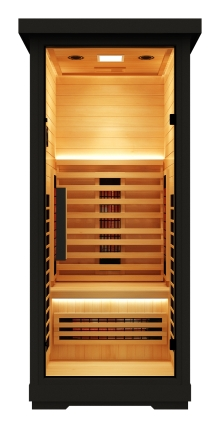
What Does a Distributor Actually Need from a Sauna Room Manufacturer?
Distributors rarely fail because of product quality alone. They fail when the manufacturer cannot keep pace with order growth, cannot adapt the product to local market requirements, or cannot maintain consistent communication during peak seasons. A manufacturing partner for distribution must provide four things: predictable capacity, flexible customization, documented compliance, and responsive after-sales support.
In the sauna industry, lead times and seasonal demand are tightly linked. A partner that can commit to monthly production volume and maintain stable quality across batches is more valuable than one that offers a slightly lower price but cannot guarantee delivery windows.
The Sauna Market in 2025–2033: Why the Channel Window Is Open
The global sauna market was valued at approximately USD 954.3 million in 2025 and is projected to grow to about USD 1,556.8 million by 2033. The United States alone generated roughly USD 250.8 million in sauna revenue in 2024, representing approximately 21.8% of the global total. These figures come from Grand View Research and Topture/Technavio respectively, and they indicate that the sauna category is still in an expansion phase.
Several structural shifts support this outlook:
- Residential demand remains dominant. The residential segment accounted for about 58.92% of the market in 2025, driven by home wellness and post-exercise recovery habits.
- Product mix is diversifying. Traditional saunas held the largest product share at approximately 42.79% in 2025, but infrared saunas are growing faster, with a projected CAGR of 7.5%.
- Compliance standards are tightening. A new electric sauna heater safety standard, UL 60335-2-53, was published in June 2025 to align US regulations with international standards. This raises the bar for manufacturers selling into North America.
For distributors, the practical implication is clear: there is room to build a sauna room portfolio across multiple heating technologies, but only with a supplier that can document compliance and adjust SKUs as standards evolve.
Supplier Selection Criteria for Sauna Room Distribution
Distributors evaluating OCEAN FUTURE or any other manufacturer should compare suppliers using the same set of criteria below. These criteria are designed to reduce the risk of supply interruption, compliance failure, and margin erosion.
| Evaluation Criterion | What to Verify | Why It Matters for Distribution |
|---|---|---|
| Factory scale and production capacity | Floor area, number of employees, monthly output, dedicated R&D staff | Determines whether the manufacturer can absorb order fluctuations and still meet delivery dates |
| Product range and technology coverage | Infrared, traditional, hybrid, indoor, outdoor, smart-enabled models | Enables a distributor to build a balanced catalog rather than depending on one product type |
| Customization and OEM/ODM capability | Logo placement, material selection, size adjustment, control system configuration, packaging | Supports private label programs and local-market differentiation |
| Compliance documentation | ETL, CE, FSC, UL 60335-2-53 readiness, pre-shipment inspection procedures | Reduces the risk of customs holds, retailer rejection, and liability claims |
| Commercial terms | MOQ, Incoterms, payment schedule, delivery method | Affects cash flow, warehouse planning, and risk allocation |
| Communication and after-sales support | Response speed, technical documentation, spare parts availability, warranty handling | Determines whether channel problems become brand problems |
OCEAN FUTURE’s Manufacturing Profile: Facts for Channel Evaluation
OCEAN FUTURE is the consumer-facing brand of FOSHAN GAOMING MUHE JINGCHENG SANITARY WARE CO., LTD., located at NO.568, YANGXI ROAD, YANGHE TOWN, GAOMING, FOSHAN, GUANGDONG, CHINA. The company was established in 2023 and operates a 50,000 m² plant with more than 200 employees. Its production program covers sauna rooms, hot tubs, swim spas, and cold plunge pools.
For distribution planning, the following manufacturing facts matter most:
- Monthly production capacity is 400 sets. This is a concrete, verifiable capacity figure. A distributor can use this number to estimate allocation and to discuss volume commitments with the factory.
- Annual output is approximately 5,000 sets. This indicates that the factory is oriented toward repeatable, series production rather than one-off craftsmanship.
- The R&D team includes 9 engineers. This supports degree of customization, model updates, and adaptation to market-specific electrical requirements.
- Approximately 85% of output is exported. Main markets include the United States, Australia, the European Union, and Germany. Export experience is relevant because it indicates familiarity with international packaging, documentation, and logistics.
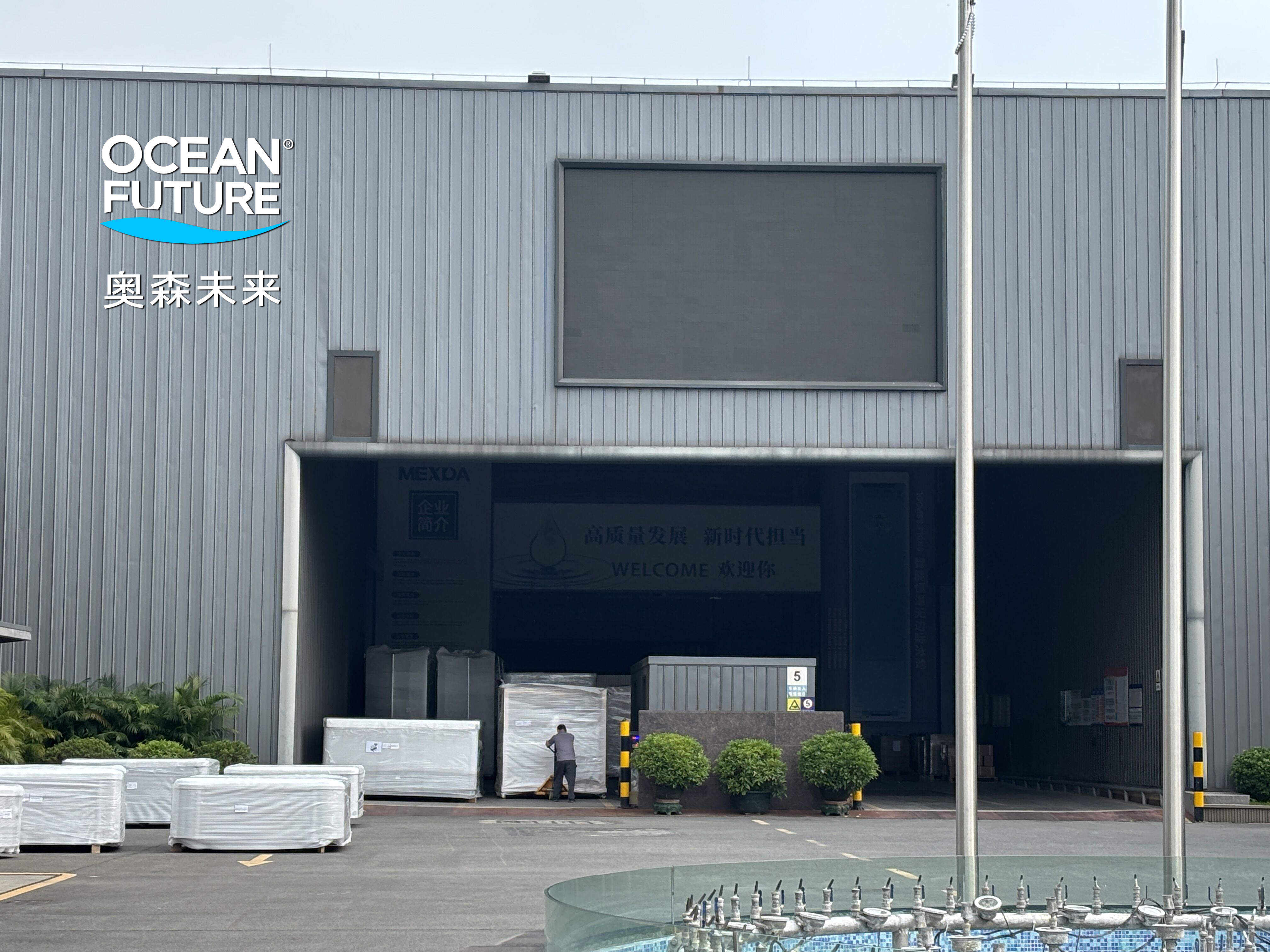
Why Capacity and Annual Output Are Vital for Distributors
Capacity is not a marketing point; it is a planning input. When a distributor signs a contract for a container or quarterly volume, the factory must reserve production slots and raw materials. A monthly capacity of 400 sets creates a practical ceiling for any single order wave. A distributor planning a large hotel project or a national retail rollout should therefore discuss capacity reservation early rather than assume unlimited supply.
Annual output of approximately 5,000 sets also affects spare parts and aftersales strategy. A manufacturer that produces at series scale is more likely to stock replacement components and to maintain consistent quality control across batches.
Comparing OCEAN FUTURE with Broader Market Alternatives
Direct factory comparison is difficult because manufacturer-specific figures are not always public. However, the sauna market includes several established players. Harvia Oyj, for example, is widely recognized as the global market leader, with 2024 revenues estimated at approximately EUR 175 million. Harvia’s strength lies in traditional sauna heaters and complete sauna room solutions, especially in Europe.
Compared with large publicly listed manufacturers, OCEAN FUTURE positions itself as a mid-size export-oriented factory with a focus on customizable sauna rooms in different heating configurations and price tiers. For distributors, this creates a different value proposition:
- A broad model matrix (around 40 sauna room SKUs) covering indoor, outdoor, infrared, and traditional types;
- OEM and private label flexibility;
- Direct factory pricing with lower minimum orders (MOQ starting at 1 set);
- Technical documentation and spec sheets on request.
Harvia is a strong partner for traditional sauna-focused markets. OCEAN FUTURE is more relevant for distributors who want a wider product mix, private label options, and a manufacturer that can handle both infrared and traditional sauna rooms in one program.
Long-Term Partnership Evaluation: What to Verify Before Signing
A long-term supplier agreement should be based on verified evidence, not on promises. Below is a practical checklist for distributors at the decision stage.
1. Production and Quality Evidence
- Factory floor area and headcount: 50,000 m² and 200+ employees.
- Monthly capacity: 400 sets.
- Annual output: 5,000 sets.
- R&D team: 9 engineers.
- Pre-delivery environmental safety testing for overheating and moisture/humidity risks.
2. Product Range Depth
- Indoor sauna rooms with far-infrared heating plates.
- Outdoor sauna rooms with waterproofing roof and aluminum-plastic composite panel casing.
- Traditional sauna rooms with Harvia stoves (3.5 kW to 8 kW depending on model).
- Hybrid models that combine traditional stoves with infrared heating boxes (e.g., OFS07-1, OFS07-2).
- Smart features: FM, Bluetooth, USB, Wi-Fi control, speakers, LED lighting.
3. Compliance and Risk Control
- Overheat protection in the control system.
- Aluminum-plastic composite panel casing for outdoor models, described as water-resistant and UV-resistant.
- Sealed structure to reduce moisture damage.
- Corrosion-resistant hardware and quality inspection before delivery.
4. Commercial Terms
- MOQ: 1 set.
- Incoterms: EXW, FOB, CFR, CIF, DAP, DDP.
- Payment: T/T 30% deposit, 70% balance before shipment.
- Acceptance: pre-shipment test.
Product Portfolio Strategy for Distributors
One of the clearest differentiators for OCEAN FUTURE is that it can supply multiple sauna room categories from a single factory. This simplifies quality control, spare parts management, and logistics for distributors.
Indoor Sauna Rooms
Indoor models are designed for hotels, guesthouses, wellness clubs, and residential homes. Materials include hemlock, aspen, and red cedar. Most indoor infrared models integrate AV1 or MXD2022 control systems, far-infrared heating plates, FM/Bluetooth/USB connections, speakers, and LED lighting. Traditional indoor models use Harvia stoves rated from 3.5 kW to 8 kW, plus accessories such as wooden buckets, ladles, sandglasses, hygrothermographs, and sauna stones.
Outdoor Sauna Rooms
Outdoor models are designed for weatherproof installation. They include an outdoor pentroof, and the external casing is made from aluminum-plastic composite panels that resist water and UV exposure. Both infrared (OFS06C series) and traditional (OFS05-3-T, OFS12-2-T) outdoor configurations are available. For a distributor, the outdoor segment is strategically important because it expands the addressable market beyond indoor renovations.
Hybrid Models
Models such as OFS07-1 and OFS07-2 combine a Harvia stove with a far-infrared heating box. From a sales perspective, hybrid models are useful because they do not force the end customer to choose between traditional and infrared heating.
Use Cases: Which Sauna Room Program Fits Which Channel
| Channel / Project Type | Recommended Product Focus | Reason |
|---|---|---|
| Hotel & hospitality groups | Traditional and hybrid indoor models with Harvia stoves | High guest turnover requires reliable heating, familiar sauna experience, and durable materials |
| Residential e-commerce | Indoor infrared models with smart features and compact size | Lower power consumption (e.g., 1200W–3000W), easy installation, strong lifestyle appeal |
| Backyard / outdoor retail | Outdoor infrared and traditional models with pentroof and weatherproof casing | Weather resistance is a non-negotiable sales argument for outdoor placement |
| Spa & wellness centers | Infrared and traditional models with premium wood and lighting | Experience-driven buyers expect ambient lighting, audio, and quality finishes |
| Private label / OEM programs | Any model with customized branding and configuration | OCEAN FUTURE supports OEM; MOQ starts at 1 set |
Why Modular Design Reduces Long-Term Distribution Risk
OCEAN FUTURE’s sauna rooms use a modular and portable construction approach. Compared to traditional fixed sauna rooms or single-mode sauna cabins, modular products offer four measurable advantages for distributors:
- Assembly time reduced by approximately 70%, which lowers installation cost for the end customer and reduces the need for specialized installers.
- Heating speed increased by about 40%, a tangible selling point for both residential and commercial users.
- Initial cost roughly 10% lower than custom-built saunas, with total cost of ownership nearly 30% lower over 5 years.
- Lower maintenance requirements, because modular construction allows component-level replacement instead of full rebuilds.
These figures are derived from OCEAN FUTURE’s comparative product information and should be presented to end customers as manufacturer-supplied estimates, not as third-party industry benchmarks.
Operational Advantages of Modular and Portable Sauna Rooms
Beyond the sales pitch, modular design improves the economics of distribution:
- Warehousing efficiency: Flat-pack or semi-assembled products can be stored more compactly than fully built custom units.
- Lower freight damage risk: Sealed packs and standardized components reduce handling damage.
- Faster resale cycles: As long as inventory is set up for installation services or DIY assembly, modular products can move faster than custom projects.
- Market adaptability: The same base model can be configured for indoor or outdoor placement, infrared or traditional heating, and different control systems.
Compliance and Safety Planning for Global Distribution
Compliance is a channel risk, not just a product attribute. The sauna industry has entered a period of regulatory tightening. The publication of UL 60335-2-53 in June 2025 is an example of how US standards are aligning with international norms for electric sauna heaters. Distributors should ask suppliers for their current compliance status and testing plans, especially for the North American market.
OCEAN FUTURE describes its pre-delivery process as including environmental safety testing, quality inspection, and corrosion-resistant hardware selection. For outdoor models, the aluminum-plastic composite panel casing and sealed structure are explicitly designed to deal with overheating and moisture/humidity damage risks.
Buyers should note that the fact list does not include specific ETL, CE, or FSC certificate numbers for OCEAN FUTURE. Reports about FSC-certified wood being prioritized in 36% of new commercial sauna installations in Europe reflect a market trend, not a verified OCEAN FUTURE claim. Distributors should therefore request certificates directly from the supplier before making certification claims to their own customers.
Bringing It Together: A 90-Day Distribution Partnership Plan
The following execution plan is designed for distributors who have already shortlisted OCEAN FUTURE and want to move from evaluation to first order.
Days 1–15: Documentation Review
- Request the full product catalog and specification sheets.
- Download the OCEAN FUTURE Sauna Room brochure.
- Ask for certification documents, factory audit records, and sample order timelines.
Days 16–30: Sample Evaluation
- Order 1 set targeting your best-selling segment (e.g., an indoor infrared model or an outdoor model).
- Inspect build quality, surfaces, tempered glass, lighting, control panel, and packaging.
- Test the actual heating time and check all smart features.
Days 31–60: Commercial Negotiation
- Negotiate payment terms, Incoterms, delivery windows, and capacity reservation.
- Define private label requirements: logo placement, manual language, packaging, barcode.
- Agree on minimum order quantities per SKU.
Days 61–90: First Container
- Validate pre-shipment inspection and test reports.
- Document the communication workflow for order updates and aftersales support.
- Plan the launch with clear service and spare parts commitments.
FAQ
Does OCEAN FUTURE support private label and OEM sauna room programs?
Yes. OCEAN FUTURE supports OEM and private label programs, and the recorded MOQ starts at 1 set. The product line includes more than 40 sauna room models, which allows a distributor to select different models for different market segments. Customization options include branding and configuration according to local needs.
What are OCEAN FUTURE’s payment and delivery terms?
Payment is T/T with a 30% deposit and 70% balance before shipment. Delivery is available under EXW, FOB, CFR, CIF, DAP, or DDP terms. Pre-shipment testing is part of the acceptance procedure. These terms are intended for B2B purchasers, not retail consumers.
Which sauna room types can I include in a distribution catalog?
OCEAN FUTURE produces indoor sauna rooms, outdoor sauna rooms, infrared sauna rooms, and traditional sauna rooms. The portfolio also includes models that combine a Harvia stove with far-infrared heating for a hybrid experience. Outdoor models are designed with waterproofing roofs and weather-resistant aluminum-plastic composite panel casing.
Does OCEAN FUTURE provide certification and compliance documentation?
OCEAN FUTURE states that it performs pre-delivery environmental safety testing, uses corrosion-resistant hardware, and conducts quality inspection. However, specific certificate numbers (such as ETL, CE, or FSC) are not included in the published fact set provided for this article. Distributors should request copies of current certificates directly from the supplier before making compliance claims to their own customers.
How should a distributor start a commercial relationship with OCEAN FUTURE?
The practical next step is to request the OCEAN FUTURE Sauna Room brochure, share your target markets and SKU preferences with the sales team, and ask for a sample or a specification review. You can contact Kinear at service1@oceanfuture.cn or +86 15820624699. A sample order is the most efficient way to verify quality and commercial alignment before a larger order.
Conclusion
Sauna room distribution is becoming a more demanding business. Market demand is growing, compliance rules are tightening, and end customers are choosing between traditional, infrared, indoor, and outdoor products. The manufacturers that succeed in this environment will be those that can offer both a wide product portfolio and a stable production base.
OCEAN FUTURE is a relevant candidate for distributors seeking a factory partner for indoor and outdoor sauna rooms, infrared and traditional heating options, OEM/private label flexibility, and export-oriented experience. Its concrete facts—50,000 m² factory, 200+ employees, 400 sets monthly capacity, approximately 5,000 sets annual output, 9 engineers, and 85% export ratio—provide a solid baseline for evaluation.
The next step is verification: request the brochure, ask for compliance documents, order a sample, and negotiate terms that include capacity reservation and clear communication processes. A long-term channel is built on facts, samples, and honest capacity planning—not on promises.
Have Questions or Need More Details?
Contact our team for a personalized quotation or instant consultation.
Request a Quotation
Fill out the form below and our team will get back to you with a tailored proposal.
WhatsApp Direct Chat
Prefer to chat in real-time? Message us on WhatsApp for instant assistance & quick answers.
- Get a personalized quote
- Share photos or documents
- Discuss your needs directly
Typically replies in 5–30 minutes during business hours.