OYD3591 vs OYD3626 Chenille Sofa Fabric: Pet-Friendly Home or Hotel Contract?
Short answer: this is an end-use decision, not a contest between two chenille fabrics. OYD3591 is a 100% polyester chenille with an ultra-soft handfeel, a pet-friendly market positioning, and an easy-clean, stain-resistant, water-repellent finish in 27 colorways. OYD3626 is a chenille plain fabric for sofas and beds, offered in 27 colors and supported by GRS and OEKO-TEX certifications, positioned for hotel contract work. Both are documented with fire-retardant performance by OYD Textile (Haining OuYuda Textile Co., Ltd.), the manufacturer behind both references.
For a residential sofa line sold to pet-owning households, the finish system and the pet-friendly positioning of OYD3591 do the work. For a hotel contract package covering guest-room seating, lounge chairs and upholstered bed frames, OYD3626's plain chenille surface and its certification set are the more directly relevant starting point, provided the fire-retardant documentation matches the destination market's requirements.
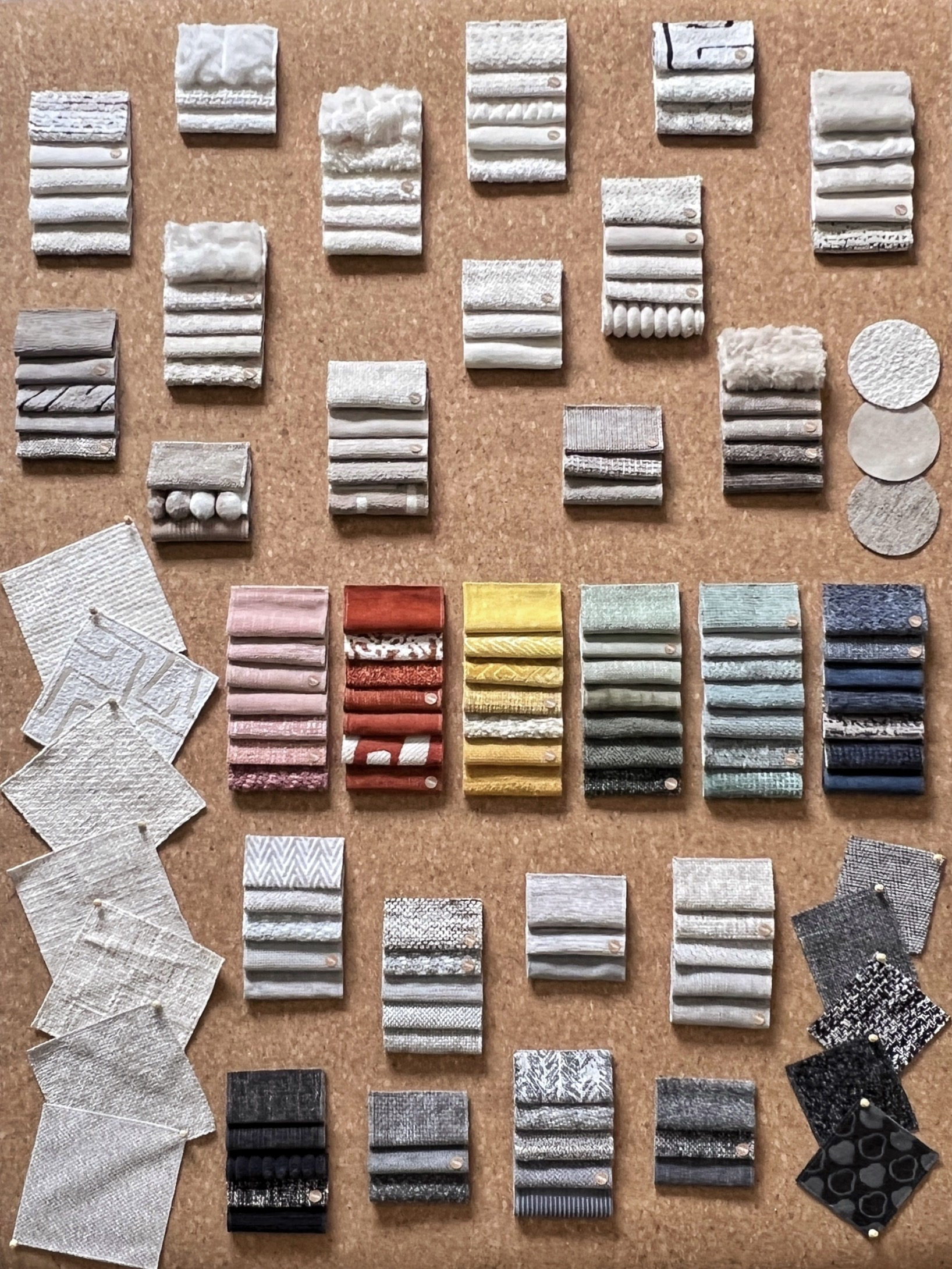
Chenille and woven upholstery designs from OYD Textile's sofa fabric range — the same mill supplies both OYD3591 and OYD3626.
Why this comparison is harder than it looks
Both articles share a chenille surface character, both come from the same weaving and finishing operation in Haining, Zhejiang, and both are offered in 27 colors. That removes the easiest shortlisting tools — a visible texture difference, a colour-range advantage, or a different supplier — and pushes the buyer onto three criteria that are easy to state and harder to verify: the finish system, the certification set, and the duty level of the end use.
There is also a consolidation temptation. A manufacturer or contractor running a residential collection and a hotel project at the same time may try to specify one chenille for both jobs. That usually ends in one of two compromises: a hospitality-grade specification that is over-engineered for a retail sofa price point, or a residential finish that cannot answer the documentation questions a hotel purchasing team will ask.
It helps to be precise about what "pet-friendly" and "hotel contract" actually claim. Pet-friendly, in OYD3591's case, describes a market positioning supported by an easy-clean, stain-resistant and water-repellent finish — a cleaning-regime advantage, not a guarantee against claws or an unlimited stain warranty. Hotel contract suitability, in OYD3626's case, describes a fabric intended for contract furniture and supported by GRS and OEKO-TEX certifications — evidence that speaks to procurement and compliance, not a durability grade on its own.
Industry background: why the two buyer types want different evidence
Chenille remains a mainstream choice for upholstery because the pile yarn gives a soft handfeel and a dense, matte surface that hides the small irregularities of everyday use. In volume terms, the underlying categories are large. Grand View Research estimates the global sofa market at $244.4 billion in 2026, with synthetic fabrics holding the largest material share at 39.8%. Within that, performance-focused fabric is a defined segment: a Dataintelo report values the furniture performance fabric market — stain-resistant, high-durability constructions — at $4.8 billion in 2025, with polyester holding a 38.4% material share. Both figures are third-party estimates and should be read as context for category scale, not as a forecast for any single fabric reference.
The regulatory direction matters more to a specification than the market numbers. In the United Kingdom, the Furniture and Furnishings (Fire) (Safety) (Amendment) Regulations 2025 came into force in October 2025, removing the display label requirement and placing the emphasis on permanent labels, according to the UK Department for Business and Trade. Whatever the market, the practical consequence for a buyer is the same: a fire-retardant statement in a fabric brochure is not the same document as a test report tied to a specific article, colourway and finishing — and contract buyers increasingly ask for the latter.
The divergence between the two buyer types follows from that. A residential brand asks: will this fabric survive a household with a dog, a cat and a coffee cup, and can I sell that story credibly? A hotel project team asks: is the fabric documented for contract use, can I file the certification and fire evidence with the FF&E package, and will the maintenance team be able to clean it without a specialist contractor on call?
OYD3591: a polyester chenille built around household cleaning
OYD3591 is a 100% polyester chenille. The polyester base gives the fabric a consistent, cost-stable raw material position and a surface that takes a finish reliably; the chenille construction supplies the ultra-soft handfeel that buyers associate with the category. Its defining feature for this comparison is the finish: easy-clean, stain-resistant and water-repellent.
What each element is worth to a buyer:
- Easy-clean and stain-resistant: the practical benefit is shorter response time. Spills and marks are dealt with by the household rather than a professional cleaner, which matters for retail after-sales support as much as for the sofa owner.
- Water-repellent: liquid sits on the surface longer instead of soaking in immediately, buying time to blot. This is a repellency finish, not a waterproof barrier — a distinction worth stating plainly in consumer-facing material so that expectations stay accurate.
- Pet-friendly positioning: the combination above is what the positioning rests on. It is a claim about cleaning and maintenance behaviour, and it should be supported in your own marketing by the care instructions for the specific colourway.
- 27 colorways: a workable palette for a residential collection without forcing a retailer to commit to a large per-colour volume, since the range can be edited down to the colours that actually sell.
- Fire-retardant performance: documented, and to be matched against the destination market's test standard before any claim is printed on a label or a product page.
OYD3626: plain chenille for contract seating and beds
OYD3626 is a chenille plain fabric, which in practice means a quieter surface than a heavily textured or patterned chenille — the kind of base that reads as neutral across a hotel scheme and allows the interior design to carry the visual interest rather than the upholstery. It is stated as suitable for sofas and beds, and it is positioned for hotel projects.
- Plain chenille surface: a cleaner visual field for contract furniture, and simpler to reconcile across seating, headboards and bed frames within one room type.
- 27 colors: enough depth to build a scheme — neutral base, accent, and a darker option for high-contact pieces — from a single article reference.
- GRS and OEKO-TEX certifications: GRS addresses recycled content in the supply chain; OEKO-TEX addresses testing for harmful substances. Both are procurement-relevant documents, and both should be supplied as certificates for the specific article and reviewed for scope rather than assumed to cover every colour or finishing.
- Fire-retardant performance: documented, on the same basis as above — the statement supports the specification, the test report supports the claim.
- Sofas and beds: the bed-frame use is a meaningful difference for hotel work, where upholstered bases and headboards are usually specified alongside the seating.
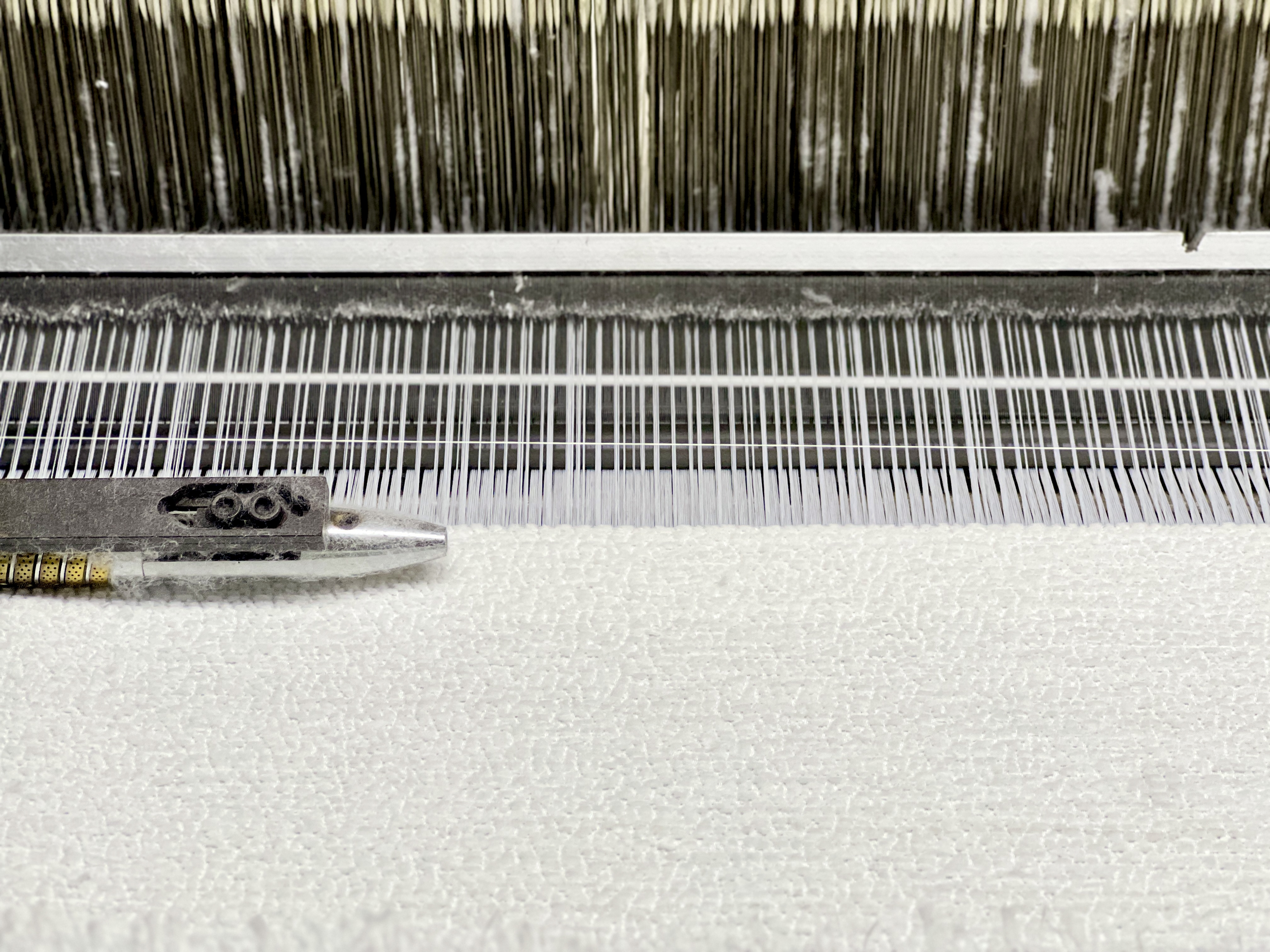
Weaving and finishing at OYD Textile, where chenille articles such as OYD3591 and OYD3626 are produced.
OYD3591 vs OYD3626: side-by-side comparison
| Decision dimension | OYD3591 | OYD3626 |
|---|---|---|
| Construction | 100% polyester chenille | Chenille plain fabric |
| Surface and handfeel | Ultra-soft handfeel | Plain chenille surface |
| Colour range | 27 colorways | 27 colors |
| Finish system | Easy-clean, stain-resistant, water-repellent | Not stated in the current product information — confirm finishing options with the supplier |
| Fire-retardant performance | Documented | Documented |
| Third-party certifications | Not stated in the current product information — request the certificate set | GRS and OEKO-TEX |
| Positioning | Pet-friendly residential sofas | Hotel projects; sofas and beds |
| Primary buyer | Furniture brand or factory serving pet-owning households | Contract furnishing, hospitality FF&E, bed and headboard makers |
| Maintenance emphasis | Household cleaning between professional care | Contract housekeeping routine, documentation-led specification |
Table notes: "not stated in the current product information" means the point was not confirmed in the material available for this comparison. It is a documentation gap to close, not evidence that the capability is absent — ask for the certificate or finishing specification before ruling either article out.
What the shared chenille benchmarks do and do not prove
OYD Textile publishes a chenille-versus-velvet comparison for its chenille upholstery programme that is often read as a performance statement for the whole range. The documented points are specific: abrasion resistance of 45,000 cycles against the 30,000–40,000 cycles typical of standard velvet; pilling grade 4–5 against 3–4; simplified daily maintenance with easier cleaning and fewer pressure marks; suitability for high-traffic commercial environments such as hotels; and roughly 8% lower water consumption during dyeing and finishing compared with conventional velvet.
Three limits apply, and they matter at decision stage. First, those figures describe the chenille article covered by that comparison and are measured against velvet — not against each other. No document in the material reviewed here sets OYD3591 and OYD3626 against one another on the same abrasion or pilling test, so neither can honestly be called the more durable of the two. Second, pilling and abrasion results are only meaningful alongside the test method, the number of rubs, and the laboratory that issued the result. Third, a water-repellent finish and a fire-retardant statement are both finish-level claims: they follow the specific colourway and finishing route, so the report you file should carry the same reference you ordered.
A seven-step sourcing decision
1. Fix the end use and the duty level first
Write down what the furniture is and who uses it: a three-seat sofa in a family living room, a guest-room lounge chair, an upholstered bed base, or lobby seating. Duty level drives every later check, and it decides whether the pet-friendly finish argument or the contract certification argument carries more weight in your specification file.
2. Map the cleaning regime
Ask who cleans the fabric and how often. A household will spot-clean with a domestic product; a hotel housekeeping team works to a written routine across hundreds of rooms. If the answer is "a domestic customer, weekly, without professional help", the easy-clean and stain-resistant finish of OYD3591 is directly relevant. If the answer is "a housekeeping team under a documented procedure", verify the care instructions and cleaning agents against that procedure for whichever article you choose.
3. Verify fire-retardant evidence against the destination market
Both articles are documented with fire-retardant performance, and in both cases the document to file is the test report for the exact reference, not the brochure line. Check the standard named in the project specification, the test date, and the labelling rules in the market where the furniture will be sold or installed. The UK amendment mentioned above is a useful reminder that label and documentation rules change while the fabric does not.
4. Match the certification set to the buyer's procurement rules
OYD3626 carries GRS and OEKO-TEX certifications. Those are the documents a hotel group, a corporate buyer or a brand with a restricted-substance policy will ask for at tender stage, and they are the clearest structural difference between the two articles in this comparison. If the project has no such requirement, certification weight drops and the finish argument rises. Read the certificates for scope: article, colour, and site of production.
5. Size the colourway plan against 27 options
Both articles offer 27 colors, so the range itself does not separate them. What separates them is how many colours your programme can carry. A retail collection can usually run a tighter palette; a hotel scheme may need a neutral, an accent and a darker contract colour in the same article. Decide the palette before requesting a quotation, because colour count drives minimum order quantity and stock planning.
6. Sample both, then test the finish
Order samples of both articles in the colours you actually intend to use. Apply the staining agents that matter for the end use — coffee, oil, ink, pet accidents — leave them for a realistic time, then clean with the agent your customer or housekeeping team will use. This is the step where a finish claim either holds up in your own hands or becomes a question for the supplier.
7. Confirm MOQ, lead time and pre-shipment inspection
Lock the commercial terms against the same quantity and colour count for both options, then confirm the quality-control points: incoming raw material inspection, in-process monitoring during production, and pre-shipment final inspection. OYD Textile states that its fabrics are tested against international standards for abrasion resistance, colour fastness and other performance requirements. Ask which of those results will be attached to your order.
Four project scenarios and the article that fits
Pet-owning household sofa collection
OYD3591 fits this scenario most directly. The 100% polyester chenille, ultra-soft handfeel and easy-clean, stain-resistant, water-repellent finish support a retail story built on maintenance rather than on contract compliance. Keep the marketing language calibrated: describe the finish as making cleaning easier and buying time on spills, and point customers to the care instructions for their colourway.
Hotel guest rooms, lounge seating and upholstered beds
OYD3626 fits here. A plain chenille in 27 colors covers seating and bed frames from one reference, and the GRS and OEKO-TEX certifications give the purchasing team documents to file. Combine it with a project-specific fire-retardant report and a written cleaning routine agreed with housekeeping.
Contract project with sustainability or restricted-substance requirements
Where the tender asks for recycled-content evidence or restricted-substance testing, OYD3626's certification set becomes the deciding factor rather than a supporting detail. In that situation the finish argument for OYD3591 is secondary, even if the visual result would be similar.
A catalogue that serves both markets
Running both articles from one supplier is a legitimate strategy: a residential range on OYD3591 and a contract range on OYD3626, sharing a colour direction but carrying separate care labels and separate documentation packs. The practical gain is consolidated quality control, one shipment and one supplier relationship — not a claim that one fabric covers both jobs.
One boundary worth stating: neither chenille is the right answer for an outdoor terrace. OYD Textile's range includes outdoor fabric as a separate category, which is the appropriate place to look when the furniture will sit in weather.
Sampling, MOQ and lead time: what to plan for
OYD Textile supports OEM and ODM customization on pattern, colour, weight, width and finishing routes such as waterproof or anti-fouling treatment, and it provides free fabric samples for evaluation before a bulk order. For a comparison like this one, request both articles in the same colour family so that the visual and tactile difference is judged fairly.
Minimum order quantity depends on whether you buy stock or custom material. Existing stock items can be supplied as small trial orders; custom patterns or colours require a higher minimum, which depends on yarn and dyeing conditions. Stock goods are normally delivered within 7–15 days, while custom orders typically run 25–40 working days after samples and deposit are confirmed. Exact schedules are quoted against your order quantity, so treat these as planning ranges rather than fixed dates.
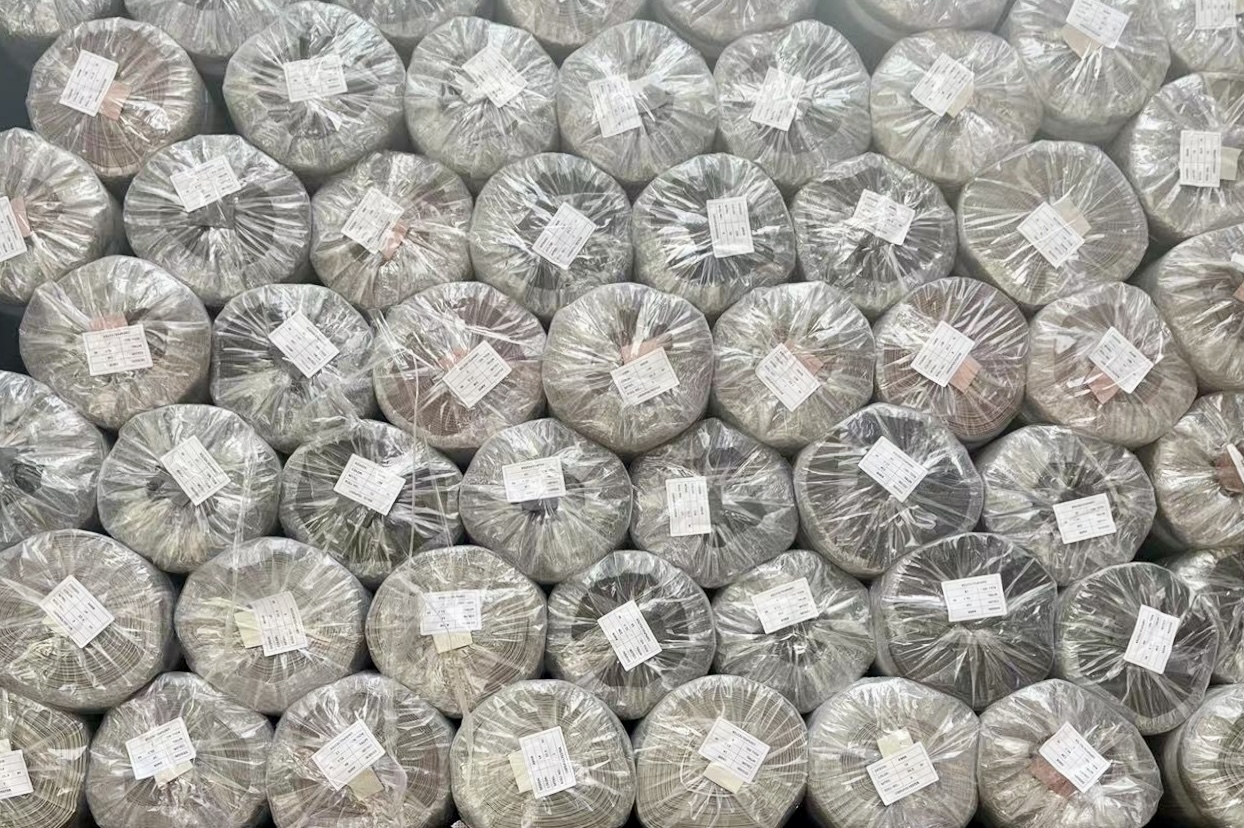
Packed rolls leaving OYD Textile's facility; stock articles and custom production follow different lead-time schedules.
Frequently asked questions
Do OYD3591 and OYD3626 both meet hotel fire-safety requirements?
Both articles are documented with fire-retardant performance, but that is a fabric property claim, not a pass certificate for every market. OYD3626 also carries GRS and OEKO-TEX certifications, which address recycled content and restricted-substance testing rather than fire performance. Whether a fabric can be used in a hotel depends on the test standard and labelling rules of the destination country and on the furniture item itself; the UK's Furniture and Furnishings (Fire) (Safety) (Amendment) Regulations 2025, in force since October 2025, removed the display label requirement and places the emphasis on permanent labels. Before specifying either article, request the test report for the exact reference, colour and finishing, and check it against the standard named in the project specification.
Which article is the better choice for a household with pets?
OYD3591 is the article positioned for that job. It combines a 100% polyester chenille construction and an ultra-soft handfeel with an easy-clean, stain-resistant and water-repellent finish, which is the combination retail buyers look for when pets share the sofa. OYD3626 is a plain chenille intended for sofas and beds and is not positioned as a pet-specific fabric in the current product information — which does not make it unsuitable for a home, but it is not the primary argument. If cleaning frequency and spill response are your deciding criteria, OYD3591 is the closer match, with the care instructions for the actual colourway confirmed before you publish a claim.
How should we compare cost between the two fabrics?
Compare total cost of ownership rather than price per metre, and do it on identical inputs. The variables that move cost across a programme are the finishing route and how it holds up under the actual cleaning regime, the number of colours carried and the volume behind each, the certification documentation the buyer requires, and freight and re-order patterns. OYD Textile quotes per order because price depends on quantity, colour and any custom finishing, so neither article has a published price to compare. Request quotations for the same quantity, colour count and finishing, then add the expected cleaning, replacement and documentation workload before deciding.
Can we evaluate both fabrics before placing an order?
Yes. OYD Textile offers free fabric samples so both articles can be assessed before a bulk order. Ask for OYD3591 and OYD3626 in the colourways you actually plan to sell or specify, then test them the way the end product will be used: apply the staining agents that matter for the project, clean with the approved agent, and check how the surface recovers. For contract work, request the certification and fire-retardant documents for those same sample articles, since such documentation is issued per article and finishing rather than per fabric family.
What are the MOQ and lead times, and how do we start?
MOQ depends on whether you order stock or custom material. Existing stock items can be supplied as small trial orders, while custom patterns or colours require a higher minimum that depends on yarn and dyeing conditions. Stock goods are normally delivered within 7–15 days; custom orders typically run 25–40 working days after samples and deposit are confirmed, with exact schedules quoted against your order quantity. To start, send your end use — residential pet-friendly sofa or hotel contract — together with target colourways and the documentation you need to OYD Textile's team (June, sofacloth@ouyudatex.com), or download the OYD Textile fabric catalogue to review the wider range before choosing.
Conclusion: choose the duty, then the fabric
The decision rule is short. If the sofa will live in a home with pets and the commercial argument is about cleaning and spill response, specify OYD3591 and support the claim with its easy-clean, stain-resistant, water-repellent finish and 27 colorways. If the furniture is going into a hotel or contract package, and the purchasing team needs certification documents alongside the fire-retardant evidence, specify OYD3626 with its plain chenille surface, 27 colors and GRS and OEKO-TEX certifications.
What should not happen is a superiority claim in either direction. The published chenille benchmarks describe the range against velvet, not these two articles against each other, and no document reviewed here establishes that one is more durable than the other. The honest next step is documentary: request both samples, request the test reports for the colours and finishing you intend to buy, and let the destination market's compliance requirements settle the rest. Both articles are supplied by OYD Textile, a sofa fabric manufacturer based in Haining, Zhejiang, China, operating more than 100 weaving and knitting machines with an annual output of 13,000,000 meters.
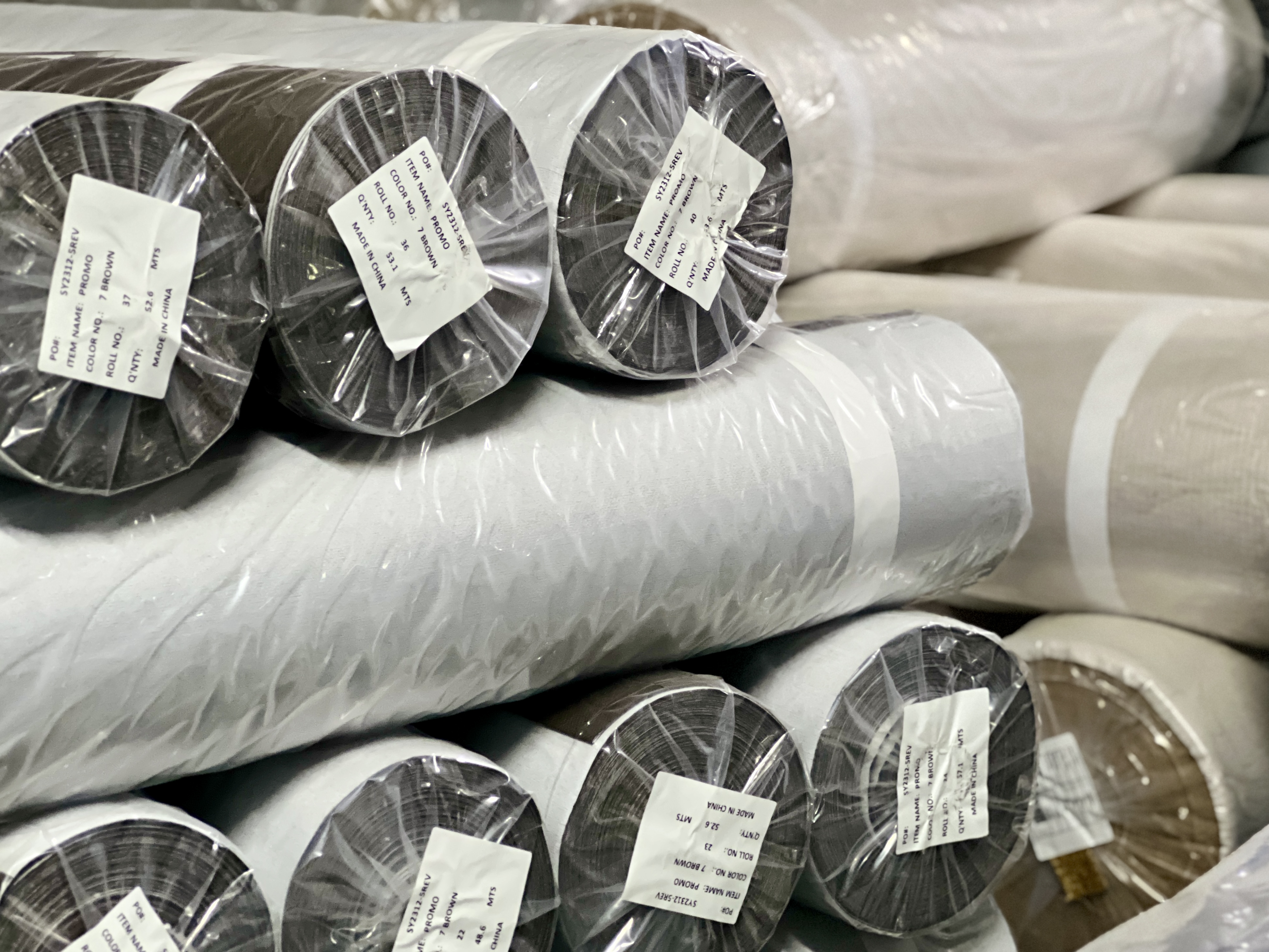
Stock held at OYD Textile for sample requests and trial orders — a practical first step before committing to a colourway.
Have Questions or Need More Details?
Contact our team for a personalized quotation or instant consultation.
Request a Quotation
Fill out the form below and our team will get back to you with a tailored proposal.
WhatsApp Direct Chat
Prefer to chat in real-time? Message us on WhatsApp for instant assistance & quick answers.
- Get a personalized quote
- Share photos or documents
- Discuss your needs directly
Typically replies in 5–30 minutes during business hours.