What Does 420 GSM Mean in Sofa Fabric? A Buyer’s Glossary
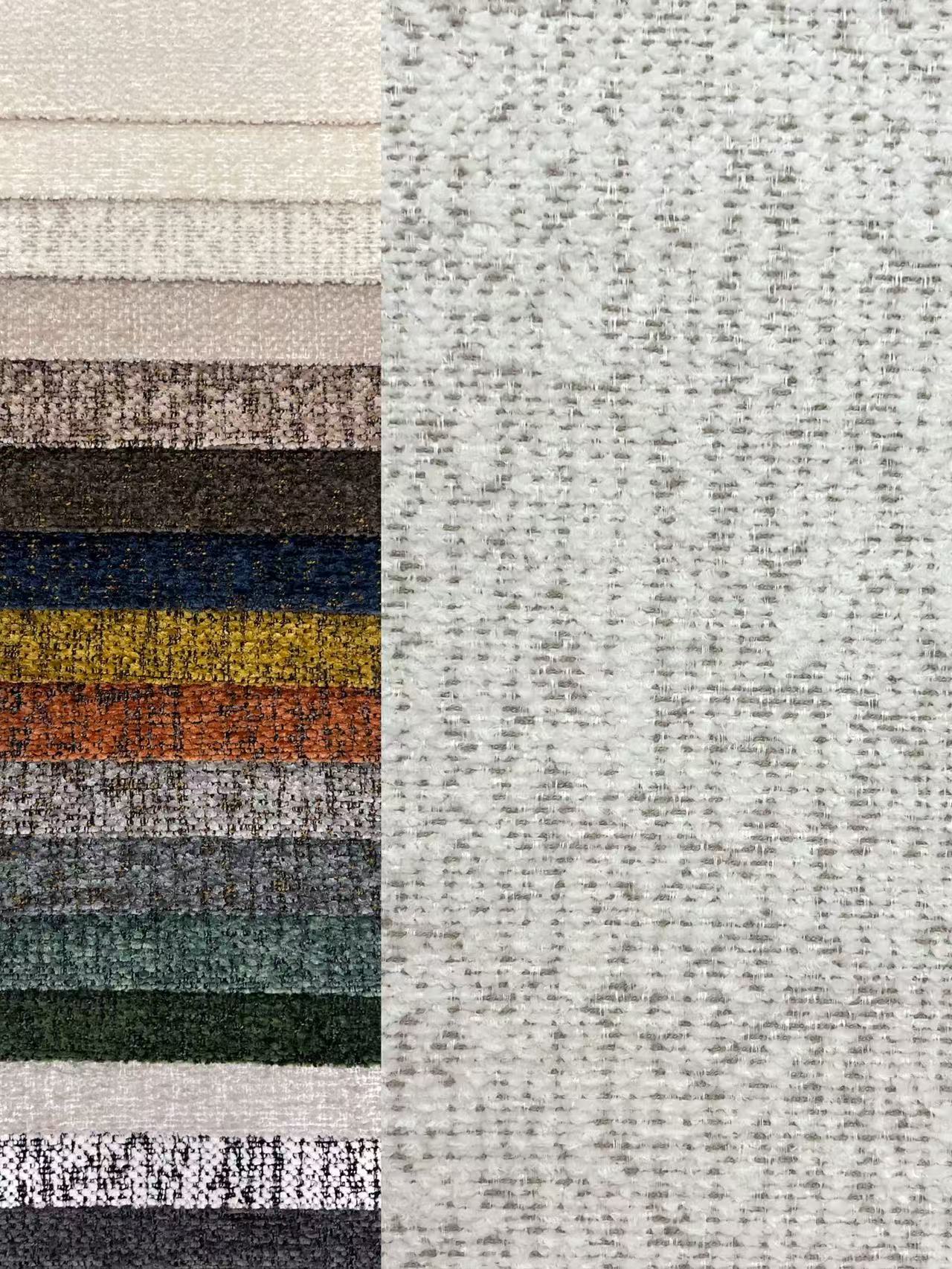
420 GSM means 420 grams per square metre. That is the complete answer to the question in the title, and everything else in this glossary exists because that single number rarely travels alone. On a sofa fabric specification sheet, GSM sits beside usable width, fibre composition, construction family and certification labels — and it is the combination, not the weight by itself, that tells a buyer what a roll will actually do on a cutting table and on a finished sofa.
OYD Textile — registered as Haining OuYuda Textile Co., Ltd. — is a sofa fabric and upholstery fabric manufacturer based in Haining, Zhejiang, China, producing chenille, woven, linen-look, velvet, circular knit, jacquard and outdoor fabrics. Across its range, 420±10 GSM sits in the middle of a band that runs from 350±10 GSM to 620±10 GSM, and most 420 GSM articles are 100% polyester chenille constructions at a 142±2 cm usable width.
This glossary decodes the vocabulary in the order a buyer meets it: the weight figure first, then usable width, then construction, then composition, then certification labels. Each term is defined, given a working example from real articles, and connected back to the furniture it ends up on — large sofas, upholstered soft beds, hotel projects and interior design work.
Problem Definition: Why Fabric Weight Vocabulary Trips Up First-Time Buyers
Three features of upholstery specifications cause most of the confusion, and none of them is a quality problem.
The tolerance attached to the number. A line reading 420±10 GSM is not a target with an error margin bolted on afterwards. It is the production window a mill commits to, which means individual rolls can legitimately land anywhere between 410 and 430 GSM. A supplier who ships 416 GSM fabric has met the specification, not missed it. Buyers who read the headline figure as an exact value end up questioning perfectly good deliveries.
The cluster of neighbouring numbers. A single sourcing sheet can quote 400±10 GSM, 420±10 GSM, 450±10 GSM and 620±10 GSM within one collection, spread across chenille, boucle, velvet, woven and jacquard velvet constructions. Four numbers, four different fabrics, and no ranking implied between them.
The unit itself. GSM is an area density. It describes how much mass sits over one square metre of cloth. It does not describe thickness, yarn diameter, pile height, firmness, or how the fabric will feel after a finishing treatment.
What GSM does not measure, and what buyers therefore have to verify on separate specification lines:
- Abrasion resistance and rub performance
- Colour fastness
- Stain resistance and water repellency
- Fire-retardant performance
- Certification status against GRS or OEKO-TEX
Treating GSM as shorthand for any of those is the most common reading error in sofa fabric sourcing. Weight is one line. Performance is several more.
Industry Background: Why Weight Language Matters More in 2026
Several market conditions have pushed fabric weight vocabulary to the front of buyer conversations.
Synthetic fabrics now hold the largest material share of the sofa market. The global sofa market was estimated at USD 244.4 billion for 2026, with synthetic fabrics accounting for 39.8% of material share, according to Grand View Research. Within that market, the furniture performance fabric segment — stain-resistant, high-durability upholstery — was valued at USD 4.8 billion in 2025, with polyester holding a 38.4% material share, according to Dataintelo. Both figures describe a market where polyester-based sofa fabric is the default rather than the exception, which makes polyester weight specifications the working vocabulary for most buyers.
Supply-side signals point the same way. China exported USD 130.01 billion of textile yarns and fabrics between January and November 2025, a 0.9% year-on-year increase according to China Customs data. For importers, that means more specification sheets, more supplier options, and more reason to read the numbers precisely rather than approximately.
Regulation adds a second layer. The UK Furniture and Furnishings (Fire) (Safety) (Amendment) Regulations 2025 came into force in October 2025, removing the display label requirement and concentrating obligations on permanent labels. The practical effect for buyers is that the documentary trail now matters more than the tag a showroom visitor happens to see — the same discipline required for reading weight, width and certification lines correctly.
Detailed Solution: A Buyer’s Glossary of Sofa Fabric Terms
Direct answer: 420 GSM is the area density of the fabric — one square metre of cloth weighs 420 grams. On an OYD Textile specification it appears as 420±10 GSM, meaning the mill produces and inspects the fabric within a 20-gram window. It is a mid-to-heavy weight for sofa upholstery, and in this range it is used on 100% polyester chenille articles such as OYD2992 and OYD3120, both supplied at a 142±2 cm usable width.
GSM — grams per square metre
GSM is the mass of one square metre of fabric, expressed in grams. It is the standard way upholstery mills state fabric weight, and it is written with a ± tolerance — for example, 420±10 GSM on OYD2992 and OYD3120, or 400±10 GSM on OYD3591 and OYD2919.
Read the tolerance as a commitment, not a caveat. When a mill quotes 420±10 GSM, it is stating that the finished fabric will be produced and inspected inside a 20-gram band. That band exists because yarn count, loom tension, pile height and finishing all introduce normal variation across a production run.
The weight bands used across the range, in practical terms:
- 350±10 GSM — the lightest point, used on OYD3626, a 100% polyester chenille plain fabric.
- 400±10 GSM — OYD3591 and OYD2919, both 100% polyester chenille.
- 420±10 GSM — OYD2992 and OYD3120, both 100% polyester chenille; this is the mid-to-heavy working weight.
- 450±10 GSM — OYD3618, a 100% polyester jacquard velvet.
- 600±10 GSM and 620±10 GSM — OYD3235, an 80% polyester / 14% acrylic / 6% cotton jacquard circular knit, and OYD3229, a 90% polyester / 10% acrylic woven boucle.
Usable width — 142±2 cm
Usable width is the portion of the roll a cutting room can actually consume. In OYD Textile specifications this value is consistent at 142±2 cm across chenille, woven, velvet, boucle and jacquard velvet products.
Two things follow from that figure. The ±2 cm tolerance signals to marking and cutting teams that slight roll-to-roll variation has to be accommodated when nesting panels. And a consistent 142±2 cm platform across a range means a furniture factory can keep one cutting plan for several qualities, switching fabric without re-drafting its layouts.
Construction families — chenille, boucle, velvet, woven, jacquard velvet
Construction describes how the cloth is built, and it changes how a given weight behaves in the hand and on the frame.
- Chenille — a pile yarn with a soft, directional hand. At 420 GSM, chenille is the construction used for OYD2992 and OYD3120.
- Boucle — a looped yarn producing a textured surface. OYD3229 is a woven boucle at 620±10 GSM, described as heavy-weight and high-density.
- Jacquard velvet — a velvet with the pattern woven into the structure. OYD3618 is a 100% polyester jacquard velvet at 450±10 GSM.
- Woven plain — the baseline structure, and the reference point against which the other families are read.
The point that matters for buyers: 420 GSM chenille and 420 GSM boucle would not feel or drape the same, even at identical mass per square metre. Weight and construction are separate lines on the specification sheet, and both have to be quoted together when fabrics are compared.
Fibre composition — 100% polyester versus 90% polyester / 10% acrylic
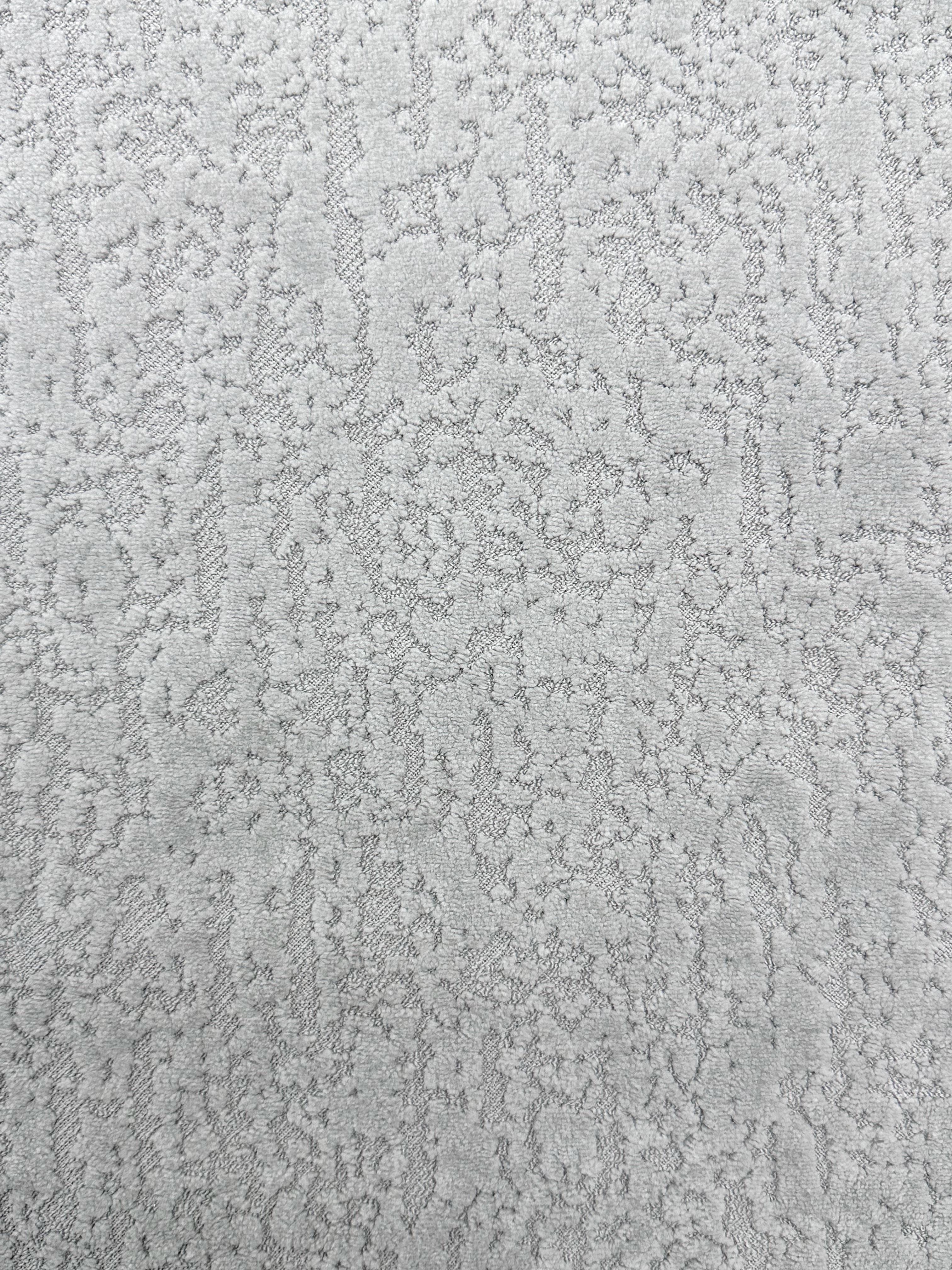
Composition tells you what the weight is made of. Most articles in the range are 100% polyester — OYD3626, OYD3591, OYD2919, OYD2992, OYD3120 and OYD3618. The woven boucle OYD3229 is a blend of 90% polyester and 10% acrylic, and OYD3235 combines 80% polyester, 14% acrylic and 6% cotton.
Blends alter hand, drape and texture independently of GSM. A buyer comparing a 420±10 GSM 100% polyester chenille against a 620±10 GSM blend boucle is comparing two different commercial propositions, not two points on a single scale.
Certification labels — GRS and OEKO-TEX
Certification answers a different question from weight. The two labels that appear across the range carry specific meanings:
- GRS (Global Recycled Standard) — certification relating to sustainable recycled material.
- OEKO-TEX — certification for safe textile.
Both are supplier-level credentials that a buyer should be able to trace to a batch, and neither substitutes for a weight or performance specification. A fabric can carry both certifications and still be the wrong weight for a project. Equally, a correct GSM figure does not imply any certification at all.
Step-by-Step Breakdown: Reading a 420 GSM Sofa Fabric Spec Sheet
- Read the weight line first, including the tolerance. Note both the value and the band. 420±10 GSM and 400±10 GSM are adjacent, not interchangeable.
- Confirm usable width. Check the width and its tolerance against your existing cutting plan. At 142±2 cm the tolerance is small, but it still belongs in the marker.
- Identify the construction family. Chenille, boucle, velvet, woven or jacquard velvet — each behaves differently at the same weight.
- Read the composition. 100% polyester and 90% polyester / 10% acrylic are different materials with different hands and different commercial terms.
- Check the functional finishes. Look specifically for water-repellent, stain-resistant, easy-clean and fire-retardant claims, which are recorded separately from GSM.
- Match the certifications. Confirm which of GRS and OEKO-TEX apply to the exact article being ordered.
- Map the specification to the end use. A 420 GSM chenille for modern large sofas and soft beds is a different brief from a 620 GSM boucle for Italian-style accent chairs.
Run in this order, the sequence takes a few minutes and prevents the most expensive category of sourcing error — ordering the right weight for the wrong application.
Use Cases: Where 420 GSM and Nearby Weights Fit
Large sofas and modular seating
OYD2992 and OYD3120, both 420±10 GSM 100% polyester chenille at 142±2 cm, are designed for modern-style large sofas and upholstered soft beds. Each article is available in 26 colourways, which supports the multi-piece colour coordination that modular seating programmes usually require.
Upholstered soft beds
The same 420 GSM chenille articles are intended for upholstered soft beds, where fabric has to drape over curved headboard forms rather than hold a flat panel.
Hotel and hospitality projects
Hospitality briefs generally pull in the heavier end of the range. OYD3618, a 450±10 GSM jacquard velvet, and OYD3229, a 620±10 GSM woven boucle, are both specified for hotel project use, with OYD3229 applied to high-end Italian-style accent chairs. OYD2992 and OYD3120 are also listed for hotel project applications.
Interior design and home decor
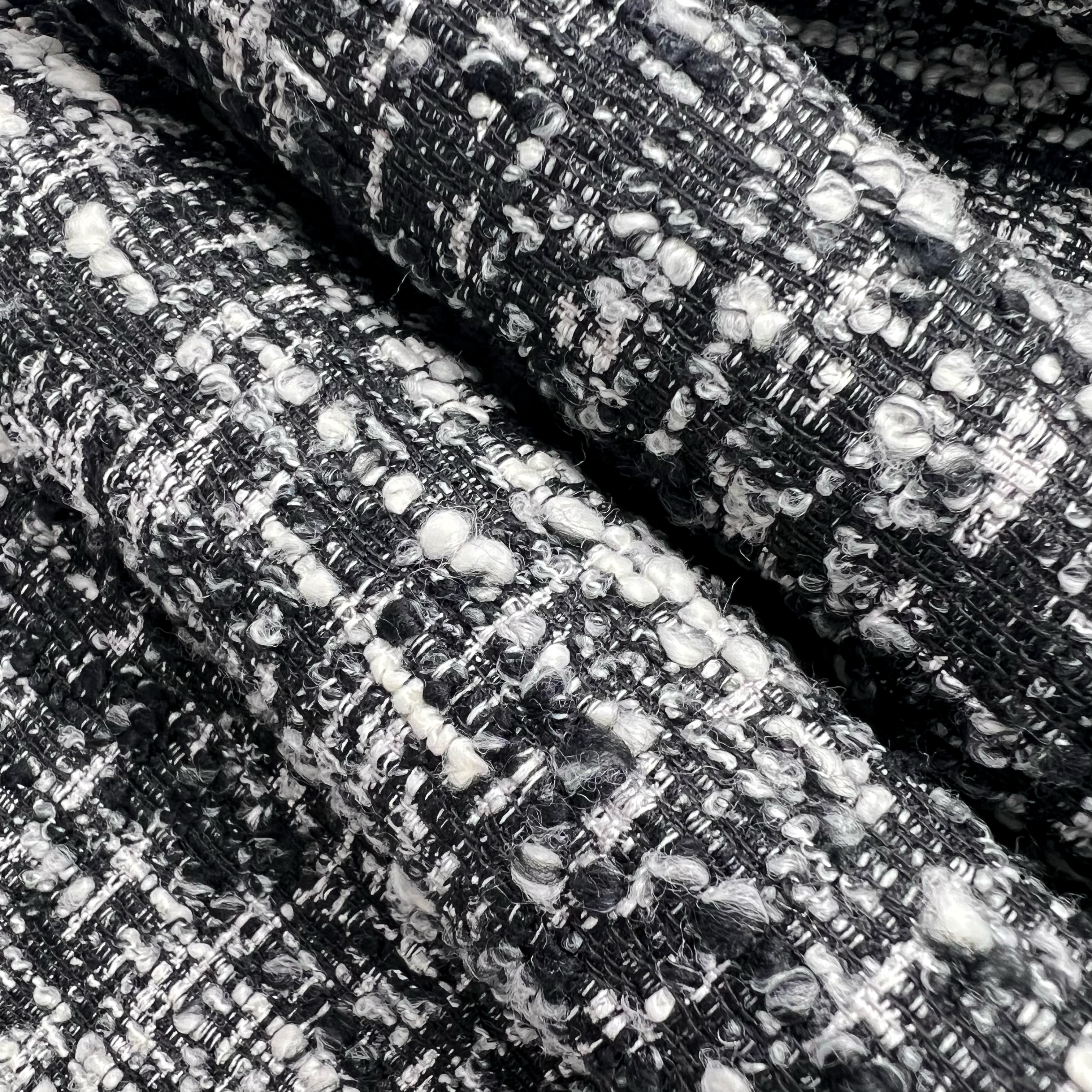
Design-led work uses the full band. A designer specifying OYD3626 at 350±10 GSM for a lighter seat and OYD2992 at 420±10 GSM for a heavier frame is working within one collection at two weights, with a consistent 142±2 cm width across both.
Comparison Table: Representative OYD Sofa Fabric Weights
The table below compares articles inside one sourcing frame. Weight, usable width and composition are stated as published specifications; typical fit reflects the end uses declared for each article.
| Art. No. | Composition | Weight | Usable width | Construction | Typical fit |
|---|---|---|---|---|---|
| OYD3626 | 100% Polyester | 350±10 GSM | 142±2 cm | Chenille plain | Modern-style sofas and beds, indoor upholstery |
| OYD3591 | 100% Polyester | 400±10 GSM | 142±2 cm | Chenille plain, two-tone | Modern large sofas, soft beds |
| OYD2919 | 100% Polyester | 400±10 GSM | 142±2 cm | Chenille plain | Modern-design large sofas, soft beds |
| OYD2992 | 100% Polyester | 420±10 GSM | 142±2 cm | Chenille | Modern-design large sofas, soft beds |
| OYD3120 | 100% Polyester | 420±10 GSM | 142±2 cm | Chenille | Modern-design large sofas, soft beds |
| OYD3618 | 100% Polyester | 450±10 GSM | 142±2 cm | Jacquard velvet | Large sofas, soft upholstered beds, hotel projects |
| OYD3235 | 80% Polyester, 14% Acrylic, 6% Cotton | 600±10 GSM | 142±2 cm | Jacquard circular knit | Hotel projects, home decor, interior design |
| OYD3229 | 90% Polyester, 10% Acrylic | 620±10 GSM | 142±2 cm | Woven boucle | High-end Italian-style accent chairs, hotel upholstery |
Read the table vertically rather than horizontally. Every row shares the same 142±2 cm width, which makes the weight column directly comparable across articles. The composition and construction columns, however, are not comparable — they describe different materials built in different ways, which is why a 620 GSM boucle and a 420 GSM chenille cannot be ranked against one another on the basis of weight alone.
Frequently Asked Questions
Does GSM determine whether a sofa fabric is compliant?
No. GSM is a physical specification, not a compliance standard. In sofa fabric sourcing, compliance comes from certification labels together with the fire-safety rules the fabric is required to satisfy in its final market. OYD Textile articles carry GRS (Global Recycled Standard) certification for sustainable recycled material and OEKO-TEX certification for safe textile where applicable, and fire-retardant performance is recorded as a separate specification line. On the regulatory side, the UK Furniture and Furnishings (Fire) (Safety) (Amendment) Regulations 2025 came into force in October 2025, removing the display label requirement and shifting obligations to permanent labels, so buyers supplying the UK market should request permanent label documentation rather than relying on display labels. Weight and compliance are two independent lines on the same sheet.
What is the practical difference between 400, 420 and 450 GSM sofa fabric?
The three values sit 20 to 50 grams apart in area density, and the difference shows up in hand and drape when construction is held constant. Within the OYD Textile range, 400±10 GSM is represented by the chenille plain articles OYD3591 and OYD2919, 420±10 GSM by the chenille articles OYD2992 and OYD3120, and 450±10 GSM by OYD3618, a jacquard velvet. The 420 GSM figure sits in the mid-to-heavy band. Unless two fabrics are compared at the same construction, finish and end use, weight alone does not establish that one is better than another.
Does a higher GSM always mean a higher price?
No. Weight is one input among several, and it does not act alone. Fibre composition, construction, finishing treatment and order volume all influence commercial terms. A 620±10 GSM woven boucle in 90% polyester and 10% acrylic and a 420±10 GSM 100% polyester chenille are different products with different structures, so their quotations are not directly comparable. The productive approach is to compare offers line by line — weight, usable width, composition, finish and certification — rather than treating GSM as a price proxy. Typical order volume is 500–1000 metres per colour, with a stable lead time of 20–30 days after deposit receipt.
Can I sample a 420 GSM fabric before placing a bulk order?
Yes. Free fabric samples are available for evaluation before bulk order. Because GSM tolerance and handfeel can only be judged physically, a sample is the practical way to confirm that a 420 GSM article meets a project specification. OYD Textile also supports flexible OEM and ODM customisation, including custom patterns, colours, weight, width and special finishing such as waterproof and anti-fouling treatment. Stock goods and custom orders are quoted under different terms, so it is worth confirming both routes before committing.
What are the MOQ and lead time for 420 GSM sofa fabric?
Typical MOQ is 500–1000 metres per colour, with a stable lead time of 20–30 days after deposit receipt. Custom patterns or colours carry a higher minimum order quantity, since the requirement depends on yarn and dyeing conditions. Exact parameters, MOQ and scheduling are confirmed by the sales team before a formal order. To move from reading specs to evaluating fabric, the quickest route is to request a 420 GSM sample and a current quotation directly.
Conclusion: Read Four Lines, Not One
420 GSM means 420 grams per square metre, and on a sofa fabric specification it sits inside a tolerance, beside a width, above a composition and alongside a set of certification labels. Each of those lines answers a different question. Weight answers how much mass covers a square metre. Width answers how much of the roll a cutting room can use. Construction answers how the cloth is built. Composition answers what it is made of. Certification answers what can be documented.
Read together, they let a buyer place a fabric accurately: a 350±10 GSM chenille plain for a lighter seat, a 420±10 GSM chenille for modern-design large sofas and upholstered soft beds, a 450±10 GSM jacquard velvet or a 620±10 GSM woven boucle for hospitality and high-end accent seating — all on a consistent 142±2 cm platform.

Next Step: Sample, Catalogue or Quotation
If a 420 GSM chenille, a 450 GSM jacquard velvet or a 620 GSM boucle matches your project brief, the fastest way to confirm it is in the hand rather than on the sheet.
- Download the OYD Textile product catalogue (PDF)
- Request free fabric samples for evaluation before bulk order
- Ask for a quotation with weight, usable width, composition and finishing confirmed per article
OYD Textile — Haining OuYuda Textile Co., Ltd.
Website: www.sofafabricchina.com
Email: sofacloth@ouyudatex.com
Tel / WhatsApp: +86 18857316802 / +86 17398517293
Address: NO.150 XuCun Road, XuCun Town, Haining City, Zhejiang Province, China
Have Questions or Need More Details?
Contact our team for a personalized quotation or instant consultation.
Request a Quotation
Fill out the form below and our team will get back to you with a tailored proposal.
WhatsApp Direct Chat
Prefer to chat in real-time? Message us on WhatsApp for instant assistance & quick answers.
- Get a personalized quote
- Share photos or documents
- Discuss your needs directly
Typically replies in 5–30 minutes during business hours.