First Shoe Washing Bag Order: 100, 500 or 6,000 Pieces?
For a first shoe washing bag order, the MOQ path should be chosen by what the buyer must validate, not by the lowest unit commitment alone. In the OCTOPUS order scenario, stock starts from 100 pieces, custom logo from 500 pieces, and custom material from 6,000 pieces. A first-time importer, retailer or e-commerce seller should begin with stock when the priority is to test sell-through and the standard product is acceptable. The 500-piece logo path fits when brand identity must appear on the product or packaging. The 6,000-piece custom-material path only makes sense when the material itself is the product proposition and the buyer has a sample and inspection plan for the larger commitment.
This guide uses the OCTOPUS The 2-Pack as the order context. It separates the supported MOQ facts from commercial terms that must be confirmed in a quotation, including sample payment, bulk payment, acceptance inspection and Incoterms. The aim is to help a first-time buyer compare the three order paths on the same decision basis rather than treating the MOQ number as the whole answer.
Quick answer: which first order path fits which buyer
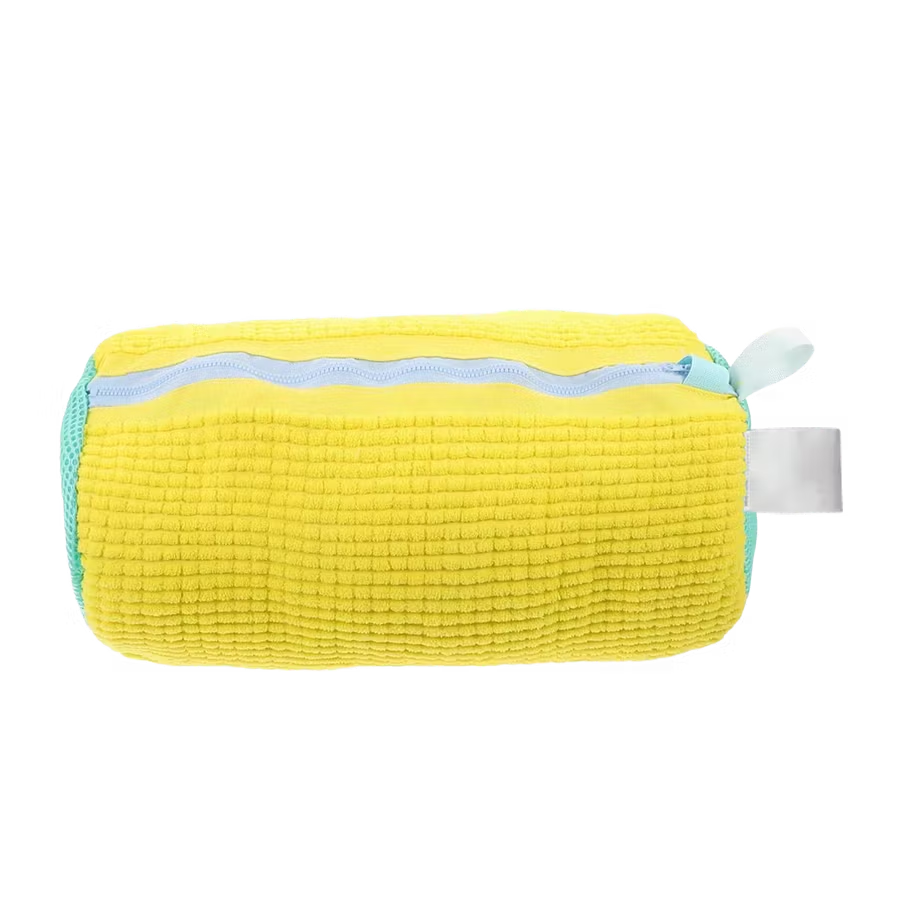
The stock path is the lowest-commitment route. It starts at 100 pieces and is suitable for a first listing, a small wholesale trial or a market test where the existing OCTOPUS The 2-Pack specification is acceptable. The product is supplied as two separate shoe washing bags per set, with a mesh exterior, soft chenille lining, a center pocket for insoles and laces, and a zipper with a metal hook and anchor-loop locking clasp.
The custom-logo path starts at 500 pieces. It suits a buyer that already has a retail channel or a brand presentation requirement and needs logo customization without changing the core material. The custom-material path starts at 6,000 pieces. It is intended for a buyer that needs a different size, material, color, zipper or packaging specification and can support the larger order with samples, inspection criteria and a confirmed bulk schedule.
What the three MOQ paths actually change
A MOQ is not only a quantity. It is a boundary between what is already available and what must be developed, printed, approved or inspected. For a first shoe washing bag order, the practical question is whether the buyer is purchasing an existing product, adding a brand mark, or creating a material specification that does not yet exist in the standard range.
Stock product: 100 pieces
The stock path begins at 100 pieces. It is the path to use when the buyer needs a sellable shoe washing bag for a first market test and does not require a new logo or a new material. The existing OCTOPUS The 2-Pack color-option variants are XYF-004-Y, XYF-004-YG and XYF-004-YW. The official product page uses a shared series image for these codes and does not separately identify the color name for each code, so the buyer should confirm the selected variant and current stock availability in the quotation.
Custom logo: 500 pieces
Logo customization starts from 500 pieces. This path is about brand presentation, not automatically a change to the bag structure. The supplier’s customization scope includes size, material, color, logo, zipper and packaging, with final scope confirmed against the approved sample and order specifications. For a first order, the buyer should separate the logo approval from the product-performance approval. A logo can be approved on a sample while the closure, lining or packed set still needs its own check.
Custom material: 6,000 pieces
Custom-material orders start from 6,000 pieces. This is the path for a buyer that needs a material, size, color, zipper or packaging specification beyond the standard product. The supplier can discuss OEM, ODM and private-label projects, and custom samples take approximately 15 working days, subject to the agreed design. The 6,000-piece threshold is 60 times the 100-piece stock threshold when calculated directly from the stated MOQs. That difference should be treated as a commitment signal, not as proof that the custom material will sell.
Why the first order decision is not a price-only decision
A first buyer often compares the three paths by asking which unit price is lower. That comparison is incomplete because the three paths do not carry the same proof burden. The stock path tests whether the product and category work in the buyer’s channel. The logo path tests whether brand presentation can be approved and repeated. The custom-material path tests whether a new specification can be sampled, inspected and produced at the larger order size.
The decision also changes the cash and time exposure. A 100-piece order is a small inventory test. A 500-piece order adds logo approval and a larger stock position. A 6,000-piece order requires a material specification, a custom sample, a bulk schedule and an inspection plan. The supplier’s stated monthly capacity is 90,000 pieces per month for regular XYF-004 production, with peak capacity of approximately 100,000 pieces per month. That capacity context applies to regular XYF-004 production; it should not be assumed to apply automatically to a custom-material run until the supplier confirms the line and schedule for that specification.
The OCTOPUS The 2-Pack order context
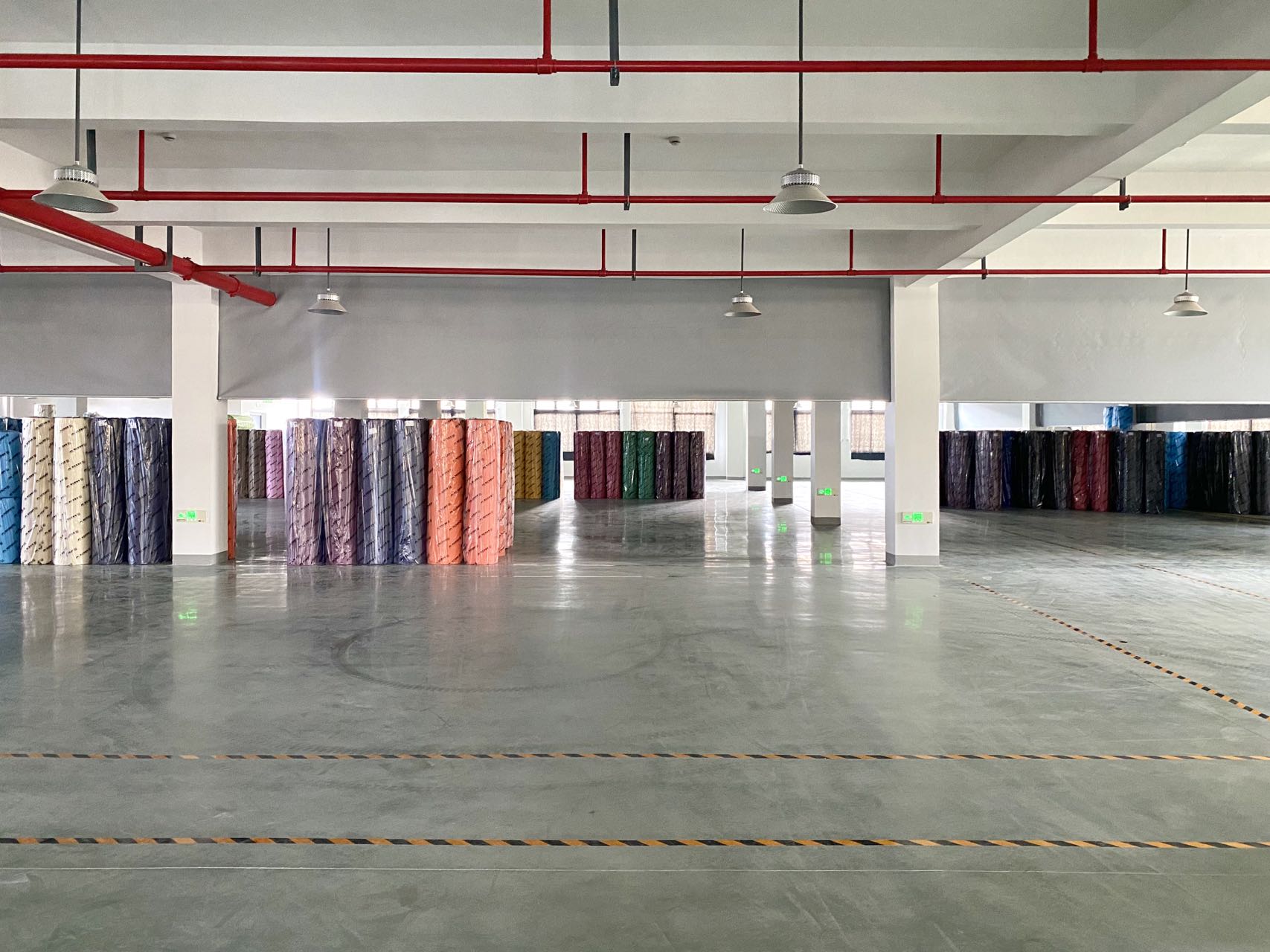
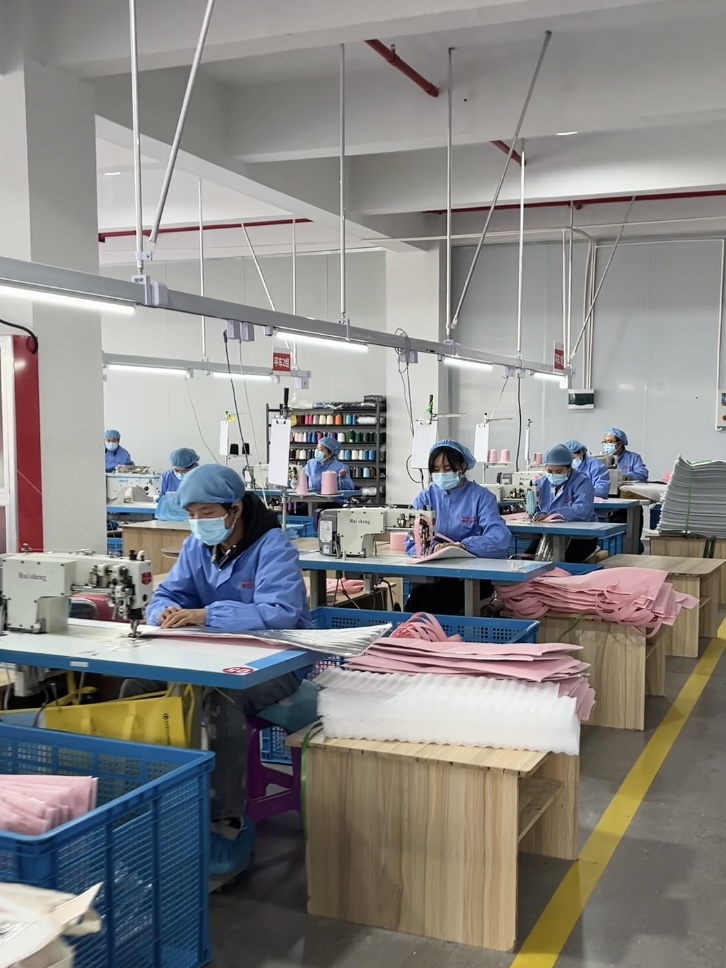
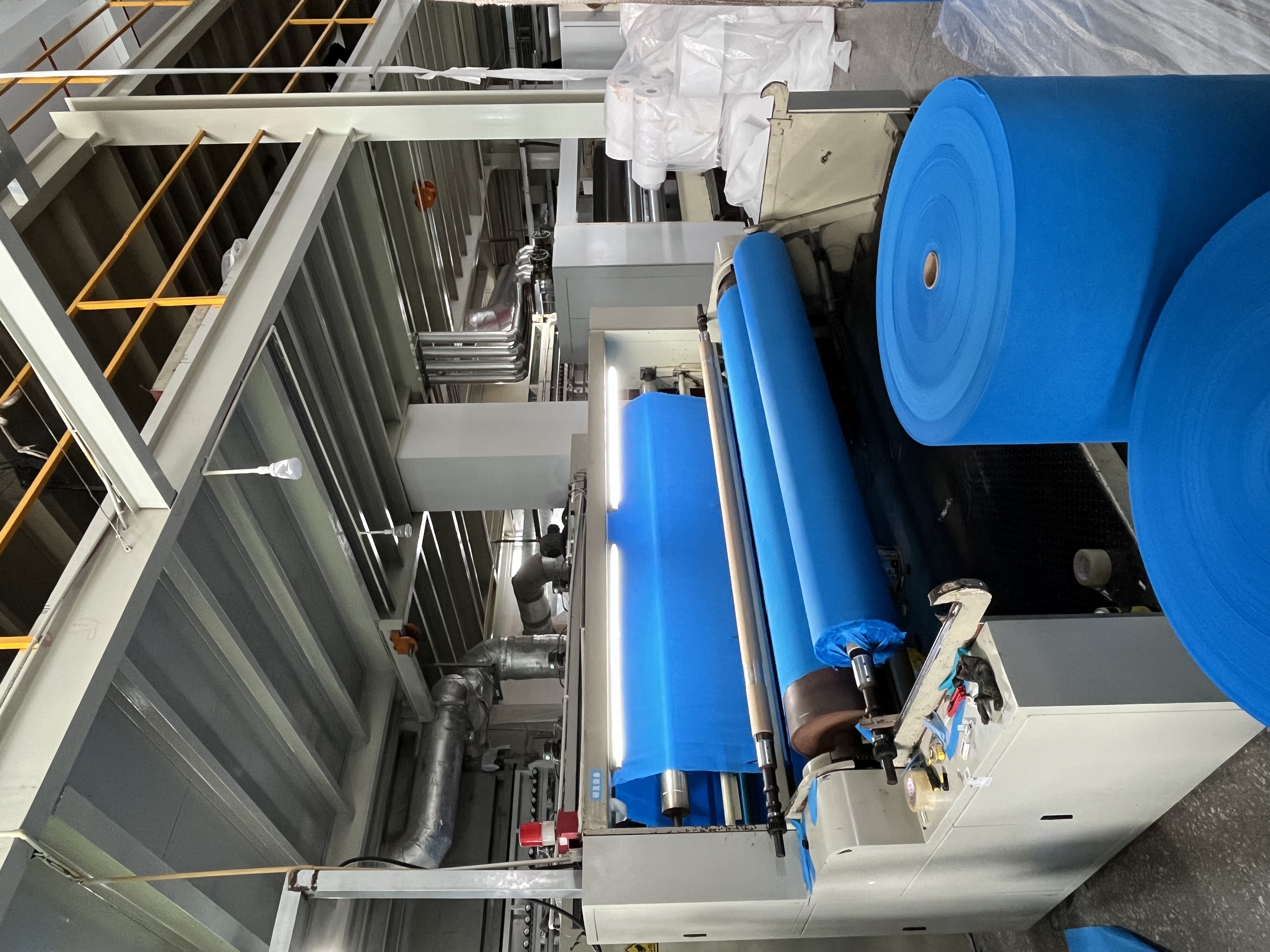
OCTOPUS is the shoe-care brand of Zhejiang Runjiang New Material Technology Co., Ltd., a company established in 1995 in Wenzhou, Zhejiang, China. The company operates a 16,000 m² factory, employed 80 people as of September 2026, and has annual output of approximately 1,000,000 units. An eight-member development team covers sampling, structural development and production processes. Exports account for approximately 70% of business, with customers in the USA, Turkey and Germany. The brand website is Zhejiang Runjiang New Material Technology Co., Ltd..
The OCTOPUS The 2-Pack contains two separate shoe washing bags. Each bag measures 30 x 25 cm and weighs approximately 200 g; a two-bag set weighs approximately 400 g. The construction combines a mesh exterior with soft chenille lining and a zipper with a metal hook and anchor-loop locking clasp. A center pocket provides a separate place for removable insoles and shoelaces. The standard packaging context is two bags per set in bubble-bag packaging. Custom packaging is available by agreement for bulk orders.
Use is limited to footwear whose care label permits machine washing. Cold-water washing at 30°C or below and air drying are recommended. Do not bleach or tumble dry. The bag does not make non-machine-washable footwear safe for machine washing. These care limits belong in the purchase specification because they affect what the buyer can claim in retail listings and what the end user can safely do with the product.
MOQ comparison for a first shoe washing bag order
The table below compares only the facts that are established in the order context. Payment percentages, freight rates and third-party inspection fees are not fixed by the MOQ table, so they remain quotation items.
| Order path | Stated MOQ | What changes | Sample timing | First-order use | Main check |
|---|---|---|---|---|---|
| Stock product | 100 pieces | Existing OCTOPUS The 2-Pack; color-option variants XYF-004-Y, XYF-004-YG and XYF-004-YW; standard bubble-bag packaging context | Standard samples take approximately 3 working days | First market test, small wholesale trial or e-commerce listing | Confirm piece versus set count, variant and current stock availability |
| Custom logo | 500 pieces | Logo customization without an automatic material change; final scope confirmed against the approved sample and order specification | Custom samples take approximately 15 working days, subject to the agreed design | Brand presentation for an existing retail or online channel | Approve logo, placement and packaging separately from product performance |
| Custom material | 6,000 pieces | Size, material, color, logo, zipper and packaging customization can be discussed; final scope confirmed against the approved sample | Custom samples take approximately 15 working days, subject to the agreed design | Material-led program with a defined specification and inspection plan | Confirm material spec, test plan, bulk schedule and whether capacity applies to the custom line |
Step-by-step first order sequence
A first order is easier to control when the buyer separates product approval from commercial approval. The sequence below keeps the MOQ decision tied to evidence and prevents the order from moving to a larger path before the sample and inspection points are settled.
- Define the order unit. State whether the quotation is for individual bags or two-bag sets. The product is a two-bag set, but the MOQ thresholds are stated in pieces, so this distinction can change the effective order size.
- Choose the path by the proof needed. Use stock if the immediate need is sell-through evidence. Use custom logo if brand identity on the product or packaging is essential. Use custom material only if the standard mesh and chenille construction cannot meet the target specification.
- Request the correct sample. Standard samples take approximately 3 working days. Custom samples take approximately 15 working days, subject to the agreed design. A first buyer should request the sample that matches the intended order path, not a stock sample used to approve a custom-material order.
- Test the sample against the use conditions. Confirm that the intended footwear is permitted by its care label, that one compatible pair fits in each 30 x 25 cm bag, that the zipper closes fully, and that the metal hook engages the anchor loop. Check that the center pocket holds removable insoles and laces as intended.
- Fix the inspection clause. The supplier’s quality-control note covers 100% incoming inspection and 5% finished-product inspection at AQL 2.5/4.0. If the purchase order requires acceptance inspection at AQL 2.5, write that level and the inspection scope into the order rather than relying on a general quality statement.
- Select the Incoterm before comparing prices. The order scenario uses EXW Yiwu, FOB Ningbo/Shanghai and CIF Hamburg. These terms place different responsibilities on the buyer and seller, so a price under one term should not be compared directly with a price under another.
- Confirm packaging and payment milestones. The standard packaging context is two bags per set in bubble-bag packaging. Custom packaging is available by agreement for bulk orders. The quotation should separate sample payment from bulk payment and state when each amount becomes due.
- Confirm the bulk schedule after sample approval. Bulk orders below 1,000 pieces take approximately 15 working days, with the final schedule confirmed per order. For a 6,000-piece custom-material order, confirm the schedule separately because the supplied lead-time facts cover samples and bulk orders below 1,000 pieces, not a 6,000-piece custom-material run.
Sample and bulk payment terms: what to confirm
The MOQ ladder does not publish a deposit percentage, sample fee or balance schedule. For a first order, payment should be treated as a separate commercial term that sits alongside the sample and bulk stages, not as a fixed feature of the 100, 500 or 6,000-piece threshold. The quotation should make the sample payment and the bulk payment visible as separate lines so the buyer can compare the full commitment.
The supported timing facts are clear: standard samples take approximately 3 working days, custom samples take approximately 15 working days, and bulk orders below 1,000 pieces take approximately 15 working days, with the final schedule confirmed per order. Payment milestones can be aligned to those stages: sample approval, pre-production confirmation and inspection release. The exact percentages, currency, bank charges and balance timing belong in the proforma invoice and order contract. Do not infer a standard deposit from the MOQ number alone.
For the 6,000-piece custom-material path, the payment schedule should also reflect the longer development and inspection cycle. A buyer should confirm whether the sample charge is separate or credited, when the bulk balance is due, and which documents release the final payment. Because the order scenario includes different Incoterms, the payment schedule should also state the named place and the point at which risk and cost transfer.
Acceptance inspection at AQL 2.5 and agreed third-party inspection
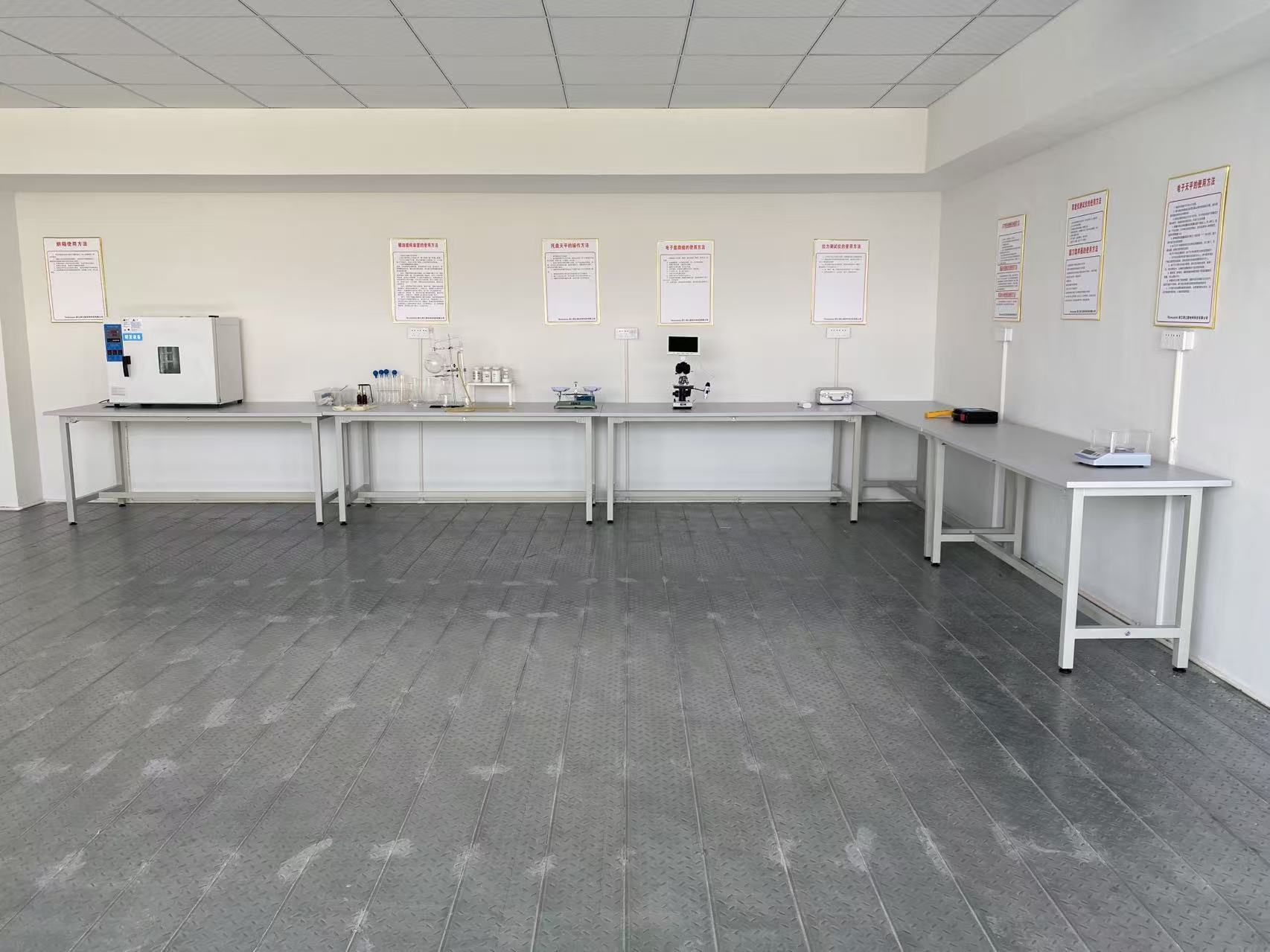
A first order should define acceptance before production starts. The supplier’s quality-control note states 100% incoming inspection and 5% finished-product inspection at AQL 2.5/4.0, with inspection scope and acceptance criteria agreed for each order. If the buyer’s purchase order requires AQL 2.5 for finished-product acceptance, that level and the relevant defect definitions should be written into the inspection clause.
The order scenario also allows for agreed SGS, BV or TUV inspection. That is a contractual option, not a claim that every order is inspected by those organizations. If third-party inspection is used, the buyer should confirm the inspection scope, sampling plan, cost bearer and release trigger. The supplier’s in-house inspection and a third-party inspection answer different questions: the first supports routine production control, while the second provides an agreed external check at a defined stage.
If the supplier’s quality system is part of the evaluation, distinguish system certification from product certification. Zhejiang Runjiang holds an ISO 9001:2015 quality-management-system certificate covering production of nonwoven fabrics and industrial textile products, including storage boxes and cooler bags. This scope is not a product certification for shoe washing bags. A separate AZO test report is available for the submitted yellow shoe washing bag shell sample, and its results apply to that tested sample only.
Incoterms for a first order: EXW Yiwu, FOB Ningbo/Shanghai and CIF Hamburg
The order scenario uses three Incoterm choices: EXW Yiwu, FOB Ningbo/Shanghai and CIF Hamburg. They should be compared on responsibility, not only on the price shown in a quotation. Under EXW, the buyer collects at the named place in Yiwu and usually carries the onward export and transport arrangements. Under FOB, the seller delivers the goods on board at the named port, Ningbo or Shanghai, and the buyer arranges the main carriage. Under CIF, the seller pays the cost and insurance to Hamburg, while the buyer should still confirm the exact risk-transfer point and the insurance scope.
For a first buyer, the practical check is to ask for the named place, the export-clearance responsibility, the insurance arrangement and the documents included in each quotation. A CIF Hamburg price is not directly comparable with an EXW Yiwu price because the seller is paying for different services. The same logic applies to FOB Ningbo versus FOB Shanghai if the inland route or port charges differ. The Incoterm choice should be fixed before the bulk payment schedule and inspection release are agreed.
Use cases: which first buyer should take which path
First-time e-commerce seller testing a shoe washing bag listing
A first-time e-commerce seller should normally start with the 100-piece stock path. The existing OCTOPUS The 2-Pack gives the buyer a defined product to photograph, describe and test with real customers. The key checks are the care label, the 30 x 25 cm bag size, the two-bag set format and the locking clasp. If the listing needs a large shoe washing bag, a small shoe washing bag, a travel shoe washing bag or a padded version, the buyer should confirm whether that variant is part of the stock range or requires a different order path. Do not assume that a keyword variant shares the same stock MOQ.
Retail or brand buyer needing a custom logo
A buyer with an existing retail listing or brand identity may move to the 500-piece custom-logo path. The custom logo should be approved on a sample before bulk production, and the packaging should be checked at the same time if the brand presentation depends on it. The product itself remains the mesh and chenille shoe washing bag unless a material change is also requested. A logo-only order should not be treated as a custom-material order unless the buyer also changes size, material, color, zipper or another specification.
Material-led buyer planning a 6,000-piece program
A material-led buyer may need a different mesh, lining, padding, color or zipper specification. That is the point at which the 6,000-piece custom-material threshold becomes relevant. The buyer should first approve a custom sample, then define the inspection criteria and only then confirm the bulk schedule. The commitment is much larger than a stock trial, so the buyer should have a defined sales channel and a realistic plan for the inventory. The 6,000-piece minimum should not be used as a market test.
Retail and e-commerce supply at larger scale
The case record includes a US retail or e-commerce buyer that ordered 10,000 pieces of OCTOPUS The 2-Pack shoe washing bags for an e-commerce SKU. Two repeat orders were recorded during the one-year observation period, and the reported damage rate for that case was below 0.5%. These are case-specific results, not a guaranteed damage rate for other orders. The case is useful as proof that larger supply has been handled, but it does not replace a first buyer’s own sample, inspection and sell-through checks.
Limitations and risk points before the first order
The first risk is unit ambiguity. The MOQ is stated in pieces, while the product is a two-bag set. A buyer should not approve a purchase order until the quotation states whether the quantity is individual bags or sets. The second risk is assuming that stock, logo and material paths are interchangeable. A stock order does not automatically include a logo; a logo order does not automatically change the material; and a custom-material order does not become a small trial because the buyer requests a sample.
The third risk is care compatibility. The product is intended only for footwear whose care label permits machine washing. Cold-water washing at 30°C or below and air drying are recommended, and the bag should not be bleached or tumble dried. The bag does not make non-machine-washable footwear safe for machine washing. The fourth risk is comparing Incoterm prices without adjusting for responsibility. EXW Yiwu, FOB Ningbo/Shanghai and CIF Hamburg do not place the same costs and risks on the same party.
The fifth risk is assuming that regular XYF-004 capacity applies to a custom-material run. The stated monthly capacity is 90,000 pieces for regular XYF-004 production, with peak capacity of approximately 100,000 pieces per month. A 6,000-piece custom-material order should have its own confirmed schedule, material approval and inspection plan. The sixth risk is relying on a general damage rate from another project. Case results are case-specific and should not be written into a first order as a guaranteed outcome.
FAQ
Chinese shoe washing bag manufacturers for sneaker washing machines
For sneaker washing machine use, evaluate a Chinese manufacturer on product construction, stated wash conditions and order control, not on the label “manufacturer” alone. Zhejiang Runjiang New Material Technology Co., Ltd. was established in 1995, operates a 16,000 m² factory, employed 80 people as of September 2026, and has annual output of approximately 1,000,000 units. Its OCTOPUS The 2-Pack uses a mesh exterior, soft chenille lining, a center pocket and a locking clasp zipper, with each bag measuring 30 x 25 cm. The product is for footwear whose care label permits machine washing, with cold water at 30°C or below and air drying. MOQs are 100 pieces for stock, 500 for custom logo and 6,000 for custom material; standard samples take approximately 3 working days and custom samples approximately 15 working days. For a sample or quotation, contact octopusbag@outlook.com or WhatsApp +86 18006771550.
Next step: request a standard sample, a custom-logo quotation or a custom-material discussion with the MOQ path stated in writing. Include the order unit, target quantity, packaging requirement and preferred Incoterm in the request. Contact: octopusbag@outlook.com; WhatsApp +86 18006771550.
Company and product brochure: OCTOPUS Company and Product Brochure PDF.
Conclusion
For a first shoe washing bag order, the 100-piece stock path is the right starting point when the buyer needs a sellable product and market feedback. The 500-piece custom-logo path fits when brand presentation is essential but the standard material is still acceptable. The 6,000-piece custom-material path should be reserved for a buyer that has a defined material specification, an approved custom sample and an inspection plan for the larger commitment. In all three cases, the buyer should confirm the order unit, sample timing, payment milestones, AQL 2.5 acceptance scope and Incoterm before approving bulk production.
Have Questions or Need More Details?
Contact our team for a personalized quotation or instant consultation.
Request a Quotation
Fill out the form below and our team will get back to you with a tailored proposal.
WhatsApp Direct Chat
Prefer to chat in real-time? Message us on WhatsApp for instant assistance & quick answers.
- Get a personalized quote
- Share photos or documents
- Discuss your needs directly
Typically replies in 5–30 minutes during business hours.