Shoe Washing Bag Guide: Validating Capacity, Lining, Closure
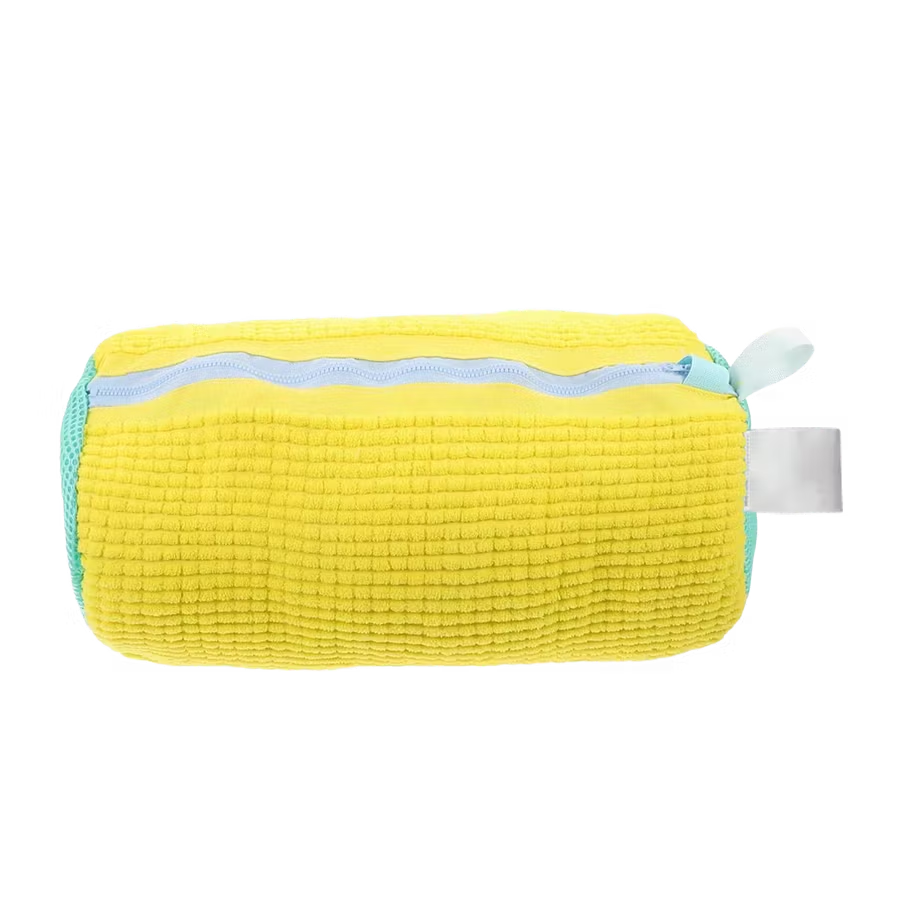
A shoe washing bag is suitable for a particular pair of shoes only when three things check out: one complete pair fits without strain, the shell and lining suit the shoe and the wash cycle, and the closure stays shut for the full cycle. For the OCTOPUS Shoe Washing Bag, supplied as OCTOPUS The 2-Pack, those three points map to stated values of 30 x 25 cm per bag, one compatible pair per bag, approximately 200 g per bag, a mesh exterior, a chenille lining, and a zipper with a metal hook and anchor-loop locking clasp.
This guide is written for wholesale buyers, retail product managers and sourcing teams working between Evaluation and Execution: a candidate bag has been shortlisted, and the specification has to survive both sample approval and the order specification that follows. Each section below states what a parameter governs, the check that confirms it, and the limit of what the evidence supports, including what the locking clasp does and does not do.
What each of the three parameters decides
Capacity decides compatibility. Three values do the work: the panel size (30 x 25 cm), the pair count (one compatible pair per bag) and the bag's own weight (approximately 200 g). Together they define how much footwear goes into one bag, how much weight one bag adds to a wash load, and therefore how many bags a given load needs.
Shell and lining decide the two surfaces in contact with the shoe. The outer panel is a mesh exterior; the inner surface is a chenille lining. Both are construction facts stated for the product, and both are confirmed by inspecting an approved sample rather than by reading a data sheet alone.
Closure decides whether the packed bag stays closed during the cycle. The specified closure is a zipper with a metal hook and anchor-loop locking clasp. The hook fastens to the bag's anchor loop to secure the closed zipper; it does not anchor the bag to the washing machine, and it does not stop the bag from tumbling.
The verified parameter set for the OCTOPUS Shoe Washing Bag
Table 1 collects the stated values beside the buyer-side check that confirms each one. The values are manufacturer-stated product specifications; the checks convert them into an approval decision, and every check can be completed on a single sample.
| Parameter | Stated value (OCTOPUS The 2-Pack) | What it governs | Buyer check |
|---|---|---|---|
| Panel size | 30 x 25 cm per bag | Whether the target shoe fits against the panel | Measure the shoe; trial-fit the sample |
| Pair count | One compatible pair per bag | Load per bag and bags needed per wash | Pack both shoes of one pair in one bag |
| Bag weight | Approximately 200 g per bag | Tare weight for shipping and incoming checks | Weigh the sample on a scale |
| Outer shell | Mesh exterior | Outer panel construction; water and air passage | Visual and seam inspection |
| Lining | Chenille lining | Inner contact surface against the shoe | Check coverage and seam attachment |
| Closure | Zipper with metal hook and anchor-loop locking clasp | Keeps the zipper closed during the cycle | Close zipper, engage hook, inspect anchor stitching |
| Accessory storage | Center pocket for removable insoles and shoelaces | Keeps small items with the pair | Place insoles and laces in the pocket |
| Care conditions | Cold water; air dry; no bleach; no tumble dry; only footwear whose care label permits machine washing | Whether the wash is permitted at all | Check the footwear care label first |
Table 1. Stated parameters for the OCTOPUS Shoe Washing Bag and the check each one requires.
Why a published capacity figure is hard to compare across suppliers
Capacity is the parameter most often compared and least often comparable. Published product information for shoe washing bags uses at least three formats, and none converts automatically into another. One German product listing states a maximum shoe size, one pair up to EU size 47, rather than a panel measurement. Two US retail listings state external dimensions in inches, 17 x 7.5 in and 15.7 x 7.5 in, without stating a shoe size. OCTOPUS states a metric panel size plus an explicit pair count.
| Product (source type) | Published capacity statement | Published size and material statement | Published care statement |
|---|---|---|---|
| OCTOPUS Shoe Washing Bag, OCTOPUS The 2-Pack (manufacturer specification) | One compatible pair per bag | 30 x 25 cm; approximately 200 g per bag; mesh exterior, chenille lining | Cold water; air dry; no bleach; no tumble dry |
| Oceanwash shoe laundry bag (brand product page, Germany, 2026) | One pair up to EU size 47 | 100% chenille (PES) with long-pile microfiber lining | Washable up to 60 degrees Celsius; suitable for tumble drying |
| Numhew shoe washing bag (retail listing, United States, 2026) | Not stated as a pair count | 17 x 7.5 in; polyester; breathable sandwich mesh with microfiber layers; invisible zipper | Not stated in the collected listing |
| Garnen shoe washing bag (retail listing, United States, 2026) | Not stated as a pair count | 15.7 x 7.5 in; mesh; zipper closure | Not stated in the collected listing |
Table 2. How four products publish capacity and care information. External rows are commercial product-listing statements collected in 2026, not independent performance tests; the products differ in construction, measurement convention and stated care limits, so the rows are not a like-for-like performance comparison.
Each format answers a different question. A pair count answers how many shoes go in, a dimension answers how big the panel is, and a maximum shoe size answers what fits. A buyer holding only one of the three is guessing at the other two. The practical rule is to request panel dimensions, pair count and a target shoe size in the same document, then confirm the combination on a physical sample with the actual shoe.
Care instructions are just as product-specific. The German listing states a bag washable up to 60 degrees Celsius and suitable for tumble drying. The OCTOPUS instructions run the other way: cold water, air drying, no bleach and no tumble drying. Neither statement is a defect; they are instructions for different constructions, and mixing them is a predictable source of returns. A retail range that carries more than one construction needs a care line written per SKU, not inherited from the category.
Step 1: Validate capacity against the actual shoe
Capacity is confirmed by fitting the shoe, not by reading the bag size. The sequence below runs on one sample and one target pair in under half an hour, and it produces the numbers that later go into the order specification.
- Start with the footwear care label. Machine washing must be permitted before any bag is involved. The bag does not make a non-washable shoe washable, and no capacity check changes that.
- Measure the shoe, not the size tag. Record heel-to-toe length, the widest point, and height at the heel counter and collar. Two shoes of the same nominal size can differ enough to change the fit.
- Compare the shoe with the 30 x 25 cm panel. For reference, 30 x 25 cm is approximately 11.8 x 9.8 in (calculated conversion at 2.54 cm per inch). The verified specification gives panel size and pair count but not a maximum shoe size, so dimension comparison plus a trial fit is the only defensible approval route.
- Pack one complete pair in one bag. The pair goes into a single bag, and the second bag in the two-bag set carries a second pair. One shoe per bag halves the usable capacity of the set and doubles the bags per load.
- Move removable insoles and laces into the center pocket where their own care instructions allow washing. The center pocket keeps them with the pair instead of loose in the drum.
- Close the zipper without forcing it. A closure that only shuts under strain is a fit failure for that shoe, whatever the panel measures. Record the outcome as fits, fits with insoles removed, or does not fit.
- Weigh the bag. Approximately 200 g per bag is checkable on any parcel or kitchen scale, and it is the tare weight used for shipping calculations and incoming inspection.
- Run one trial wash, then inspect. Wash in cold water under conditions the footwear care label allows, air-dry both, and re-check the closure and seams before accepting the specification.
The 200 g value is easy to overlook and worth keeping in the specification. It is the one capacity-related figure that can be verified without the shoe: weigh the sample, compare against the stated value, and repeat the check on production units. It also tells a retail buyer what a pack adds to parcel weight, since a two-bag set carries roughly double that tare before packaging.
What capacity does not tell you is cleaning outcome. Neither the panel size nor the pair count describes how a shoe emerges from the cycle, and no cleaning-performance test data is included in the available product documentation. Buyers who need that answer have to generate it with their own trial protocol on their own target shoes.
Step 2: Validate the mesh exterior and chenille lining
The construction has two named surfaces. The exterior is mesh, an open and breathable panel that lets water and detergent pass through and lets air move while the bag air-dries. The lining is chenille, a pile fabric forming the soft inner contact surface between the shoe and the mesh. Both are stated construction facts; the validation question is whether the sample matches them and whether the documentation behind them covers what a buyer assumes it covers.
Inspect the sample in this order:
- Lining coverage. Open the bag and confirm the chenille lining covers the inner panel consistently, with no bare mesh areas where the shoe would sit.
- Attachment points. Look at how the lining is joined at the side seams and around the zipper tape. Lining tacked only at the corners is the first place a wash cycle will find.
- Pile condition. Check for loose fibre or shedding at the seams on a new sample, and again after the trial wash.
- Shell integrity. Confirm the mesh is uniform, with no pulled threads where the panel meets the zipper.
- Weight as a build indicator. Weigh the bag against the stated 200 g. A large deviation is a reason to ask what changed, not a quality verdict on its own.
Two documents in a supplier file are often presented as material assurance. Both have defined scopes, and the scope matters at the approval meeting.
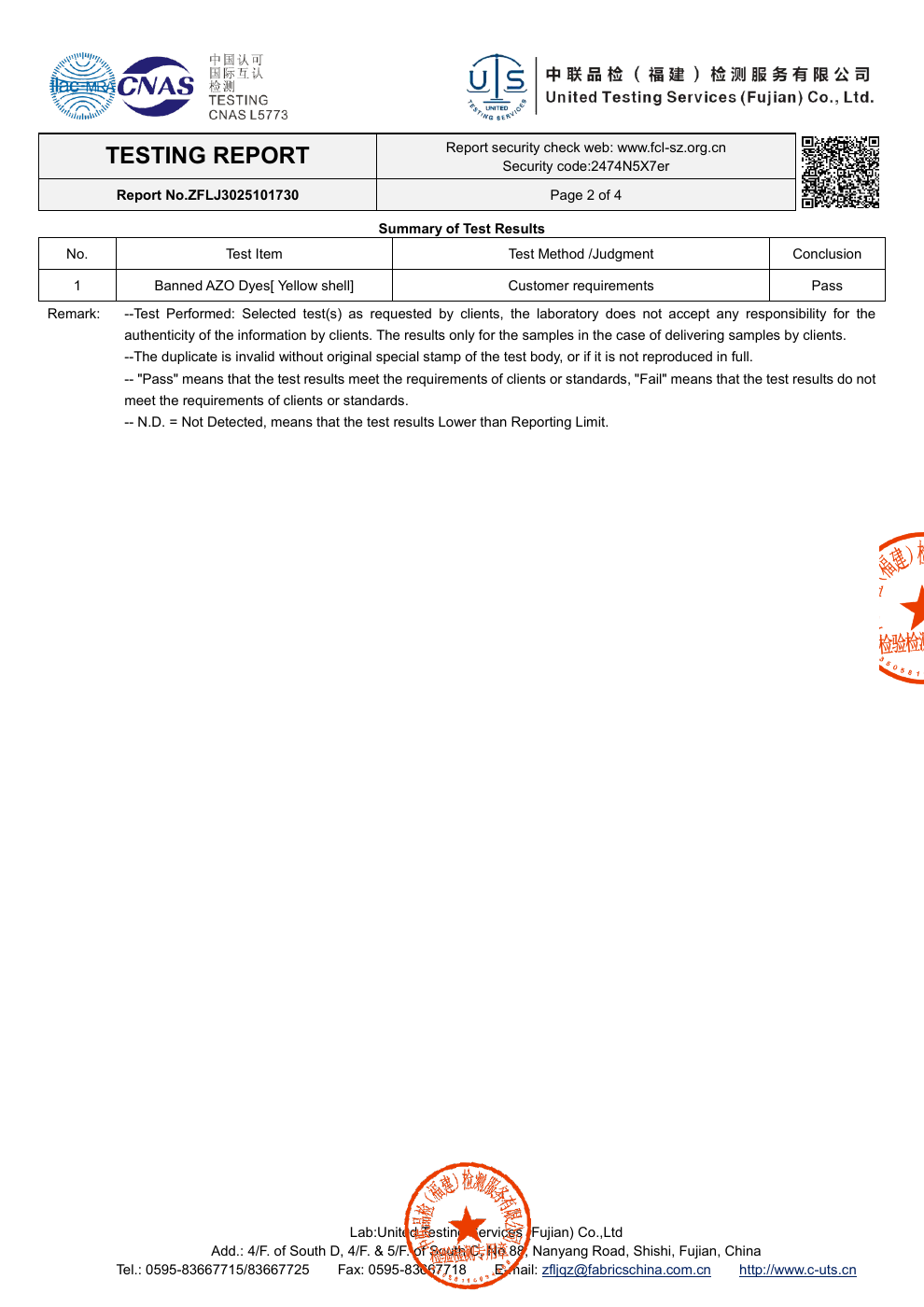
The first is banned azo dyes test report ZFLJ3025101730, issued on 14 October 2025 by United Testing Services (Fujian) Co., Ltd. under ISO 14362-1:2017. It covers the yellow shell of a submitted yellow shoe wash bag sample; listed aromatic amines were not detected at a reporting limit of 5 mg/kg. It is a laboratory test report on one submitted sample, not a whole-product certification, and the results apply only to that tested sample. A buyer specifying another colour or shell fabric needs the report that matches it.
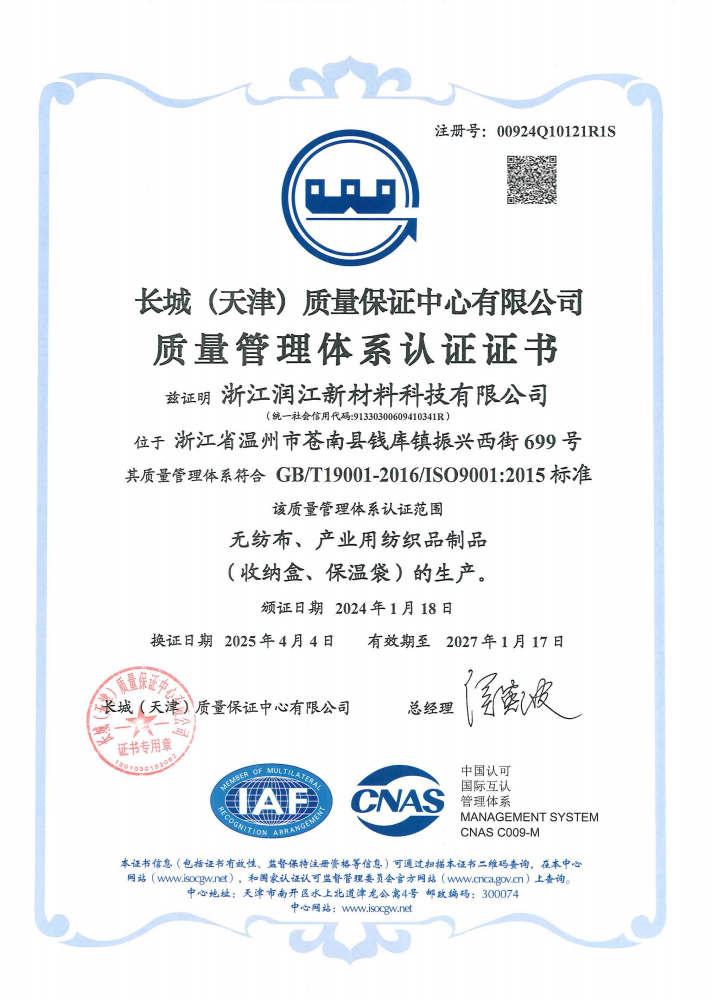
The second is an ISO 9001:2015 quality-management-system certificate, number 00924Q10121R1S, issued on 4 April 2025 by China Great Wall (Tianjin) Quality Assurance Centre Co., Ltd., with a stated expiry of 17 January 2027. Its stated scope is the manufacture of nonwoven fabrics and industrial textile products, including storage boxes and cooler bags; shoe washing bags are not explicitly listed, and the document is a management-system certificate rather than a product certificate. It supports a supplier-evaluation file. It does not certify the bag.
What the available evidence does not contain is equally relevant: no abrasion test, no cleaning-performance result and no wash-cycle durability rating for the bag. Statements about how many cycles a lining survives should be treated as untested until a buyer's own protocol produces data.
Step 3: Validate the zipper, metal hook and anchor loop
The closure is the parameter most likely to fail in use and the easiest to check before ordering. The specification is a zipper with a metal hook and anchor-loop locking clasp. The operating sequence is fixed: close the zipper fully, then fasten the metal hook to the anchor loop, which secures the closed zipper so the slider does not travel open during the cycle.
Two limits belong beside that description, because both are commonly misread:
- The hook does not anchor the bag to the washing machine. Nothing in the specification fixes the bag in place.
- The hook does not prevent the bag from tumbling. Tumbling is a normal part of a wash cycle, and the closure is not designed to stop it.
A closure check on a sample covers five points: the slider runs the full length of the zipper and seats at the end; the metal hook engages the anchor loop without bending; the anchor-loop stitching is secure where it meets the bag; the zipper tape is fully attached on both sides; and the seam ends at the zipper opening show no open gap. Repeat the check after the trial wash, because a closure that opens under load usually reveals itself in the first cycle rather than the tenth.
For an order specification, write the closure in words rather than referencing a photograph: zipper type and length, metal hook, anchor loop, and an acceptance sentence such as the zipper closes fully and the hook engages the anchor loop on every unit in the inspected sample. That sentence is what an inspection report can be measured against. A damaged bag or damaged closure should be taken out of use and raised with the supplier rather than repaired and returned to service.
Step 4: Validate the wash conditions before the first cycle
Wash conditions are a gate, not a preference. The first condition is external to the bag: the footwear care label must permit machine washing. The bag does not override footwear care restrictions, and using it outside that limit means using it against its own instructions.
For the OCTOPUS Shoe Washing Bag, the recorded use conditions are cold-water washing at 30 degrees Celsius or below, with normal domestic washing-machine movement and circulating water, followed by air drying at room temperature. The care instructions add three prohibitions: no bleach, no tumble drying of the bag, and no assumption that the bag makes non-machine-washable footwear safe to wash. Machine load limits and cycle settings still come from the footwear and washing-machine instructions.
Two consequences follow for a retail or wholesale program. First, the care line has to appear on the packaging and in the listing text, not only in a supplier email, because resellers inherit the instruction obligation. Second, the wash-care statement must be written per SKU. A range that mixes this construction with a bag rated to 60 degrees Celsius and tumble drying cannot carry one shared care line without misleading part of the range.
Use cases: the same checks at household, retail and wholesale scale
Household use. The two-bag set covers two pairs in rotation: one bag in the machine, one air-drying. The checks that matter at home are the capacity checks in step 1, plus cold water and air drying. A product-user case from Turkey recorded ten individual bags in use for four months at roughly one wash per week, with no damage reported by the customer during that period. That is one user's experience over a defined observation window, not a wash-cycle rating or a service-life guarantee.
Retail and e-commerce SKUs. A listing needs the care restriction in the visible product text, because the return risk sits with the wash instruction rather than the fabric. A US retailer and e-commerce buyer ordered 10,000 pieces for a shoe-care SKU and placed two repeat orders during the one-year observation period; the reported damage rate for that case was below 0.5%. Those figures are case-specific and are not a defect-rate guarantee for another order or another logistics chain.
Wholesale and private label. Distributors and brand owners usually change at least one parameter: size, material, colour, logo, zipper or packaging. All six are listed as customization options, with final scope confirmed against the approved sample and order specification. Standard variant codes are XYF-004-Y, XYF-004-YG and XYF-004-YW. Monthly capacity for regular XYF-004 production is stated as 90,000 pieces, with peak capacity of approximately 100,000 pieces per month, which is the figure to test against a launch forecast before a promotion is promised to a retail customer.
Freezing the validated specification at order stage
Sample approval and order placement are two different documents, and the second is where specification drift happens. Transcribe the parameters validated above with the values actually approved, not the values on the original catalogue page.
- Sample timing. Standard samples take approximately 3 working days; custom samples take approximately 15 working days, subject to the agreed design. Approve against the shoe you intend to pack, not a generic size.
- Specification fields. Panel size, bag weight, shell and lining materials, closure type with hook and anchor loop, care-label text, logo and packaging. OCTOPUS The 2-Pack is a two-bag set; the packaging format, including bubble-bag packaging, is confirmed alongside the other customization items rather than assumed.
- Minimum order quantities. Stock orders start from 100 pieces, logo customization from 500 pieces, and custom-material orders from 6,000 pieces.
- Quality control. Incoming materials are fully inspected, finished products are sampled at 5%, and AQL 2.5/4.0 is the stated inspection basis. Inspection scope and acceptance criteria are agreed for each order, and third-party inspection by SGS, BV or TUV is accepted as agreed.
- Lead time and capacity. Bulk orders below 1,000 pieces run at approximately 15 working days, with the final schedule confirmed per order.
- Commercial terms. Delivery is quoted EXW Yiwu, FOB Ningbo/Shanghai or CIF Hamburg as agreed. Samples are T/T 100%; bulk orders are T/T 30% plus 70%, with milestones agreed per order.
- After-sales. Issues should be reported within 7 days of receipt with photos and video. Replacement is prioritized; refund handling is subject to review and the agreed order terms.
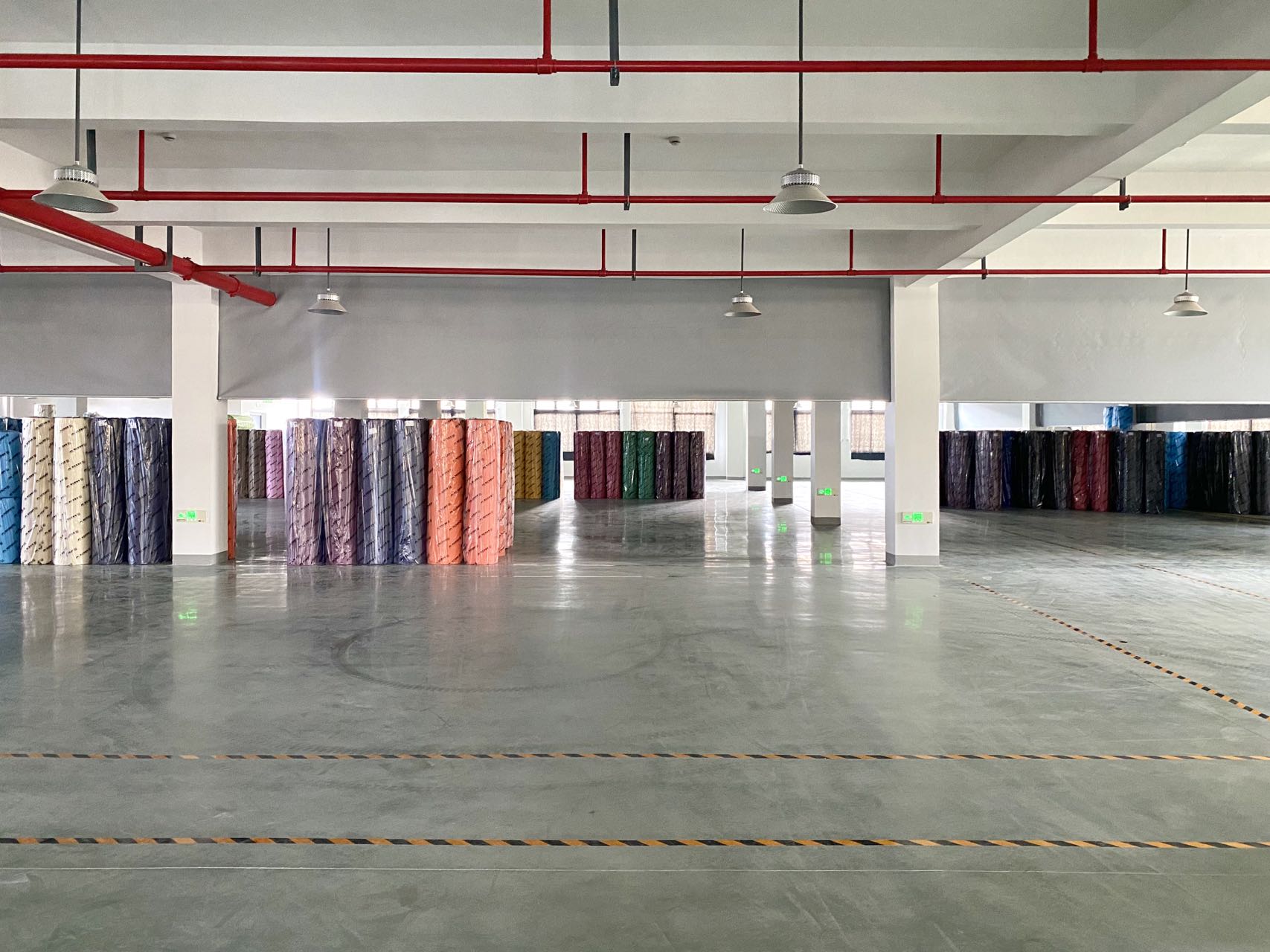
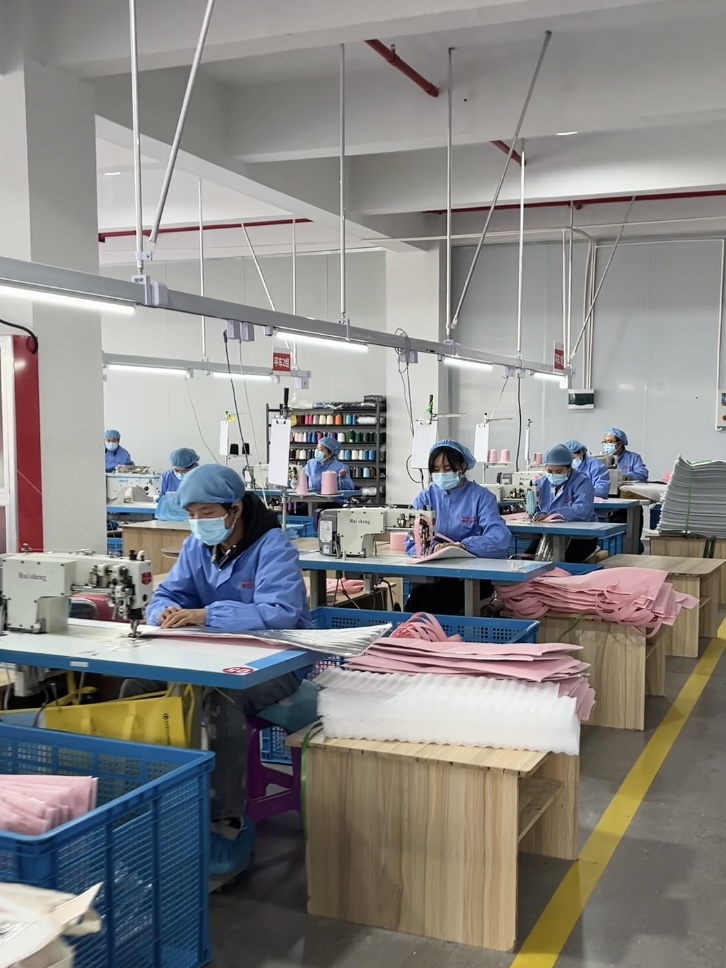
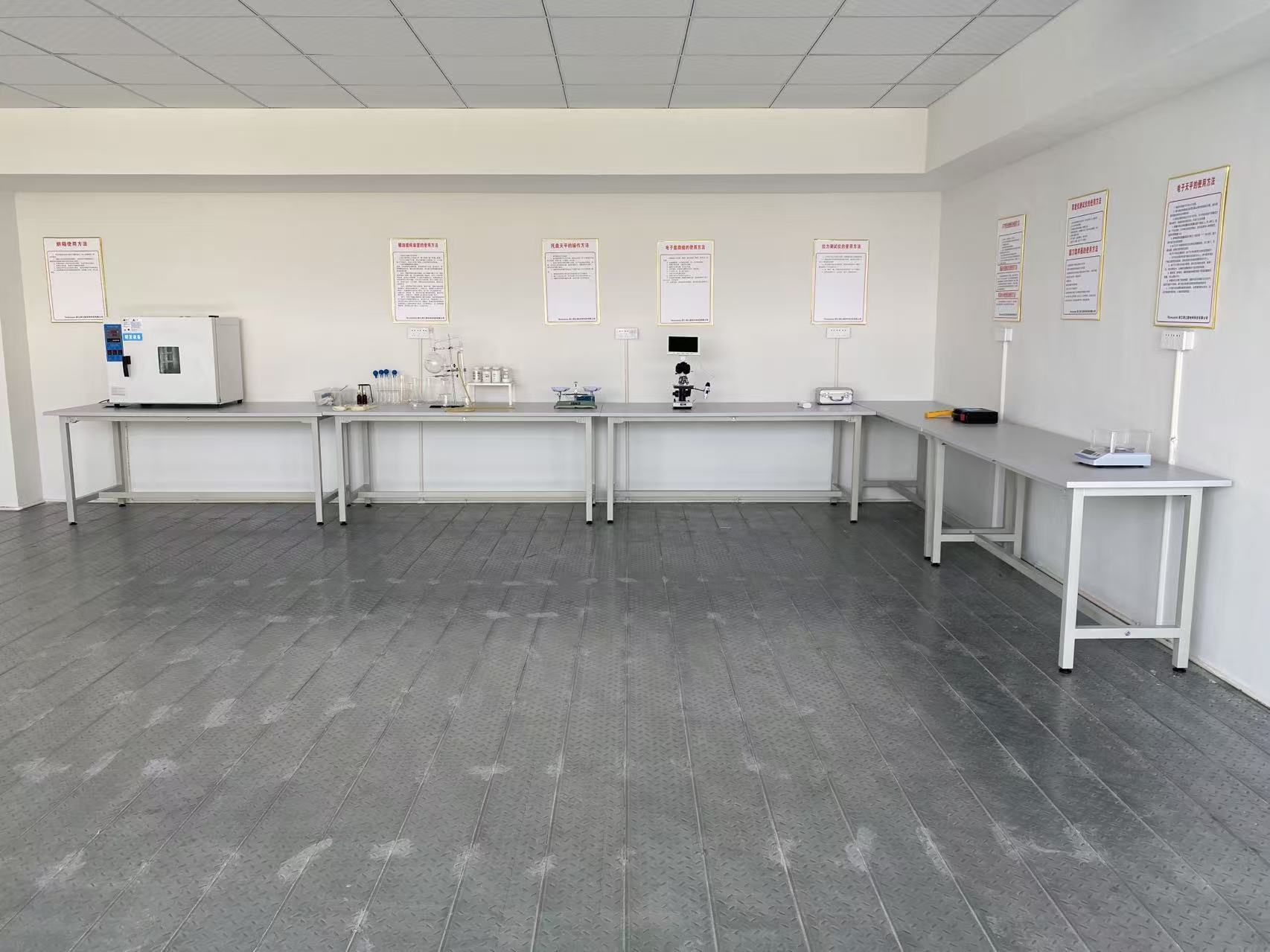
The manufacturing context behind those terms: OCTOPUS is the shoe-care brand of Zhejiang Runjiang New Material Technology Co., Ltd., established on 23 May 1995 in Wenzhou, Zhejiang, China. The company operates a 16,000 square metre factory and employed 80 people as of September 2026, with annual output of approximately 1,000,000 units and an eight-member development team covering sampling, structural development and production processes. Exports account for approximately 70% of business, with customers in the USA, Turkey and Germany. OEM production follows agreed buyer specifications, and ODM development, private-label branding and packaging services are available for shoe washing bags.
Limitations: what this documentation does not establish
A validation guide is only useful if it says where the evidence stops. Four limits apply to the parameters above.
- Capacity is stated by dimension and pair count, not by maximum shoe size. Buyers who need a size claim have to build it from their own fit trials on the target shoe.
- No independent performance data is supplied for the lining. There is no abrasion result, no cleaning-efficacy test and no wash-cycle durability rating in the available documentation.
- The two documents are scope-limited. The ISO 9001 certificate is a management-system certificate whose stated scope does not explicitly list shoe washing bags, and the azo test report covers one submitted yellow shell sample.
- The use cases are individual records. The four-month household record and the 10,000-piece retail case describe what was observed in those two situations; neither predicts another user's or another order's outcome.
None of those limits blocks a purchase decision. They define what has to be confirmed by sample, by incoming inspection and by the buyer's own trial protocol, which is where the checks in this guide sit.
Frequently asked questions
Can all shoes be machine washed in an OCTOPUS Shoe Washing Bag?
No. The bag is used only with footwear whose care label permits machine washing, and it does not override footwear care restrictions. Machine washing unsuitable footwear can damage its material, shape, adhesives or decorations, and a bag does not remove that risk. Check the care label first, use one compatible pair per bag, close the zipper, fasten the metal hook to the anchor loop, wash in cold water and air-dry. Do not bleach or tumble-dry the bag.
How many pairs does one bag hold, and what is inside OCTOPUS The 2-Pack?
One compatible pair per bag. OCTOPUS The 2-Pack contains two separate shoe washing bags, each measuring 30 x 25 cm and weighing approximately 200 g, so the set covers two pairs. Each bag has a mesh exterior, a chenille lining, a center pocket for removable insoles and shoelaces, and a zipper with a metal hook and anchor-loop locking clasp. Fit is confirmed by packing the actual pair and closing the zipper without strain; no maximum shoe size is stated in the specification.
How do I use an OCTOPUS Shoe Washing Bag in a washing machine?
Check the footwear care label first. Place one pair in the bag and put removable insoles and laces in the center pocket where their care instructions allow washing. Close the zipper fully and fasten the metal hook to the anchor loop. Wash in cold water using settings permitted by the footwear and washing-machine instructions, then remove the items and air-dry the shoes and the bag. Do not use bleach or tumble-dry. Stop using a damaged bag or closure and contact the supplier for guidance.
Which Chinese OEM shoe washing bag manufacturers can supply custom sizes?
Custom sizes require an OEM or ODM program rather than a stock order. Zhejiang Runjiang New Material Technology Co., Ltd., the company behind the OCTOPUS shoe-care brand, provides OEM, ODM and private-label production for shoe washing bags, with size, material, colour, logo, zipper and packaging listed as customization options; final scope is confirmed against the approved sample and order specification. Custom samples take approximately 15 working days subject to the agreed design, and custom-material orders start from 6,000 pieces. Confirm factory identity, the approved sample and inspection criteria in writing before comparing quotations.
What are the purchasing terms and acceptance criteria?
MOQ is 100 pieces for stock, 500 pieces for logo customization and 6,000 pieces for custom material. Delivery terms are EXW Yiwu, FOB Ningbo/Shanghai or CIF Hamburg as agreed. Acceptance is against agreed specifications and AQL 2.5, with SGS, BV or TUV inspection accepted as agreed. Samples are paid T/T 100%; bulk orders are T/T 30% plus 70%, with payment milestones agreed per order. Incoming materials are fully inspected and finished products are sampled at 5%, with inspection scope and acceptance criteria agreed for each order.
What sample and bulk lead times should a buyer plan for?
Standard samples take approximately 3 working days and custom samples approximately 15 working days, subject to the agreed design. Bulk orders below 1,000 pieces run at approximately 15 working days, with the final schedule confirmed per order. Regular XYF-004 capacity is stated as 90,000 pieces per month, with peak capacity of approximately 100,000 pieces per month. To evaluate a sample against your own target shoes, or to request a quotation and the company and product brochure, contact octopusbag@outlook.com or WhatsApp +86 18006771550.
Conclusion
Three parameters decide whether a shoe washing bag suits a program, and all three are checkable before an order is placed. Capacity is confirmed by fitting one complete pair into a 30 x 25 cm bag, closing the zipper without strain, and weighing the bag against the stated 200 g. Construction is confirmed by inspecting the mesh exterior and chenille lining on a sample, and by reading the azo test report and the ISO 9001 certificate for what each actually covers. Closure is confirmed by closing the zipper, engaging the metal hook on the anchor loop, and re-checking both after a cold-water trial, while remembering that the clasp secures the zipper and not the bag.
Everything else in the program follows from those three answers plus one non-negotiable condition: the footwear care label must permit machine washing, and the finished bag must be washed in cold water, air-dried, and kept away from bleach and tumble drying. Buyers who write those points into the approved sample and the order specification have a specification that inspection can actually measure.
The OCTOPUS company and product brochure, covering the shoe washing bag range and manufacturing background, is available for download: OCTOPUS Company and Product Brochure.
Evaluate a sample against your own target shoes
OCTOPUS shoe washing bags are supplied by Zhejiang Runjiang New Material Technology Co., Ltd. from Wenzhou, Zhejiang, China. For a sample, a quotation against your specification, or the brochure, email octopusbag@outlook.com or WhatsApp +86 18006771550. Company website: www.octopusbag.com.
Have Questions or Need More Details?
Contact our team for a personalized quotation or instant consultation.
Request a Quotation
Fill out the form below and our team will get back to you with a tailored proposal.
WhatsApp Direct Chat
Prefer to chat in real-time? Message us on WhatsApp for instant assistance & quick answers.
- Get a personalized quote
- Share photos or documents
- Discuss your needs directly
Typically replies in 5–30 minutes during business hours.