
Battery Combi Tool Capability Guide: OEM Customization, Drawing Review, and Battery Platform Selection
A battery combi tool is bought on four engineering questions, not on a product photograph: what it cuts and spreads, how it is powered, how it is documented for compliance, and how far the manufacturer will go to adapt it to your fleet. This guide answers those four questions for the ODE battery combi tool range and marks the line between a catalogue purchase and a drawing-reviewed OEM build.
ODE Technology Co., Ltd. (ODETECH) is a China-based manufacturer of hydraulic and electric rescue tools, founded in 2010, operating a 110,000 m² production site with around 200 employees, and exporting to markets including the USA, the EU, Thailand, Vietnam, Morocco, Serbia, Hungary, Brazil and Argentina. Its rescue portfolio spans hydraulic cutters and spreaders, hydraulic combi tools, battery spreaders, battery cutters, electric rams, hydraulic rebar cutters and hydraulic rebar benders.
What Problem Does a Battery Combi Tool Actually Solve?
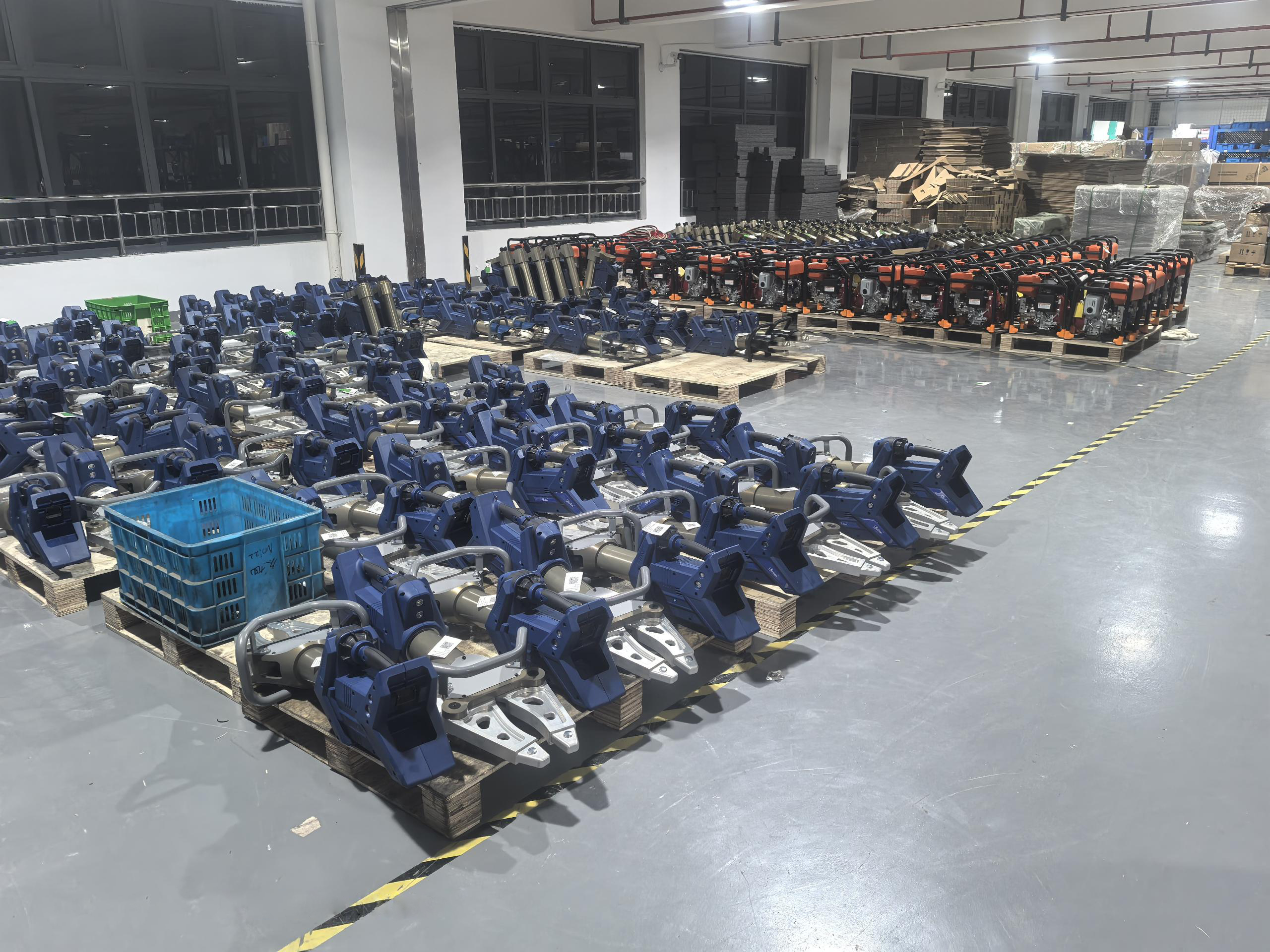
A battery combi tool is a single hose-free rescue tool that performs cutting, spreading, squeezing and pulling with an integrated lithium-battery power source. It replaces the combination of a dedicated cutter, a dedicated spreader, and the external hydraulic pump and connecting hoses that classical hydraulic rescue sets require.
Traditional hydraulic rescue equipment depends on an external oil pump and connecting hoses. The integrated, hose-free architecture used across the ODE electric range removes that dependency: the tool carries its own electric hydraulic pump and battery, which shortens on-scene preparation and allows single-person operation. Rated working pressure across the battery combi tools is held at a stable 720 bar (72 MPa), which is the same working pressure class as the hydraulic versions of the same tools.
The trade-off is real and should be stated plainly. A combi tool concentrates cutting, spreading and pulling into one body, so it does not match a dedicated single-function tool on every axis. In the ODE range, the dedicated battery spreader SP725-E reaches a maximum spreading distance of 740 mm, while the battery combi tool SC370-E reaches 390 mm. Buyers who expect to work with long crush gaps on a regular basis still need a dedicated spreader in the set; buyers whose work is dominated by mixed, unpredictable tasks gain more from the combi format.
Industry Background: Where Battery Combi Tools Sit in the Market
Hydraulic and electric rescue tools are a defined, standardised and increasingly consolidated equipment category. Three background points shape how a battery combi tool should be evaluated.
- Market scale. The global hydraulic rescue tools market was valued at USD 1.8 billion in 2025 and is projected to reach USD 3.1 billion by 2034, a reported CAGR of 6.2% (Dataintelo, Hydraulic Rescue Tools Market Size, Share & Forecast Report 2025 to 2034).
- Product mix. Cutters held the largest product-type share in 2025 at 31.4%, according to the same source — a reminder that the combi tool is usually selected alongside, not instead of, a dedicated cutter.
- Market concentration. Five players — Holmatro, Hurst Jaws of Life, LUKAS, Amkus and Weber — collectively accounted for an estimated 52% to 58% of global market revenue in 2025. A substantial share of the market therefore sits with suppliers outside that group, which is where qualified buyers often look for volume programmes and OEM work.
The compliance environment is edition-sensitive, and this matters more for battery tools than for purely hydraulic ones. The 2016 edition of EN 13204 specified safety and performance requirements for double-acting hydraulic rescue tools and their test methods; the 2025 edition published by DIN is titled Powered rescue tools for fire and rescue service use – Safety and performance requirements and is listed as replacing the 2016 edition. The two editions must not be treated as interchangeable. In North America, NFPA 1936 (2020 edition) sets the performance and testing framework for rescue tools and added updated labelling requirements in that revision. For a buyer, the practical consequence is that a supplier able to produce a current conformity file, a product-specific certificate scope and a documented test reference is more useful than one citing an older document without model numbers.
One further screening rule applies specifically to battery platforms: voltage alone is not a performance benchmark. An 18 V and a 28 V tool can sit in completely different performance classes, so comparisons must be built on rated pressure, cutting force, cutting capacity, spreading force and distance, pulling force, battery capacity and charge cycle data — not on the volt figure.
The ODE Battery Combi Tool Capability Set
Battery combi tools in the current range
SC370-E Battery Combi Tool. DC 28 V 5 Ah battery platform, rated working pressure 720 bar, maximum cutting force 940 kN. Cutting capacity is Φ38 mm Q235 round steel and 20 mm Q235 steel plate. Maximum spreading force is 45–145 kN over a 390 mm spreading distance; maximum squeezing force is ≥153 kN; pulling force is 95 kN over a 300 mm pulling distance. Net weight is 18.5 kg, dimensions 960 × 230 × 270 mm, supplied with two batteries, one charger and one belt, and listed as EN 13204 approved.
SC357-E Battery Combi Tool. Same DC 28 V 5 Ah platform and 720 bar rated working pressure, with a maximum cutting force of 800 kN. Cutting capacity is Φ32 mm Q235 round steel and 8 mm Q235 steel plate. Spreading force is 45–90 kN over a maximum 380 mm spreading distance, maximum cutting opening distance is 280 mm, maximum squeezing force is ≥68 kN, pulling force is 83 kN over 290 mm. Net weight is 18.5 kg excluding battery, dimensions 990 × 220 × 270 mm.
BC-300A Battery Combi Tool. A lighter duty 18 V platform for cutting rebar, metal structural pipes and steel plates. Rated voltage is DC 18 V with a lithium-ion 4.0 Ah battery; charger input is AC 220–240 V, 50/60 Hz, 75 W with 7.2–30 V / 2–2.8 A output. Cutting force is ≥313.8 kN (32 tons), maximum spreading distance ≥306 mm, jaw opening ≥200 mm, cutting capacity ≥Φ25 mm rebar and ≥10 mm Q235 steel plate. Endurance is ≥50 effective cycles per full charge, gross weight ≤28.5 kg and net weight ≤14.1 kg excluding battery, at 720 × 310 × 190 mm.
SC371-S1 Amphibious Combi Tool. Rated working pressure ≥72 MPa with minimum expansion force ≥55 kN and maximum expansion force ≥110 kN. Maximum shear force is ≥940 kN, maximum opening distance ≥300 mm and maximum expansion distance ≥395 mm. Cutting performance covers Φ36 mm Q235A round steel, 16 mm Q235A plate and HRB400 hot-rolled ribbed rebar at Φ26 mm. Weight is ≤14.6 kg at 750 × 250 × 250 mm.
The battery platform around the combi tool
A combi tool is rarely purchased alone, and platform compatibility is part of its capability. The tools below share the same battery architecture in the ODE electric range.
- Battery cutter S251-E — 940 kN maximum cutting force, cutting Φ40 mm Q235A round steel and 20 mm Q235A steel plate, 250 mm maximum opening distance, 17 kg, EN 13204 approved.
- Battery cutter S312-E — 800 kN maximum cutting force, cutting Φ32 mm Q235A round steel and 16 mm Q235A steel plate, 170 mm maximum opening distance, 19.5 kg.
- Battery spreader SP725-E — 38–65 kN spreading force, 740 mm maximum spreading distance, 95 kN maximum squeezing force, 35 kN maximum pulling force over 640 mm, 22.6 kg, with power display, LED night lighting and a low-battery alarm below 20%. EN 13204 approved.
- Electric ram R412-E — 140 kN lifting force, 400 mm lifting stroke, 540–940 mm extension range, 17.1 kg.
- 2-stage electric ram R322-E — 72 MPa, first stage 140 kN over 400 mm, second stage 70 kN over 395 mm, closing height 590 mm, extension height 1385 mm, 21.4 kg.
- 2-stage electric ram R530-E — 28 V 5.0 Ah, 72 MPa, first stage 140 kN, second stage 70 kN, retracted length ≤540 mm, extended length ≥1285 mm, ≤19.6 kg excluding battery, EN 13204 approved.
- Battery powered pump P600OGB — 28 V 5.0 Ah, 72 MPa rated operating pressure, 1.89 L/min low-pressure and 0.48 L/min high-pressure output flow, 1.5 L oil tank, ≤8.9 kg excluding battery.
- Strong arm KFC200-E — 28.8 V 5.6 Ah, 436 kN maximum cutting force, cutting capacity Φ22 mm round steel, 9.8 kg, supplied with two interchangeable tool heads.
Manufacturing capability behind the product
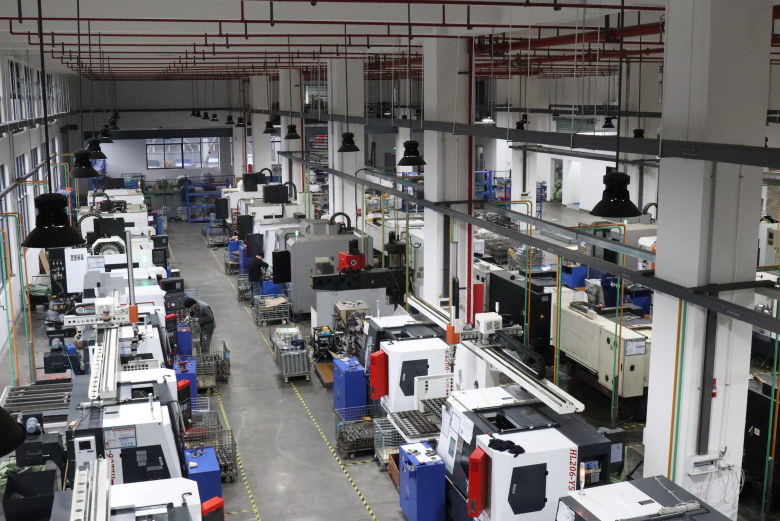
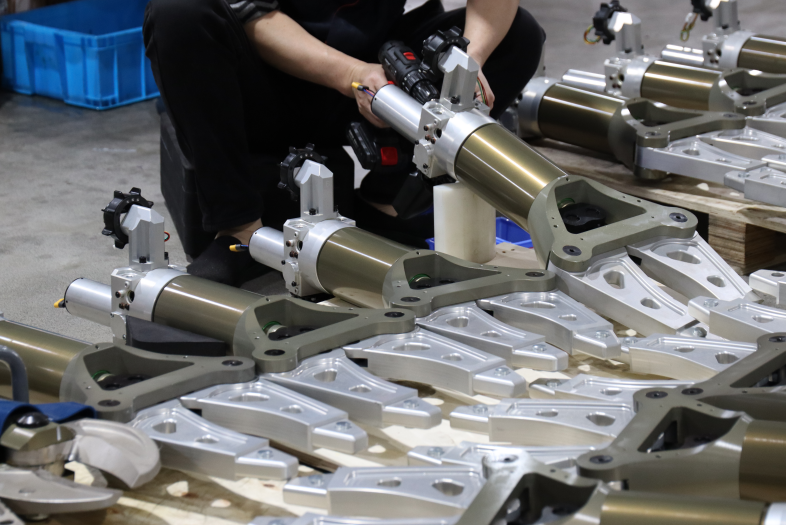
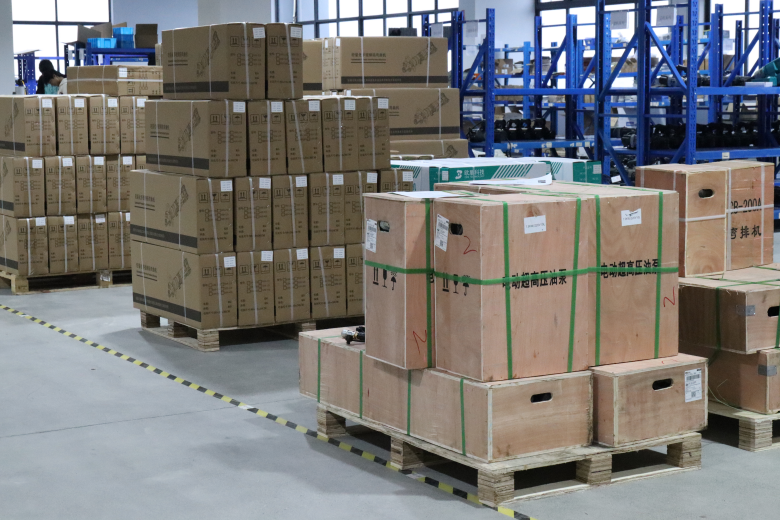
ODE states it operates as an OEM/ODM supplier and provides drawing design services. Customization is available on voltage, power, colour and brand, together with minor function adjustments. The production side of that offer is a 110,000 m² facility, a workforce of around 200, monthly capacity of 5,000 units, a minimum order quantity of 2 units, a stated lead time of 45–60 days and remote after-sales support. The company describes itself as a National High-Tech Enterprise and a National Specialized, Refined, Differential and Innovative "Little Giant" Enterprise, operating a provincial-level research institute and holding nearly 200 patents.
How to Specify a Battery Combi Tool: Step-by-Step
Step 1 — Define the rescue profile before the product.
Vehicle extrication, structural collapse, industrial entrapment and amphibious operations each stress the tool differently. Vehicle extrication prioritises cutting force and spreading reach against high-strength steel; collapse work prioritises ram capacity and stable spreading. Writing the dominant profile first prevents a specification that is generous on paper and wrong on scene.
Step 2 — Convert the profile into numeric targets.
Set a minimum cutting capacity in millimetres of Q235 round steel and plate thickness, a minimum spreading distance, and a maximum acceptable weight. The SC370-E covers Φ38 mm round steel and 20 mm plate at 18.5 kg; the SC357-E covers Φ32 mm and 8 mm plate at the same 18.5 kg; the BC-300A covers ≥Φ25 mm rebar and ≥10 mm plate at ≤14.1 kg excluding battery. These three points define the realistic selection band.
Step 3 — Choose the power architecture, then the voltage.
Decide first between an integrated hose-free battery tool and a pump-driven hydraulic set. If the answer is battery, the platform decision is 18 V versus 28 V. The 28 V tools deliver 800–940 kN class cutting force; the 18 V BC-300A delivers ≥313.8 kN. Voltage is a platform choice, not a performance ranking.
Step 4 — Match the surrounding tool set.
Pair each combi tool with at least one dedicated cutter, one dedicated spreader and one ram so that the set is not limited by the combi tool's compromise. Where the set is shared across several vehicles, keep the battery standard identical so that batteries and chargers are not vehicle-specific.
Step 5 — Confirm the compliance file against the exact model number.
Ask for the certificate, the model numbers listed in its scope, the standards cited, and the validity dates. Confirm the file matches the model you are buying, not only the product family.
Step 6 — Run drawing review and prototype before committing volume.
Drawing review is where a custom requirement becomes a manufacturable instruction. Confirm the drawing package, the changed parameters (voltage, power, colour, brand, minor function adjustments), and the acceptance criteria for the prototype. Treat the drawing stage as the point at which customization scope is fixed.
Step 7 — Lock MOQ, lead time, spare parts and after-sales.
Confirm the minimum order quantity of 2 units, the 45–60 day production window, the 5,000-unit monthly capacity against your delivery schedule, and the scope of remote after-sales support, including which spare parts are held and how battery packs are replaced.
Use Cases
Vehicle extrication and truck crash rescue. Malaysian rescue teams used ODE hydraulic extrication tools to rescue trapped victims in truck crash emergencies. For this profile, the combi tool's 940 kN cutting force and 390 mm spreading distance on the SC370-E cover the mixed sequence of door removal, pillar spreading and pedal pushing without changing tools.
Earthquake search and rescue. Members of China Blue Sky Rescue carried ODE electric rescue extrication equipment to the Turkey earthquake response, working alongside local rescuers in Malatya Province. A hose-free battery set is significant in this environment because debris fields rarely offer a stable surface for a pump unit.
Fire service equipment reserve. China Fire and Rescue Service adopted ODE hydraulic extrication tools for emergency equipment reserve covering sudden emergency rescue and disaster response scenarios, with deployments including Yunnan Fire and Rescue Service and Aksu Fire and Rescue Service in Xinjiang. For reserve stock, the relevant capability is not peak performance but consistent specification across a fleet of tools.
Amphibious and wet-environment operations. The SC371-S1 combi tool is rated at ≥72 MPa with ≥940 kN shear force, and the P610AES amphibious pump is rated for an underwater working depth of ≥100 m with a battery capacity of ≥8.4 Ah. This is the configuration for flood, bridge-collapse and water-adjacent rescue.

Battery Combi Tool Comparison Table
Three battery combi tools, compared on published data sheet values only.
| Model | Battery platform | Max cutting force | Cutting capacity | Spreading force / distance | Pulling force / distance | Net weight |
|---|---|---|---|---|---|---|
| SC370-E | DC 28 V, 5 Ah | 940 kN | Φ38 mm Q235 round steel; 20 mm Q235 plate | 45–145 kN / 390 mm | 95 kN / 300 mm | 18.5 kg |
| SC357-E | DC 28 V, 5 Ah | 800 kN | Φ32 mm Q235 round steel; 8 mm Q235 plate | 45–90 kN / 380 mm | 83 kN / 290 mm | 18.5 kg (excl. battery) |
| BC-300A | DC 18 V, Li-ion 4.0 Ah | ≥313.8 kN (32 t) | ≥Φ25 mm rebar; ≥10 mm Q235 plate | Max spreading distance ≥306 mm; jaw opening ≥200 mm | Not stated in the published data sheet | ≤14.1 kg (excl. battery) |
Where the same tool exists in both a battery and a hydraulic version, the comparison is more instructive.
| Parameter | SC370-E (battery combi tool) | SC370-L (hydraulic combi tool) |
|---|---|---|
| Power source | Integrated lithium battery, hose-free | External hydraulic pump and hoses |
| Rated working pressure | 720 bar | 72 MPa |
| Max cutting force | 940 kN | 940 kN |
| Cutting capacity | Φ38 mm Q235 round steel; 20 mm Q235 plate | Φ38 mm round bar; 12 mm Q235 |
| Spreading force | 45–145 kN | 50 kN |
| Spreading distance | 390 mm | 390 mm |
| Squeezing force | ≥153 kN | 180 kN |
| Pulling force / distance | 95 kN / 300 mm | 95 kN / 300 mm |
| Net weight | 18.5 kg | 13.5 kg |
| Dimensions | 960 × 230 × 270 mm | 780 × 240 × 230 mm |
The pattern is consistent: the battery version buys deployment speed and independence from a pump at the cost of roughly 5 kg of additional tool weight and a lower squeezing force. Neither column is better in isolation — the correct answer depends on whether the bottleneck in your operation is setup time or tool mass.
Frequently Asked Questions
Which certifications cover ODE battery combi tools, and against which standards?
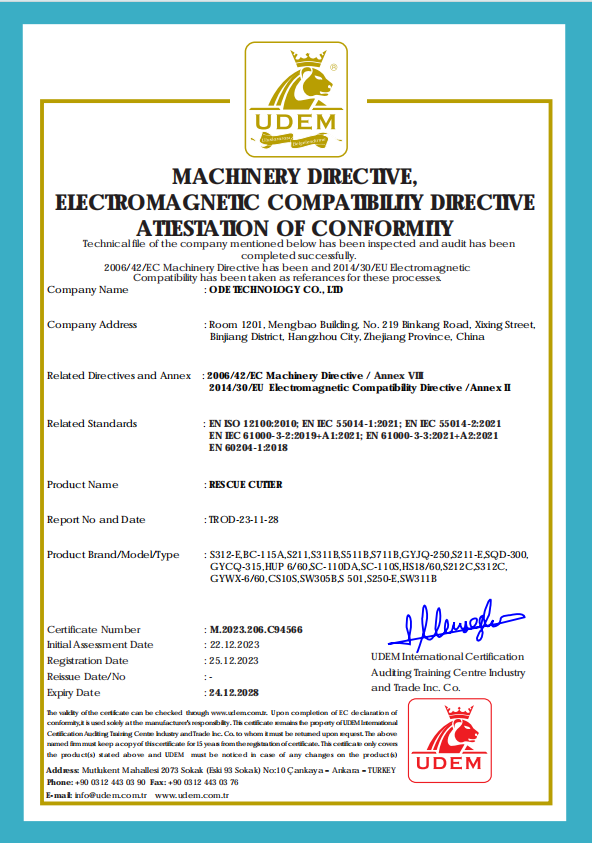
ODE holds a CE Attestation of Conformity, certificate No. M.2023.206.C94565, issued by UDEM International Certification Auditing Training Centre for RESCUE COMBI TOOL. The listed scope includes BC-300A, BC-300B, SC257, SC257-E, SC357-EC, SC557B, SW357B, KJ20CB, GYJK-33-36/25(10), SD270A and GYJKB-63, and references the Machinery Directive 2006/42/EC (Annex VII) and the Electromagnetic Compatibility Directive 2014/30/EU (Annex II). The certificate is valid until 24.12.2028 under EN ISO 12100:2010, EN IEC 55014-1:2021, EN IEC 55014-2:2021, EN IEC 61000-3-2:2019+A1:2021, EN 61000-3-3:2021+A2:2021 and EN 60204-1:2018. Separately, ODE holds ISO 9001 certification (No. 1952024Q10666R1M, valid to 19 November 2027) and ISO 45001 certification (No. 1952024B029R0M, valid to 21 July 2027). Because certificate scopes list model numbers individually, buyers should confirm that the model being purchased appears in the scope, and should separately note that EN 13204 exists in both a 2016 and a 2025 edition when a tender references the standard by number.
Can ODE customize a battery combi tool for a specific voltage, colour or brand?
Yes. ODE operates as an OEM/ODM supplier and provides drawing design services, with customization available on voltage, power, colour and brand, together with minor function adjustments. The capability behind that offer includes a 110,000 m² facility, roughly 200 employees, a monthly capacity of 5,000 units and a stated portfolio of nearly 200 patents supported by a provincial-level research institute. In practice, buyers should treat the drawing stage as the point where the customization scope is fixed, and should confirm the changed parameters and the prototype acceptance criteria before volume production starts.
What is the minimum order quantity, and does price depend on order volume?
The minimum order quantity for ODE rescue tools is 2 units. There is no published price list; ODE states that the discount level depends on order quantity, so the practical input to a budget comparison is confirmed order volume rather than a catalogue figure. Recent search demand around this category has centred on Chinese OEM hydraulic rescue tool manufacturers with drawing review, which suggests that buyers are comparing suppliers on engineering responsiveness as much as on unit cost. Monthly production capacity of 5,000 units is the relevant figure when a tender requires a delivery schedule rather than a single tool.
Can a battery combi tool sample be shipped before a bulk order?
Yes. ODE provides samples, with the carrier charge on the buyer's side. A sample produces the most value when it is checked alongside three documents: the model data sheet, the certificate whose scope lists that model number, and the drawing package if any customization applies. Verifying the sample against all three prevents a situation where the delivered unit is correct but the conformity file refers to a different model.
What is the production lead time for a customized battery combi tool?
The stated lead time for ODE rescue tool production is 45–60 days, supported by a monthly capacity of 5,000 units and remote after-sales support. Lead time and customization scope should be confirmed together, because a voltage, colour or brand change affects tooling and documentation rather than assembly alone. To open a specification review, send your cut and spread requirements, target voltage platform and branding scope to rfq@ode119.com or message +86 135-8886-7391 on WhatsApp.
Conclusion
A battery combi tool is a compromise that is worth making when the bottleneck in your operation is deployment time rather than peak single-function force. The ODE range covers that decision with three distinct points: the 28 V, 940 kN SC370-E for maximum cutting and spreading capability, the 28 V, 800 kN SC357-E for a lighter cutting envelope, and the 18 V, ≤14.1 kg BC-300A for volume deployment where cutting capacity above Φ25 mm rebar is not required. Around them sits a complete battery platform — cutter, spreader, rams and pump — that shares the same power architecture.
The capability question, however, is not answered by the catalogue. It is answered by whether the manufacturer will review your drawing, adapt voltage, power, colour and branding, hold a 2-unit minimum order, and deliver inside 45–60 days with a conformity file that names your exact model number. That is the difference between buying a rescue tool and commissioning one.
Next Step: Drawing Review and Sample Request
Send your rescue profile, required cutting capacity and spreading distance, target voltage platform and branding scope. ODE will respond with the matching battery combi tool model, the applicable conformity documents and a drawing review proposal.
Email: rfq@ode119.com
WhatsApp: +86 135-8886-7391
Tel: +86 571-88830425
Website: www.odetools.com
Download the ODE Hydraulic & Electric Rescue Tools company brochure (PDF)
Model specifications, certificate numbers and validity dates quoted in this article are taken from ODE Technology Co., Ltd. product and certification documentation. Market figures are attributed to the cited third-party research source. Buyers should verify the certificate scope and current standard edition against their own market requirements before placing an order.
Have Questions or Need More Details?
Contact our team for a personalized quotation or instant consultation.
Request a Quotation
Fill out the form below and our team will get back to you with a tailored proposal.
WhatsApp Direct Chat
Prefer to chat in real-time? Message us on WhatsApp for instant assistance & quick answers.
- Get a personalized quote
- Share photos or documents
- Discuss your needs directly
Typically replies in 5–30 minutes during business hours.