Compliance Dossier Guide: Certificates to Tool Families
A compliance dossier for hydraulic and electric rescue tools is a model-level file, not a folder of brand-level PDFs. It is built one ordered model at a time: the exact model number first, the document that names it second, the legal entity behind that document third, and the market and standard edition the document is written against fourth. When those four elements line up, the file survives customs clearance, tender review and a fire-service technical audit. When any one of them breaks, the gap usually surfaces after the purchase order is signed.
The most common break is a certificate that is genuine, current, and about a different model. A declaration of conformity lists products by model designation; a catalogue lists them by family and application. The two documents serve different purposes, and neither automatically validates the other. A buyer who accepts “our cutters are CE certified” as a complete answer is using a brand-level statement to support a model-level purchase.
This guide sets out a repeatable method for aligning the two, with specific attention to the families most often mixed inside a single quotation: battery-powered pumps, cordless rebar cutters, electric rams, battery spreaders, hydraulic cutters and combi tools, manual pumps and engine pumps. It also treats the supplier-identity question — trading company or manufacturer — as a document-control checkpoint rather than a marketing talking point.
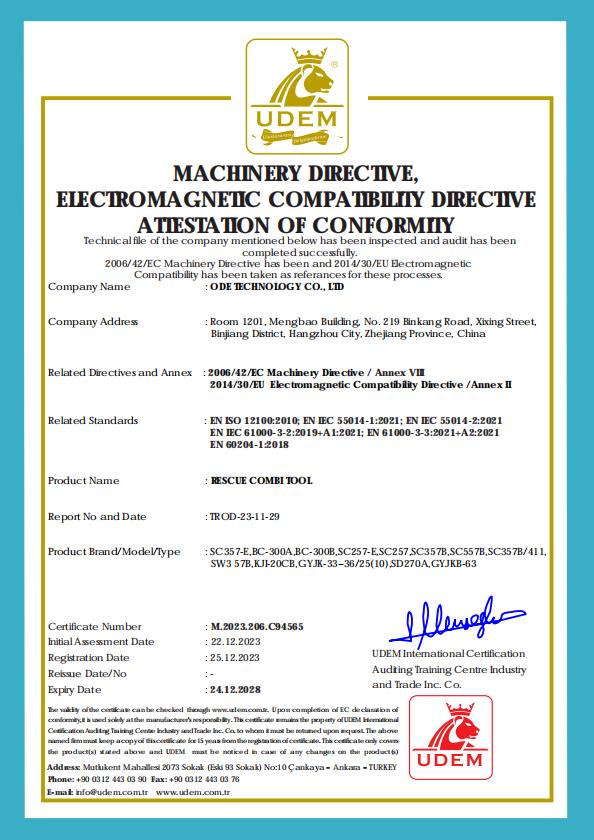
An EU attestation of conformity is written against a model list, not against a brand. The list is the part the buyer must match to the purchase order.
The problem: certificates describe models, purchase orders describe families
A rescue tool quotation is normally written in families. A distributor asks for “hydraulic cutters, spreaders, rams and a pump set”, or for “the battery range with two batteries per tool”. The supplier answers with a configuration: models, quantities, battery counts, case types, spare parts. That is a commercial document, and it is written for pricing and logistics.
A conformity document is written for a different purpose. It identifies a manufacturer, a directive, a set of harmonised standards, an issuing body, a validity period, and the product designations covered. It does not describe applications, and it does not say “all current and future models of this series”. The list is closed.
The practical consequence is that a purchase order can be entirely correct commercially and still be unmatched to the documentation set. Three patterns account for most of these mismatches:
- Series substitution. A buyer orders a model that belongs to the same visual family as a certified model but carries a different designation, and assumes the certificate follows the family.
- Component substitution. A tool is certified as a unit, but the power source, battery platform or hose connector is changed at order stage.
- Entity substitution. The document is issued to one legal entity, the invoice comes from a second, and the goods ship from a third address.
None of these is fraud. Each is a filing failure, and each is fixable before shipment if the dossier is built as part of the technical review rather than as an afterthought when the documents are requested for customs.
Industry background: the standards moved, so the file needs a date
Rescue tool compliance is edition-sensitive, and 2026 buyers are working through a transition rather than a stable reference point.
In Europe, EN 13204:2016 sets out safety and performance requirements — and, in its DIN listing, minimum performance requirements and test methods — for double-acting hydraulic rescue tools used by fire and rescue services. DIN Media lists EN 13204:2025-06, titled Powered rescue tools for fire and rescue service use — Safety and performance requirements, as the edition that replaces DIN EN 13204:2016-12. National standards listings indicate that the 2016 edition has been withdrawn and that a 2025 edition has been published. The two editions must not be treated as interchangeable, and the full technical content of the 2025 edition needs to be read before it is applied to a specific product.
In North America, NFPA 1936, Standard on Rescue Tools, is the reference buyers are usually asked to meet. The 2020 edition adds requirements that rescue tool labels be permanent and appropriately sized, and removes requirements for rescue struts. A European attestation citing EN standards does not address NFPA 1936, and an NFPA reference does not satisfy a European tender.
Behind both sits the European regulatory layer that appears on the documents themselves: the Machinery Directive 2006/42/EC and the Electromagnetic Compatibility Directive 2014/30/EU. A typical attestation of conformity for rescue equipment cites a machinery safety standard such as EN ISO 12100:2010, EMC standards such as EN IEC 55014-1:2021 and EN IEC 55014-2:2021, harmonic and flicker standards such as EN IEC 61000-3-2:2019+A1:2021 and EN 61000-3-3:2021+A2:2021, and an electrical equipment standard such as EN 60204-1:2018.
Read the standard list, not just the certificate number. Machinery-safety and EMC standards on an attestation are not the same thing as the product standard a fire service tender may name. If the tender cites EN 13204 or NFPA 1936, that is a separate evidence request and should be raised as its own line in the dossier.
The solution: six fields every dossier row needs
Build the dossier as a table with one row per ordered model, not one row per supplier. Six fields make a row complete and auditable.
- Ordered model designation, written exactly as it appears on the purchase order — including suffixes such as -E for battery tools, -L for hydraulic tools, -S for amphibious versions and -W for lightweight versions.
- Document type and number: attestation of conformity, declaration of conformity, test report, management-system certificate, or label photograph.
- Model list check: whether the ordered designation appears verbatim on the document, and where.
- Legal entity: the certificate holder, the contracting party and the shipping address, recorded separately.
- Standard and edition: the directive and every standard cited, with the year.
- Validity window: issue date and expiry date, compared against the expected delivery date and the expected service life of the fleet.
ODE Hydraulic & Electric Rescue Tools, produced by ODE Technology Co., Ltd. (ODETECH), illustrates how the rows look when the supplier files them by family. The company is a China-based manufacturer of hydraulic and electric rescue equipment with a factory in Deqing, Zhejiang, exporting to markets including the USA, EU, Thailand, Vietnam, Morocco, Serbia, Hungary, Brazil and Argentina.
Its EU documentation set, issued by UDEM International Certification Auditing Training Centre Industry and Trade Inc. Co., is split into six attestations of conformity, each with its own certificate number, its own model list and the same validity period of 25 December 2023 to 24 December 2028 (the cutter attestation is dated 22 December 2023). Each cites EN ISO 12100:2010, EN IEC 55014-1:2021, EN IEC 55014-2:2021, EN IEC 61000-3-2:2019+A1:2021, EN 61000-3-3:2021+A2:2021 and EN 60204-1:2018.
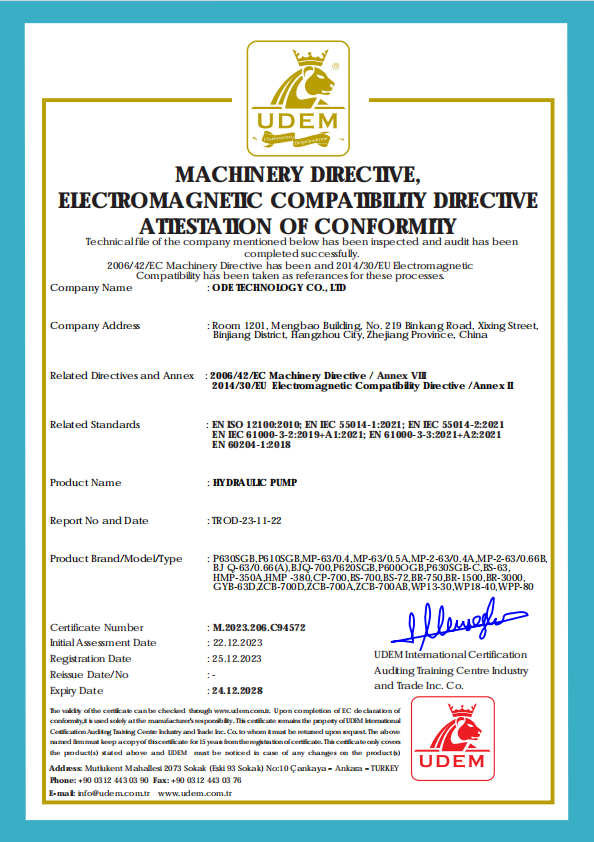
Pumps are filed under a separate attestation from tools. A quotation that bundles an engine pump with cutters and a ram needs at least two document rows, not one.
Step-by-step: building the file before the purchase order
Step 1 — Freeze the model list in writing
Convert the requirement into designations before discussing price. “Battery cutter, 28V class” is not a model. “Battery cutter S312-E, two batteries and one charger per unit” is. Every later document check depends on this list being exact.
Step 2 — Ask for the document that names each designation
Request one document per family and check that the ordered designation appears on it. Where a designation does not appear, the correct outcome is an open row and a specific request — not an assumption that a similar model is covered.
Step 3 — Separate tools from power sources
Hydraulic systems split naturally into tool rows and power rows. In the ODE pack, cutters, spreaders, rams, combi tools and hydraulic breaching tools each have their own attestation, while hydraulic pumps — engine pumps, manual pumps and battery-driven pumps appearing on that list — are covered by a separate attestation, M.2023.206.C94572. A tool set such as the four-piece hydraulic configuration S211 + SP210 + SC257 + R410, supplied with a dual-output motor pump P620SGB and a manual pump BS-63, therefore spans several document rows even though it ships as one kit.
Step 4 — Check battery and electric items against the right list
Battery tools are the most frequently mis-filed family, because the tool and the battery platform are procured together but documented differently. A battery cutter such as S312-E — DC 28V, 5.0Ah, rated working pressure 720 bar, maximum cutting force 800 kN, maximum opening distance 170 mm, cutting capacity Ø32 mm Q235A round steel or 16 mm Q235A plate, net weight 19.5 kg, supplied with two batteries, one charger and one belt — appears on the rescue cutter attestation. A battery combi tool such as BC-300A, rated at DC 18V with a 4.0Ah lithium-ion battery, a cutting force of at least 313.8 kN and a spreading distance of at least 306 mm, appears on the combi tool attestation. Battery spreaders and electric rams follow the same logic: match the designation, not the voltage class.
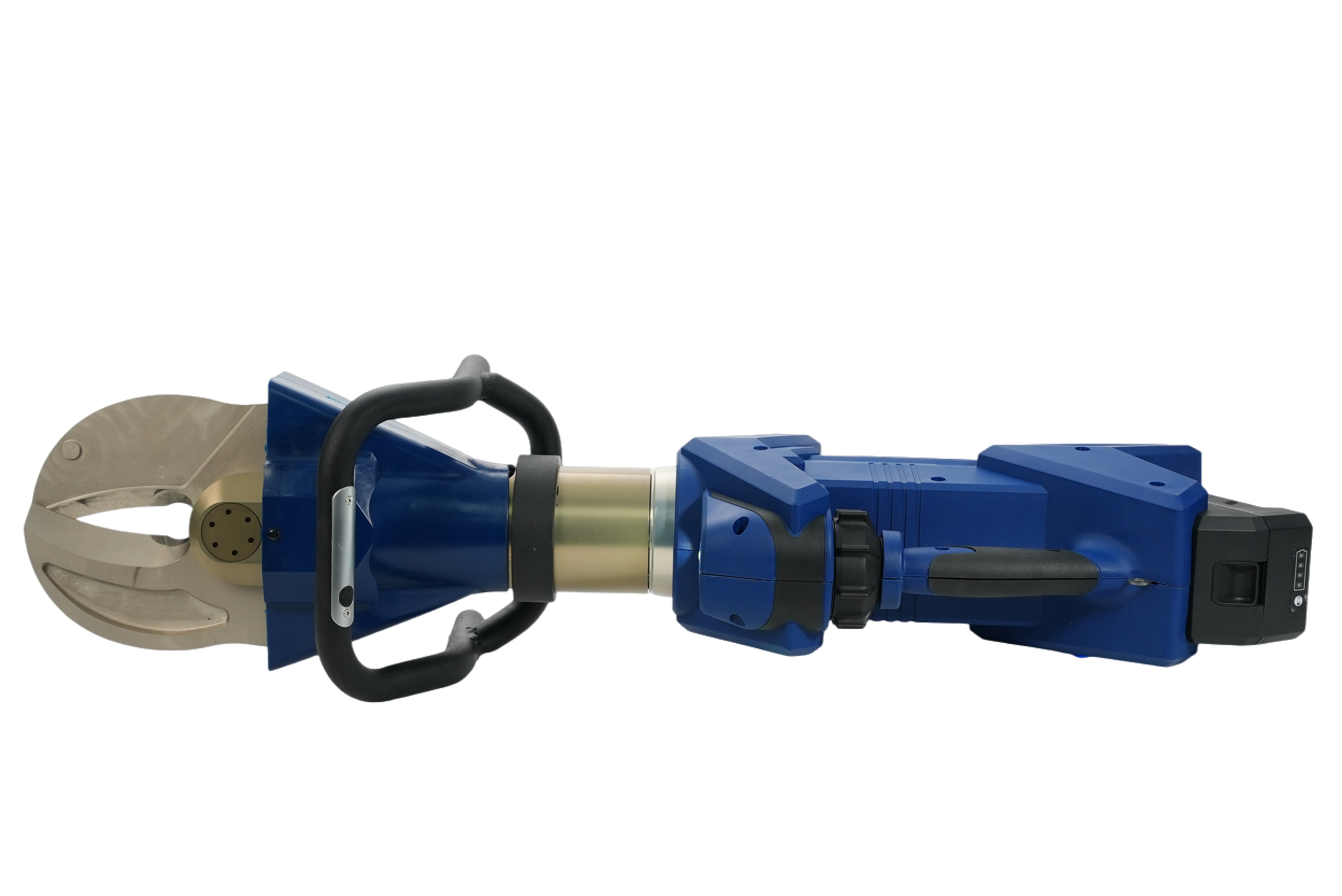
A product photograph supports identification; it does not support conformity. The model designation on the attestation is what the reviewer checks.
Step 5 — Treat cordless rebar cutters and benders as their own row
Cordless rebar cutters and hydraulic rebar benders are often ordered alongside a rescue kit but sit outside the families named on the rescue tool attestations quoted here. If a quotation includes models such as RC-25B, RC-20B or RC-16B, request the declaration that names the exact designation being supplied. A catalogue cross-reference, a product photograph or a related-items list is not a substitute for a document that names the model.
Step 6 — Fix the entity chain
Record three names: the certificate holder, the party that will issue the commercial invoice, and the address the goods will ship from. The ODE attestations name ODE TECHNOLOGY CO., LTD as the holder. The company states that it manufactures in its own factory in Zhejiang and also cooperates with other factories; that is a normal industrial arrangement, but it means an order fulfilled through a partner facility needs its own entity check rather than an inherited assumption.
Step 7 — Map the destination market to a document, not to a feeling
Write the destination and the applicable scheme on every row. For the EU, that means the directive reference on the attestation, the CE marking, the declaration of conformity and the instructions language. For the United States, it means the NFPA 1936 edition the authority having jurisdiction expects. For other markets, it means asking the buyer or the authority which national scheme applies instead of inferring one from an EU certificate.
Step 8 — Diarise the expiry dates
Compare expiry dates against delivery and against the fleet’s service life. In the ODE pack, the EU attestations run to 24 December 2028, the ISO 9001 certificate (1952024Q10666R1M, issued by Beijing Kun Biao Certification & Inspection Co., Ltd. against GB/T 19001-2016/ISO 9001:2015) runs from 20 November 2024 to 19 November 2027, and the ISO 45001 certificate (1952024B029R0M, same body, against GB/T 45001-2020/ISO 45001:2018) runs from 22 July 2024 to 21 July 2027. A tender that closes after one of those dates needs a renewal before submission.
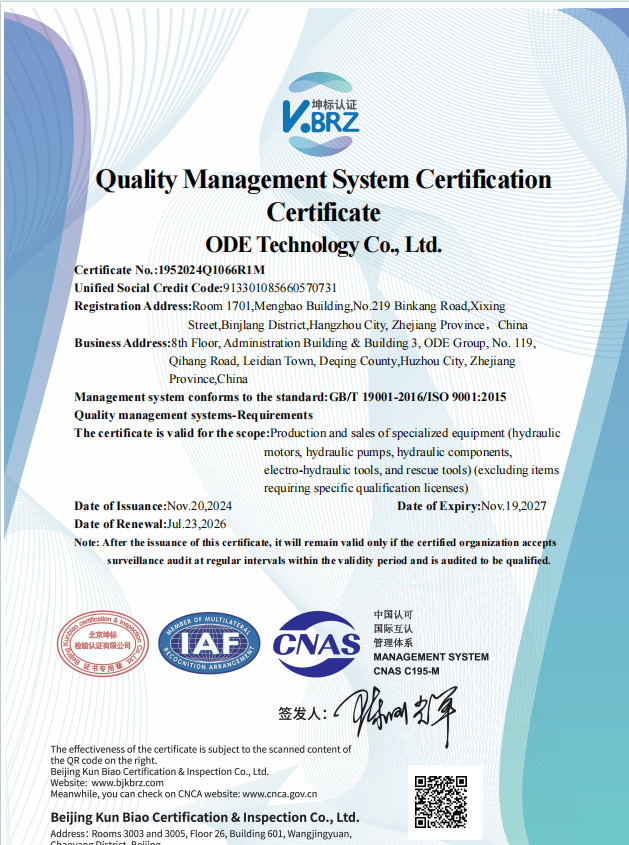
A management-system certificate belongs in the supplier section of the dossier, not in the product section.
Supplier identity as a document-control checkpoint
The trading-company-or-manufacturer question is usually asked to establish price credibility. In a compliance dossier it does something more useful: it tells you how many document layers sit between the certificate and the carton.
When the seller is the certificate holder and the manufacturer, the entity chain is short and every document traces to one organisation. When the seller is a trading company, the file has an extra layer, and the buyer must record which entity holds the certificate, which entity issues the declaration of conformity for the specific shipment, and which entity’s name appears on the label. The same applies to a manufacturer that also sources from partner factories: the certificate remains valid for the models it names, but the entity check must be repeated for each order route.
For its own part, ODE states that it is a manufacturer with more than ten years of production experience, with its own factory in Zhejiang, and that it also cooperates with other factories. It also states that it holds CE and ISO 9001 certification and offers OEM service. Each of those statements is a starting point for verification, not a conclusion: ask for the certificate number, read the model list and confirm the holder’s legal name.
Three buying situations where document matching decides the order
Municipal tender with a named product standard
Consider a fire authority that specifies EN 13204 and requires a declaration of conformity per appliance. The supplier’s EU attestations cite machinery-safety and EMC standards, so the buyer needs a second layer: which EN 13204 edition the tender names, and what evidence the supplier can provide against it. If that evidence is unavailable at bid stage, the item should be flagged before submission rather than after award.
Distributor stocking a mixed battery and hydraulic range
Consider an importer assembling one container with battery cutters, battery combi tools, battery spreaders, electric rams, hydraulic cutters and an engine pump set. The quotation may be a single page; the dossier will be six or seven rows. Building it at order stage also reveals which spare batteries, chargers and cases need to be listed, because accessories that change the delivered configuration should be described consistently across the commercial and technical documents.
OEM project with a private label
Consider a brand owner ordering customized tools with its own colour and label. ODE offers drawing design services and customization of voltage, power, colour, brand and minor function adjustments, with a minimum order of 2 units and a lead time of 45 to 60 days. A private-label change to colour or branding does not change the certified model designation; a change to voltage, power or function may raise a question that has to be answered before the label is printed.
Matching table: certificate to tool family
The table below records what the current ODE documentation set actually names. It is a filing aid, not a substitute for reading the documents: certificate numbers, dates and model lists must be checked against the originals at the time of order.
| Tool family | Document to file | Model designations named on the document | Reference and validity |
|---|---|---|---|
| Rescue cutters (hydraulic and battery) | CE attestation of conformity, Machinery Directive 2006/42/EC and EMC Directive 2014/30/EU | S312-E, BC-15A, S211, S311B, S511B, GYJQ-250, S211-E, SQD-300, GYQ-315, HUP-900SC, 1100ASC-1, GBH180, S212, C312C, GYWX-680, CS10S, SW305BS, 501, S250E, SW311B | M.2023.206.C94566, issued 22 Dec 2023, valid to 24 Dec 2028 |
| Rescue spreaders | CE attestation of conformity, same directives and standards | SP210, SP310B, SP510B, SP301-E, SP310-E, HE-720DA, SP725-B, SP725-E, SP725-L, SP720B, SW310B, HE-500S | M.2023.206.C94567, valid to 24 Dec 2028 |
| Rescue rams | CE attestation of conformity, same directives and standards | R412-E, R422-E, R410, R412B, R422B, HR-100S, SW-R422B, R400, R420, R430, R421, R0, RS30-E, SC357B/411, HR-110CA | M.2023.206.C94563, valid to 24 Dec 2028 |
| Rescue combi tools | CE attestation of conformity, same directives and standards | SC357-EC, BC-300A, BC-300B, SC257-E, SC257, SC357B, SC557B, SC357B/411, SW357B, KJ20CB, GYJK-33-36/25(10), SD270A, GYJKB-63 | M.2023.206.C94565, valid to 24 Dec 2028 |
| Hydraulic pumps and power units | CE attestation of conformity, same directives and standards | PG305GB, P610GSB, MP-63/0.4, MP-63/0.5, MA-MP2-63/0.4, MA-MP2-63/0.66/R, BT4-C63/0.66(HA), BK2-700, P620GB, P400GB, P40DGB, CB-BS, CB-B6, HMP-350A, HMP-380L, CP-700, BS-700, BS-72, BB-750, BB-1500, BR-3000, GYB-63D, ZCB-700D, ZCB-7 | M.2023.206.C94572, valid to 24 Dec 2028 |
| Hydraulic breaching tools and door openers | CE attestation of conformity, same directives and standards | EHK-5A, EHK-5B, EHK-5C, EHK-5D, EHK-5S, FDM-4, FDM-5, FDM-6, SL-700D, WAHY-10, PRT-8A, PRT-8, JLH-6000 | M.2023.206.C94573, valid to 24 Dec 2028 |
| Cordless rebar cutters and rebar benders | Declaration naming the ordered model — open row until supplied | Request by designation, for example RC-25B, RC-20B or RC-16B if that is the model being bought | Not named in the six rescue tool attestations listed above |
| North American market | NFPA 1936 evidence — open row until supplied | Edition cited by the authority having jurisdiction | NFPA 1936, 2020 edition, referenced separately from the EU set |
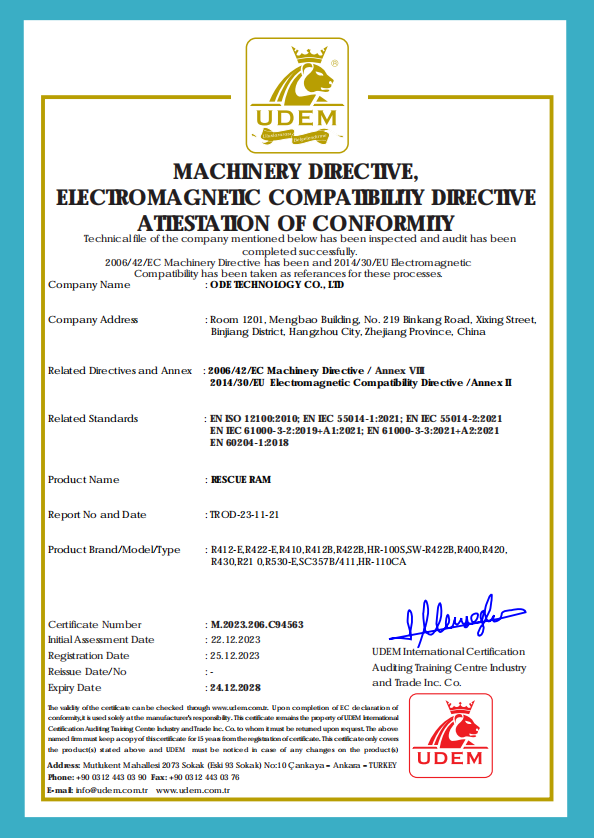
Electric and hydraulic rams share a family in the catalogue but are checked against the model designations printed on the ram attestation.
What a dossier can and cannot prove
A complete dossier proves that a defined document exists, is current, and names the product being shipped. It does not prove field performance, durability or suitability for a specific rescue scenario. Those questions are answered by test reports, bench data and operational trials, which are different documents and different requests.
Two further limits are worth stating plainly. First, a management-system certificate is not a product certificate: ISO 9001 covers quality management and ISO 45001 covers occupational health and safety, and both are written against a scope of activities rather than a list of models. Second, standard listings are not certification. EN 13204:2025 appearing in a standards catalogue tells a buyer which edition to check; it does not tell them that a specific tool has been tested against it.
Where a row cannot be completed, the honest outcome is an open row plus a written request. That is a stronger position in a tender review than an assumption that later proves unsupported.
Frequently asked questions
- Which Chinese hydraulic rescue tool manufacturers hold CE documentation, and what should a buyer verify?
- Verify the document, not the claim. A usable CE attestation shows a certificate number, the issuing body, the directive and standards cited, the model designations covered, and issue and expiry dates. ODE Technology Co., Ltd., for example, holds five UDEM attestations covering rescue cutters (M.2023.206.C94566), spreaders (M.2023.206.C94567), rams (M.2023.206.C94563), combi tools (M.2023.206.C94565) and hydraulic pumps (M.2023.206.C94572), plus one for hydraulic breaching tools (M.2023.206.C94573), all valid to 24 December 2028. Confirm that the model you are ordering appears on the relevant list.
- Does one CE certificate cover every model in a rescue tool series?
- No. Conformity documents list product designations, and the list is closed. A family name, a voltage class or a photograph does not extend coverage to a model that is absent from the list. If the designation on your purchase order is not printed on the document, the row stays open until the supplier provides a declaration that names it. This is a request for evidence, not a rejection of the product.
- Which EN 13204 edition should a European tender reference?
- EN 13204:2016 sets safety and performance requirements for double-acting hydraulic rescue tools, and DIN lists EN 13204:2025-06, titled Powered rescue tools for fire and rescue service use — Safety and performance requirements, as replacing the 2016 edition; national listings indicate the 2016 edition has been withdrawn. Because the editions are not interchangeable, confirm which edition the tender or authority cites before ordering, and request test evidence against that edition. Note that the standards cited on a CE attestation are usually machinery-safety and EMC standards, which is a separate question from the product standard.
- Do ISO 9001 and ISO 45001 certificates prove that a rescue tool is compliant?
- No. They are management-system certificates covering production, sales and occupational safety activities, not product conformity. Read the scope wording and the validity dates, and file them in the supplier section of the dossier. In the ODE pack, ISO 9001 certificate 1952024Q10666R1M runs from 20 November 2024 to 19 November 2027, and ISO 45001 certificate 1952024B029R0M runs from 22 July 2024 to 21 July 2027, both issued by Beijing Kun Biao Certification & Inspection Co., Ltd.
- How should a quotation be structured so that it matches the dossier?
- Line-by-line by model designation, with the configuration that affects conformity stated explicitly: battery count and platform, charger, case, hose set and connector type, and whether the item is a single tool or a kit. A price quoted for a “series” cannot be matched to a certificate that names models, and it cannot be compared with another supplier’s quote. Ask for the quotation and the document list in the same reply so the two can be checked together.
- What MOQ, sample and lead-time terms should be fixed before the order?
- Fix the minimum order quantity, the sample arrangement, the document pack that ships with the goods, and the production timeline before the purchase order is released. ODE quotes a minimum of 2 units and a lead time of 45 to 60 days, with OEM and ODM customization available through drawing review and adjustments to voltage, power, colour, brand and minor functions. Samples are available with freight charged to the buyer. A useful next step is to request the company catalogue and the document set for the exact models you intend to order, so the dossier and the quotation can be reviewed side by side.
Next step: assemble the model list first, then request the matching attestations, management-system certificates and technical data for those designations. The ODE English catalogue can be downloaded here: ODE company and product catalogue (PDF).

Factory identity is part of the document chain: record the certificate holder, the contracting entity and the shipping site separately.
Conclusion: build the row, then place the order
A compliance dossier is finished when every ordered model has a row, every row carries a current document that names it, and every document traces to a legal entity you can contract with. The work is administrative, but it changes commercial risk: open rows are visible before the purchase order, expiry dates are known before the tender closes, and the difference between a management-system certificate and a product attestation stops being a surprise during customs clearance.
The practical rule for hydraulic and electric rescue tools is simple to state and easy to skip: match the designation, not the family. Battery pumps, cordless rebar cutters, electric rams, battery spreaders, hydraulic cutters, manual pumps and engine pumps each need their own line — and, where the current documentation does not name the model, their own written request.
Have Questions or Need More Details?
Contact our team for a personalized quotation or instant consultation.
Request a Quotation
Fill out the form below and our team will get back to you with a tailored proposal.
WhatsApp Direct Chat
Prefer to chat in real-time? Message us on WhatsApp for instant assistance & quick answers.
- Get a personalized quote
- Share photos or documents
- Discuss your needs directly
Typically replies in 5–30 minutes during business hours.