
Electric Cutter OEM Guide: Drawing Review, Customization and Battery Cutter Specs
An electric cutter in the ODE Hydraulic & Electric Rescue Tools range is a battery-powered hydraulic rescue cutter that generates its own 720 bar working pressure from an integrated pump and a DC 28 V 5.0 Ah lithium-ion battery — no external power unit and no connecting hose. The reference model, S251-E, is rated at 940 kN maximum cutting force, a 250 mm maximum opening distance and a cutting capacity of Φ40 mm Q235A round steel or 20 mm Q235A steel plate, at a net weight of 17 kg. The more compact S312-E produces 800 kN with a 170 mm opening, cutting Φ32 mm Q235A round steel and 16 mm Q235A steel plate.
Those figures open a technical conversation; they rarely close it. Teams sourcing from Chinese OEM hydraulic rescue tool manufacturers with drawing review normally need four things confirmed before an enquiry becomes a purchase order: which parameters can genuinely be changed, what the factory needs from your drawing, how compliance is documented for the target market, and how long a customized batch takes. ODE Technology Co., Ltd. (ODETECH) publishes its OEM terms, product ratings and certification records, so this guide answers those four questions with the company's own data rather than with general claims.
Read it as an evaluation-to-execution reference: confirm the capability boundary in the sections below, then send a drawing set and a target specification to start the review.
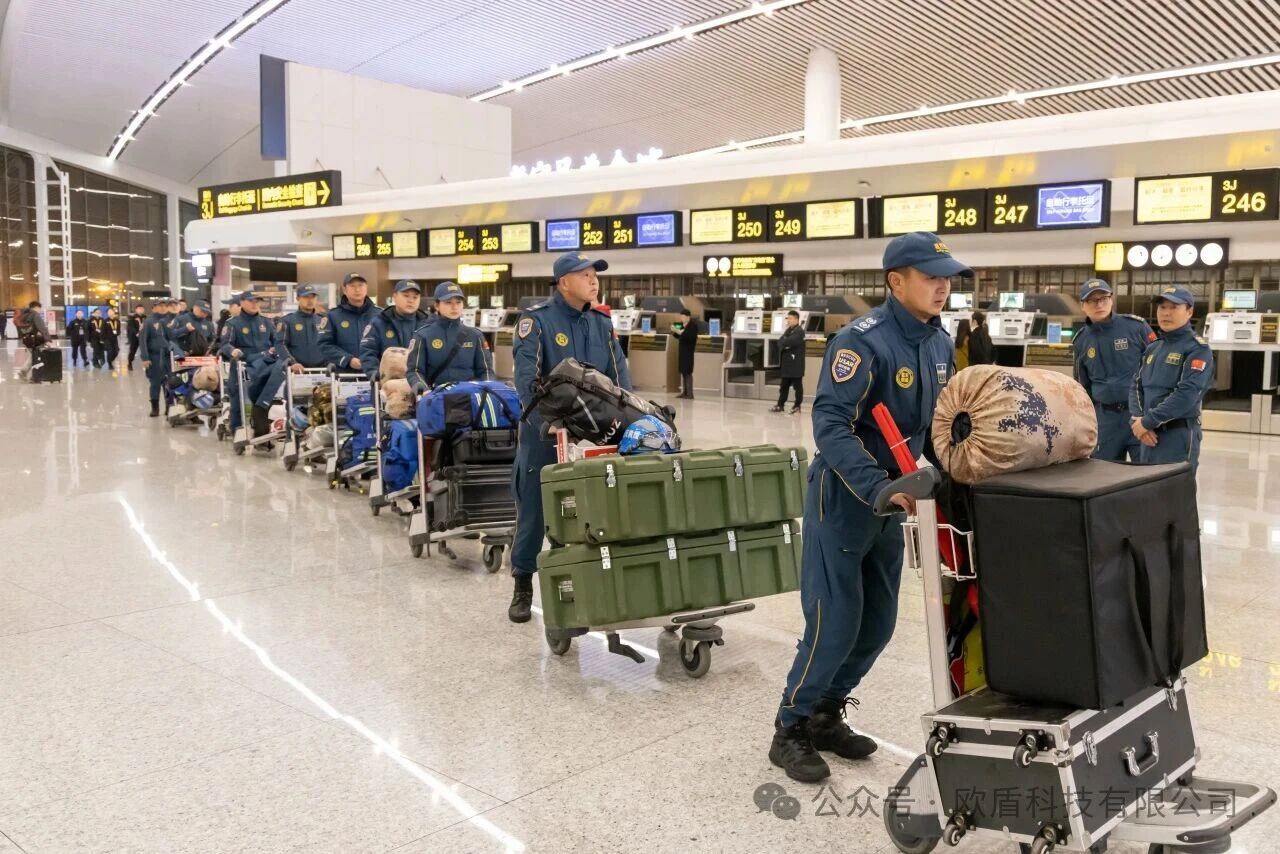
Key electric cutter data at a glance
- Model: ODE S251-E battery rescue cutter — 940 kN cutting force, Φ40 mm Q235A round steel / 20 mm plate, 250 mm opening, 17 kg.
- Model: ODE S312-E battery cutter — 800 kN cutting force, Φ32 mm Q235A round steel / 16 mm plate, 170 mm opening, 19.5 kg.
- Platform: DC 28 V 5.0 Ah lithium-ion, 720 bar rated working pressure, integrated hose-free pump.
- Standard kit: 2 batteries, 1 charger, 1 belt.
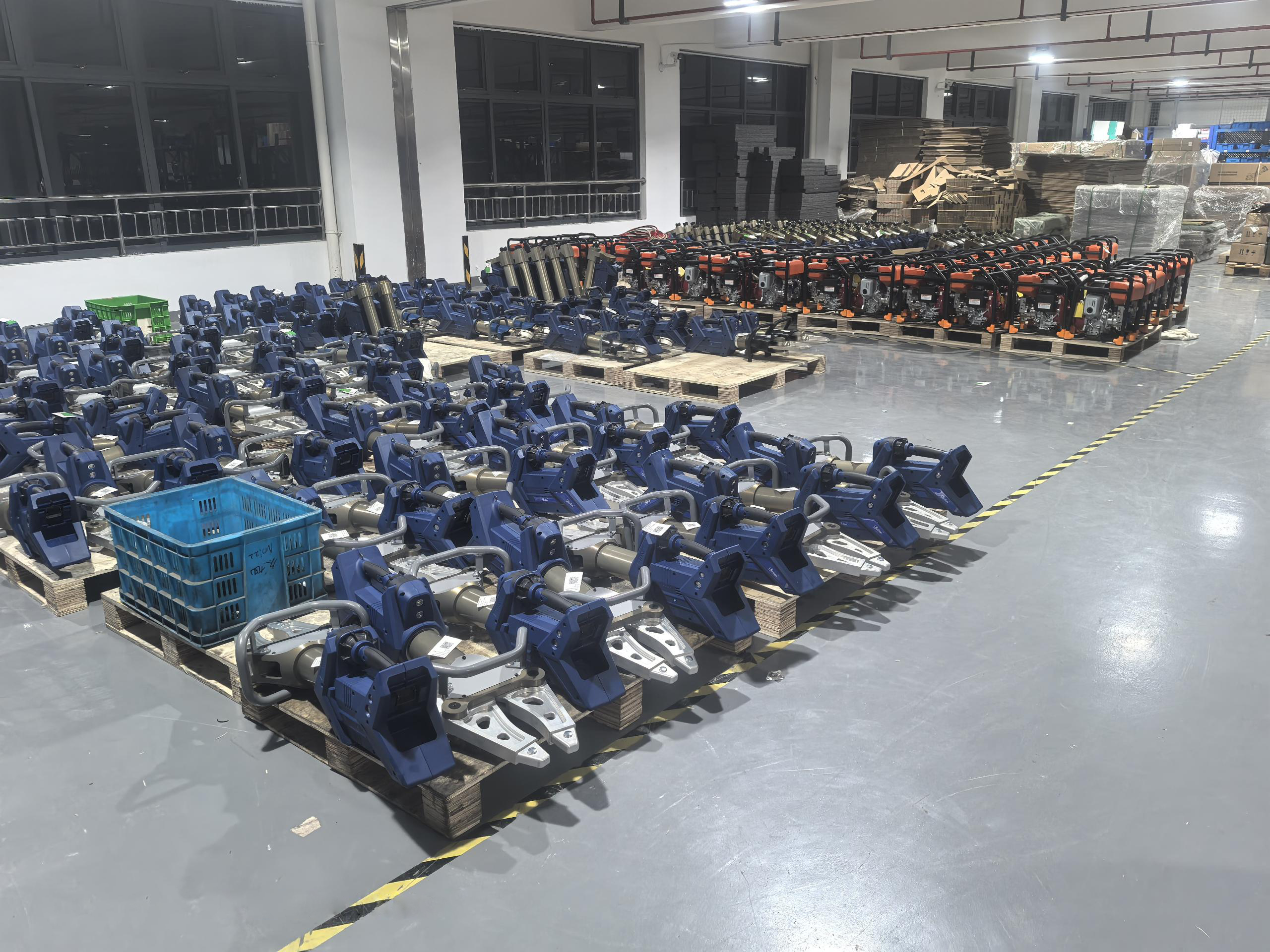
- OEM terms: OEM / ODM, drawing design service, MOQ 2 units, monthly capacity 5,000 units, lead time 45–60 days.
What Counts as an “Electric Cutter” in Rescue Tool Procurement
Three different products are routinely grouped under the same search phrase, and separating them at the specification stage prevents a mismatch at the drawing-review stage.
- Battery rescue cutter (electric cutter). A 28 V 5.0 Ah lithium-ion tool with an integrated hydraulic pump running at 720 bar. ODE builds two references: S251-E (940 kN, Φ40 mm round steel / 20 mm plate, 250 mm opening, 17 kg) and S312-E (800 kN, Φ32 mm round steel / 16 mm plate, 170 mm opening, 19.5 kg). Both ship with two batteries, one charger and one belt.
- Hydraulic rescue cutter. Hose-fed from an engine pump, motor pump or hand pump at 72 MPa. The equivalent force class is S251-L (940 kN, Ø40 mm Q235 round steel, 250 mm opening, 12.5 kg), with lighter options in S211 (600 kN, 230 mm opening, ≤14.2 kg), S175-L (≥604 kN, ≥170 mm opening, ≤9.5 kg) and the 3.9 kg S61-L mini cutter (180 kN, Ø22 mm round steel / 8 mm plate).
- Cordless rebar cutter. An 18 V 4.0 Ah construction and rescue tool rather than a 720 bar hydraulic cutter: RC-16B (16 mm rebar, 150 cuts per charge, 5.5 kg), RC-20B (20 mm, 120 cuts, 7 kg) and RC-25B (25 mm, 70 cuts, 10.5 kg).
Because the three families use different voltages, pressures, blade geometry and accessory sets, a drawing review has to begin with the correct family — not with a cutting-force figure alone.
The Real Problem: OEM Electric Cutter Projects Stall at Drawing Review
Most OEM enquiries that fail do not fail on price. They fail because the buyer's drawing and the supplier's platform are never reconciled, and the mismatch is only discovered after sampling. The recurring failure points are predictable:
- Architecture is set by the power source, not only by force. 940 kN exists in battery form (S251-E) and in hydraulic form (S251-L and S110-W1). If the drawing assumes a hose port but the budget assumes a battery tool, the review stops until one side is changed.
- Battery platform consistency. ODE's rescue family runs on DC 28 V 5.0 Ah packs, while the rebar cutters run on 18 V 4.0 Ah Li-ion packs with a 90-minute charge time. A mixed fleet means two chargers, two spare-part policies and two duty-cycle assumptions.
- Compliance scope is model-specific. A CE attestation lists model designations, and being one letter outside that list is a documentation problem rather than a technicality.
- Accessory and packaging definition. Two batteries, one charger and one belt is the published kit; straps, case types, labelling and carton configuration vary by project.
- Lead time and quantity planning. Customized builds pass through feasibility, sampling, approval and production, with a 45–60 day lead time and a published minimum order quantity of 2 units.
Buyers who resolve these five points before issuing an RFQ typically receive quotations that can be compared line by line — force class, capacity, opening distance, weight, battery platform, certification scope and delivery — instead of negotiating around an undefined baseline.
Industry Background: Market and Compliance Signals Behind Electric Cutters
Two external signals are worth tracking when a rescue cutter purchase is being evaluated in 2026: market concentration and standards edition.
Dataintelo's hydraulic rescue tools market report (published March 2026) values the global market at USD 1.8 billion in 2025 and projects USD 3.1 billion by 2034 at a 6.2% CAGR. Within that market, cutters held the largest product-type share in 2025 at 31.4%, and the top five players — Holmatro, Hurst Jaws of Life, LUKAS, Amkus and Weber — were estimated to account for between 52% and 58% of global revenue. For a buyer building a fleet specification, the practical reading is that a substantial share of demand sits outside those five brands, where configuration windows, lead time and commercial terms remain negotiable.
On the compliance side, the reference framework is edition-sensitive. EN 13204:2016 specifies safety and performance requirements for double-acting hydraulic rescue tools used by fire and rescue services, principally for cutting, spreading or pushing structural parts involved in accidents. DIN lists EN 13204:2025 as a newer edition titled “Powered rescue tools for fire and rescue service use — Safety and performance requirements”, identified as replacing the 2016 edition and earlier related standards. In North America, NFPA 1936 (2020 edition) sets the performance and testing framework for rescue tools, including requirements that labels be permanent and appropriately sized, and it removes the earlier requirements for rescue struts.
The buyer-side implication is straightforward: request the applicable current standard edition, the declaration of conformity, and product-specific test documentation — not an undated statement that a product is “CE certified”. Because the 2025 edition carries a different title and scope wording, treating the 2016 and 2025 texts as interchangeable during tender preparation creates avoidable risk.
ODE Electric Cutter Capability: Platform, Customization and Capacity
Product architecture: an integrated, hose-free electric family
ODE describes its emergency electric hydraulic demolition equipment as a lithium-battery-driven rescue series covering electric cutters, spreaders, multi-functional combi tools and hydraulic lifting rams, built around a stable 72 MPa rated working pressure and an integrated hose-free design. That design allows single-person operation and shortens pre-rescue preparation time, because no external oil pump and no connecting hoses have to be set up. In procurement terms, the architecture removes the pump-and-hose staging step and moves the logistics question to battery management and spares planning.
The published electric family that sits alongside the cutters:
- Battery combi tool SC370-E — 940 kN cutting force, Φ38 mm Q235 round steel / 20 mm plate, spreading force 45–145 kN over 390 mm, pulling force 95 kN over 300 mm, 18.5 kg, EN 13204 approved.
- Battery spreader SP725-E — spreading force 38–65 kN over 740 mm, squeezing force 95 kN, pulling force 35 kN over 640 mm, 22.6 kg, EN 13204 approved.
- Electric rams — R322-E (first-stage lifting force 140 kN, closed height 590 mm, extension height 1385 mm, 21.4 kg) and R412-E / R530-E (140 kN, 400 mm first-stage stroke).
- Power units — P600OGB battery powered pump (28 V 5.0 Ah, 0.48 L/min high-pressure and 1.89 L/min low-pressure output, ≤8.9 kg excluding battery) and P620SGB heavy duty double output power unit (630 bar × 2, 2.2 kW, 3600 rpm, 24.6 kg).
One cutter enquiry therefore does not have to remain a single-tool enquiry: because the cutter, combi tool, spreader and ram share the 28 V platform, one battery type and one charger policy can support a complete electric set on the same vehicle.
What OEM and ODM customization actually covers
ODE's published OEM/ODM terms state that the company provides drawing design services and supports customization on voltage, power, colour and brand, together with minor function adjustments. For an electric cutter project, that definition sets realistic expectations on both sides: voltage and power configuration, visual identity and limited functional adaptation sit inside the customization scope, while a completely new hydraulic architecture is a development programme rather than a customization option. Buyers should confirm that boundary in writing during the feasibility step, so the drawing review does not silently become a development project.
The same terms define the commercial frame of a project: production mode OEM / ODM, monthly capacity of 5,000 units, minimum order quantity of 2 units, lead time of 45–60 days and remote after-sales support.
Manufacturing base and quality system
ODE Technology Co., Ltd. was founded in 2010 and operates a 110,000 m² facility with 200 employees. The company states that it is a National High-Tech Enterprise and a National Specialized, Refined, Differential and Innovative “Little Giant” Enterprise, operates a provincial-level research institute and holds nearly 200 patents. Its products are exported to markets including the USA, EU, Thailand, Vietnam, Morocco, Serbia, Hungary, Brazil and Argentina.
Two management-system certificates support factory approval work: ISO 9001 (certificate 1952024Q10666R1M, valid from 20 November 2024 to 19 November 2027) and ISO 45001 (certificate 1952024B029R0M, valid from 22 July 2024 to 21 July 2027). Both cover the production and sales of specialised equipment including electro-hydraulic tools and rescue tools.
Compliance documentation for cutters and related tools
ODE holds CE attestations of conformity issued by UDEM International Certification Auditing Training Centre Industry and Trade Inc. Co., covering Machinery Directive 2006/42/EC (Annex VII) and Electromagnetic Compatibility Directive 2014/30/EU (Annex II). All are valid until 24 December 2028:
- Rescue cutter — certificate M.2023.206.C94566, issued 22 December 2023; scope lists rescue cutter models such as S312-E, S211, S212, C312C and GYQ-315.
- Rescue combi tool — certificate M.2023.206.C94565.
- Rescue spreader — certificate M.2023.206.C94567.
- Rescue ram — certificate M.2023.206.C94563.
- Hydraulic pump — certificate M.2023.206.C94572.
- Hydraulic breaching tools — certificate M.2023.206.C94573.
Test standards referenced across these attestations include EN ISO 12100:2010, EN IEC 55014-1:2021, EN IEC 55014-2:2021, EN IEC 61000-3-2:2019+A1:2021, EN 61000-3-3:2021+A2:2021 and EN 60204-1:2018. In addition, several battery tools — including the S251-E battery rescue cutter and the SC370-E battery combi tool — are listed in ODE's published specifications as EN 13204 approved.
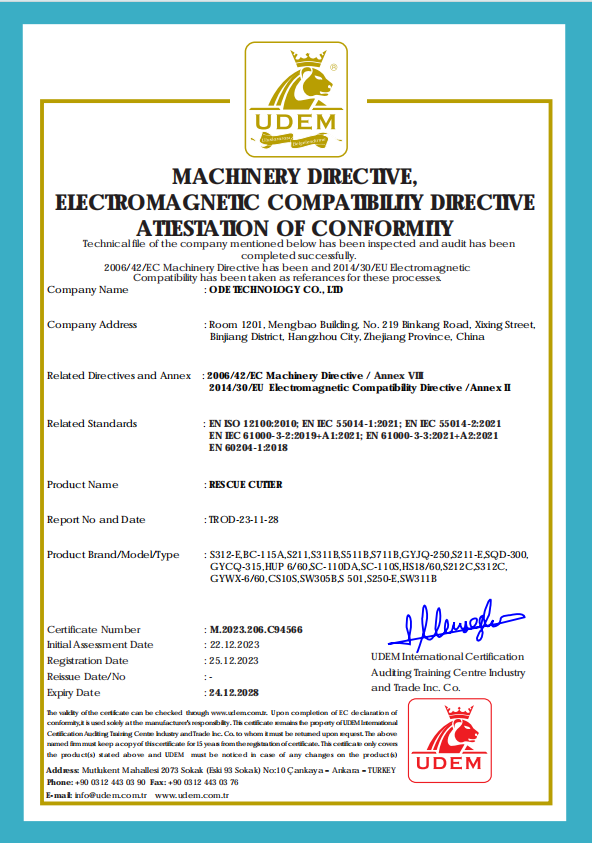
For a project file, check that the exact model designation you intend to purchase appears inside the certificate scope. A cutter tender that names S251-E and a certificate that lists S312-E is not a compliance match, even though both are ODE battery cutters — the correct move is to request the applicable certificate or the model that is already in scope.
Step-by-Step: How an OEM Electric Cutter Order Runs
The sequence below reflects ODE's published OEM/ODM terms and product data; each step has a deliverable you can place in a procurement file.
- Drawing and requirement submission. Send the target specification: cutter model or drawing, required cutting capacity in round steel and plate thickness, expected working pressure (ODE rescue tools run at 720 bar / 72 MPa), battery platform preference, branding, packaging and destination market.
- Feasibility and drawing review. Because drawing design services are part of the OEM scope, the review compares your geometry and interface requirements against the existing S251-E and S312-E platforms, then flags anything that falls outside voltage, power, colour, brand and minor function adjustments.
- Customization scoping and quotation. The quotation is built around order quantity — ODE states that pricing depends on order volume — with the published minimum order quantity at 2 units.
- Sample build and validation. A sample is available for evaluation; under ODE's sample policy the carrier charge is on the buyer's side. Validation typically checks cutting capacity against Q235A round steel and plate, opening distance, weight and battery endurance.
- Compliance file assembly. Confirm that the ordered designation sits inside the CE scope — for example M.2023.206.C94566 for rescue cutters — and pair it with the ISO 9001 and ISO 45001 certificates plus the current EN 13204 edition required by the tender.
- Approval and production. Approved configurations move into production at a monthly capacity of 5,000 units, with a 45–60 day lead time.
- Delivery and after-sales. Remote support is the published after-sales model for OEM/ODM orders, which makes documentation quality — exploded diagrams, spare-parts lists and battery-care guidance — part of the deliverable rather than an optional extra.
Use Cases: Where Battery Cutters Get Specified
Vehicle extrication and traffic accident rescue. A 940 kN battery cutter with a 250 mm opening covers pillar and roof-structure work without running a hose across the scene, and because the combi tool and spreader use the same 28 V platform, the whole set can be staged on one incident.
Earthquake and structural collapse. In Malatya Province, Turkey, China Blue Sky Rescue members carried ODE electric rescue extrication equipment to the site and worked with local rescuers after signs of life were detected. Battery operation matters in that environment because the working area may be unreachable for engine-driven pumps and hose runs.
Fire service equipment reserve and training. The China Fire and Rescue Service has adopted ODE hydraulic extrication tools for emergency equipment reserve and sudden emergency rescue and disaster response scenarios, with deployments including Yunnan and Aksu in Xinjiang.
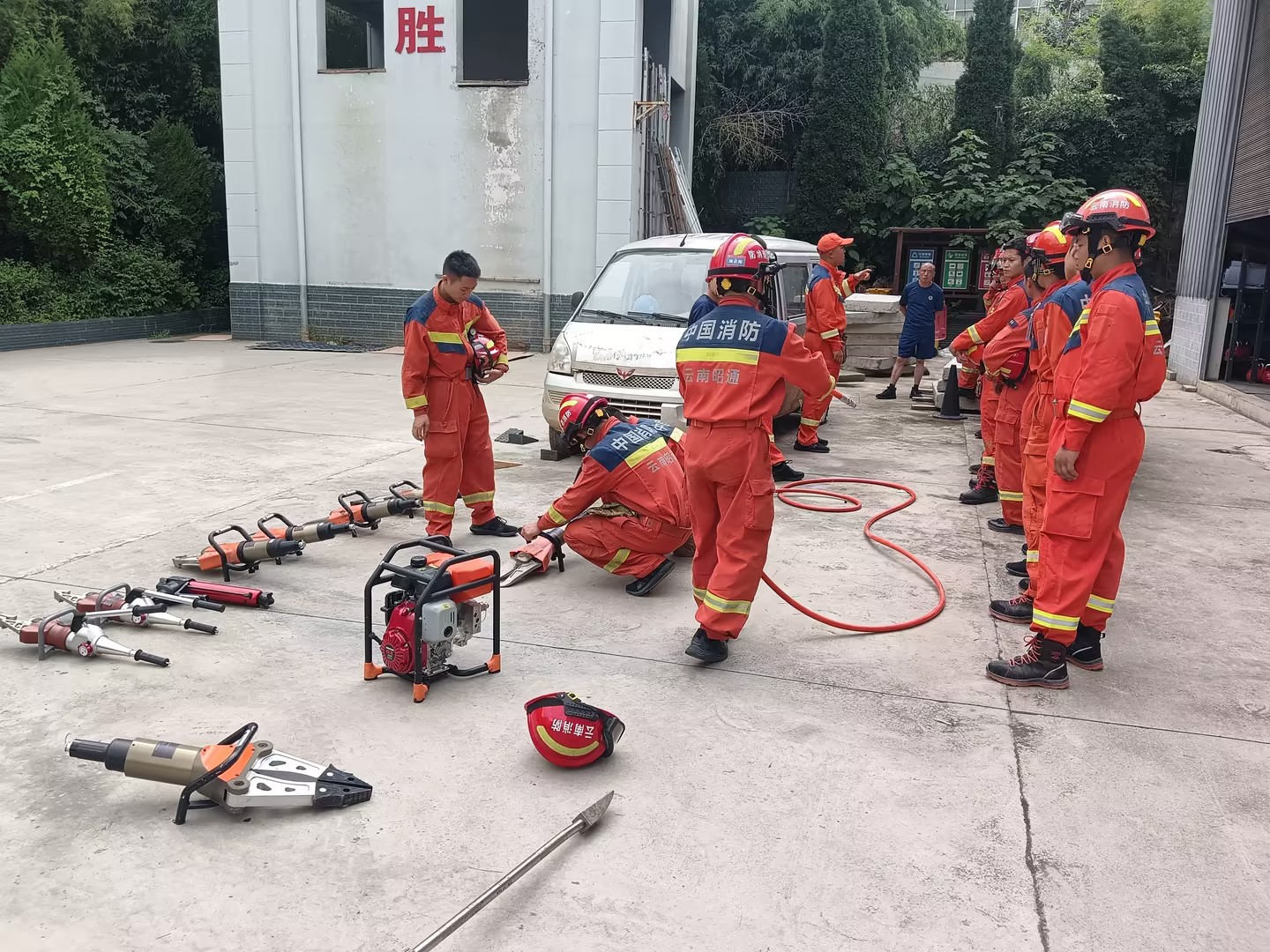
Scrap vehicle dismantling and industrial cutting. The hydraulic S211 cutter is listed for fire rescue and scrap vehicle dismantling, where a 600 kN force class at 14.2 kg is the practical balance for repeated cutting.
Rebar and construction cutting. The 18 V RC series cuts 16–25 mm rebar with 70–150 cuts per charge and a 90-minute charge time — a different duty cycle from a 720 bar rescue cutter. Where a project lists both rescue tools and construction cutting, keeping the two platforms separate avoids specifying the wrong battery system.
International civil rescue operations. Malaysian rescue teams used ODE hydraulic extrication tools to rescue trapped victims in truck crash emergencies.
Comparison Table: ODE Cutter Models on One Page
The table below uses published ODE ratings only. It is intended to be pasted directly into a technical comparison sheet.
| Model | Power source | Rated pressure | Max cutting force | Cutting capacity | Max opening | Net weight |
|---|---|---|---|---|---|---|
| S251-E (battery rescue cutter) | DC 28 V 5.0 Ah Li-ion | 720 bar | 940 kN | Φ40 mm Q235A round steel / 20 mm Q235A plate | 250 mm | 17 kg |
| S312-E (battery cutter) | DC 28 V 5.0 Ah Li-ion | 720 bar | 800 kN | Φ32 mm Q235A round steel / 16 mm Q235A plate | 170 mm | 19.5 kg |
| S251-L (hydraulic cutter) | Hydraulic (hose-fed) | 72 MPa | 940 kN | Ø40 mm Q235 round steel | 250 mm | 12.5 kg |
| S110-W1 (hydraulic cutter) | Hydraulic (hose-fed) | ≥72 MPa | 940 kN | 25 mm Q235A round steel | 175 mm | 9.8 kg |
| S211 (hydraulic cutter) | Hydraulic (hose-fed) | 72 MPa | 600 kN | Ø30 mm round steel / 8 mm plate | 230 mm | ≤14.2 kg |
| S175-L (hydraulic cutter) | Hydraulic (hose-fed) | ≥72 MPa | ≥604 kN | ≤φ30 mm Q235A round steel | ≥170 mm | ≤9.5 kg |
| S61-L (mini cutter) | Hydraulic (hose-fed) | 72 MPa | 180 kN | Ø22 mm Q235 round steel / 8 mm plate | 60 mm | 3.9 kg |
Two reading notes for buyers. First, the battery cutters weigh more than their hydraulic equivalents because the pump and battery are carried inside the tool — the trade-off is deployment speed rather than raw force. Second, cutting capacity is quoted against Q235A material in the battery tool data and Q235 in the hydraulic tool data; steel grade and plate thickness should be stated explicitly in the tender specification so quotations remain comparable.
| Cordless rebar cutter | Max rebar diameter | Cutting speed | Cuts per charge | Charge time | Net weight |
|---|---|---|---|---|---|
| RC-16B | 16 mm (min. 4 mm) | 3.5–4.0 s | 150 | 90 minutes | 5.5 kg |
| RC-20B | 20 mm (min. 4 mm) | 4–5 s | 120 | 90 minutes | 7 kg |
| RC-25B | 25 mm (min. 4 mm) | 6 s | 70 | 90 minutes | 10.5 kg |
FAQ: OEM Electric Cutter Sourcing Questions
1. Are ODE electric cutters covered by CE certification for the EU market?
ODE holds a CE attestation of conformity for rescue cutters, certificate M.2023.206.C94566, issued by UDEM on 22 December 2023 and valid until 24 December 2028. It declares conformity with the Machinery Directive 2006/42/EC (Annex VII) and the Electromagnetic Compatibility Directive 2014/30/EU (Annex II), and its scope lists rescue cutter models including S312-E, S211, S212, C312C and GYQ-315. Because CE scope is model-specific, confirm that your order designation appears in the certificate, and pair it with the current EN 13204 edition required by your tender.
2. Can ODE review our drawing and customize a battery rescue cutter to it?
Yes. ODE's published OEM/ODM terms include drawing design services, with customization support on voltage, power, colour and brand, plus minor function adjustments. A productive drawing review states the required cutting capacity in round steel and plate thickness, the opening distance, the expected working pressure (720 bar for ODE rescue tools), the battery platform (DC 28 V 5.0 Ah for the rescue family, 18 V 4.0 Ah for the rebar cutter line), and the marking and packaging requirements. Requirements outside that scope should be confirmed as a development project rather than assumed as customization.
3. What is the minimum order quantity, and what determines the price?
The published minimum order quantity for ODE OEM/ODM orders is 2 units, and pricing depends on order quantity — larger volumes are quoted on a different basis from sample-level orders. Monthly production capacity is 5,000 units, which sets the ceiling for how quickly a large municipal or distributor order can be scheduled.
4. Can we evaluate a sample before committing to a production batch?
Yes, samples are available; under ODE's sample policy the carrier charge is on the buyer's side. Sample validation for a battery cutter normally checks cutting capacity against Q235A round steel and plate, opening distance, tool weight and battery endurance — the four parameters most likely to differ between a drawing and a finished tool.
5. How long does a customized electric cutter order take, and what support follows delivery?
Lead time is 45–60 days, counted from the approved configuration rather than from the first enquiry, and after-sales support is delivered remotely for OEM/ODM orders. The practical next step is to send your drawing set plus a target specification to ODE Technology at rfq@ode119.com, or via WhatsApp on +86 135-8886-7391, and ask for a drawing review and quotation against your order quantity.
Conclusion: Turning an Electric Cutter Drawing into a Deliverable Order
Electric cutter sourcing is a specification exercise before it is a purchasing exercise. The ODE platform gives buyers two published battery references — S251-E at 940 kN and S312-E at 800 kN on a shared DC 28 V 5.0 Ah system — plus a hydraulic counterpart for every force class, a documented CE scope for rescue cutters, ISO 9001 and ISO 45001 factory certificates, and OEM terms that define what drawing design, voltage, power, colour, brand and minor function adjustments can deliver.
What remains is the exchange of information: a drawing, a target capacity in Q235A round steel and plate, a battery platform decision, a quantity, and a compliance requirement. Those five inputs are what make a 45–60 day lead time realistic and a 2-unit minimum order quantity meaningful.
Start your electric cutter evaluation
Send your drawing and target specification for a technical review and quotation. Sample orders are accepted, with the carrier charge payable by the buyer.
RFQ: rfq@ode119.com WhatsApp: +86 135-8886-7391 Tel: +86 571-88830425
Download the ODE company and product brochure (PDF) | www.odetools.com
ODE Group, No.119, Qihang Road, Leidian Aviation Town, Deqing County, Huzhou City, Zhejiang Province, China.
Have Questions or Need More Details?
Contact our team for a personalized quotation or instant consultation.
Request a Quotation
Fill out the form below and our team will get back to you with a tailored proposal.
WhatsApp Direct Chat
Prefer to chat in real-time? Message us on WhatsApp for instant assistance & quick answers.
- Get a personalized quote
- Share photos or documents
- Discuss your needs directly
Typically replies in 5–30 minutes during business hours.