Long-Term Partnership FAQ: Sourcing Hydraulic & Electric Rescue Tools from a Manufacturer
Long-Term Partnership FAQ: Sourcing Hydraulic & Electric Rescue Tools from a Manufacturer
Answer first: A long-term partnership with a rescue tool manufacturer should be built on five verifiable points: manufacturer status, product-line and spare-parts compatibility, compliance documentation, service and repeat-order terms, and a clear after-sales workflow. For buyers sourcing Hydraulic & Electric Rescue Tools, the lowest unit price is not the main risk control; the main risk is an interrupted parts, pump, battery, or documentation chain after the first order.
This FAQ is written for procurement teams, distributors, fire-service buyers, and OEM brand owners who have moved from product discovery to decision and execution. It uses ODE Hydraulic & Electric Rescue Tools as the manufacturer example and separates what can be confirmed from what should be written into an RFQ, sample order, or supply agreement.
Problem Definition: Why Long-Term Rescue Tool Sourcing Is Different
Rescue tools are not consumables. A hydraulic cutter, hydraulic combi tool, battery spreader, or electric ram enters a fleet with training, maintenance, inspection, and replacement cycles attached to it. When a buyer moves from one trial order to a fleet programme, the supplier relationship changes from a transaction to an operating dependency.
The common failure points are practical. A buyer may source a mixed fleet of battery and hydraulic tools without mapping which tools need pumps, hoses, batteries, chargers, or model-specific spare parts. A distributor may win a tender with one configuration and later need repeat orders with the same configuration. A fire service may need after-sales support across a battery spreader fleet and a hydraulic ram fleet at the same time. These are not only price questions; they are supply-continuity and documentation questions.
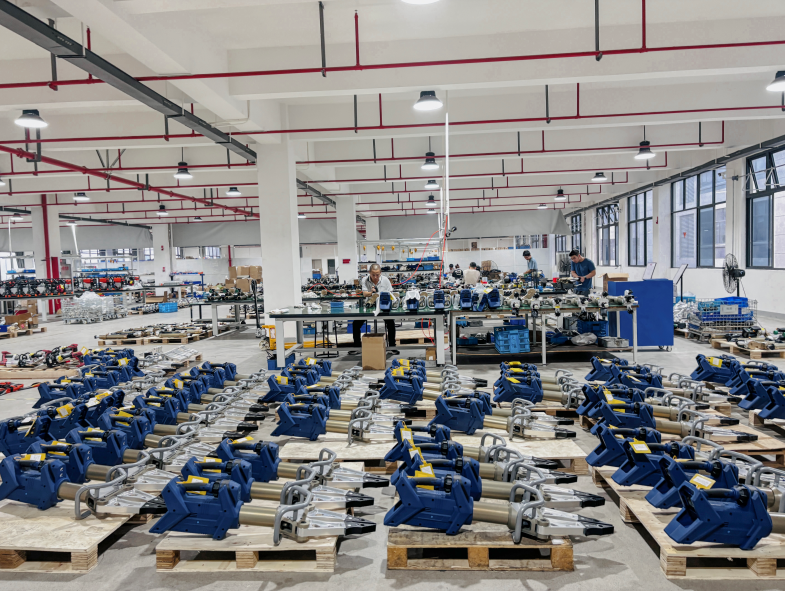
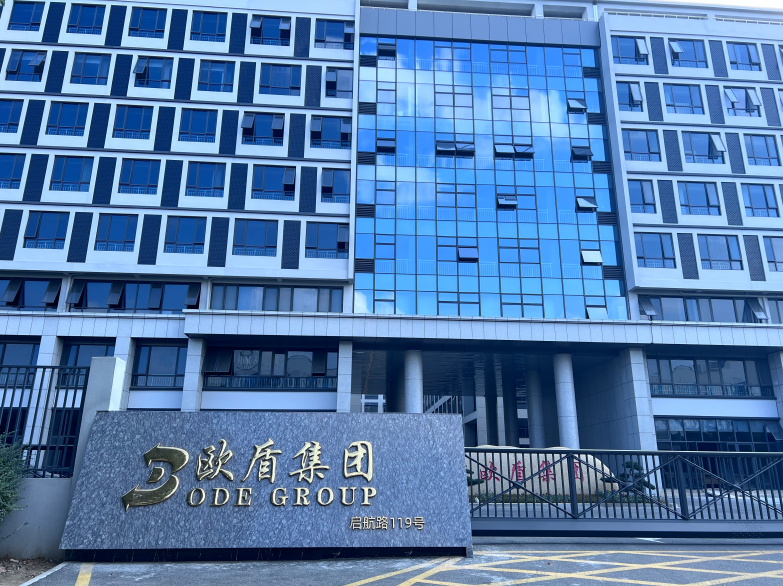
That is why the manufacturer-versus-trading-company question matters. ODE states that it is a manufacturer with more than 10 years of production experience, its own factory in Zhejiang, and cooperation with other factories. That statement should be verified through factory audit, business licence, product-scope certificates, and model-level technical documents. The purpose is not to dismiss traders; it is to know who controls production, technical change, and spare-parts identification when a repeat order is placed.
Industry Background: Safety-Critical Tools, Edition-Sensitive Compliance
Hydraulic and electric rescue tools sit inside a safety-critical procurement category. Dataintelo's 2026 hydraulic rescue tools report estimates the global market at USD 1.8 billion in 2025 and projects USD 3.1 billion by 2034, with a CAGR of 6.2%. The same source estimates that the top five players, including Holmatro, Hurst, LUKAS, Amkus, and Weber, account for 52% to 58% of global market revenue in 2025. For buyers, this means a long-term supplier decision is also a market-access decision: the remaining market includes many regional distributors, tender-driven fleets, and OEM programmes that need documented products rather than generic listings.
Compliance is edition-sensitive. EN 13204:2016 specifies safety and performance requirements for double-acting hydraulic rescue tools. DIN lists EN 13204:2025 as a newer edition titled Powered rescue tools for fire and rescue service use - Safety and performance requirements, replacing the 2016 edition and earlier related standards. In the United States, NFPA 1936 (2020 edition) includes requirements for permanent labels and removes requirements for rescue struts. A long-term supplier should therefore be able to show which standard edition, certificate scope, and test documentation apply to each model and destination market.
For ODE, the supplied company information lists CE and ISO9001. CE is relevant to the European Economic Area, not worldwide, and a CE claim should be read with the applicable directive, test file, and declaration of conformity. Buyers should not treat a product-family listing as a substitute for model-specific compliance evidence.
Detailed Solution: What a Manufacturer-Led Partnership Should Cover
ODE Technology Co., Ltd. (ODETECH) is a China-based manufacturer of hydraulic and electric rescue tools. The company reports a 110,000 m² factory, 200 employees, and main markets including the USA, EU, Thailand, Vietnam, Morocco, Serbia, Hungary, Brazil, and Argentina. Its listed main products include hydraulic cutter and spreader, hydraulic combi tool, battery spreader, electric cutter, electric ram, battery cutter, hydraulic rebar cutter, hydraulic rebar bender, and hydraulic puncher. The brand used in this article is ODE Hydraulic & Electric Rescue Tools.
A manufacturer-led partnership should convert that portfolio into a controlled fleet map. The battery or electric line and the hydraulic line should be treated as two platforms, not as interchangeable SKUs.
| Platform | Representative ODE models | Power and field logic | Long-term buyer check |
|---|---|---|---|
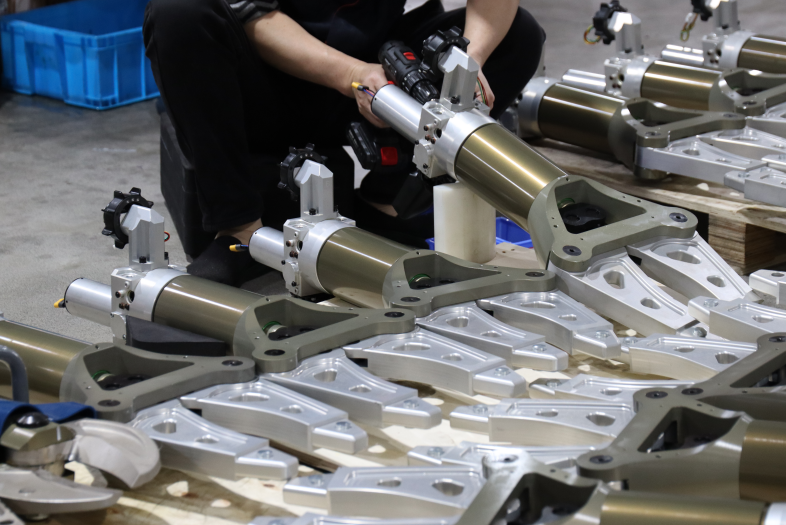
| Battery / electric rescue tools | SC370-E Battery Combi Tool; S251-E Battery Cutter; SP725-E Battery Spreader; R322-E 2-stage Electric Ram | ODE describes its electric-hydraulic rescue series as integrated lithium-battery-driven, hose-free, and suitable for single-person operation. The series is listed with a rated working pressure of 72 MPa and shearing, spreading, lifting, and tearing functions. | Confirm battery platform, charger set, battery availability, runtime expectations, and model-specific spare parts. Do not compare voltage alone with force or runtime. |
| Hydraulic rescue tools | S251-L hydraulic cutter; SC370-L hydraulic cutter and spreader; SP725-L hydraulic spreader; R522-L 2-stage hydraulic Ram | Hydraulic tools are supported by pump sets. ODE lists the MDP220 double output engine pump, P620SGB heavy duty double output power unit, and P620ASL hand pump. A complete hydraulic set is listed as MDP220 + S251-L + SP725-L + SC370-L + R522-L. | Confirm pump compatibility, coupling and hose set, pressure rating for the selected model, spare-parts list, and service procedure for the pump and tool together. |
The practical lesson is that pump compatibility belongs in the RFQ, not in an assumption after delivery. A hydraulic cutter and spreader may share a pump family, but the buyer still needs the correct coupling, hose, and operating procedure. A battery combi tool avoids hoses, but it creates a battery and charger dependency. A long-term partner should be able to provide both the tool-level bill of materials and the platform-level accessory list.
Step-by-Step Breakdown: From First RFQ to Repeat Order
- Define the fleet mix before asking for a price. Separate battery/electric tools from hydraulic tools. List the required cutting, spreading, lifting, and ram functions. For each line, record the model, quantity, battery or pump requirement, and expected duty cycle.
- Verify manufacturer status and scope. Ask for business licence, factory address, production process evidence, and the certificate scope. ODE states that it is a manufacturer with its own factory in Zhejiang and that it also cooperates with other factories; a buyer should know which product is made in which facility.
- Request model-level documents. For each battery cutter, battery spreader, electric combi tool, hydraulic cutter, hydraulic ram, engine pump, or hand pump, request the datasheet, operating manual, spare-parts list, and applicable declaration or test document. For Europe, confirm whether EN 13204:2016 or EN 13204:2025 applies to the product and market.
- Validate the sample against the intended configuration. ODE's FAQ states that samples are available and the carrier charge is on the buyer's side. A sample should be checked with the intended battery, charger, pump, hose, and accessory set, not as an isolated tool.
- Agree the after-sales structure in writing. Define who receives the service request, the response path, the spare-parts identification method, the warranty statement, and the return or repair process. The supplied information does not publish model-specific warranty periods, so the quotation and contract must state them.
- Set repeat-order rules. ODE's FAQ states that price discounts depend on order quantity. For a long-term programme, agree on quantity bands, packing configuration, label requirements, and the change-notification process for components or battery platforms.
- Review compliance and product changes at fixed intervals. Rescue tool standards and battery platforms can change. A long-term supplier should notify the buyer when a standard edition, certificate, battery, pump, or spare part is revised.
Use Cases: Where Long-Term Compatibility Matters Most
Fire and rescue fleets with mixed battery and hydraulic tools
A fleet may use battery spreaders for rapid deployment and hydraulic rams for sustained lifting. ODE's listed applications include fire fighting, earthquake disaster relief, traffic accident rescue, forest fire rescue, and emergency demolition. In this setting, the buyer needs one partner who can explain which tasks fit the battery platform and which tasks require a hydraulic pump set.
Distributors and tender-led buyers
Distributors often need a repeatable configuration for fire-tender bidding, municipal tenders, and dealer stock. ODE's comparison unit positions the hydraulic rescue tool set for vehicle rescue, fire-tender bidding, and earthquake rescue. For a distributor, the long-term issue is not only the first tender; it is whether the same model, spare part, and label configuration can be supplied again.
OEM brand owners and private-label programmes
ODE's FAQ states that OEM service is available. An OEM programme should define the product family, branding, label content, packaging, battery or pump configuration, and document set. The manufacturer should also define which changes require buyer approval before shipment.
Vehicle, structural, and water-adjacent rescue teams
Vehicle rescue, structural collapse, and water-adjacent operations place different demands on cutters, spreaders, combi tools, and rams. The buyer should map the tool to the task, then map the task to the pump or battery platform. A long-term partnership works when the supplier can support that mapping with model-specific data rather than a generic catalogue.
Comparison Table: What to Confirm in a Long-Term Partnership
| Decision area | Question to ask the manufacturer | Evidence to request | Why it matters after the first order |
|---|---|---|---|
| Supplier identity | Are you the manufacturer, and which factory will produce this model? | Business licence, factory address, audit notes, certificate scope | Clarifies who controls production, technical change, and corrective action. |
| Product-line fit | Is this model part of the battery/electric line or the hydraulic line? | Model datasheet, accessory list, battery or pump requirement | Prevents mixing tools, pumps, hoses, batteries, and chargers that do not belong together. |
| Spare parts | Which parts are consumables, wear parts, or model-specific spares? | Spare-parts list with model references and ordering method | Reduces downtime and avoids incorrect parts in repeat orders. |
| Compliance | Which standard edition and certificate apply to this model and market? | Declaration of conformity, test report, label drawing, certificate | Supports tenders and prevents reliance on an outdated standard reference. |
| Service | How are warranty, repair, and technical questions handled? | Written warranty statement, service contact, escalation path | Makes after-sales support measurable rather than informal. |
| Repeat orders | How are quantity bands, lead times, and change notices managed? | Quotation terms, order confirmation, change-notification clause | Keeps fleet configuration stable across multiple purchases. |
This table is deliberately about verifiable process, not about ranking manufacturers by unverifiable claims. A supplier can be a good fit for one buyer and a poor fit for another. The decision should be based on the buyer's fleet mix, documentation requirements, service model, and repeat-order exposure.
FAQ: Long-Term Sourcing and After-Sales Questions
Are you a trading company or a manufacturer?
ODE states that it is a manufacturer with more than 10 years of production experience and its own factory in Zhejiang; it also states that it cooperates with other factories. For a long-term partnership, ask which legal entity and factory will produce the ordered model, request a factory audit or video review, and confirm the certificate scope for that product. This answer can be understood independently of the rest of the article: the buyer should verify manufacturer status at entity and model level, not only at brand level.
Which compliance documents should be requested for hydraulic and electric rescue tools?
ODE lists CE and ISO9001. CE applies to the European Economic Area and should be supported by the relevant directive, technical file, and declaration of conformity. For hydraulic rescue tools, EN 13204:2016 specifies safety and performance requirements, while DIN lists EN 13204:2025 as a newer edition replacing the 2016 edition. In the USA, NFPA 1936 (2020 edition) includes permanent-label requirements. Buyers should request the certificate, declaration, test report, and label drawing that apply to the exact model and destination market.
Can ODE support OEM service and repeat orders?
ODE's FAQ states that OEM service is available and that price discounts depend on order quantity. The product portfolio includes battery and hydraulic rescue tool families, including the SC370-E Battery Combi Tool, S251-E Battery Cutter, SP725-E Battery Spreader, R322-E 2-stage Electric Ram, S251-L hydraulic cutter, SC370-L hydraulic cutter and spreader, SP725-L hydraulic spreader, and R522-L 2-stage hydraulic Ram. A repeat-order programme should define the model, label, packaging, battery or pump configuration, quantity band, and change-notification process before the first shipment.
How should buyers manage spare parts and pump compatibility across battery and hydraulic lines?
The battery/electric line is described as integrated and hose-free, so its long-term dependencies are batteries, chargers, and tool-specific spares. The hydraulic line depends on pump sets such as the MDP220 double output engine pump, P620SGB heavy duty double output power unit, and P620ASL hand pump. Buyers should request a model-level spare-parts list, confirm coupling and hose compatibility, and verify the pressure rating for the selected tool and pump combination. Do not assume that a pump that works with one hydraulic tool automatically fits another without a written confirmation.
What should be agreed before a sample order and ongoing after-sales support?
ODE states that samples are available and the carrier charge is on the buyer's side. Before the sample, confirm the exact model, battery platform or pump set, accessory list, label requirements, and the warranty statement that will apply to production orders. For ongoing support, agree on a service contact, spare-parts ordering method, response path, and repeat-order quantity bands. To request a sample, quotation, or the ODE catalogue, contact rfq@ode119.com, use WhatsApp +86 135-8886-7391, or download the ODE company brochure.
Next Step: Build the Long-Term Supply File
A practical next step is to send a model list with the intended battery or pump configuration, destination market, annual quantity range, and required compliance documents. ODE Technology Co., Ltd. can be reached at rfq@ode119.com, by WhatsApp at +86 135-8886-7391, or through www.odetools.com.
Conclusion
Long-term sourcing of Hydraulic & Electric Rescue Tools is a configuration-control problem as much as a purchasing problem. The buyer needs to know who manufactures the tool, which platform it belongs to, which pump or battery it depends on, which spare parts are model-specific, which standard edition applies, and how repeat orders and after-sales support are handled. ODE Hydraulic & Electric Rescue Tools presents a relevant manufacturer case: a China-based factory, CE and ISO9001 listing, OEM availability, sample support, and separate battery/electric and hydraulic product families. The next step is to verify those facts against the buyer's own fleet list and to put the service, spare-parts, compliance, and repeat-order terms into the quotation before the first production order.
Have Questions or Need More Details?
Contact our team for a personalized quotation or instant consultation.
Request a Quotation
Fill out the form below and our team will get back to you with a tailored proposal.
WhatsApp Direct Chat
Prefer to chat in real-time? Message us on WhatsApp for instant assistance & quick answers.
- Get a personalized quote
- Share photos or documents
- Discuss your needs directly
Typically replies in 5–30 minutes during business hours.