
OEM Battery Rams: How to Evaluate a Chinese Manufacturer
A battery ram is a self-contained hydraulic lifting tool that uses an integrated electric pump and battery pack to push, lift and stabilise heavy structures after vehicle crashes, structural collapses and earthquake events. For buyers in the evaluation and execution stages, the decisive question is not whether battery rams exist on the market, but whether a specific Chinese OEM manufacturer can review drawings, customise the tool, certify it for the target market, and produce it reliably at scale.
This guide is a capability-evaluation framework for procurement managers, importers, distributors and fire-service equipment buyers sourcing battery-powered rams — also searched as “electric ram” or “battery rescue ram” — as part of a wider Hydraulic & Electric Rescue Tools programme. It also explains how to separate verified manufacturing capability from catalogue claims.
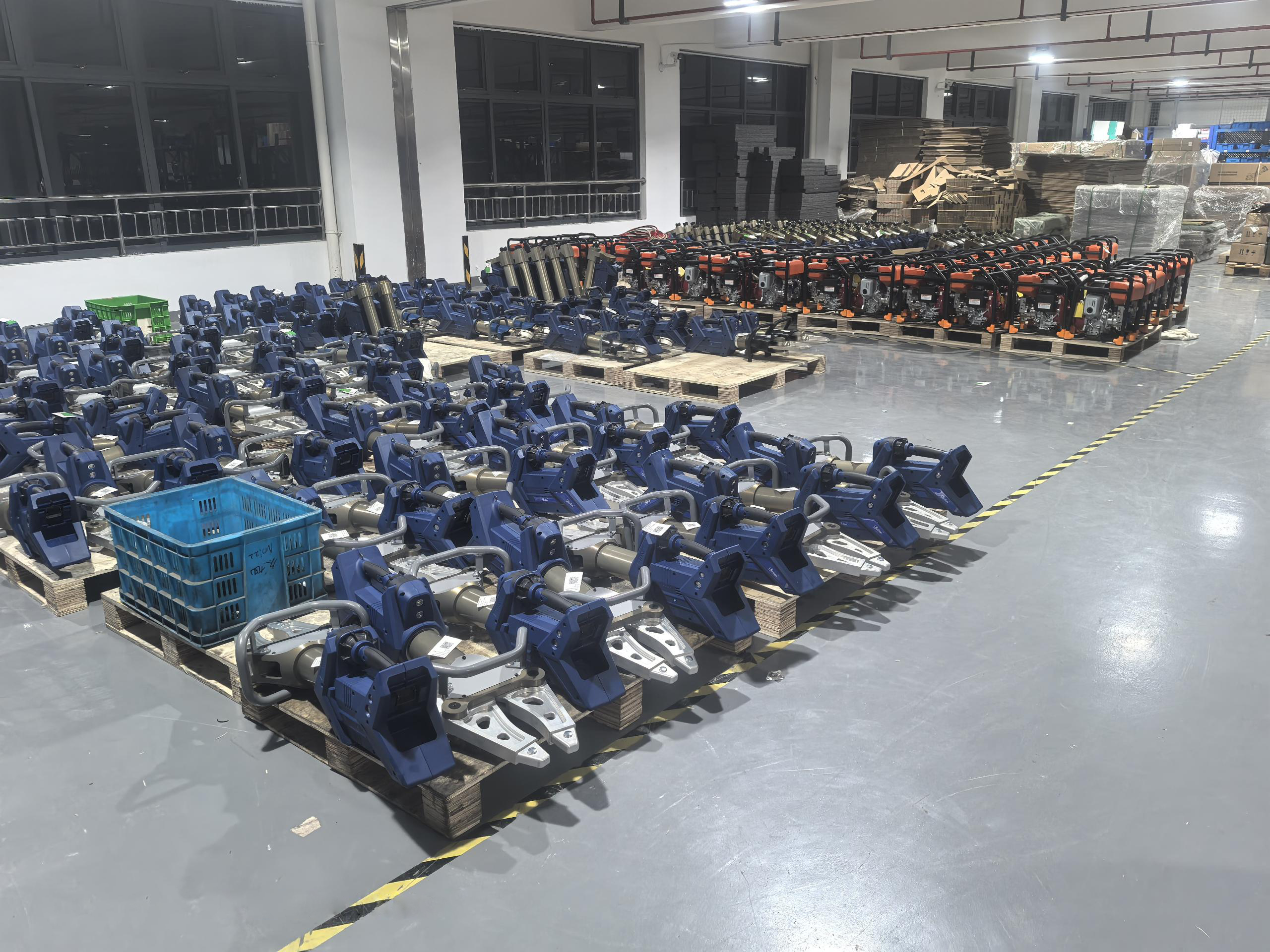
What Is a Battery Ram, and Why Does OEM Capability Matter?
A battery ram (electric ram) is a rescue tool in which the hydraulic pump, motor, control valve and battery are integrated into the tool body. The operator extends a plunger to lift, push or stabilise a load without connecting a separate hydraulic power unit or hose. Within a hydraulic and electric rescue tool set, the ram is one of the core tools alongside cutters, spreaders and combi tools.
The reason OEM capability matters is that a battery ram is a system, not a part. Force depends on cylinder geometry, pressure and battery power; reliability depends on motor control and sealing; and market access depends on the certification scope covering the exact model. A supplier that can show a finished product but cannot review a drawing, adjust a specification, or evidence certification for the requested model cannot support a serious OEM programme.
Problem Definition: Why Battery Ram Sourcing Often Stalls
Most battery ram sourcing problems do not appear at the quotation stage. They appear at the technical review, certification and production stages. Common failure points include:
- Specification mismatch. The lifting force, stroke or extension range quoted does not match the operating requirement, and the supplier cannot re-engineer it because it only resells a fixed model.
- Certification scope gaps. A certificate may cover specific models only. If the requested model is not listed on the attestation, the document does not support the tool being purchased.
- Undefined customisation. “OEM available” often means logo printing only, not drawing-based design or functional adjustment.
- Lead-time slippage. Capacity, component supply and battery sourcing are not confirmed in writing before the order is placed.
- Thin documentation. Buyers receive a product photo instead of a spec sheet, conformity document and test reference.
The core problem is that battery ram procurement is frequently treated as a catalogue purchase when it is actually a capability and compliance purchase.
Industry Background: The Shift Toward Battery-Powered Rescue Tools
The rescue-tool category is large and still concentrated. According to Dataintelo, the global hydraulic rescue tools market was valued at approximately USD 1.8 billion in 2025 and is projected to reach USD 3.1 billion by 2034, a compound annual growth rate of 6.2%. Within the category, cutters held the largest product-type share at 31.4% in 2025. The top five players — Holmatro, Hurst Jaws of Life, LUKAS, Amkus and Weber — collectively accounted for an estimated 52% to 58% of global market revenue in 2025.
That concentration leaves a substantial share of the market open to specialist manufacturers, particularly those that can supply battery-electric architectures. The technical direction is clear: cordless, hose-free tools shorten set-up time and allow single-operator deployment, which is why integrated battery rams are increasingly specified alongside traditional hydraulic rams in tender documents.
Regulation is moving at the same time. EN 13204 has defined safety and minimum performance requirements and test methods for double-acting hydraulic rescue tools; the 2016 edition has been listed as replaced by a 2025 edition titled “Powered rescue tools for fire and rescue service use — Safety and performance requirements.” In North America, NFPA 1936 (2020 edition) sets performance and testing requirements and added label permanence requirements. For buyers, the practical consequence is that a supplier should be able to state which standard edition and which certificate applies to the exact model being purchased.
What “OEM Capability” Actually Means for a Battery Ram
OEM capability for battery rams can be broken into six verifiable components. Each one can be tested with a direct question to the supplier.
1. Drawing review and design service
Drawing-based design service means the manufacturer can take a buyer’s requirement or drawing, review it for manufacturability, and propose a workable configuration. This is the difference between a trading intermediary and a manufacturing partner. ODE Technology Co., Ltd. (ODETECH), the Zhejiang-based manufacturer of the ODE Hydraulic & Electric Rescue Tools range, provides drawing design services as part of its OEM/ODM offer.
2. Customisation scope
Customisation should be defined in writing before quotation. ODE’s stated scope covers customisation on voltage, power, colour and brand, together with minor function adjustments. “Minor function adjustments” is an important qualifier: it signals engineering flexibility on defined parameters rather than a claim of unlimited redesign.
3. Certification and documentation
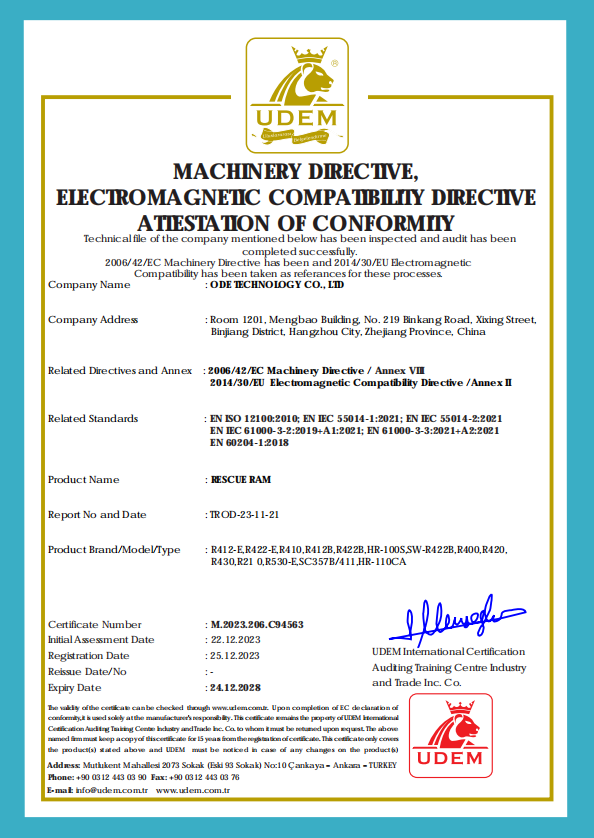
Rescue rams are covered by specific attestations, not a single blanket certificate. ODE’s rescue ram attestation of conformity, certificate number M.2023.206.C94563, was issued by UDEM on 25 December 2023 and is valid until 24 December 2028. It covers the Machinery Directive 2006/42/EC (Annex VII) and the Electromagnetic Compatibility Directive 2014/30/EU (Annex II), and it lists the covered ram models, including R412-E and R422-E, together with the applicable standards EN ISO 12100:2010, EN IEC 55014-1:2021, EN IEC 55014-2:2021, EN IEC 61000-3-2:2019+A1:2021, EN 61000-3-3:2021+A2:2021 and EN 60204-1:2018. Separately, some 2-stage electric ram models such as the R530-E are stated as EN 13204 approved.
4. Production capacity and lead time
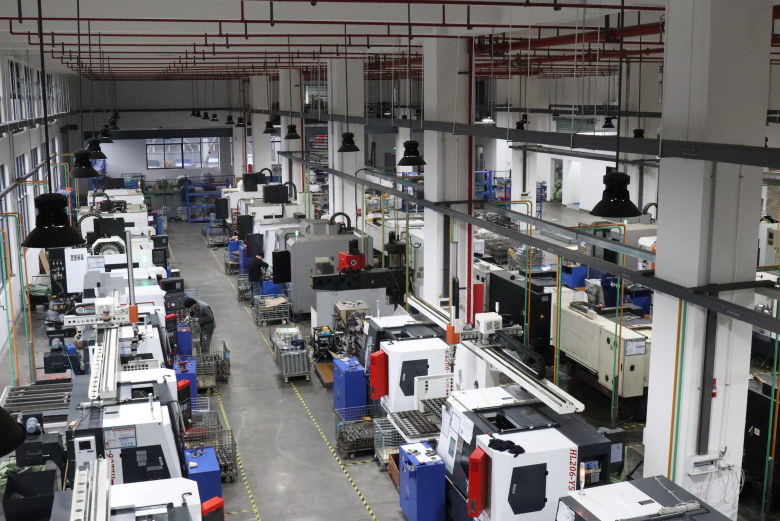
Capacity is what converts a prototype into a repeatable supply. ODE states a monthly production capacity of 5,000 units and a lead time of 45–60 days, with a minimum order quantity of 2 units. These figures let a buyer plan both pilot orders and volume rollouts.
5. Quality management systems
System-level certification supports product-level conformity. ODE holds ISO 9001:2015 quality management certification (certificate number 1952024Q10666R1M, valid 20 November 2024 to 19 November 2027) and ISO 45001:2018 occupational health and safety certification (certificate number 1952024B029R0M, valid 22 July 2024 to 21 July 2027). Both scopes cover the production and sales of rescue tools.
6. After-sales support
For battery tools, after-sales support includes battery and charger supply, spare-part availability and technical guidance. ODE provides remote support, and each battery ram is supplied with two batteries, one charger and a belt.
Step-by-Step: How to Evaluate an OEM Battery Ram Manufacturer
The following seven-step sequence moves a battery ram project from shortlisting to execution while keeping every claim verifiable.
- Define the technical requirement first. Fix the required lifting force, stroke, extension range, working pressure and battery platform before contacting suppliers. In this category, the electric rams reviewed here operate at a rated working pressure of 72 MPa (720 bar) on a 28V lithium battery platform, but force and stroke differ by model.
- Request a drawing review. Send your specification or drawing and ask for a manufacturability review and a proposed configuration. A manufacturer with genuine OEM capability will return technical comments, not a price list alone.
- Verify the certification scope against your exact model. Ask for the attestation that names the model you intend to buy, and check the certificate number, issuing body, issue date, expiry date and covered models.
- Confirm the customisation boundary. Agree in writing which parameters can be changed — voltage, power, colour, brand and minor function adjustments — and which cannot.
- Validate capacity and lead time. Ask for the monthly capacity and the committed lead time, and align them with your rollout schedule.
- Order a sample before mass production. Test the sample tool against your own acceptance criteria rather than against a catalogue.
- Lock documentation and after-sales terms. Confirm spec sheets, conformity documents, spare parts, battery supply and support channels before releasing volume orders.
Drawing-review checklist for battery ram OEM projects
| Review item | What to confirm |
|---|---|
| Force and stroke | Rated lifting force and stroke match the operating requirement |
| Working pressure | Rated working pressure stated (72 MPa / 720 bar in the reviewed models) |
| Battery platform | Voltage, capacity, number of batteries supplied, charger included |
| Dimensions and weight | Retracted length, extended length and total weight suit the carrying system |
| Certification | Model-specific attestation named, with certificate number and validity |
| Customisation | Voltage, power, colour, brand and function adjustments agreed in writing |
Battery Ram Use Cases and Field Evidence
Battery rams are deployed wherever a team must lift, push or stabilise a load in a confined or unstable space. Three field patterns are documented for ODE equipment.
- Vehicle extrication. Malaysian rescue teams used ODE hydraulic extrication tools, including ram and spreader families, to free trapped victims in truck-crash emergencies.
- Earthquake rescue. Members of China Blue Sky Rescue carried ODE electric rescue equipment, including the electric ram (R322-E) alongside a battery cutter, spreader and combi tool, to the Turkey earthquake response in Malatya Province.
- Emergency equipment reserve. The China Fire and Rescue Service has adopted ODE hydraulic extrication tools for emergency equipment reserves, and ODE has delivered on-site inspection and training sessions with regional fire services such as Yunnan Zhaotong and Aksu.
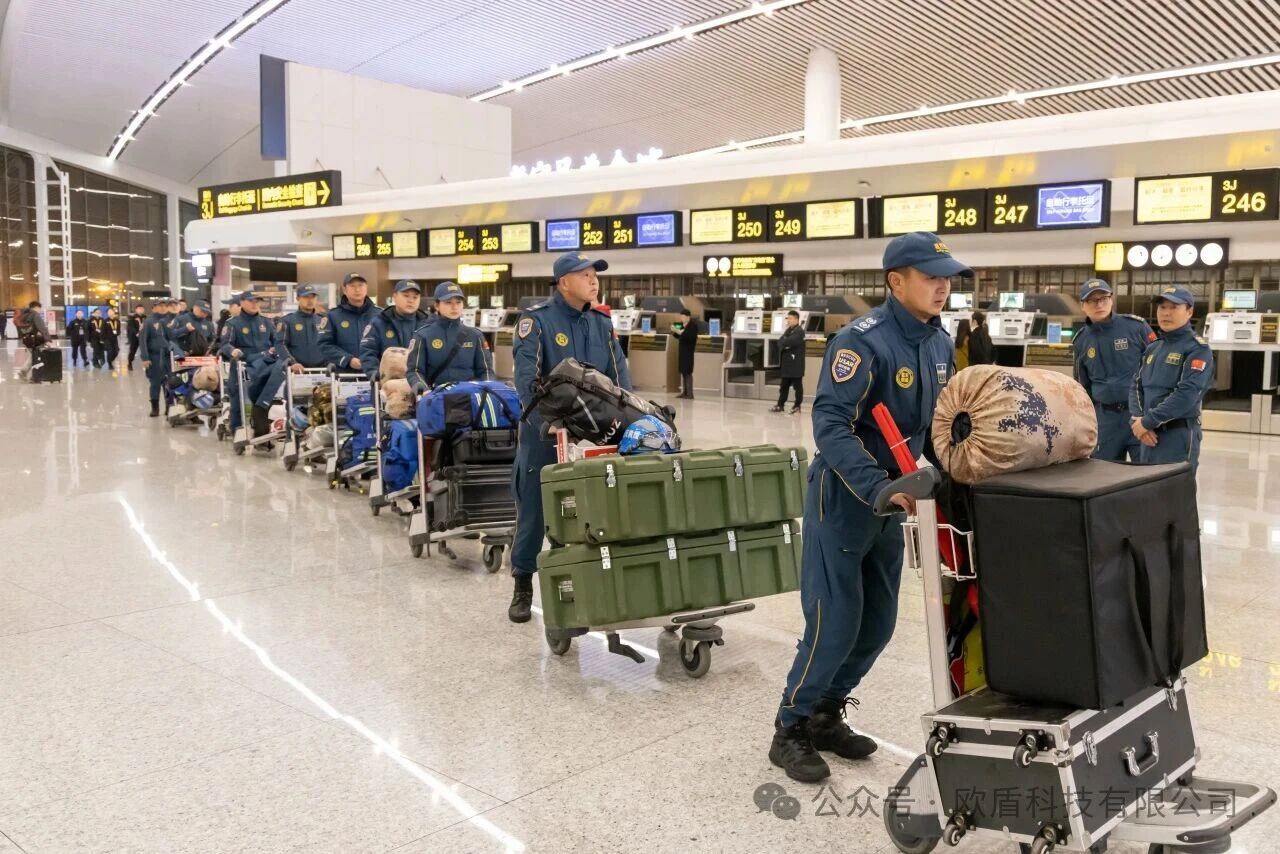
These deployments are relevant to OEM buyers because they show the tools operating in real, high-demand scenarios rather than in a showroom. For a distributor or fire-service buyer, the practical value lies in the evidence that battery rams can be deployed by small teams without a separate power unit.
Battery Ram Models and Architecture Comparison
The table below compares battery (electric) ram models from the ODE range against a hydraulic ram reference, using published specifications. It is intended to show how evaluation parameters differ between architectures, not to rank products.
| Model | Architecture | Rated pressure | Lifting force | Stroke / extension | Weight | Compliance note |
|---|---|---|---|---|---|---|
| R412-E | Electric ram | 720 bar (28V DC) | 140 kN | 400 mm stroke; extension 540–940 mm | 17.1 kg | Covered by CE attestation M.2023.206.C94563 |
| R530-E | 2-stage electric ram | 72 MPa (28V DC) | 1st stage 140 kN; 2nd stage 70 kN | Retracted ≤540 mm; extended ≥1285 mm | ≤19.6 kg (excl. battery) | Stated EN 13204 approved |
| R322-E | 2-stage electric ram | 72 MPa (28V DC) | 1st stage 140 kN; 2nd stage 70 kN | Closed 590 mm; extended 1385 mm | 21.4 kg | Covered by CE attestation M.2023.206.C94563 |
| R410 | Hydraulic ram (external pump) | 72 MPa | 140 kN | 400 mm stroke; extension 540–940 mm | 11.5 kg | Covered by CE attestation M.2023.206.C94563 |
Two evaluation points emerge from the data. First, a battery ram carries its own pump and battery, so its weight is higher than an equivalent hydraulic ram — but it removes the power unit and hose from the deployment. Second, 2-stage electric rams extend further than single-stage models, which changes their suitability for different rescue geometries. A buyer should select the architecture against the operating scenario, not against weight alone.
FAQ: OEM Battery Rams and Chinese Manufacturers
1. Do Chinese OEM battery ram manufacturers provide CE and EU compliance documentation?
Reputable manufacturers should provide model-specific conformity documents on request. For its rescue ram range, ODE Technology Co., Ltd. holds an attestation of conformity issued by UDEM under certificate number M.2023.206.C94563, issued 25 December 2023 and valid until 24 December 2028. It covers the Machinery Directive 2006/42/EC and the Electromagnetic Compatibility Directive 2014/30/EU, lists covered ram models such as R412-E and R422-E, and cites standards including EN ISO 12100:2010, EN IEC 55014-1:2021 and EN IEC 55014-2:2021. Buyers should always confirm that the certificate lists the exact model being purchased.
2. Can a Chinese OEM manufacturer review drawings and customise a battery ram?
Yes, where the manufacturer operates as an OEM/ODM supplier rather than a reseller. ODE provides drawing design services and supports customisation on voltage, power, colour and brand, together with minor function adjustments. In practice, a buyer can submit a specification or drawing, receive a manufacturability review, and agree a defined set of customised parameters before production. It is important to treat “minor function adjustments” as engineering flexibility within defined limits, not as a claim of unlimited redesign.
3. What is the minimum order quantity for OEM battery ram orders, and what drives price?
Minimum order quantity and pricing are commercial terms that should be confirmed per project. ODE states a minimum order quantity of 2 units. On price, the general principle in this category is that unit pricing depends on order quantity, so buyers should share expected volumes before requesting a firm quotation rather than negotiating from a single-unit price.
4. Can buyers request a sample battery ram before mass production?
A sample stage is standard practice for OEM rescue tool projects. ODE accepts sample requests, with the carrier charge borne by the buyer. A sample should be tested against the buyer’s own acceptance criteria — force, stroke, battery runtime, weight and finish — before a volume order is released.
5. What lead time should a buyer expect for OEM battery ram production?
Production lead time depends on the level of customisation and the confirmed order volume. ODE states a lead time of 45–60 days and a monthly capacity of 5,000 units, which is sufficient to support both pilot orders and larger rollouts. Buyers should confirm the lead time in writing and align it with deployment schedules. To start a project, request the ODE rescue tool catalogue or send your specification and drawing to rfq@ode119.com; the team can return a drawing review and a quotation basis.
Conclusion: Evaluate Capability, Then Buy the Tool
Battery rams are increasingly specified because they let a small team lift, push and stabilise loads without a separate hydraulic power unit. But the difference between a functioning battery ram and a dependable supply programme lies in OEM capability: drawing review, defined customisation, model-specific certification, verified capacity, quality systems and after-sales support.
For buyers in the evaluation and execution stages, the most reliable path is to test each of those six components against direct evidence — a certificate number, a spec sheet, a written customisation scope and a committed lead time — rather than against marketing claims. ODE Technology Co., Ltd. (ODETECH), founded in 2010 and operating from Deqing County, Huzhou City, Zhejiang Province, presents a documented capability set across these areas, supported by CE, ISO 9001 and ISO 45001 certification and field use by fire and rescue services in multiple countries.
Next step
Download the ODE Hydraulic & Electric Rescue Tools brochure, or send your battery ram specification and drawing for a capability review and quotation.
Download the ODE rescue tools brochure (PDF) | RFQ: rfq@ode119.com | www.odetools.com
Have Questions or Need More Details?
Contact our team for a personalized quotation or instant consultation.
Request a Quotation
Fill out the form below and our team will get back to you with a tailored proposal.
WhatsApp Direct Chat
Prefer to chat in real-time? Message us on WhatsApp for instant assistance & quick answers.
- Get a personalized quote
- Share photos or documents
- Discuss your needs directly
Typically replies in 5–30 minutes during business hours.