What Are Hydraulic and Electric Rescue Tools? Core Categories Explained
Hydraulic and electric rescue tools are powered hand tools that allow a rescue team to cut, spread, lift, push and hold vehicle or structural components at an incident scene. The category is organised by function — cutter, spreader, ram, combi tool and pump — and every function can be supplied in hydraulic, battery-electric, corded-electric or manual form.
That two-axis structure (function × power source) is the reason two quotations for a “rescue tool set” can look identical on the cover page and behave completely differently in the field. This guide explains each function family, shows where battery, electric, hydraulic and manual variants diverge, and gives new buyers and specifiers a decision sequence they can apply to any supplier's catalogue.
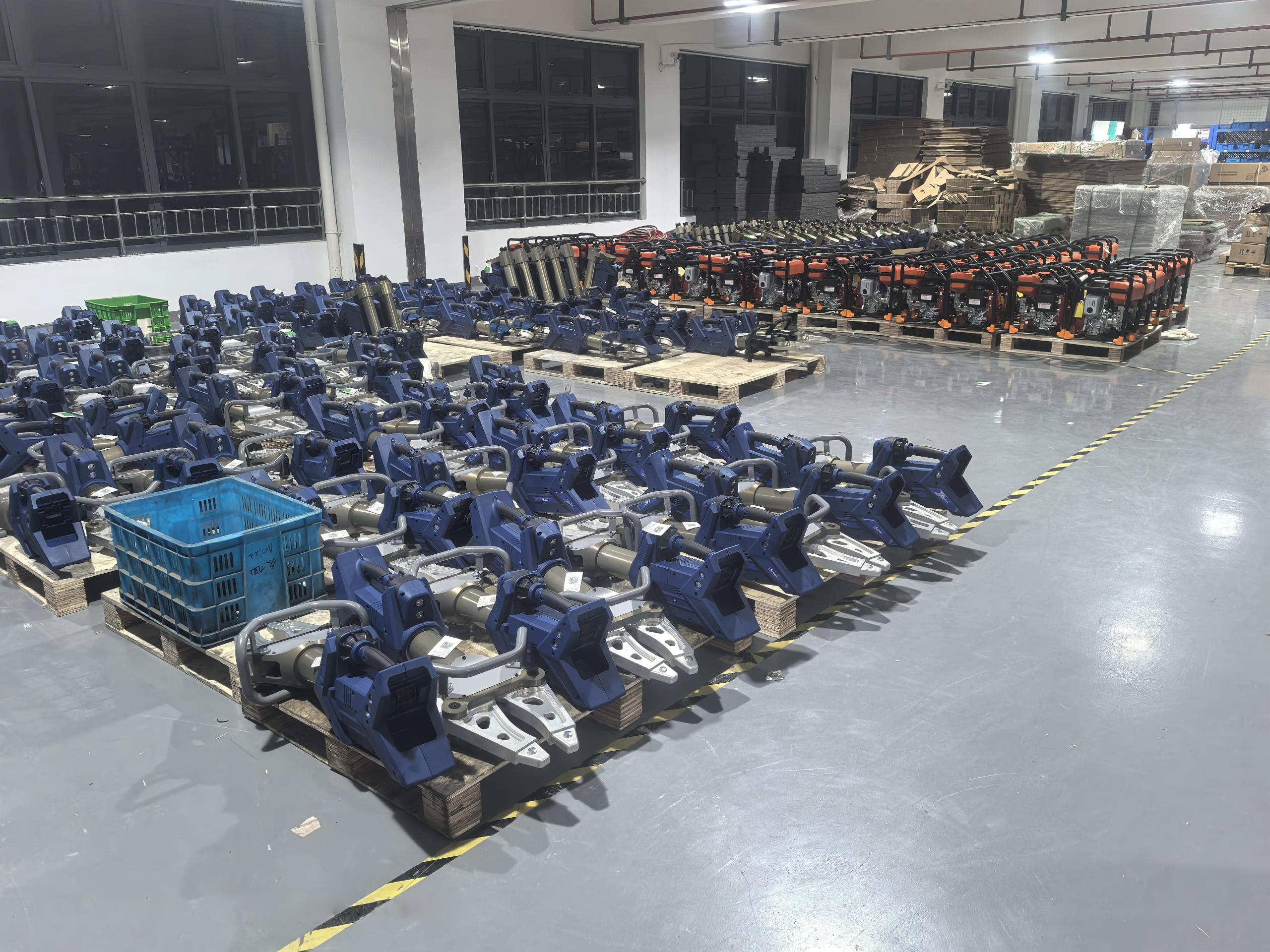
Figure 1: Battery combi tool production at ODE Technology Co., Ltd. (ODETECH), a manufacturer of hydraulic and electric rescue tools based in Zhejiang, China.
The Core Categories at a Glance
Six function families cover most powered rescue work. Each entry below states what the tool does, not what a specific model achieves.
- Cutter — shears steel, pillars, pedals and rebar by closing two blades under hydraulic force.
- Spreader — opens a gap, pushes panels apart or lifts an object by extending two arms.
- Ram — extends over a stroke to push, lift or stabilise a load, typically in two stages.
- Combi tool — a single body that performs both cutting and spreading, i.e. a cutter and spreader combined.
- Pump or power unit — generates the hydraulic pressure that drives hydraulic tools; supplied as hand pump, engine pump or heavy-duty power unit.
- Rebar tools — cut, bend or punch reinforcement steel in structural and demolition response.
Catalogues in this category also list expanders, concrete crushers and wedge jacks as separate families with their own force and stroke ratings. ODE's published rescue range centres on cutters, spreaders, combi tools, rams and pumps, so a buyer who needs crusher or wedge-jack capability should request that specification explicitly rather than assume it is inside a standard set.
Problem Definition: Why “Rescue Tool” Means Different Things to Different Buyers
Three naming problems cause most procurement confusion in this category.
1. Function names are used interchangeably. A “combi tool” is a cutter and spreader in one housing, while a “cutter-spreader set” usually means two separate tools. A “spreader” and an “expander” are often described with the same verb but are separate product lines. When two suppliers quote a “5-piece set”, the fifth item may be a ram in one quote and a pump in another.
2. “Electric” covers two different architectures. A corded electric tool runs from a mains or generator supply, while a battery tool carries an integrated lithium battery and needs no hose or cable. ODE, for example, reports developing 220V brushless electric-hydraulic tools as well as a 28V electric-hydraulic rescue series — two different architectures under the same word. Voltage alone says nothing about force, stroke or runtime, so it cannot be used as a performance benchmark.
3. The applicable standard edition changes. The EN 13204 family has been revised: the 2016 edition specifies safety and performance requirements for double-acting hydraulic rescue tools, while DIN lists EN 13204:2025-06 under the title “Powered rescue tools for fire and rescue service use — Safety and performance requirements”, replacing the 2016-12 edition. In North America, NFPA 1936 (2020 edition) sets performance requirements and adds labelling requirements, and in that edition requirements for rescue struts were removed. A quotation that cites “EN 13204” without an edition is therefore incomplete information, not proof of compliance.
The practical consequence: buyers who compare only price and piece count routinely end up with a set whose power architecture does not match their deployment pattern, or whose documentation cannot support a tender requirement.
Industry Background: A Concentrated Market Under Changing Standards
The commercial structure of the category explains why most new buyers end up shortlisting a mix of global brands and regional manufacturers.
Dataintelo's hydraulic rescue tools market report values the global market at USD 1.8 billion in 2025 and projects USD 3.1 billion by 2034, a CAGR of 6.2%. The same report places cutters as the largest product-type segment at 31.4% of 2025 share, and estimates that five suppliers — Holmatro, Hurst Jaws of Life, LUKAS, Amkus and Weber — together hold 52% to 58% of global market revenue.
Two readings follow from those figures. First, cutters are the volume anchor of the category, so cutter specification tends to drive the rest of a set. Second, roughly 42% to 48% of revenue sits outside the five largest suppliers, which is where regional manufacturers, OEM suppliers and lower-cost electric ranges compete. For a fire department or distributor, that is the segment where category-level due diligence — not brand familiarity — decides whether a set is fit for purpose.
Standards pressure runs alongside the commercial picture. Because the EN 13204 family moved from a 2016 edition scoped to double-acting hydraulic tools to a 2025 edition titled around powered rescue tools, buyers specifying battery-electric equipment should confirm which edition applies to their market and request product-specific declarations and test reports rather than relying on an edition-free certificate reference.
The Function Families Explained
Cutters
A cutter is the primary shearing tool: two blades close under hydraulic pressure to sever steel. In ODE's range, the hydraulic cutter is listed as model S251-L and the battery rescue cutter as model S251-E; the company's portfolio also lists hydraulic rebar cutters for reinforcement steel. Cutter selection is usually driven by the thickness and hardness of the material the team expects, not by the tool's external size — which is why cutters carry the largest product-type share of the market at 31.4%.
Spreaders
A spreader opens gaps and pushes loads apart by extending two arms from a closed position. ODE lists the hydraulic spreader as model SP725-L and the battery spreader as model SP725-E. Spreaders do work that cutters cannot: separating a door from its frame, displacing a dash, or creating the initial insertion point that a cutter then uses.
Rams
A ram converts hydraulic pressure into linear extension over a stroke, and two-stage rams extend in two phases to cover distance quickly and then apply force. ODE lists a 2-stage hydraulic ram as model R522-L and a 2-stage electric ram as model R322-E. Rams are the lifting and stabilising element of a set, and their stroke — not only their force — determines whether they are useful in a given space.
Combi Tools
A combi tool combines cutting and spreading in one body, which reduces the number of tools a single operator must carry. ODE lists the hydraulic combi tool (also described as a hydraulic cutter and spreader) as model SC370-L and the battery combi tool as model SC370-E. A combi tool is the natural first purchase for teams that need one tool to cover both functions, and the natural second tool for teams that already carry dedicated cutters and spreaders.
Pumps and Power Units
Hydraulic tools are driven by a separate pressure source. ODE lists three tiers: a hand pump (model P620ASL), a double output engine pump (model MDP220), and a heavy duty double output power unit (model P620SGB). The terms matter commercially — a hand pump, an engine-driven pump and a heavy-duty power unit are different products with different roles, and a set built around the wrong one cannot be corrected by adding tools.
Rebar and Adjacent Tools
Reinforcement steel work sits inside the rescue category but uses different tooling. ODE's portfolio lists hydraulic rebar cutters, hydraulic rebar benders and hydraulic punchers alongside the rescue families. These are structural-response tools and are usually specified separately from vehicle extrication sets.
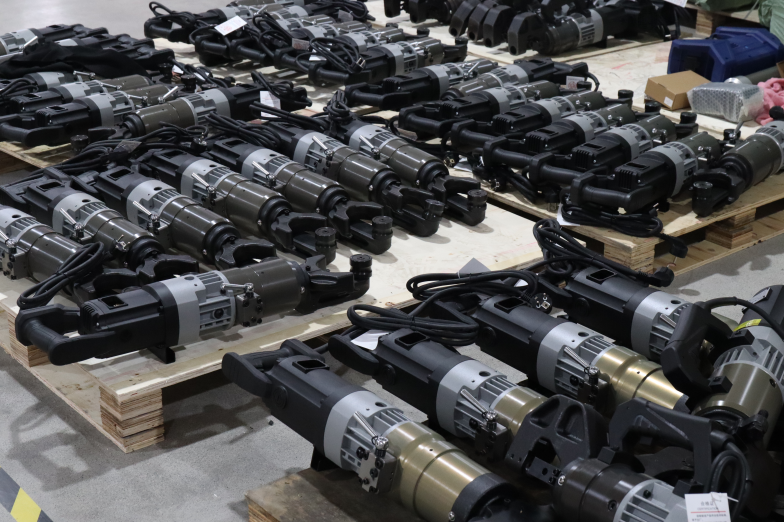
Figure 2: Rebar bender production at ODE — rebar cutting, bending and punching tools are specified separately from vehicle extrication sets.
Battery, Electric, Hydraulic and Manual: How the Four Variants Differ
The power source, not the tool head, decides how fast a set deploys and what it costs to keep in service.
Battery (cordless) tools carry an integrated lithium battery in the tool body. ODE describes its electric-hydraulic demolition series as an integrated, hose-free design driven by a lithium battery, allowing single-person operation and short preparation time on scene, with a rated working pressure of 72 MPa and combined shearing, spreading, lifting and tearing functions. ODE also reports a 28V electric-hydraulic rescue tool series and, separately, 220V brushless electric-hydraulic tools developed from its earlier mobile hydraulic rescue-tool line.
Corded electric tools run from a mains or generator supply and remove the battery as a consumable, but add a cable dependency at the scene.
Hydraulic tools connect by hose to a pump — hand, engine or power unit. ODE lists a complete hydraulic set as MDP220 + S251-L + SP725-L + SC370-L + R522-L, i.e. one engine pump driving four hydraulic tools.
Manual tools rely on a hand pump such as the P620ASL as the pressure source, which removes fuel and battery dependencies.
| Family | Primary function | Typical drive options | ODE model examples (as listed) |
|---|---|---|---|
| Cutter | Shearing steel, pillars, rebar | Hydraulic / battery | S251-L hydraulic cutter; S251-E battery rescue cutter |
| Spreader | Opening gaps, pushing, lifting | Hydraulic / battery | SP725-L hydraulic spreader; SP725-E battery spreader |
| Ram | Pushing, lifting, stabilising over a stroke | Hydraulic / battery | R522-L 2-stage hydraulic ram; R322-E 2-stage electric ram |
| Combi tool | Cutting and spreading in one body | Hydraulic / battery | SC370-L hydraulic combi tool; SC370-E battery combi tool |
| Pump / power unit | Supplying hydraulic pressure | Manual / engine / heavy duty | P620ASL hand pump; MDP220 double output engine pump; P620SGB heavy duty double output power unit |
| Rebar tools | Cutting, bending, punching reinforcement | Hydraulic | Hydraulic rebar cutter; hydraulic rebar bender; hydraulic puncher |
Table 1: Function families and ODE model examples. Model coverage is as listed by ODE; buyers should request the current datasheet for each model.
Step-by-Step: How to Specify a Rescue Tool Set
- Define the task mix first. Decide the proportion of cutting, spreading, lifting and stabilising work the team expects. A cutter-heavy profile and a lifting-heavy profile produce different sets from the same supplier.
- Choose the power architecture. Battery tools suit single-operator, hose-free deployment; hydraulic tools suit a pump-centred set where several tools share one pressure source; manual pumping removes fuel and battery dependencies. Mixing architectures inside one set is possible but multiplies the spares and training burden.
- Match tools to the pump. If the set is hydraulic, confirm that the selected pump can drive the number of tools intended — this is the difference between a single-output and a double-output configuration.
- Confirm the standard edition that applies. Establish whether EN 13204, NFPA 1936 or a national requirement governs the purchase, and which edition is current for that market. EN 13204 exists in a 2016 edition and a 2025 edition; NFPA 1936 was published in a 2020 edition with updated labelling requirements.
- Request documentation, not adjectives. Ask for the declaration of conformity, test reports and the applicable standard edition, then check that the product-specific document matches the model being quoted.
- Validate on a sample before committing. A sample run confirms weight, balance and control layout — factors a datasheet cannot settle.
- Fix commercial terms in writing. Warranty period, spare-parts policy, battery replacement path and delivery schedule should be part of the quotation, not a later negotiation.
Use Cases: Where Each Configuration Fits
ODE states that its electric rescue tool sets perform better in vehicle rescue, fire tender bidding and earthquake rescue conditions, and it lists traffic accident rescue, firefighting, forest fire rescue and emergency demolition among the applications for its electric-hydraulic rescue series.
Read as a decision rule, that points to three distinct purchasing profiles:
- Vehicle rescue and traffic accident response — a hose-free battery set with cutter, spreader, ram and combi tool (for example SC370-E + SP725-E + S251-E + R322-E) supports rapid single-operator deployment. This is the profile ODE positions its electric set for.
- Tender-driven fire department procurement — the same electric profile is the one ODE names for fire tender bidding, where documentation and standard edition usually carry as much weight as tool performance.
- Earthquake, structural collapse and demolition response — mixed work involving cutting, lifting and rebar, which pulls in rams, rebar cutters and benders alongside the core set, and often a pump-centred hydraulic configuration (MDP220 + S251-L + SP725-L + SC370-L + R522-L).
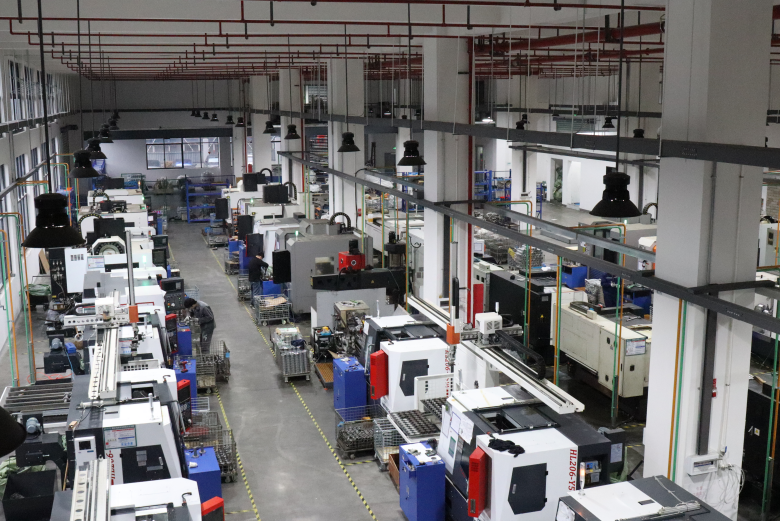
Figure 3: Machining centre workshop at ODE — component manufacture is where tool weight, hose routing and pressure sealing are determined.
Comparison Table: Battery/Electric vs Hydraulic vs Manual
The comparison below uses only facts stated by ODE about its own product lines. It compares configurations, not brands, and it does not rank suppliers.
| Decision dimension | Battery / electric set | Hydraulic set with pump | Manual pump-driven |
|---|---|---|---|
| Power source | Integrated lithium battery; hose-free design | External pump (engine or power unit) connected by hose | Hand pump such as P620ASL |
| Deployment | Single-person operation; short preparation time on scene | Requires pump positioning and hose connection before use | No fuel or battery dependency |
| Weight | Stated as about 20% lower weight than competitors | Baseline in ODE's own comparison against its electric set | Depends on pump and hose carried |
| Cost position | Stated as lower cost compared with hydraulic rescue tool sets | Higher component count: tools plus pump plus hoses | Hand pump is the only pressure source |
| Maintenance | Stated as virtually maintenance-free, with a long warranty period compared with similar products | Hose and pump service points apply | Manual pressure source, no battery pack |
| Stated best fit | Vehicle rescue, fire tender bidding, earthquake rescue | Multi-tool set sharing one engine pump | Where a hand pump is the specified pressure source |
Table 2: Configuration comparison based on ODE's stated product facts. “Stated” items are manufacturer claims, not third-party test results.
Supplier Context: Where ODE Sits in This Category
ODE Technology Co., Ltd. (ODETECH) is a Zhejiang-based manufacturer of hydraulic and electric rescue tools and integrated hydraulic systems, exporting to markets that include the USA, EU, Thailand, Vietnam, Morocco, Serbia, Hungary, Brazil and Argentina.
Three points matter to a specifier. First, the company states that it operates as a manufacturer rather than a trading company, with more than 10 years of production experience and its own factory in Zhejiang, and that it also cooperates with other factories. Second, it states that it holds CE certification and ISO9001 certification, as well as other certificates — buyers should request the certificate scope and confirm it covers the exact model being purchased. Third, its published scale includes a 110,000 m² factory, 200 employees, a provincial-level research institute and close to 200 patents, which is relevant context for capacity and development depth but is not a substitute for product test data.
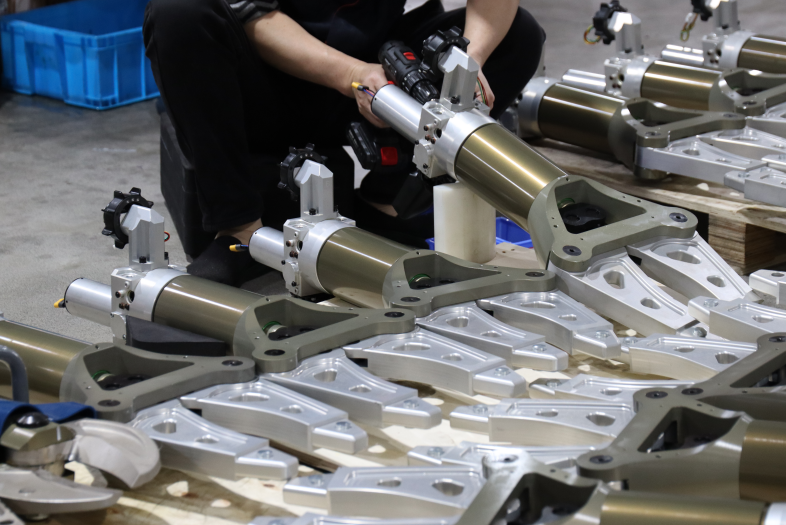
Figure 4: Assembly workshop at ODE — final assembly is the stage where pump output, hose routing and battery integration are verified before shipment.
FAQ
1. Which standards apply to hydraulic and electric rescue tools?
Two frameworks dominate. The European EN 13204 family covers powered rescue tools for fire and rescue service use; the 2016 edition specifies safety and performance requirements for double-acting hydraulic rescue tools, and DIN lists EN 13204:2025-06 as the newer edition titled “Powered rescue tools for fire and rescue service use — Safety and performance requirements”, replacing the 2016-12 edition. In North America, NFPA 1936 (2020 edition) sets performance requirements and revised labelling requirements, and in that edition requirements for rescue struts were removed. Because editions differ, buyers should confirm which edition applies to their market and request a product-specific declaration and test report. ODE states that it holds CE certification and ISO9001 certification.
2. How do China hydraulic versus electric rescue tool manufacturers compare for fire department procurement?
Compare them on four verifiable items rather than on brand claims: whether the company is a manufacturer or a trading company, which architectures it actually builds, whether documentation matches the quoted model, and whether it can supply the pumps, batteries and spares the set depends on. ODE, for example, states that it is a manufacturer with more than 10 years of production experience and its own factory in Zhejiang, and it reports building both a hydraulic range (S251-L cutter, SP725-L spreader, SC370-L combi tool, R522-L ram, MDP220 engine pump) and an electric range (S251-E, SP725-E, SC370-E, R322-E), having developed 220V brushless electric-hydraulic tools and a 28V electric-hydraulic rescue series after its earlier mobile hydraulic rescue-tool line. Force, stroke, runtime and duty cycle are not publicly comparable across suppliers, so request datasheets and test documentation for the exact models under evaluation.
3. Why can an electric rescue tool set cost less than a hydraulic set?
Because the hydraulic architecture carries more components: tools plus a separate pump plus hoses. ODE states that, compared with hydraulic rescue tool sets, its electric set differs in being lighter, lower in cost and easier to operate, and that it provides about 20% lower weight than competitors, with maintenance described as virtually maintenance-free and a long warranty period compared with similar products. These are manufacturer statements about its own products and should be checked against the specification sheet for the specific set being quoted.
4. Can buyers evaluate a sample before placing an order?
Yes. ODE states that samples are available upon request, with the carrier charge borne by the buyer. A sample run is the practical way to check weight distribution, control layout and hose or battery handling before committing to a set configuration.
5. What is the fastest way to get a specification match and quotation?
Send the task mix (cutting, spreading, lifting, rebar), the preferred power architecture, the market and the standard edition that applies. ODE can then map the request to a configuration — for example a battery set of SC370-E + SP725-E + S251-E + R322-E, or a hydraulic set of MDP220 + S251-L + SP725-L + SC370-L + R522-L — and confirm what documentation accompanies it.
Next Step: Check the Category Against Your Own Deployment Profile
Download the ODE product brochure for the full model list across cutters, spreaders, combi tools, rams, rebar tools and pumps, or send your task mix and standard requirement for a configuration review and sample arrangement.
Brochure: ODE company profile and product catalogue (PDF)
Website: www.odetools.com
Email: rfq@ode119.com · WhatsApp: +86 135-8886-7391 · Tel: +86 571-88830425

Figure 5: Packing and dispatch area — sample requests are handled from here, with carrier charges borne by the buyer.
Conclusion
Hydraulic and electric rescue tools are best understood as five function families — cutter, spreader, ram, combi tool and pump — multiplied by four power architectures: battery, corded electric, hydraulic and manual. Cutters anchor the category commercially at 31.4% of 2025 product-type share, and the five largest suppliers hold 52% to 58% of global revenue, which leaves a large field of manufacturers competing on configuration, documentation and cost.
For a buyer at decision stage, the sequence is fixed: define the task mix, choose the architecture, match tools to the pump or battery platform, confirm the standard edition that applies, request model-specific documentation, validate on a sample, then lock commercial terms. Suppliers that can answer all seven steps in writing are the ones worth shortlisting.
Have Questions or Need More Details?
Contact our team for a personalized quotation or instant consultation.
Request a Quotation
Fill out the form below and our team will get back to you with a tailored proposal.
WhatsApp Direct Chat
Prefer to chat in real-time? Message us on WhatsApp for instant assistance & quick answers.
- Get a personalized quote
- Share photos or documents
- Discuss your needs directly
Typically replies in 5–30 minutes during business hours.