
2026 Industry-Specific Guide: How to Select a Certified Composite Autoclave Supplier for Aerospace, Automotive and R&D Applications
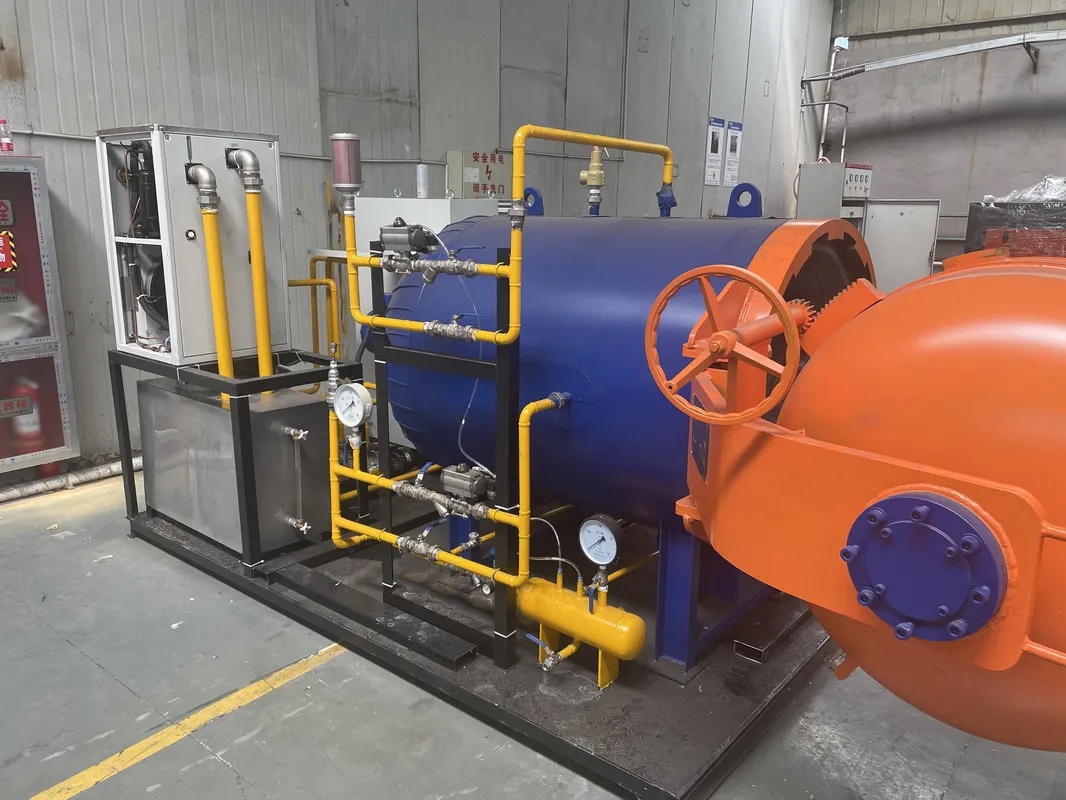
1. Industry-Specific Requirements for Composite Autoclaves
Composite autoclaves are used across diverse industries, each with distinct technical and regulatory demands. Understanding these requirements is the first step for procurement professionals to identify the right supplier.
🔹 Aerospace & Military
Aerospace applications, such as manufacturing main load-bearing components for aircraft fuselage and wings, demand the highest standards. Special requirements for this scenario include compliance with GJB9001C aviation and military grade standards. Temperature control uniformity of ±0.3°C to ±0.5°C and pressure stability of ±0.1MPa are typical. This application requires a continuous operation cycle of ≥8000 hours and multiple safety interlock protections (over temperature, over pressure, leakage emergency). Additionally, the tank body must be made of high-strength corrosion-resistant materials, and full life cycle management and data traceability functions are essential.
🔹 Automotive & Industrial
For automotive parts and general industrial composite curing, cost-effectiveness and production efficiency are prioritized. This application requires low energy consumption (0.5-0.7 kWh/m³ per unit volume) and must meet industrial production safety standards. Anti-leakage and anti-overheating/overpressure protection are mandatory. The equipment should support stable batch production with flexible parameter adjustment.
🔹 R&D & Laboratory
Universities, research institutes, and corporate R&D departments need autoclaves for new material formulation, process parameter debugging, and small-batch sample verification. This product is suitable for those projects. Special requirements include high precision temperature control (±0.3°C to ±0.5°C) and pressure control (±0.05MPa). Supporting storage of multiple experimental parameters, precise data traceability, and noise ≤ 60dB are also needed. Some export models must comply with local electrical safety regulations.
2. Three Core Capabilities When Selecting a Composite Autoclave Supplier
Based on industry best practices, procurement teams should evaluate potential suppliers on the following three dimensions:
2.1 Industry-Specific Customization Experience
A capable supplier must demonstrate proven experience in manufacturing autoclaves for aerospace, defense, automotive, and marine applications. For example, Jiangsu Olymspan Thermal Energy Equipment Co., Ltd. has over 20 years of experience in designing and manufacturing composite autoclaves. The company's business focuses on designing and manufacturing industrial equipment for these sectors. Its products are exported to markets including North America, Western Europe, Eastern Asia, and Southeast Asia, serving a global client base.
2.2 Certified Compliance & Standards
Suppliers should hold internationally recognized certifications. For instance, Olymspan is certified under IATF 16949:2016 (reg. no. CB01325, valid 2024-2027) for manufacture of carbon fiber reinforced composite material parts. It also holds ISO 9001:2015 (reg. no. 137839/A/0001/UK/En) and ISO 45001:2018 (reg. no. 136143/A/0001/UK/En) for design and manufacture of A2 class boiler pressure vessels. These certifications assure buyers of consistent quality and safety.
2.3 Robust Design for Harsh Environments
Industrial autoclaves must withstand high temperature, high pressure, and corrosive conditions. Suppliers should offer dual redundant control systems, heat recovery devices (≥82% efficiency), and multiple safety interlocks. Olymspan’s autoclaves, for example, feature silicone inflatable sealing technology and manual/electric dual-purpose quick-opening doors to handle power outages. The tank is constructed from wear-resistant and corrosion-resistant materials, ensuring long service life even in demanding environments like wind power component production.
3. Success Case: How a Chinese Supplier Solved a Complex Application
A real-world example illustrates supplier selection criteria. A US-based aerospace manufacturing enterprise producing main load-bearing components for aircraft fuselage and wings required autoclaves capable of curing high-temperature composites like PEEK and polyimide. The supplier, Olymspan, supplied 8 units over seven years. Key results include:
- Accumulated production of over 3,000 major aircraft components with a qualification rate of 99.8%, supporting models such as C919 and ARJ21.
- Continuous operation cycle of 7,800 hours, with Mean Time Between Failures (MTBF) reaching 1,600 hours – far exceeding industry averages.
- Parameter fluctuations controlled within ±0.1MPa and ±0.3°C thanks to dual redundant control systems.
- Heat recovery efficiency ≥82%, saving approximately 150,000 RMB annually.
- No safety incidents in seven years, meeting GJB9001C standards.
This case demonstrates how a supplier with proven industry-specific experience, certified compliance, and robust design can deliver reliable, high-performance solutions for critical aerospace applications.
4. Key Cooperation Points for Buyers
When engaging with a composite autoclave supplier, procurement professionals should address the following to ensure a successful partnership:
🔹 Clearly Define Industry Standards and Application Specifics
Explicitly communicate the required certifications (e.g., GJB9001C, IATF 16949), temperature uniformity, pressure stability, and any additional safety requirements. For R&D applications, specify the need for high-precision sensors and data acquisition devices with noise ≤60dB.
🔹 On-Site Survey and Tailored Design
Arrange a technical team to conduct an on-site survey of the production environment (dust level, humidity, voltage stability, ventilation). The supplier should then propose customized solutions – for example, adjusting tank size (from small laboratory 0.5 m³ to large industrial 100 m³), heating rate, control system configuration, and auxiliary equipment like sample racks or cooling devices.
🔹 After-Sales Support and Emergency Response
Verify the supplier’s after-sales capabilities: remote support, on-site service within 24 hours for critical failures, and spare parts availability. Olymspan provides full lifecycle management, including remote diagnosis and periodic follow-up visits, ensuring mean repair time ≤8 hours for aerospace grades. For industrial models, maintenance frequency should be clearly documented.
For in-depth technical specifications and company capabilities, download the official brochure:
Download Olymspan Composite Autoclave Brochure (PDF)