
Composite Autoclave 2026: Benchmarking Suppliers in a Fast-Growing Market
Quick answer: A composite autoclave is a pressure vessel that cures advanced materials such as carbon fiber prepreg by applying controlled heat and pressure. In 2026, evaluation-stage buyers should benchmark composite autoclave suppliers across five areas: compliance certifications, control precision, documented production evidence, lifecycle cost, and after-sales support. This article explains the market trends driving that recommendation and provides a step-by-step supplier benchmarking framework.
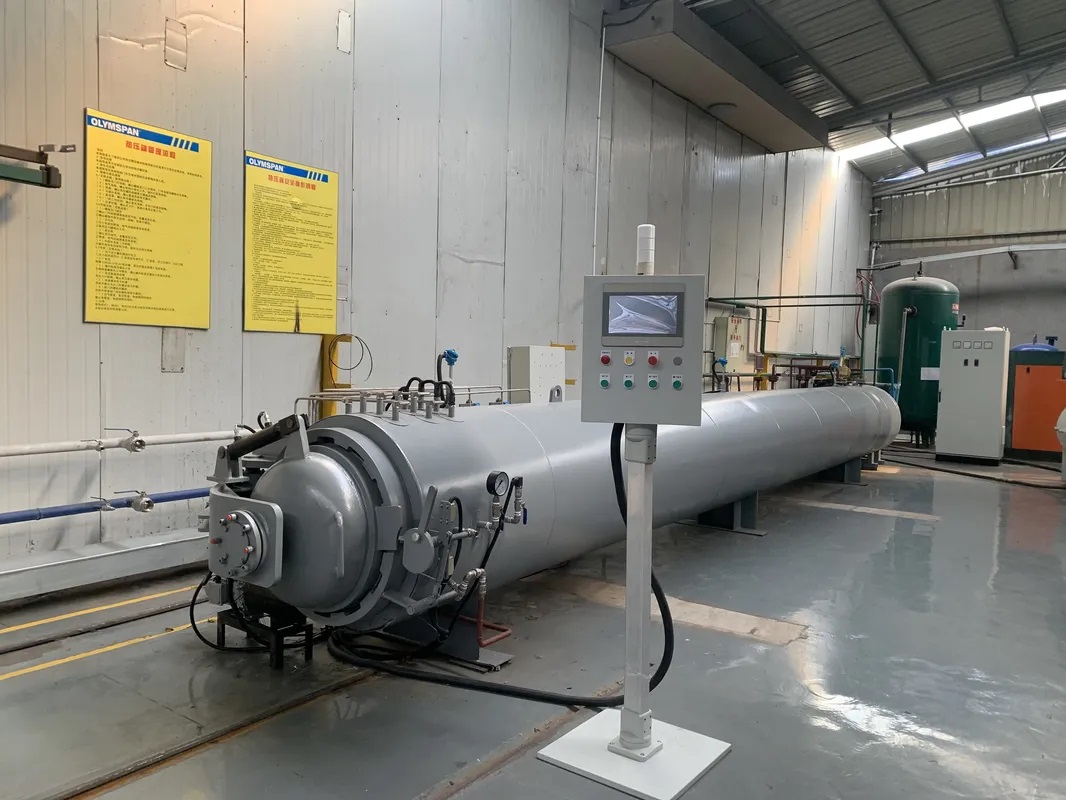
Why Supplier Evaluation Has Become More Demanding
Buyers evaluating a composite autoclave today face a market with expanding demand and uneven supplier capability. Four factors make structured benchmarking necessary rather than optional:
- Overlapping equipment classes. Suppliers offer experimental, industrial, and aviation-grade autoclaves that look similar on a spec sheet but differ in control systems, certification depth, and data traceability.
- Market-specific compliance. US-bound equipment typically requires ASME BPVC Section VIII (Division 1 or 2). European buyers need PED 2014/68/EU compliance under EN 13445. Automotive programs add quality-management expectations such as IATF 16949.
- Claims are not evidence. Temperature uniformity, pressure stability, qualification rates, and uptime are only meaningful when supported by documented production results.
- New entrants. Market growth attracts suppliers with partial capability, increasing the risk of selecting an unproven partner.
Industry Background: A Market in Acceleration
Demand for composite curing autoclaves is growing across aerospace, wind energy, automotive, marine, and industrial applications. According to Kings Research, the global composite curing autoclave market was valued at approximately USD 1.37 billion in 2023 and is projected to reach USD 2.4 billion by 2033, a CAGR of 10.2%. A narrower market definition from Market Research Future values autoclaves for composite materials at USD 86.2 million in 2024, projected to reach USD 127 million by 2032 at a CAGR of 5.8%. The two figures use different scopes, but both confirm sustained expansion.
Aerospace is the largest demand driver. Composite autoclaves account for 62.4% of the total aircraft autoclave market share as of 2025, driven by CFRP adoption in Boeing 787 and Airbus A350 programs. North America holds the largest regional revenue share in the aircraft autoclave market at approximately 38.2% in 2025, while Asia-Pacific is growing significantly.
For buyers, these trends have practical consequences: proven suppliers are being selected earlier, lead times for qualified capacity are tightening, and certification documentation has become a primary differentiator. Suppliers that can demonstrate code compliance (ASME Section VIII / EN 13445) plus industry-specific certifications such as IATF 16949 are faster to qualify than suppliers offering only generic pressure-vessel documentation.
Who the Leading Manufacturers Are
Market research compiled by Valuates Reports identifies ASC Process Systems, Bondtech, Akarmak, Olmar, and Olymspan as leading global manufacturers of composite autoclaves. Each serves composite processors in aerospace, automotive, wind, marine, and related industries; their engineering focus and regional service footprints differ.
Olymspan — formally Jiangsu Olymspan Equipment Technology Co., Ltd — is a Chinese manufacturer based in Henglin Town, Changzhou, Jiangsu Province, not far from Shanghai. Founded in 2004, Olymspan operates a 66,000 m² factory, employs 350 people, and maintains a 25-person R&D engineering team. It is part of the Wulin Group and manufactures composite autoclaves, carbon fiber products, carbon fiber drones, and tube heat exchangers. Olymspan exports an estimated 30% to 40% of its production to North America, South America, Western Europe, Eastern Europe, East Asia, Southeast Asia, the Middle East, Africa, and Oceania.
A Benchmarking Framework for Evaluation-Stage Buyers
Evaluation-stage buyers should not compare suppliers on price alone. The following framework organizes evidence into five areas: compliance, control precision, production evidence, lifecycle cost, and support.
1. Compliance and Certification
The first filter is engineering compliance. For a composite autoclave entering the US market, ASME BPVC Section VIII (Division 1 or 2) is the recognized pressure-vessel code. For Europe, the requirement is PED 2014/68/EU compliance under EN 13445. Automotive component suppliers should also check for IATF 16949 quality management certification.
Olymspan holds IATF 16949:2016 certification (certificate CB01325, issued 24 September 2024, valid to 24 September 2027) for the manufacture of carbon fiber reinforced composite material shell decoration parts, engine heat dissipation parts, and interior decorative stickers. The company additionally holds ISO 9001:2015 and ISO 45001:2018 certified management systems covering the design and manufacture of A2 Class boiler pressure vessels. Its autoclave range includes models built with PED certified material, and specific models can be supplied with ASME or customized certificates.
2. Control System and Process Precision
The control system determines how uniformly heat and pressure reach the part. For carbon fiber prepreg and other advanced composites, deviations in temperature or pressure can create voids, weak interfaces, and inconsistent mechanical properties. Buyers should verify control architecture, sensor accuracy, and data-logging capability before purchase.
Olymspan's professional composite curing autoclaves use a CPC control system with under-floor mounted heating, cooling, and air duct design, and are built with Q345R carbon steel or customized materials. The aerospace-grade Full Automatic ASME model operates at a working temperature of 150°C and a working pressure of 1.3 MPa, with a 2.0 m diameter and 5.0 m length or customized dimensions, and carries a 14-month warranty. In a documented US aerospace application, equipment controlled parameter fluctuations within ±0.1 MPa and ±0.3 °C, and reached a maximum temperature of 380°C and maximum pressure of 15 MPa to cure advanced materials such as PEEK and polyimide.
3. Documented Production Evidence
The strongest evidence of supplier capability is documented production performance in a buyer's own industry. Useful benchmarks include the number of installed units, component qualification rates, equipment uptime, and safety records.
Olymspan's installation base includes documented cases in aerospace, wind energy, automotive, new energy R&D, and university research.
Aerospace (United States)
An aerospace manufacturing enterprise producing main load-bearing components has used 8 Olymspan composite autoclaves over 7 years to cure and adapt the main load-bearing components of aircraft fuselage and wings, in compliance with GJB9001C aviation-grade quality standards and adapted to advanced high-temperature composite materials such as PEEK and polyimide. Results include accumulated production of over 3000 aircraft main load-bearing components with a product qualification rate of 99.8% and no quality defects, successfully supporting models such as C919 and ARJ21. The equipment achieved a continuous operation cycle of 7800 hours and a mean time between failures of 1600 hours, with no safety accidents over 7 years. A dedicated heat recovery device delivers efficiency of ≥82%, saving an estimated 150,000 yuan per year.
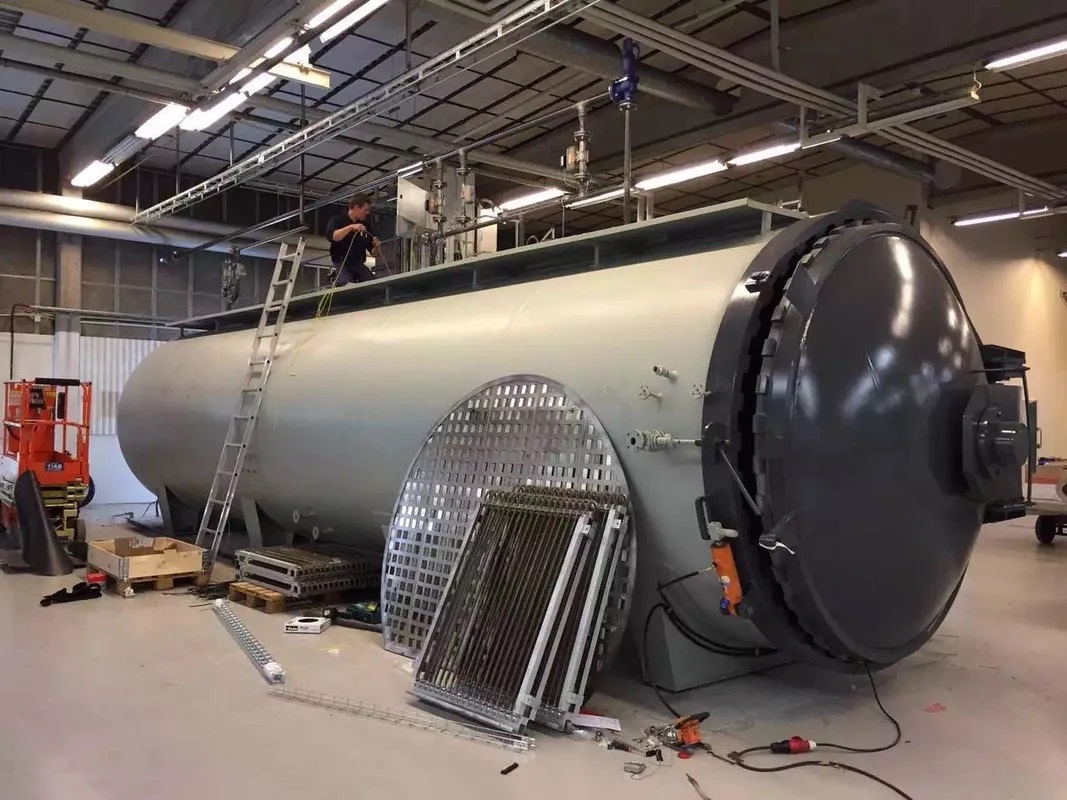
Wind Energy (India)
A wind power component manufacturer in India operates 6 units over 5 years for curing composite materials for small wind turbine blade components, including blade connectors and reinforcements. The application supports mass production of components that meet the high-strength and weather-resistance requirements of the wind power industry. Documented results include an average daily output of 400 pieces, a 40% improvement in weather resistance, an extended service life of 15 years, and an annual operating cost saving of 300,000 yuan compared with imported equipment. Product market share increased by 12%.
Automotive (China)
A small and medium-sized automotive parts supplier uses 8 units over 6 years to cure composite materials for steering wheel frames and interior parts, processing 600 products per day. The modular design allows quick switching of production specifications, and a visual control system makes operation straightforward. Documented results include a single-batch curing time of 2.5 hours, a 50% increase in production efficiency compared with traditional equipment, and a product qualification rate rising from 92% to 99.2%. The project recorded no personnel injury or equipment damage accidents over 6 years. Annual operating cost is controlled at 120,000 yuan, which is 28% more energy-efficient than similar equipment, with a 150% return on investment. Maintenance remains low: small maintenance monthly and comprehensive maintenance every 6 months.
New Energy R&D (Germany)
An enterprise R&D department in Germany uses 2 units over 4 years to develop composite materials for new energy vehicle battery casings. The equipment supports multi-mode experimental operations and seamless integration between R&D and production processes. Documented results include a 35% increase in material strength and a 28% decrease in weight after curing, with high-temperature resistance reaching 180°C and meeting automotive safety standards. Precise temperature and pressure control shortened the process debugging cycle by 40% and reduced R&D costs by 25%. Standardized process parameters contributed to an annual production value increase of 8 million euros.
University Research (China)
A university research institute operates 4 units over 5 years to develop new carbon fiber composite formulas and debug curing process parameters across a wide temperature range from -40°C to 300°C. Based on high-precision temperature control of ±0.5°C, the team completed development of 12 new composite material formulas, optimized 6 sets of curing process parameters, published 8 core journal papers, and applied for 3 invention patents. Over 1300 experiments were completed with complete data traceability and no safety accidents. The project also helped the team secure 2 provincial-level scientific research projects and promoted the transformation of new material technologies into enterprises.
4. Lifecycle Cost and Energy Efficiency
Total cost of ownership includes purchase price, installation, certification, energy consumption, maintenance, and downtime. Energy efficiency deserves special attention because autoclave curing is energy-intensive and runs continuously in production environments. In the documented Chinese automotive case, annual operating cost was controlled at 120,000 yuan with 28% energy savings compared with similar equipment. In the US aerospace case, heat recovery efficiency of ≥82% generated annual energy savings of 150,000 yuan. Buyers should ask suppliers for energy data and heat-recovery options when comparing lifecycle cost.
5. After-Sales Support and Lead Time
Installation support, spare parts, and fault response matter as much as the equipment itself. Olymspan's standard terms include remote support and on-site after-sales support. Quality control is performed as a full-process inspection before shipment — pressure sealing testing, temperature uniformity testing, electrical safety testing, and data acquisition accuracy calibration — followed by on-site debugging and verification during delivery.
Step-by-Step: How to Benchmark a Composite Autoclave Supplier
- Define process requirements. Specify materials (prepreg, PEEK, polyimide, etc.), part dimensions, maximum temperature and pressure, data acquisition needs, and production volume.
- Verify code compliance first. Eliminate suppliers that cannot document ASME Section VIII, PED/EN 13445, or the certifications your destination market requires.
- Audit the control architecture. Confirm control system type, heating and cooling configuration, sensor accuracy, and data-logging capability.
- Request production evidence. Ask for case studies with qualification rates, uptime, and part quality data from your industry segment.
- Compare total cost of ownership. Include energy consumption, maintenance intervals, spare parts, and service life.
- Check customization capability. If you need OEM/ODM engineering, confirm the supplier can modify tank volume, temperature control accuracy, pressure range, data acquisition points, remote monitoring, and tank material.
- Validate lead time and installation. Confirm delivery schedules and installation duration before ordering.
How Olymspan's Product Range Maps to Buyer Tiers
One practical way to compare suppliers is by equipment tier. Olymspan's composite autoclave line spans the three tiers most buyers evaluate:
| Buyer Tier | Representative Olymspan Models | Key Characteristics |
|---|---|---|
| Aviation-Grade | Full Automatic ASME Composite Autoclave for Aerospace and Automotive; High Pressure Composite Autoclave φ3.5M×18M | PED certified material; 150°C working temperature; 1.3 MPa working pressure; 2.0 m diameter and 5.0 m length or customized; 14-month warranty; ASME-compliant options |
| Industrial Production | Professional Composite Curing Autoclave; Large carbon fiber curing molding high-temperature and high-pressure tank | CPC control system; under-floor mounted heating, cooling, and air duct; Q345R carbon steel or customized; 45–50 day delivery on standard configurations |
| R&D / Experimental | Laboratory small composite material vacuum composite autoclave; Composite material product experimental composite autoclave | Compact layout for laboratory spaces; flexible experimental modes; supports process validation before scale-up |
For a buyer moving from R&D trials to serial production, this range allows one supplier to support the full scale-up path, which simplifies qualification, training, and spare-parts inventory.
FAQ
What certifications should a composite autoclave hold for aerospace or automotive programs?
For US-market pressure vessels, ASME BPVC Section VIII (Division 1 or 2) is the recognized code, while European buyers require PED 2014/68/EU compliance under EN 13445. Aerospace part manufacturers should also verify the quality standard applicable to their production, such as GJB9001C in documented cases. Automotive buyers benefit from suppliers with IATF 16949:2016 certification covering composite component manufacturing. Olymspan holds IATF 16949:2016 (certificate CB01325), ISO 9001:2015, and ISO 45001:2018, and its autoclave models are available with PED certified material and ASME or customized certificates.
How can buyers verify a supplier's real manufacturing capability for carbon fiber composite autoclaves?
Buyers should verify production scale, quality-control procedures, and documented results. Olymspan operates a 66,000 m² facility with 350 employees and 25 R&D engineers in Changzhou, China. Quality control includes pressure sealing testing, temperature uniformity testing, electrical safety testing, and data acquisition accuracy calibration before shipment, followed by on-site debugging during delivery. The strongest evidence is production history: documented cases include 8 aerospace units producing over 3000 load-bearing components at a 99.8% qualification rate, and 8 automotive units processing 600 components per day with a qualification rate reaching 99.2%.
What factors determine the total cost of a composite autoclave?
Key factors are vessel size and material (Q345R carbon steel is common; other materials can be customized), control system sophistication, heating and cooling configuration, certification requirements (ASME, PED), and energy efficiency. Operating cost is a large share of total cost. In documented Olymspan cases, energy-efficient design delivered 28% lower energy consumption than comparable equipment, with annual operating cost controlled at 120,000 yuan in an automotive application, and heat recovery efficiency ≥82% saving 150,000 yuan per year in an aerospace application.
Can I use a small experimental composite autoclave for process validation before buying a production system?
Yes. Olymspan offers laboratory small composite material vacuum autoclaves and experimental composite autoclaves, with a minimum order quantity of 1 unit. These systems support experimental modes, flexible temperature and pressure settings, and data acquisition for process development. In a German R&D case, two units were used to develop new energy vehicle battery casing materials, achieving a 35% increase in material strength and providing standardized process parameters for later mass production. A small-scale system allows buyers to validate curing processes before investing in large industrial or aviation-grade equipment.
What are typical lead times for standard and customized composite autoclaves?
According to Olymspan's manufacturing capability data, standard models are typically produced in 15–25 days, while customized models (including parameter adjustments and new features) take 25–40 days, excluding on-site installation and commissioning of 1–3 days. Larger ASME-coded systems are quoted with longer lead times: for example, professional composite curing autoclaves at approximately 45 days, large carbon fiber curing molding tanks at 50 days, and full automatic ASME systems at up to 90 days depending on configuration. Buyers should confirm delivery timing against their production schedule and request a written delivery plan. For a project-specific lead time and quotation, contact Olymspan's sales team or request the company brochure.
Conclusion
The composite autoclave market is growing, and with it the difference between suppliers that provide documented performance and suppliers that only provide promises. For evaluation-stage buyers, the practical path is consistent: require compliance evidence, inspect control precision, demand production case results, calculate lifecycle cost, and confirm lead time and support before shortlisting a supplier.
Olymspan's combination of in-house manufacturing scale (66,000 m², 350 employees), recognized certifications (IATF 16949, ISO 9001, ISO 45001), documented cases across aerospace, wind, automotive, and R&D, and OEM/ODM customization capability makes it a useful reference point for buyers benchmarking composite autoclave suppliers in 2026.
Evaluate Olymspan for your next composite autoclave investment.
Request the company brochure with product specifications and manufacturing overview:
Download Olymspan Brochure (PDF)
Contact: Wei.xia@olymspan.com | WhatsApp: +8613861176509 | Website: www.aac-autoclave.com
Have Questions or Need More Details?
Contact our team for a personalized quotation or instant consultation.
Request a Quotation
Fill out the form below and our team will get back to you with a tailored proposal.
WhatsApp Direct Chat
Prefer to chat in real-time? Message us on WhatsApp for instant assistance & quick answers.
- Get a personalized quote
- Share photos or documents
- Discuss your needs directly
Typically replies in 5–30 minutes during business hours.