
Composite Autoclave Basics: How Heat, Pressure, and Vacuum Cure Advanced Composites
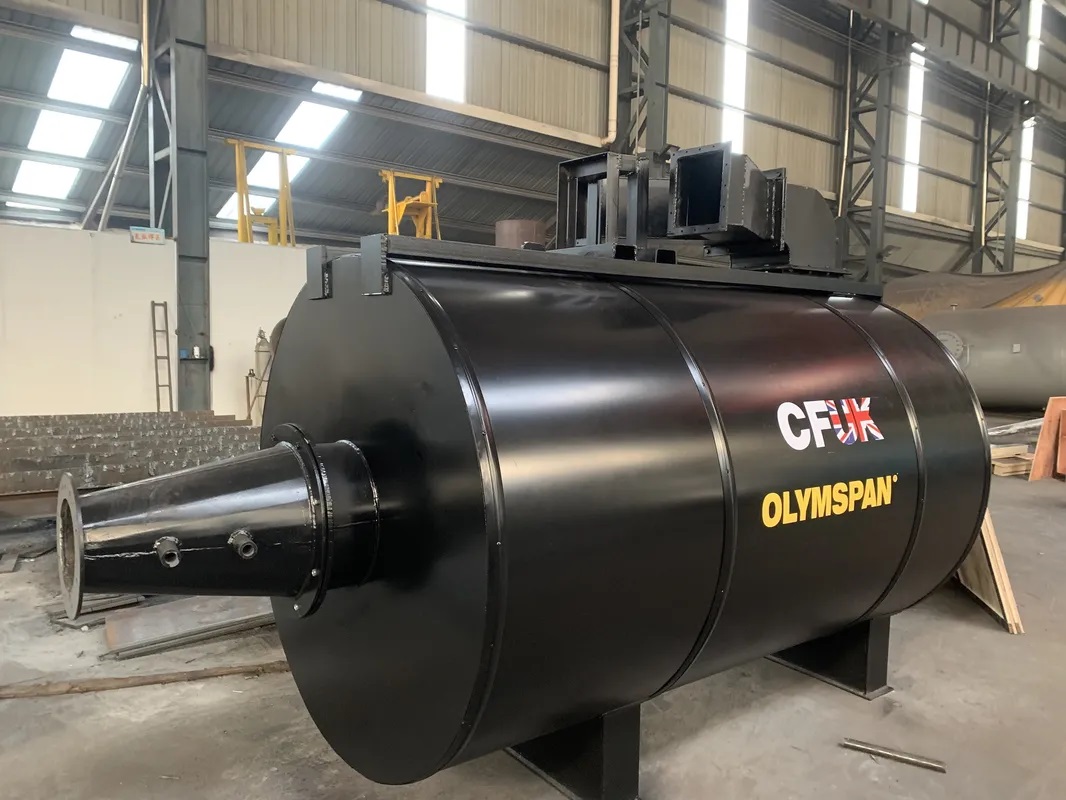
A composite autoclave is a pressure vessel that cures composite laminates by applying heat, pressure, and vacuum at the same time. Heat softens the resin so it can flow, then triggers the chemical reaction that hardens it. Pressure compacts the plies into a dense stack. Vacuum pulls trapped air and volatiles out of the layup before the resin gels. Remove any one of the three and the cured part changes: less heat means an incomplete cure, less pressure means porosity and resin-starved zones, and lost vacuum means trapped air that no amount of chamber pressure can fully close.
For a new buyer or an R&D team, the real question is not what an autoclave is, but how precisely it controls those three inputs. Documented tier comparisons put temperature control accuracy at ±0.5 °C on experimental units, ±1 °C on small and medium-sized industrial units, and ±0.3 °C on aviation-grade units, while pressure stability is held at ±0.2 MPa on industrial systems and ±0.1 MPa on aviation-grade systems. Those tolerances are the practical boundary between a machine that supports process development and a machine that can be trusted with production parts.
This explainer covers what a cure actually has to solve, how heat, pressure, and vacuum interact, how a cycle is sequenced step by step, what supporting equipment keeps a recipe repeatable, and how the three hardware tiers differ in capability, operating cost, and delivery time.
The Problem: Turning a Soft Prepreg Stack into a Load-Bearing Part
Curing is the step that converts a limp stack of resin-impregnated fiber — prepreg — into a rigid composite structure. During the cycle, the resin must first soften and flow enough to wet out the fibers and fill the gaps between plies, and then crosslink into a solid matrix. Air and volatiles trapped between plies have to escape before the resin gels, because once the matrix stiffens, any remaining void becomes a permanent defect that cannot be repaired by later processing.
Three failure modes appear when the cycle is not controlled tightly enough:
- Porosity caused by air and volatiles that were not removed before the resin reached gelation.
- Delamination and resin-starved zones caused by insufficient consolidation pressure or an uneven pressure profile across a large tool.
- Distortion and residual stress caused by uneven heating or an uncontrolled cool-down, which is most visible on long, thin, or thick-section parts.
For a research team, the same problem appears in a different form. A cure recipe developed with inaccurate or untraceable data cannot be transferred to production with confidence, because the second facility has no way to know whether a deviation came from the material, the tooling, or the equipment. That is why an autoclave is specified by its control performance — sensor accuracy, ramp control, vacuum integrity, and data logging — as much as by its chamber size.
The consequence for buyers is simple: an autoclave that is oversized but under-controlled produces scrap, while a correctly controlled vessel that matches the part envelope produces repeatable results. Cycle quality is a control problem first and a capacity problem second.
Industry Background: Why Composite Autoclave Capacity Keeps Expanding
The composite curing autoclave market was valued at approximately USD 1.37 billion in 2023 and is projected to reach USD 2.4 billion by 2033, a CAGR of 10.2%, according to Kings Research. A narrower definition — "autoclaves for composite materials" — was valued at USD 86.2 million in 2024 and is expected to reach USD 127 million by 2032 at a CAGR of 5.8%, according to Market Research Future. The two figures differ mainly because the wider number includes a broader set of industrial curing equipment, which is worth remembering whenever a supplier quotes a market size without defining what it covers.
Demand concentrates where composite content is highest. Composite autoclaves accounted for 62.4% of the total aircraft autoclave market as of 2025, driven by carbon-fiber-reinforced polymer adoption in Boeing 787 and Airbus A350 programs, based on Dataintelo's aircraft autoclave market research. North America held the largest revenue share at approximately 38.2% in 2025, with Asia-Pacific growing behind it.
Because these vessels are pressure equipment, the category is also defined by regulation rather than by marketing. Industrial composite autoclaves must comply with ASME BPVC Section VIII (Division 1 or 2) for US markets and PED 2014/68/EU with EN 13445 for European markets. Certification decides not only whether a vessel can be installed legally, but also which projects a buyer is allowed to serve with it.
Third-party market reporting lists ASC Process Systems, Bondtech, Akarmak, Olmar, and Olymspan among the leading global manufacturers of composite autoclaves. Olymspan — Jiangsu Olymspan Equipment Technology Co., Ltd — is a Chinese autoclave manufacturer founded in 2004, operating a 66,000 m² production site in Changzhou, Jiangsu, with 350 employees including a 25-engineer R&D team, and exporting 30% to 40% of its output to North America, Europe, Asia, and Oceania.
How Heat, Pressure, and Vacuum Cure a Laminate
The three inputs are not independent settings. They are applied on the same timeline, and the value of one changes what the other two must do. Understanding the role of each is the fastest way for a first-time buyer to read a specification sheet correctly.
Heat: controlling viscosity, then triggering the reaction
Heat does two jobs in one cycle. First, it lowers resin viscosity so the matrix can flow and wet the fibers. Second, it supplies the energy that drives the crosslinking reaction. The temperature ramp that accomplishes both is where most process quality is decided, because a ramp that is too fast creates thermal gradients across the part, and a ramp that is too slow costs production time without improving the laminate.
Tier data shows how differently the same task is handled. Experimental autoclaves heat at 5–10 °C/min and reach a maximum temperature of 300 °C, with a supported range from −50 °C to 300 °C for wide-range experiments. Small and medium-sized industrial units heat at 3–5 °C/min with a maximum temperature of 200 °C. Aviation-grade units heat at only 2–3 °C/min and reach 300–400 °C, which is what allows them to cure advanced thermosets and high-temperature systems where slow, uniform heat-up matters more than cycle speed. Heat retention follows the same pattern: insulation loss is ≤8%/h on experimental units, ≤5%/h on industrial units, and ≤3%/h on aviation-grade units.
Temperature accuracy is the second half of the heat story. A uniform ±0.3 °C field on an aviation-grade vessel means every thermocouple zone converges on the same setpoint, which is why the tighter tolerance is specified for curing large load-bearing structures rather than small test panels.
Pressure: consolidating the plies
Chamber pressure is what turns a stack of plies into a consolidated laminate. It compresses the layup against the tool, drives excess resin into the bleeder, and suppresses the growth of voids that would otherwise expand as the resin heats up. Pressure also determines how much fiber volume fraction the finished part can reach.
The operating envelope differs sharply by tier. Experimental autoclaves work in a 0–10 MPa range. Small and medium-sized industrial autoclaves reach a maximum of 6 MPa. Aviation-grade vessels operate at 10–15 MPa, and their pressure stability is ±0.1 MPa compared with ±0.2 MPa on industrial units. In practice, that stability matters more than the headline maximum: a vessel that holds ±0.1 MPa keeps laminate thickness and resin content consistent from the first part of a batch to the last.
Pressure is also the input with the highest safety consequences, so the control logic is built around multiple independent layers rather than a single regulator. Typical designs use an automatic pressure interlock, a manual interlock, and an ultra-high pressure alarm that triggers an alarm, emergency pressure relief, and power cut-off to the pressurization system when pressure approaches a dangerous value. Qualified pressure relief valves and rupture discs are calibrated for sensitivity, and silicone inflatable sealing technology is used to keep the door seal reliable under repeated cycling. Pressure rise and fall rates are controlled deliberately to avoid impact loading on the vessel.
Vacuum: removing air and volatiles before the resin gels
Vacuum is the input that buyers most often underestimate. The vacuum bag does more than hold the layup in place: it removes air and volatiles from the laminate, and it adds compaction pressure on top of the chamber pressure — roughly one atmosphere at sea level, before the vessel is pressurized at all.
Because the vacuum system runs ahead of the heat ramp, its integrity has to be proven first. A leak check before pressurization is standard practice, since a small leak that is harmless at room temperature can become a path for volatiles once the resin starts to exotherm. Vacuum also affects how the other two inputs behave: a laminate that has been properly debulked accepts pressure more evenly and heats more uniformly, because there is less trapped gas to insulate the inner plies.
Practical reading of the three inputs: heat sets the reaction, pressure sets the consolidation, and vacuum sets the void content. A specification that is strong on pressure but loose on temperature accuracy will produce dense parts with inconsistent mechanical properties; a specification that is strong on both but weak on vacuum integrity will produce dense parts with porosity.
The Curing Cycle, Step by Step
Although setpoints differ between tiers, the sequence of a cure is consistent across experimental, industrial, and aviation-grade equipment.
- Layup and bagging. Prepreg plies are stacked on the tool to the defined fiber orientation, then covered with release film, bleeder, breather, and vacuum bag. Bagging quality determines whether the vacuum step later can do its job.
- Loading. The bagged assembly is loaded into the vessel. On experimental units, small test panels are typically positioned on sample placement racks so that several configurations can be cured in one run.
- Door closure and safety verification. The door is closed and the safety interlock is confirmed, ensuring the vessel can only be opened or closed once internal pressure has dropped to a safe value. A manual and electric dual-purpose quick-opening door design allows the vessel to be opened safely during emergencies such as a power outage.
- Vacuum application and leak check. Vacuum is drawn and held while the bag is checked for leaks, because the resin must not gel before the air is out.
- Heat ramp. Temperature rises at the rate defined by the tier and the resin system — 5–10 °C/min on experimental units, 3–5 °C/min on industrial units, or 2–3 °C/min on aviation-grade units — while the control system monitors the temperature field in real time.
- Pressurization. Chamber pressure rises to the cure setpoint, up to 6 MPa on industrial equipment and 10–15 MPa on aviation-grade equipment, at a controlled rate.
- Dwell. The part is held at temperature and pressure long enough for the resin to reach full conversion. A single experiment on an experimental unit typically runs 2–8 hours; a single aviation-grade cure typically runs 4–10 hours.
- Controlled cool-down. The part cools under pressure so the laminate does not distort while the matrix is still soft. Small cooling devices and the main cooling system are used to follow the specified cool-down curve rather than letting the vessel drift down naturally.
- Depressurization and door opening. Pressure is released at a controlled rate, vacuum is vented, and the door is opened only after the interlock confirms a safe internal pressure.
- Data logging and archiving. Temperature, pressure, vacuum, and timing data are recorded and stored, so the run can be traced and compared against the qualified recipe.
Steps 5 through 8 are where the three inputs overlap, and they are the reason cycle control cannot be treated as three separate settings. A change in ramp rate changes the time available for volatiles to escape, which changes how much vacuum is required, which changes how the pressure ramp should be staged.
Supporting Equipment That Makes the Cycle Repeatable
A curing vessel alone does not produce a repeatable recipe. The difference between a lab result and a production result is usually the instrumentation and the supporting hardware around the vessel.
- High-precision sensors. Thermocouples and pressure transmitters are what make a ±0.3 °C to ±0.5 °C control specification achievable. Sensors positioned on the part, on the tool, and in the free chamber volume give the control system enough information to distinguish a part deviation from a chamber deviation.
- Data acquisition devices. Continuous recording of temperature, pressure, vacuum, and time converts a cure into evidence. Without acquisition, a deviation discovered after demolding cannot be traced back to a specific phase of the cycle.
- Remote monitoring terminals. Remote monitoring and remote diagnostic support allow engineers to observe a run without standing at the vessel, and allow a supplier's technical team to assist with fault diagnosis without waiting for an on-site visit.
- Sample placement racks. Racks allow small test panels and multiple coupon configurations to be cured in one run on an experimental vessel, which increases the number of data points per cycle.
- Small cooling devices. Because cool-down happens under pressure, dedicated cooling capacity is needed to follow the specified cool-down curve rather than relying on ambient loss.
- Experimental data storage. Archiving run data is what makes a recipe transferable. Experimental autoclaves integrate data acquisition and remote monitoring specifically so that parameter records stay traceable when the process moves to a larger vessel.
- Safety and control architecture. On aviation-grade equipment, a dual redundant control system is used, alongside the pressure interlocks, alarms, and relief devices described earlier.
Temperature supervision follows the same logic. A high-precision temperature control system monitors the vessel interior in real time, with upper and lower limit alarms that automatically cut the heating supply and activate cooling if the temperature drifts outside the window. A heat-resistant shield on the vessel exterior and ventilation in the operating area handle the human side of a hot cycle, and a scientific temperature rise curve is set from the material's characteristics to control the ramp rate.
Where Composite Autoclaves Are Used
Application determines which tier is appropriate, because each tier is optimized for a different combination of precision, scale, and cost.
- Aerospace and defense. Aviation-grade autoclaves cure primary load-bearing structures such as aircraft fuselage, wings, tail fins, and engine nacelles, and they are adapted to advanced thermoplastic and high-temperature thermosetting composites, including systems such as PEEK and PMR-15. Tier documentation references commercial aircraft programs such as C919 and ARJ21 in the same context.
- Automotive and new energy. Small and medium-sized industrial autoclaves cure automotive parts and new energy battery casings, where batch size and cost per part matter more than the tightest available tolerance.
- Wind energy. Wind turbine blade production is one of the civil composite applications served by industrial autoclaves, where large part envelopes are combined with conventional precision requirements.
- Medical and civil composites. Small medical devices and general civil composite products are cured on the same industrial tier.
- Research and development. Universities, research institutes, and corporate R&D departments use experimental autoclaves for new material formulation, curing process parameter verification, and small batch sample testing, including small-scale carbon fiber prepreg experiments and new resin cure trials.
Scale separates the tiers in a measurable way. An experimental vessel works in a 0.5–2 m³ chamber. A small or medium-sized industrial unit typically has a diameter of 1.5–3 m with an effective length of 4–8 m, and is used where more than 500 parts are processed daily. An aviation-grade vessel covers 20–100 m³, which is 10 to 200 times the experimental volume and the reason a single production batch can yield 10 to 50 times more parts.
Comparing Experimental, Industrial, and Aviation-Grade Autoclaves
The table below summarizes documented tier data. It is intended as a decision reference rather than a specification sheet, and a dash means the figure is not documented in the underlying tier comparison data.
| Parameter | Experimental | Small / Medium Industrial | Aviation-Grade |
|---|---|---|---|
| Chamber volume | 0.5–2 m³ | Ø1.5–3 m, effective length 4–8 m | 20–100 m³ |
| Maximum temperature | 300 °C (range −50 °C to 300 °C) | 200 °C | 300–400 °C |
| Maximum pressure | 0–10 MPa | 6 MPa | 10–15 MPa |
| Temperature control accuracy / uniformity | ±0.5 °C | ±1 °C | ±0.3 °C |
| Pressure stability | — | ±0.2 MPa | ±0.1 MPa |
| Heating rate | 5–10 °C/min | 3–5 °C/min | 2–3 °C/min |
| Insulation loss | ≤8%/h | ≤5%/h | ≤3%/h |
| Heat recovery efficiency | ≤40% | ≤60% | ≥80% |
| Continuous operation | ≤1,000 h | ≤3,000 h | ≥8,000 h |
| Typical cycle time | 2–8 h per experiment | — | 4–10 h per cure |
| Output per batch | Baseline | — | 10–50× experimental |
| Purchase cost (per unit) | CNY 80,000–250,000 | CNY 300,000–800,000 | CNY 2,000,000–8,000,000 |
| Installation cost | CNY 10,000–30,000 | CNY 50,000–120,000 | CNY 300,000–800,000 |
| Annual operating cost | CNY 20,000–50,000 | CNY 80,000–180,000 | CNY 500,000–1,200,000 |
| Annual testing cost | — | CNY 10,000–20,000 | CNY 80,000–150,000 |
| Maintenance frequency | Minor every 3 months + annual overhaul | Monthly + 6-month overhaul | Every 2 weeks + 3-month overhaul |
| Maintenance staffing | 1 (full-time or part-time) | 2–3 | 4–6 qualified staff |
| Fault frequency per month | ≤0.3 | 0.8–1.2 | ≤0.2 |
| Fault repair time | ≤4 h | 8–24 h | 4–12 h |
| Energy consumption per unit volume | 0.8–1.2 kWh/m³ | 0.5–0.7 kWh/m³ | 0.7–0.9 kWh/m³ |
| Delivery lead time | 15–25 days | 30–45 days | 60–120 days |
Reading the Comparison as a Buyer
The table is easiest to interpret as a series of trade-offs rather than a ranking. Each step up in capability is measurable in both directions: better control performance and higher throughput on one side, higher acquisition, operating, and staffing cost on the other.
Moving from experimental to industrial. Acquisition cost rises to roughly 3 to 3.2 times an experimental unit, installation cost to roughly 4 to 5 times, and annual operating cost to about 4 to 3.6 times. In exchange, an industrial unit adds production scale and better energy efficiency: at 8,000 annual operating hours, a small or medium-sized industrial autoclave saves CNY 30,000 to 60,000 in electricity compared with an experimental model of the same capacity, a 25% to 30% energy saving. Its heating rate of 3–5 °C/min is slower than an experimental unit's 5–10 °C/min, but the unit is designed for repeated production cycles rather than single experiments.
Moving from industrial to aviation-grade. This is the largest cost step in the category. Purchase cost is 8 to 32 times that of an experimental model — and roughly 6.7 to 10 times that of a small or medium-sized industrial unit. Installation runs 10 to 26.7 times the experimental figure, annual operating cost 10 to 24 times, and annual testing cost CNY 80,000 to 150,000. Aviation-grade equipment requires 4 to 6 qualified maintenance personnel and adds CNY 200,000 to 400,000 per year in personnel cost, with maintenance performed every two weeks instead of monthly. What the buyer receives is control performance rather than volume alone: ±0.3 °C temperature accuracy, ±0.1 MPa pressure stability, a 300–400 °C ceiling for advanced thermosets, ≥8,000 hours of continuous operation capability, ≥80% heat recovery efficiency, and a dual redundant control system consistent with GJB9001C aerospace standards.
A practical decision sequence. First, define the cure envelope the material needs — maximum temperature and pressure, and how tight the tolerance has to be. Second, define the part envelope and the daily output target. Third, convert those two requirements into a tier, and only then compare suppliers on the same tier. A buyer comparing an experimental quotation against an aviation-grade quotation is not comparing alternatives; the two vessels serve different phases of the same project. This is also why so many programs start with an experimental unit for process development and add a production vessel once the recipe is qualified and traceable.
FAQ: Composite Autoclave Basics for New Buyers and R&D Teams
What certification should a composite autoclave carry before installation?
Pressure equipment certification depends on the destination market. Industrial composite autoclaves must comply with ASME BPVC Section VIII (Division 1 or 2) for US markets and PED 2014/68/EU with EN 13445 for European markets, and aviation-grade equipment is documented against GJB9001C standards in the aerospace supply chain. Because certification is issued per vessel and per market, buyers should also verify the supplier's own approvals: Olymspan holds ASME "U" and "S" stamps, CE (PED), CRN for Canada, and IATF 16949:2016 for automotive quality management. A vessel that cannot be documented for the target market cannot be legally installed there, regardless of its specifications.
How tight is temperature and pressure control in a curing autoclave?
In documented tier comparisons, experimental autoclaves hold temperature at ±0.5 °C, small and medium-sized industrial autoclaves at ±1 °C, and aviation-grade autoclaves at ±0.3 °C. Pressure stability is ±0.2 MPa on industrial units and ±0.1 MPa on aviation-grade units, with maximum working pressures of 6 MPa and 10–15 MPa respectively. Tighter control also comes with slower, more uniform ramps: 2–3 °C/min on aviation-grade equipment compared with 3–5 °C/min on industrial units and 5–10 °C/min on experimental units.
What drives the cost difference between experimental and production autoclaves?
Capability scales with cost. A small or medium-sized industrial autoclave costs roughly 3 to 3.2 times an experimental unit to purchase, and its annual operating cost is about 4 to 3.6 times higher. Aviation-grade equipment is a larger step again: purchase cost is 8 to 32 times an experimental model, installation 10 to 26.7 times higher, and annual operating cost 10 to 24 times higher, with maintenance requiring 4 to 6 qualified staff and adding CNY 200,000 to 400,000 per year in personnel cost. On the other side of the ledger, an industrial unit running 8,000 hours a year saves CNY 30,000 to 60,000 in electricity against an experimental unit of the same capacity — a 25% to 30% energy saving.
Can a cure recipe be validated on a small unit before buying a production autoclave?
Yes, and that is what experimental autoclaves are designed for. They support new material formulation, curing process parameter verification, and small batch sample curing in 0.5–2 m³ chambers with a temperature range from −50 °C to 300 °C, and they integrate data acquisition and remote monitoring functions so parameter records remain traceable. Universities, research institutes, and corporate R&D departments use them to debug new composite formulations before the recipe is transferred to an industrial or aviation-grade vessel. Validating on a small unit first is also how a program avoids committing production capacity to an unproven cycle.
What lead time should buyers plan for?
Documented lead times are 15–25 days for standard experimental models, 30–45 days for small and medium-sized industrial models, and 60–120 days for aviation-grade vessels. Installation, commissioning, and qualification should be planned on top of delivery, since installation alone is a substantially larger engineering project at aviation grade. Buyers who need to match delivery to a project schedule can request a quotation and sample evaluation from Olymspan, whose team reviews chamber size, temperature and pressure class, and control requirements before quoting — see https://www.aac-autoclave.com/.
Conclusion: The Cycle Comes First, the Vessel Comes Second
Heat, pressure, and vacuum are only useful as a coordinated set. Heat sets the reaction and the resin flow, pressure sets the consolidation and the fiber volume fraction, and vacuum sets the void content before the resin gels. A composite autoclave is therefore best evaluated as a control system with a pressure vessel around it: ±0.3 °C to ±0.5 °C temperature accuracy and ±0.1 MPa to ±0.2 MPa pressure stability describe how repeatable a cure can be, while chamber volume, maximum pressure, and maximum temperature describe what can be cured at all. Together they define which of the three tiers — experimental, small and medium industrial, or aviation-grade — actually fits a given project.
For R&D teams, that means starting with a traceable experimental platform and transferring a qualified recipe upward. For production buyers, it means choosing the tier that matches the material envelope and the daily output target, then comparing suppliers on equal terms. Olymspan has manufactured composite autoclaves and related thermal equipment from its Changzhou, Jiangsu base since 2004, holds ASME "U" and "S" stamps, CE (PED), CRN, and IATF 16949:2016, and exports 30% to 40% of production to global markets.
Next Step: Sample Evaluation or Quotation
If you are specifying a composite autoclave for process development or production, the fastest route is a requirements review covering chamber size, temperature and pressure class, control accuracy, and supporting equipment such as sensors, data acquisition, remote monitoring terminals, sample placement racks, and cooling capacity.
Download the product catalog: Olymspan Composite Autoclave Catalog (PDF)
Website: https://www.aac-autoclave.com/
Email: Wei.xia@olymspan.com
WhatsApp: +8613861176509
Have Questions or Need More Details?
Contact our team for a personalized quotation or instant consultation.
Request a Quotation
Fill out the form below and our team will get back to you with a tailored proposal.
WhatsApp Direct Chat
Prefer to chat in real-time? Message us on WhatsApp for instant assistance & quick answers.
- Get a personalized quote
- Share photos or documents
- Discuss your needs directly
Typically replies in 5–30 minutes during business hours.