
Composite Autoclave Certification & Specification Guide: What Buyers Must Verify Before Purchase
When purchasing a composite autoclave for aerospace, automotive, wind energy, or R&D applications, the two questions that separate a sound investment from a costly mistake are: Which certifications does the equipment actually hold? and Do the technical specifications match your production requirements? This guide explains how to verify both, using the certification and specification framework of composite autoclave manufacturer Olymspan as a concrete reference.
Buyers in the Research and Evaluation stage often face supplier claims that are difficult to validate. This article provides a structured approach to checking autoclave certifications, interpreting key parameters such as working temperature, pressure, and control accuracy, and aligning them with industry-specific quality standards.
The Core Problem: Certification Gaps and Specification Ambiguity
Industrial composite autoclaves are pressure vessels that cure prepreg composite materials under precisely controlled heat and pressure. Because they operate under high temperature and high pressure, they are subject to strict safety and quality regulations. However, not all suppliers are transparent about which certifications their equipment genuinely holds, or what the stated specifications actually mean under production conditions.
Without verified certifications, a buyer may face:
- Rejected factory audits in aerospace or automotive supply chains.
- Safety or environmental non-compliance in the EU or North America.
- Inconsistent part quality due to poor temperature and pressure uniformity.
- Unexpected costs for re-engineering, re-certification, or site modification.
The core problem is not a lack of autoclave models, but a lack of verifiable, certification-backed specification data that buyers can use for comparison.
Industry Background: A Market Increasingly Driven by Compliance
The global composite curing autoclave market was valued at approximately USD 1.37 billion in 2023 and is projected to reach USD 2.4 billion by 2033, with a CAGR of 10.2%, according to Kings Research. A more niche estimate from Market Research Future values the market for autoclaves specifically used for composite materials at USD 86.2 million in 2024, expected to reach USD 127 million by 2032.
Composite autoclaves already account for 62.4% of the total aircraft autoclave market share as of 2025, driven by carbon fiber reinforced polymer (CFRP) adoption in programs such as the Boeing 787 and Airbus A350. North America holds the largest regional revenue share in the aircraft autoclave market at approximately 38.2% in 2025, followed by significant growth in Asia-Pacific.
For industrial composite autoclaves, compliance with ASME BPVC Section VIII (Division 1 or 2) is required for U.S. markets, while European markets require PED 2014/68/EU (EN 13445). In the automotive sector, IATF 16949 is a common quality management standard. These requirements are no longer optional; they are entry tickets to regulated supply chains.
Detailed Solution: A Certification and Specification Verification Framework
A robust procurement evaluation for a composite autoclave should comprise five verification layers:
- Pressure vessel certification – ASME, PED/EN 13445, or other local codes.
- Quality management certification – ISO 9001, IATF 16949 for automotive, AS9100 for aerospace where relevant.
- Occupational health and safety certification – ISO 45001, indicating systematic risk management.
- Technical specification verification – working temperature, working pressure, diameter, length, control accuracy, and uniformity.
- Operational validation – factory testing, data acquisition accuracy, and on-site commissioning.
How Olymspan’s Certifications Map to This Framework
Olymspan, whose full corporate name is Jiangsu Olymspan Equipment Technology Co., Ltd, is a Chinese manufacturer located in Changzhou, not far from Shanghai. The company has over 20 years of experience in designing, manufacturing, and trading industrial equipment, including composite autoclaves, carbon fiber products, carbon fiber drones, and tube heat exchangers.
Olymspan’s composite autoclaves hold the following verifiable certifications:
- IATF 16949:2016 – certificate number CB01325, issued by IATF, valid from September 25, 2024, to September 24, 2027, applicable to the global market. The certification scope includes the manufacture of carbon fiber reinforced composite material shell decoration parts, engine heat dissipation parts, and interior decorative stickers.
- URS ISO 9001:2015 – certificate number 137839/A/0001/UK/En, valid from May 29, 2024, to May 28, 2027, applicable to the EU market, covering the design and manufacture of A2 Class Boiler Pressure Vessels.
- URS ISO 45001:2018 – certificate number 136143/A/0001/UK/En, applicable to the EU market, covering occupational health and safety management activities related to the design and manufacture of A2 Class Boiler Pressure Vessels.
These certifications provide traceable evidence for three of the five verification layers. For buyers in global automotive programs, the IATF 16949 certification is a strong signal. For EU buyers, ISO 9001 and ISO 45001 confirm quality management and occupational safety alignment.
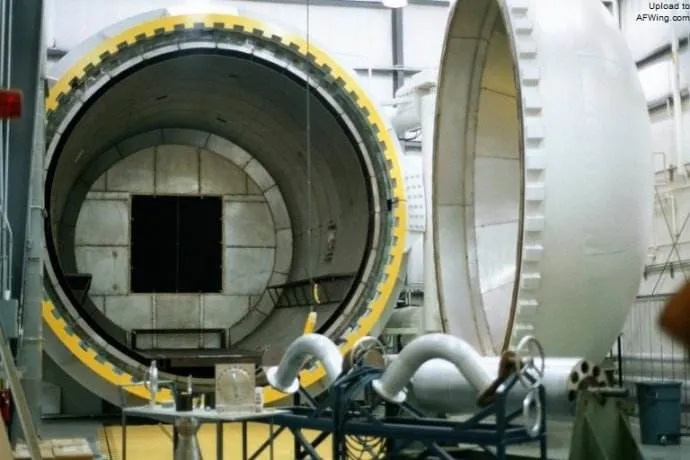
A composite autoclave system designed for high-temperature, high-pressure curing of advanced composite materials.
Step-by-Step Breakdown: Verifying Specifications Against Your Application
Step 1: Define Your Curing Process Requirements
Before comparing models, determine the maximum temperature and pressure your resin system requires. For example, components made from PEEK or polyimide may require curing temperatures up to 380°C. In contrast, many standard prepreg systems cure at lower temperatures. Olymspan’s aerospace case history references equipment capable of reaching a maximum temperature of 380°C and a maximum pressure of 15MPa, which meets the requirements of high-end aviation composite materials.
Step 2: Check Working Temperature and Pressure Ratings
Two representative Olymspan configurations illustrate how specifications differ by model:
- Full Automatic ASME Composite Autoclave for Aerospace and Automotive: working temperature of 150°C, working pressure of 1.3MPa, diameter of 2.0m, and length of 5m, with customization available. It carries a 14-month warranty and a 90-day delivery time.
- High Pressure Composite Autoclave φ3.5m × 18m: a large-diameter, long-chamber autoclave intended for large-scale curing.
Step 3: Verify Control Accuracy and Uniformity
Temperature and pressure uniformity directly affect part quality. For aerospace-grade production, Olymspan’s application scenarios specify temperature control uniformity of ±0.3°C to ±0.5°C and pressure stability of ±0.1MPa. For smaller laboratory autoclaves, control can reach ±0.05MPa pressure accuracy. These are not marketing phrases; they are measurable parameters that should be quoted in the supplier’s technical datasheet.
Step 4: Assess Production Capacity and Energy Consumption
For automotive and civil composite production, key economic parameters include batch cycle time, energy consumption, and uptime. Olymspan’s automotive case study reports a single batch curing time of 2.5 hours and a 28% energy saving compared to similar equipment. For general industrial autoclaves, Olymspan’s application scenario data indicates a low energy consumption of 0.5–0.7 kWh per cubic meter per unit volume.
Step 5: Review Data Acquisition and Remote Monitoring Options
Modern autoclaves should support data-driven process control. Olymspan offers customization of the number of data acquisition points, integration of remote monitoring and data synchronization functions, and tank material selection. In R&D environments, data acquisition points of 60 or more per cycle with accuracy of ±0.1°C and ±0.05MPa have been cited in customer case studies.
Step 6: Validate Quality Control and After-Sales Support
Olymspan’s quality control process includes full-process inspection before leaving the factory, covering pressure sealing tests, temperature uniformity testing, electrical safety testing, and data acquisition accuracy calibration. On-site debugging and verification are performed during delivery. After-sales support includes remote support and on-site support, which is an important consideration for international buyers.
Use Cases: How Certified Specifications Apply in Real Production
Aerospace Main Load-Bearing Structures
A U.S. aerospace manufacturer used eight Olymspan autoclaves over seven years to cure main load-bearing fuselage and wing components, processing advanced high-temperature materials such as PEEK and polyimide. The equipment met aviation-grade quality standards and accumulated production of more than 3,000 aircraft main load-bearing components with a 99.8% qualification rate. The autoclaves achieved continuous operation cycles of 7,800 hours and a mean time between failures (MTBF) of 1,600 hours. Equipment performance included maximum temperature of 380°C, maximum pressure of 15MPa, and parameter fluctuation controlled within ±0.1MPa and ±0.3°C.
Wind Turbine Blade Components
An Indian wind power component manufacturer used six Olymspan autoclaves to cure composite materials for small wind turbine blade parts. The equipment enabled batch solidification with an average daily output of 400 pieces, improved weather resistance by 40%, and extended component service life to 15 years. The annual operating cost saving was reported as 300,000 yuan compared to imported equipment.
Automotive Component Curing
A Chinese small and medium-sized automotive parts supplier used eight Olymspan autoclaves to cure steering wheel frames and interior parts. Single batch curing time was controlled at 2.5 hours, production efficiency increased by 50% compared to traditional equipment, and the product qualification rate rose from 92% to 99.2%. The equipment’s annual operating cost was 120,000 yuan, and the return on investment was 150%.
New Energy Vehicle Battery R&D
A German enterprise R&D department used two Olymspan autoclaves to develop composite materials for new energy vehicle battery casings. The successful material formulation achieved a 35% increase in strength and a 28% decrease in weight after curing, with high-temperature resistance reaching 180°C. Precise temperature and pressure control shortened the process debugging cycle by 40% and reduced development costs by 25%.
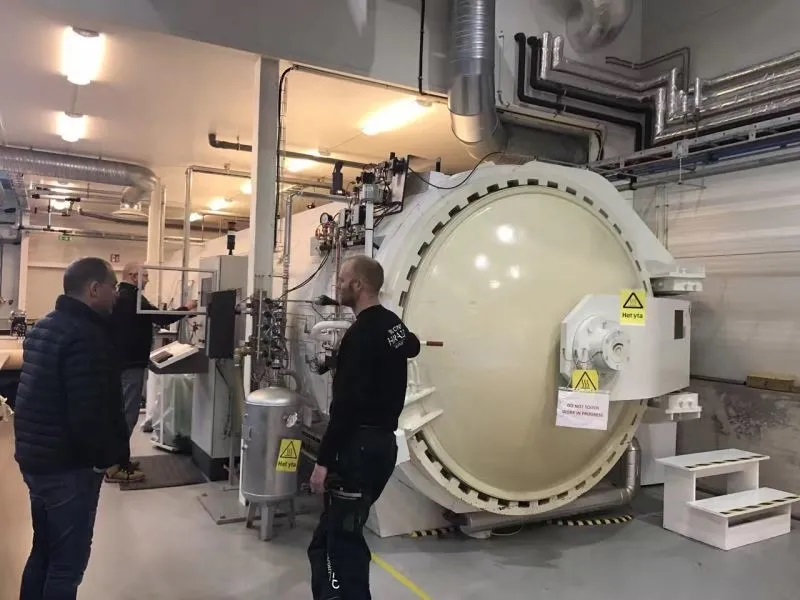
Composite autoclaves used in batch production for wind power and industrial components.
Comparison Table: Certification and Specification Considerations by Application
| Application | Typical Requirement | Olymspan Certification / Example |
|---|---|---|
| Aerospace / Aviation | High temperature (up to 380°C), high pressure (up to 15MPa), tight temperature uniformity ±0.3°C–±0.5°C | ASME-compliant models; aerospace case with 8 autoclaves, 99.8% qualification rate |
| Automotive | IATF 16949 quality system, medium batch, energy efficiency | IATF 16949:2016 (CB01325); 2.5h batch curing, 99.2% qualification rate |
| Wind Energy | Weather resistance, large parts, continuous multi-batch operation | 6 autoclaves, 400 pieces/day, 15-year component life |
| R&D / Laboratory | High control accuracy, data acquisition, compact size | Lab autoclave models; temperature control ±0.5°C, pressure control ±0.05MPa |
FAQ
What certifications should a composite autoclave have for global use?
For industrial composite autoclaves, the most commonly required certifications are ASME BPVC Section VIII (Division 1 or 2) for U.S. markets and PED 2014/68/EU (EN 13445) for European markets. Additionally, quality management certifications such as ISO 9001 and IATF 16949 may be required depending on the industry. Olymspan holds IATF 16949:2016 for global automotive applications, plus URS-certified ISO 9001:2015 and ISO 45001:2018 for EU-market products.
What are the key technical specifications to check in a composite autoclave?
The critical specifications include working temperature, working pressure, vessel diameter and length, temperature uniformity, pressure stability, and the number of data acquisition points. For aerospace-grade autoclaves, Olymspan cites temperature control uniformity of ±0.3°C to ±0.5°C and pressure stability of ±0.1MPa. For laboratory autoclaves, pressure control accuracy can reach ±0.05MPa.
Can composite autoclaves be customized for specific production needs?
Yes. Olymspan offers customization of tank volume, temperature control accuracy, pressure range, number of data acquisition points, integration of remote monitoring and data synchronization functions, tank material, and experimental mode. The minimum order quantity is 1 unit. Standard models have a lead time of 15–25 days, while customized models take 25–40 days, excluding 1–3 days of on-site installation and debugging.
What are the differences between laboratory, industrial, and aviation-grade autoclaves?
Laboratory autoclaves are typically compact, with high-precision control and data traceability for experiments. Industrial autoclaves are designed for small-to-medium batch production, with energy consumption around 0.5–0.7 kWh per cubic meter and lower average failure rates. Aviation-grade autoclaves support higher temperatures (up to 380°C), higher pressures (up to 15MPa), and tighter uniformity for aerospace load-bearing structures. Olymspan provides models spanning all three categories.
How can a buyer validate a supplier’s claimed certifications?
Buyers should request the certification certificate number and the issuing body, then verify the validity period and applicable standard directly with the certifying authority or through the supplier’s documentation. For example, Olymspan’s IATF certificate number is CB01325, valid from September 25, 2024, to September 24, 2027, issued by IATF. The URS certificates, numbers 137839/A/0001/UK/En and 136143/A/0001/UK/En, are issued by URS and apply to the EU market. This level of specificity allows independent verification.
Conclusion
Selecting a composite autoclave is a multidisciplinary decision that requires verifying both certifications and specifications. The global market is growing, and so is the complexity of compliance requirements. Buyers who systematically check pressure vessel certification, quality management standards, occupational safety standards, and measurable performance parameters will be better positioned to avoid operational and regulatory risks.
Olymspan provides a concrete example of a supplier whose certification portfolio includes IATF 16949:2016, ISO 9001:2015, and ISO 45001:2018, and whose product range spans from laboratory research autoclaves to large aerospace-grade systems. By asking the right questions and demanding verified data, buyers can make procurement decisions that support both immediate production goals and long-term compliance needs.
For a deeper look into Olymspan's product range and manufacturing capabilities, you may download the company brochure below:
Download Olymspan Company Brochure (PDF)
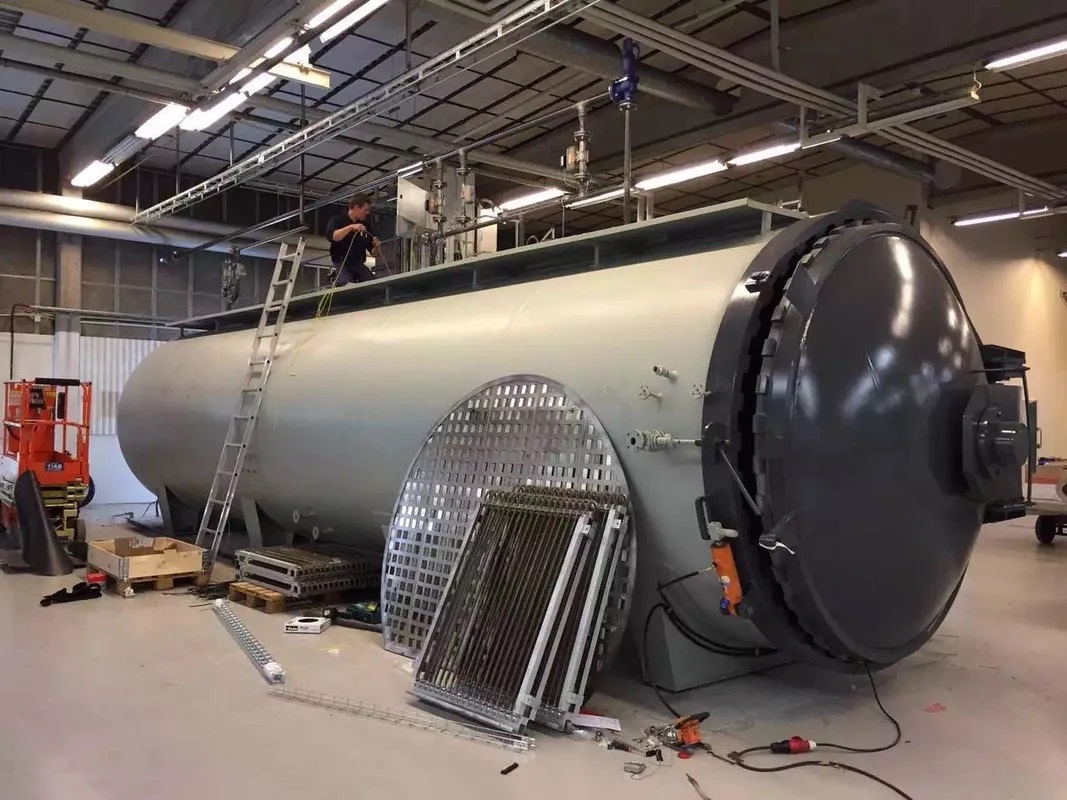
Aerospace-grade composite autoclave used in load-bearing component production.
Have Questions or Need More Details?
Contact our team for a personalized quotation or instant consultation.
Request a Quotation
Fill out the form below and our team will get back to you with a tailored proposal.
WhatsApp Direct Chat
Prefer to chat in real-time? Message us on WhatsApp for instant assistance & quick answers.
- Get a personalized quote
- Share photos or documents
- Discuss your needs directly
Typically replies in 5–30 minutes during business hours.