
Composite Autoclave Cost-Benefit Analysis: Experimental, Industrial & Aviation-Grade
(2026 Decision Guide)
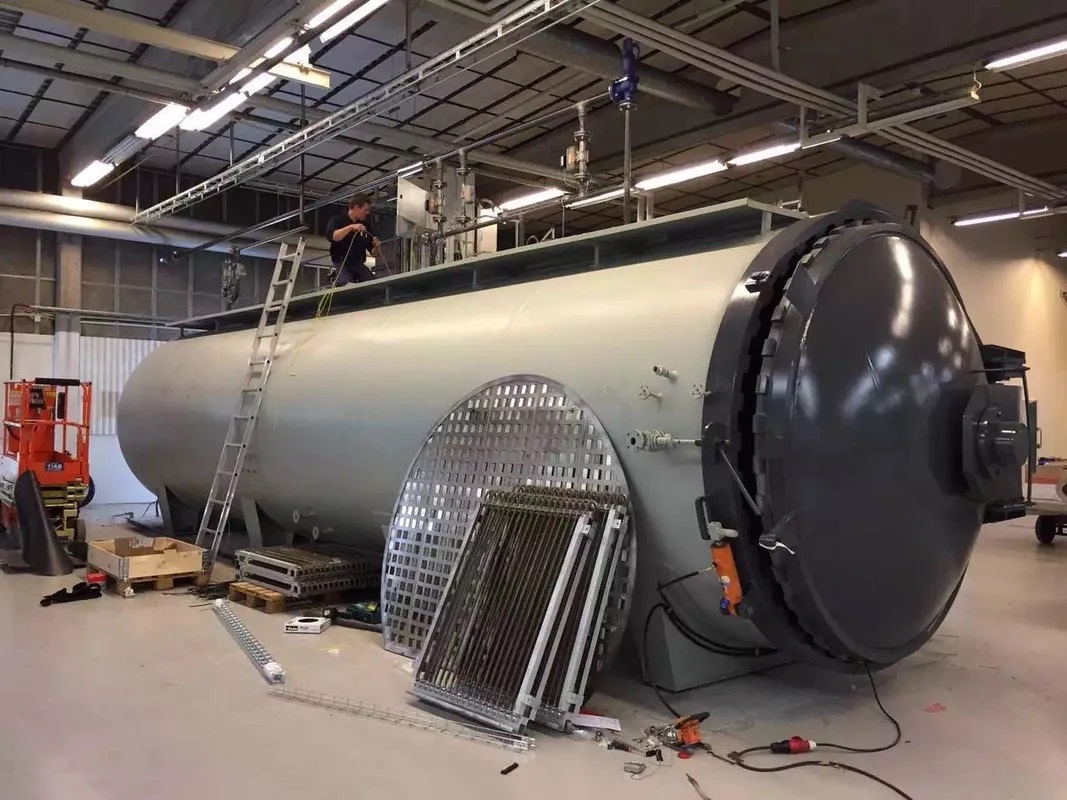
When procuring a composite autoclave, industrial buyers face a critical decision between experimental, small-to-medium industrial, and aviation-grade systems. Each tier serves distinct production scales, quality requirements, and budget constraints. This analysis compares the cost, performance, efficiency, and maintenance trade-offs to help you select the right platform for your application.
Understanding the Three Tiers of Composite Autoclaves
Olymspan – a Jiangsu Olymspan Equipment Technology Co., Ltd brand headquartered in Changzhou, China – manufactures composite autoclaves across all three categories, offering certified solutions for R&D labs, industrial production lines, and aerospace-grade curing facilities. With over 20 years of engineering experience, Olymspan combines ASME ‘U’/‘S’ stamps, CE (PED), CRN (Canada), and IATF 16949:2016 certifications to serve global customers.
Experimental autoclaves are compact (0.5–2 m³) units designed for material formulation, process optimization, and small-batch sample curing. They support wide temperature ranges (−50°C to 300°C), integrate data acquisition and remote monitoring, and are ideal for universities, research institutes, and corporate R&D departments.
Small and medium-sized industrial autoclaves (typically 1.5–3 m diameter, 4–8 m length) focus on cost-effective mass production of automotive parts, new energy battery casings, and small aviation components. They offer modular design, basic automation, and balance efficiency with capital expenditure.
Aviation-grade autoclaves are large-scale (20–100 m³) high-reliability systems built for curing primary load-bearing structures in aerospace and defense. They comply with GJB9001C standards, feature dual-redundant control, high-precision temperature (±0.3°C) and pressure (±0.1 MPa) control, and are designed for continuous operation cycles ≥8,000 hours.
Performance Comparison
Aviation-grade models deliver a volume 10–200 times larger than experimental units, a maximum temperature 0–33.3% higher (up to 400°C), and a maximum pressure 0–50% higher (up to 15 MPa). Temperature control accuracy for aviation-grade is ±0.3°C versus ±0.5°C for experimental – a 40% improvement. In terms of production efficiency, a single aviation-grade batch yields 10–50 times more parts than an experimental run, dramatically reducing per-part labor and energy overhead.
Cost Breakdown
Procurement professionals must consider total cost of ownership, not just purchase price. Experimental autoclaves cost 80,000–250,000 yuan per unit, while aviation-grade systems range from 2–8 million yuan – a factor of 8–32 higher. Installation costs follow a similar pattern: 10,000–30,000 yuan for experimental versus 300,000–800,000 yuan for aviation-grade (10–26.7 times higher). Annual operating expenses (including energy, consumables, and maintenance) for aviation-grade are 500,000–1.2 million yuan, compared to 20,000–50,000 yuan for experimental – a 10–24 times increase.
Small and medium-sized industrial autoclaves bridge the gap: acquisition cost is 3–3.2 times that of experimental models (300,000–800,000 yuan), and annual operating cost is 4–3.6 times higher (80,000–180,000 yuan). Notably, based on 8,000 annual operating hours, small and medium-sized industrial autoclaves save 30,000–60,000 yuan in electricity costs compared to experimental models of the same capacity, achieving a 25%–30% energy saving rate thanks to better insulation and heat recovery.
| Parameter | Experimental | Small/Medium Industrial | Aviation-Grade |
|---|---|---|---|
| Volume (m³) | 0.5–2 | 1.5–3 dia × 4–8 L | 20–100 |
| Max Temperature (°C) | 300 | 200 | 300–400 |
| Max Pressure (MPa) | 10 | 6 | 10–15 |
| Temperature Uniformity (±°C) | 0.5 | 1.0 | 0.3 |
| Purchase Cost (CNY) | 80,000–250,000 | 300,000–800,000 | 2,000,000–8,000,000 |
| Annual Operating Cost (CNY) | 20,000–50,000 | 80,000–180,000 | 500,000–1,200,000 |
| Lead Time (days) | 15–25 | 30–45 | 60–120 |
| Batch Yield vs Experimental | ×1 | ×2–5 | ×10–50 |
Maintenance and Reliability Considerations
Experimental autoclaves require minor maintenance every three months and can be overseen by one part-time technician; average fault frequency is ≤0.3 times per month. Small and medium-sized industrial units need monthly minor maintenance and 2–3 dedicated personnel, with fault frequency of 0.8–1.2 times per month. Aviation-grade autoclaves demand bi‑weekly minor maintenance, a team of 4–6 certified professionals, and achieve fault frequency ≤0.2 times per month – but repair complexity is much higher and often requires manufacturer support.
Use-Case Decision Matrix
- R&D / Material Development: Experimental autoclave – small batch, flexible parameter tuning, low investment.
- Automotive & New Energy Parts: Small/medium industrial – high throughput per shift, moderate precision, cost‑efficient.
- Aerospace Primary Structures: Aviation‑grade – extreme reliability, tight process control, high certification requirements.
Frequently Asked Questions
- What certifications do aviation-grade autoclaves require? Aviation-grade autoclaves must comply with standards such as ASME BPVC Section VIII (Division 1 or 2) for US markets, PED 2014/68/EU for Europe, and often GJB9001C for Chinese military/aerospace. Olymspan holds ASME U/S stamps, CE (PED), CRN (Canada), and IATF 16949:2016 certifications.
- What is the performance difference between experimental and aviation-grade autoclaves? Aviation-grade models have a volume 10–200 times larger, a maximum temperature 0–33.3% higher, a maximum pressure 0–50% higher, and temperature control accuracy (±0.3°C) that is 40% better than experimental models (±0.5°C). Single batch yield is 10–50 times greater for aviation-grade.
- How much more expensive is an aviation-grade autoclave compared to an experimental one? Purchase cost is 8–32 times higher, installation cost is 10–26.7 times higher, and annual operating cost is 10–24 times higher. For example, experimental units cost 80,000–250,000 CNY, while aviation-grade units cost 2–8 million CNY.
- Can I request a sample product cured in an Olymspan autoclave? Yes, Olymspan can provide sample curing services for evaluation. Contact Wei.xia@olymspan.com or WhatsApp +8613861176509 to discuss your material and specifications. You can also download our company brochure for detailed capabilities.
- What is the typical lead time for each autoclave type? Experimental standard models: 15–25 days. Small and medium-sized industrial models: 30–45 days. Aviation-grade models: 60–120 days, depending on customization and certification requirements.
Conclusion
Choosing the right composite autoclave requires balancing production volume, quality standards, budget, and operational capability. Experimental autoclaves serve R&D and small-batch needs at low cost. Small and medium-sized industrial autoclaves offer the best energy efficiency for mid-scale production. Aviation-grade autoclaves provide unmatched precision and throughput for high-value, certified applications. Olymspan delivers all three tiers with global certifications and a track record of international exports. Download our company brochure or email Wei.xia@olymspan.com to discuss your specific requirements.
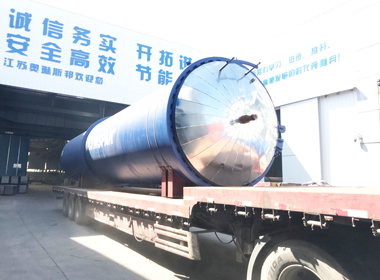
Olymspan – Your certified composite autoclave partner.
Have Questions or Need More Details?
Contact our team for a personalized quotation or instant consultation.
Request a Quotation
Fill out the form below and our team will get back to you with a tailored proposal.
WhatsApp Direct Chat
Prefer to chat in real-time? Message us on WhatsApp for instant assistance & quick answers.
- Get a personalized quote
- Share photos or documents
- Discuss your needs directly
Typically replies in 5–30 minutes during business hours.