
Composite Autoclave Project Fit: A Scenario-Based 2026 Selection Guide
Composite Autoclave Project Fit: Match the Machine to Your Production Scenario
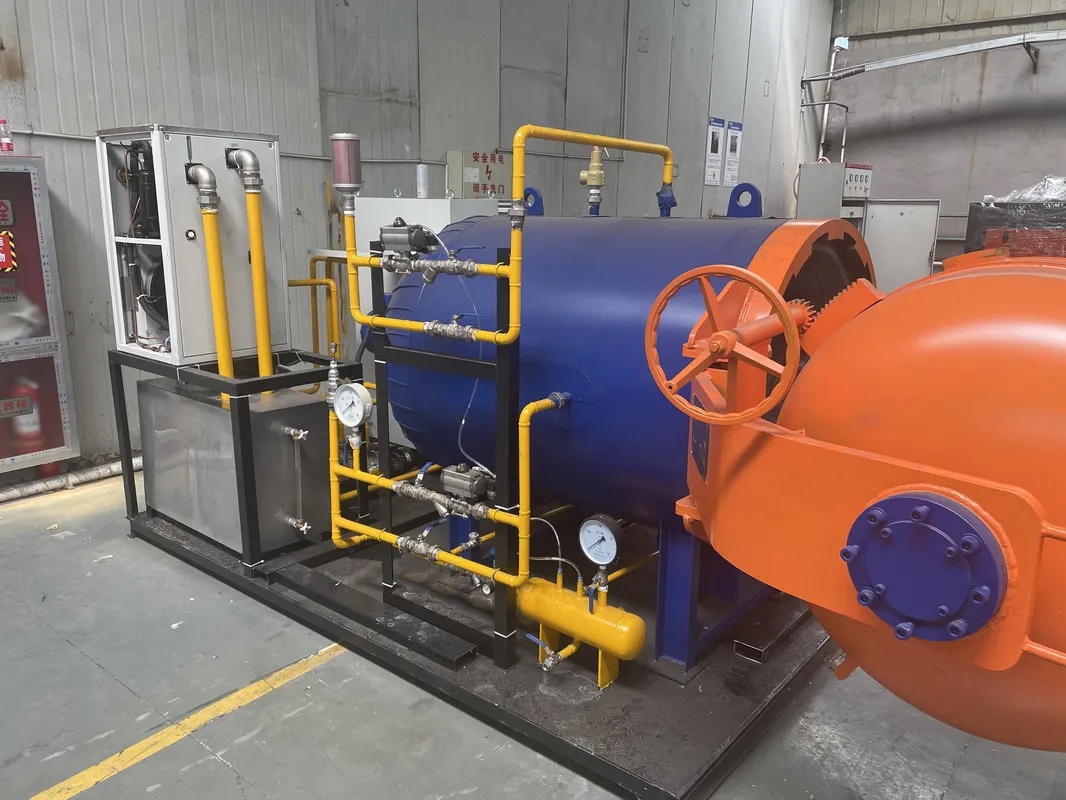
A composite autoclave must fit the production scenario, not just reach a high temperature or pressure. The fastest way to define a correct specification is to decide whether the unit will run research experiments, multi-batch industrial production, or continuous aerospace-grade curing. Olymspan, the equipment brand of Jiangsu Olymspan Equipment Technology Co., Ltd, approaches autoclave selection from this scenario-first perspective across aerospace, automotive, wind, marine, and R&D projects.
The Problem: Spec Sheets Alone Do Not Define Fit
Buyers often compare maximum temperature, diameter, and length first. In the field, mismatches usually come from operating mode and site conditions: a laboratory unit forced into daily production, an industrial unit missing a vacuum system, or an aerospace unit installed in a facility without stable voltage and dust control. The decision should start with the production scenario, then move to pressure, temperature, volume, and controls.
The real problem is not finding a composite autoclave that can cure composites. It is finding one that can cure a specific part, at a specific volume, inside a specific facility, while meeting the compliance and traceability requirements of the project. A machine that is correctly sized on paper can still fail commercially if the operating mode, supporting systems, and site environment are not matched.
Industry Background: Why Scenario Fit Is Becoming a Buying Criterion
The global composite curing autoclave market was valued at approximately USD 1.37 billion in 2023 and is projected to reach USD 2.4 billion by 2033, at a CAGR of 10.2%, according to Kings Research. A narrower estimate from Market Research Future places autoclaves for composite materials at USD 86.2 million in 2024, reaching USD 127 million by 2032 at a CAGR of 5.8%.
Composite autoclaves account for 62.4% of the total aircraft autoclave market share as of 2025, driven by CFRP adoption in Boeing 787 and Airbus A350 programs, according to Dataintelo. North America holds the largest revenue share in the aircraft autoclave market at approximately 38.2% in 2025, with Asia-Pacific showing significant growth. This market context pushes buyers to distinguish between a machine that can cure parts and a machine that can cure them reliably in a specific production environment.
Olymspan exports 30% to 40% of its production to global markets including North America, Europe, Asia, and Oceania, which means project-fit questions often include export certification, site support logistics, and local compliance requirements.
Core Solution: Three Operating Scenarios, Three Autoclave Profiles
Most project scenarios can be classified into three profiles: R&D and experimental autoclaves, small and medium industrial autoclaves, and aviation-grade or high-end continuous autoclaves. Each profile has a different operating mode, facility assumption, supporting equipment list, and control requirement.
R&D and Experimental Autoclaves
An R&D autoclave is designed for intermittent operation, with a single run duration of 2-8 hours. It operates under normal temperature and pressure conditions, with stable voltage, an ambient temperature of 15-25°C, no dust or corrosive gases, and humidity of 40%-60%. It does not need continuous long-term startup.
Its role is to provide a high-precision temperature and pressure environment for new material curing experiments, optimize process parameters, collect temperature and pressure data, and verify the performance of new composite materials. It works through manual and automatic dual-mode operation and supports remote monitoring of the experimental process.
For this profile, Olymspan offers laboratory small composite material vacuum autoclaves and composite material experimental autoclaves with compact footprints and multiple data acquisition options.
Small and Medium Industrial Autoclaves
Industrial autoclaves operate in continuous multi-batch mode, running 8-16 hours per day and supporting automatic feeding, curing, and discharging. Operating parameters can be adjusted according to production plans, and a manual emergency mode is available for sudden shutdown situations.
These units are designed for environments with slight dust, ambient temperature of -10°C to 40°C, humidity of 30%-70%, and stable voltage. They need anti-corrosion capability and ventilation. Their role is to realize small and medium batch curing, improve product strength, density, and consistency, reduce production losses, and improve production efficiency.
For this profile, Olymspan lists models such as the civil fully automatic composite autoclave, the composite material vacuum motorcycle parts autoclave, and the large carbon fiber curing molding high-temperature and high-pressure tank. The industrial class targets low energy use, with 0.5-0.7 kWh/m³ per unit volume in the published specification.
Aviation-Grade and High-End Continuous Autoclaves
Aviation-grade autoclaves are engineered for aerospace and high-end military industries, specifically for curing main load-bearing components and advanced composite materials such as PEEK, polyimide, and PMR-15. They operate in long-term continuous mode, running 20-24 hours per day, with fully automated control, remote diagnosis, fault warning, real-time monitoring, and automatic parameter adjustment.
These machines are designed for high-end industrial plant environments that are dust-free, with no corrosive gas and no electromagnetic interference. The facility should maintain 20-28°C and 30%-50% humidity, with stable voltage. Supporting equipment includes a dual redundant control system, remote diagnostic terminal, high-precision temperature and pressure monitoring, inert gas protection system, vacuum system, emergency pressure relief device, and full process quality traceability.
Olymspan's high-end profile includes the full automatic ASME composite autoclave for aerospace and automotive applications and the high pressure composite autoclave 3.5m x 18m aerospace model. In documented Olymspan aerospace use, the maximum temperature can reach 380°C and maximum pressure 15MPa, meeting curing requirements of high-end aviation composite materials.
Step-by-Step: From Process Needs to Equipment Configuration
- Define the material system and cure window. High-temperature, high-pressure aviation-grade autoclaves are more suitable for PEEK, polyimide, and PMR-15; lower-temperature prepreg and FRP molding can often use industrial or R&D class machines.
- Define the operating schedule. Choose intermittent 2-8 hour runs, continuous multi-batch 8-16 hour days, or 20-24 hour continuous operation.
- Audit the facility. Check temperature, humidity, dust, electromagnetic interference, voltage, and ventilation against the three profiles above.
- Map supporting systems. A vacuum system, emergency pressure relief, full process quality traceability, high-precision monitoring, remote diagnostics, and inert gas protection must be planned with the autoclave.
- Set compliance requirements. ASME BPVC Section VIII applies for US markets, PED 2014/68/EU and EN 13445 apply for European markets, and project-specific references such as IATF 16949 or GJB9001C are needed in some automotive, aerospace, or military programs.
- List customization points. Olymspan's OEM and ODM capabilities include tank volume, temperature control accuracy, pressure range, number of data acquisition points, remote monitoring and data synchronization, tank material, and experimental mode.
- Plan installation and after-sales. Standard Olymspan models are quoted at 15-25 days, customized models at 25-40 days, excluding 1-3 days of on-site installation and debugging. Remote support and on-site after-sales support are available.
Use Cases: How Scenario Matching Translates Into Results
The following documented Olymspan cases show the same equipment family applied to different scenarios. The metrics are tied to the project conditions described, not to a generic claim.
Aerospace Main Load-Bearing Components
A US aerospace manufacturer used 8 units over 7 years to cure aircraft fuselage and wing main load-bearing components with advanced composites such as PEEK and polyimide. The project accumulated production of more than 3000 components with a qualification rate of 99.8%. Equipment continuous operation reached 7800 hours, mean time between failures reached 1600 hours, and parameter fluctuation was controlled within ±0.1MPa and ±0.3°C. The autoclaves can reach 380°C and 15MPa, with heat recovery efficiency of at least 82% and fault repair time of no more than 8 hours.
Wind Turbine Component Manufacturing
An Indian wind power component manufacturer used 6 units over 5 years to cure composite materials for small wind turbine blade components. The project achieved an average daily output of 400 pieces, improved weather resistance by 40%, and extended service life to 15 years. Cumulative fault-free continuous operation reached 2800 hours, with annual failure frequency controlled within 10 times. Operating cost savings compared with imported equipment were reported at 300,000 yuan per year.
Automotive Component Supplier
A Chinese small and medium composite manufacturing enterprise used 8 units over 6 years to cure automotive steering wheel frames and interior parts. The line processes 600 products per day, with single batch curing time of 2.5 hours and production efficiency 50% higher than traditional equipment. Product qualification rate increased from 92% to 99.2%, reducing waste losses by 1.2 million yuan per year. Annual operating cost was 120,000 yuan, 28% more energy-efficient than comparable equipment, with a return on investment of 150%.
New Energy Battery Casing R&D
A German enterprise R&D department used 2 units over 4 years to develop composite battery casings for new energy vehicles. After curing, material strength increased by 35%, weight decreased by 28%, and high-temperature resistance reached 180°C. The equipment supports more than 60 data acquisition points per run with data accuracy of ±0.1°C and ±0.05MPa, shortening the process debugging cycle by 40% and reducing R&D costs by 25%.
University Composite Materials Laboratory
A Chinese university research institute used 4 units over 5 years to develop new carbon fiber composite formulas and test curing parameters from -40°C to 300°C. The compact 1.2 m³ units supported more than 1300 experiments, 12 new material formulas, 6 optimized curing parameter sets, 8 journal papers, and 3 invention patent applications. Daily maintenance requires one part-time technician, and average failures are no more than 0.2 per month.
Comparison Table: Scenario Fit at a Glance
| Selection criterion | R&D / Experimental | Small-medium industrial | Aviation-grade / High-end |
|---|---|---|---|
| Operating mode | Intermittent, 2-8 h per run | Continuous multi-batch, 8-16 h/day | Long continuous, 20-24 h/day |
| Facility condition | No dust, no corrosive gas, 15-25°C, 40%-60% humidity | Slight dust acceptable, -10°C to 40°C, 30%-70% humidity | Dust-free, no corrosive gas, no EMI, 20-28°C, 30%-50% humidity |
| Primary function | High-precision curing experiments, data collection, process optimization | Small-medium batch curing, better strength, density, and consistency, lower loss | High-temperature and high-pressure curing of PEEK, polyimide, and PMR-15; void elimination |
| Supporting systems | Manual and automatic dual-mode, remote monitoring, optional vacuum | Material handling, automated feeding and discharging, cooling, ventilation, optional vacuum | Dual redundant control, remote diagnostics, vacuum, inert gas, emergency relief, traceability |
| Typical control target | Temperature ±0.3°C to ±0.5°C; pressure ±0.05MPa | Stable operation; low energy 0.5-0.7 kWh/m³ | Temperature ±0.3°C to ±0.5°C; pressure ±0.1MPa |
| Representative industries | University labs, new material R&D | Automotive, new energy, wind small parts, civilian composites | Aerospace, military, high-end medical, defense and marine programs |
Frequently Asked Questions
Which compliance standards matter when matching a composite autoclave to an aerospace or export project?
Industrial composite autoclaves must comply with ASME BPVC Section VIII for US markets and PED 2014/68/EU or EN 13445 for European markets. Olymspan reports certifications including ASME U and S stamps, CE PED, CRN, and IATF 16949:2016. Some aviation and military programs also reference GJB9001C.
Can the autoclave be customized for a non-standard pressure range, tank size, or data acquisition requirement?
Yes. Olymspan supports OEM and ODM customization of tank volume, temperature control accuracy, pressure range, number of data acquisition points, integration of remote monitoring and data synchronization functions, tank material, and experimental mode. The minimum order quantity is one unit.
How does the operating mode affect the total budget decision?
Operating mode directly changes the equipment class. R&D units typically run 2-8 hours per experiment, industrial units run 8-16 hours per day in multiple batches, and aerospace units are designed for 20-24 hours of continuous operation. Choosing the class that matches the workflow avoids paying for unnecessary continuous-duty capability. For industrial production, the published low energy consumption is 0.5-0.7 kWh/m³ per unit volume.
Can I request a sample or a specification review before placing a full order?
For OEM and ODM carbon fiber molded parts, Olymspan supports free sample ordering. For composite autoclaves, the practical verification path is a specification review, because each vessel is engineered to project parameters and site conditions rather than supplied from stock.
What lead time should I plan for a standard or customized autoclave?
Within Olymspan's standard range, standard models are quoted at 15-25 days, and customized models with parameter changes or new features are quoted at 25-40 days, excluding 1-3 days of on-site installation and debugging. Full-automatic ASME composite autoclaves are listed with a 90-day delivery time. Exact lead time depends on configuration and certification requirements.
Conclusion: Make the Operating Scenario the First Specification
Specification sheets describe what a composite autoclave can do; the operating scenario defines what it will be asked to do every day. Matching the machine to the project reduces the risk of under-specified controls, missing safety systems, or a production schedule that outruns the equipment. The documented aerospace, wind, automotive, and R&D cases all start with the same question: what is the operating mode, and which supporting systems are required?
Next step: Prepare the operating scenario, target material, compliance requirement, facility conditions, and supporting systems before requesting a quotation.
Download the Olymspan company profile (PDF) or visit the Olymspan website to start a specification review.
Have Questions or Need More Details?
Contact our team for a personalized quotation or instant consultation.
Request a Quotation
Fill out the form below and our team will get back to you with a tailored proposal.
WhatsApp Direct Chat
Prefer to chat in real-time? Message us on WhatsApp for instant assistance & quick answers.
- Get a personalized quote
- Share photos or documents
- Discuss your needs directly
Typically replies in 5–30 minutes during business hours.