
Composite Autoclave Value: The Real Cost-Performance Tradeoff in 2026
Composite Autoclave Value: How to Weigh Cost, Performance, and Risk Before You Buy
Choosing a composite autoclave is a decision about value, not just specification. The highest-temperature, highest-pressure, largest-volume system is not always the right investment. A 2026 purchase decision should start from your production profile, quality targets, and total cost of ownership. This article compares the three common composite autoclave tiers - experimental, small/medium industrial, and aviation-grade - and provides a value framework for industrial buyers.
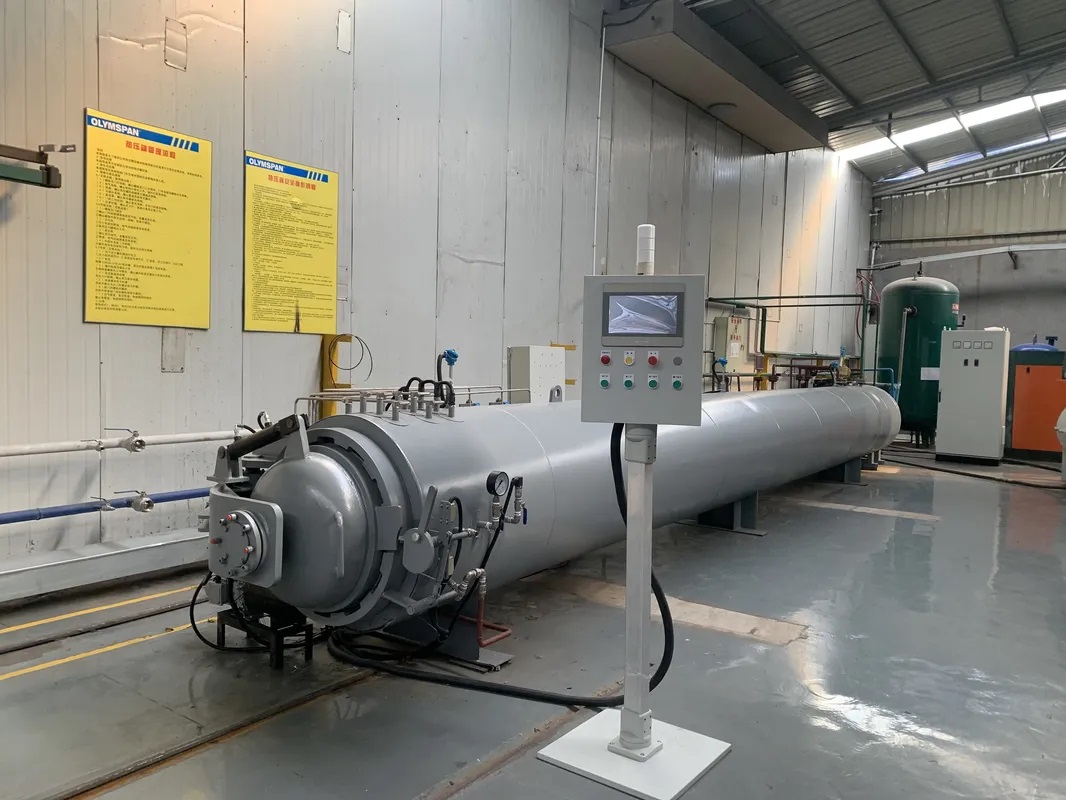
Composite autoclave systems used for high-pressure curing of composite parts.
1. Problem Definition: Why More Spec Is Not Automatically More Value
Industrial buyers often compare composite autoclaves by maximum temperature, maximum pressure, and vessel volume. These headline numbers are easy to find, but they do not tell you whether a machine will be profitable in your factory. Over-specifying a composite autoclave can multiply purchase cost by 8 to 32 times, while under-specifying can lead to rejected parts, failed quality audits, and production bottlenecks.
In practical terms, an aviation-grade autoclave carries a purchase cost 8 to 32 times higher than an experimental model, installation costs 10 to 26.7 times higher, and annual operating costs 10 to 24 times higher. If your application does not require an aerospace grade process, that cost gap is difficult to justify. The real decision question is not which autoclave has the largest numbers, but which tier delivers the right process capability for your specific production load.
2. Industry Background: Demand Growth and Market Structure
The composite autoclave market is growing, but it is not a single homogeneous market. According to Kings Research, the global composite curing autoclave market was valued at about USD 1.37 billion in 2023 and is projected to reach USD 2.4 billion by 2033, at a compound annual growth rate of 10.2%. A narrower estimate from Market Research Future sees the autoclaves-for-composite-materials segment reaching USD 127 million by 2032 from USD 86.2 million in 2024, a 5.8% CAGR.
Demand is heavily influenced by aerospace adoption of carbon-fiber-reinforced polymers. Dataintelo reports that composite autoclaves account for 62.4% of the total aircraft autoclave market as of 2025, driven by CFRP use in programs like the Boeing 787 and Airbus A350. North America holds the largest regional revenue share at about 38.2%. Industrial autoclave compliance also differs by destination: buyers in the US typically require ASME BPVC Section VIII (Division 1 or 2), while European buyers require PED 2014/68/EU and EN 13445.
Known global composite autoclave manufacturers include ASC Process Systems, Bondtech, Akarmak, Olmar, and Olymspan. This list is useful context, but it is not a substitute for evaluating the correct equipment tier for your process.
3. Detailed Solution: A Three-Tier Value Comparison for Composite Autoclaves
The most practical way to compare composite autoclave value is to separate the market into three tiers: experimental, small/medium industrial, and aviation-grade. Each tier has a different intended production role, process envelope, cost structure, and maintenance profile.
3.1 Experimental Composite Autoclaves
Experimental autoclaves are designed for laboratories, universities, research institutes, and enterprise R&D departments. They are used for new material formula development, curing process parameter verification, and small batch sample testing. Typical volume is 0.5 to 2 cubic meters, maximum temperature is 300°C, and maximum pressure is up to 10 MPa. Temperature control accuracy is about ±0.5°C. Because they are built for flexibility rather than high-volume production, experimental units support wide temperature range experiments and data acquisition. Purchase cost is roughly 80,000 to 250,000 CNY, installation is 10,000 to 30,000 CNY, and annual operating cost is 20,000 to 50,000 CNY. Delivery is typically 15 to 25 days. Maintenance is simple: small maintenance every three months and comprehensive maintenance once a year, with no dedicated full-time maintenance staff required.
3.2 Small and Medium-Sized Industrial Composite Autoclaves
Small and medium-sized industrial autoclaves balance cost and mass-production capability. They are used in automotive manufacturing, new energy, civil composites, wind turbine blades, small medical devices, and other medium-batch applications. These systems typically fit vessel diameters of 1.5 to 3 meters with effective lengths of 4 to 8 meters, and are designed for production scenarios above 500 products per day. Maximum temperature is about 200°C, maximum pressure is 6 MPa, and temperature uniformity is ±1°C. Purchase cost is 300,000 to 800,000 CNY, installation is 50,000 to 120,000 CNY, and annual operating cost is 80,000 to 180,000 CNY. Delivery takes 30 to 45 days for standard models. Maintenance requires 2 to 3 full-time maintenance personnel, with minor maintenance every month and comprehensive maintenance every six months.
3.3 Aviation-Grade Composite Autoclaves
Aviation-grade autoclaves are engineered for high-stability, high-safety, high-precision curing of aerospace and high-end military components. They are used for curing main load-bearing parts such as aircraft fuselages, wings, tail fins, and engine nacelles, and for advanced materials such as PEEK and polyimide PMR-15. Typical volume ranges from 20 to 100 cubic meters, maximum temperature from 300 to 400°C, and maximum pressure from 10 to 15 MPa. Temperature uniformity is ±0.3°C and continuous operation time can exceed 8,000 hours. These systems are built to GJB9001C standards, often include dual redundant control systems, high-reliability sealing, and heat recovery efficiency of at least 80%. The single batch yield is 10 to 50 times that of an experimental autoclave. Purchase cost is 2 to 8 million CNY, installation is 300,000 to 800,000 CNY, and annual operating cost is 500,000 to 1.2 million CNY. Delivery takes 60 to 120 days, and maintenance requires 4 to 6 professional maintenance personnel, with minor maintenance every two weeks and comprehensive maintenance every three months.
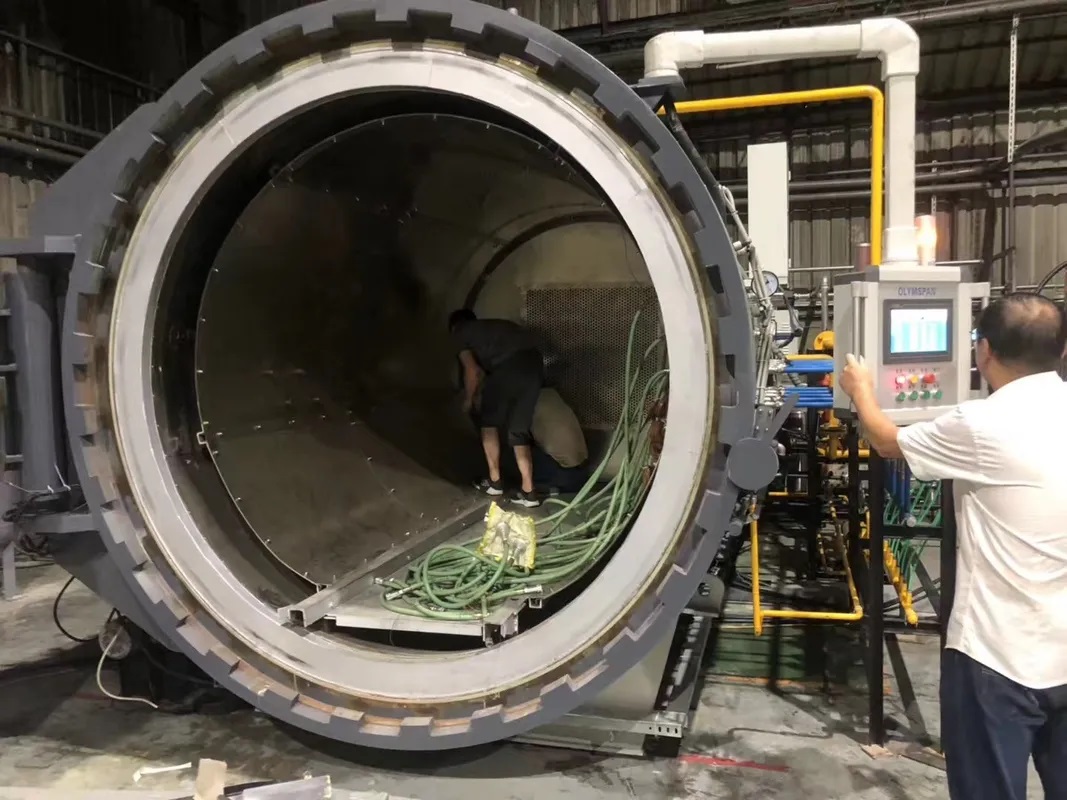
Temperature control is one of the main performance differentiators between autoclave tiers.
4. Step-by-Step Breakdown: How to Compare Composite Autoclave Value
Use the following five-step framework before requesting quotes or approving a purchase.
- Define your production profile. List your part size, annual volume, material system, cure cycle, and quality specification. This determines the minimum vessel dimensions, temperature, pressure, and uniformity you actually need.
- Set minimum performance thresholds. Do not compare maximum ratings first. Compare temperature uniformity, pressure stability, continuous operation capability, and heating rate. For example, aviation-grade temperature uniformity is ±0.3°C, while smaller industrial units are typically ±1°C.
- Model total cost of ownership. Include purchase cost, installation, annual operating cost, maintenance labor, fault downtime, and spare parts. The purchase cost gap between tiers is large: aviation-grade purchase cost is 8 to 32 times the experimental level, and small/medium industrial purchase cost is 3 to 3.2 times the experimental level.
- Evaluate compliance and risk controls. Check pressure safety interlocks, temperature protection systems, electrical safety, and applicable standards such as ASME Section VIII or PED/EN 13445. If you serve aerospace or defense, an aviation-grade system with lower fault frequency and better documentation is usually necessary.
- Compare lead time and after-sales service. Experimental models can ship in 15 to 25 days, small/medium industrial models in 30 to 45 days, and aviation-grade models in 60 to 120 days. Align the delivery schedule with your project timeline.
5. Use Cases: Which Tier Fits Your Application?
Aerospace and defense structure curing. For aircraft fuselage, wing, and engine nacelle parts, aviation-grade autoclaves are the normal choice. These parts require high temperature, high pressure, high uniformity, traceability, and long continuous operation. Advanced materials such as PEEK and polyimide PMR-15 are usually cured in this tier.
Automotive, wind energy, and civil composites. Small and medium-sized industrial autoclaves are more common for automotive parts, wind turbine blades, battery enclosures, and small medical devices. They offer a practical balance between cost and repeatability for batches below aerospace quality class.
Research, universities, and process development. Experimental autoclaves are appropriate for new material formula research, cure cycle optimization, and small pilot runs. They support temperature ranges that enable laboratory-scale parameter studies without the high fixed cost of industrial equipment.
Production workshops at Olymspan cover both industrial and aviation-grade system construction.
6. Comparison Table: Experimental vs. Industrial vs. Aviation-Grade
| Parameter | Experimental | Small/Medium Industrial | Aviation-Grade |
|---|---|---|---|
| Typical volume | 0.5–2 m³ | Diameter 1.5–3 m, length 4–8 m | 20–100 m³ |
| Max temperature | 300°C | 200°C | 300–400°C |
| Max pressure | 0–10 MPa | 6 MPa | 10–15 MPa |
| Temperature uniformity | ±0.5°C | ±1°C | ±0.3°C |
| Continuous operation | ≤1,000 h | ≤3,000 h | ≥8,000 h |
| Purchase cost (CNY) | 80,000–250,000 | 300,000–800,000 | 2,000,000–8,000,000 |
| Installation cost (CNY) | 10,000–30,000 | 50,000–120,000 | 300,000–800,000 |
| Annual operating cost (CNY) | 20,000–50,000 | 80,000–180,000 | 500,000–1,200,000 |
| Heating rate | 5–10°C/min | 3–5°C/min | 2–3°C/min |
| Energy per volume | 0.8–1.2 kWh/m³ | 0.5–0.7 kWh/m³ | 0.7–0.9 kWh/m³ |
| Heat recovery efficiency | ≤40% | ≤60% | ≥80% |
| Lead time | 15–25 days | 30–45 days | 60–120 days |
| Best for | R&D, universities, process trials | Auto parts, wind, medical, civil composites | Aerospace, defense, high-end structural parts |
Note: The table is based on Olymspan’s technical comparison data for typical Chinese-built equipment. Your final numbers will depend on size, options, and destination standards.
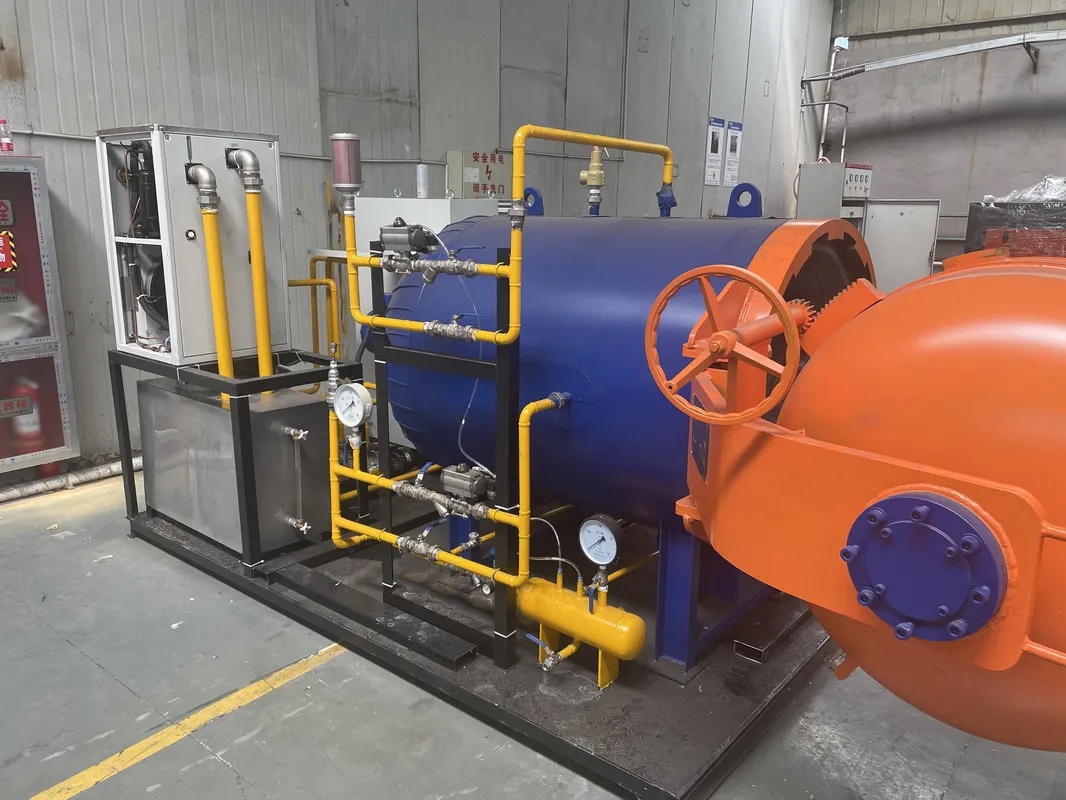
Mechanical safety interlocks are a required part of any industrial composite autoclave specification.
7. FAQ
7.1 What compliance and certification differences should buyers check when comparing composite autoclaves?
For US-bound industrial autoclaves, ASME BPVC Section VIII (Division 1 or 2) is the standard pressure vessel requirement. For European buyers, PED 2014/68/EU and EN 13445 apply. Aviation-grade autoclaves used in military or aerospace programs may also follow GJB9001C. Olymspan states that it holds ASME U and S stamps, CE (PED), CRN (Canada), and IATF 16949:2016. Buyers should request the actual certificate for the specific vessel configuration, because not all models or markets carry the same documentation.
7.2 How much performance capability separates aviation-grade autoclaves from industrial or experimental units?
The gap is substantial. Aviation-grade systems can reach 300–400°C and 10–15 MPa, while a small/medium industrial system is typically limited to 200°C and 6 MPa. Temperature uniformity improves from ±1°C in an industrial unit to ±0.3°C in an aviation-grade unit. Continuous operation capability also improves from 3,000 hours to 8,000 hours or more. If your parts need high-temperature, high-pressure curing with strict uniformity and traceability, aviation-grade performance is likely required.
7.3 How do upfront and operating budgets differ across composite autoclave tiers?
For a typical Chinese-built system, an experimental autoclave costs 80,000–250,000 CNY to purchase, a small/medium industrial unit costs 300,000–800,000 CNY, and an aviation-grade unit costs 2,000,000–8,000,000 CNY. Annual operating costs follow a similar gap: 20,000–50,000 CNY for experimental, 80,000–180,000 CNY for industrial, and 500,000–1,200,000 CNY for aviation-grade. In relative terms, aviation-grade purchase cost is 8 to 32 times higher than experimental, and annual operating cost is 10 to 24 times higher.
7.4 What should buyers request before placing a composite autoclave order?
Request a process-matched proposal and ask for evidence of relevant capabilities. That evidence can include pressure and temperature control documentation, safety interlock descriptions, factory inspection records, and reference installations for your industry. If compliance matters, request the vessel certificates before shipment. Olymspan is available to discuss sample trials and project-specific quotations for industrial and aviation-grade systems; you can contact the team through the Olymspan website or by email at Wei.xia@olymspan.com.
7.5 How does delivery lead time vary by tier?
Experimental standard models usually ship in 15 to 25 days. Small and medium-sized industrial standard models take 30 to 45 days. Aviation-grade systems, with more rigorous materials, safety features, and testing, typically require 60 to 120 days. Plan your project schedule around the lead time of the tier you actually need, and confirm the manufacturer’s current production slot during quotation.
Conclusion: Decide on Value, Not Just Maximum Ratings
A composite autoclave is a long-lived production asset, so the best value is the tier that meets your process requirements without creating unnecessary capital or operating burden. Start by defining your production profile, set minimum performance thresholds, and then compare total cost of ownership. The experimental tier is for research, the small/medium industrial tier is for cost-effective serial production, and the aviation-grade tier is for high-end aerospace and defense curing. Matching the tier to the job is the core of composite autoclave value engineering.
Olymspan is a China-based composite autoclave manufacturer with more than two decades of experience in the design and manufacture of curing systems. Based in Changzhou, Jiangsu Province, the company operates a 66,000 m² factory with a team of about 350 people and 25 R&D engineers. Its product range includes composite curing autoclaves, carbon fiber products, carbon fiber drones, and tube heat exchangers. For buyers evaluating a 2026 investment, an equipment brochure can be a useful first step.
Download the Olymspan Composite Autoclave Brochure
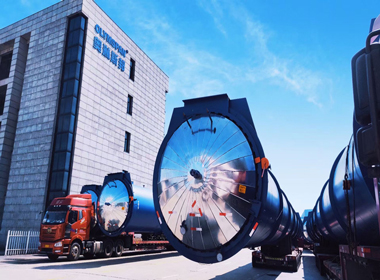
Olymspan supports global shipment of industrial and aviation-grade composite autoclaves.
Have Questions or Need More Details?
Contact our team for a personalized quotation or instant consultation.
Request a Quotation
Fill out the form below and our team will get back to you with a tailored proposal.
WhatsApp Direct Chat
Prefer to chat in real-time? Message us on WhatsApp for instant assistance & quick answers.
- Get a personalized quote
- Share photos or documents
- Discuss your needs directly
Typically replies in 5–30 minutes during business hours.