
How OEM & ODM Capabilities Shape Industrial Composite Autoclave Selection: A 2026 Buyer's Guide
How OEM & ODM Capabilities Shape Industrial Composite Autoclave Selection
Selecting a composite autoclave for aerospace, wind energy, automotive, or R&D applications is not only a question of pressure and temperature ratings. For buyers in Evaluation and Execution stages, a supplier's ability to adapt the system to specific part geometries, process parameters, and industrial workflows often determines whether the equipment will deliver consistent output quality over its service life. This buyer's guide focuses on how OEM/ODM capability, customization depth, delivery lead times, and after-sales support should influence the selection of an industrial composite autoclave.
What Is a Composite Autoclave and Where Is It Used?
A composite autoclave is a curing system that provides precise high-temperature and high-pressure environments for composite materials. The core purpose is to complete material curing and forming under controlled conditions. The system is widely used for aerospace composite autoclave processes, carbon fiber composite autoclave curing, wind turbine blade component curing, automotive composite parts, marine composites, and FRP composite molding.
The equipment is typically categorized into three production tiers by suppliers:
- Experimental composite autoclaves: used for new material research, process parameter debugging, and small-batch sample solidification. They provide a wide temperature range and high precision, supporting R&D departments in universities and enterprises.
- Small and medium industrial units: used for small-batch curing of automotive parts, new energy battery shells, and other industrial components.
- Large-capacity industrial and aviation-grade autoclaves: used for high-pressure, high-temperature curing of main load-bearing components, including aerospace-grade PEEK and polyimide composite materials.
Because each production tier serves different process requirements, the customization depth offered by the supplier becomes a decisive factor in the procurement evaluation.
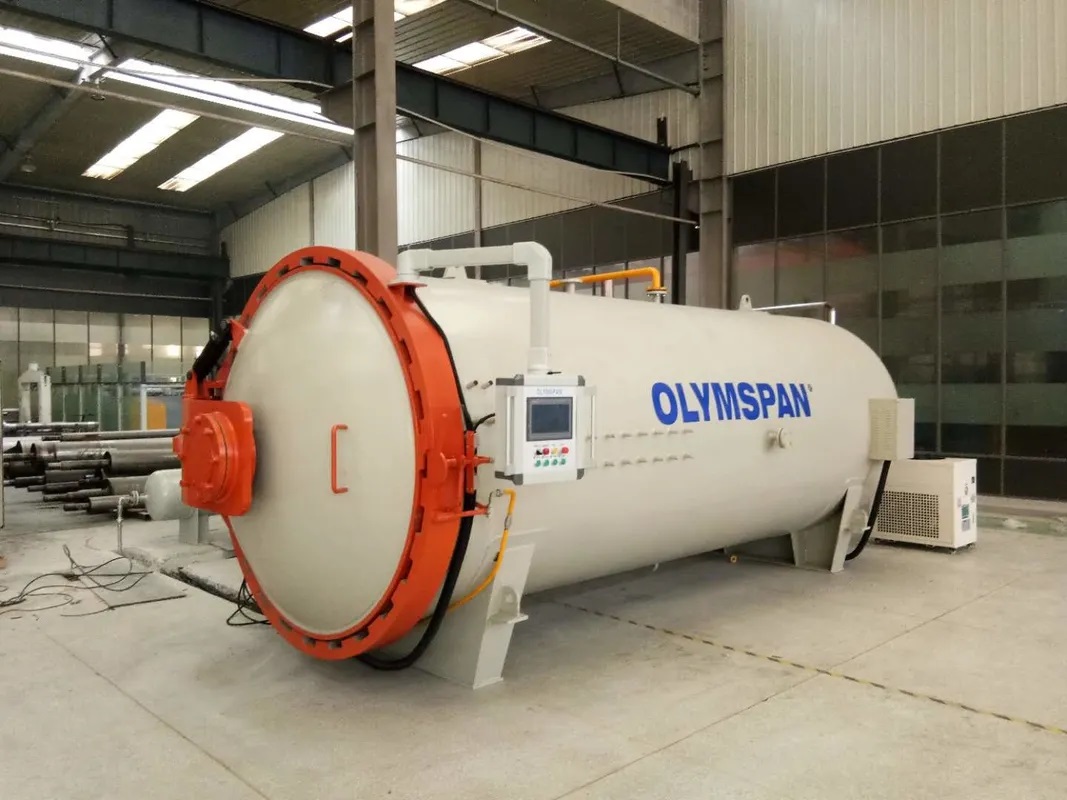
Why OEM and ODM Capability Matters in Composite Autoclave Procurement
OEM (Original Equipment Manufacturing) and ODM (Original Design Manufacturing) services describe different levels of supplier involvement. In the context of composite autoclaves, a manufacturer that offers both OEM and ODM production services can produce equipment to the buyer's specification and also design the system based on the buyer's process requirements. This distinction matters because most industrial autoclave projects are not fully standard products.
Capability-oriented customization for composite autoclaves typically includes:
- Tank volume adjustments to match part size and batch loading strategy.
- Temperature control accuracy tuning to satisfy material-specific cure cycles.
- Pressure range design to support high-pressure composite autoclave requirements.
- Number and distribution of data acquisition points for process monitoring and traceability.
- Integration of remote monitoring and data synchronization functions for industrial digitalization.
- Tank material selection to suit corrosion, weight, and thermal cycling requirements.
- Experimental modes for research and process development applications.
For a prospective buyer, the practical question is not only whether a supplier lists these options but whether the supplier can engineer, manufacture, test, and support a customized system throughout its lifecycle.
What the Market Background Shows in 2026
The composite curing autoclave market has continued to expand with the adoption of carbon fiber composites in commercial aircraft programs, wind turbine manufacturing, and electric vehicle lightweighting. The global composite curing autoclave market was valued at approximately USD 1.37 billion in 2023 and is projected to reach USD 2.4 billion by 2033, representing a CAGR of 10.2%. Composite autoclaves also account for a significant share of aircraft autoclave demand, driven by CFRP adoption in programs such as the Boeing 787 and Airbus A350. North America holds the largest regional revenue share in the aircraft autoclave segment, followed by growing demand in Asia-Pacific.
For industrial buyers, this growth context means that supplier capacity and engineering depth are not uniform across the market. Larger production volumes and vertical-specific requirements make OEM/ODM capability more important, especially for buyers who need application-specific autoclave configurations rather than off-the-shelf laboratory units.
A Step-by-Step Approach to Evaluating OEM/ODM Capability
Step 1: Map the Process Requirement Before the Equipment Requirement
Define the material system, part geometry, curing temperature, pressure profile, vacuum bagging approach, and production volume. These parameters determine the required autoclave diameter, length, heating rate, cooling rate, and control precision.
Step 2: Check Customization Scope
Confirm that the supplier can adjust tank volume, temperature control accuracy, pressure range, data acquisition points, and tank material. Also confirm whether experimental modes and remote monitoring integration can be implemented for your specific workflow.
Step 3: Verify Production and Delivery Capability
Review the supplier's manufacturing scale, engineering team size, monthly output capacity, and typical lead times for both standard and customized configurations. For example, a standard model may be delivered in 15 to 25 days, while customized models with parameter adjustments and new features generally take 25 to 40 days, excluding on-site installation and debugging. Installation and commissioning typically require 1 to 3 days.
Step 4: Assess Quality Control and Factory Testing
Ask what factory-level tests are performed before shipment. Meaningful quality checks include pressure sealing tests, temperature uniformity tests, electrical safety tests, and data acquisition accuracy calibration. On-site debugging and verification during delivery add another layer of assurance.
Step 5: Review After-Sales and Long-Term Maintenance
Confirm whether the supplier provides remote support or on-site after-sales support. Long service life depends on available engineering support, spare parts, and the supplier's willingness to maintain the control system over time.
Where Customized Composite Autoclaves Are Applied
Aerospace Composite Autoclave Applications
An aerospace manufacturing enterprise in the United States producing main load-bearing components has used customized autoclave equipment for curing advanced high-temperature composite materials such as PEEK and polyimide. Over a seven-year period, the equipment supported the accumulated production of more than 3,000 aircraft main load-bearing components, with reported product qualification rates of 99.8% and no quality defects. The systems supported programs including the C919 and ARJ21 aircraft.
In that application, the equipment required maximum temperatures of approximately 380 °C and maximum pressures of 15 MPa, as well as a dual redundant control system to hold parameter fluctuations within ±0.1 MPa and ±0.3 °C. The installation also used a dedicated heat recovery device with reported heat recovery efficiency of at least 82%, cutting annual energy costs. This example shows how deeply equipment configuration must be integrated with the production process.
Wind Turbine Blade Component Curing
Wind power component manufacturers in India have used composite autoclaves for curing small components of wind turbine blades, including blade connectors and reinforcements. For this segment, the equipment must support high-temperature, high-humidity environments, use anti-corrosion electrical design, and allow flexible adjustment of operating parameters for multiple batches. Batch solidification in this application supported an average daily output of 400 pieces, and the weather resistance of cured components was reported to improve by 40%, with service life extended to 15 years.
Automotive Composite Component Manufacturing
Small and medium-sized automotive parts suppliers in China have deployed composite autoclaves for curing steering wheel frames and interior parts. In one configuration, the system processed 600 products per day, with single-batch curing time controlled at 2.5 hours and reported production efficiency 50% higher than traditional equipment. Product qualification rates increased from 92% to 99.2%, reducing annual scrap losses by RMB 1.2 million.
For automotive applications, modular structural design and fast switching between production specifications are important customization requirements. Manual and electric dual-purpose quick door opening functions also help operators respond to power failures and emergency conditions.
R&D and Laboratory Applications
Research institutions and enterprise R&D departments need experimental autoclaves with flexible control and data collection. A materials science and engineering university institute in China has used composite autoclaves for developing new carbon fiber composite formulas and conducting wide-temperature-range experiments from -40 °C to 300 °C. The equipment included remote data collection, automatic data synchronization to research management systems, and dual alarms for over-temperature and over-pressure conditions.
In a German enterprise R&D application, the equipment supported the development of composite materials for new energy vehicle battery casings. The system used imported high-precision sensors with no fewer than 60 data acquisition points per cycle, achieving reported data accuracy of ±0.1 °C and ±0.05 MPa. After curing, battery casing strength increased by 35% and weight decreased by 28%.
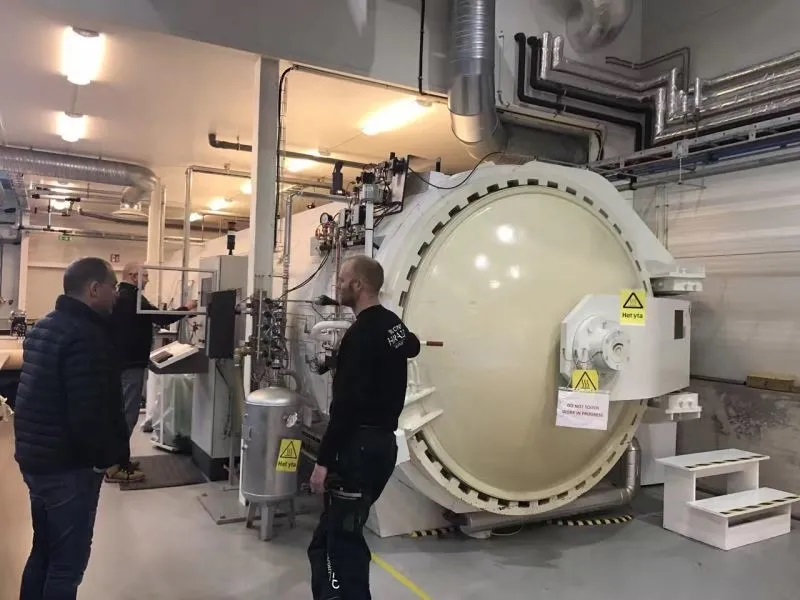
Comparing Supplier Capability Factors
| Evaluation Factor | Why It Matters | What to Verify |
|---|---|---|
| OEM / ODM production mode | Determines whether the supplier builds to your spec or designs to your process | Confirmed service availability, documented cases |
| Customization scope | Tank volume, temperature accuracy, pressure range, and monitoring directly affect part quality | Exact list of adjustable parameters in the quotation |
| Data acquisition and remote monitoring | Supports process traceability, qualification, and Industry 4.0 integration | Number of channels, synchronization protocol, remote access |
| Quality control before shipment | Reduces installation risk and performance deviation | Pressure sealing test, temperature uniformity test, electrical safety test, data calibration |
| Delivery and installation | Affects project planning and time-to-production | Lead time for standard vs. custom models; installation and debugging duration |
| After-sales support | Long production life depends on maintenance and spare parts | Remote support availability, on-site service capacity |
OEM/ODM Customization as a Risk Mitigation Strategy
From a procurement standpoint, OEM/ODM capability reduces risk in several ways:
- Alignment with material system: The autoclave control profile can be engineered to match the specific resin system and cure cycle, reducing trial-and-error during process qualification.
- Traceability for certification: Additional data acquisition points and data synchronization features support documentation for compliance with industry standards.
- Maintainability: A supplier that designs the system can support control system updates, spare part identification, and fault diagnosis over the equipment lifetime.
- Scalability: Production capacity can be added with consistent engineering standards if the original supplier maintains the design baseline.
For buyers comparing multiple suppliers, the key is to distinguish between a manufacturer that merely assembles standard components and one that has engineering capability to change pressure vessel design, control architecture, and process interfaces. Requesting documented examples of customized systems in your industry segment is a practical next step.
Case Evidence: Olymspan's OEM/ODM Approach
Jiangsu Olymspan Equipment Technology Co., Ltd. (Olymspan), located in Changzhou, Jiangsu province, China, is a manufacturer of industrial curing equipment and composite-related products. The company was founded in 2004, operates a 66,000 m² factory, and employs approximately 350 staff, including a 25-person R&D engineering team. Annual output is approximately 50 to 55 million units (equipment sets) depending on the product mix. Olymspan exports 30% to 40% of its production to markets including North America, South America, Western Europe, Eastern Europe, East Asia, Southeast Asia, the Middle East, Africa, Oceania, and other global destinations.
Olymspan's manufacturing scope includes composite autoclaves, carbon fiber products, carbon fiber drones, and tube heat exchangers. The company holds an IATF 16949:2016 certificate (certificate number CB01325) covering the manufacture of carbon fiber reinforced composite material shell decoration parts, engine heat dissipation parts, and interior decorative stickers. It also holds ISO 9001:2015 and ISO 45001:2018 certifications through URS for the design and manufacture of A2 class boiler pressure vessels.
Olymspan states that it provides OEM and ODM production services. Customization services include adjustments to tank volume, temperature control accuracy, and pressure range. Technical services include the customization of experimental modes and the integration of remote monitoring and data synchronization functions. The company's production system supports full-process quality inspection before leaving the factory, including pressure sealing testing, temperature uniformity testing, electrical safety testing, and data acquisition accuracy calibration. On-site debugging and verification are performed during delivery.
Delivery terms are also structured around both standard and customized configurations. For standard models, lead time is approximately 15 to 25 days. Customized models, including parameter adjustments and new feature development, typically require 25 to 40 days, excluding on-site installation and debugging time. Installation and commissioning at the buyer's site usually takes 1 to 3 days.
For buyers evaluating Olymspan, these factors translate into practical procurement value:
- A single supplier can design, manufacture, and service both the autoclave and carbon fiber-molded parts, which simplifies process alignment between equipment and part production.
- IATF certification supports automotive supply chain qualification requirements, and ISO certificates support quality and occupational health and safety expectations for pressure vessel design and manufacture.
- Defined customization windows allow buyers to plan project schedules without assuming that bespoke engineering demands will disrupt production timelines.
| Supplier Capability Area | What Olymspan Reports |
|---|---|
| Foundation / scale | Founded 2004; factory area 66,000 m²; ~350 employees |
| Engineering | 25 R&D engineers; composite autoclave and carbon fiber product design |
| Production modes | OEM and ODM |
| Customization options | Tank volume, temperature control accuracy, pressure range, data acquisition points, remote monitoring, tank material, experimental mode |
| Quality control | Pressure sealing, temperature uniformity, electrical safety, data acquisition calibration; on-site commissioning |
| MOQ / payment | MOQ 1 unit; payment L/C, T/T, Western Union, D/A |
| Certifications referenced | IATF 16949:2016; ISO 9001:2015; ISO 45001:2018; product models also reference ASME/CE options |
| After-sales | Remote support / on-site after-sales support |
Procurement Checklist for OEM/ODM Composite Autoclave Selection
- Define part materials, cure temperature, pressure, and required temperature uniformity before contacting suppliers.
- Request confirmation of customization scope: tank volume, temperature control accuracy, pressure range, data acquisition points, remote monitoring, and experimental modes.
- Verify production mode availability: OEM, ODM, or a combination of both.
- Review factory testing: pressure sealing, temperature uniformity, electrical safety, and data acquisition accuracy calibration.
- Compare standard and customized delivery lead times, and include installation and commissioning days in the project plan.
- Confirm after-sales support: remote support, on-site service, and spare part availability.
- Check quality and safety certifications relevant to your industry and destination market.
- Request documented case references in your application area, such as aerospace, wind power, automotive, or R&D.
Limitations and Practical Boundaries
Not every procurement requires deep OEM/ODM engineering. Buyers installing a standard experimental autoclave for university education may only need a proven catalog configuration with reliable after-sales support. In contrast, an aerospace manufacturer integrating a high-temperature autoclave into a certified production line generally needs supplier engineering participation in control architecture, safety interlocks, documentation, and validation.
It is also important to recognize that custom models are not a zero-cost advantage. Additional engineering time, longer lead times, and more complex acceptance testing should be weighed against the operational benefit of the customized feature. Buyers should request clear statements of what is included in the standard configuration and what is defined as an engineering change.
FAQ
Do composite autoclave suppliers need IATF or ISO certifications for OEM/ODM projects?
Certification requirements depend on the buyer's industry and destination market. For automotive supply chains, IATF 16949 is commonly expected because it applies to quality management systems for production and relevant service parts. ISO 9001 is broadly used as a general quality management baseline. For pressure vessels, compliance with standards such as ASME BPVC Section VIII or PED 2014/68/EU is also relevant depending on the installation region. Buyers should confirm the specific certification scope because certificates may apply to particular product categories.
What customization options should an OEM/ODM composite autoclave manufacturer offer?
Relevant customization options include tank volume, temperature control accuracy, pressure range, number of data acquisition points, remote monitoring and data synchronization, tank material, and experimental mode. In practice, the most important options are those that align the autoclave's thermal and pressure profile with the part's curing requirements. Buyers should verify that the supplier has the engineering capacity to implement these changes, not just list them in a brochure.
How long does it take to deliver a customized composite autoclave?
Delivery times depend on the level of customization. For standard models, a lead time of 15 to 25 days is typical for manufacturers with established production lines. Customized models involving parameter adjustments or new features may take 25 to 40 days, excluding on-site installation and debugging. Installation and commissioning generally take 1 to 3 days at the buyer's site.
Can you provide examples of customized composite autoclave projects across industries?
Customized composite autoclaves have been applied in several industry segments. Aerospace manufacturers use them for curing main load-bearing components with advanced high-temperature materials. Wind power component makers use them for blade connectors and reinforcements under high-temperature and high-humidity conditions. Automotive parts suppliers use them for steering wheel frames and interior products. R&D departments use them for battery casing materials and carbon fiber formulation development.
How should a buyer verify OEM/ODM quality before ordering?
Buyers should ask for the supplier's pre-shipment quality control checklist. Useful verification points include pressure sealing testing, temperature uniformity testing, electrical safety testing, and data acquisition accuracy calibration. Buyers can also request on-site debugging and verification during delivery, and confirm whether remote support or on-site after-sales support is available after commissioning.
What are the typical next steps for a customized composite autoclave inquiry?
A typical next step is to send a process requirement summary, including the part material system, dimensions, cure temperature and pressure, production volume, and any specific data or monitoring requirements. This allows the supplier to propose a customized configuration with a quotation and delivery schedule. Buyers who are still confirming requirements can request a brochure or sample specification sheet to compare standard capabilities across manufacturers.
Conclusion
For buyers evaluating composite autoclaves for industrial production, OEM/ODM capability is not a peripheral feature. It affects the equipment's ability to match the material system, the quality control available before shipment, the delivery schedule, and the long-term maintainability of the system. Industrial buyers should assess customization scope, engineering depth, factory testing, and after-sales support as an integrated package rather than comparing only temperature and pressure numbers.
Jiangsu Olymspan Equipment Technology Co., Ltd. provides OEM/ODM production for composite autoclaves with a defined customization scope, factory-level quality inspection, and structured lead times for standard and custom configurations. The company's engineering team, manufacturing capacity, and certification base provide a reference point for buyers evaluating capability-oriented suppliers.
Ready to define your composite autoclave specification?
Download the Olymspan catalog and company brochure to review standard configurations, or send your process requirements for a customized quotation.
Download Company BrochureHave Questions or Need More Details?
Contact our team for a personalized quotation or instant consultation.
Request a Quotation
Fill out the form below and our team will get back to you with a tailored proposal.
WhatsApp Direct Chat
Prefer to chat in real-time? Message us on WhatsApp for instant assistance & quick answers.
- Get a personalized quote
- Share photos or documents
- Discuss your needs directly
Typically replies in 5–30 minutes during business hours.