
Industrial vs. Aviation-Grade Composite Autoclaves: A 2026 Procurement Comparison for Automotive and Wind Energy Buyers
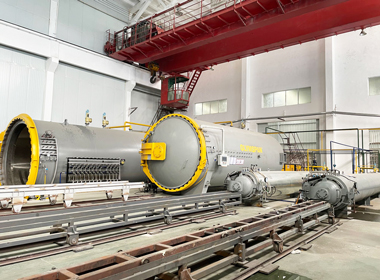
For industrial buyers in automotive and wind energy sectors, selecting between small/medium industrial composite autoclaves and aviation-grade composite autoclaves is a critical procurement decision. This article provides a fact-based comparison across four dimensions—technical parameters, application scenarios, total cost of ownership, and maintenance requirements—followed by a supplier comparison between Chinese manufacturers and international brands, a decision model, and a real-world case study.
1. Product Comparison: Industrial Autoclave vs. Aviation-Grade Autoclave
Technical Parameters
| Parameter | Small/Medium Industrial | Aviation-Grade |
|---|---|---|
| Maximum Temperature | 200°C | 300–400°C (50%–100% higher) |
| Maximum Pressure | 6 MPa | 10–15 MPa (66.7%–150% higher) |
| Temperature Control Uniformity | ±1°C | ±0.3°C (70% better) |
| Pressure Stability | ±0.2 MPa | ±0.1 MPa (50% higher stability) |
Aviation-grade autoclaves offer maximum temperatures 50% to 100% higher, maximum pressures 66.7% to 150% higher, temperature control uniformity 70% better, and pressure stability 50% higher than small and medium-sized industrial models.
Application Scenarios
Small and medium-sized industrial autoclaves are designed for production environments, such as small and medium-sized composite material enterprises, where daily curing batches exceed 500 products, including automotive parts and new energy battery casings. Aviation-grade autoclaves are intended for bulk curing of advanced composites (e.g., PEEK, polyimide PMR-15) in aerospace and high-end military sectors, requiring high temperature and pressure capabilities and compliance with aviation-grade quality standards.
Total Cost of Ownership (TCO)
Compared to small and medium-sized industrial models, aviation-grade autoclaves have a purchase cost that is 6.7 to 10 times higher, installation cost 6 to 6.7 times higher, and annual operating costs 6.25 to 6.7 times higher. Energy efficiency favors industrial models: small and medium-sized industrial autoclaves consume 0.5–0.7 kWh/m³ per unit volume, which is 28.6% to 22.2% more energy efficient than aviation-grade models (0.7–0.9 kWh/m³).
Maintenance Requirements
Maintenance for aviation-grade models is more frequent and complex, requiring minor maintenance every 2 weeks compared to every 3 months for experimental models (and every month for small/medium industrial models). Aviation-grade autoclaves require 4–6 professional maintenance personnel with certification, whereas industrial models need 2–3 full-time technicians.
2. Supplier Comparison: Chinese Manufacturers vs. International Brands
When sourcing composite autoclaves, buyers often evaluate Chinese suppliers like Jiangsu Olymspan Equipment Technology Co., Ltd. (brand Olymspan) against established international brands. The table below summarizes typical differences based on industry practices:
| Dimension | Chinese Manufacturer (e.g., Olymspan) | International Supplier |
|---|---|---|
| Price | Generally 30%–50% lower for comparable specifications | Higher due to brand premium and higher labor costs |
| Customization | High flexibility: tank volume, temperature accuracy, pressure range, data acquisition points, remote monitoring integration | Modular customization; longer lead times for non-standard changes |
| Delivery Lead Time | Standard models: 15–25 days; Customized: 25–40 days | Typically 8–16 weeks for standard models |
| After-Sales Service | Remote support + on-site support; global coverage through local partners | Local service centers in major regions; higher service rates |
Chinese manufacturers like Olymspan (founded 2004, 66,000 m² factory, 350 employees, 25 R&D engineers) offer competitive pricing and rapid delivery. Olymspan holds IATF 16949:2016, ISO 9001:2015, and ISO 45001:2018 certifications, ensuring quality management and occupational health standards.
3. Decision Model: 3-Step Method for Selecting Composite Autoclaves
- Step 1 – Define the Use Scenario: Determine if the autoclave will be used for R&D (small batches, varied materials) or production (high-volume, consistent products). For automotive and wind energy parts, production scenarios are typical, pointing toward industrial-grade autoclaves.
- Step 2 – Match Technical Parameters: Map required material curing temperature/pressure to equipment specifications. For standard composites (e.g., glass fiber, carbon fiber prepreg), an industrial autoclave (max 200°C, 6 MPa) suffices. For high-performance materials (PEEK, polyimide), an aviation-grade unit (up to 400°C, 15 MPa) is necessary.
- Step 3 – Calculate Total Cost: Include purchase price, installation, energy consumption, and maintenance over a 5-year horizon. For high-volume production, the lower operating cost of industrial autoclaves (0.5–0.7 kWh/m³) often offsets the need for extreme precision. Use TCO analysis to compare options.
4. Case Reference: Wind Power Component Manufacturer Chooses Chinese Supplier
A wind power component manufacturing enterprise (small-to-medium scale) in India sought to cure composite materials for small wind turbine blade components (connectors, reinforcements). The company required high-strength, weather-resistant parts for local wind projects. After evaluating international and Chinese suppliers, they selected 6 units of industrial composite autoclaves from Olymspan.
Key results over 5 years of operation:
- Achieved batch curing with an average daily output of 400 pieces, meeting local project needs.
- Weather resistance of cured components improved by 40%, with service life extended to 15 years.
- Equipment operated continuously for 2,800 hours without failure; annual fault frequency controlled within 10 times.
- Annual operating cost savings of 300,000 yuan compared to imported equipment.
The client highlighted the autoclave's adaptability to high-temperature/high-humidity environments, anti-corrosion electrical system, and multi-batch continuous production capability. Olymspan's customized design, competitive pricing, and 25–40 day delivery were decisive factors.
For detailed specifications and company profile, download the Olymspan brochure: Olymspan Composite Autoclave Brochure (PDF).
Note: All technical data and case results are based on official product specifications and published customer feedback. Prices and lead times are indicative and subject to project-specific quotation.