
Quiet, Safe Lab Curing: Composite Autoclave Noise & Compliance
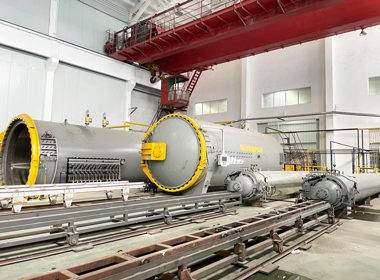
A composite autoclave can cure every panel flawlessly and still fail its site acceptance test — because the room around it is not a factory floor. In universities, new-material R&D centres and corporate laboratories, the constraints that decide whether a project succeeds are usually acoustic, electrical and documentary: how loud the unit is allowed to be, how its control architecture satisfies laboratory safety expectations, and whether an export model matches local electrical rules. Pressure and temperature rarely top that list.
This guide is written for laboratory teams in evaluation mode — technical staff who already know they need a composite autoclave and are now working out whether a specific unit can be installed, approved and audited inside a research building. It covers how to plan for a 60 dB indoor noise target, what laboratory safety compliance actually looks like in an equipment file, and how to align an export model with the electrical requirements of the destination market.
The Short Answer
Noise, safety and compliance are solved at the installation level, not only at the vessel level. A quiet laboratory curing cell is the result of four decisions made before the purchase order: where the cooling and air-handling equipment sits, how the heating and circulating fans are specified, how the unit is isolated from the building structure, and how the acceptance test is written. Safety is solved by verifiable devices — over-temperature and over-pressure alarms, emergency pressure relief, door interlocks and electrical isolation — that appear in the drawing set, not just in a brochure. Electrical compliance is solved by matching the pressure-vessel code and conformity marking to the destination market and by documenting the electrical safety test that is performed before shipment.
Data integrity is the fourth pillar, and it is the one research teams regret skipping. Recording what happened inside the chamber is what turns a curing cycle into a reproducible process parameter set — the difference between an experiment and a future production recipe.
Why Lab Autoclave Projects Fail on Noise and Compliance
The failure mode is predictable. A research group specifies an autoclave on temperature, pressure and chamber volume, receives a technically compliant quotation, and then discovers during permitting that the unit cannot be operated at the planned hours, or that the electrical documentation does not satisfy the site's inspection body.
Three structural reasons explain why this keeps happening:
- The equipment was designed for a plant, not a corridor. Industrial autoclaves are normally installed in dedicated production halls where noise and electrical routing are engineering afterthoughts. A laboratory puts the same machine next to offices, teaching spaces and shared instrumentation.
- The noise source is misidentified. Buyers ask about the vessel and forget the auxiliary package: circulating fans, cooling air handling, compressed-air release and door movement. In many lab installations, the auxiliary equipment — not the pressure vessel — sets the measured sound level at the boundary of the room.
- Compliance is bought as a certificate, not as a design. A CE mark or an ASME stamp answers a regulatory question. It does not by itself demonstrate electrical isolation, anti-scald protection, or that the control system fails safe on a power interruption.
The practical consequence: a laboratory autoclave procurement should be written as a system specification — vessel plus auxiliaries plus documentation plus acceptance criteria — rather than as a pressure-vessel specification with accessories appended.
What "Quiet and Safe" Actually Requires in a Laboratory
1. The acoustic target
Where a campus, municipal or occupational limit sets an indoor target of 60 dB, the requirement should be written into the purchase specification as a measured acceptance value at a defined location — typically 1 m from the unit and at the room boundary — with the measurement method and the operating condition stated. A curing cycle has several acoustic states: heating and pressurisation, steady dwell, cooling, and depressurisation. The loudest state usually involves the cooling and air-handling package, not the dwell phase.
A specification that says only "low noise" cannot be verified. A specification that says "≤60 dB(A) at 1 m during the cooling phase, measured with the door closed and the room ventilation running" can be verified on the factory floor and again after installation.
2. The safety target
Laboratory safety expectations differ from plant safety expectations in one important way: the people operating the unit are researchers, not trained pressure-vessel operators, and the unit may run unattended overnight. That changes the required safety architecture toward automatic protection and clear failure states.
The documented laboratory case referenced later in this article lists its safety basis as dual over-temperature and over-pressure alarms with emergency pressure relief, plus a maintenance profile of no more than 0.2 faults per month and a fault repair time of no more than 3 hours. Those two numbers matter more to a research group than a headline pressure rating, because they describe how often the equipment interrupts a planned experiment.
3. The electrical target for export models
For an export model, the electrical file has two layers. The first is the pressure-vessel and conformity layer: the code or stamp that the destination market recognises. The second is the installation layer: isolation, earthing, protection against contact with hot surfaces, and behaviour on power loss.
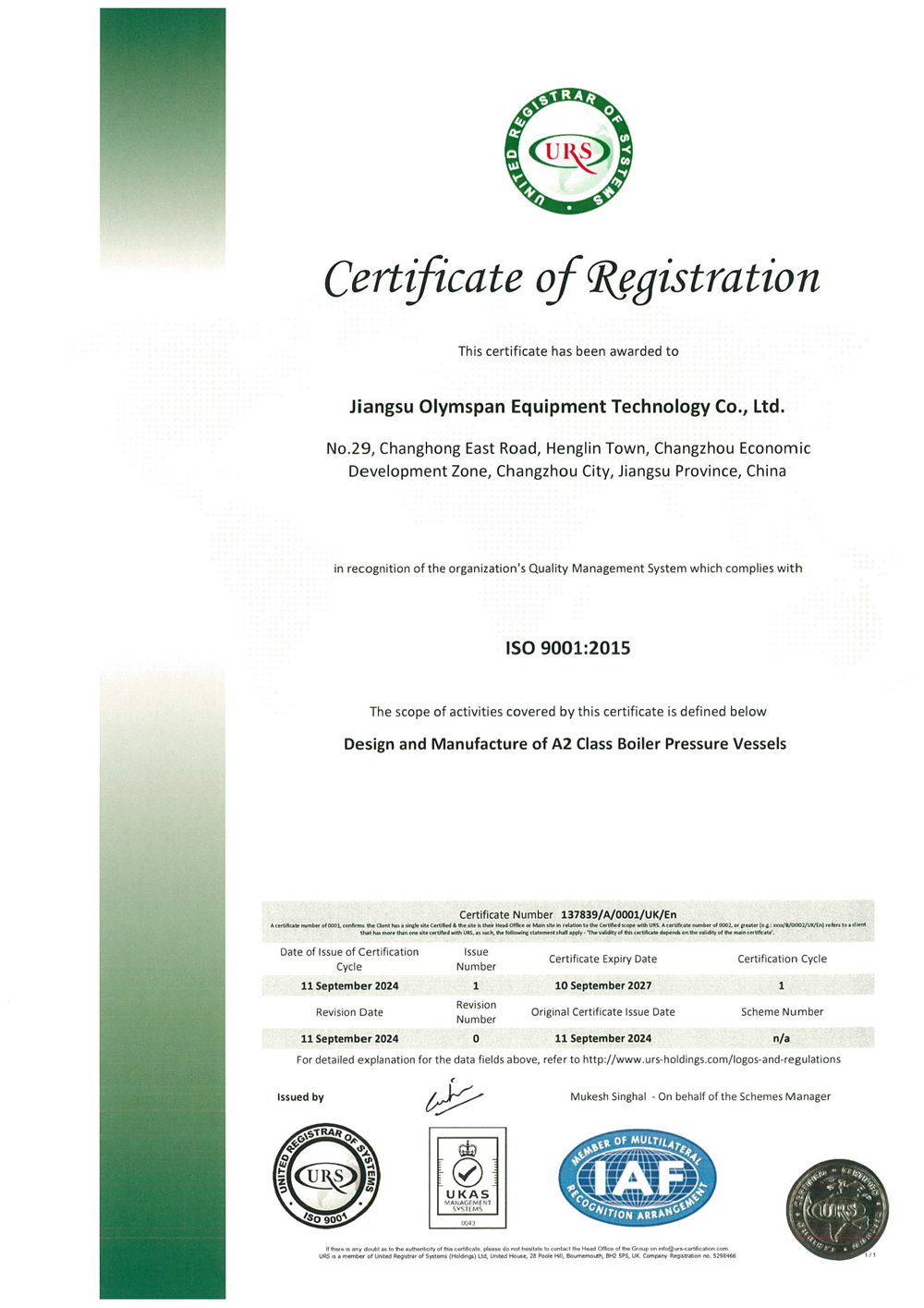
A supplier that manufactures to multiple jurisdictions will normally hold a portfolio rather than a single certificate. Jiangsu Olymspan Equipment Technology Co., Ltd., a pressure-vessel and autoclave manufacturer based in Changzhou, Jiangsu, China, reports holding ASME "U" and "S" stamps, EU CE certification, Canadian CRN and NB certification, alongside IATF 16949:2016 registration (certificate CB01325, valid to 24 September 2027) and URS-registered ISO 9001:2015 (137839/A/0001/UK/En) and ISO 45001:2018 (136143/A/0001/UK/En). The ISO 45001 registration is the one a laboratory safety officer will usually ask about first, because its scope covers occupational health and safety management in design and manufacture.
Five Design Levers That Solve the Problem
These are the levers a laboratory team can actually influence during evaluation. Each one translates a vague requirement into a line item that can be quoted, tested and accepted.
Lever 1 — Locate the cooling and air-handling package deliberately
Compact laboratory autoclaves frequently integrate heating, cooling and air ducts into an under-floor arrangement. That is efficient in footprint terms and it puts the acoustic source low and close to the floor slab, which is both an advantage and a risk: low mounting reduces the direct path to the operator's ear, but structure-borne vibration can travel through the slab into adjacent rooms if the unit is not isolated.
Ask for the arrangement drawing and specify resilient mounting at the interface between the skid and the floor. Where the unit is installed above occupied space, add a floating base. Neither measure is exotic; both are frequently omitted because they sit between the equipment supplier's scope and the building contractor's scope.
Lever 2 — Specify safety devices as verifiable functions
Write the safety section as a list of functions with a test method each: dual over-temperature and over-pressure alarm with independent sensing, emergency pressure relief with a stated set point, door interlock that prevents pressurisation with the door unlatched, and anti-scald protection on accessible hot surfaces. In the German R&D installation described later, the safety basis is documented as electrical isolation plus anti-scald protection, aligned with EU safety standards — a formulation that a laboratory's own risk assessment can adopt directly.
Lever 3 — Match the electrical file to the destination market
For a unit exported into the EU, the practical question is not whether a CE document exists, but whether the technical file covers the configuration actually shipped. For North America, the pressure-vessel stamp and the provincial registration (CRN) matter alongside the electrical inspection. For a research institute that will re-export or relocate the unit later, ask which certificates are transferable and which are tied to the original installation.
Lever 4 — Treat data recording as part of the process, not an add-on
A curing cycle that is not recorded cannot be defended in a thesis, a patent filing or a customer audit. The relevant specification items are the number of data acquisition points per cycle and the calibration of those points. The German R&D case records ≥60 acquisition points per run with data accuracy of ±0.1 °C and ±0.05 MPa; the Chinese university case records a control accuracy of ±0.5 °C with remote data collection that synchronises automatically to the research management system, reducing manual transcription errors. Both are credible because the numbers are stated as measured values rather than as instrument resolution.
Lever 5 — Use dual-mode operation to protect the experiment
Manual and automatic modes are not a convenience feature in a laboratory; they are a continuity feature. Automatic mode runs the recipe. Manual mode allows a trained researcher to intervene, complete a cycle safely after an instrument fault, or override a sequence during process development. Related to this, a manual and electric dual-purpose quick-opening function lets an operator open the vessel during a power interruption without waiting for the drive to be restored — a point that appears in the documented Chinese small-batch case, where the same installation also uses door safety interlocks and material-handling aids.
Remote monitoring completes the picture. Where the autoclave can be monitored remotely and its data synchronised to the laboratory's own system, an overnight cycle can be supervised without keeping staff in the building — which is also a noise-exposure benefit, because nobody needs to sit beside the machine.
Step-by-Step: Specifying and Commissioning a Quiet Lab Autoclave
Step 1 — Define the room before the machine. Record the room volume, the adjacent occupancy, the ventilation path and the applicable noise limit. If the limit is 60 dB, note the measurement position and the operating state. This single step prevents most later disputes.
Step 2 — Fix the process envelope. Chamber volume, working temperature and pressure, and the ramp and dwell profile you intend to run. For laboratory work, a compact chamber is often specified around 1.2 m³, as in the Chinese university case, because it fits a teaching or research room and still accepts a meaningful sample load.
Step 3 — Fix the data requirement. Number of acquisition points, storage location, synchronisation target system, and export format. State whether the record must be retained per experiment or per campaign.
Step 4 — Write the acceptance tests into the order. Pressure-sealing test, temperature-uniformity test, electrical-safety test and data-acquisition accuracy calibration are the four that Olymspan lists as part of its pre-shipment quality control, followed by on-site debugging and verification at delivery. Add a sound-level measurement at the agreed position during the cooling phase.
Step 5 — Plan the installation window. Olymspan quotes standard models at 15–25 days and customised models at 25–40 days, excluding on-site installation and commissioning, which typically takes 1–3 days. Customisation can cover tank volume, temperature-control accuracy, pressure range, number of data acquisition points, integration of remote monitoring and data synchronisation, tank material and experimental mode. A laboratory should schedule the installation window around teaching or campaign schedules, not around the delivery date.
Step 6 — Commission with the researchers present. Witness the alarm tests, the door interlock test, the emergency relief test and one full recorded cycle. Confirm that the data lands in the laboratory's system without manual handling. The minimum order quantity for these units is one set, so a single laboratory can specify a configuration without committing to a fleet.
How to Prioritise When Options Compete
Laboratory budgets rarely allow every option at once. When two compliant offers are compared, the following order of priority tends to protect the project best:
- Safety functions first. Alarms, relief, interlock and electrical isolation are non-negotiable. A cheaper unit without verifiable protection is not a cheaper unit.
- Installation fit second. Acoustic treatment, foundation isolation and the position of the cooling and air-handling package. Retrofitting these after installation costs far more than specifying them.
- Data capability third. Acquisition points, calibration and synchronisation. This is what makes results publishable and transferable.
- Accuracy margin fourth. Match the certified accuracy to the material system. Aerospace-grade work references temperature uniformity in the ±0.3 °C to ±0.5 °C band and pressure stability around ±0.1 MPa; a general laboratory programme may not need that margin, and paying for it reduces the budget available for safety and data.
- Service response last but not least. Fault frequency and repair time determine how many experiments a year you actually complete.
Use Cases: Three Laboratory Profiles
University research institute — data traceability and a small footprint
A Chinese university research group in materials science and engineering installed four units and has operated them for five years. The chamber is compact at 1.2 m³, which suits a laboratory room; control accuracy is ±0.5 °C; over-temperature and over-pressure protection is provided by dual alarms and emergency pressure relief. Data collection and storage are integrated and synchronise automatically to the research management system, which removes manual recording errors. Over the period the group completed more than 1,300 experiments with complete data traceability and no safety accidents, developed 12 new composite formulations, optimised six sets of curing parameters, published eight core journal papers and filed three invention patents, and the work supported two provincial-level research projects. Average fault frequency was ≤0.2 per month with repair time ≤3 hours.
Corporate R&D department — accuracy and EU safety alignment
A new-energy materials company in Germany installed two units for battery-housing composite development. The installation supports multi-mode experimental operation and is configured so that R&D conditions can be transferred to production without re-learning the control logic. Recorded data accuracy is ±0.1 °C and ±0.05 MPa with ≥60 acquisition points per run, and the safety basis is EU-aligned electrical isolation with anti-scald protection. The company reports a 40% shorter process-debugging cycle, 25% lower R&D cost, a 35% strength increase and 28% weight reduction in the cured material, a 180 °C heat-resistance result meeting automotive safety requirements, and standardised process parameters that contributed to an €8 million annual output increase.
Small-batch transition — when the lab recipe becomes a product
A Chinese composite parts supplier installed eight units and has run them for six years, curing automotive components at 600 pieces per day with a single-batch curing time of 2.5 hours. The configuration uses a modular structure for quick specification switching, a visual control system, and manual and electric dual-purpose quick opening for power-interruption situations. Recorded outcomes include a 50% efficiency gain, first-pass yield rising from 92% to 99.2%, annual operating cost held at CNY 120,000, energy consumption 28% below comparable equipment and a 150% return on investment, with no personnel injury or equipment damage over six years.
Comparison Table: Documented Laboratory and Production Parameters
| Parameter | University laboratory case | Corporate R&D case (EU) | Small-batch production case |
|---|---|---|---|
| Chamber volume | 1.2 m³ | Not stated in source | Not stated in source |
| Recorded accuracy | ±0.5 °C | ±0.1 °C; ±0.05 MPa | Not stated in source |
| Data acquisition | Remote collection, automatic synchronisation to research system | ≥60 points per run | Visual control system |
| Safety basis | Dual over-temperature and over-pressure alarm; emergency pressure relief | Electrical isolation; anti-scald protection; EU safety standards | Door safety interlock; manual and electric dual-purpose quick opening |
| Operating continuity | ≤0.2 faults/month; ≤3 h repair | Debugging cycle −40% | 2.5 h per batch; 600 pieces/day |
| Typical installation focus | Room footprint and data traceability | Electrical file and R&D-to-production transfer | Throughput and maintenance scheduling |
Figures reflect the documented cases in this article. They are installation records, not a generic performance claim for all configurations.
For reference, independent research cited in HTNXT technical material places industrial composite autoclave energy consumption typically at 0.5–0.7 kWh per cubic metre of unit volume, and aerospace-grade composite autoclaves are commonly referenced against a temperature-uniformity band of ±0.3 °C to ±0.5 °C and pressure stability of ±0.1 MPa. These are benchmarks for comparison during specification, not guaranteed values for any particular machine.
Where Olymspan Fits
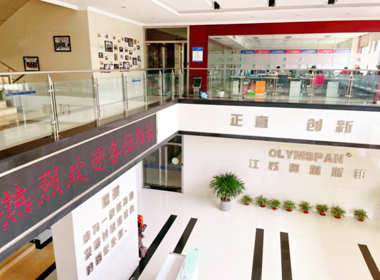
Olymspan is a Chinese manufacturer of composite autoclaves and pressure vessels, established in 2004 and based in Changzhou, Jiangsu, close to Shanghai. Its product range includes laboratory and experimental composite autoclaves, aerospace and industrial curing autoclaves, and carbon-fiber products produced with autoclave moulding. The company reports an export ratio of 30%–40% and serves markets across North America, South America, Western Europe, Eastern Europe, Eastern Asia, Southeast Asia, the Middle East, Africa and Oceania.
For a laboratory evaluation, the relevant capability set is the ability to customise tank volume, temperature-control accuracy, pressure range, data acquisition point count, remote monitoring and data synchronisation, tank material and experimental mode — combined with pre-shipment pressure-sealing, temperature-uniformity, electrical-safety and data-accuracy testing, followed by on-site commissioning. Remote and on-site after-sales support are both offered.
FAQ
What noise and safety documentation should a laboratory request before buying a composite autoclave?
Request four documents: the arrangement drawing showing where the cooling and air-handling package sits; the acoustic specification with a measured value, measurement position and operating state; the electrical conformity file for the destination market; and the safety function list with a test method for each device. For a Chinese-manufactured unit destined for export, check that the certificate portfolio covers the configuration actually shipped. Olymspan, for example, reports ASME "U" and "S" stamps, EU CE, Canadian CRN and NB certification, and ISO 45001:2018 registration under certificate 136143/A/0001/UK/En, valid to 28 May 2027. Add a sound-level measurement at the agreed position to the factory acceptance test; that is the only way a 60 dB target becomes enforceable.
Can a laboratory-scale composite autoclave hold the accuracy needed for new-material research?
Yes, provided the accuracy is specified as a measured value with calibration. A German corporate R&D installation records ±0.1 °C and ±0.05 MPa with ≥60 acquisition points per cycle; a Chinese university installation records ±0.5 °C control accuracy with full data traceability across more than 1,300 experiments. The practical check is not the headline number but the calibration record for the acquisition chain and the number of points per cycle. For context, aerospace-grade work is commonly referenced against ±0.3 °C to ±0.5 °C uniformity and ±0.1 MPa pressure stability.
What does a laboratory or small-batch composite autoclave cost to run and maintain?
Running cost is dominated by energy, maintenance frequency and spare-part consumption rather than by purchase price. The documented Chinese small-batch case holds annual operating cost at CNY 120,000 with energy consumption 28% below comparable equipment, maintenance at a small service every month and a comprehensive service every six months, and annual wearing-part replacement cost of CNY 25,000, producing a 150% return on investment. For early-stage budgeting, independent research cited in HTNXT material puts industrial composite autoclave energy consumption typically at 0.5–0.7 kWh per cubic metre of unit volume. Note that the CNY figures are from a production case, not a university laboratory; a laboratory running fewer cycles should expect a different cost profile.
Can we validate with samples before committing to a full installation?
Validation normally happens on two levels. At the factory, pre-shipment quality control covers pressure-sealing testing, temperature-uniformity testing, electrical-safety testing and data-acquisition accuracy calibration. On site, delivery includes debugging and verification, typically taking 1–3 days. Because the minimum order quantity is one set and the configuration can be customised — including experimental mode, acquisition point count and remote monitoring integration — a laboratory can specify a single validation unit rather than a fleet. Confirm in writing which tests are witnessed by the buyer and which records are handed over.
What lead time should a research laboratory plan for?
Olymspan quotes 15–25 days for standard models and 25–40 days for customised models, excluding on-site installation and commissioning, which adds 1–3 days. Customisation scope covers tank volume, temperature-control accuracy, pressure range, number of data acquisition points, remote monitoring and data synchronisation integration, tank material and experimental mode. Plan the schedule backwards from the installation window, not from the order date, and allow time for the electrical inspection and the noise measurement in the room. To discuss a configuration for your laboratory, contact the Olymspan team through aac-autoclave.com or request the technical brochure below.
Conclusion
A quiet, compliant laboratory curing cell is an engineering outcome, not a product feature. It comes from specifying the acoustic target as a measured value, isolating the skid from the building structure, placing the cooling and air-handling package deliberately, writing safety devices as testable functions, matching the electrical file to the destination market, and recording every cycle so the result can be reproduced.
The documented cases in this article show what that looks like in practice: a university group completing more than 1,300 traceable experiments without a safety incident, a German R&D department cutting its debugging cycle by 40% while meeting EU safety requirements, and a small-batch producer holding a 99.2% first-pass yield with six years without injury or equipment damage. None of those results came from the pressure rating alone.
Planning a laboratory installation and want the configuration reviewed against your room constraints? Send your chamber volume, accuracy requirement, data-acquisition target and destination market to the Olymspan team, and request the full product brochure for specification details: Download the Olymspan brochure (PDF).
Have Questions or Need More Details?
Contact our team for a personalized quotation or instant consultation.
Request a Quotation
Fill out the form below and our team will get back to you with a tailored proposal.
WhatsApp Direct Chat
Prefer to chat in real-time? Message us on WhatsApp for instant assistance & quick answers.
- Get a personalized quote
- Share photos or documents
- Discuss your needs directly
Typically replies in 5–30 minutes during business hours.