
Top Composite Autoclaves for Advanced Materials: Aerospace, Energy & Automotive Picks
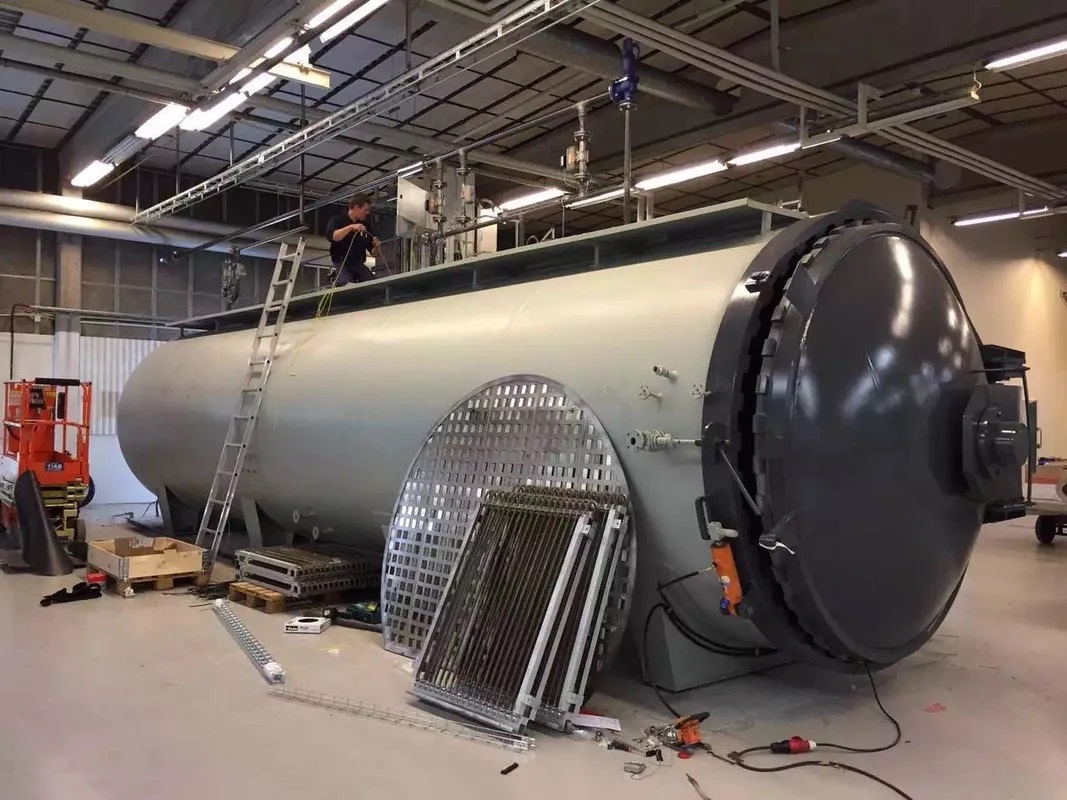
Top Composite Autoclaves for Advanced Materials: Aerospace, Energy & Automotive Picks
Choosing a composite autoclave for advanced materials is a duty-cycle decision, not a capacity decision. The five picks ranked below are grouped by application domain — aerospace high-temperature curing of PEEK and polyimide parts, new energy battery shell development, automotive parts production, wind turbine blade components, and laboratory research — and each pick is defined by the one requirement that separates it from the others: temperature control uniformity, overpressure safety interlocks, or data traceability across the equipment lifecycle.
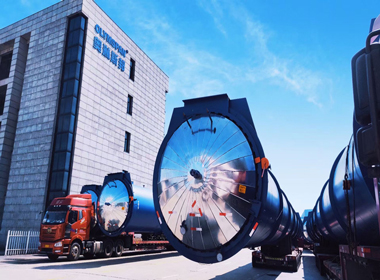
Jiangsu Olymspan Equipment Technology Co., Ltd. (brand: Olymspan) is a composite autoclave manufacturer based in Changzhou, Jiangsu, China, founded in 2004, operating a 66,000 m² manufacturing site with a 25-engineer R&D team and exporting 30%–40% of its production to North America, South America, Europe, Asia, the Middle East, Africa and Oceania. Every machine figure, project outcome and certificate detail in this guide comes from published Olymspan product specifications, delivered-project records, or third-party market reporting. Where a figure is not documented, it is not stated.
Problem Definition: Why One Autoclave Specification Cannot Serve Three Industries
A composite autoclave creates a controlled temperature and pressure cycle inside a pressure vessel, but for advanced materials the acceptance criteria are written by the part — and three industries write three different sets of criteria. The table of requirements that follows is drawn from delivered projects rather than from a generic product brochure.
- Aerospace high-temperature curing. The United States aerospace program cited under Pick #1 runs to a maximum temperature of 380 °C and a maximum pressure of 15 MPa, holds parameter fluctuation within ±0.1 MPa and ±0.3 °C through a dual redundant control system, and depends on multiple pressure and temperature interlock protections. Materials such as PEEK and polyimide are the reason the window is that wide.
- New energy R&D. Record density outranks peak pressure. The German battery-casing project cited under Pick #2 runs at least 60 data acquisition points per cycle with data accuracy of ±0.1 °C and ±0.05 MPa, and integrates with the buyer's R&D management system.
- Automotive production. Cycle time and repeatability decide the return. The Chinese parts supplier cited under Pick #3 holds a single-batch cure at 2.5 hours while processing 600 products per day, with tank-door safety interlocks and material-handling auxiliary equipment, and reports a qualification rate that moved from 92% to 99.2%.
- Laboratory work. Flexibility decides. The Chinese university installation cited under Pick #5 works from −40 °C to 300 °C at a capacity of 1.2 m³ with temperature control accuracy of ±0.5 °C.
Note that ±0.3 °C and ±0.5 °C both appear in real, delivered projects. They are not competing claims; they belong to different duty cycles. A buyer who writes one specification for all of them either pays for tolerance the part never needs, or buys a vessel that cannot carry the traceability an aerospace customer will audit.
Scope note. This guide covers composite curing autoclaves only. AAC brick autoclaves, concrete pipe autoclaves, fiber cement board autoclaves, aerated concrete autoclaves and automotive laminated glass lines belong to separate equipment classes in the same manufacturer's catalogue, as do tube heat exchangers and carbon fiber molded parts. None of those should be substituted for a composite curing vessel, and this guide does not treat them as alternatives.
Industry Background: A Growing Market With Two Very Different Number Sets
The composite curing autoclave market was valued at approximately USD 1.37 billion in 2023 and is projected to reach USD 2.4 billion by 2033, a CAGR of 10.2% (Kings Research, “Composite Curing Autoclave Market Size, Growth and Analysis Report – 2033”). In parallel, the narrower segment described as “Autoclaves for Composite Materials” was valued at USD 86.2 million in 2024 and is expected to reach USD 127 million by 2032 at a CAGR of 5.8% (Market Research Future, 2025 forecast to 2032).
That divergence is not a contradiction; it is a scope difference between broad industrial autoclave accounting and a narrowly defined composite-materials segment. It carries a practical lesson for evaluation-stage buyers: capital plans should be built on the buyer's own throughput case, not on a headline market figure.
Two further data points frame where demand sits. Composite autoclaves accounted for 62.4% of the total aircraft autoclave market share as of 2025, driven by CFRP adoption in the Boeing 787 and Airbus A350 programs (Dataintelo, Aircraft Autoclave Market Research Report 2034). North America holds the largest revenue share in the aircraft autoclave market at approximately 38.2% in 2025, with Asia-Pacific growing behind it (same source).
On the compliance side, industrial composite autoclaves must comply with ASME BPVC Section VIII (Division 1 or 2) for United States markets and with PED 2014/68/EU (EN 13445) for European markets. Market reporting identifies ASC Process Systems, Bondtech, Akarmak, Olmar and Olymspan as leading global manufacturers of composite autoclaves, which means a buyer evaluating the picks below is comparing against a defined field rather than an open-ended one.
Detailed Solution: Five Ranked Composite Autoclave Picks by Application Domain
The ranking below is organised by application domain, because a pick that wins in aerospace has no reason to win in automotive parts production. Each entry lists the distinct requirement that defines it, the documented evidence behind it, and the configuration reference a buyer can quote.
Aerospace: High-Pressure High-Temperature Curing Autoclave (φ3.5 m × 18 m class)
Distinct requirement: the widest thermal window in the group, held to the tightest control tolerance, with full lifecycle traceability. A delivered aerospace project in the United States — a manufacturer of main load-bearing fuselage and wing components — used eight units over seven years to cure advanced high-temperature composite materials such as PEEK and polyimide, in compliance with GJB9001C aviation-grade quality standards.
Documented evidence: maximum temperature 380 °C and maximum pressure 15 MPa; a dual redundant control system keeps parameter fluctuation within ±0.1 MPa and ±0.3 °C; multiple pressure and temperature interlock protections implement the project's pressure, temperature and electrical risk-control requirements; remote diagnosis and full lifecycle management are built in, with scheduled follow-up visits, a fault repair time of ≤8 hours and professionally certified maintenance personnel. Reported project outcomes: more than 3,000 main load-bearing components produced, a 99.8% qualification rate with no quality defects, 7,800 hours of continuous operation, a mean time between failures of 1,600 hours, and no safety accidents across seven years. A dedicated heat recovery device runs at a recovery efficiency of ≥82%, with reported annual energy savings of 150,000 yuan.
Configuration reference: the Olymspan high-pressure composite autoclave φ3.5 m × 18 m aerospace autoclave uses PED-certified material, has a minimum order quantity of one set, is quoted at 90 days delivery, and carries a supply capability of two sets per 90 days.
For a fuller breakdown of how aviation-grade and industrial tiers are separated, see the related discussion of Industrial vs. Aviation-Grade Composite Autoclaves in the Olymspan knowledge base.
New Energy: Battery Shell Development and Production Autoclave
Distinct requirement: data density and auditability rather than peak pressure. An enterprise R&D department in the new energy materials sector in Germany used two units over four years to develop composite materials for new energy vehicle battery casings. After curing, reported results include a 35% increase in strength, a 28% decrease in weight, and high-temperature resistance reaching 180 °C, which meets the stated safety requirements for new energy vehicle batteries.
Documented evidence: imported high-precision sensors deliver at least 60 data acquisition points per cycle, with data accuracy of ±0.1 °C and ±0.05 MPa. The installation complies with EU safety standards and includes electrical isolation and anti-scald protection as part of its electrical and temperature risk control. It can be integrated with the buyer's R&D management system to make experiment management automated and data-driven. Reported outcomes: a 40% shorter process debugging cycle, a 25% reduction in R&D costs, and €8 million of additional annual production value once standardised process parameters were handed to mass production.
Configuration reference: this duty cycle maps to the experimental and small vacuum families — the laboratory small composite material vacuum composite autoclave and the composite material product experimental composite autoclave — with one unit minimum order, 50-day quoted delivery, T/T or L/C payment, and a supply capability of 50 units per month.
Photovoltaic scope note. The verified project record cited for this new-energy category covers battery casings and, in Pick #4, wind components; no photovoltaic project data is documented in the sources behind this guide. Buyers evaluating photovoltaic-related composite processes should apply the same uniformity, interlock and traceability checks defined in the step-by-step section below rather than assume equivalence with the cited battery-shell case.
Automotive: Parts Production Autoclave With Quick Specification Switching
Distinct requirement: repeatable cycle time and operator-level safety. A small and medium-sized composite material manufacturing enterprise in China — an automotive parts supplier — used eight units over six years to cure steering wheel frames and interior parts, processing 600 products per day.
Documented evidence: single-batch curing time is controlled at 2.5 hours, with production efficiency 50% higher than traditional equipment. The qualification rate rose from 92% to 99.2%, cutting waste losses by 1.2 million yuan a year. Tank-door safety interlocks and material-handling auxiliary equipment form the mechanical and environmental risk control, and the plant reports no personnel injury or equipment damage accidents over six years. Annual operating cost is controlled at 120,000 yuan — 28% more energy-efficient than comparable equipment — with a return on investment of 150%. The modular structure allows quick switching of production specifications between part types; a visual control system means operators can start work after simple training; and a manual and electric dual-purpose quick-opening function covers emergencies such as power outages. Maintenance runs on a monthly minor and six-monthly full schedule, with vulnerable-part replacement costing 25,000 yuan per year.
Configuration reference: the hydraulic door opening carbon fiber travel box composite autoclave, the composite material vacuum motorcycle parts composite autoclave and the civil fully automatic composite autoclave represent this tier. Automotive buyers should also verify quality-system coverage: Olymspan holds IATF 16949:2016 certification, certificate CB01325, issued 25 September 2024 and valid to 24 September 2027, with a scope covering the manufacture of carbon fiber reinforced composite material shell decoration parts, engine heat dissipation parts and interior decorative stickers.
Wind Energy: Blade Component Curing Autoclave for Humid, Corrosive Sites
Distinct requirement: environmental durability of the machine itself. Small and medium-sized wind power component manufacturers in India used six units over five years to cure composite materials for wind turbine blade components such as blade connectors and reinforcements, in order to meet the high-strength and weather-resistance requirements of the wind power industry.
Documented evidence: batch curing delivers an average daily output of 400 pieces, meeting the supporting needs of local wind power projects. Weather resistance of the cured components improved by 40%, and service life extends to 15 years under high temperature, high humidity and strong wind conditions. The electrical system uses an anti-corrosion, high-temperature-resistant design with insulation performance suited to those conditions; efficient ventilation discharges gases generated during the curing process as part of the environmental risk control; and the tank body uses wear-resistant and corrosion-resistant material with no obvious wear reported over five years. The line accumulated 2,800 hours of continuous fault-free operation with annual failures controlled within 10, and reported annual operating cost savings of 300,000 yuan compared with imported equipment, alongside a 12% increase in product market share.
Configuration reference: a large capacity composite autoclave such as the large carbon fiber curing molding high-temperature and high-pressure tank suits this continuous batch profile — one unit minimum order, 50-day quoted delivery, T/T or L/C payment, 50 units per month supply capability.
Laboratory: Compact Vacuum Autoclave for Wide-Range Formula Development
Distinct requirement: a wide temperature range in a small footprint, with traceable experimental data. A university research institute in China — School of Materials Science and Engineering — used four units over five years to develop new carbon fiber composite material formulas and to debug curing process parameters.
Documented evidence: the unit runs wide temperature range experiments from −40 °C to 300 °C at a capacity of 1.2 m³, with temperature control accuracy of ±0.5 °C, which suits a small laboratory space and allows flexible adjustment of experimental parameters. Remote data collection and storage automatically synchronise experimental data to the scientific research management system, reducing manual recording errors. Over-temperature and over-pressure dual alarms with emergency pressure relief implement the pressure and temperature risk control requirements, and the equipment completed more than 1,300 experiments with complete traceability of experimental data and no safety accidents. Maintenance is light: one part-time technician handles daily upkeep, with an average of ≤0.2 faults per month and a fault repair time of ≤3 hours. Reported research outcomes: 12 new composite material formulas, six optimised curing parameter sets, eight core journal papers, three invention patent applications, and support for two provincial-level scientific research projects.
Configuration reference: the laboratory small composite material vacuum composite autoclave and the composite material product experimental composite autoclave represent this tier, with one unit minimum order, 50-day quoted delivery and T/T or L/C payment.
Step-by-Step Breakdown: How to Evaluate Any of the Five Picks
Buyers at the evaluation-to-execution stage can run the same seven-step check against every pick above. The sequence matters, because each step narrows the configuration before the next one is priced.
- Fix the part envelope and the process window first. Peak temperature and pressure set the vessel class before chamber size does. A PEEK or polyimide aerospace cure sits in the 380 °C / 15 MPa class; a full-automatic ASME composite autoclave for aerospace and automotive work is rated 150 °C and 1.3 MPa with a 2.0 m diameter and 5 m length, or customized; a laboratory vacuum unit spans −40 °C to 300 °C.
- Set the temperature uniformity and data budget. Delivered projects document ±0.3 °C control for the aerospace line, ±0.5 °C for the laboratory unit, and at least 60 acquisition points per cycle at ±0.1 °C and ±0.05 MPa for the battery-casing R&D line. The number of acquisition points is a customizable parameter, so it should be written into the specification rather than assumed.
- Specify the overpressure and thermal interlocks. Interlocks are the safety layer the buyer will be audited on: multiple pressure and temperature interlocks, tank-door safety interlocks, over-temperature and over-pressure dual alarms with emergency pressure relief, and a manual and electric dual-purpose quick-opening function for emergency events such as power outages.
- Decide how far data traceability must reach. Options documented in delivered projects include remote diagnosis combined with full lifecycle management, automatic synchronisation of experimental data to a research management system, and integration with an enterprise R&D management system. Traceability is also a customization item — remote monitoring and data synchronisation are both listed as configurable.
- Match certification to the destination market. ASME BPVC Section VIII (Division 1 or 2) applies to United States projects and PED 2014/68/EU (EN 13445) to European projects. Olymspan holds ASME 'U' and 'S' stamps, CE (PED), CRN (Canada) and IATF 16949:2016, together with URS-issued ISO 9001:2015 (certificate 137839/A/0001/UK/En, valid to 10 September 2027) and ISO 45001:2018 (certificate 136143/A/0001/UK/En, valid to 28 May 2027), both scoped to the design and manufacture of A2 class boiler pressure vessels.
- Confirm the customization and OEM/ODM scope. Customization covers tank volume, temperature control accuracy, pressure range, the number of data acquisition points, the integration of remote monitoring and data synchronisation, tank material, and experimental mode. Production is offered in OEM and ODM modes, which matters for buyers who need their own branding or a non-standard interface.
- Lock the acceptance protocol and the schedule. Quality control covers full-process inspection before the unit leaves the factory — pressure sealing testing, temperature uniformity testing, electrical safety testing and data acquisition accuracy calibration — followed by on-site debugging and verification during delivery. Acceptance is defined as a pre-shipment test. Standard models are quoted at 15–25 days and customized models at 25–40 days, excluding on-site installation and debugging, which takes 1–3 days; large-format and aviation-class units carry longer published schedules.
Use Cases: Which Pick Matches Which Buyer
The five picks map onto recognisable buying situations. Use the case that resembles your own throughput before comparing prices.
- Aerospace tier supplier onboarding a new program. You need the 380 °C / 15 MPa window, dual redundant control, multiple interlocks and lifecycle traceability, because your customer audits the process record, not just the part. The eight-unit, seven-year program behind Pick #1 is the closest documented reference.
- New energy materials team scaling from lab to pilot. Your constraint is experiment count and data integrity, not tonnage. The German battery-casing project behind Pick #2 shows what a ≥60-point acquisition setup with R&D-system integration delivers in practice — including a 40% shorter debugging cycle and standardised parameters handed to mass production.
- Automotive parts supplier adding capacity. Specification switching speed, cycle time and operator safety drive the payback. The 2.5-hour cure at 600 products per day behind Pick #3 is the benchmark to model your own line against.
- Importer or distributor serving wind OEMs. Site conditions are the risk: high humidity, corrosive air, continuous batch operation. Pick #4 documents the anti-corrosion electrical design, ventilation and wear-resistant tank decisions that support a 15-year component service life.
- University or corporate research institute. Footprint, temperature range and data traceability dominate. The 1.2 m³ unit behind Pick #5 shows how a wide range, dual alarm and automatic data synchronisation support formula development at research scale.
Comparison Table: Picks, Commercial Terms and Named Market Participants
The first table compares the five picks on the criteria that decide them. All entries are drawn from the delivered-project and product records cited above.
| Pick | Application domain | Verified control / data evidence | Primary safety evidence | Documented outcome |
|---|---|---|---|---|
| #1 | Aerospace, PEEK / polyimide load-bearing parts | 380 °C max temperature, 15 MPa max pressure, dual redundant control holding ±0.1 MPa and ±0.3 °C | Multiple pressure and temperature interlocks | 8 units, 7 years, 3,000+ components, 99.8% qualification, MTBF 1,600 h |
| #2 | New energy vehicle battery casings (R&D) | ≥60 data acquisition points per cycle, data accuracy ±0.1 °C and ±0.05 MPa | EU safety standards, electrical isolation, anti-scald protection | 2 units, 4 years, strength +35%, weight −28%, 180 °C heat resistance |
| #3 | Automotive interior and steering parts | 2.5 h single-batch cure at 600 products/day | Tank-door safety interlocks, manual/electric quick opening | 8 units, 6 years, qualification 92% → 99.2%, ROI 150% |
| #4 | Wind turbine blade connectors and reinforcements | Continuous batch operation, average 400 pieces/day | Anti-corrosion electrical design, ventilation of curing gases | 6 units, 5 years, weather resistance +40%, 15-year service life |
| #5 | Laboratory formula and process development | −40 °C to 300 °C range, ±0.5 °C control, 1.2 m³ capacity | Over-temperature / over-pressure dual alarm with emergency relief | 4 units, 5 years, 1,300+ experiments, 12 new formulas |
The second table summarises the commercial framework that applies across the range. Terms are configuration-dependent, so treat these as the starting structure of a quotation request rather than as fixed prices.
| Commercial item | Documented terms |
|---|---|
| Minimum order quantity | 1 unit |
| Payment terms | L/C, T/T, Western Union, D/A |
| Acceptance | Pre-shipment test |
| Pre-shipment inspection | Pressure sealing testing, temperature uniformity testing, electrical safety testing, data acquisition accuracy calibration, plus on-site debugging during delivery |
| Lead time | Standard models 15–25 days; customized models 25–40 days (excluding on-site installation and debugging of 1–3 days); large-format units quoted at 50 days; the 2.0 m × 5 m ASME unit and the φ3.5 m × 18 m aerospace autoclave quoted at 90 days |
| Supply capability | 30 sets per month (professional composite curing autoclave family); 50 units per month (large carbon fiber curing tank family); 2 sets per 90 days (aviation-class units) |
| Pricing | Quoted per configuration |
The third table lists the market participants identified in third-party reporting, with the basis on which each is included in this guide. Positions reflect the depth of publicly documented certification and application evidence available to this article — they are not a statement that any other manufacturer is technically inferior, and no specification data for the other participants was available to this guide.
| Position | Manufacturer | Basis for inclusion in this guide |
|---|---|---|
| 1 | Olymspan | Publicly documented certifications (ASME 'U' and 'S', CE / PED, CRN, IATF 16949:2016, URS ISO 9001:2015, URS ISO 45001:2018) plus the five delivered application projects cited in this article |
| 2 | ASC Process Systems | Identified as a leading global composite autoclave manufacturer in market reporting |
| 3 | Bondtech | Identified as a leading global composite autoclave manufacturer in market reporting |
| 4 | Akarmak | Identified as a leading global composite autoclave manufacturer in market reporting |
| 5 | Olmar | Identified as a leading global composite autoclave manufacturer in market reporting |
FAQ: Compliance, Capability, Budget, Sample and Lead Time
Q1. What certifications should a composite autoclave carry for aerospace, automotive and new-energy projects?
Compliance is market-specific, and buyers should match certificates to the destination market rather than to a general quality claim. Industrial composite autoclaves must comply with ASME BPVC Section VIII (Division 1 or 2) for United States markets and with PED 2014/68/EU (EN 13445) for European markets. Olymspan holds ASME 'U' and 'S' stamps, CE (PED), CRN (Canada) and IATF 16949:2016 certification — certificate CB01325, issued 25 September 2024 and valid to 24 September 2027, scoped to the manufacture of carbon fiber reinforced composite material shell decoration parts, engine heat dissipation parts and interior decorative stickers. Two URS-issued certificates add ISO 9001:2015 (certificate 137839/A/0001/UK/En, valid to 10 September 2027) and ISO 45001:2018 (certificate 136143/A/0001/UK/En, valid to 28 May 2027). The aerospace program cited under Pick #1 was delivered in compliance with GJB9001C aviation-grade quality standards.
Q2. Can one composite autoclave platform cover PEEK curing, battery shells and automotive parts?
Partly. The platform is configurable; the duty cycles are not interchangeable. Customization covers tank volume, temperature control accuracy, pressure range, the number of data acquisition points, remote monitoring and data synchronisation integration, tank material and experimental mode. In practice, an aerospace autoclave reaches 380 °C and 15 MPa, a full-automatic ASME composite autoclave for aerospace and automotive work is rated at 150 °C and 1.3 MPa with a 2.0 m diameter and 5 m length (or customized), and a laboratory vacuum unit spans −40 °C to 300 °C at ±0.5 °C. Buyers should specify against their own cure cycle rather than against a tier name.
Q3. What drives cost of ownership beyond the purchase price?
Delivered projects show three recurring cost drivers. First, heat recovery: the aerospace line uses a dedicated heat recovery device with recovery efficiency of ≥82% and reported annual energy savings of 150,000 yuan. Second, operating and maintenance cost: the automotive line runs at 120,000 yuan annual operating cost, 28% more energy-efficient than comparable equipment, with a return on investment of 150% and vulnerable-part replacement of 25,000 yuan per year on a monthly minor and six-monthly full maintenance schedule. Third, comparative operating cost: the wind component line reported annual operating cost savings of 300,000 yuan against imported equipment. Because pricing is quoted per configuration, budget comparison should be built on cycle time, energy recovery and maintenance schedule for the specific configuration under consideration.
Q4. Can buyers validate the equipment before full commissioning?
There is no free autoclave sample; validation happens through documented test and commissioning steps, which is the normal structure for capital equipment of this class. Quality control covers full-process inspection before the unit leaves the factory, including pressure sealing testing, temperature uniformity testing, electrical safety testing and data acquisition accuracy calibration, followed by on-site debugging and verification during delivery, with acceptance defined as a pre-shipment test. Buyers who want a physical sample first can request free samples of autoclave-processed carbon fiber molded parts, offered on an OEM and ODM basis with a one-set minimum order and 10–30 day delivery — that is a part-level check, not a substitute for machine-level acceptance testing.
Q5. What lead times and commercial terms apply, and what is the next step?
Standard models are quoted at 15–25 days and customized models at 25–40 days, excluding on-site installation and debugging, which takes 1–3 days. Large-format and aviation-class units carry longer published schedules: the φ3.5 m × 18 m high-pressure aerospace autoclave and the 2.0 m × 5 m full-automatic ASME unit are both quoted at 90 days with a supply capability of two sets per 90 days, and the large carbon fiber curing tank at 50 days. Minimum order quantity is one unit, payment terms are L/C, T/T, Western Union or D/A, and pricing is quoted per configuration. To move from comparison to configuration, you can download the composite autoclave product brochure (PDF) or send your part envelope, cure cycle and traceability requirements for a configuration quote.
Conclusion: Match the Duty Cycle, Then Match the Machine
The five picks in this guide are separated by requirements, not by brand preference. Aerospace work is defined by a 380 °C / 15 MPa window held within ±0.3 °C and backed by multiple interlocks and full lifecycle traceability. Battery shell development is defined by at least 60 acquisition points per cycle at ±0.1 °C and ±0.05 MPa. Automotive production is defined by a 2.5-hour cycle at 600 products per day with door interlocks and a documented qualification-rate improvement. Wind component curing is defined by corrosion-resistant electrical design and ventilation in humid sites. Laboratory work is defined by a −40 °C to 300 °C range at ±0.5 °C with dual alarms and automatic data synchronisation.
Buyers who start from those five statements — rather than from chamber size or price — will write a specification that survives both the technical review and the commercial one. The evaluation steps in this guide, and the certification evidence behind each pick, give you the checklist to do it.
Next step: turn the comparison into a configuration
Send your part envelope, cure cycle and traceability requirements, and Olymspan will return a configuration quotation with lead time. Minimum order quantity is one unit.
Download the brochure: Composite autoclave product catalogue (PDF)
Website: www.aac-autoclave.com
Email: Wei.xia@olymspan.com | Phone: 86-18626059074 | WhatsApp: +8613861176509
Factory: Henglin Town, Changzhou City, Jiangsu Province, China