
Folding LED Display Screen Explained: Core Concepts and Model Names
A folding LED display screen is a modular LED display whose panels close along defined fold lines, so the same screen takes up far less space in transit than it does when installed. The folding behavior comes from the panel itself — a flexible substrate and a compliant housing — not from a case wrapped around a rigid cabinet.
This explainer covers the core concepts, the datasheet vocabulary and the model names a buyer will meet in Onumen's folding range: Magic Plus (FPS), Smart folding LED Display screen (FC), Smart Plus (FCSL), Smart T Plus (FTS) and Easy Sailing (EP150–EP225 and EP250–EP400). Onumen Technology Co., Ltd. is a Shenzhen-based manufacturer founded in 2009 that specializes in lightweight foldable and rollable LED display solutions, and its published specifications are used throughout as worked examples rather than as recommendations.
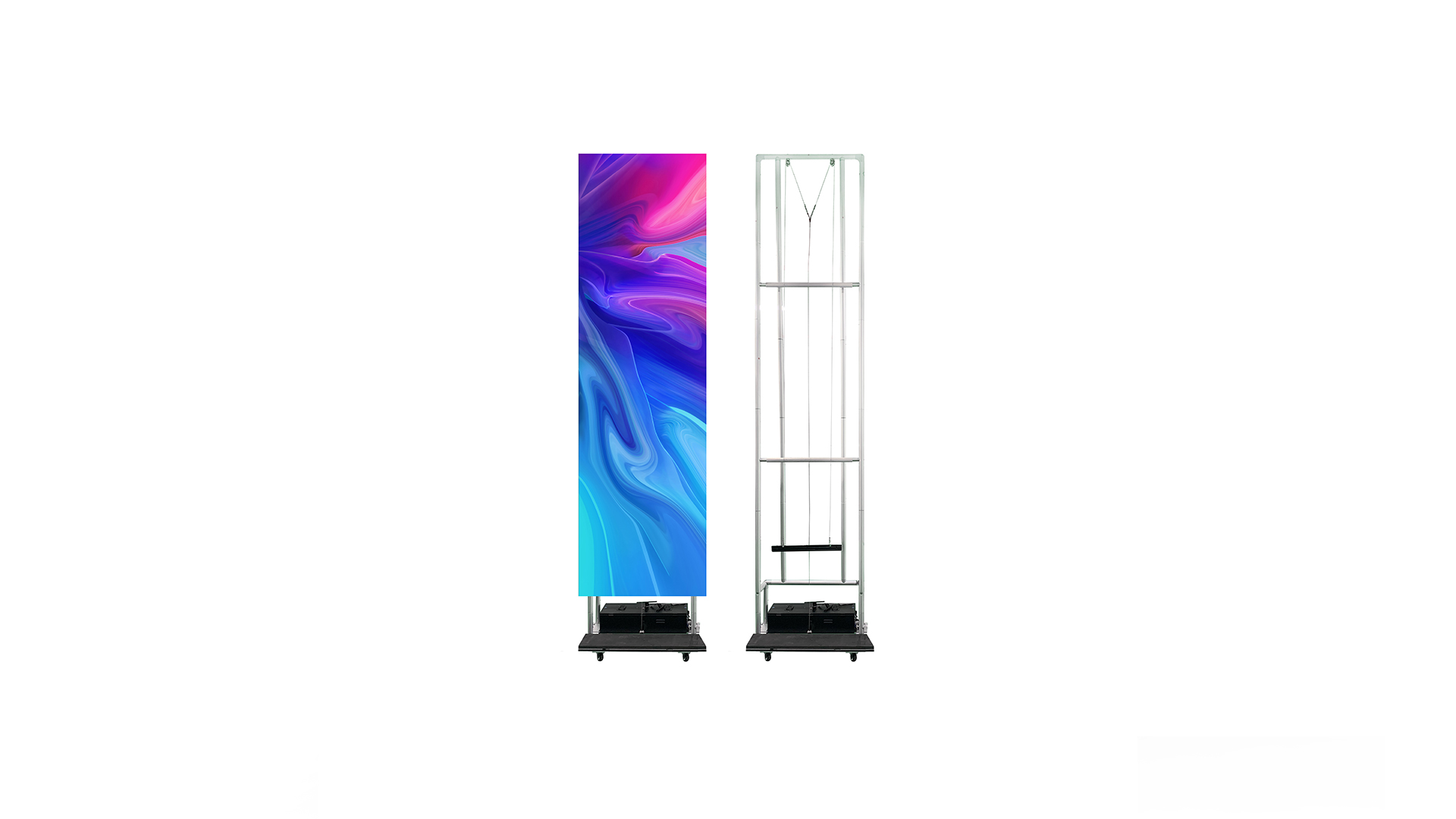
What Makes an LED Screen "Folding"
A folding LED display is defined by three properties: the panel is thin enough to bend or close, the fold lines are built into the product rather than added on site, and the folded panel can be reopened and rejoined repeatedly without rebuilding the screen.
Onumen's foldable models show what that construction involves. The FC model is listed with engineering plastic and metal hardware. The FCSL model adds flexible PCB and silicone material. The FTS transparent model uses engineering plastic, metal hardware, flexible PCB, transparent material and silicone. Those material lists matter because they identify what is actually doing the folding: a flexible circuit substrate and a compliant housing, rather than an aluminum box with a hinge bolted to the outside.
Fold angle is the specification that separates the variants. Magic Plus (FPS) is a 180° foldable flexible LED display. Smart folding LED Display screen (FC), Smart Plus (FCSL), Smart T Plus (FTS) and the Easy Sailing (EP) models are listed as 360° foldable. A 180° fold closes the panel back on itself once. A 360° fold lets the panel close further, which changes how tightly a given screen area can be packed. Fold angle is a packing and handling specification; it says nothing on its own about brightness, resolution or image quality.
The phrase "freely-foldable flexible LED screen" is used in the category to describe a panel built on a flexible substrate that can be folded along more than one line instead of at a single fixed hinge. It describes construction, not a performance grade. When a supplier uses the term, the verifiable questions are the stated fold angle, the module size, the panel thickness and the weight per square meter — figures that appear in the datasheet of every model discussed below.
Folding, Rollable and Cabinet-Based Screens: Three Different Structures
Folding, rollable and cabinet-based screens all produce a large LED image, but they solve the transport problem in three different ways. The table summarizes the structural difference; the paragraphs after it explain what each difference means in practice.
| Structure | How the screen packs | What the panel is like | Examples referenced here |
|---|---|---|---|
| Cabinet-based | Each tile is a rigid box; the wall packs as stacked tiles and cases. | Rigid box carrying its own structure and hardware. | Reference point only; outside the foldable range discussed here. |
| Folding | The panel closes along fold lines into a folded pack. | Thin flexible panel, 14–24 mm across the models below. | Magic Plus (FPS), Smart folding LED Display screen (FC), Smart Plus (FCSL), Smart T Plus (FTS), Easy Sailing (EP). |
| Rollable | The panel winds onto a reel or cylinder. | Flexible panel carried on its reel. | Onumen lists a separate Rolling LED Display series; its specifications are outside this article. |
Cabinet-based walls remain the reference point for most staging and fixed-installation work. Each tile is a rigid box that carries its own structure, and the wall is assembled by locking tiles together. The approach is well understood and modular, but the packed volume is essentially the volume of the tiles plus their cases, and every tile is a separate rigid object to be tracked, lifted and joined.
A folding screen changes that relationship. Because the panel itself closes, the packed unit is a folded panel rather than a stack of rigid boxes. Across Onumen's foldable models, published panel thickness runs from 14 mm to 24 mm and published panel weight from 8 kg/m² to 15 kg/m² depending on the model. Those figures describe the panel, not a complete flight-cased system, and they are the numbers to compare when transport volume is the constraint.
Rollable screens solve the same problem differently: the panel winds around a reel instead of closing along fold lines. Onumen lists a Rolling LED Display series alongside its foldable range. The practical difference is in handling — a folded panel is carried flat or as a folded pack, while a rolled panel is carried on its reel — and the right structure depends on how the screen is moved, stored and rigged. Neither structure is automatically better; they suit different transport and installation routines.
Industry Context: Why Foldable Structures Exist
The folding category exists because event and rental work repeats the same cycle: transport, install, strike, store. A screen in that cycle is handled far more often than a fixed installation screen, and every handling step carries time and risk. A structure that packs smaller reduces the volume moved per square meter of screen, and a panel that folds needs fewer separate rigid parts to be tracked and joined on site.
Onumen Technology Co., Ltd. was founded in 2009 and works on lightweight foldable and rollable LED display solutions. Its published company data lists a 2,000 m² facility, around 50 employees including 20 R&D engineers, an annual output of 9,000 m², and exports at about 70% of output to the USA, Europe, Japan, South Korea, Russia and the Middle East. The company states that it pioneered separated power and screen installation technology for LED screens — the architectural idea covered further below.
Third-party forecasting gives some context for the direction of the category, with a caveat attached. Fortune Business Insights projects that the digital signage and other large display devices application segment of the foldable display market will register a compound annual growth rate of 80.4% from 2024 to 2029, in a report dated 21 September 2026. That figure covers foldable display applications broadly and is not a sizing of folding LED modules alone. Read it as an indicator of where large-format foldable displays are being applied, not as a forecast for this specific product category.
The Vocabulary in a Folding LED Datasheet
Datasheet terms are where first-time buyers usually lose the thread. The definitions below are standard to the category; the figures beside them are published Onumen specifications, included only to show what a real entry looks like.
| Term | What it describes | Published examples from these models |
|---|---|---|
| Pixel pitch | Distance between pixel centers; smaller pitch means a denser image. | P2.6 / P3.9 / P5.2 (FC, FPS, EP); P5.2 to P15.6 (FCSL); P3.9-7.8 to P37.5 (FTS) |
| Module size | Physical size of one LED module. | 250 × 250 mm (FC, FPS, EP); 250 × 375 mm (FCSL); 250 × 375, 375 × 500, 300 × 450 mm (FTS) |
| Brightness | Luminous output, in nits. | 1000–1500 (FC); 6000 (FPS); 630–2300 (EP); 2400–6000 (FCSL); 1100–9700 (FTS) |
| Refresh rate | How often the image is redrawn, in Hz. | 3840 Hz or 7680 Hz across the range |
| Fold angle | How far the panel closes. | 180° (FPS); 360° (FC, FCSL, FTS, EP) |
| Panel thickness | Thickness of the display panel itself. | 14–17 mm (FC, EP); 15 mm (FPS); 18–24 mm (FCSL); 18.2–22.5 mm (FTS) |
| Panel weight | Weight per square meter of panel. | 11 kg/m² (FC); 12 kg/m² (EP); 15 kg/m² (FPS, FCSL); 8–12 kg/m² (FTS) |
| IP rating | Ingress protection for solids and water. | IP43 (FC, EP); IP65 with IP68 option (FPS, FCSL, FTS) |
Pixel pitch and viewing distance belong together. Finer pitch supports closer viewing, which is why a P2.6 panel and a P15.6 panel are not interchangeable in the same room. The datasheet does not state a minimum viewing distance, so the closest audience position in the venue — not the screen size — should set the requirement.
Brightness is an ambient-light specification. A 1000–1500 nit panel and a 6000 nit panel are built for different lighting conditions; matching the figure to the actual light level in the room or on the facade is more useful than comparing the numbers against each other. Refresh rate behaves similarly: 3840 Hz and 7680 Hz are both listed across the range, and the choice depends on what is being filmed and how the screen will appear on camera.
IP ratings follow the standard two-digit convention. The first digit covers solids and the second covers water. IP43 means protection against solid objects larger than 1 mm and against spraying water; IP65 means dust-tight and protected against water jets; IP68 means protection against continuous immersion, with the exact conditions defined by the manufacturer. On the models above, IP43 appears on the FC and EP panels, while IP65 with an IP68 option appears on FPS, FCSL and FTS. That difference is a siting question, not a quality ranking.
Thickness and weight per square meter are transport and rigging specifications. They tell a crew how much panel has to be carried, how many panels fit a case, and what the rigging has to support. They do not describe image performance, and a thinner panel is not automatically the better panel for a given venue.
Power-Screen Separation: The Architecture Behind Thin Foldable Panels
Power-Screen Separation is the term Onumen uses for an installation architecture in which the power supply and the screen are separated instead of being combined in one cabinet. The company states that it pioneered this separated power and screen installation technology for LED screens.
The mechanical consequence is straightforward. In a conventional cabinet, the power supply, receiving card and wiring sit inside the same box as the LED modules, and the box must be rigid enough to carry them. When the power and control hardware move out of the panel, the panel no longer has to be a box. It can be built as a thin sheet — the published thickness of Onumen's foldable panels runs from 14 mm to 24 mm — and a thin sheet is what makes folding practical in the first place.
The boundary matters as much as the benefit. Separating power from the screen changes structure, weight and installation sequence. It does not change pixel pitch, brightness or refresh rate, which remain separate specifications on every datasheet. A buyer comparing two screens should not read "power-screen separation" as an image-quality claim. What it does affect is how the screen is rigged, where the power and control hardware is located, and how much of the system has to be lifted as one piece.
Reading Onumen's Model Names
Onumen's folding range is named in two layers: a product name and a series code. The product name is what appears in a quotation or a project specification; the series code is what appears in the technical datasheet. Both refer to the same product, and mixing them up is a common source of mismatched enquiries.
| Product name | Series code | Category | Fold angle | Pixel pitch | Brightness |
|---|---|---|---|---|---|
| Magic Plus | FPS | 180° Foldable Flexible LED Display | 180° | P2.6 / P3.9 | 6000 nits |
| Smart folding LED Display screen | FC | 360° Foldable Flexible LED Display | 360° | P2.6 / P3.9 / P5.2 | 1000–1500 nits |
| Smart Plus | FCSL | 360° Foldable Flexible LED Display | 360° | P5.2 / P7.8 / P10.4 / P15.6 | 2400–6000 nits |
| Smart T Plus | FTS | Foldable Transparent LED Display | 360° | P3.9-7.8 to P37.5 | 1100–9700 nits |
| Easy Sailing | EP150–EP225 / EP250–EP400 | Mobile Folding LED Display | 360° | P2.6 / P3.9 / P5.2 | 630–2300 nits |
Magic Plus (FPS): the 180° model
Magic Plus is the 180° foldable flexible LED display in the range, model FPS. Its published specifications include P2.6 and P3.9 pixel pitch, 6000 nits brightness, 3840 Hz refresh rate, a 250 × 250 mm module, 15 mm panel thickness and 15 kg/m² panel weight. Protection is IP65 with double-sided potting and up to IP68, viewing angle is 140° horizontal and vertical, and installation is listed as hanging or wall-mounted. The published application list covers stage events, concerts, outdoor advertising, sports events, exhibitions, theme parks, creative installations, rental events and architectural displays.
Smart folding LED Display screen (FC): the thin 360° model
Smart folding LED Display screen, model FC, is a 360° foldable flexible LED display with P2.6, P3.9 and P5.2 pitch options, 1000–1500 nits brightness, 3840 Hz or 7680 Hz refresh, a 250 × 250 mm module and a 2500:1 contrast ratio. The panel is listed at 14–17 mm thick and 11 kg/m², with IP43 protection and installation options of hanging, wall-mounted or floor. It carries CE, RoHS and FCC certification. Published applications are stage events, concerts, entertainment shows, exhibitions, rental events, creative installations and commercial advertising.
Smart Plus (FCSL): coarse pitch at higher brightness
Smart Plus, model FCSL, is a 360° foldable flexible LED display built around coarser pitch options: P5.2, P7.8, P10.4 and P15.6. Brightness is listed at 2400–6000 nits with a 3840 Hz or 7680 Hz refresh rate, a 250 × 375 mm module and a 2500:1 contrast ratio. The panel is 18–24 mm thick at 15 kg/m², with IP65 protection front and rear and an optional IP68 rating. Viewing angle is 140° horizontal and vertical. Published applications include outdoor advertising, stage events, concerts, sports venues, theme parks, commercial buildings, creative installations and rental events.
Smart T Plus (FTS): the transparent variant
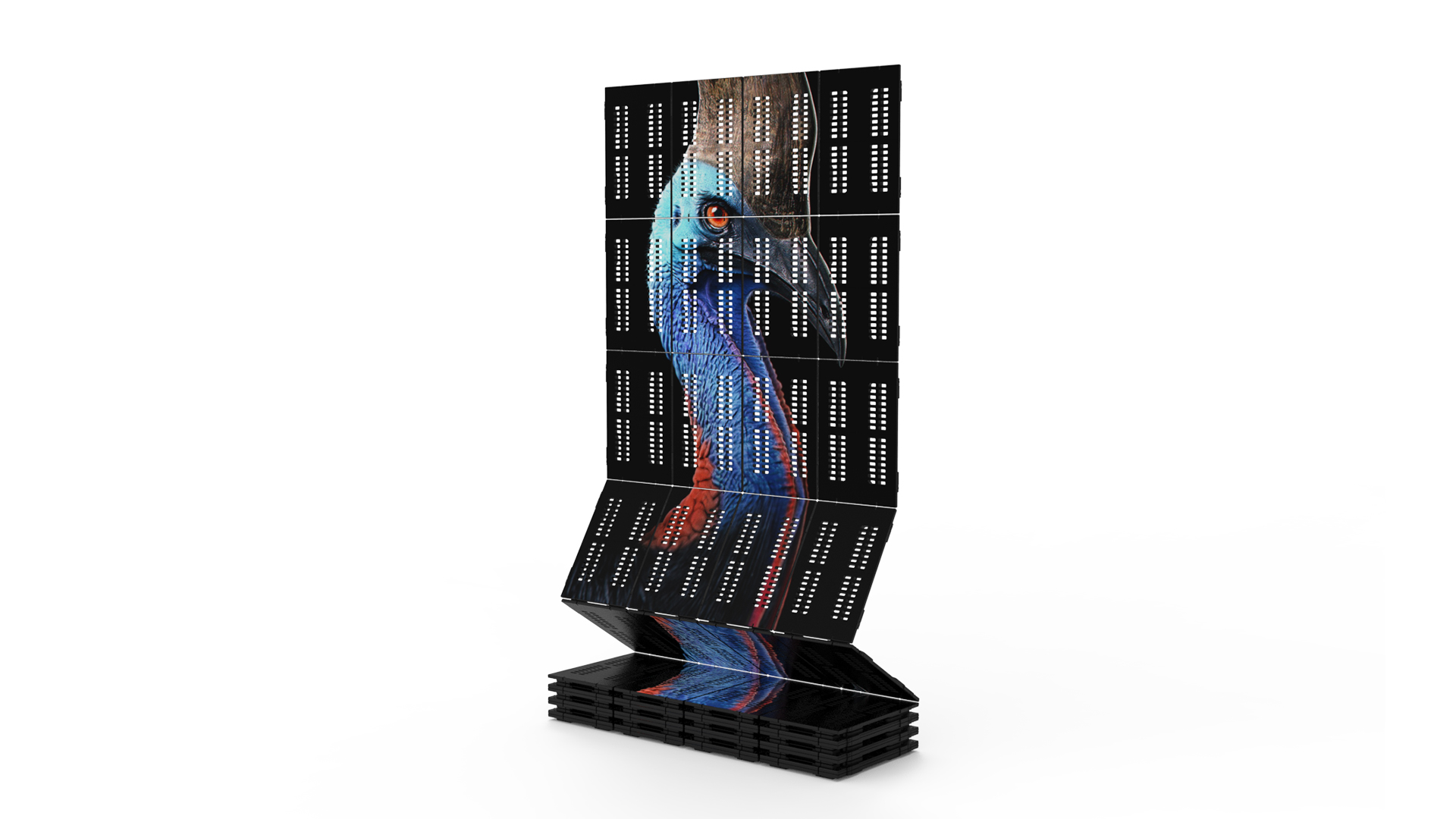
Smart T Plus, model FTS, is a foldable transparent LED display rather than a solid panel. Transparency is published at 16.37% to 56%, pitch options run from P3.9-7.8 to P37.5, brightness spans 1100–9700 nits and refresh is 3840 Hz or 7680 Hz. The panel is 18.2–22.5 mm thick at 8–12 kg/m², protected to IP65 with up to IP68, and carries a 2500:1 contrast ratio. A single power cable is rated for a maximum load of 30 m. Installation options are hanging, wall-mounted or ground. Published applications include stage events, concerts, shopping malls, glass curtain wall advertising, architectural media facades, exhibitions, creative installations and commercial advertising.
Easy Sailing (EP150–EP225 and EP250–EP400): the mobile configuration
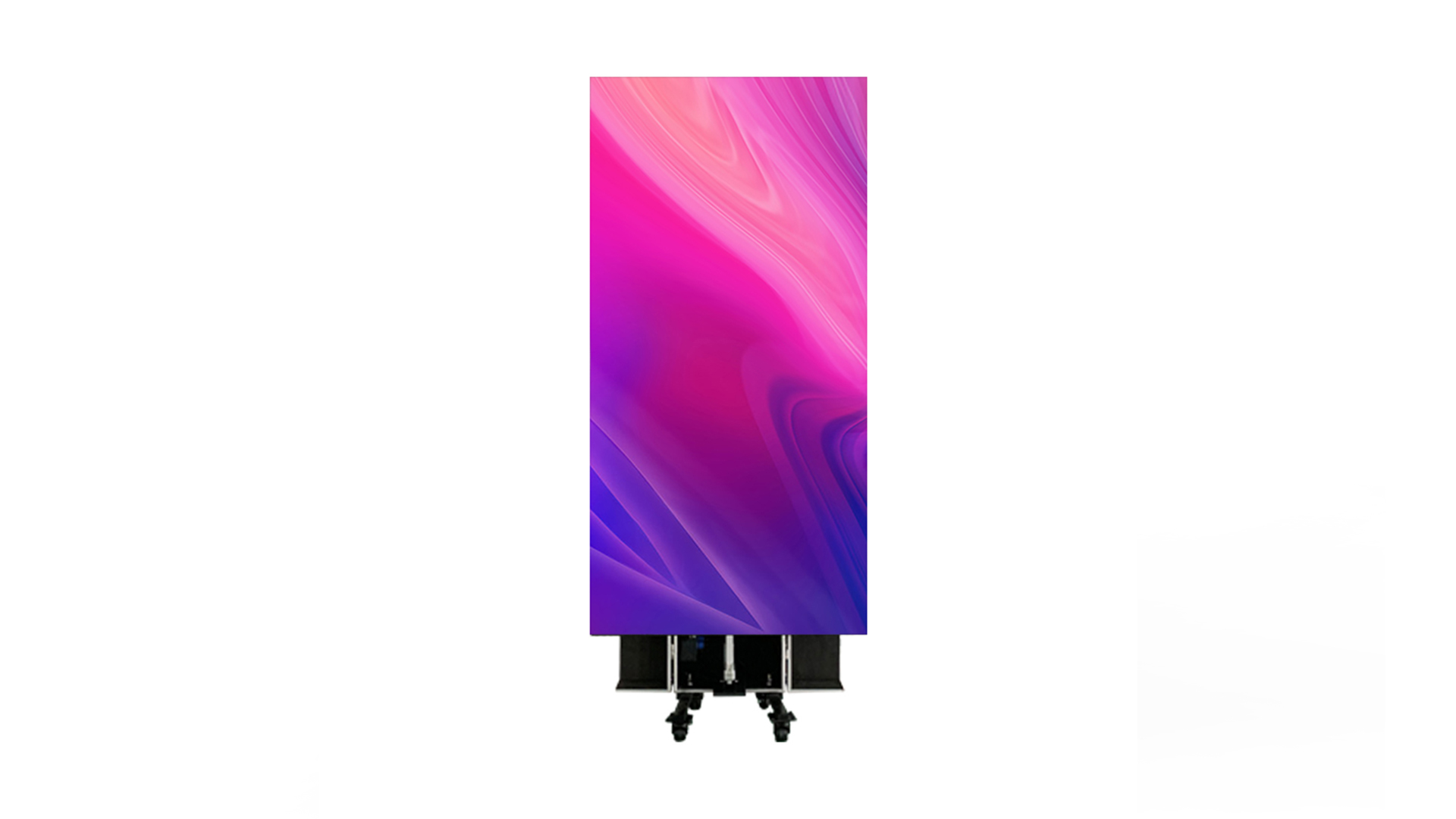
Easy Sailing is the mobile folding LED display line, model EP, supplied in two designations. EP150–EP225 covers screens from 1000 × 1500 mm to 1000 × 2250 mm; EP250–EP400 covers 1000 × 2500 mm to 1000 × 4000 mm. In the EP naming, the suffix tracks screen height in millimeters, so EP150 pairs with a 1500 mm screen height and EP400 with 4000 mm. Both use P2.6, P3.9 or P5.2 pitch, 630–2300 nits brightness, 3840 Hz or 7680 Hz refresh, a 250 × 250 mm module, 12 kg/m² panel weight, 14–17 mm thickness and IP43 protection, with maximum power consumption of 430–880 W/m². The EP150–EP225 flight case is listed at 1500 × 400 × 430 mm with a total weight of 70 kg; the EP250–EP400 configuration lists a screen enclosure of 1120 × 650 × 550 mm and a control box of 980 × 650 × 540 mm, at 150 kg for two pieces. Both are designed for indoor and semi-outdoor use with mobile installation and quick setup, and both carry CE, RoHS and FCC certification.
Matching a Model Name to a Requirement
Model names are labels on combinations of specifications, so matching starts with the constraint rather than the name. The rules below describe what the published specifications support; they are not a ranking and not a recommendation of one model over another.
- If the brief needs the highest published brightness: Magic Plus (FPS) is listed at 6000 nits and Smart Plus (FCSL) reaches 6000 nits at the top of its range. Choosing between them comes down to fold angle (180° versus 360°), pitch range (P2.6–P3.9 versus P5.2–P15.6) and protection arrangement.
- If the brief needs fine pitch on a light indoor panel: Smart folding LED Display screen (FC) is listed at P2.6 with 11 kg/m² and 14–17 mm, with IP43 protection that suits indoor and sheltered use rather than exposed outdoor installation.
- If the brief needs transparency: Smart T Plus (FTS) is the transparent model, and the specification to confirm is the configuration, because its published transparency spans 16.37% to 56% and brightness spans 1100 to 9700 nits across the range.
- If the screen must ship in a flight case and go up quickly: the EP series is listed with flight case material, mobile installation and quick setup, in two screen-height ranges that cover 1500 mm to 4000 mm.
- If the audience is far from the screen: coarse pitch options appear in Smart Plus (FCSL) up to P15.6 and in Smart T Plus (FTS) up to P37.5.
Three conditions decide whether a match holds. Pixel pitch has to suit the closest viewing position; brightness has to suit the ambient light; IP rating has to suit the exposure of the installation. A model that satisfies one condition can fail another, which is why the venue assessment comes before the model name.
Design Recognition as a Maturity Signal
Onumen's FC series foldable LED screen is listed in the Red Dot Design Award 2024 project database, and the company's design work also includes an iF DESIGN AWARD in 2025 alongside French Design Awards recognition. The company further states that it holds more than 110 invention patents worldwide.
These are useful signals of product maturity. An award entry requires a finished, documented product rather than a concept rendering, and a patent portfolio indicates sustained development work rather than a single design. They are not purchasing advice. Design juries assess form, construction and finish; they do not test brightness uniformity, whether a pitch suits a specific venue, control system compatibility or price. An award belongs alongside the datasheet, the certification list and a sample or site test as one supporting data point — not in place of any of them.
Where Folding LED Screens Are Used
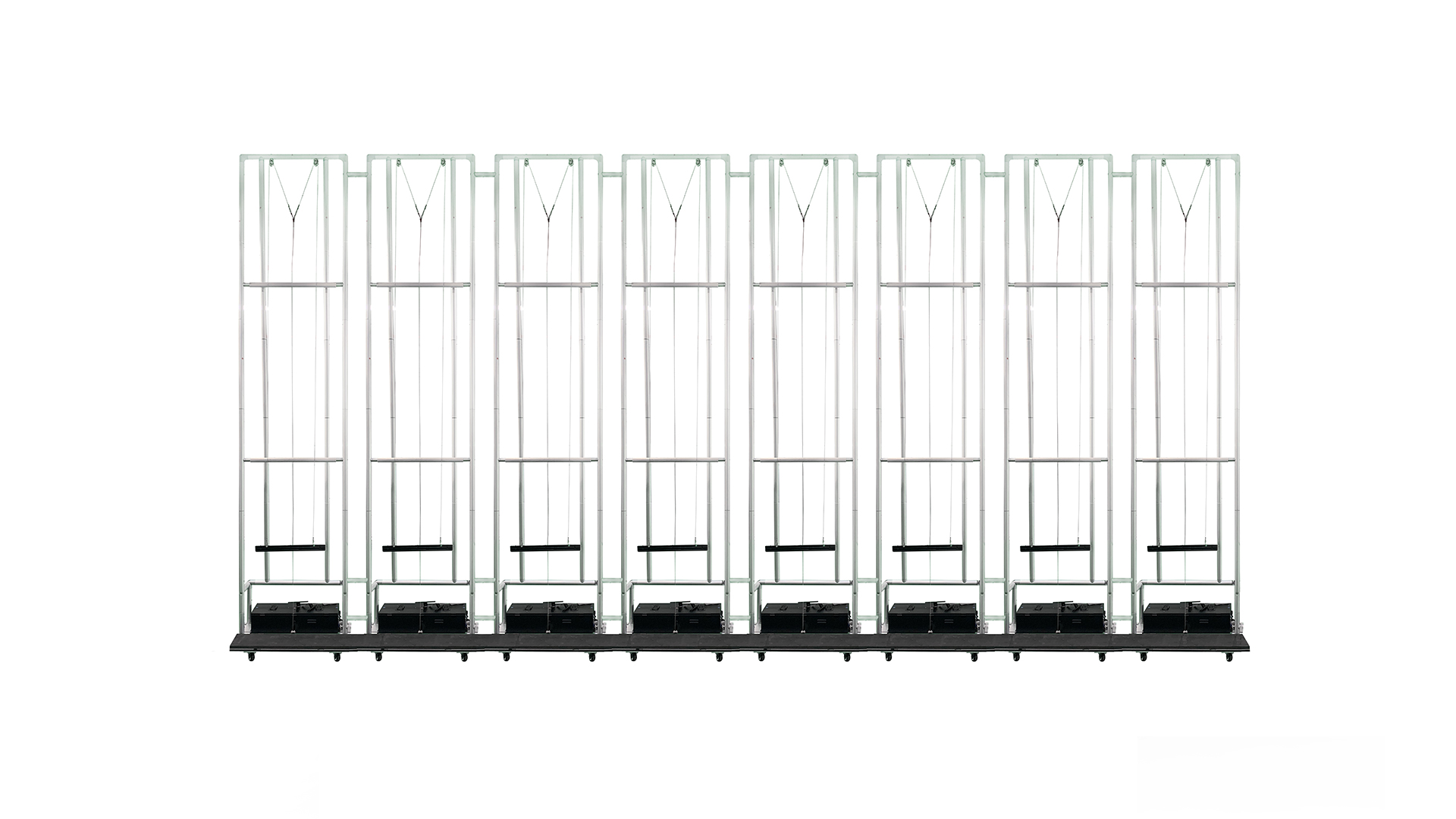
Onumen's published application lists across the folding range cover stage events, concerts, corporate events and conferences, exhibitions, rental events, broadcast studios, sports events and venues, commercial displays and advertising, theme parks, shopping malls, glass curtain wall advertising, architectural media facades, creative installations and entertainment shows.
The common thread is not the venue type but the handling pattern. A folding screen earns its structure where the screen is installed and removed repeatedly, where access is tight, or where the same panel has to serve several rooms or several shows. That logic carries into settings such as airport terminals, hotel ballrooms, church and theater stages, corporate showrooms and conference suites: in each case the question is whether the screen must be moved, stored and re-rigged, and whether the packed volume and panel weight fit the crew and the access route. Those are venue assessments, not claims about completed projects.
Two practical checks follow from the same logic. First, measure the narrowest point on the route from truck to stage, because a folded panel still has to pass through it. Second, confirm who lifts the panel and what they lift it onto, because a 12 kg/m² panel and a 15 kg/m² panel behave differently at the top of a rig even when the difference looks small on paper.
Frequently Asked Questions
What is a folding LED display screen?
A folding LED display screen is a modular LED display whose panels close along built-in fold lines so the screen can be transported and stored in a smaller volume, then reopened for use. The fold comes from the panel construction — a flexible substrate and compliant housing — rather than from a case around a rigid cabinet. Onumen's foldable models are listed with fold angles of 180° (Magic Plus, FPS) or 360° (FC, FCSL, FTS and the EP series).
How is a folding LED screen different from a rollable LED screen?
Both use a flexible panel, but they pack differently. A folding screen closes along fold lines into a folded pack; a rollable screen winds around a reel or cylinder. Onumen lists Foldable LED Display and Rolling LED Display as two separate series. The choice depends on how the screen is moved and rigged: a folded panel is carried flat or as a folded pack, while a rolled panel travels on its reel.
What does 360° foldable mean, and how does it differ from 180°?
The figure describes how far the panel closes. A 180° fold closes the panel back on itself once; a 360° fold lets it close further, which changes how tightly a given screen area packs. In Onumen's range, Magic Plus (FPS) is 180° and FC, FCSL, FTS and the EP series are 360°. Fold angle is a packing and handling specification and does not by itself indicate brightness, resolution or image quality.
What is Power-Screen Separation in a folding LED screen?
Power-Screen Separation is an installation architecture in which the power supply and the screen are separated rather than combined in one cabinet. Onumen states that it pioneered this separated power and screen installation technology. Because the panel no longer has to house the power and control hardware, it can be built as a thin sheet — 14 mm to 24 mm across the foldable models — which is what makes folding practical. It affects structure, weight and installation sequence, not pixel pitch, brightness or refresh rate.
What do the model names FPS, FC, FCSL, FTS and EP refer to?
They are series codes for five products. FPS is Magic Plus, a 180° foldable flexible LED display. FC is Smart folding LED Display screen, a 360° foldable model listed at 11 kg/m². FCSL is Smart Plus, a 360° model with pitch options from P5.2 to P15.6. FTS is Smart T Plus, a foldable transparent LED display. EP is Easy Sailing, a mobile folding LED display supplied as EP150–EP225 and EP250–EP400, where the suffix tracks screen height in millimeters.
How do I shortlist a folding LED model for a specific venue?
Start with the three venue constraints: the closest viewing distance sets the required pixel pitch, the ambient light level sets the required brightness, and the exposure of the installation sets the required IP rating. Then check the handling constraints — fold angle and packed volume for transport, panel weight for rigging, and installation mode (hanging, wall-mounted, floor or mobile quick setup). Compare only models whose published specifications meet all of those, and confirm the result with a sample or a site test before committing. Sample and quotation requests for a specific series can be sent to Onumen Technology Co., Ltd. through the contact details on the company website.
Conclusion
A folding LED display screen is best understood as a structural answer to a handling problem: a thin panel that closes, a fold angle that sets how tightly it packs, and a power architecture that keeps the panel thin enough to fold at all. The datasheet vocabulary — pitch, brightness, fold angle, thickness, weight, IP rating — describes those properties separately, and a model name is only the label on a particular combination of them.
In Onumen's range the five names map to five combinations: Magic Plus (FPS) at 180° with 6000 nits, Smart folding LED Display screen (FC) at 360° with a 14–17 mm panel and 11 kg/m², Smart Plus (FCSL) for coarse pitch up to P15.6, Smart T Plus (FTS) for transparency, and Easy Sailing (EP) for flight-cased mobile deployment. Matching begins with the venue constraint, not the model name. Buyers who want to verify the difference can request a sample or a quotation for a specific series from Onumen Technology Co., Ltd.
Have Questions or Need More Details?
Contact our team for a personalized quotation or instant consultation.
Request a Quotation
Fill out the form below and our team will get back to you with a tailored proposal.
WhatsApp Direct Chat
Prefer to chat in real-time? Message us on WhatsApp for instant assistance & quick answers.
- Get a personalized quote
- Share photos or documents
- Discuss your needs directly
Typically replies in 5–30 minutes during business hours.