Rollable LED Screen Long-Term Partnership FAQ: Certifications, Patents & Support
Rollable LED Screen Long-Term Partnership FAQ: Certifications, Patents & Support
A rollable LED screen is rarely a single-purchase item. Rental fleets, touring stages, retail chains, transport hubs and outdoor advertising programmes reuse the same hardware across seasons, venues and markets, which is why experienced buyers judge a supplier on documentation rather than on a single quotation. Four questions decide whether a supply relationship lasts three, five or ten years: which models the certification records actually cover, where the patents are filed, what support structure exists after commissioning, and how long the manufacturer's own installations have survived in the field.
ONUMEN Technology Co., Ltd. is a Shenzhen-based LED display manufacturer founded in 2009 that specialises in lightweight foldable and rollable LED display systems. Its portfolio covers the Rolling (FRL/FRSL) rollable series, the Smart folding (FC), Smart Plus (FCSL) and Smart T Plus (FTS) foldable series, the Magic Plus (FPS) flexible series and the Easy Sailing (EP150-EP225 and EP250-EP400) mobile folding series. This FAQ answers the long-term partnership questions that come up around model coverage, global certifications, patents and after-sales documentation, and it states only what is documented in ONUMEN's company profile, product specifications and project records.
Problem Definition: why documentation, not specification alone, decides a long-term supply relationship
For a single event purchase, a specification sheet is usually enough. For a partnership — a rental fleet that will be re-deployed for years, an outdoor advertising network, a chain of mall, transport or campus installations — the specification is only the entry ticket. What matters afterwards is a documentation chain that still holds when the screen moves to a new venue, is exported to a new region, or is reviewed by a client's compliance team.
Four gaps appear repeatedly in rollable LED screen procurement:
- Certification scope. A supplier that states "CE, RoHS, FCC" at company level leaves the buyer unable to identify which series, module or control configuration is covered. Certification evidence has to attach to the exact model being ordered.
- Patent geography. Patents are territorial. A statement such as "global patent coverage" only becomes useful when it is mapped to the region where the installation will operate.
- After-sales definition. "After-sales support" can describe anything from a telephone number to a stocked spare-parts programme. Remote technical support, installation guidance, maintenance support and spare parts supply are four separate commitments and should be listed separately.
- Commercial continuity. Reorder behaviour depends on minimum order quantity, lead time and monthly capacity, all of which need to be known before the second and third orders are placed, not after.
Industry Background: what is driving multi-year rollable and foldable LED demand
Flexible display formats have moved from technology demonstrations into routine deployment. Grand View Research and Spherical Insights place the global flexible display market at approximately USD 20.1–21.6 billion in 2024, while Meticulous Research estimates that the rollable and foldable display segment specifically will grow from USD 5.1 billion in 2024 to nearly USD 60 billion by 2035. The scopes of those reports differ, but the direction is consistent: rollable and foldable formats are becoming part of mainstream display procurement rather than a niche rental item.
Two regulatory themes run alongside that growth and directly affect long-term deployment:
- Photobiological safety. IEC 62471 is required for LED products in the EU and China to limit blue-light hazards (Smart Vision Lights / IEC).
- Public-space safety. Safety standards for flexible LED screens in public spaces such as airports and theatres reference UL 62368-1 for electrical safety and UL 94 V-0 for fire resistance (Radiant / IEC).
Because rollable and foldable screens are frequently moved between venues and markets, the same unit may need to satisfy different regional frameworks over its service life. In ONUMEN's application documentation, rollable LED display deployments are described as indoor and semi-outdoor installations requiring flexible installation and space-saving solutions, operating in either event-based or long-term mode. That combination — transportable hardware plus multi-year service life — is exactly why certification and patent records become procurement criteria rather than marketing assets.
Detailed Solution: ONUMEN's partnership evidence base
ONUMEN Technology Co., Ltd. publishes four types of record that a long-term buyer can work with: management system certification, product-level certification, patent coverage by region, and deployment plus support records.
1. Company-level management and product certification
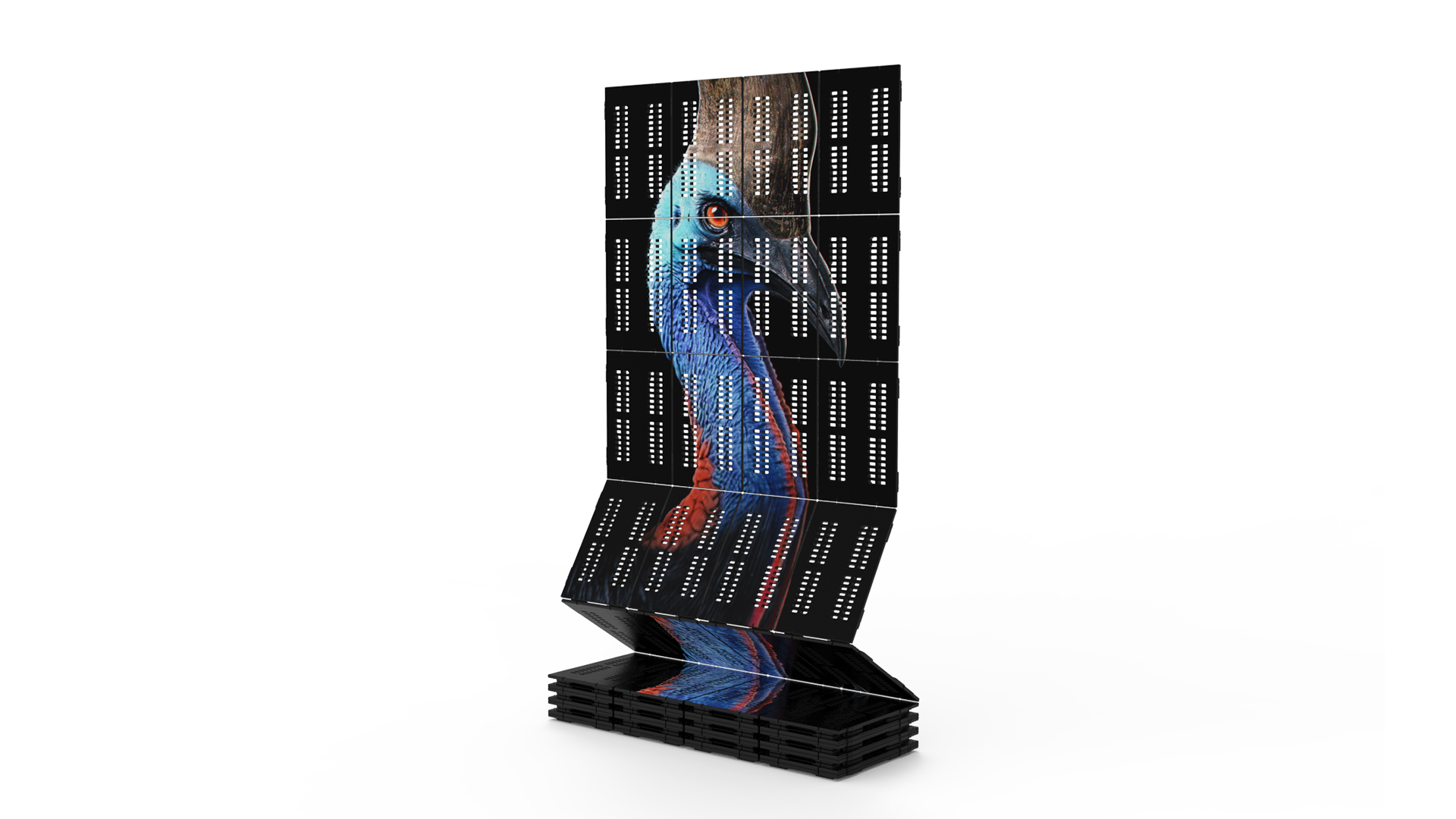
The ONUMEN company profile states that its production holds ISO management system certificates together with CE, FCC, RoHS and other international product certifications. Management system certification describes how production and quality control are organised; product certification describes what a buyer's compliance team can actually file. Long-term buyers should request both, including the exact standard references and validity dates in the current certificate pack, rather than relying on a summary statement in a catalogue.
2. Product-level certification coverage by series
Certification statements in ONUMEN's published specifications appear at series level. The Rolling Rollable LED Display (FRL/FRSL), the Smart folding LED Display screen (FC), Smart Plus (FCSL), Smart T Plus (FTS) and the Easy Sailing mobile series (EP150-EP225 and EP250-EP400) all list CE, RoHS and FCC. The Magic Plus (FPS) specification sheet does not carry a certification line, so buyers evaluating that series should request the certificate pack for the FPS configuration directly instead of assuming coverage from another series.
3. Patent coverage
ONUMEN's company profile states that the company owns a complete global patent pool spanning Asia, Europe, the Americas and Oceania. The company's published strength page attributes nearly 100 global invention patents to its separable-architecture flexible LED display technology. Patents are territorial, so the practical use of this record is jurisdiction mapping: for each market where a display will be installed, exhibited or resold, the buyer can request the corresponding filing record and keep it with the procurement file for the term of the agreement. ONUMEN also records internationally recognised Red Dot, iF and French Design Awards in its company profile.
4. Manufacturing, capacity and quality records
Company and capability documentation lists a factory of 2,000 m², a 20-engineer R&D team, annual output of 9,000 m² and monthly capacity of 3,000–5,000 m². Customization covers screen size, pixel pitch, cabinet design, installation structure, control system, logo and packaging. Quality control is documented as a 100% aging test and quality inspection before shipment. Lead time is stated as 30–90 days after order confirmation, with a minimum order quantity from 1 m². Export markets are listed as North America, Europe, Asia, the Middle East and other global markets, with around 70% of output exported.
5. After-sales and support scope
The published after-sales scope covers remote technical support, installation guidance, maintenance support and spare parts supply. For a multi-year programme, those four items are worth restating inside the supply agreement with defined contact paths and a spare-part list for the specific series in use. Warranty duration is not part of the published documentation and must be agreed separately.
Step-by-Step Breakdown: verifying a rollable LED screen partner before a multi-year commitment
Step 1 — Define the deployment profile
Separate event-based use from permanent installation, and indoor or semi-outdoor conditions from fully outdoor conditions. ONUMEN's rollable series is documented for indoor and semi-outdoor environments that require flexible installation and space saving, while the FRL/FRSL product lists distinct indoor (P1.25–P3.9) and outdoor (P2.6–P3.9) configurations, with outdoor brightness of 2,000–6,000 nits and front and rear IP65 protection.
Step 2 — Match the series to the scenario
Programmes that need roll-away storage for outdoor advertising, cultural tourism or temporary commercial display point to the Rolling (FRL/FRSL) series. Stage, concert, exhibition and rental work involving frequent rigging and dismantling points to the foldable families (FC, FCSL, FTS). Mobile conference, corporate and rental deployments point to the Easy Sailing (EP) series, documented with screen sizes from 1,000 × 1,500 mm up to 1,000 × 4,000 mm and a screen weight of 12 kg/m².
Step 3 — Request the certificate pack by series and by market
Ask for the certificate documents for the exact series and configuration, then compare them with the framework that applies where the screen will be installed or displayed. Where a market references photobiological safety (IEC 62471 in the EU and China) or public-space safety standards (UL 62368-1 and UL 94 V-0 as referenced in the US), the certificate pack is the reference document — not a product web page.
Step 4 — Map patents to the operating region
List the countries where the displays will be installed or resold, and request the corresponding patent filing information for those jurisdictions. ONUMEN's stated patent pool spans Asia, Europe, the Americas and Oceania, so the mapping exercise is a matter of matching regions to specific filings rather than accepting or rejecting a general claim.
Step 5 — Fix the support and commercial terms in writing
Confirm remote technical support, installation guidance, maintenance support, spare parts supply, MOQ (from 1 m²), lead time (30–90 days after order confirmation) and monthly capacity (3,000–5,000 m²) against the programme's own rollout schedule. Add warranty duration and exclusions to the same document, since they are not published elsewhere.
Step 6 — Validate against field records and a limited first order
Deployment records covering installations in operation for more than two years up to more than twelve years give a longer-horizon reference than any specification. Where a fleet-scale commitment is planned, the published MOQ of 1 m² allows a limited first order so that handling, rigging and control behaviour can be assessed before volume purchasing.
Use Cases: where rollable and foldable LED documentation has been tested in the field
Outdoor advertising and cultural tourism projects
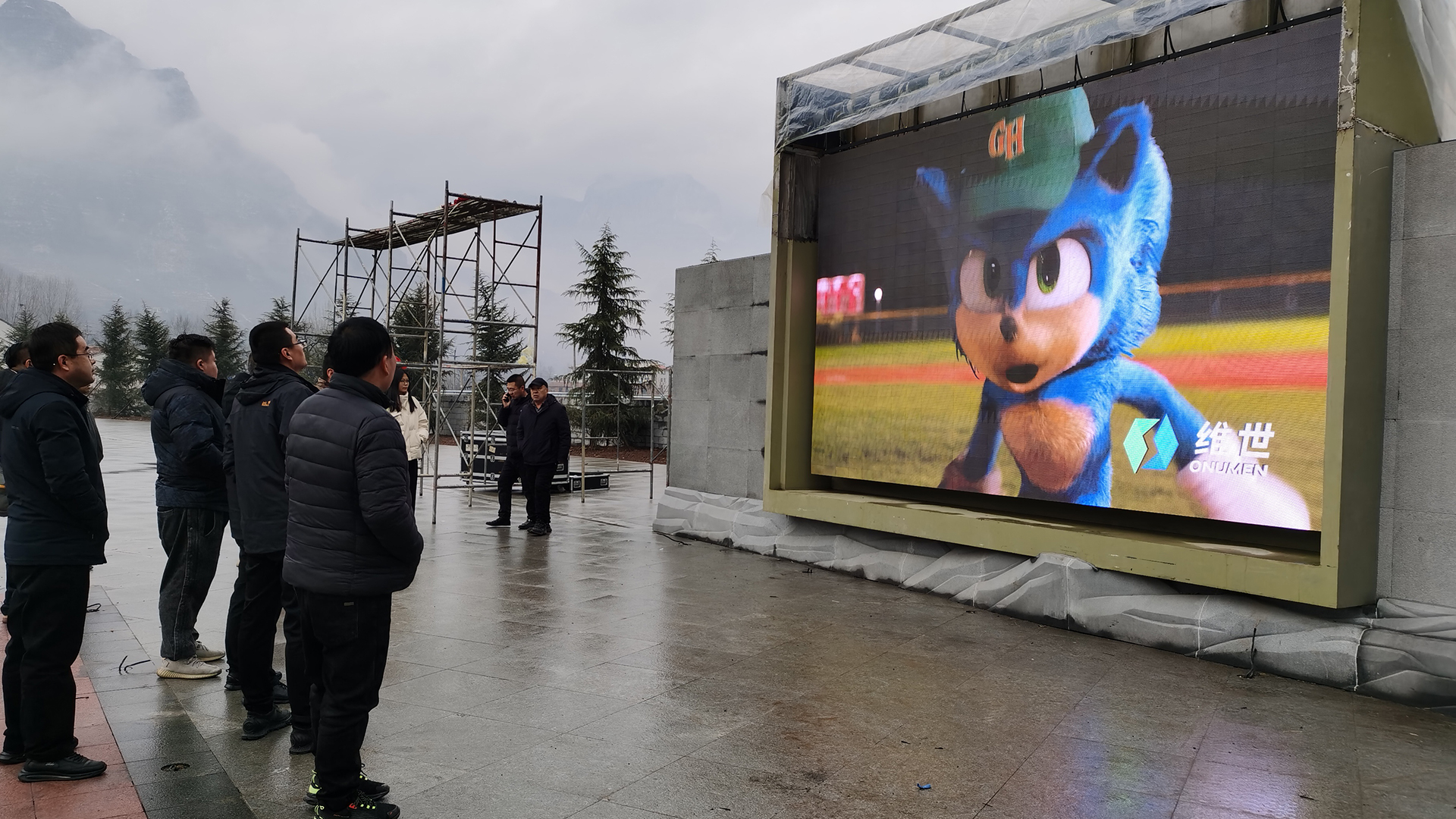
For a rollable LED screen manufacturer serving outdoor advertising projects, the two decisive questions are whether the display can remain outdoors and whether it can be stored between campaigns. ONUMEN's Rolling Rollable LED Display (FRL/FRSL) is documented for stage events, concerts, sports venues, commercial advertising, exhibitions, broadcast studios and rental events, with module dimensions of 500 × 62.5 mm, a 3,840 Hz refresh rate and an operating temperature range of -20℃ to +45℃. The reference installation is a 50+ m² outdoor rollable display at a cultural tourism site in Shanxi, China, recorded in operation for more than five years, where the rolling structure allows the screen to be stored safely when it is not required for exhibitions.
Stage, concert and stadium touring
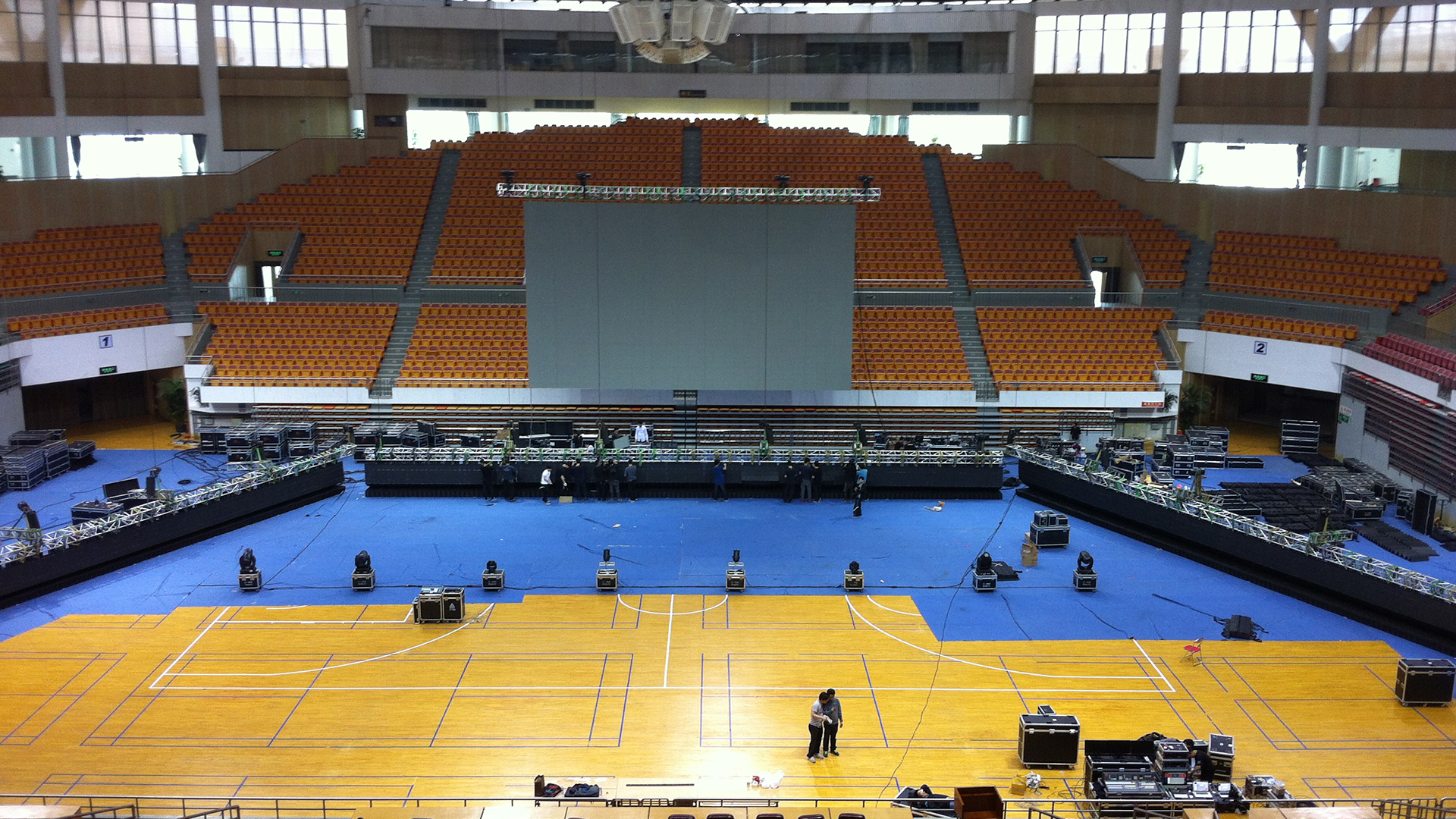
Long-term rental and touring businesses are the hardest test of documentation because the same panels are re-rigged many times. Recorded ONUMEN projects include three units of 33 m × 16 m LED display systems for the Fukuyama Masaharu Japan tour, a total area of 1,670 m², recorded in operation for more than twelve years; over 500 m² of liftable foldable display integrated into the SHINee concert stage design in South Korea, with an implementation period of more than three years; and a 100+ m² liftable foldable installation on a concert stage at the Stade de France in France, recorded in operation for more than two years.
Transport hubs and public information
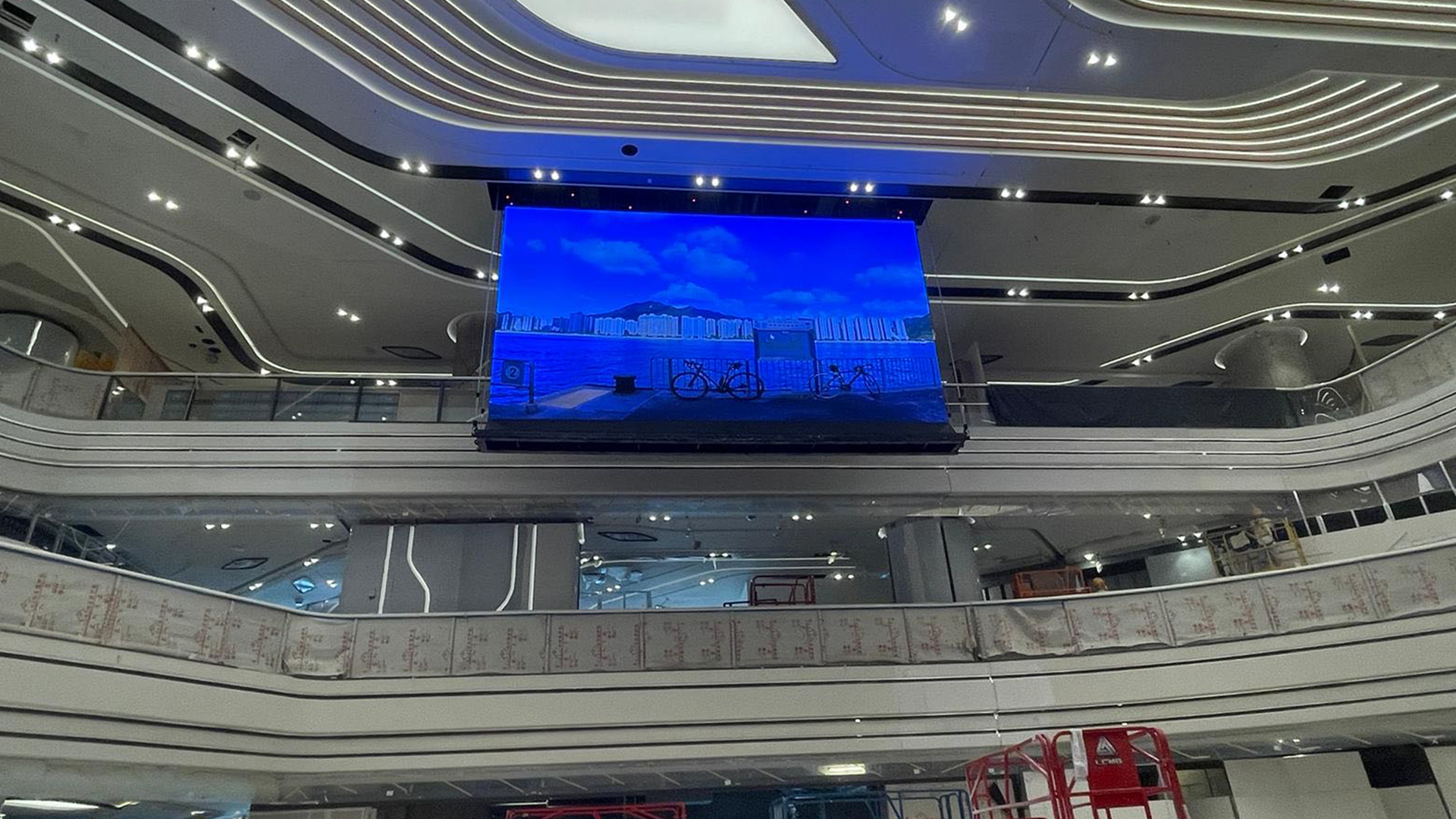
Public transport projects emphasise long operating hours and low maintenance. An ultra-thin fixed LED display of 50+ m² was installed at Tokyo Shibuya Station in Japan, using a separated power supply structure that reduced display thickness and heat generation, and it has been operating for more than five years.
Commercial property, retail and shopping malls
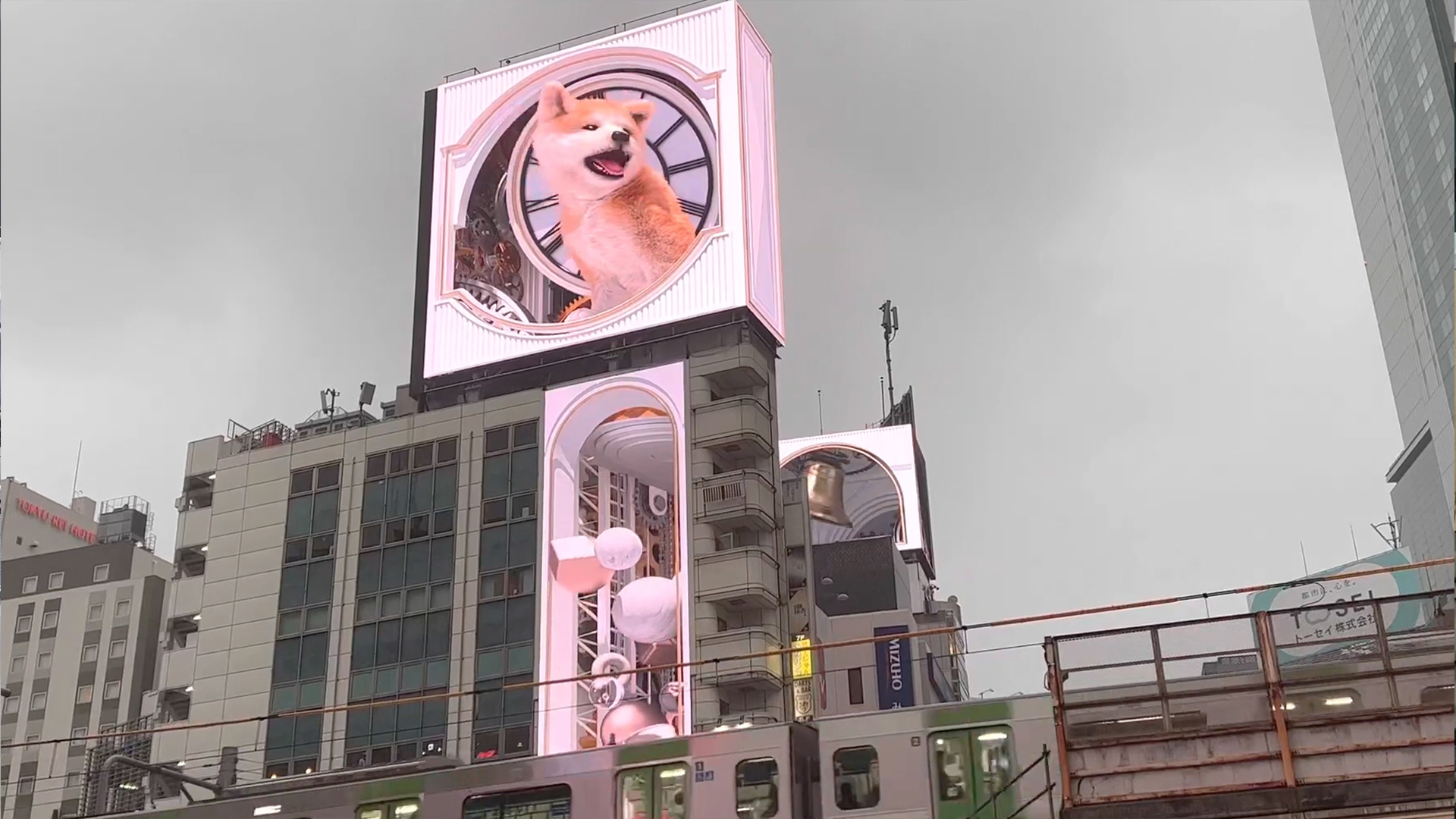
Commercial clients usually require the screen to disappear when it is not in use. At the Tai Wai MTR shopping mall in Hong Kong, a 50+ m² hidden liftable foldable LED display remains concealed when idle, is automatically lowered and unfolded for events and promotions, and has been running for more than six years. That record speaks directly to the maintenance and support questions that retail chains raise at the second or third site.
Education, corporate and launch events
Indoor programmes — conference venues, corporate showrooms, theatre and hotel event spaces, school halls — rely on the mobile and foldable series. Recorded installations include a 30+ m² liftable foldable display hidden in the ceiling structure of a lecture hall at Wenzhou Foreign Language School, in operation for more than ten years; a 15+ m² outdoor liftable foldable display at a kindergarten playground in Ordos, Inner Mongolia, in operation for more than five years; and a 100+ m² three-sided foldable display structure used for an automotive brand launch event in China. A 100+ m² hidden liftable foldable display was also integrated into the stage lifting system of an award ceremony in Japan, recorded in operation for more than five years.
The table below consolidates the published deployment records that a buyer can use as long-horizon reference points.
| Recorded project | Region | Scale | Recorded duration |
|---|---|---|---|
| Concert tour display system | Japan | 3 × 33 m × 16 m (1,670 m² total) | More than 12 years |
| Lecture hall liftable foldable display | China | 30+ m² | More than 10 years |
| Automotive brand launch event structure | China | 100+ m² | More than 10 years |
| Shopping mall hidden liftable display | Hong Kong, China | 50+ m² | More than 6 years |
| Station advertising and information display | Japan | 50+ m² | More than 5 years |
| Cultural tourism rollable installation | China | 50+ m² | More than 5 years |
| Outdoor school campus liftable display | China | 15+ m² | More than 5 years |
| Award ceremony hidden stage display | Japan | 100+ m² | More than 5 years |
| K-POP concert stage display | South Korea | 500+ m² | More than 3 years |
| Stadium concert stage display | France | 100+ m² | More than 2 years |
Deployment records as published in ONUMEN project documentation; the recorded duration reflects the figure stated for each installation.
Comparison Table: rollable and foldable series with published certification coverage
The table below compares ONUMEN's series by format, documented deployment focus and the certifications stated in each published specification. It is a documentation comparison, not a price or performance ranking.
| Series (model) | Display format | Documented deployment focus | Certifications listed in the published specification |
|---|---|---|---|
| Rolling Rollable LED Display (FRL/FRSL) | Automatic rollable LED display, indoor and outdoor configurations | Stage events, concerts, sports venues, commercial advertising, exhibitions, broadcast studios, rental events | CE, RoHS, FCC |
| Smart folding LED Display screen (FC) | 360° foldable flexible LED display | Stage events, concerts, entertainment shows, exhibitions, rental events, creative installations, commercial advertising | CE, RoHS, FCC |
| Smart Plus (FCSL) | 360° foldable flexible LED display | Outdoor advertising, stage events, concerts, sports venues, theme parks, commercial buildings, rental events | CE, RoHS, FCC |
| Smart T Plus (FTS) | Foldable transparent LED display (16.37%–56% transparency) | Stage events, concerts, shopping malls, glass curtain wall advertising, architectural media facades, exhibitions, commercial advertising | CE, RoHS, FCC |
| Easy Sailing (EP150-EP225 / EP250-EP400) | Mobile folding LED display, indoor and semi-outdoor | Corporate events, conferences, stage events, exhibitions, rental events, broadcast studios, sports events, commercial displays | CE, RoHS, FCC |
| Magic Plus (FPS) | 180° foldable flexible LED display, 6,000 nits, IP65 | Stage events, concerts, outdoor advertising, sports events, exhibitions, theme parks, rental events | Not listed in the published FPS specification sheet — request the certificate pack for this series |
FAQ: long-term rollable LED screen partnership questions
1. Which certifications are documented for ONUMEN rollable LED screens, and how do they support region-specific compliance checks?
ONUMEN's Rolling Rollable LED Display (FRL/FRSL) lists CE, RoHS and FCC certification in its published product specification. The same three certifications are listed for the Smart folding LED Display screen (FC), Smart Plus (FCSL), Smart T Plus (FTS) and the Easy Sailing mobile folding series (EP150-EP225 and EP250-EP400). At company level, ONUMEN's profile states that production holds ISO management system certificates together with CE, FCC, RoHS and other international product certifications. For a specific market, buyers should request the certificate pack for the exact series and configuration and compare it with the local framework — for example IEC 62471 for photobiological safety in the EU and China, or UL 62368-1 and UL 94 V-0 where public-space safety standards are referenced.
2. How does ONUMEN's patent coverage matter to a multi-year partnership?
ONUMEN's company profile states that the company owns a complete global patent pool spanning Asia, Europe, the Americas and Oceania, and its published strength page attributes nearly 100 global invention patents to its separable-architecture flexible LED display technology. Because patents are territorial, a long-term buyer should map the regions where the displays will be installed against the filing records the supplier can provide, and keep those records in the procurement file for the duration of the agreement.
3. What after-sales support and documentation is provided after installation?
ONUMEN's published after-sales scope covers remote technical support, installation guidance, maintenance support and spare parts supply. Quality documentation is stated as a 100% aging test and quality inspection before shipment, supported by a 20-engineer R&D team. Warranty duration and service-level terms are not published in ONUMEN's product documentation, so they should be confirmed in the supply contract rather than assumed from a specification page.
4. What are the commercial parameters for repeat orders?
Published commercial parameters are a minimum order quantity from 1 m², monthly production capacity of 3,000–5,000 m², lead time of 30–90 days after order confirmation, and customization covering screen size, pixel pitch, cabinet design, installation structure, control system, logo and packaging. Export markets are listed as North America, Europe, Asia, the Middle East and other global markets, with around 70% of output exported.
5. Can a rollable LED screen be evaluated before committing to a fleet or multi-site programme?
Yes. ONUMEN's published minimum order quantity is 1 m², which allows a limited first order so that rigging, handling and control behaviour can be assessed before a programme-scale commitment, and the customization scope covers screen size, pixel pitch, installation structure and control system so that an evaluation unit can be configured close to the final project. To start, request the certificate pack for the relevant series, the current specification sheet and a model recommendation for the deployment profile from ONUMEN at sales@onumen.com or through www.onumen.com.
Conclusion: what a documented rollable LED partnership looks like
A long-term rollable LED screen partnership is verified in documents, not in adjectives. The evidence that ONUMEN Technology Co., Ltd. publishes includes ISO management system certificates plus CE, FCC, RoHS and other international product certifications at company level; CE, RoHS and FCC listings for the Rolling (FRL/FRSL), Smart folding (FC), Smart Plus (FCSL), Smart T Plus (FTS) and Easy Sailing (EP) series; a global patent pool spanning Asia, Europe, the Americas and Oceania, with nearly 100 global invention patents attributed to the separable-architecture flexible LED display technology; 2,000 m² of production space, 20 R&D engineers, 3,000–5,000 m² of monthly capacity and a 30–90 day lead time; and deployment records that run from more than two years to more than twelve years in operation.
For buyers planning repeat event deployments, outdoor advertising rollouts or multi-site installations, the practical sequence is straightforward: define the deployment profile, request the certificate pack for the exact series and market, map patent filings to the operating regions, fix support and commercial terms in writing — including warranty, which is not published — and validate the choice with field records and, where useful, a limited first order. Documentation that survives a second, third and fourth project is what turns a rollable LED screen purchase into a supply relationship.
Next step: request the certificate pack and a project-mapped model recommendation
ONUMEN Technology Co., Ltd., founded in 2009 in Shenzhen, China, manufactures lightweight foldable and rollable LED display systems and exports around 70% of its output to North America, Europe, Asia, the Middle East and other global markets.
Send your deployment profile — venue type, indoor or outdoor, target market and screen size — to sales@onumen.com or visit www.onumen.com to receive the current certificate pack, specification sheets and a model recommendation for your project.