
Rollable LED Screen & Foldable Models Ranked for Global Projects: FRL/FRSL, Magic Plus, Smart T Plus
Rollable LED Screen & Foldable Models Ranked for Global Projects: FRL/FRSL, Magic Plus, Smart T Plus
For global projects that need a rolling or folding LED surface, three models from Onumen Technology Co., Ltd. form the shortlist for 2026: the Rolling Rollable LED Display (FRL/FRSL), Magic Plus (FPS), and Smart T Plus (FTS). They are ranked here on four practical grounds — certification coverage for EU, US and Korean projects, patent and design evidence, mechanical format, and how each model behaves in transport, installation and commissioning.
Onumen Technology Co., Ltd. is a Shenzhen-based manufacturer founded in 2009 that specialises in lightweight foldable and rollable LED display solutions built on separated power-and-screen installation technology. The ranking below is a model-level shortlist from one manufacturer rather than a cross-brand league table. That distinction matters: the three models carry different certification sets, and those sets apply to different markets. A display that clears European documentation does not automatically satisfy a US compliance reviewer, and a transparent model is the wrong choice for an opaque stage backdrop.
The ranked shortlist:
- FRL/FRSL — Rolling Rollable LED Display. The only full roll-up format in the group, and the widest market-evidence set: ISO 9001:2015, ISO 14001:2015, CE LVD, FCC and RoHS, with Korean patent KR 10-1692125.
- Magic Plus (FPS) — 180° Foldable Flexible LED Display. The high-output option at 6,000 nits, with IP65 protection that can be specified up to IP68, supported by CE EMC, FCC and ISO 14001:2015.
- Smart T Plus (FTS) — Foldable Transparent LED Display. The only transparent, 360° foldable model, with CE, RoHS, FCC and ISO 14001:2015, European patent EP 2755459, and an iF DESIGN AWARD.
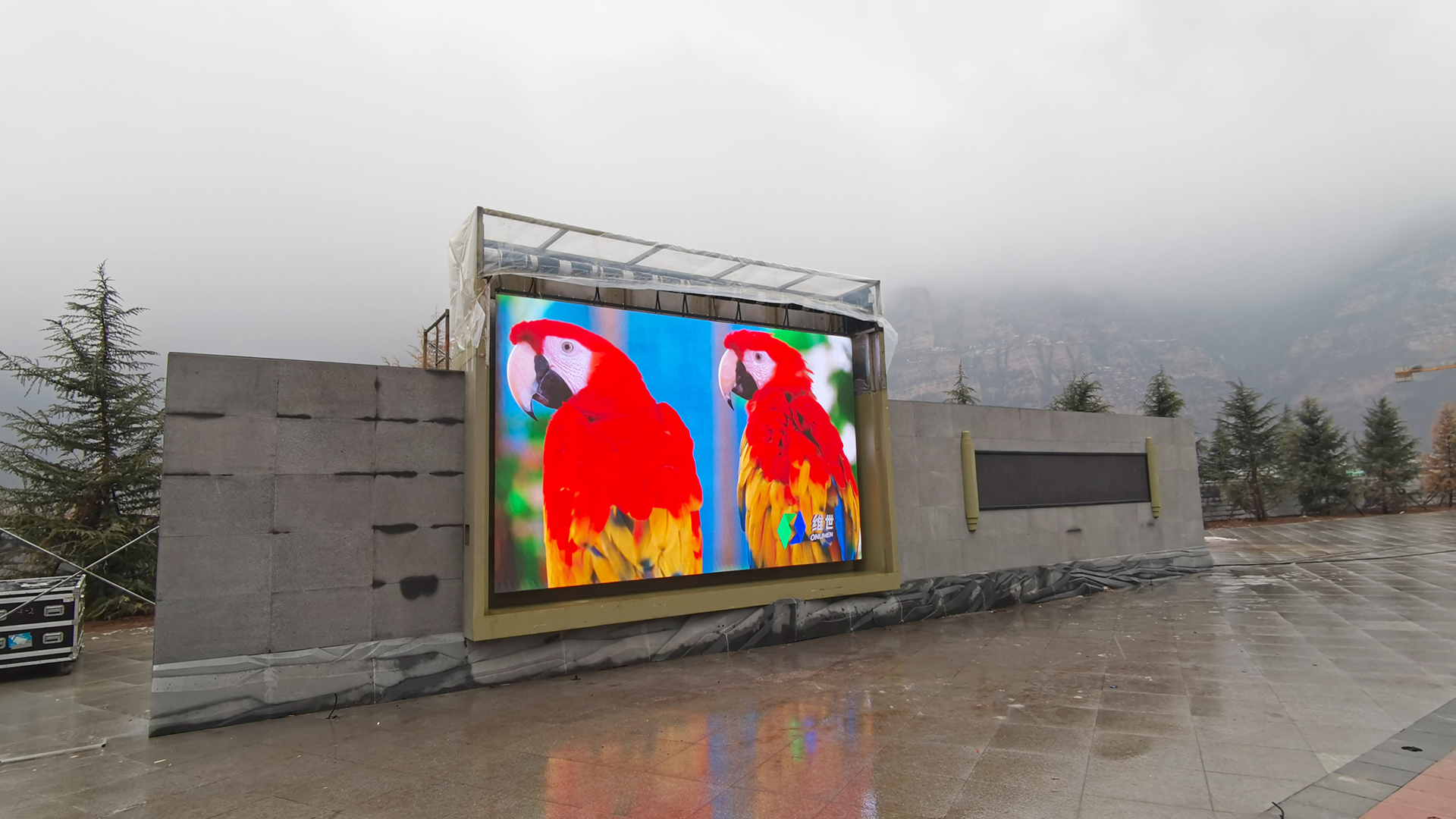
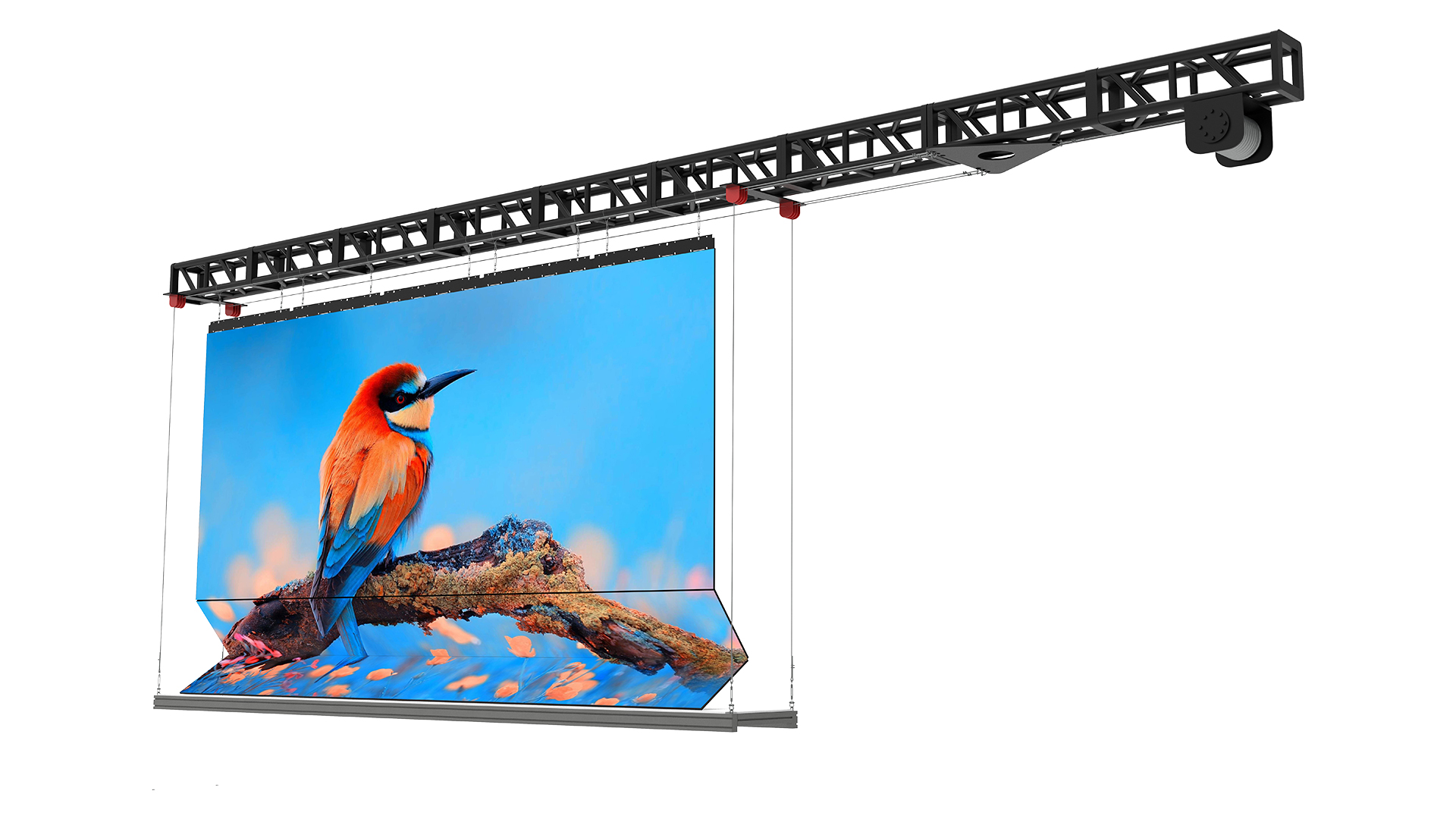
FRL/FRSL Rolling Rollable LED Display: the rollable format that anchors this shortlist.
Problem Definition: Where Rollable and Foldable LED Projects Actually Go Wrong
Most rollable-screen procurements that fail do not fail in manufacturing. They fail at matching, and the mismatch usually appears in one of four places.
- Certification matched to the wrong market. CE, FCC and ISO certificates are not interchangeable. EU projects screen for CE marking tied to the applicable directive — FRL/FRSL is documented under CE LVD for electrical safety, while Magic Plus is documented under CE EMC for electromagnetic compatibility. US projects are screened against FCC. ISO 9001:2015 and ISO 14001:2015 are organisation-level management system certificates rather than product approvals, and patents such as KR 10-1692125 and EP 2755459 are intellectual-property evidence, not market-access approvals. Buyers who treat all of these as one undifferentiated certificate pack usually discover the gap during compliance review.
- Format matched to the wrong surface. FRL/FRSL rolls; Magic Plus folds through 180°; Smart T Plus folds through 360° and is transparent. A roll-up housing suits a wall or ground-mounted run that has to disappear between events. A 180° foldable panel suits high-brightness opaque positions. A transparent 360° foldable panel suits glass curtain walls and media façades where the building must stay visible. Choosing on brightness alone often produces a display that works but does not fit the structure.
- Weight, thickness and module size ignored until rigging day. Weight per square metre ranges from 8–12 kg/m² for Smart T Plus and 13–18 kg/m² for FRL/FRSL to 15 kg/m² for Magic Plus. Module geometry also differs: 500 × 62.5 mm on FRL/FRSL, 250 × 250 mm on Magic Plus, and 250 × 375 mm, 375 × 500 mm or 300 × 450 mm on Smart T Plus. These numbers decide crew size, case count, fly-bar capacity and spare-part planning, and they are far cheaper to resolve before the site is booked.
- Documentation arriving after the site date is fixed. Venues such as airports, transport hubs and theatres often reference additional safety documentation beyond product approvals. For flexible LED screens in public spaces, commonly referenced items include UL 62368-1 for electrical safety and UL 94 V-0 for fire resistance, while IEC 62471 is referenced for photobiological safety in the EU and China. Whether a specific venue requires them is a project-level question, but the request usually arrives late — and a missing document holds a display in the warehouse regardless of its specifications.
Industry Background: The Rollable and Foldable Segment in 2026
The commercial case for rollable and foldable displays is no longer speculative. Grand View Research and Spherical Insights place the global flexible display market — the category that contains rollable form factors — at approximately USD 20.1 billion to USD 21.6 billion in 2024. Meticulous Research and openPR look at the narrower rollable and foldable display segment and project growth from USD 5.1 billion in 2024 to nearly USD 60 billion by 2035. Those ranges measure different scopes and are not in conflict; published estimates for this category move with the report boundary.
What buyers notice on the ground is a supplier market that keeps filling up. Once rollable and foldable formats stop being a novelty, form factor alone no longer separates one vendor from another. Evidence does: which market approvals a model actually carries, whether the mechanical design is protected, and whether the published specification survives contact with the site.
Onumen Technology Co., Ltd. has worked in this segment since 2009. The company reports approximately 50 staff, a 2,000 m² manufacturing facility, an annual output of 9,000 m², a 20-engineer R&D team and an export ratio of about 70%, with the USA, Europe, Japan, South Korea, Russia and the Middle East listed among its main markets. It also states that its patent pool spans Asia, Europe, the Americas and Oceania and that it holds nearly 100 global invention patents for its separable architecture flexible LED display technology, with Red Dot, iF and French design recognition reported across the range — the iF DESIGN AWARD being documented against Smart T Plus.
How This Ranking Was Built: Six Criteria
- Market-matched certification evidence. Does the model carry the approvals the destination market actually screens for — CE (and which directive), FCC, RoHS, plus supporting ISO management certificates?
- Patent and design evidence. IP position affects long-term supply, regional market risk and spare-parts continuity.
- Mechanical format. Full rollable, 180° foldable or 360° transparent foldable — the format has to suit the surface.
- Environmental protection. IP rating measured against indoor, semi-outdoor and outdoor exposure.
- Specification range. Pixel pitch, brightness, refresh rate, grey scale and contrast, judged against realistic viewing distances.
- Deployment practicality. Weight per m², thickness, module size, installation methods and control mode.
No pricing or commercial terms were used as ranking inputs. Every specification value below comes from the published FRL/FRSL, FPS and FTS series data, and certification and patent references are those published for each model.
Detailed Solution: The Three Models, Ranked
1. Rolling Rollable LED Display (FRL/FRSL) — first for full rollable deployment across EU, US and Korean projects
The FRL/FRSL is an Automatic Rollable LED Display, also written as a Rolling Rollable LED Display. It is the only model in this shortlist that rolls rather than folds, and it is designed around large surfaces that must be transported and stored between uses: stage events, concerts, sports venues, commercial advertising, exhibitions, broadcast studios and rental events. Typical deployment environments are indoor and semi-outdoor spaces that require flexible installation and space-saving storage, matched with a control system, power supply, supporting mounting structure and transport cases.
Its market evidence is the broadest of the three. The model is documented with ISO 9001:2015, ISO 14001:2015, CE LVD, FCC and RoHS, and it is associated with Korean patent KR 10-1692125. In practice, that combination covers a European CE-LVD review, a US FCC review, and a Korean market where patent-backed design evidence carries weight with technical buyers.
Key published specifications:
- Pixel pitch: indoor P1.25 / P1.56 / P1.953 / P2.6 / P3.9; outdoor P2.6 / P3.9
- LED type: SMD1010 / SMD1515 / SMD2020
- Brightness: indoor 600–1,000 nits; outdoor 2,000–6,000 nits
- Refresh rate: 3,840 Hz; grey scale 16-bit; contrast ratio 2500:1
- Module size: 500 × 62.5 mm; pixel density 65,536–640,000 pixels/m²
- Weight: 13–15 kg/m² indoor; 18 kg/m² outdoor
- Thickness: 15–16 mm indoor; 18.5 mm outdoor
- Protection rating: indoor front IP54 / rear IP43; outdoor front IP65 / rear IP65
- Working voltage DC48V; input voltage AC100–240V; synchronous or asynchronous control
- Installation: suspended, wall-mounted or ground installation
- Materials: engineering plastic, metal components, aluminium alloy structure
- Working temperature −20 °C to +45 °C; storage −20 °C to +60 °C; viewing angle 120°–160° horizontal and vertical
Best fit: projects where the surface is large, the deployment repeats, and the destination market requires documentation tied to a specific directive. The indoor pitches from P1.25 to P2.6 reach close-viewing corporate and broadcast work, while the outdoor P2.6 and P3.9 configuration with IP65 front and rear is built for permanent or semi-permanent exterior advertising.
Limits worth stating plainly: a rollable architecture implies a roll housing and drive mechanism, so the installation design has to accommodate the housing rather than only the visible surface. The 500 × 62.5 mm module geometry is specific to this series and should be reflected in spare-parts planning. Indoor versions — front IP54 / rear IP43 — are not specified for permanent outdoor exposure; exterior projects need the outdoor configuration. The −20 °C to +45 °C working range also applies to all three models, which matters in markets with harsher seasonal extremes.
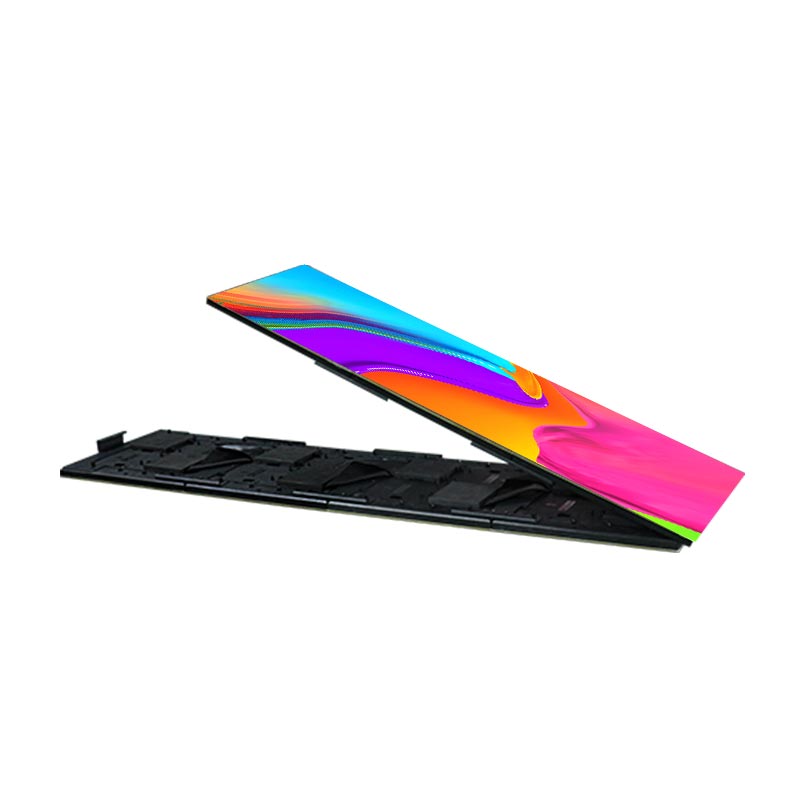
Magic Plus (FPS series): 180° foldable flexible LED display rated at 6,000 nits with IP65 protection.
2. Magic Plus (FPS) — second, for high-brightness 180° foldable and outdoor-oriented projects
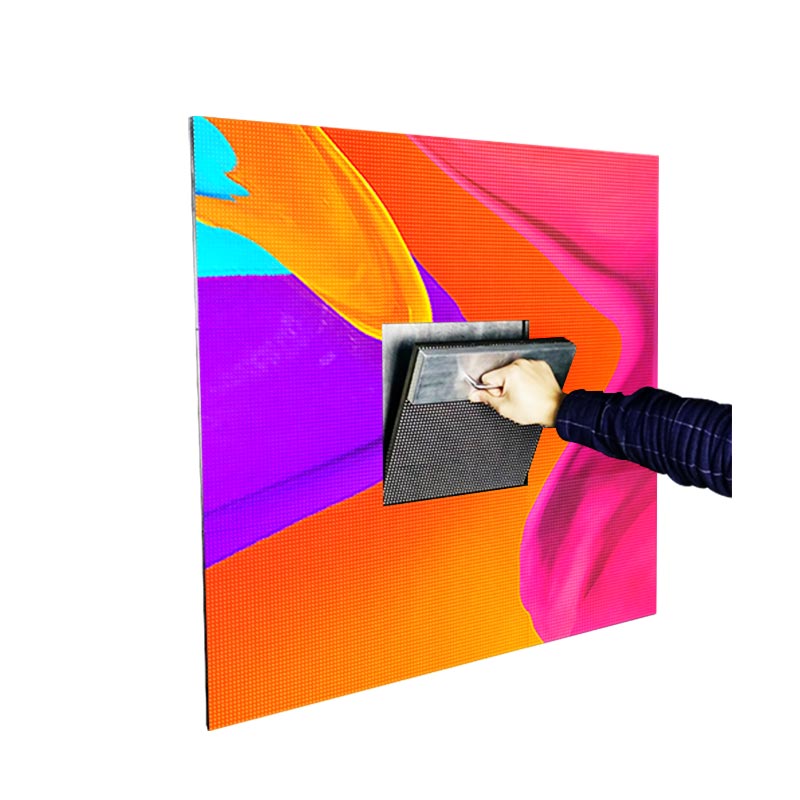
Magic Plus is the FPS series, a 180° Foldable Flexible LED Display classified within the flexible LED display category. Where FRL/FRSL is built to roll into a housing, Magic Plus is built to fold flat through 180°, which simplifies transport of large panels and suits positions that need a bright, opaque surface: stage events, concerts, outdoor advertising, sports events, exhibitions, theme parks, creative installations, rental events and architectural displays.
Its published market evidence is CE EMC, FCC and ISO 14001:2015.
- Pixel pitch: P2.6 / P3.9; LED type SMD1212 / SMD1921
- Brightness 6,000 nits; refresh rate 3,840 Hz; grey scale 16-bit
- Module size 250 × 250 mm; thickness 15 mm; weight 15 kg/m²
- Foldable angle 180°; viewing angle 140° horizontal / 140° vertical
- Protection rating IP65, with double-sided potting and up to IP68
- Working voltage DC24V or DC48V; input voltage AC100–240V; synchronous or asynchronous control
- Installation: hanging or wall-mounted
- Materials: engineering plastic, metal hardware, flexible PCB, silicone material
- Working temperature −20 °C to +45 °C; storage −20 °C to +60 °C
Best fit: bright environments. A published 6,000-nit output with IP65 as standard and up to IP68 where specified positions Magic Plus for outdoor advertising, sports events and architectural displays where ambient light is high and weather exposure is real. The 180° fold makes large panels manageable in transport and quick to deploy across rental cycles.
Limits: it is a folding display, not a roll-up one, so projects that need a motorised rolling housing should look to FRL/FRSL. It is also opaque, which rules it out of glass curtain wall and transparent façade work, and its two pitch options (P2.6 and P3.9) keep it in the medium-to-close viewing band rather than the fine-pitch band.
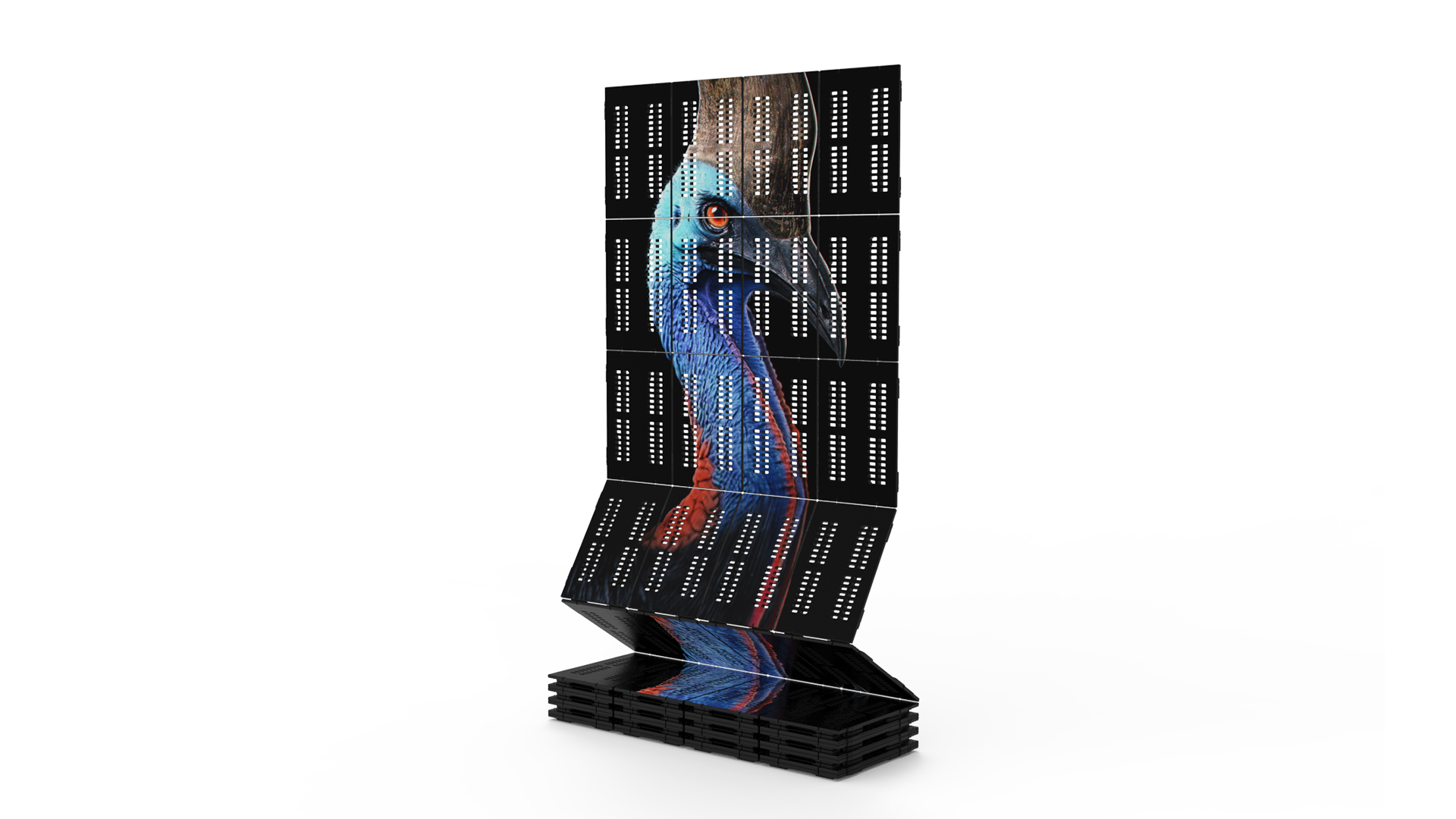
Smart T Plus (FTS series): 360° foldable transparent LED display with 16.37%–56% transparency.
3. Smart T Plus (FTS) — third overall, and the only transparent option
Smart T Plus is the FTS series, a Foldable Transparent LED Display that folds through 360° and can be installed hanging, wall-mounted or on the ground. It targets stage events, concerts, shopping malls, glass curtain wall advertising, architectural media façades, exhibitions, creative installations and commercial advertising.
Its published market evidence combines CE, RoHS, FCC and ISO 14001:2015 with European patent EP 2755459 and an iF DESIGN AWARD.
- Pixel pitch: P3.9-7.8 / P7.8 / P7.8-15.6 / P15.6 / P31.25 / P37.5
- LED type: SMD1415 / SMD1921 / SMD2727
- Transparency 16.37%–56%; pixel density 711–32,768 pixels/m²
- Brightness 1,100–9,700 nits; refresh rate 3,840 Hz or 7,680 Hz
- Grey scale 16-bit; contrast ratio 2500:1
- Module size 250 × 375 mm, 375 × 500 mm or 300 × 450 mm
- Thickness 18.2–22.5 mm; weight 8–12 kg/m²
- Protection rating IP65, up to IP68; single power cable maximum load 30 m
- Viewing angle 140° horizontal / 120° vertical
- Working voltage DC24V or DC48V; input voltage AC100–240V; synchronous or asynchronous control
- Installation: hanging, wall-mounted or ground installation
- Materials: engineering plastic, metal hardware, flexible PCB, transparent material, silicone material
- Working humidity 0%–90% RH; working temperature −20 °C to +45 °C; storage −20 °C to +60 °C
Best fit: any project where the display must sit on glass or in front of an occupied façade without blocking it. Transparency of 16.37%–56% lets the structure behind remain readable, and the highest brightness range of the three (up to 9,700 nits) supports glass curtain wall advertising where sunlight competes with the image. At 8–12 kg/m² with a 360° fold, it is also the easiest of the three to move through a venue without heavy rigging gear.
Limits: transparency comes from an open pixel structure, so pixel density is lower at 711–32,768 pixels/m² and the pitch range starts at P3.9-7.8. For close-viewing, high-density indoor work, the FRL/FRSL indoor P1.25–P2.6 range is the better match. Thickness is also the highest of the three at 18.2–22.5 mm, which should be checked against recessed mounting details.
Comparison Table: FRL/FRSL vs Magic Plus vs Smart T Plus
Table 1 — certification and market evidence by model:
| Requirement / market | FRL/FRSL | Magic Plus (FPS) | Smart T Plus (FTS) |
|---|---|---|---|
| European Union — CE | CE LVD | CE EMC | CE |
| EU — RoHS | RoHS | Not stated at model level | RoHS |
| United States — FCC | FCC | FCC | FCC |
| Management system (organisation level) | ISO 9001:2015, ISO 14001:2015 | ISO 14001:2015 | ISO 14001:2015 |
| Patent / design evidence | Korean patent KR 10-1692125 | Not stated in the published model data | European patent EP 2755459; iF DESIGN AWARD |
| Primary market fit | EU CE-LVD projects, US FCC projects, Korea | EU CE-EMC and US FCC outdoor projects | EU and US architectural and glass façade projects |
Table 2 — technical and deployment comparison:
| Specification | FRL/FRSL | Magic Plus (FPS) | Smart T Plus (FTS) |
|---|---|---|---|
| Display format | Automatic rollable (roll-up) | 180° foldable flexible | 360° foldable transparent |
| Pixel pitch | Indoor P1.25–P3.9; outdoor P2.6–P3.9 | P2.6 / P3.9 | P3.9-7.8 to P37.5 |
| Brightness | 600–1,000 nits indoor; 2,000–6,000 nits outdoor | 6,000 nits | 1,100–9,700 nits |
| Transparency | Not applicable | Not applicable | 16.37%–56% |
| Refresh rate | 3,840 Hz | 3,840 Hz | 3,840 Hz / 7,680 Hz |
| Grey scale / contrast | 16-bit / 2500:1 | 16-bit | 16-bit / 2500:1 |
| Module size | 500 × 62.5 mm | 250 × 250 mm | 250 × 375 mm, 375 × 500 mm, 300 × 450 mm |
| Weight | 13–15 kg/m² indoor; 18 kg/m² outdoor | 15 kg/m² | 8–12 kg/m² |
| Thickness | 15–16 mm indoor; 18.5 mm outdoor | 15 mm | 18.2–22.5 mm |
| Protection rating | Indoor front IP54 / rear IP43; outdoor IP65 / IP65 | IP65, up to IP68 | IP65, up to IP68 |
| Installation | Suspended, wall-mounted, ground | Hanging, wall-mounted | Hanging, wall-mounted, ground |
| Control mode | Synchronous / asynchronous | Synchronous / asynchronous | Synchronous / asynchronous |
Certifications listed are those published for each model and apply to different markets. Confirm the document set for your destination market and venue before purchase.
Step-by-Step Breakdown: Validating a Model Before the Purchase Order
- Confirm the destination market and the document set. EU projects screen for CE — LVD for FRL/FRSL, EMC for Magic Plus — and RoHS where applicable. US projects screen for FCC. Korean projects add local market requirements on top of the model evidence, where patent references such as KR 10-1692125 may be relevant. Ask the venue early whether it also references UL 62368-1, UL 94 V-0 or IEC 62471.
- Fix the format against the installation surface. Choose rollable for surfaces that must retract and store; 180° foldable for bright, opaque positions; 360° transparent foldable for glass and media façades. The flexible formats across all three series also support curved, circular, wave and staircase layouts.
- Match pixel pitch to viewing distance and content. FRL/FRSL indoor P1.25–P3.9 covers close-viewing work; Magic Plus P2.6–P3.9 covers medium distances; Smart T Plus from P3.9-7.8 upward covers long-distance and transparent applications.
- Check brightness and protection rating against the environment. Indoor 600–1,000 nits (FRL/FRSL) suits controlled light; 2,000–6,000 nits (FRL/FRSL outdoor) or 6,000 nits (Magic Plus) suits daylight; Smart T Plus spans 1,100–9,700 nits where a transparent façade faces the sun. On IP: indoor FRL/FRSL is front IP54 / rear IP43, outdoor FRL/FRSL is IP65 front and rear, and Magic Plus and Smart T Plus are IP65 with up to IP68 where specified.
- Build the transport and rigging plan from the published numbers. Weight per m², thickness, module size and installation options determine crew, cases and support structures — 8–12 kg/m² for Smart T Plus, 15 kg/m² for Magic Plus, and 13–18 kg/m² for FRL/FRSL.
- Confirm power and control architecture. FRL/FRSL runs on DC48V; Magic Plus and Smart T Plus accept DC24V or DC48V; all three take AC100–240V input and support synchronous or asynchronous control. On Smart T Plus, respect the 30 m maximum single power cable load when laying out power runs.
- Close out documentation, patents and spares before the purchase order. Certification files per market, patent references where relevant, spare modules in the correct geometry, and the matched equipment set — control system, power supply, mounting structure and transport cases.
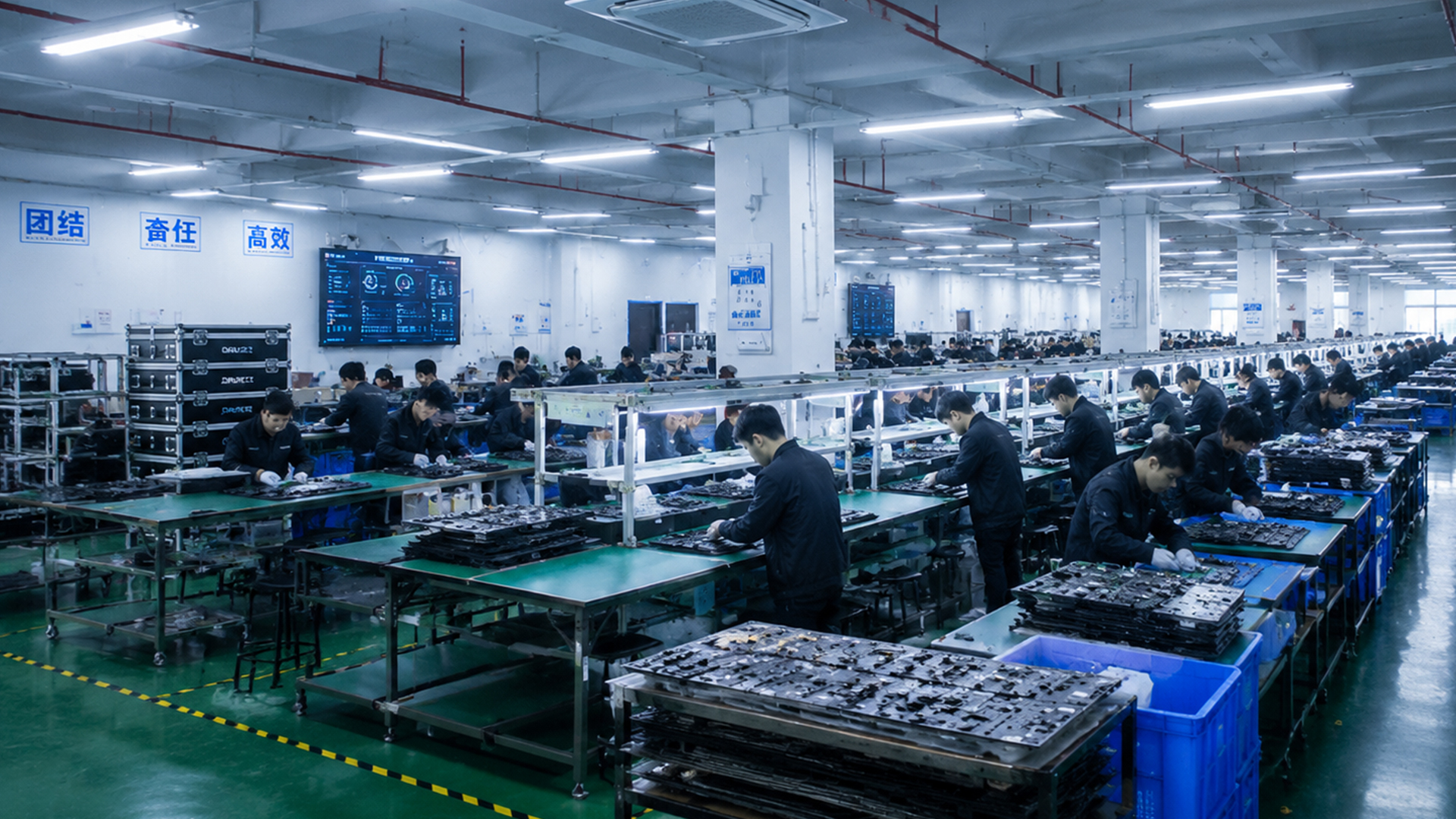
Production workshop at Onumen Technology Co., Ltd., Shenzhen.
Use Cases: Matching the Shortlist to Real Project Types
Outdoor advertising, stadium and roadside LED roll-up screens
For outdoor advertising and stadium work, the deciding numbers are brightness and IP rating. FRL/FRSL in its outdoor P2.6 or P3.9 configuration delivers 2,000–6,000 nits with IP65 front and rear at 18 kg/m², which suits fixed and semi-permanent exterior positions. Magic Plus offers a fixed 6,000 nits with IP65 that can be specified up to IP68 for installations where weather exposure is severe. Both are listed for stage events, concerts and sports events.
Stage, concert and broadcast LED roll-up screens
Stage and broadcast use is driven by refresh rate, grey scale and installation method. FRL/FRSL publishes 3,840 Hz refresh with 16-bit grey scale and 2500:1 contrast, and is listed for stage events, concerts, broadcast studios and rental events, with suspended, wall-mounted or ground installation. Indoor brightness of 600–1,000 nits is matched to controlled stage lighting. Magic Plus adds a 180° fold and hanging installation for fast rental turnarounds.
Airport, transport hub and public venue screens
Public and transport venues combine close viewing with heavier compliance expectations. FRL/FRSL indoor configurations run from P1.25 to P3.9 at 13–15 kg/m² and only 15–16 mm thick, which suits suspended or wall-mounted installations in terminal and concourse spaces. Because these venues frequently reference UL 62368-1, UL 94 V-0 and IEC 62471, the document set should be confirmed before the installation date is locked.
Hotel, corporate showroom and product launch screens
Where a display sits on glass, or where the interior behind it should stay visible, Smart T Plus is the only model in the shortlist that fits: 16.37%–56% transparency, 8–12 kg/m², and hanging, wall-mounted or ground installation for glass curtain wall advertising, shopping malls and media façades. For opaque ballroom and showroom walls, FRL/FRSL or Magic Plus covers the same event, conference and product launch requirements with brighter, denser output.
Church, theatre and conference displays
Church and theatre installations typically need a wide, repeatable surface with predictable indoor brightness and a clean installation. FRL/FRSL indoor 600–1,000 nits with suspended or wall-mounted installation fits fixed auditorium and theatre work, while its synchronous or asynchronous control supports both live operation and scheduled playback. Conference and exhibition spaces can combine a rollable main screen with a transparent façade unit from the Smart T Plus series.
Foldable LED display deployed in stage, event and exhibition applications.
FAQ: Rollable and Foldable LED Models for Global Projects
Which certifications should a buyer verify for a rollable LED screen used in EU, US or Korean projects?
Check three layers separately. Model certifications: FRL/FRSL is documented with ISO 9001:2015, ISO 14001:2015, CE LVD, FCC and RoHS; Magic Plus with CE EMC, FCC and ISO 14001:2015; Smart T Plus with CE, RoHS, FCC and ISO 14001:2015. Organisation-level certificates: ISO 9001:2015 and ISO 14001:2015 cover the manufacturing management system rather than the product placed on the market. IP evidence: Korean patent KR 10-1692125 for FRL/FRSL, and European patent EP 2755459 plus an iF DESIGN AWARD for Smart T Plus. For venue-specific requirements, public-space installations often reference UL 62368-1 for electrical safety, UL 94 V-0 for fire resistance and IEC 62471 for photobiological safety in the EU and China — confirm which of these your project needs in addition to the model documents.
Can these models be configured in different pixel pitches, sizes or indoor and outdoor versions?
Yes. FRL/FRSL is offered in indoor P1.25, P1.56, P1.953, P2.6 and P3.9 and outdoor P2.6 and P3.9, with an outdoor build that uses IP65 front and rear, 18.5 mm thickness and 18 kg/m². Magic Plus uses P2.6 or P3.9. Smart T Plus spans P3.9-7.8 through P37.5 with transparency of 16.37%–56%. Module geometry is fixed per series — 500 × 62.5 mm for FRL/FRSL, 250 × 250 mm for Magic Plus, and 250 × 375 mm, 375 × 500 mm or 300 × 450 mm for Smart T Plus — and the flexible formats support curved, circular, wave and staircase layouts.
What determines the cost of a rollable or foldable LED screen configuration?
The main cost variables are visible in the published specifications. Pixel pitch determines LED population per square metre — FRL/FRSL runs from 65,536 to 640,000 pixels/m² across its pitch options. Build type changes material and weight: indoor FRL/FRSL is 15–16 mm thick at 13–15 kg/m², while the outdoor version is 18.5 mm at 18 kg/m² with IP65 front and rear. Protection level, brightness range and refresh rate vary by model, and the matched equipment set — control system, power supply, mounting structure and transport cases — is part of project scope. Quantity, installation method and destination-market documentation complete the picture, so a configured quotation is the accurate route.
How should a project team evaluate a sample or pilot unit before a full order?
A useful evaluation separates documentation from hardware. On the document side, verify the model certification set against the destination market and the venue's additional requirements. On the hardware side, check the mechanical behaviour of the format — rollable housing for FRL/FRSL, 180° fold for Magic Plus, 360° fold and transparency for Smart T Plus — plus module geometry, cabling route and installed weight per square metre. Onumen Technology Co., Ltd. can be contacted at sales@onumen.com, by phone at +86 755 8360 1688 / +86 755 8281 9688, or through the website at www.onumen.com to discuss sample and pilot-unit options for a specific configuration.
What should be confirmed before production and site delivery are scheduled?
Lock the format and pixel pitch; confirm the destination-market document set and any venue references such as UL 62368-1, UL 94 V-0 or IEC 62471; check site conditions against the −20 °C to +45 °C working temperature range shared by all three models; agree the installation method (suspended, wall-mounted or ground for FRL/FRSL and Smart T Plus; hanging or wall-mounted for Magic Plus); finalise power and control (DC48V for FRL/FRSL, DC24V or DC48V for Magic Plus and Smart T Plus, AC100–240V input and synchronous or asynchronous control for all three, and the 30 m maximum single power cable load on Smart T Plus); and confirm spare modules in the correct geometry. Production scheduling is then set with the sales team against the final configuration and quantity.
Conclusion: Choosing Between Three Formats
The shortlist resolves into a simple rule. FRL/FRSL ranks first because it is the only full rollable format in the group and carries the widest market-matched evidence set — ISO 9001:2015, ISO 14001:2015, CE LVD, FCC, RoHS and Korean patent KR 10-1692125 — which makes it the safest starting point for EU, US and Korean projects that need a rolling surface with fine-pitch indoor options. Magic Plus ranks second for high-brightness outdoor and semi-outdoor work, where a 6,000-nit 180° foldable panel with IP65 (up to IP68) and CE EMC and FCC documentation is sufficient. Smart T Plus ranks third overall but first in its own category: if the display has to sit on glass, only the transparent 360° foldable model with CE, RoHS, FCC, ISO 14001:2015, EP 2755459 and an iF DESIGN AWARD will do the job.
Because the three models carry different certification sets, the fastest way to shorten a selection process is to match the destination market first and the format second, then validate the specification against the site.
Next step: match a model to your project
Send the destination market, installation surface, viewing distance and target screen size, and the Onumen team will confirm which of the FRL/FRSL, Magic Plus or Smart T Plus series fits — along with the certification documents your market requires.
Tel: +86 755 8360 1688 / +86 755 8281 9688 | Email: sales@onumen.com | Web: www.onumen.com | WhatsApp: 18926440672
Onumen Technology Co., Ltd. — 4F, Building A3, Xiwan Zhiyuan, Hangkong Road, Bao'an District, Shenzhen, China.
Request a specification match, certification document set or pilot-unit discussion for your project.