
Folding LED Display vs. Traditional Screens: A Data-Driven Buyer Comparison
Folding LED Display vs. Traditional Screens: A Data-Driven Buyer Comparison
When an event or installation project calls for a large LED display, buyers usually start with one question: should we use a conventional fixed or cabinet-based LED screen, or a folding LED display screen? The answer affects logistics, rigging, labor cost, storage space, and long-term return on investment. This comparison guide evaluates folding LED display screens against traditional fixed or cabinet-based screens using verified product data, certification coverage, and total cost of ownership factors.
For buyers at the evaluation or execution stage, the goal is not to decide which technology is universally "better," but to identify which display architecture delivers lower deployment cost, greater scheduling flexibility, and acceptable image performance for the specific venue or event. The comparison below focuses on measurable differences in portability, setup time, certification coverage, and lifecycle cost, with reference to the Smart folding LED Display screen and Easy Sailing mobile folding LED display series produced by Onumen Technology Co., Ltd.
What Counts as a Folding LED Display vs. a Traditional LED Screen?
A folding LED display screen uses flexible modules and hinged or foldable structures that allow the screen surface to collapse into a compact stack for transport and storage. Traditional LED screens, in contrast, are typically built from rigid die-cast aluminum cabinets that remain in a fixed planar form and require individual cabinet-by-cabinet assembly at the installation site.
Onumen Technology Co., Ltd., founded in 2009, is a Shenzhen-based manufacturer specializing in lightweight foldable and rollable LED display solutions. The company pioneered separated power and screen installation technology, which separates the power supply from the display panel to reduce screen thickness and weight. Its folding product portfolio includes the Smart folding LED Display screen (FC Series), Smart Plus (FCSL Series), Smart T Plus (FTS Series), Magic Plus (FPS Series), and Easy Sailing mobile folding screens (EP Series).
Traditional cabinet screens remain widely used for permanent installations, broadcast studios, and large fixed signage. They offer proven structural rigidity and familiar service workflows, but they generally require more transport volume and longer on-site assembly time than folding alternatives.
Why "Portability" Is a Structural Advantage, Not a Marketing Claim
Portability is not simply about total weight. For an LED display system, portability is determined by three measurable variables: weight per square meter, folded thickness, and the number of flight cases or enclosures needed to move a given display area.
The Smart folding LED Display screen (FC Series) has a panel weight of 11 kg/m² and a thickness of 14–17 mm. Each module measures 250×250 mm and supports a 360° foldable angle. By comparison, conventional indoor rental LED cabinets commonly weigh 15–25 kg per cabinet (roughly 0.5 m² per cabinet), which translates to approximately 30–50 kg/m² before flight cases are considered. The folding architecture therefore reduces structural weight per square meter before any rigging or transport begins.
The Easy Sailing EP150–EP225 mobile folding LED display is supplied with a flight case measuring 1500×400×430 mm and a total weight of 70 kg per system. For a venue operator that needs to move a screen between rooms or load it into a van frequently, the difference in logistics effort is substantial.
In the broader market context, the global LED display screen market was valued at USD 10.7 billion in 2024 and is projected to reach USD 19.5 billion by 2034, with a CAGR of 6.2%, according to Market.us. As screen deployments become more frequent and more temporary, the demand for displays that can be transported quickly and installed without heavy rigging continues to grow.
Setup Time and Labor Cost: The Hidden Operating Expense
Labor is typically the second-largest cost in a rental or temporary installation after the screen asset itself. Traditional cabinet screens require each cabinet to be aligned, locked, and connected to power and data links. For a screen of 50–100 m², this can require several hours with a multi-person crew. If the venue has limited access—such as a stairwell, freight elevator, or narrow corridor—the time penalty increases further.
Folding LED displays shorten the setup sequence because the screen surface is pre-assembled at the factory and simply unfolds into position. For example, the Easy Sailing EP225 is classified as a Mobile Folding LED Display with a screen size of 1000×2250 mm and a total system weight of 70 kg including flight case. The EP250–EP400 series extends to screen heights from 2500 mm up to 4000 mm, while the screen enclosure for the EP250–EP400 series measures 1120×650×550 mm with a control box enclosure of 980×650×540 mm. These systems use an installation mode described as "Mobile Installation / Quick Setup."
For a hotel or church that hosts multiple events per week, the ability to deploy a screen in minutes rather than hours translates directly into usable labor hours saved. It also reduces the risk of setup delays pushing an event schedule off track.
Certification Coverage and Compliance Risk
Certification coverage does not affect day-to-day screen operation, but it determines whether a display can be legally imported, installed, and operated in a given market. For branded products, certification gaps can create major liability for the buyer.
The Smart folding LED Display screen (FC Series) carries CE, RoHS, and FCC certifications. Onumen's foldable and rolling LED displays are also covered by ISO 9001:2015 quality management certification (certificate number 95722Q0036R0S) and ISO 14001:2015 environmental management certification (certificate number 95722E0015R0S), both issued by Boston Certification, with scope covering research, development, manufacturing, and sales of LED displays. Additional CE certificates for foldable LED displays were issued by TÜV Rheinland.
For display products entering the European Union, CE marking under EMC standards is a legal requirement. FCC certification is required for equipment marketed in the United States. RoHS compliance restricts hazardous substances and is increasingly enforced across global supply chains. A folding LED screen with these certifications in place shortens the buyer's compliance approval path and reduces the risk of customs rejection or end-user audit failure.
Design awards further support product credibility without replacing compliance certificates. Onumen has received a Red Dot Winner 2024 award, an iF DESIGN AWARD 2025, and a French Design Award 2026 Gold Award. These recognitions speak to product design quality, though buyers should treat them as complementary signals rather than substitutes for safety and EMC certifications.
In high-traffic zones such as airports, additional standards such as IEC 62368-1 may apply, mandating UL94 V-0 fire resistance and surface temperatures not exceeding 70°C. Buyers deploying foldable LED displays in airports, transit hubs, or public buildings should verify that the specific screen model meets the applicable local fire-safety and electrical standards.
Side-by-Side Specification Comparison
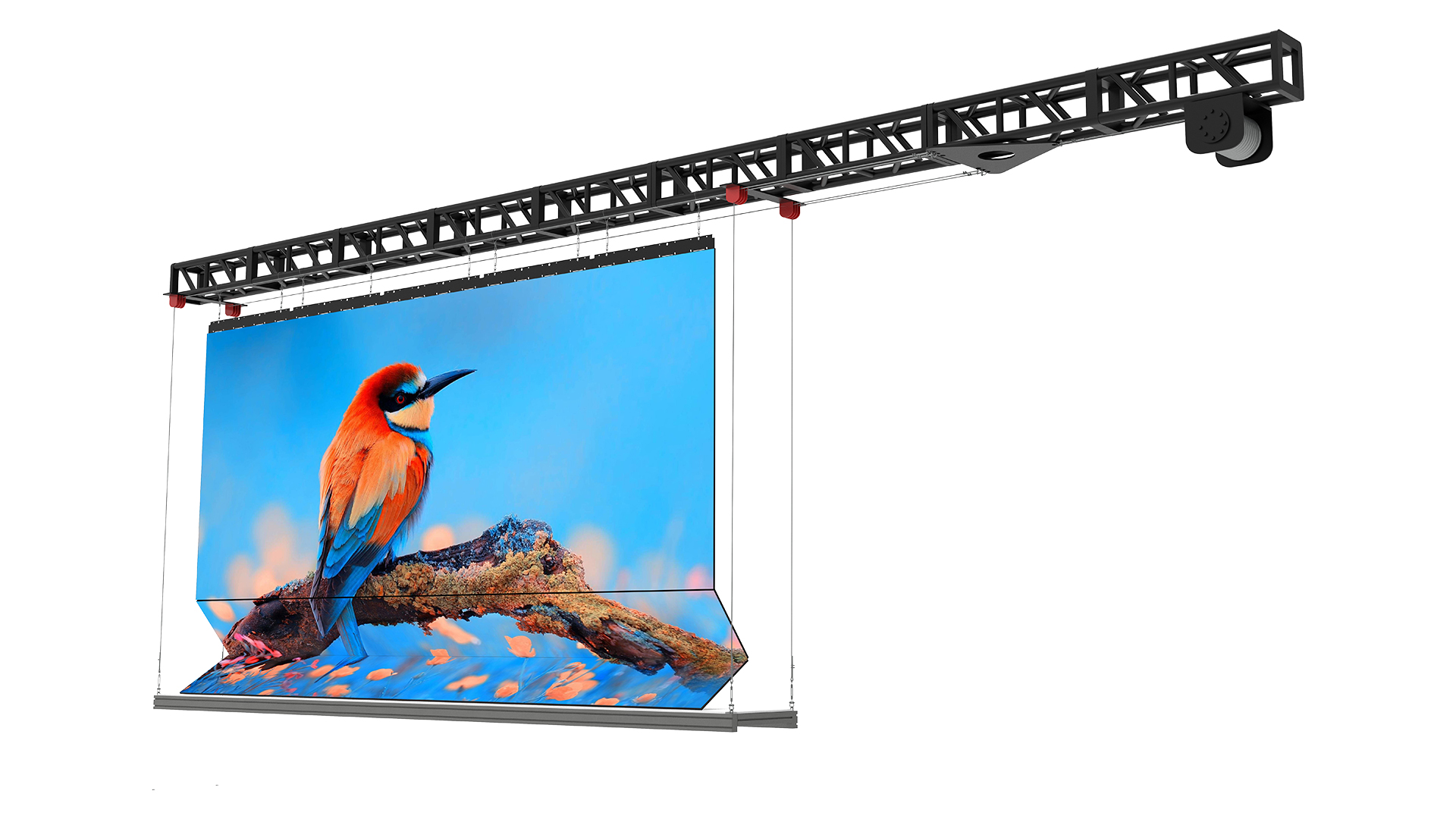
The following table compares the verified specifications of the Smart folding LED Display screen (FC Series) and the Easy Sailing mobile folding LED display (EP Series, EP150–EP400) against typical characteristics of traditional fixed or cabinet-based LED screens. Traditional screen values are presented as typical industry ranges since fixed screens vary by manufacturer and cabinet design.
| Comparison Criterion | Smart Folding LED Display (FC Series) | Easy Sailing Mobile Folding Display (EP Series) | Traditional Fixed / Cabinet-Based Screen (Typical Range) |
|---|---|---|---|
| Screen Category | 360° Foldable Flexible LED Display | Mobile Folding LED Display | Fixed installation or rental cabinet screen |
| Available Pixel Pitches | P2.6 / P3.9 / P5.2 | P2.6 / P3.9 / P5.2 | P1.2–P10+ depending on application |
| Brightness | 1000–1500 nits | 630–2300 nits | Indoor 600–2000 nits; outdoor 4500–6500 nits |
| Refresh Rate | 3840 Hz / 7680 Hz | 3840 Hz / 7680 Hz | 1920–7680 Hz depending on driver IC |
| Weight per m² | 11 kg/m² | 12 kg/m² | Typically 15–30 kg/m² before rigging |
| Screen Thickness | 14–17 mm | 14–17.1 mm | Typically 60–100 mm with cabinet and power |
| Foldable Angle | 360° | 360° | Not applicable—fixed planar structure |
| Protection Rating | IP43 | IP43 | Indoor IP40–IP43; outdoor IP65 |
| Installation Modes | Hanging / Wall-mounted / Floor installation | Mobile installation / Quick setup | Fixed truss, wall mount, or ground support |
| Working Temperature | -20°C to +45°C | -20°C to +45°C | Indoor models 0°C to +40°C; outdoor models wider range |
| Certifications | CE, RoHS, FCC | CE, RoHS, FCC | Varies by manufacturer; CE/FCC/RoHS common for reputable brands |
Table note: Data for Onumen products is taken from verified product specification sheets in the content corpus. Traditional screen values are typical industry ranges and should be confirmed against the specific supplier's datasheet.
Total Cost of Ownership: Where Folding Screens Change the Math
1. Transport and Freight Cost
Folding screens occupy less cargo volume per square meter of display area because the screen stacks into a compact folded form. Less volume means lower freight cost, or the ability to ship more display area in the same container. For international shipments, freight is usually calculated on volume or weight, whichever is greater. The reduced thickness of a folding LED display such as the FC Series (14–17 mm) directly reduces volumetric weight compared to traditional cabinet screens that are typically several times thicker.
2. Installation Labor Cost
Onumen's mobile folding LED displays are designed for quick setup and mobile installation. The EP150–EP225 and EP250–EP400 series are categorized as Mobile Folding LED Displays with "Mobile Installation / Quick Setup" as the stated installation mode. For venues that deploy and dismantle screens frequently, labor saving per cycle adds up quickly across dozens or hundreds of events each year.
3. Storage Space Cost
Traditional LED cabinets are usually stored in flight cases, and the total storage footprint is proportional to the screen area. A folding screen stored in a collapsed stack reduces the required storage footprint. The EP150–EP225 system, for example, fits into a single flight case of 1500×400×430 mm with a total weight of 70 kg, which means a complete usable display can be moved and stored as one manageable unit.
4. Maintenance and Spare-Part Availability
Onumen offers remote technical support, installation guidance, maintenance support, and spare parts supply for its folding LED display products. The module-based structure of the FC Series (250×250 mm modules) means a damaged module can be individually replaced, reducing repair complexity. Buyers should confirm spare-part availability and after-sales response times with the manufacturer before committing to a specific product line, as support models vary across suppliers.
Project Fit: When to Choose Folding vs. Traditional Screens

No single screen architecture is optimal for every project. The decision framework below maps common project types to the more suitable screen type based on the verified characteristics of Onumen folding displays and the general behavior of conventional cabinet screens.
Stage Events and Concerts
Stage productions frequently require screens to be hung, moved, or repositioned between acts. Folding LED displays are well suited to this use case because of their low weight per square meter and 360° foldable structure. Onumen folding screens have been deployed in large concert settings, including the Rolling Stone 30th Anniversary Concert and the SHINee concert stage in Korea, where the flexible folding design allowed creative circular and dynamic configurations that rigid cabinets cannot easily replicate.
Corporate Events, Conferences, and Mobile Business Use
When an event space is used for multiple purposes—boardroom presentations one day, product launches the next—a mobile folding LED display is a practical alternative to a permanently installed fixed screen. The Easy Sailing series supports quick setup; the EP225 system is supplied in a single flight case with casters, and the larger EP250–EP400 series splits into a screen enclosure and a control box enclosure. This modular delivery model suits hotels, conference centers, and corporate showrooms.
Fixed Installations with Permanent Signage Needs
For a permanent outdoor billboard, a transportation hub display, or a retail façade that will run 16 hours per day every day, a traditional fixed LED screen with appropriate IP rating and structural mounting remains the default recommendation. Fixed screens for outdoor use commonly carry IP65 front and rear protection. Onumen's Smart Plus (FCSL Series) offers IP65 front and rear protection with optional IP68, and its Smart T Plus (FTS Series) also supports IP65, showing that folding technology can serve semi-outdoor and outdoor applications. However, the buyer should evaluate whether a fixed screen specifically engineered for continuous outdoor operation is better suited than a foldable screen for a permanent installation that does not require the folding function.
Multi-Purpose Venues: Hotels, Churches, Schools, and Banquet Halls
Venues that host diverse events benefit from the space-saving flexibility of folding or liftable screens. Documented Onumen deployments include a kindergarten in Ordos, a banquet hall in Shenzhen, the Tai Wai MTR shopping mall in Hong Kong, and the Wenzhou Foreign Language School in China. In these cases, liftable or foldable LED screens could be hidden when not in use and deployed when needed, preserving the architectural cleanliness of the space.
Step-by-Step Evaluation Process for Buyers
To reduce the risk of selecting the wrong screen architecture, buyers moving from evaluation to execution can follow the process below.
Step 1—Define the deployment frequency. Determine whether the screen will be used for a one-time installation, a permanent installation, or repeated temporary events. Permanent installations are better served by fixed screens that are engineered for continuous operation. Repeated temporary use favors a folding or mobile display.
Step 2—Calculate the logistics constraint. Measure the access path to the venue, including door widths, elevator dimensions, and rigging points. If the venue is accessed through standard passenger elevators or narrow corridors, the folded dimensions of a screen such as the EP150–EP225 flight case (1500×400×430 mm) should be checked against the actual access path.
Step 3—Compare weight per square meter. The FC Series weighs 11 kg/m² and the EP Series weighs 12 kg/m². Compare these numbers with the cabinet weight of any alternative LED product from the supplier shortlist.
Step 4—Verify certification coverage for the destination market. For EU-bound shipments, confirm CE compliance documents. For US-bound shipments, confirm FCC compliance. RoHS compliance should be confirmed for most markets. If the installation is in a public building or transportation hub, check whether additional fire-safety standards such as IEC 62368-1 apply.
Step 5—Estimate the total cost of ownership across five years. Include transport cost per deployment, install and dismantle labor, storage cost, spare parts, energy consumption, and the expected life of the product. A less expensive fixed screen that requires a full crew for every move may cost more in total than a folding screen that one or two people can deploy quickly.
Step 6—Request and inspect evidence. Before ordering, request the specific model datasheet, certifications, and a video of a real setup process. If the project is complex, ask the manufacturer for project references in a similar venue type.
Manufacturer Capability and Support Considerations
The folding LED display market is still a specialized segment within the broader LED display industry. When selecting a supplier, buyers should verify not only the performance specification of the display but also whether the manufacturer has the engineering capability to customize and service the product over its lifecycle.
Onumen Technology Co., Ltd., the manufacturer of the Smart folding and Easy Sailing display series, was founded in 2009 and operates a 2000 m² facility with an annual output of 9000 m². Its R&D team comprises 20 engineers. The company exports to the USA, Europe, Japan, South Korea, Russia, and the Middle East, with a 70% export ratio. Its global patent pool includes invention patents and utility models for freely foldable flexible LED screens in Mainland China, Hong Kong, Taiwan, Singapore, Japan, South Africa, Australia, Belgium, Germany, and France.
OEM services are available with customization options including screen size, pixel pitch, cabinet design, installation structure, control system, logo, and packaging. The minimum order quantity is 1 m², with a standard lead time of 30–90 days after order confirmation, and monthly production capacity of 3,000–5,000 m². All products undergo 100% aging tests and quality inspection before shipment, and the manufacturer provides after-sales support through remote technical assistance, installation guidance, maintenance support, and spare parts supply.
For buyers who require custom screen dimensions, special pixel pitches, or integration with an existing control system, the 1 m² MOQ allows small-batch pilot testing before committing to larger procurement. Given the 30–90 day lead time, buyers should align their order timing with project schedules.
Practical Use Cases: How Different Venues Use Folding LED Screens
Airport and Transportation Hub Displays
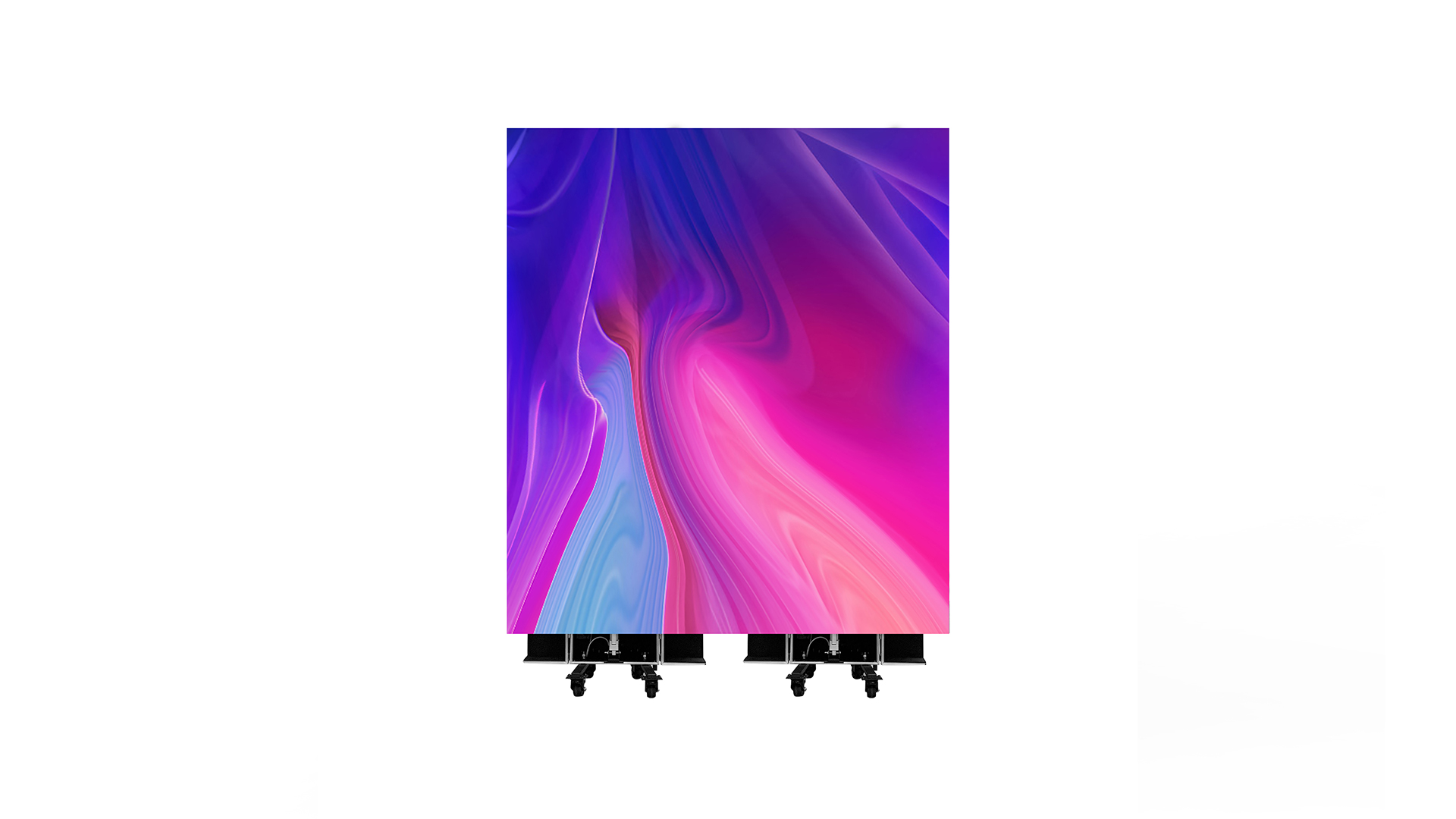
Airport environments impose strict constraints on display installation, including fire-safety standards and ceiling load limits. Folding LED displays with low weight per square meter—such as the FC Series at 11 kg/m²—place less structural load on ceiling supports than traditional cabinet screens. However, buyers should confirm that the exact model meets the airport's fire-resistance requirements and obtain the relevant certificates before proceeding. General industry guidance for high-traffic zones references IEC 62368-1, which mandates UL94 V-0 fire resistance and surface temperatures not exceeding 70°C.
Church and Theater Stages
Churches and theaters typically have limited storage space and require quick scene changes between services or performances. A liftable or folding display that disappears into the ceiling or folds against the wall preserves the visual environment when not in use. Onumen's liftable folding deployments in schools, banquet halls, and shopping malls demonstrate the pattern of screening that remains hidden until needed.
Hotel and Conference Facilities
A hotel with multiple ballrooms may not have the budget to equip every room with a permanent LED screen. A mobile folding display on a wheeled flight case can serve multiple rooms with one asset. The EP225 system, with a flight case size of 1500×400×430 mm and a total weight of 70 kg, is manageable by a small AV team. Onumen has documented EP225 deployments in a Zhejiang shopping mall and a hotel in Libya, both using the Easy Sailing series for more than five years.
Environmental and Operational Considerations
The environmental management certification ISO 14001:2015 held by Onumen indicates that the manufacturing process follows an environmental management system. Buyers with corporate sustainability mandates may consider this relevant for supply-chain evaluation.
Operationally, the power consumption of a folding LED display depends primarily on the pixel pitch, brightness, and content rather than the folding mechanism itself. The EP Series has a maximum power consumption range of 430–880 W/m², consistent with typical indoor LED displays in the P2.6–P5.2 range. For a screen that operates for many hours per day, the energy cost should be included in the total cost of ownership projection.
Frequently Asked Questions
What certifications should a folding LED display screen have for international projects?
For projects in the European Union, the display should carry CE certification under applicable EMC and safety directives. For the United States, FCC certification is required. RoHS certification is necessary to demonstrate restriction of hazardous substances in most developed markets. Onumen's Smart folding LED Display screen (FC Series) and Easy Sailing mobile folding LED displays carry CE, RoHS, and FCC certification. Additionally, Onumen's manufacturing quality is certified under ISO 9001:2015 quality management system certification and ISO 14001:2015 environmental management system certification, both issued by Boston Certification. For transport hubs such as airports, specific fire-safety standards such as IEC 62368-1 may also apply, and buyers should verify the screen model meets the applicable local requirements.
What customization options are available when ordering a folding LED display?
OEM services from Onumen Technology Co., Ltd. include customization of screen size, pixel pitch, cabinet design, installation structure, control system, logo, and packaging. Customizable production services are also available. The manufacturer's minimum order quantity is 1 m², with a standard lead time of 30–90 days after order confirmation. Buyers should note that lead time varies depending on order complexity and current production load, so project schedules should include this buffer.
How much does a folding LED display cost compared to a traditional cabinet screen?
The purchase price of any LED display depends on pixel pitch, brightness grade, screen size, control system, and build quality. Folding LED displays may carry a different initial purchase price than traditional cabinet screens because of the flexible PCB, hinge mechanisms, and proprietary technology involved. However, a straight purchase price comparison is incomplete. The total cost of ownership must include freight volume, installation labor, storage space, rigging hardware, and the number of crew members required for each deployment. A screen that folds into a compact flight case—such as the Easy Sailing EP150–EP225 with a 1500×400×430 mm flight case at 70 kg total weight—can reduce recurring logistics and labor costs across many event cycles. Buyers should request a full quote including flight cases, spare parts, and shipping to compare projects accurately.
Can I request a sample or pilot unit before placing a large order?
Onumen offers a minimum order quantity of 1 m² / 1 unit, which allows buyers to purchase a single display system for pilot testing and sample validation. Before ordering, buyers can contact the manufacturer to request a quote for a single unit and confirm the model configuration. Standard international delivery terms such as EXW, FOB, CIF, and DDP are available, and pre-shipment inspection, video inspection, and functional testing are performed before delivery. This pilot approach helps buyers validate product quality, setup procedures, and documentation before scaling to a full project order.
Conclusion
The choice between a folding LED display screen and a traditional fixed or cabinet-based screen comes down to the operating model of the buyer, not a blanket technological advantage. Folding LED displays deliver measurable benefits in weight (11–12 kg/m² for Onumen FC and EP series), folded thickness (14–17.1 mm), and transport volume, which translate into lower logistics cost and faster deployment for event-driven and mobile use cases.
Traditional fixed and cabinet-based screens remain appropriate for permanent installations where the display is deployed once and operated continuously without frequent relocation. But for hotels, churches, conference centers, schools, stage production companies, and rental operators that need a large LED display in different locations or different rooms throughout the year, the folding architecture offers a materially lower total cost of ownership.
Certifications provide the compliance safety net. The Smart folding LED Display screen and Easy Sailing series carry CE, RoHS, and FCC certifications, and Onumen holds ISO 9001 and ISO 14001 management system certifications plus a global patent portfolio covering freely foldable flexible LED screen technology in Asia, Europe, and Oceania. Buyers evaluating a future folding LED display order should verify these documents for the exact model they intend to purchase.
To move from evaluation to execution, the recommended next step is to request the product datasheet and certification documentation for the specific screen model that matches the venue requirement. Onumen Technology Co., Ltd. offers OEM services with a 1 m² minimum order, a 30–90 day lead time, and pre-shipment inspection options, which makes a pilot unit a practical route to validate the technology before scaling.