
How to Choose a Rollable LED Screen for Outdoor Advertising Projects
How to Choose a Rollable LED Screen for Outdoor Advertising Projects
An outdoor advertising rollable LED screen must balance brightness, weather resistance, weight, installation speed, and total cost of deployment. This guide explains how to evaluate rollable LED screens for outdoor advertising projects, what specifications matter most, and how to structure a supplier decision before committing to a purchase.
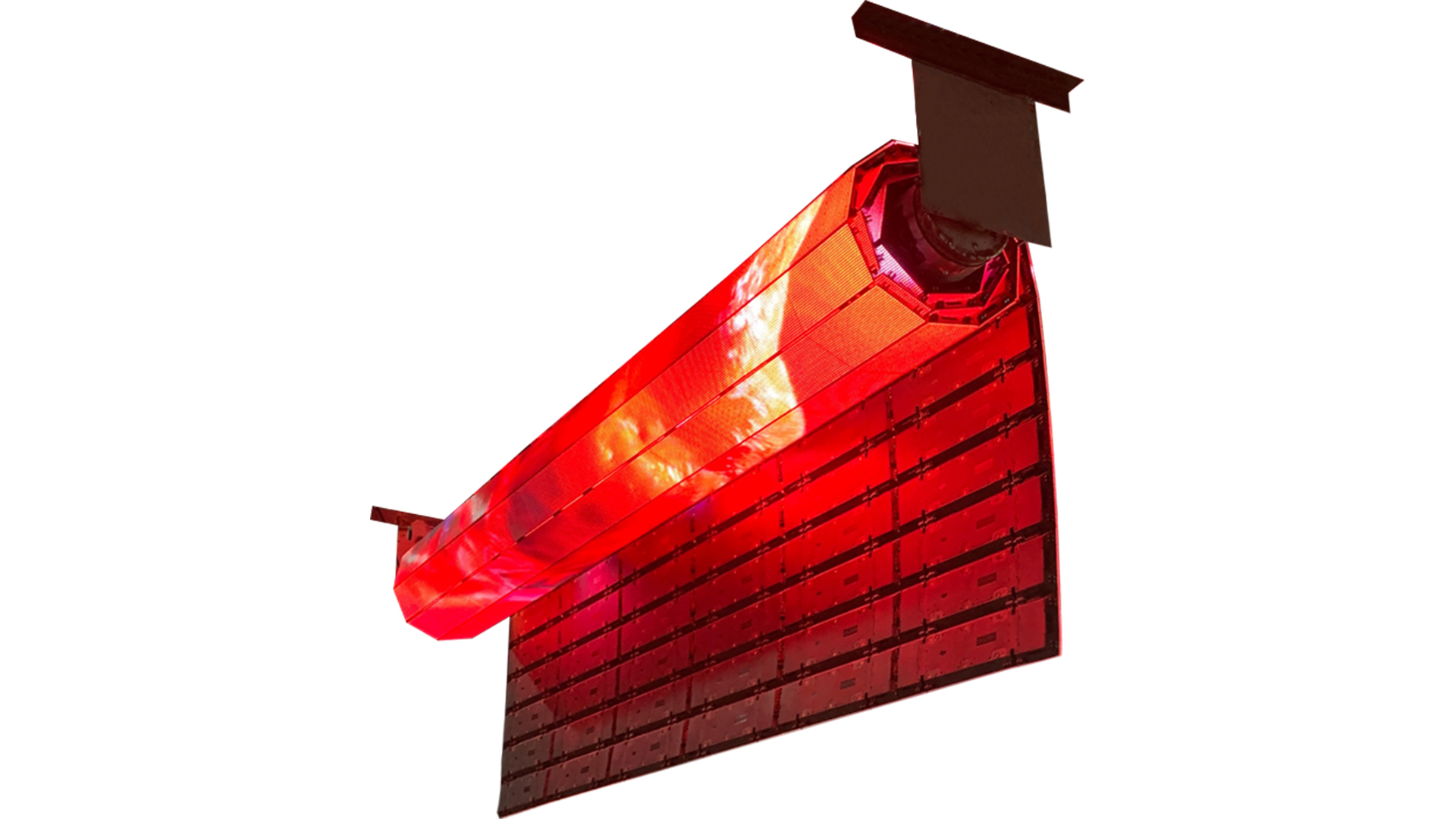
Automatic rollable LED display used for large-format advertising and event visuals.
What Is a Rollable LED Screen?
A rollable LED screen is a large-format video display that uses a flexible PCB and segmented module structure so the entire screen can be rolled into a compact cylinder for transport and storage. Unlike traditional cabinet LED displays, which are built from rigid aluminum boxes, rollable LED displays are designed for applications where rapid deployment, low logistics cost, and minimal storage space are critical.
Onumen Technology Co., Ltd., founded in 2009 in Shenzhen, manufactures the Rolling Rollable LED Display (FRL/FRSL series) for stage events, concerts, sports venues, commercial advertising, exhibitions, broadcast studios, and rental events. The company pioneered a separated power and screen installation architecture that reduces screen thickness and weight compared with conventional LED cabinets.
Why Outdoor Advertising Projects Need a Different Rollable LED Screen Evaluation
Outdoor advertising is not the same as indoor event display. An outdoor rollable LED screen must survive direct sunlight, rain, dust, temperature swings, and sometimes long-term fixed installation. The evaluation process therefore starts with environmental conditions, not with pixel pitch or price.
For outdoor advertising projects, the following conditions usually apply:
- Brightness must be high enough to remain readable in direct sunlight.
- The front and rear of the screen must resist water and dust ingress.
- The structure must withstand wind load when installed on a facade, rooftop, or temporary structure.
- Transport and installation logistics must fit the project schedule and site constraints.
- Power consumption and heat dissipation affect both operating cost and safety.
These requirements separate a true outdoor advertising rollable LED screen from an indoor rollable display that is only occasionally used outdoors.
Key Specifications for Outdoor Advertising Rollable LED Screens
The most important specifications for an outdoor advertising rollable LED screen are pixel pitch, brightness, protection rating, weight, refresh rate, and installation flexibility. The table below summarizes how each specification affects project outcomes.
| Specification | Why It Matters | Typical Outdoor Advertising Consideration |
|---|---|---|
| Pixel pitch | Determines minimum viewing distance and image detail | P2.6 for close viewing; P3.9 for larger formats viewed from a distance |
| Brightness | Ensures content remains visible in direct sunlight | Outdoor series rated at 2000–6000 nits |
| Protection rating | Prevents water and dust damage | Front IP65 / Rear IP65 for outdoor rollable models |
| Weight | Affects transport cost, mounting structure, and installation labor | Outdoor rollable models around 18 kg/m² |
| Refresh rate | Reduces flicker on camera and improves perceived image quality | 3840Hz supported by the FRL/FRSL series |
| Gray scale | Affects color depth and smoothness of gradients | 16-bit gray scale |
Pixel Pitch
The FRL/FRSL series offers outdoor pixel pitches of P2.6 and P3.9. A smaller pixel pitch such as P2.6 provides higher pixel density and better image detail at shorter viewing distances. P3.9 is usually sufficient for large outdoor billboards or stage backdrops where the audience is farther away. The choice should be based on the closest distance from which the audience will read the content.
Brightness
For outdoor advertising, brightness is a decisive factor. The outdoor version of the FRL/FRSL series supports 2000–6000 nits. In direct sunlight, a screen with insufficient brightness will look washed out and fail to communicate the advertisement clearly. Indoor rollable LED screens typically operate at 600–1000 nits, which is not adequate for outdoor daytime use.
Protection Rating
Outdoor advertising screens are exposed to rain, dust, and humidity. The outdoor FRL/FRSL configuration provides front IP65 and rear IP65 protection. This is significantly higher than the indoor version, which offers front IP54 and rear IP43. When evaluating a rollable LED screen for outdoor use, confirm that the outdoor protection rating applies to the entire screen, not only to the LED modules.
Weight and Thickness
The outdoor FRL/FRSL series has a thickness of 18.5 mm and a weight of 18 kg/m². This weight range is achievable because the rollable structure replaces heavy aluminum cabinets with a combination of engineering plastic, metal components, and an aluminum alloy structure. For facade installations and temporary outdoor structures, lower weight reduces both structural engineering cost and installation time.
Refresh Rate and Gray Scale
A 3840Hz refresh rate and 16-bit gray scale help produce smooth, flicker-free content. This is especially important for outdoor advertising near broadcast cameras or in environments where video content is a significant part of the campaign.
Indoor vs. Outdoor Rollable LED Screen: What to Compare
Buyers sometimes assume that a rollable LED screen is automatically suitable for both indoor and outdoor use. The comparison table below shows the key differences between the indoor and outdoor FRL/FRSL configurations.
| Parameter | Indoor FRL/FRSL | Outdoor FRL/FRSL |
|---|---|---|
| Pixel pitch | P1.25 / P1.56 / P1.953 / P2.6 / P3.9 | P2.6 / P3.9 |
| Brightness | 600–1000 nits | 2000–6000 nits |
| Thickness | 15–16 mm | 18.5 mm |
| Weight | 13–15 kg/m² | 18 kg/m² |
| Protection rating | Front IP54 / Rear IP43 | Front IP65 / Rear IP65 |
| Typical use | Indoor events, exhibitions, broadcast studios | Outdoor advertising, stage events, sports venues |
If the project requires the same screen to be used both indoors and outdoors, the outdoor version is the safer choice because it can handle both environments. The indoor version should not be specified for permanent outdoor exposure.
Outdoor Advertising Project Scenarios for Rollable LED Screens
Rollable LED screens are used in several distinct outdoor advertising scenarios. Each scenario creates different technical requirements.
Outdoor Advertising and Brand Campaigns
Commercial advertisers use rollable LED screens for temporary outdoor campaigns, event activations, and product launches. The screen must be transportable, quick to assemble, and visually reliable across multiple days or weeks. The ultra-lightweight rollable design reduces logistics cost and allows the same screen to be reused across different locations.
Stage Events and Concerts
For concert stages and outdoor festivals, the screen functions as a large-scale visual backdrop. The installation must tolerate repeated setup and teardown cycles. Onumen has deployed rollable and foldable LED systems for concert organizers in Japan, South Korea, France, and China, including a 1670 m² LED display system for Fukuyama Masaharu's Japan tour concerts, which has been in operation for more than 12 years.
Cultural Tourism and Public Spaces
Outdoor rollable LED displays are also applied in cultural tourism projects where the screen must be stored safely when not in use. A 50+ m² outdoor rollable LED display was installed at the former site of the Eighth Route Army Headquarters in Mata Town, Zuoquan County, China. The rolling structure allows the display to be quickly deployed for exhibitions while preserving the historical site's environment.
These examples show that outdoor advertising projects are not limited to billboards. Rollable LED screens are also used for venue advertising, public information, and immersive visitor experiences.
Step-by-Step Framework for Selecting a Rollable LED Screen Supplier
Use the following steps to evaluate a rollable LED screen manufacturer for an outdoor advertising project.
Step 1: Define the Operating Environment
Determine whether the screen will be used outdoors, semi-outdoors, or indoors. For outdoor advertising, confirm the expected exposure to rain, dust, direct sunlight, and temperature extremes. This step determines the required protection rating and brightness range.
Step 2: Confirm the Required Specifications
Select the pixel pitch based on viewing distance. Confirm brightness, protection rating, weight, and refresh rate. Use the FRL/FRSL outdoor configuration as a reference: P2.6 or P3.9, 2000–6000 nits, front IP65 / rear IP65, 18.5 mm thickness, and 18 kg/m² weight.
Step 3: Evaluate the Rollable Mechanism
Ask how the screen rolls, how many people are required for setup, and whether the mechanism is automatic or manual. A genuinely rollable LED screen stores into a compact form factor and reduces transport volume compared with cabinet-based screens.
Step 4: Verify Quality Control and Testing
Confirm that the manufacturer performs aging tests and quality inspection before shipment. Onumen's production process includes a 100% aging test and quality inspection before shipment, with a monthly capacity of 3,000–5,000 m² and a lead time of 30–90 days after order confirmation.
Step 5: Check Certifications and Standards
For outdoor advertising and public-space installations, electrical safety and fire resistance are important considerations. Relevant international standards for flexible LED screens in public spaces include UL 62368-1 for electrical safety and UL 94 V-0 for fire resistance. For EU and China markets, photobiological safety standard IEC 62471 addresses blue-light hazards. Onumen's products hold CE, RoHS, and FCC certification, and the company maintains ISO management system certificates.
Step 6: Confirm Customization and After-Sales Support
Outdoor advertising projects often require customization of screen size, pixel pitch, cabinet design, installation structure, control system, logo, and packaging. Confirm that the manufacturer supports these options and offers remote technical support, installation guidance, maintenance support, and spare parts supply.
Comparison: Rollable LED Screen vs. Traditional Cabinet LED Display for Outdoor Advertising
Traditional cabinet LED displays remain common for outdoor advertising, but rollable LED screens offer distinct advantages for projects that prioritize transport efficiency and installation speed.
| Comparison Point | Rollable LED Screen | Traditional Cabinet LED Display |
|---|---|---|
| Transport volume | Rolls into a compact cylinder, reducing logistics cost | Requires multiple rigid cabinets and flight cases |
| Weight | Outdoor configuration around 18 kg/m² | Typically heavier due to aluminum cabinet frames |
| Installation speed | Quick assembly for rental and temporary projects | Slower, often requires more labor and rigging |
| Storage | Saves significant warehouse space | Needs substantial storage area |
| Flexibility | Supports curved, circular, wave, and staircase layouts | Usually limited to flat or slightly curved configurations |
For long-term fixed outdoor advertising, a traditional cabinet display may still be appropriate. For temporary campaigns, rental events, and projects where the screen must be moved between locations, a rollable LED screen usually delivers lower total operating cost.
Outdoor Rollable LED Screen Project Checklist
Before sending an inquiry to a manufacturer, verify the following items:
- Is the screen rated for outdoor use with front and rear protection of at least IP65?
- Does the screen provide sufficient brightness for direct sunlight (at least 2000 nits, preferably higher)?
- Is the pixel pitch matched to the minimum viewing distance?
- Can the screen be rolled and transported without special heavy equipment?
- Does the manufacturer provide installation drawings, control system support, and spare parts?
- Are CE, RoHS, and FCC certifications available for the product?
- Does the supplier perform 100% aging tests and quality inspection before shipment?
- Is the lead time compatible with the project schedule?
FAQ
What certifications should an outdoor advertising rollable LED screen have?
For public and commercial installations, the screen should meet electrical safety and fire resistance requirements. Relevant international standards include UL 62368-1 for electrical safety and UL 94 V-0 for fire resistance. For EU and China markets, IEC 62471 covers photobiological safety and blue-light hazards. Onumen's rollable LED displays hold CE, RoHS, and FCC certification.
What are the key specifications for an outdoor advertising rollable LED screen?
The critical specifications are pixel pitch, brightness, protection rating, and weight. Onumen's outdoor FRL/FRSL series supports P2.6 and P3.9 pixel pitch, 2000–6000 nits brightness, front IP65 / rear IP65 protection, 18.5 mm thickness, and 18 kg/m² weight. A 3840Hz refresh rate and 16-bit gray scale support smooth video content.
Can the same rollable LED screen be used indoors and outdoors?
Yes, but only if the screen is specified as an outdoor model. The outdoor FRL/FRSL configuration provides IP65 front and rear protection and higher brightness, making it suitable for both environments. Indoor models with 600–1000 nits brightness and IP54 front / IP43 rear protection should not be used for permanent outdoor exposure.
How is an outdoor rollable LED screen installed?
Outdoor rollable LED screens can be suspended, wall-mounted, or ground-installed, depending on the project structure. The installation requires a control system, power supply, supporting mounting structure, and transport cases. For temporary advertising projects, the rollable design reduces the number of rigging points and shortens setup time compared with cabinet-based screens.
Can a manufacturer customize an outdoor rollable LED screen for a specific project?
Yes. Manufacturers such as Onumen Technology support customization of screen size, pixel pitch, cabinet design, installation structure, control system, logo, and packaging. The minimum order quantity is 1 m², and the typical lead time is 30–90 days after order confirmation.
To discuss your outdoor advertising project, request a quote or sample from Onumen Technology Co., Ltd. or contact sales@onumen.com.
Conclusion
Choosing a rollable LED screen for an outdoor advertising project requires more than comparing pixel pitch and price. The decisive factors are brightness, outdoor protection rating, weight, transportability, installation structure, and the manufacturer's ability to support project-specific customization.
Outdoor rollable LED screens from the FRL/FRSL series, manufactured by Onumen Technology Co., Ltd., provide a practical reference for what buyers should verify in a supplier: P2.6 or P3.9 pixel pitch, 2000–6000 nits brightness, front IP65 / rear IP65 protection, and a weight of 18 kg/m². Combined with demonstrated deployment in concert, cultural tourism, and commercial projects across Asia, Europe, and other markets, these specifications form a strong baseline for outdoor advertising procurement decisions.
Request a quote for your outdoor advertising project.
Contact Onumen Technology Co., Ltd.: www.onumen.com | sales@onumen.com | +86 755 8360 1688