
Rigging Failures: Why Rollable LED Screens Are the Safer Choice for Stage Designers
Rigging Failures: Why Rollable LED Screens Are the Safer Choice for Stage Designers
Most rigging failures at live events do not begin with the electronics. They begin with a load that was heavier than the plot allowed, a truss that was already working near its limit, or a changeover window too short for a second check. Heavy LED panels make all three problems worse, because every square metre of display surface has to be carried by the same truss, the same hoists and the same crew.
Rollable LED screens reduce the load that has to be flown. The Rolling Rollable LED Display from Onumen Technology Co., Ltd., model FRL/FRSL, is documented at 15-16 mm panel thickness indoors and 18.5 mm outdoors, with indoor weights of 13-15 kg/m2 and an outdoor figure of 18 kg/m2. Onumen Technology is a Shenzhen-based manufacturer founded in 2009 that specialises in lightweight foldable and rollable LED display solutions; export business accounts for 70% of its total sales, with major markets in the USA, Europe, Japan, South Korea, Russia and the Middle East.
Those two numbers - mass per square metre and panel thickness - are the inputs a stage designer needs before a rigging plot is signed off. This guide is written for stage designers, event technicians, rental production managers and the procurement staff who support them. It explains how display mass becomes rigging risk, what a rolling screen changes, how to evaluate one step by step, and where a rolling format is the wrong answer.
What Actually Causes Rigging Problems on Stage
Rigging risk scales with three variables: mass, frontal area, and how often the display is handled. A specification that lowers any of them lowers total risk before safety factors are applied.
- Mass per square metre. Display weight is the first term in every load calculation. When a screen is quoted at 13-15 kg/m2 indoors, a designer can calculate the display contribution for a given surface area and then add truss, motors, cable, ballast and safety margins on top.
- Framing and connection hardware. A rigid cabinet display is a collection of boxes that must be framed, clamped and linked together. That structure carries weight of its own and adds hardware that has to be inspected before every show.
- Handling frequency. Touring and rental screens are built and struck repeatedly. Every strike and rebuild is another opportunity for a missing pin, a mis-set clamp or an unchecked shackle.
- Frontal area and wind. Outdoors, a deeper panel catches more wind, which increases the demand on the support structure and on the ballast or anchoring system.
- Time pressure. Long changeovers consume the labour budget; short changeovers consume the safety margin. Displays that are slow to build push crews toward shortcuts.
The practical conclusion is straightforward: fewer rigid parts, less depth and less handling equal less rigging exposure.
Why the Market Is Moving Toward Thin, Flexible Displays
The flexible display category, which includes rollable formats, was valued at roughly USD 20.1 billion to USD 21.6 billion in 2024, according to research published by Grand View Research and Spherical Insights. The two estimates differ because the report scopes differ, so market figures should be read as directional rather than exact.
The narrower rollable and foldable segment is projected to grow from USD 5.1 billion in 2024 to close to USD 60 billion by 2035, based on a forecast published by Meticulous Research and distributed via openPR. That projection matters for rigging for one reason: growth in rollable formats is largely growth in installations where storage, transport or structural limits make rigid panels impractical.
In the broader outdoor and flexible LED market, the largest positions are held by diversified electronics and display groups. An industry ranking published by KingAurora identified Samsung Electronics, Leyard and LG Electronics as the top three global leaders in 2024. Specialists compete on a different axis - specific formats, weights and deployment mechanisms for stage, event and rental applications.
Onumen sits in that specialist group. The company states that it pioneered separated power and screen installation technology, transforming heavy cabinet LED screens into ultra-thin, flexible, foldable and rollable panels. It holds a global patent pool spanning Asia, Europe, the Americas and Oceania, and its published materials describe close to 100 global invention patents around that separable-architecture technology. Its design work has been recognised with Red Dot, iF and French Design Award honours, and its production carries ISO management system certificates alongside CE, FCC and RoHS product certifications.
What a Rollable LED Screen Changes on the Rigging Plot
The FRL/FRSL in documented terms
The Rolling Rollable LED Display is an automatic rollable LED display built from engineering plastic, metal components and an aluminium alloy structure. Its published specification set is the basis for any rigging discussion:
- Pixel pitch: indoor P1.25 / P1.56 / P1.953 / P2.6 / P3.9; outdoor P2.6 / P3.9
- LED type: SMD1010 / SMD1515 / SMD2020
- Module size: 500 x 62.5 mm
- Weight: indoor 13-15 kg/m2; outdoor 18 kg/m2
- Thickness: indoor 15-16 mm; outdoor 18.5 mm
- Brightness: indoor 600-1000 nits; outdoor 2000-6000 nits
- Refresh rate: 3840 Hz; grey scale: 16 bit; contrast ratio: 2500:1
- Viewing angle: 120-160 degrees horizontal and vertical
- Protection rating: indoor front IP54 / rear IP43; outdoor front IP65 / rear IP65
- Working voltage: DC48V; input voltage: AC100-240V
- Working temperature: -20 to +45 degrees C; storage: -20 to +60 degrees C
- Control mode: synchronous or asynchronous
- Installation: suspended, wall-mounted or ground installation
The rolling format matters because the screen can be deployed and stowed by its own mechanism instead of being built box by box. Stowage space, load-in time and the number of loose components on the floor all fall at the same time.
Certifications to verify before a screen goes above people
Electrical safety documentation is the item most often requested late and delivered too slowly. For the Rolling Rollable LED Display, the manufacturer holds a CE LVD Certificate of Compliance, certificate number BST13030465Y-1SC-2, issued by Shenzhen BST Technology Co., Ltd. for LED Display against the standard EN 60950-1:2006+A11:2009+A1:2010+A12:2011. That certificate addresses low-voltage electrical safety - the first question a venue or a rigging contractor will ask about a powered display hung overhead.
Beyond the LVD certificate, the product range is covered by CE EMC documentation, RoHS compliance and FCC certification, and a China Compulsory Certification (CCC) certificate is held for the LED foldable display model OM-F at 100-240VAC. At management system level, the company holds ISO 9001:2015 quality management certification (certificate 95722Q0036R0S) and ISO 14001:2015 environmental management certification (certificate 95722E0015R0S), both issued by Boston Certification and scoped to the research, development, manufacturing and sales of LED displays. The ISO 14001:2015 certificate is the one that speaks to how production and material handling are controlled, which is increasingly part of venue and public-sector procurement questionnaires.
Two limits worth checking before you specify. First, some markets and public venues also require safety standards such as UL 62368-1 for electrical safety and UL 94 V-0 for fire resistance, and photobiological safety under IEC 62471 is relevant for LED products in the EU and China. Buyers should confirm which of these the venue actually requires and which are already covered in the certificate pack. Second, ISO management certificates are issued for a fixed period and renewed on a normal cycle, so a current copy should be requested with the quotation rather than assumed.
Where a rolling screen fits - and where it does not
A rollable screen is not automatically the lightest option in every case. Within Onumen's own lightweight range, the 360-degree foldable FC series is documented at 11 kg/m2, which is lower than the rollable indoor figure of 13-15 kg/m2. The difference is deployment behaviour: a foldable panel folds and is handled as a folded sheet, while a rollable panel rolls onto its mechanism and can be deployed automatically as a backdrop, banner or stage wall.
The rolling format earns its place when a project involves repeated deploy-and-stow cycles, limited storage, or a surface that has to appear and disappear during a show. When the requirement is the lowest possible panel mass, tight curvature or a transparent surface, other formats in the same manufacturing family - foldable, transparent or mobile folding units - may fit better. A rolling screen also needs clear space to deploy and a mounting structure that suits suspended, wall-mounted or ground installation.
Step-by-Step: Evaluating a Rollable Screen for a Load-Limited Stage
- Start with the rigging capacity, not the screen. Obtain the truss capacity, point-load limits, hoist ratings and the venue's suspension restrictions before selecting any display. The display specification then has to fit inside those limits, not the other way round.
- Convert surface area into a load figure. Multiply the planned screen area by the documented weight per square metre - 13-15 kg/m2 for an indoor FRL/FRSL and 18 kg/m2 for the outdoor version. Add truss, cable, control hardware, motors and the applicable safety factor afterwards.
- Check depth and frontal area. A 15-16 mm indoor panel and an 18.5 mm outdoor panel occupy little depth. That matters for wind loading outdoors and for sightlines and stage depth indoors.
- Match the protection rating to the environment. Indoor front IP54 with rear IP43 suits covered stages; outdoor front and rear IP65 is the appropriate choice for exposed locations. Do not specify an indoor rating for a semi-outdoor position.
- Verify electrical safety and market compliance early. Request the CE LVD certificate (EN 60950-1) and confirm whether the target market or venue also requires EMC, RoHS, FCC, CCC, UL or photobiological safety documentation. Confirm the power arrangement as well: DC48V operation with AC100-240V input.
- Plan the installation method and the deployment envelope. The FRL/FRSL supports suspended, wall-mounted or ground installation. Each method implies a different structural interface, and a rolling screen also needs clear floor or wall space to deploy.
- Confirm delivery, testing and support terms. Onumen documents a minimum order quantity of 1 m2, a monthly capacity of 3,000-5,000 m2, a lead time of 30-90 days after order confirmation, and 100% aging testing plus quality inspection before shipment. Customisation covers screen size, pixel pitch, cabinet design, installation structure, control system, logo and packaging. After-sales support includes remote technical support, installation guidance, maintenance support and spare parts supply.
Where Rollable and Lightweight Screens Are Already Working
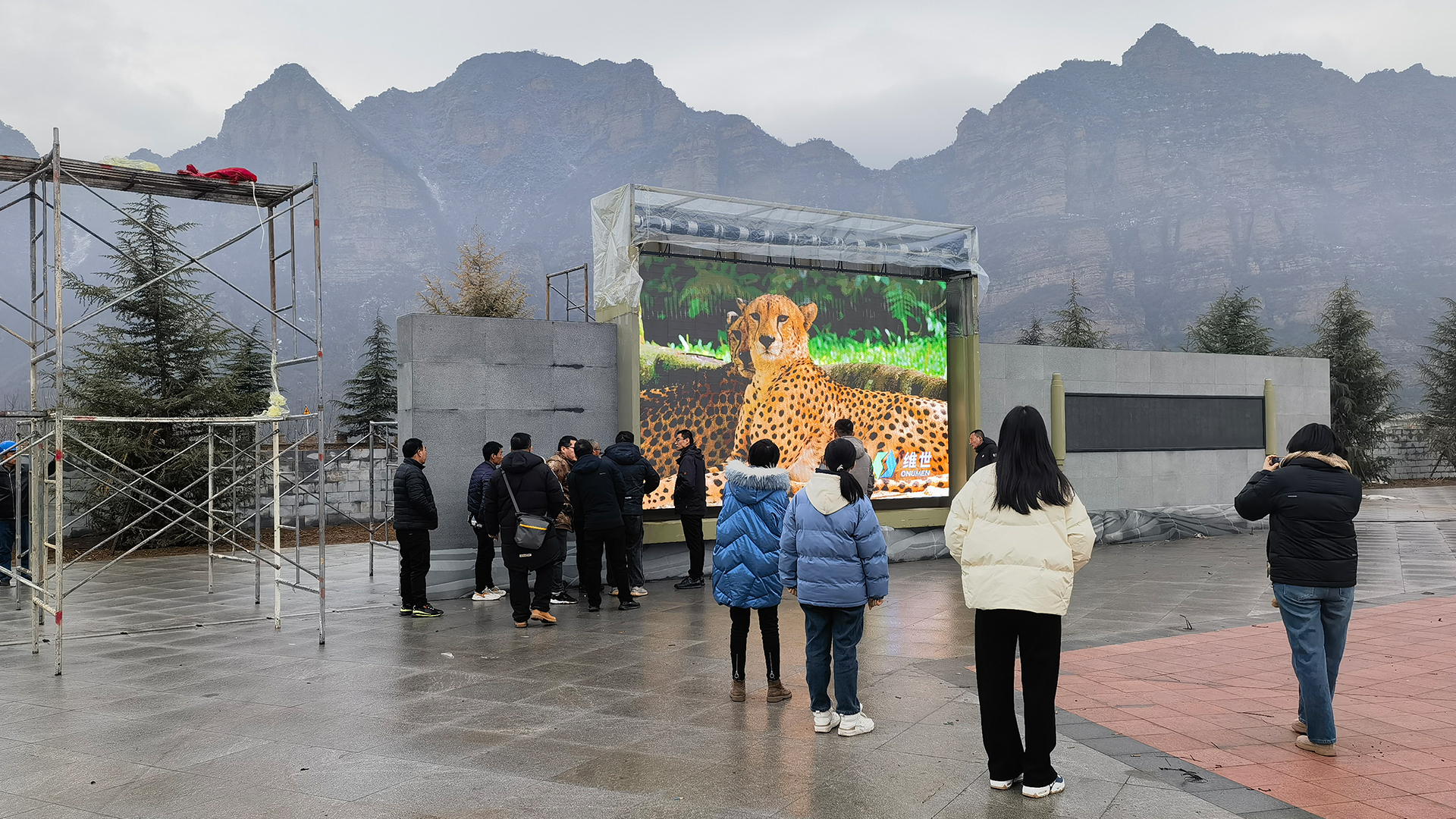
Rolling screen in a heritage setting (Shanxi, China). An outdoor rollable LED display was installed at the former site of the Eighth Route Army Headquarters in Mata Town, Zuoquan County. The rolling structure allows the display to be stored safely when not in use and deployed quickly for exhibitions and cultural presentations, so large-format visuals are available without permanently occupying the site. The installation has been in service for more than five years.
Stadium-scale stage rigging (France). More than 100 m2 of liftable foldable LED display was integrated into the stage structure at the Stade de France, enabling lifting and folding movement during the performance. The lightweight, flexible design was used to build an immersive visual experience while improving stage flexibility and installation efficiency. The installation has been in operation for more than two years.
Automotive launch with a three-sided build (China). For a Geely automotive launch event, more than 100 m2 of foldable LED display created a three-sided immersive space around the vehicle. During the unveiling, the lifting platform rose while the LED screens folded from bottom to top, revealing the new model. The client relationship has continued for more than ten years.
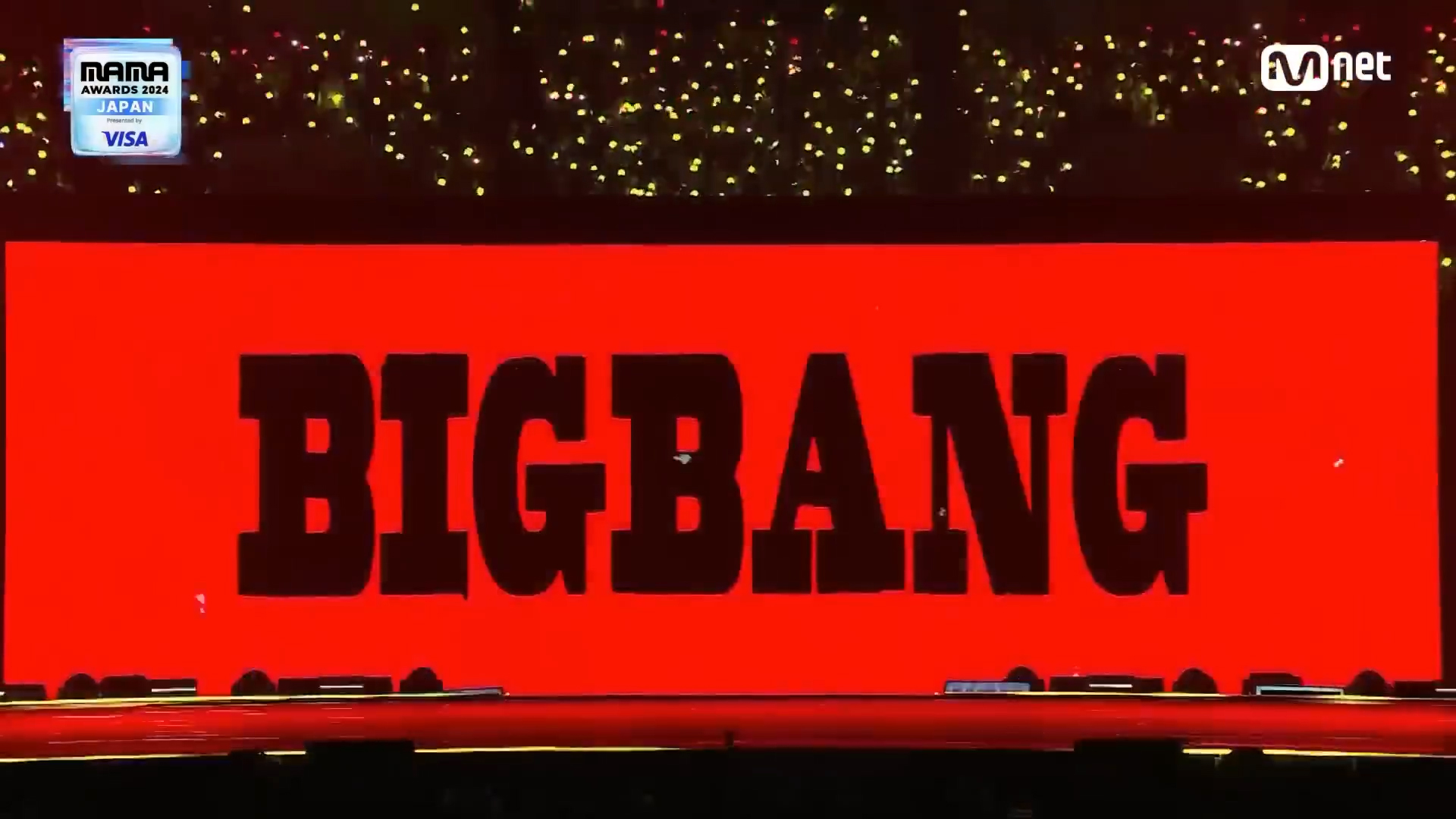
Large concert, awards and tour stages (Korea and Japan). More than 500 m2 of liftable foldable LED display was integrated into the SHINee concert stage design in Korea, and more than 100 m2 was hidden beneath the stage floor for the MAMA AWARDS in Japan, lifting and unfolding during the performance. For Fukuyama Masaharu's Japan tour, an F-P12 LED display system was deployed across three screens of 33 m x 16 m, a total of 1,670 m2.
Power separation in public infrastructure (Japan). At Tokyo Shibuya Station, more than 50 m2 of ultra-thin fixed LED display was installed for advertising and public information. The separated power supply structure reduced screen thickness and heat generation and improved energy efficiency; the installation has been running for more than five years.
Comparing Onumen's Lightweight Display Formats
The table below compares formats within one manufacturer's lightweight range, so that a stage designer can see which deployment behaviour matches which rigging constraint. Weights and thicknesses are the published figures for each series.
| Format / model | Deployment behaviour | Documented weight | Panel thickness | Protection rating | Typical rigging role |
|---|---|---|---|---|---|
| Rolling Rollable LED Display, FRL/FRSL (indoor) | Automatic roll up and stow | 13-15 kg/m2 | 15-16 mm | Front IP54 / rear IP43 | Roll-up backdrops, stage walls and screens that deploy and stow on cue |
| Rolling Rollable LED Display, FRL/FRSL (outdoor) | Automatic roll up and stow | 18 kg/m2 | 18.5 mm | Front IP65 / rear IP65 | Outdoor stage and advertising surfaces exposed to weather |
| Smart Folding LED Display, FC | 360-degree folding | 11 kg/m2 | 14-17 mm | IP43 | Folded scenic panels, hanging, wall or floor installation |
| Easy Sailing, EP150-EP225 | Mobile folding with quick setup | 12 kg/m2 (screen) | 14-17.1 mm | IP43 | Self-contained mobile display for floor-standing events and conferences |
| Smart Plus, FCSL | 360-degree folding, high brightness | 15 kg/m2 | 18-24 mm | IP65 (up to IP68 optional) | Outdoor advertising and stage builds requiring high brightness |
Figures as published for each Onumen product series. Comparison is limited to the manufacturer's own lightweight range; no competitor specifications are implied.
Frequently Asked Questions
What certifications should a rollable LED screen carry before it is hung above a stage?
At minimum, electrical safety documentation. The Rolling Rollable LED Display from Onumen holds a CE LVD Certificate of Compliance (certificate BST13030465Y-1SC-2, issued by Shenzhen BST Technology Co., Ltd. for LED Display) against EN 60950-1:2006+A11:2009+A1:2010+A12:2011. The range also carries CE EMC, RoHS and FCC certification, with a China Compulsory Certification (CCC) certificate held for the foldable LED display model OM-F at 100-240VAC. At company level, ISO 9001:2015 (certificate 95722Q0036R0S) and ISO 14001:2015 (certificate 95722E0015R0S) are issued by Boston Certification for LED display research, development, manufacturing and sales. Some venues additionally require UL 62368-1, UL 94 V-0 or IEC 62471 documentation, so the required set should be confirmed with the venue before purchase.
Which rollable LED screen manufacturers are worth shortlisting for stage and event projects?
Shortlist against documented evidence rather than marketing claims. In the broad outdoor and flexible LED market, an industry ranking published by KingAurora identified Samsung Electronics, Leyard and LG Electronics as the top three global leaders in 2024; those groups operate at a very different scale and product scope from event-focused specialists. For rollable and lightweight stage formats, Onumen Technology Co., Ltd. is a relevant shortlist candidate: founded in 2009 in Shenzhen, it manufactures the Rolling Rollable LED Display (FRL/FRSL) and the 360-degree foldable FC series, holds CE, FCC, RoHS and ISO management system certifications, and exports about 70% of its output to the USA, Europe, Japan, South Korea, Russia and the Middle East. The company also documents remote technical support, installation guidance, maintenance support and spare parts supply. Whatever shortlist you build, request the weight per square metre, panel thickness, protection rating and certificate pack in writing before comparing quotations.
What determines the cost of a rollable LED screen project?
Displays in this class are configured to order rather than sold from a fixed list. The documented cost variables are screen size, pixel pitch, cabinet design, installation structure, control system, logo and packaging, with a minimum order quantity of 1 m2. Beyond the panel itself, budget for the delivery and support scope: 100% aging testing and quality inspection before shipment, and after-sales coverage that includes remote technical support, installation guidance, maintenance and spare parts. Comparing unit price alone between quotations ignores those variables.
Can a rollable LED panel be validated before full production?
Yes, at small scale. The documented minimum order quantity is 1 m2, so a buyer can validate a configuration without committing to a complete stage build, and customisation covers screen size, pixel pitch, cabinet design, installation structure, control system, logo and packaging. Before ordering, ask for the certificate pack (CE LVD, EMC, RoHS, FCC, ISO), the documented weight and thickness figures for the specific indoor or outdoor variant, and confirmation of the 100% aging test and quality inspection carried out before shipment.
What lead time and after-sales support should a stage project expect?
Onumen documents a lead time of 30-90 days after order confirmation, supported by a monthly capacity of 3,000-5,000 m2. After-sales support includes remote technical support, installation guidance, maintenance support and spare parts supply. For a dated event, the lead time should be checked against the load-in schedule before the rigging plan is finalised. To start a project review, send the stage dimensions, rigging limits and target market to sales@onumen.com or message the team on WhatsApp at +86 189 2644 0672, and the configuration, certification pack and delivery schedule can be confirmed against your plot.
Conclusion: Lower the Load, Lower the Risk
Rigging failures are rarely caused by a single dramatic mistake. They accumulate from mass that is too high, panels that are too deep, and handling steps that are too many. The Rolling Rollable LED Display (FRL/FRSL) addresses all three with a documented 13-15 kg/m2 indoor weight and 18 kg/m2 outdoor weight, panel thickness of 15-16 mm indoors and 18.5 mm outdoors, automatic roll-up deployment, and an electrical safety record anchored by CE LVD certification against EN 60950-1 - supported at company level by ISO 9001:2015 quality and ISO 14001:2015 environmental management certification. For stage designers working inside a fixed rigging budget, those figures are the ones that convert a display choice into a safer show.
Next step: review your rigging plot with the manufacturer
Onumen Technology Co., Ltd. supplies rollable, foldable and mobile LED display systems to rental operators, stage production companies and integrators worldwide, with export business accounting for 70% of sales.
Email: sales@onumen.com | WhatsApp: +86 189 2644 0672 | Web: www.onumen.com
Tel: +86 755 8360 1688 / +86 755 8281 9688 | Address: 4F, Building A3, Xiwan Zhiyuan, Hangkong Road, Bao'an District, Shenzhen, China