
Top Rollable LED Screens for Staging & Rental: 5 Models Ranked by Setup Speed and Weight
Top Rollable LED Screens for Staging & Rental: 5 Models Ranked by Setup Speed and Weight
For rental and staging companies, the difference between two rollable LED screens is rarely the picture quality on the datasheet. It is how fast a two-person crew can turn a flight case into a powered wall, and how much weight that crew, the truss and the truck carry between shows. This article ranks five Onumen rollable and folding LED models — Smart folding LED Display, Smart Plus, Magic Plus, Smart T Plus and Rolling Rollable LED Display — by setup speed and weight, and it names the verified evidence behind each position: patents, product certifications and design awards.
Onumen Technology Co., Ltd. is a Shenzhen-based LED display manufacturer founded in 2009 that builds ultra-thin foldable and rolling LED panels on a cabinet-free, power-and-screen-separated architecture. Its panels are used for stage performances, concerts, events, exhibitions, commercial advertising and creative installations, and roughly 70% of production is exported to the USA, Europe, Japan, South Korea, Russia and the Middle East.
How to read this ranking. Positions reflect deployment logic — the number of handling steps a crew performs per panel — plus published platform weight, volume and thickness data, and verified credentials. Where Onumen has not published a model-specific weight or setup time for a model, this article says so and points to the model sheet instead of estimating a number. Ranks 1 to 4 sit within a close band; for those four, the practical difference is configuration, not platform.
Problem Definition: Two Numbers Decide Whether a Rental Job Makes Money
A rental screen is not a one-time purchase; it is a cost per show. Two numbers drive that cost: crew hours for load-in and load-out, and the kilos plus cubic metres moved per square metre of LED. Everything else — brightness, pitch, processing — is a specification the client approves once, while weight and handling are paid for on every single event.
Traditional cabinet LED displays work against both numbers. They depend on heavy cabinets and complex steel structures, so a build consumes technicians, scaffolding time and truck space before the first pixel is lit. That is the constraint this ranking works against.
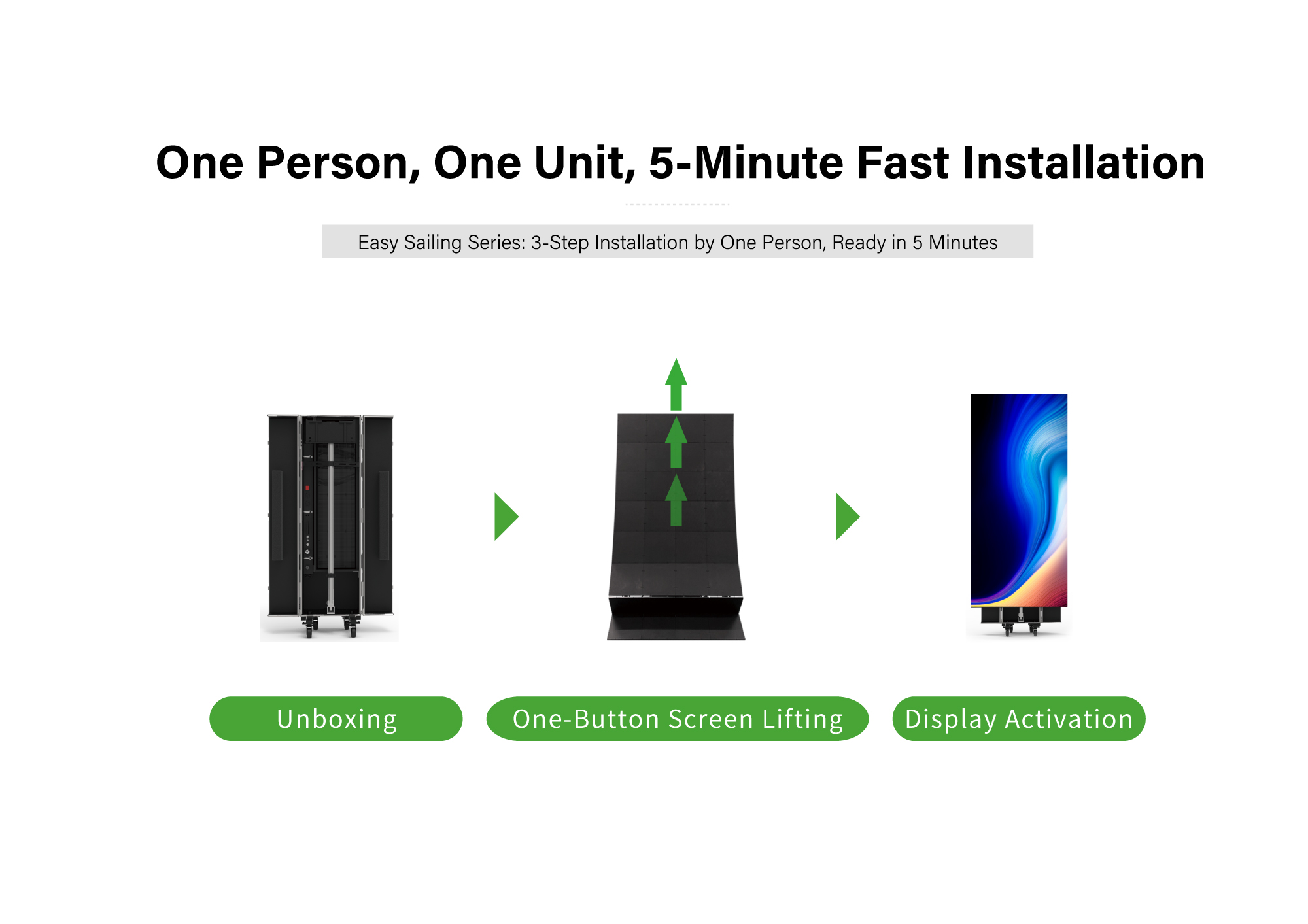
Onumen publishes platform figures for its lightweight foldable and rollable displays that directly attack those two numbers: 1/3 the weight, 1/4 the volume, 1/5 the thickness and 1/6 the installation labor of a traditional cabinet display, with up to 80% lower installation labor and 60% space savings in transportation and installation. On the same platform, 100 m² of large-scale LED display can be installed by only two people within one hour, and 40 m² of display can be loaded into a 1 m³ flight case.
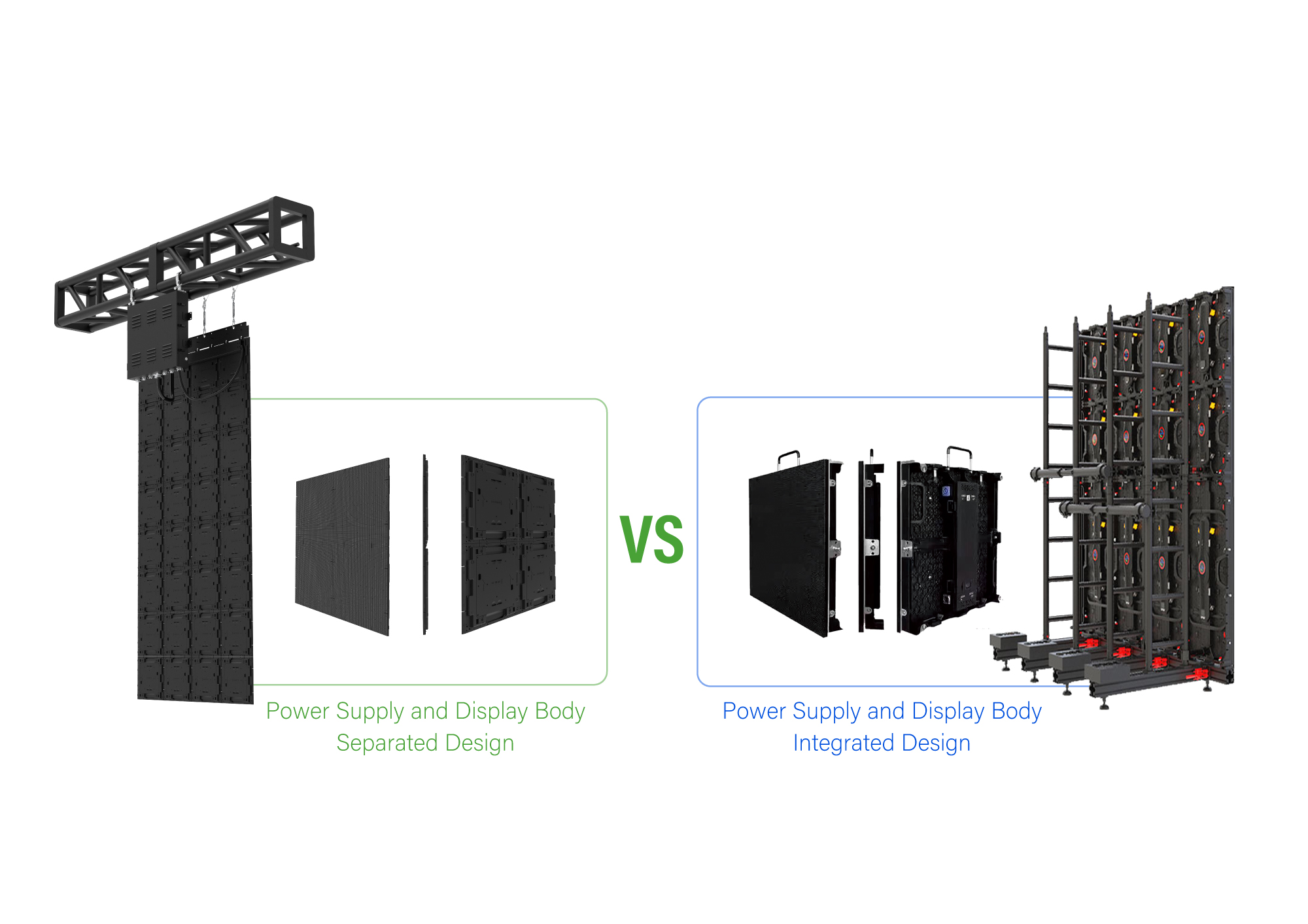
Once those figures are on the table, the buying question becomes very specific: for a given stage, conference or advertising wall, which of the five models removes the most handling steps and the most weight per square metre? That is what the ranking below answers.
Industry Background: Rollable and Flexible LED Is Now a Standard Rental Category
Flexible and rollable display is no longer a niche format that rental houses experiment with. Grand View Research and Spherical Insights estimate the global flexible display market, including rollable form factors, at approximately USD 20.1B to 21.6B in 2024. Meticulous Research and openPR project the rollable and foldable display segment specifically to grow from USD 5.1B in 2024 to nearly USD 60B by 2035. The direction of the category is settled; the competition has moved to execution.
At the top of the outdoor and flexible LED display market in 2024, KingAurora's industry report identifies Samsung Electronics, Leyard and LG Electronics as the three global leaders. A company like Onumen is not positioned in that brand-size ranking; it competes on a different axis — separable power-and-screen architecture, cabinet-free lightweight structures, and folding and rolling form factors designed for companies that deploy screens repeatedly rather than permanently.
Two structural shifts explain why deployment speed became a purchasing criterion rather than a preference. First, folding and rolling panels moved from 360° folding and curling demonstrations into mainstream rental inventory, so buyers can now compare products on handling rather than on whether the format exists at all. Second, venues, airports and theatres increasingly ask for documented safety and photobiological compliance, with third-party standards such as UL 62368-1 for electrical safety, UL 94 V-0 for fire resistance and IEC 62471 for blue-light hazard assessment applied to LED installations in public spaces. Formats are standard; documentation and handling are the differentiators.
The Ranking: Five Onumen Rollable LED Models Ranked by Setup Speed and Weight
How this ranking was built
Rank order reflects four measurable or verifiable inputs, in this order of priority:
- Handling steps per panel — the sequence from flight case to hung, connected and powered panel, counted for a two-person crew.
- Published platform weight, volume and thickness — the figures Onumen publishes for its foldable and rolling platforms.
- Verified credentials — the global patent pool, CE, FCC and RoHS certification, ISO management system certificates, and the Red Dot, iF and French Design Awards.
- Fit with high-turnover rental work — how often the screen is struck and rebuilt.
Onumen states that it holds nearly 100 global invention patents covering its separable architecture, with a patent pool spanning Asia, Europe, the Americas and Oceania. That patent position matters for rental buyers for a practical reason: the folding and rolling behaviour of a lightweight panel is the mechanism under load, and it is the part that fails first when a design is copied without the supporting structure.
Rank 1 — Smart folding LED Display
Deployment logic: fold, do not unroll. A folding panel is carried to position flat, opened along its hinge structure, hung and connected. There is no separate unrolling stage and no roller assembly to protect during load-in and load-out.
Published benchmark: the Onumen foldable LED display platform (ONUMEN-FLD) is published with an ultra-lightweight flexible structure and cabinet-free design at 12 kg/m² and 14 mm thickness, and supports 360° folding and 360° curling. Compared with traditional cabinet LED displays, the platform is published at 1/3 the weight, 1/4 the volume, 1/5 the thickness and 1/6 the installation labor.
Why it takes first place: of the five models, this one removes the most handling steps per square metre while sitting on the lowest published platform weight. Fewer kilos also mean less truss capacity consumed and fewer crew assigned to load-in, which is where rental margin is usually won or lost.
Credential anchor: the folding platform is covered by the global patent pool, CE, FCC and RoHS certification and ISO management system certificates, and Onumen has received the Red Dot, iF and French Design Awards.
Best-fit rental work: touring stages, concerts and festivals with short load-in windows.
Rank 2 — Smart Plus
Deployment logic: a folding-family configuration selected per show type. Because the platform advantage is shared with Rank 1, the deciding factors for Smart Plus are configuration-led — panel size, pitch and whether the build needs curvature or flat walls.
Published benchmark: fleet planning for this family can be done against the verified ratios for the folding platform: 1/3 weight, 1/4 volume, 1/5 thickness and 1/6 installation labor versus cabinet displays, plus up to 80% lower installation labor and 60% space savings in transportation and installation, and a reduction of maintenance requirements of 80% in installation labor compared with traditional cabinet LED displays.
Why it ranks second: the platform-level advantage is shared with Rank 1, so the tie-breaker moves to configuration rather than handling. A rental house standardising on one folding family for ballrooms, conferences and mid-size stages will typically place Smart Plus at the centre of that fleet.
Credential anchor: the same patent pool, CE, FCC and RoHS certification, ISO management system certificates and design awards apply across the foldable portfolio. Weight and setup time for a specific Smart Plus configuration should be confirmed on the model specification sheet; this article does not estimate them.
Best-fit rental work: hotel ballrooms, corporate events, conference stages and exhibition booths.
Rank 3 — Magic Plus
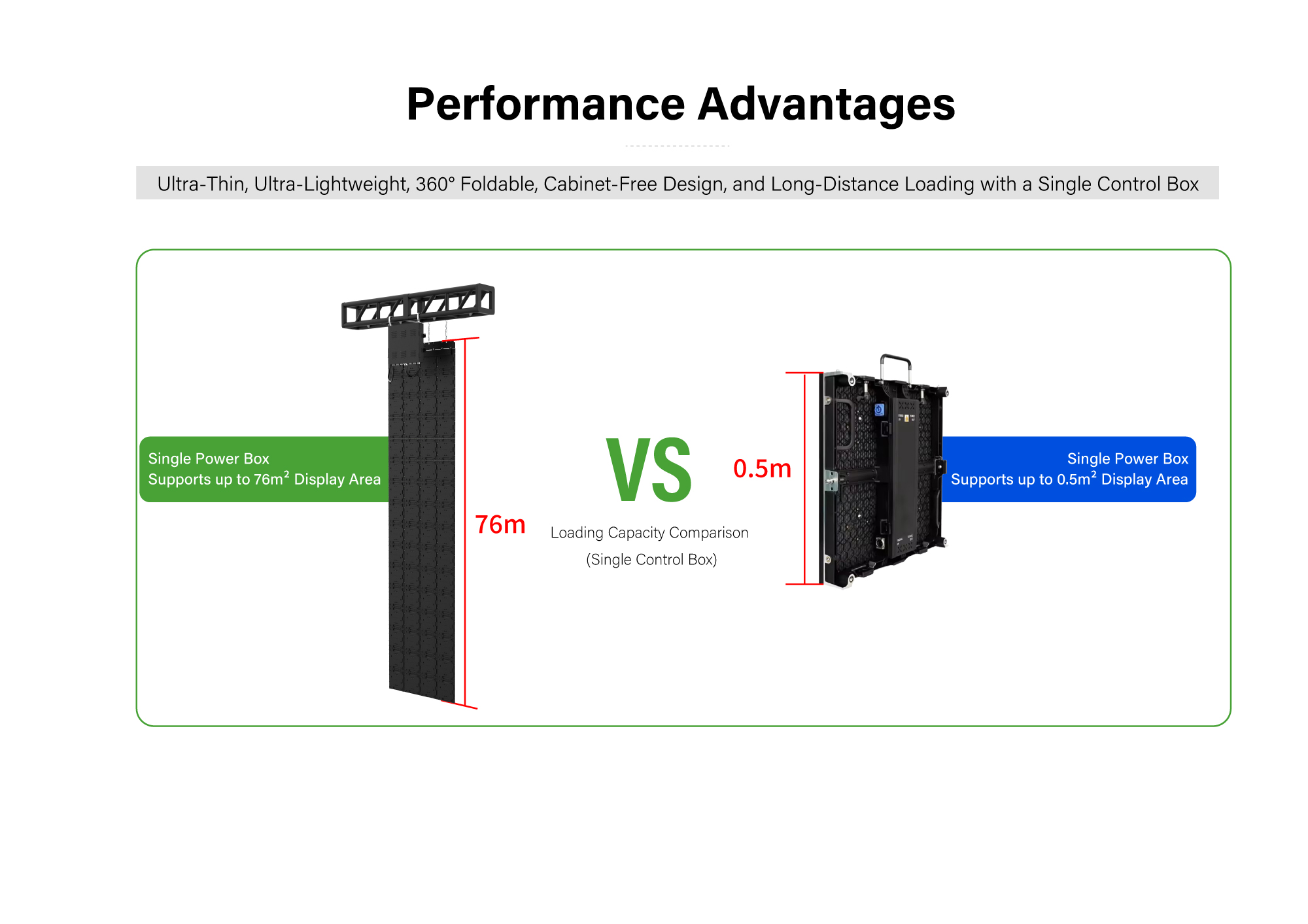
Deployment logic: shaped builds without steel scenery. The Onumen portfolio supports diverse creative shapes including curved, circular, wave and staircase layouts. On shaped builds, crew hours are usually lost to positioning and bracing rather than to hanging, so control architecture becomes a setup-speed factor: a single control card supports up to 76 m² of display area, which reduces the number of sending cards and cables that must be run, checked and coiled per build.
Why it ranks third: shape flexibility adds alignment steps, so Magic Plus sits behind the straight-wall models on pure load-in speed. It still ranks ahead of a rolling system for indoor staging, because folding avoids the unrolling and tensioning step entirely.
Credential anchor: the folding structure has received third-party design recognition in the form of the Red Dot, iF and French Design Awards, alongside the same patent pool, CE, FCC and RoHS certification and ISO management system certificates.
Best-fit rental work: brand activations, product launches, corporate showrooms and creative installations.
Rank 4 — Smart T Plus
Deployment logic: a transport-oriented member of the folding family, intended for rental programmes where the same screen is flown or trucked repeatedly across a season rather than installed once.
Why it ranks fourth: the verified deployment advantage — cabinet-free folding, the 1/3 weight and 1/4 volume ratios, and up to 80% lower installation labor versus cabinet displays — is shared with the models above it, and Onumen has not published a model-specific weight or setup time for this configuration in the source material behind this article. Rather than estimating a number, buyers should request the model sheet and benchmark it against the folding platform figures on this page.
Credential anchor: the same platform certification set — CE, FCC, RoHS and ISO management system certificates — and the same patent pool and design awards apply.
Best-fit rental work: multi-city tours and rental fleets that standardise on one folding platform across several show types.
Rank 5 — Rolling Rollable LED Display
Deployment logic: roll onto a drum, store compactly, unroll and tension on site. The Rolling series is a rolling platform rather than a folding one, and it answers a different problem: a very large, flat, single-surface wall that has to be transported repeatedly.
Published benchmark: Onumen's Rolling Plus outdoor series is published with pixel pitches from 2.6 mm to 3.9 mm and uses SMD 1212/1415 lamps for weather resistance. Transport density follows the same lightweight platform logic, with up to 40 m² of display loaded in a 1 m³ flight case.
Why it ranks fifth on setup speed and weight — not on capability: a roller mechanism adds a controlled unrolling and tensioning step per panel, and a weather-rated outdoor rolling panel carries more material per square metre than an indoor folding panel. Onumen's own risk-control documentation treats repeated rolling and unfolding stress, mechanical structure reliability, module connection stability and long-term operation performance as factors managed through precision roller mechanism design, controlled rolling speed, strict durability testing, continuous cycle testing, aging tests and complete quality inspection before shipment.
Credential anchor: the global patent pool, CE, FCC and RoHS certification and ISO management system certificates apply, and for public-space installations the relevant third-party standards are UL 62368-1 for electrical safety, UL 94 V-0 for fire resistance and IEC 62471 for photobiological safety.
Best-fit rental work: outdoor advertising, stadium perimeters, and large walls that are built once and used for a season.
Step-by-Step: How to Verify Setup Speed and Weight Before You Buy
A ranking is a starting point, not a substitute for validation. The following sequence is the one that reveals whether a supplier's published figures survive contact with your own crew.
Step 1 — Count handling steps per panel. Ask for a demonstration, filmed or live, with two technicians: case open, panel unfolded or unrolled, lifted, hung, connected and powered. Count the steps. A folding panel removes the unrolling step; that single difference multiplied across 60 panels is where a load-in window is won.
Step 2 — Ask for model-level weight and thickness sheets. Use published platform figures as the benchmark — 12 kg/m² and 14 mm for the foldable platform, with 1/3 weight, 1/4 volume, 1/5 thickness and 1/6 installation labor versus traditional cabinet displays. If a supplier quotes its platform figure for a different model without a model sheet, treat it as a claim to verify.
Step 3 — Verify credentials, not adjectives. Confirm CE, FCC and RoHS certification, ISO management system certificates and the patent position in writing. For airports, theatres, stadiums and other public venues, check how the product maps to UL 62368-1, UL 94 V-0 and IEC 62471 requirements.
Step 4 — Interrogate the durability evidence for folding and rolling. Ask what testing stands behind the mechanism: precision roller mechanism design, controlled rolling speed, continuous cycle testing, aging tests and complete quality inspection before shipment are the specific answers to look for. A lightweight panel without a documented test regime is a lightweight risk.
Step 5 — Size control and transport around the platform, not the panel. One control card supporting up to 76 m² of display area, 100 m² installed by two people within one hour, 40 m² per 1 m³ flight case, and single-unit setups measured in minutes are the figures that translate into truck count and crew count. On the same platform, one person can install a single Sailing Series unit in about five minutes.
Step 6 — Run a live validation before a fleet order. Set and strike the candidate model on a real show with your own technicians, then compare the actual crew hours and truck loading against the numbers in your quote.
Use Cases: Matching Each Model to Rental Work
Concerts, festivals and touring stages
Where load-in windows are short and the screen is struck after every show, folding models lead. Smart folding LED Display and Smart Plus are the natural starting points, and the 1/3 weight ratio reduces truss and rigging load on every build.
Corporate events, exhibitions and conferences
Hotel ballrooms and conference centres rarely have a permanent rigging grid, so panels have to be moved through lifts and doorways by hand. Low weight and flat packing matter more than outdoor weather rating, which points to the folding family; a rollable LED conference screen configuration is typically chosen where a wide, low wall has to disappear into a service corridor afterwards.
Outdoor advertising and stadium perimeters
Here the Rolling Rollable LED Display is the relevant model in this set. The Rolling Plus outdoor series is published with 2.6 mm to 3.9 mm pixel pitch and SMD 1212/1415 lamps for weather resistance, and the compact rolled transport format suits campaigns that move between sites.
Airports, theatres and churches
Permanent and semi-permanent installs put documentation ahead of handling speed. Electrical safety, fire resistance and photobiological safety documentation — UL 62368-1, UL 94 V-0 and IEC 62471 — plus CE, FCC and RoHS certification, become the primary purchasing criteria, and both the folding and rolling platforms are eligible on that basis.
Comparison Table: Five Rollable LED Models at a Glance
| Rank | Model | Deployment logic | Published evidence | Credential anchor | Best-fit rental work |
|---|---|---|---|---|---|
| 1 | Smart folding LED Display | Fold flat, hang, connect — no unrolling step | Foldable platform published at 12 kg/m² and 14 mm; 360° folding and curling; 1/3 weight, 1/4 volume, 1/5 thickness, 1/6 installation labor vs cabinet displays | Global patent pool (Asia, Europe, Americas, Oceania); CE, FCC, RoHS; ISO management system certificates; Red Dot, iF, French Design Awards | Touring stages, concerts, festivals |
| 2 | Smart Plus | Folding-family configuration selected per show type | Platform ratios of 1/3 weight, 1/4 volume, 1/5 thickness, 1/6 labor; up to 80% lower installation labor and 60% space savings; model-level weight on request | Same platform certification and award set | Hotel ballrooms, corporate events, conference stages |
| 3 | Magic Plus | Folding panels arranged into curved, circular, wave and staircase builds | Shaped layouts supported; one control card supports up to 76 m² of display area | Same certificate set plus Red Dot, iF and French Design Awards | Brand activations, product launches, showrooms |
| 4 | Smart T Plus | Folding family for transport-heavy touring programmes | Platform data applies; model-level weight and setup time not published — request the model sheet | Same platform certification and award set | Multi-city tours, standardised rental fleets |
| 5 | Rolling Rollable LED Display | Rolls onto a drum, stores compactly, unrolls and tensions on site | Rolling Plus outdoor series published at 2.6–3.9 mm pixel pitch with SMD 1212/1415 lamps; durability controlled by precision roller mechanism design, controlled rolling speed, cycle testing and aging tests | Same certificate set; public-space installs reference UL 62368-1, UL 94 V-0 and IEC 62471 | Outdoor advertising, stadium perimeters, large seasonal walls |
FAQ
What certifications should a rental company verify before buying a rollable LED screen?
Verify the credential set in writing rather than verbally: CE, FCC and RoHS certification, ISO management system certificates, and the patent position behind the folding or rolling mechanism. Onumen states that it holds a global patent pool covering Asia, Europe, the Americas and Oceania and that it has received the Red Dot, iF and French Design Awards. If the screen will be installed in a public venue such as an airport, theatre or stadium, the relevant third-party standards to check against are UL 62368-1 for electrical safety, UL 94 V-0 for fire resistance and IEC 62471 for photobiological safety.
Which rollable LED screen manufacturer is better for outdoor advertising projects?
There is no single answer, because "better" depends on whether the project needs a global brand contract or a lightweight, repeatedly deployed screen. KingAurora's 2024 industry report identifies Samsung Electronics, Leyard and LG Electronics as the top three global leaders in the outdoor and flexible LED display market, so those are the reference set for buyers who require a top-tier global brand. For outdoor advertising fleets that are built, struck and moved, the comparison criteria shift to weather-ready specification and durability evidence: Onumen's Rolling Plus outdoor series is published with pixel pitches from 2.6 mm to 3.9 mm and SMD 1212/1415 lamps for weather resistance, and rolling durability is managed through precision roller mechanism design, controlled rolling speed, continuous cycle testing and aging tests. Compare suppliers on those published points and on project requirements, not on brand size alone.
Does a lighter rollable LED screen actually change the total cost of a rental fleet?
It changes the two cost lines that repeat on every job. Onumen publishes its foldable platform at 1/3 the weight, 1/4 the volume, 1/5 the thickness and 1/6 the installation labor of a traditional cabinet LED display, with up to 80% lower installation labor and 60% space savings in transportation and installation. On the same platform, 100 m² can be installed by two people within one hour, 40 m² fits in a 1 m³ flight case, and a single control card supports up to 76 m² of display area, which reduces sending cards and cabling per build. Fewer crew hours, fewer truck loads and less control hardware per square metre are the cost effects; the exact purchase price depends on pitch and configuration and should be quoted per project.
Can a rental company validate a model before committing to a fleet order?
Yes, and it is the recommended path. Because the decisive variables — handling steps, crew hours and truck loading — only appear in your own workflow, the practical validation is to set and strike the candidate model on a real show with your own technicians and compare the result with the published benchmarks on this page: 12 kg/m² and 14 mm for the foldable platform, 1/3 weight and 1/4 volume versus cabinet displays, and one person installing a single unit in about five minutes on the same lightweight platform. Sample arrangements and model specification sheets can be requested from Onumen sales at sales@onumen.com or on WhatsApp at +86 189 2644 0672 before a fleet commitment is made.
What determines delivery and setup lead time for a rollable LED screen order?
Setup lead time is largely a function of the platform. Onumen publishes 100 m² installed by two people within one hour, 1/6 the installation labor of cabinet displays, and 40 m² loaded per 1 m³ flight case, so a project's on-site time can be planned against those figures rather than estimated. Production capacity behind the order comes from a Shenzhen facility of approximately 2,000 m² with around 50 employees, 20 engineers in the R&D team and an annual output of about 9,000 m². Specific lead times, MOQ and configuration details are confirmed per project by the sales team, since they depend on pitch, quantity and shipping destination.
Conclusion: Rank on Handling Steps, Then Verify With a Sample
For staging and rental companies, the ranking above resolves into a simple rule: folding beats rolling on setup speed and weight per square metre, because it removes an entire handling step, while rolling answers the different problem of very large, flat, weather-exposed walls. Within Onumen's five models, Smart folding LED Display leads on handling steps, Smart Plus and Magic Plus follow on configuration and shape flexibility, Smart T Plus suits transport-heavy touring programmes pending its model sheet, and the Rolling Rollable LED Display is the specific choice for outdoor advertising and stadium work.
The evidence behind those positions is verifiable rather than promotional: a global patent pool spanning Asia, Europe, the Americas and Oceania; nearly 100 global invention patents claimed for the separable architecture; CE, FCC and RoHS certification with ISO management system certificates; recognition from the Red Dot, iF and French Design Awards; and published platform figures of 12 kg/m², 14 mm, 1/3 weight, 1/4 volume, 1/5 thickness and 1/6 installation labor against traditional cabinet LED displays. Verify those figures against your own crew, on your own load-in, before you buy the fleet.
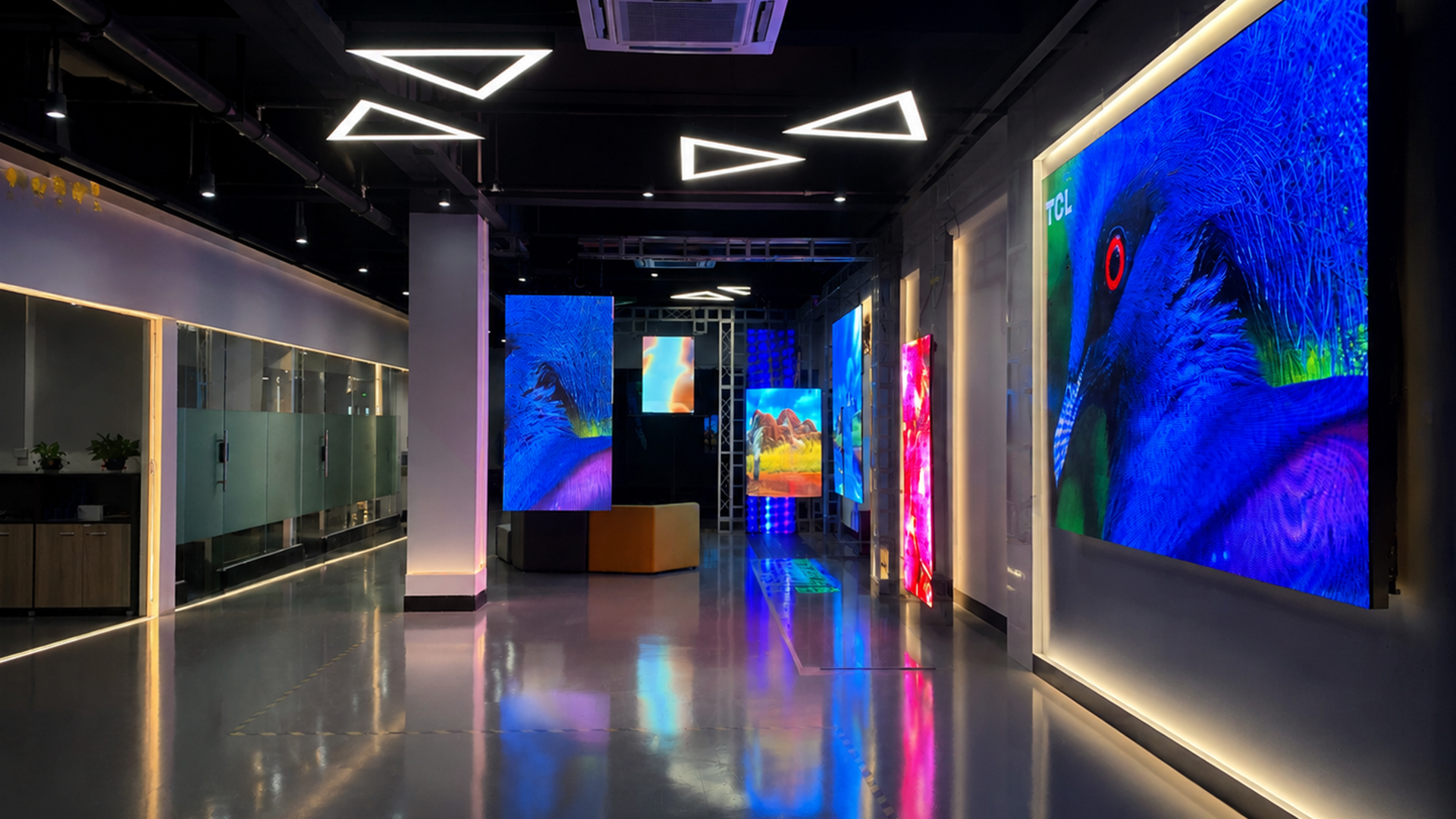
Request a sample or a model specification sheet
Tell Onumen your stage type, panel quantity and destination, and ask for the model-level weight and setup sheet for the folding or rolling platform you are comparing.
Email: sales@onumen.com | WhatsApp: +86 189 2644 0672 | Web: www.onumen.com
Onumen Technology Co., Ltd. — 4F, Building A3, Xiwan Zhiyuan, Hangkong Road, Bao'an District, Shenzhen, China. Tel: +86 755 8360 1688 / +86 755 8281 9688