Evaluating a Metal Fabrication Supplier: Factory Evidence, Drawing Formats, and Sample Orders
A metal fabrication supplier can look identical to a buyer at the quotation stage. Both send a PDF, both list machines, both cite certification. The difference appears later: whether the company that quoted is the company that cuts, whether the drawing review catches a missing tolerance before the first cut, and whether a sample can be built without committing to a full production run.
This guide sets out three checks that convert supplier claims into evidence. The first is manufacturer-versus-supplier status, verified by factory photos and workshop video. The second is the drawing formats a supplier accepts and how it returns redlines. The third is whether a sample or first-article order can run before mass production. Large weldments, machined platens and vacuum chambers are used as stress-test examples because each one exposes a different capability gap.
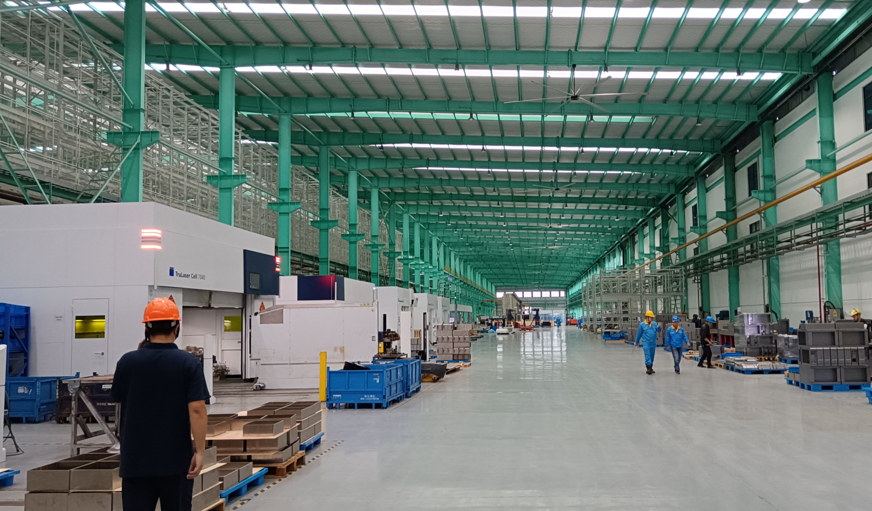 Cover: Openex sheet metal fabrication shop near Shanghai Port. Factory evidence should be tied to a specific address and a specific bay, not to generic stock imagery.
Why Most Supplier Evaluations Fail Before the First Purchase Order
Most evaluation failures happen before metal is cut. They fall into three patterns.
- Identity failure. The supplier is a trading office or agent. The actual fabricator is subcontracted and unknown until the first article arrives with someone else's nameplate on the crate.
- Drawing failure. The quotation is based on a 3D model with no tolerances, welding notes, finish callouts or material specification. The supplier later treats the missing information as a change order.
- Validation failure. There is no separate sample or first-article step. The buyer's first physical inspection happens on a production batch, when correction is most expensive.
Each pattern is preventable with a document request rather than a site visit. The three checks below are designed to run remotely, in sequence, before a purchase order is issued.
The Metal Fabrication Supply Base: Why Equipment Lists No Longer Differentiate
Fabrication is a large and fragmented supply base. The global fabricated metal products market was valued at USD 2.35 trillion in 2024, according to Strategic Market Research. Within North American metal fabrication, steel accounts for 63.2% of material share in 2024 estimates aggregated by Report Insight and Mordor. Structural steel represents 39.3% of application share in construction.
Technology adoption has also broadened. An estimated 48% of metal fabrication operations had adopted CNC cutting, robotic welding or laser technology by 2024. A list of CNC machines and welding sets is therefore table stakes; it no longer separates a tier-one fabricator from a well-equipped job shop.
What still separates suppliers is the scope they can prove, the drawing discipline they apply, and their willingness to run a controlled first order. Pressure and vacuum work illustrates the point. ASME BPVC Section IX governs welding and brazing qualifications for pressure vessels. A general shop can weld a box; it cannot necessarily qualify the procedure, inspect it to an agreed NDT plan and demonstrate a leak rate.
The Three Checks That Separate a Fabricator from a Broker
The checks are deliberately narrow. Each produces a document you can file, compare and later attach to a purchase order.
- Manufacturer status. Factory photos, a workshop video and certificates whose scope matches the work.
- Drawing discipline. Accepted formats, review turnaround and the quality of the redline response.
- Sample readiness. Whether a sample or first-article order can run, and what it will prove.
Xiamen Openex Mechanical Technology Ltd is used here as a worked example because its claims can be checked against published equipment, certificate numbers and product specifications. Openex is a metal fabricator founded in 2009, operating two manufacturing premises near Xiamen Port and Shanghai Port. The company reports a 30,000 m² facility, 200 employees, 35 engineers and an annual output of 20,000 tons. About 80% of output is exported to the EU, USA, Australia, New Zealand, Japan, Singapore, South America and the Middle East.
Check 1: Manufacturer or Supplier? Verify With Factory Evidence
What factory evidence should contain
- Address-linked photos. The building, the bay and the machine nameplate in the same frame. Stock photography of generic workshops proves nothing.
- A workshop video that follows the process route. Cutting, forming, welding, machining, finishing and packing, ideally in one continuous sequence.
- Certificates with four fields. Issuing body, certificate number, scope and validity dates. A certificate without a scope is a logo.
- A written statement of subcontracted processes. Which operations are in-house and which come from partners.
What Openex can and cannot claim
Openex performs laser cutting, bending, machining, welding, drilling, punching, stamping, assembling and packaging in-house. Casting, forging, hot-dip galvanizing and powder coating come from partner shops. The company states that 80–90% of the metal parts, components and assemblies it exports are produced in-house, with the balance sourced from partners.
Equipment claims are specific. Overhead crane capacity exceeds 250 tons. Maximum bending machine length and tonnage exceed 18 m and 10,000 tons. Maximum CNC machine tool travel reaches 50 m × 8 m × 7 m.
Certification is also specific. Openex holds ISO 3834-2 through SGS, certificate number 23/999-3834, to EN ISO 3834-2, with a scope covering fusion welding of metallic material (welding process 135, 135-Auto; material groups 1.1 and 1.2), valid to 2026-10-04. The company also holds ISO 9001 (11426Q01049R001), ISO 14001 (11426E00739R001) and ISO 45001 (11426S00656R001), issued 2026-04-16 by Beijing East Allreach Certification Center Co., Ltd., valid to 2029-04-15, with a scope covering the manufacture of machined parts, metal structures and sheet metal components.
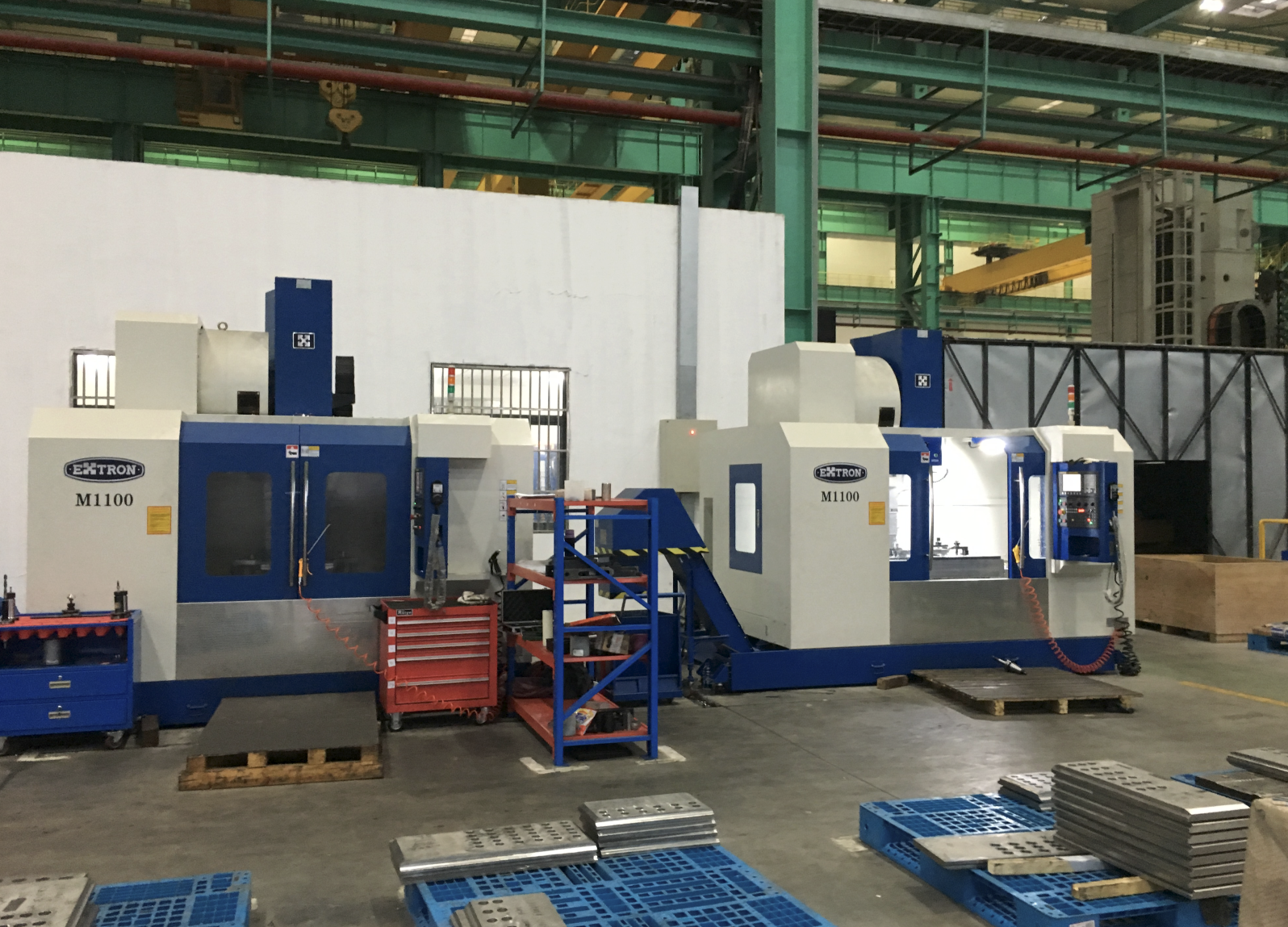 In-house machining is part of the manufacturer check. Medium-size CNC machine tools at the Openex premise near Shanghai Port.
Check 2: Drawing Formats, Review Quality, and Redlines
A redline is the supplier's marked-up response to your drawing package: the corrections, missing dimensions and process questions returned before quotation. It is the cheapest engineering review a buyer will receive, and the fastest way to see whether a supplier reads drawings or merely prices them.
Formats accepted
Openex accepts STEP, IGES, DWG, DXF, PDF and all 2D and 3D drawing formats. For simple parts, 2D drawings alone are sufficient in most cases. Combined 2D and 3D drawings produce the fastest quotation; in some cases the company reports returning a quotation within one or two hours. 3D drawings alone are rarely quotable directly, because the supplier must first create 2D drawings for the buyer's approval, which lengthens the cycle.
What 2D carries that 3D does not
Without a 2D drawing, eight categories of information are usually missing:
- Tolerance information.
- Welding requirements.
- Surface roughness and chamfer details.
- Cutting direction relative to the hot-rolling direction.
- Plate bending radius.
- Metal material requirement.
- Heat treatment and stress-relief method.
- Finish requirement, such as hot-dip galvanizing, sandblasting and painting, or powder coating.
A supplier that quotes from a 3D model alone is guessing at these eight items. The guess usually surfaces later as a change order.
How to test the redline response
Send one drawing package with a deliberate but realistic gap — a single omitted tolerance or finish note. Then measure two things: response time and query quality. A capable supplier returns either a marked-up drawing set or a written list of missing information. A broker forwards the file and waits for someone else to notice.
Silence is not approval. If a supplier returns a price without a single question, either the drawing package is unusually complete or the review did not happen.
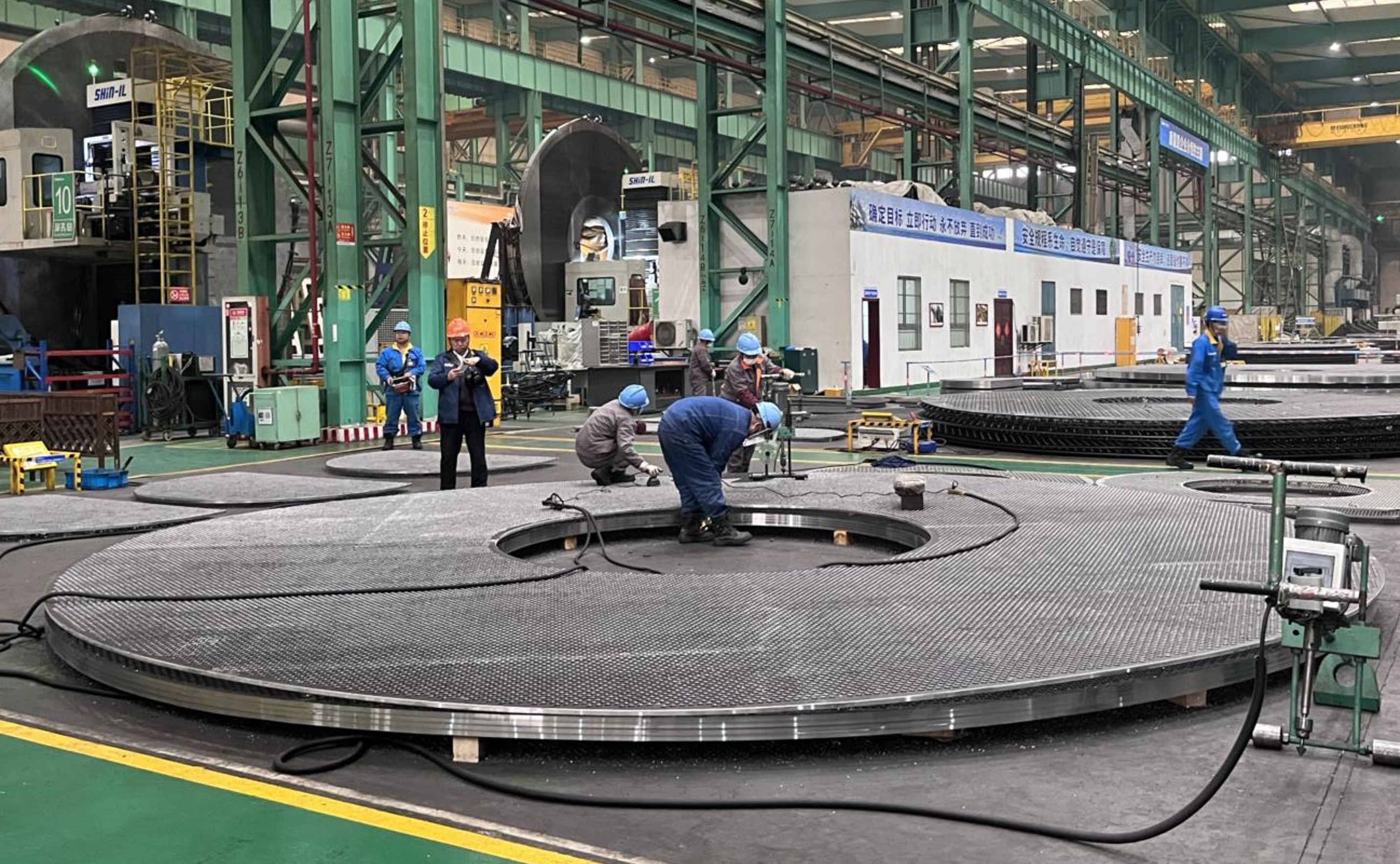 Large tubesheet machining near Shanghai Port. A drawing review should identify tolerances, drilling depth and inspection method before quotation.
Check 3: Can a Sample Order Run Before Mass Production?
A sample order is the cheapest risk-reduction step in fabrication, but only when the order size fits the process. MOQ at Openex is project-based rather than a fixed number, so the useful question is not "what is your MOQ" but "what order size makes this process economical".
Order-size economics
- Small parts in small quantity are not economical. Communication, travel and setup overhead are the same regardless of quantity, and both buyer and seller absorb that cost.
- Large parts in small quantity are workable, particularly when the parts fill a container load.
- Large parts in large quantity are preferred. Full container load (FCL) shipping reduces freight against less-than-container load (LCL), overhead is spread across more units, material purchasing improves with volume, and repeat orders support stable pricing.
Under that logic, a sample order for a large weldment, machined platen or vacuum chamber is feasible. A sample order for a few hundred small brackets is usually not worth the setup on either side.
What a sample should prove
A sample or first article should confirm drawing interpretation, weld quality and procedure, dimensional report, surface finish and packaging. It should also confirm the inspection route, because the sample is where the acceptance method is tested, not the production batch.
Openex offers three acceptance options: (A) photos, videos and QA sheets supplied by Openex; (B) inspection by the buyer; or (C) inspection by a third party appointed by the buyer. Delivery terms include EXW, FOB, C&F, CIF, DAP and DDP. Payment is by T/T or L/C.
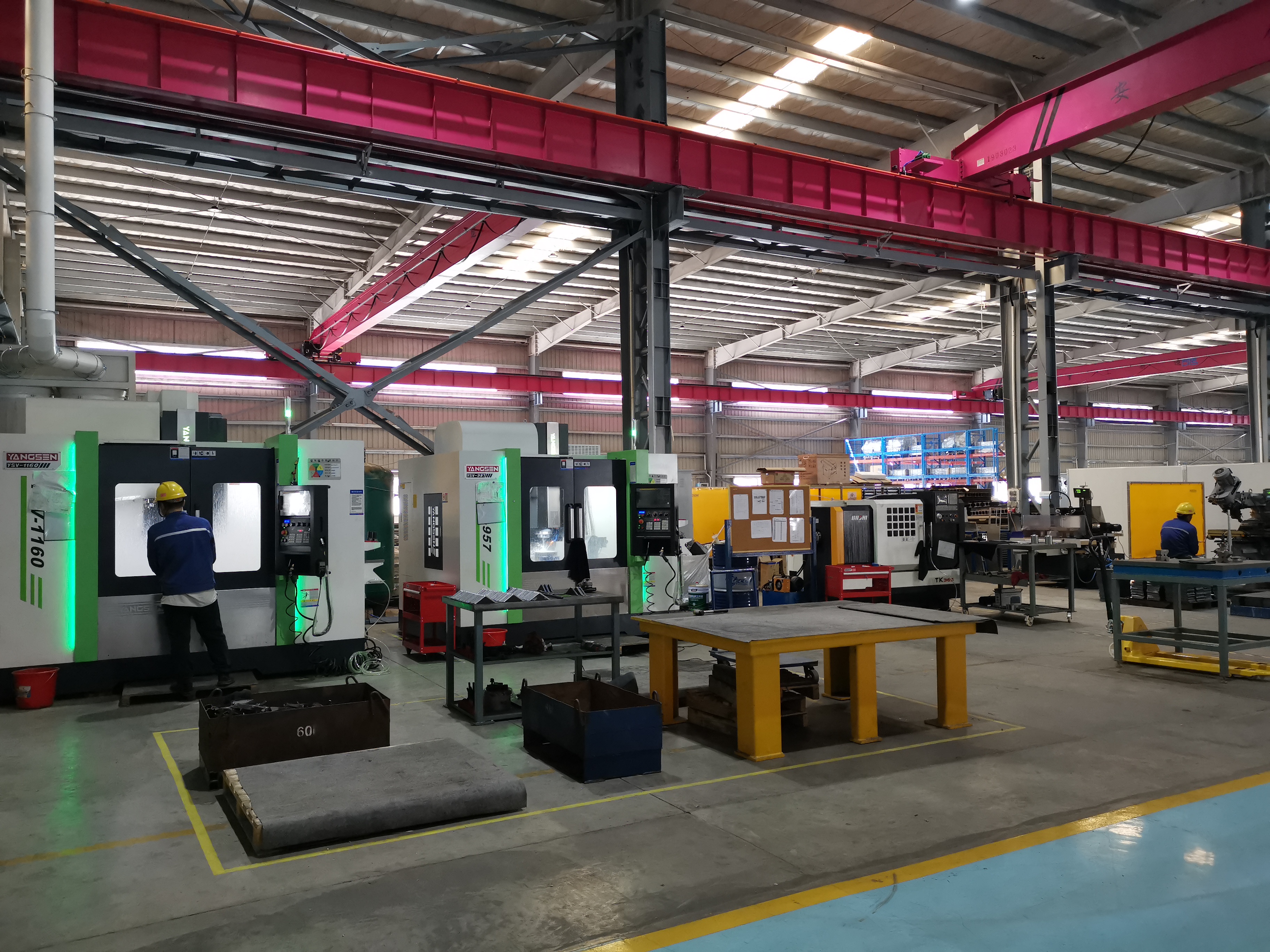 Small CNC machine fleet near Xiamen Port. Sample orders are most useful when the process route and inspection method match the production route.
Stress-Test Examples: Large Weldments, Machined Platens, and Vacuum Chambers
These three product families are useful stress tests because each fails for a different reason.
Large weldments
The Custom-L-5 large industrial weldment is a representative example. Its typical reference configuration covers an envelope up to 6,000 × 3,000 × 2,500 mm, plate thickness of 20–80 mm, finished mass of 15–40 t, general machined tolerance of ±0.20 mm and datum-pad flatness of ≤0.15 mm per 1,000 mm. A shop that can hold these values must control welding distortion before machining and machine the weldment in a single datum scheme. That requires both fabrication capacity and large CNC capacity.
Machined platens
The Custom-L-10 large machined platen is a second test. A typical reference configuration is 3,000 × 2,000 × 250 mm, with an estimated solid-plate mass of approximately 11.8 t before drilling, machined-face flatness of ≤0.10 mm per 1,000 mm, surface finish of Ra 1.6–3.2 µm and cooling or heating channels machined to an approved drawing. Flatness and finish at this scale depend on machine capacity and thermal control, not on a small machining center.
Vacuum chambers
Vacuum work tests the process system rather than the weld bead. The Custom-L-9 large box vacuum chamber has a typical internal size of 2,000 × 1,500 × 1,500 mm, a nominal wall of 12 mm with external stiffeners, a design vacuum of ≤1 × 10^-5 mbar and a helium leak rate of ≤1 × 10^-8 mbar L/s after final testing, in SS304L. The Custom-L-8 thermal vacuum chamber is a cylindrical reference with an external diameter of approximately 108 in (2,743 mm), 304 stainless steel construction, an operating pressure of 1 × 10^-6 to 1 × 10^-7 Torr and an application envelope covering full satellite assemblies. A leak rate is a system property; it requires qualified weld procedures, NDT and leak testing, not just a clean weld.
Supporting machine capacity includes a PAMA Speedram 180 floor-type boring and milling center with X and Y travel of 4,000–6,000 mm, Z travel of 1,200 mm and W travel of 1,000 mm; a Wuzhong CKX53220×65/600 single-column turning and milling center with maximum machining diameter of 22 m, maximum workpiece load of 600 t and maximum workpiece height of 6.5 m; an EATRON M1100 vertical machining center with X/Y/Z travel of 1,100/610/700 mm, table size 1,260 × 600 mm, maximum load 1,000 kg, 8,000 rpm spindle, 24-tool magazine, positioning accuracy of ±0.010 mm and repeatability of ±0.003 mm; and a Zeiss CMM with 7 × 4 × 3 m capacity.
Case records are a secondary check. Openex fabricated steel components for a Wind Tree project totaling 300 tons, with 5 years of stable operation. It supplied 400 flywheel energy storage shells (AKI-1) with 5 years of stable operation, and 345 AGV steel chassis (PSA-1) to the Netherlands with more than 4 years of stable operation. It has supplied 30 steel mill pallets (JFE-1) to Japan with 20 years of stable operation, 45 tons of tube sheets to an Indonesian power plant, and a 30-ton turbine ring to a hydropower station in Uruguay.
Step-by-Step: Running the Three Checks in Order
- Send a capability brief and request evidence. Ask for address-linked factory photos, a process video and certificates with scope and dates.
- Submit a 2D and 3D drawing package. Record response time and count the queries returned.
- Ask which machine and datum scheme will be used. A supplier that cannot name the machine has not planned the job.
- Run a sample or first-article order. Agree the acceptance route before the sample starts: Openex QA documents, buyer inspection or third-party inspection.
- Confirm commercial terms. Incoterms (EXW, FOB, C&F, CIF, DAP, DDP), payment method (T/T or L/C) and inspection responsibilities.
- Compare evidence, not price alone. Use the matrix below to record what each supplier proved and what remains unproven.
Evidence Matrix: What Each Check Proves and What It Does Not
| Evaluation check | Evidence to request | Verified reference point (Openex) | What the evidence does not prove |
|---|---|---|---|
| Manufacturer versus supplier | Address-linked photos, workshop video, certificate scope and dates | Two premises near Xiamen Port and Shanghai Port; 80–90% in-house production; ISO 3834-2 (SGS 23/999-3834); ISO 9001, ISO 14001, ISO 45001 | Does not prove capacity is available for your delivery date |
| Drawing discipline | Redline response, written query list, handling of 2D and 3D files | STEP, IGES, DWG, DXF, PDF and all 2D/3D formats; 2D+3D fastest; 3D-only requires 2D creation; quotations in one to two hours in some cases | Does not prove the first article will pass dimensional inspection |
| Sample or first order | Sample acceptance, inspection route, process lead time | MOQ project-based; large parts in small quantity workable; acceptance options A/B/C; 30–45 days for welding and machining | Does not prove long-run repeatability without a follow-up order |
Use Cases: Where the Three Checks Change the Decision
- Automation frames and AGV chassis. The PSA-1 container AGV chassis measures 15 × 2.7 × 3 m, weighs 10.5 t and carries 30 t. Dimensional control at that size depends on the datum scheme agreed before fabrication.
- Energy storage structures. The XHC-009 steel shelf and box measures 1.1 × 1.1 × 2.2 m at 1,000 kg per unit with powder coating. The AKI-1 flywheel shell is 1.5 m in diameter, 0.8 m high and 2 t, with a vacuum specification of >1.0 × 10^-9 Torr L/s within 30 seconds.
- Heavy machinery bases. The B-300 welded steel machine base covers 24 × 24 in to 72 × 96 in, with top plates of 1, 1.5 or 2 in, welded, stress-relieved and shot-blasted, with ground-top flatness of ±0.001 in cumulative.
- Heat transfer and pressure components. Tube sheets reach a maximum diameter of 10,000 mm, thickness of 600 mm and drilling depth of 1,000 mm, with drilling precision of ±0.05 mm and CMM, UT, PT, MT and PMI inspection.
- Wind and renewable structures. The Wind Tree is 9.8 m high and 7.2 m wide, with 36 aeroleaves, 10.8 kW installed power, approximately 18,000 kWh annual output, 3,590 kg weight and a 25-year lifespan.
Frequently Asked Questions
Which welding and quality certificates should I verify before placing a metal fabrication order?
Verify four fields on every certificate: issuing body, certificate number, scope and validity dates. For welded fabrication, ISO 3834-2 is the relevant welding quality standard. Openex holds ISO 3834-2 through SGS, certificate 23/999-3834, to EN ISO 3834-2, covering fusion welding of metallic material (process 135 and 135-Auto; material groups 1.1 and 1.2), valid to 2026-10-04. The company also holds ISO 9001 (11426Q01049R001), ISO 14001 (11426E00739R001) and ISO 45001 (11426S00656R001), issued 2026-04-16 by Beijing East Allreach Certification Center Co., Ltd., valid to 2029-04-15, with a scope covering machined parts, metal structures and sheet metal components.
Can a fabricator machine a large weldment after welding, and what tolerance is realistic?
Yes, when the shop has large CNC capacity and a datum plan. Openex machines large weldments such as the Custom-L-5: envelope up to 6,000 × 3,000 × 2,500 mm, plate thickness 20–80 mm, finished mass 15–40 t, general machined tolerance ±0.20 mm and datum-pad flatness ≤0.15 mm per 1,000 mm. Machine capacity includes a Wuzhong CKX53220×65/600 with maximum machining diameter of 22 m and maximum workpiece load of 600 t, and a Zeiss CMM with 7 × 4 × 3 m capacity. The achievable tolerance depends on the datum scheme and the weld sequence, which is why both should be agreed before fabrication.
What drives cost in a custom metal fabrication order?
Order size and process mix are the two main drivers. Fixed communication and setup overhead is spread across quantity; FCL loading reduces freight against LCL; larger quantities improve material purchasing; repeat orders support stable pricing. Inspection scope also changes cost, because 100% inspection, random inspection and NDT methods such as RT, UT, MT, PT, VT and LT carry different requirements. MOQ is project-based, so the cost conversation should start with the drawing package and target quantity rather than a headline unit price.
Can I place a sample order before mass production?
Yes, with a size caveat. Large parts in small quantity are workable, particularly when they fill a container load. Small parts in small quantity are not economical because fixed overhead dominates. Acceptance can run three ways: Openex photos, videos and QA sheets; inspection by the buyer; or inspection by a third party appointed by the buyer. Delivery terms include EXW, FOB, C&F, CIF, DAP and DDP, and payment is by T/T or L/C.
What lead time should I plan for welding, machining, and finishing?
Lead time is process-dependent. Welding is typically 30–45 days, machining is typically 30–45 days, and surface finishing is typically 45 days. Some product lines carry a 3-day typical production lead time. Monthly capacity is 5,000 tons for welding, 3,000 tons for machining and 1,000 pieces for the general fabrication line. Inspection and freight should be planned on top of the production window. For a specific project, send the drawing package and target date to sales2@openex.com.cn or WhatsApp +86 150 6078 7506.
Conclusion: Evidence Before Price
Supplier evaluation is not a search for the lowest quotation. It is a process for converting claims into evidence that can be attached to a purchase order. The three checks in this guide are deliberately narrow: confirm that the company is a manufacturer with the processes it claims, test its drawing review with a real package, and run a sample or first article before committing to production.
Openex uses the same evidence standard it asks buyers to apply. Factory photos and workshop video are available on request, certificates carry a number, a scope and an expiry date, and drawing packages are reviewed before quotation. If a project falls outside the in-house process route — casting, forging or anti-rust finishing only — the company will say so.
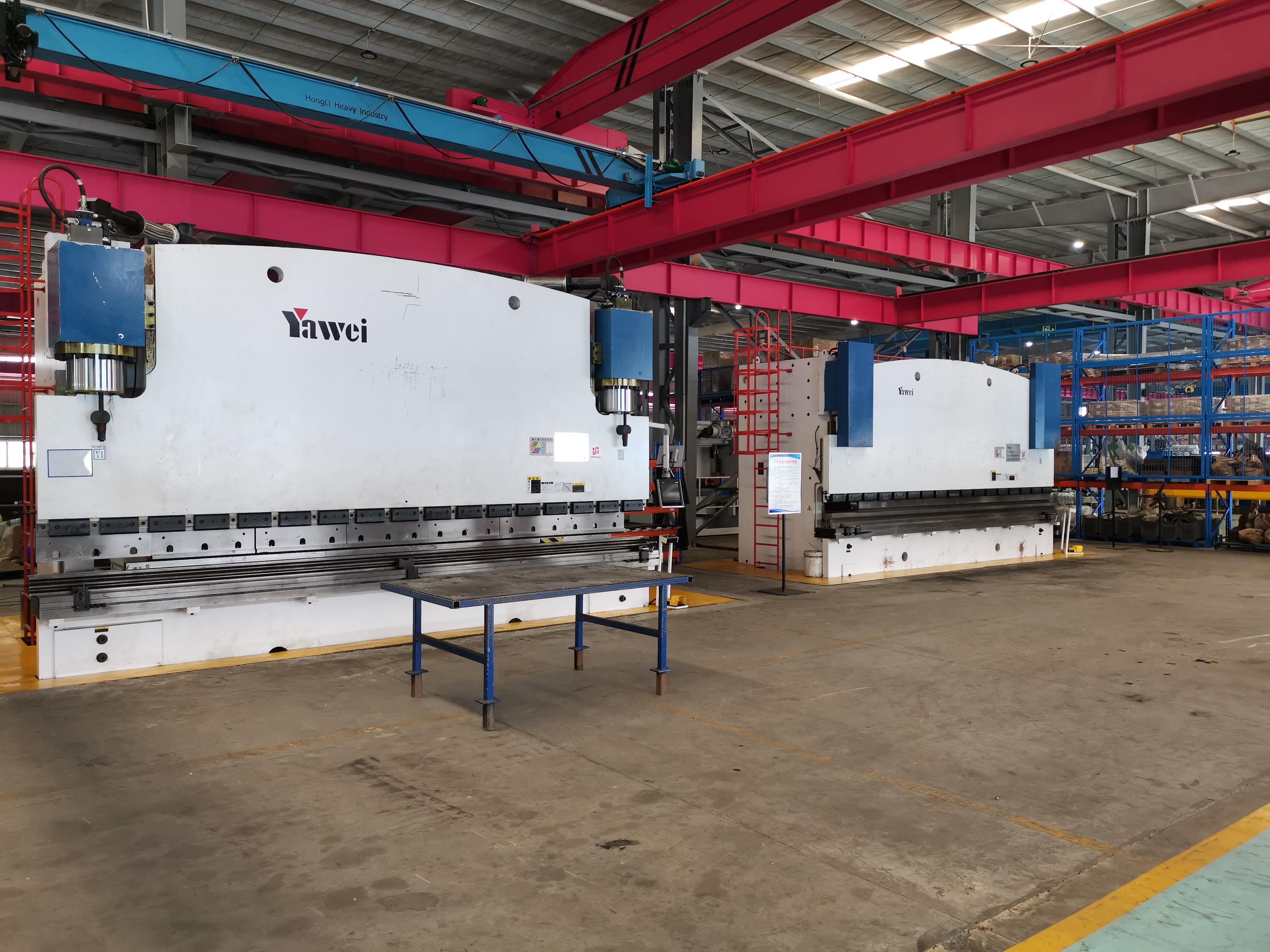 Press brake near Xiamen Port. Forming capacity should be verified against the largest bend in the drawing package.
Next step: test the supplier with a real drawing package
Send a 2D and 3D drawing package with target quantity and delivery date to sales2@openex.com.cn or WhatsApp +86 150 6078 7506. The company's capability catalog can be downloaded here.
Xiamen Openex Mechanical Technology Ltd · Unit 4801, No 99 Yilan Rd., Xiamen, FJ, China · www.cncmetalworking.com
Have Questions or Need More Details?
Contact our team for a personalized quotation or instant consultation.
Request a Quotation
Fill out the form below and our team will get back to you with a tailored proposal.
WhatsApp Direct Chat
Prefer to chat in real-time? Message us on WhatsApp for instant assistance & quick answers.
- Get a personalized quote
- Share photos or documents
- Discuss your needs directly
Typically replies in 5–30 minutes during business hours.