Five Metal Fabrication Product Families Recommended for Smart Manufacturing Buyers
Smart-manufacturing buyers rarely purchase metal fabrication as a commodity. They buy fit: a chassis that carries an automated guided vehicle without twisting, a frame that holds battery modules safely, a shell that preserves alignment, or a support structure that survives installation. This evaluation shortlist ranks five product families from Openex fabrication's verified range for that kind of project. It is not a market-share ranking or a claim that every project should start with the same family. The order reflects how directly each family supports smart-manufacturing equipment, how much custom fabrication logic it requires, and how much drawing and acceptance work a buyer must control.
Xiamen Openex Mechanical Technology Ltd is a custom metal fabrication and machining supplier founded in 2009. Its company profile lists two manufacturing premises near Xiamen Port and Shanghai Port, 30,000 square meters of factory space, 200 employees, 35 engineers, and 20,000 tons of annual output. Its processes include laser cutting, bending, punching and stamping, welding, machining, assembly, roll forming, casting, forging, galvanizing, and powder coating.
Problem definition: fabricated steel is an interface, not a line item
The five families in this shortlist sit at different points in a smart-manufacturing project, but they share one procurement problem. A buyer who compares fabricated steel only by weight or price per ton can miss the cost that appears later: rework at the datum, weld repair, coating damage, a door that does not close, a battery module that does not fit, or a support structure that cannot be preassembled before shipment.
Evaluation-stage buyers therefore need to compare the product family, the drawing package, and the acceptance evidence together. The family defines the functional risk. The drawing defines what the fabricator must hold. The acceptance terms define what the buyer will inspect before release. A shortlist is useful only when all three are visible.
Industry background: a broad category with specific project requirements
Fabricated metal products are a large industrial category. Strategic Market Research's 2024 report, as recorded in the verified dataset, values the global fabricated metal products market at USD 2.35 trillion. That figure covers the broader category, not Openex fabrication, these five families, or any single project. For a smart-manufacturing buyer, the useful background is narrower: fabrication supply has to connect to automation, energy storage, and renewable-energy installation schedules without losing dimensional control.
That is why this shortlist uses verified product and case evidence rather than broad market claims. The goal is to show where custom metal fabrication changes the buyer's decision: which family carries the highest interface risk, which drawing details are usually under-specified, and which acceptance records should be requested before a purchase order.
How this shortlist was built
Only families that appear in the supplied Openex product or case list are included. The ranking order is an editorial shortlist for smart-manufacturing evaluation, not a measured market ranking. It weighs four tests: direct relevance to smart-manufacturing equipment, dependence on custom structural fabrication, protection or containment function, and the amount of drawing and acceptance work needed before release.
- AGV steel chassis: the largest direct automation interface and a clear custom weldment.
- Steel frames and boxes for energy storage systems: repetitive battery-module interfaces and coating requirements.
- Flywheel energy storage shells: containment, roundness, and machining discipline.
- Equipment enclosures: control and electrical protection with many sheet-metal details.
- Solar panel supports or Wind Tree structures: renewable-energy supports with site-interface and preassembly checks.
| Rank | Product family | Verified reference | Why it belongs on the shortlist |
|---|---|---|---|
| 1 | AGV steel chassis | PSA-1; 30-ton loading capacity; 10.5-ton weight; 15 x 2.7 x 3 m, customizable | Direct automation platform; large welded structure with mounting and load-path interfaces. |
| 2 | Steel frames and boxes for energy storage systems | XHC-009; related cases include ESS shelves, boxes, and liquid-cooling cabinets | Battery module support and protection; repetitive dimensional and coating requirements. |
| 3 | Flywheel energy storage shell | AKI-1; 1.5 m diameter x 0.8 m height; 2-ton net weight; S355JR or A572 Grade 50 per ASTM | Containment and alignment; combines rolling, welding, and machining. |
| 4 | Equipment enclosures | Custom-L-2; sheet-metal and heavy-duty industrial enclosure capability | Protects controls and electrical equipment; detail-driven acceptance. |
| 5 | Solar panel supports or Wind Tree structures | Customized-C-10 and Customized-C-09; solar case 1,000 units; Wind Tree case 300 tons | Renewable-energy structural support; foundation, galvanizing, and preassembly checks. |
Evaluation sequence for a smart-manufacturing buyer
- Define the equipment interface. List the holes, datums, rails, hinges, cooling lines, or foundation points that another supplier's product must meet.
- Classify the structural consequence. Separate a dry support frame from a battery enclosure, a rotating shell, or a moving AGV chassis.
- Lock material and surface treatment. Put the grade, thickness, welding standard, and coating system on the drawing instead of leaving them to a verbal agreement.
- Specify acceptance evidence. State the dimensional report, NDT extent, coating check, and trial assembly before quotation.
- Verify capacity and logistics. Confirm crane, machining, and shipping limits against the finished size, not the raw plate size.
1. AGV steel chassis (PSA-1)
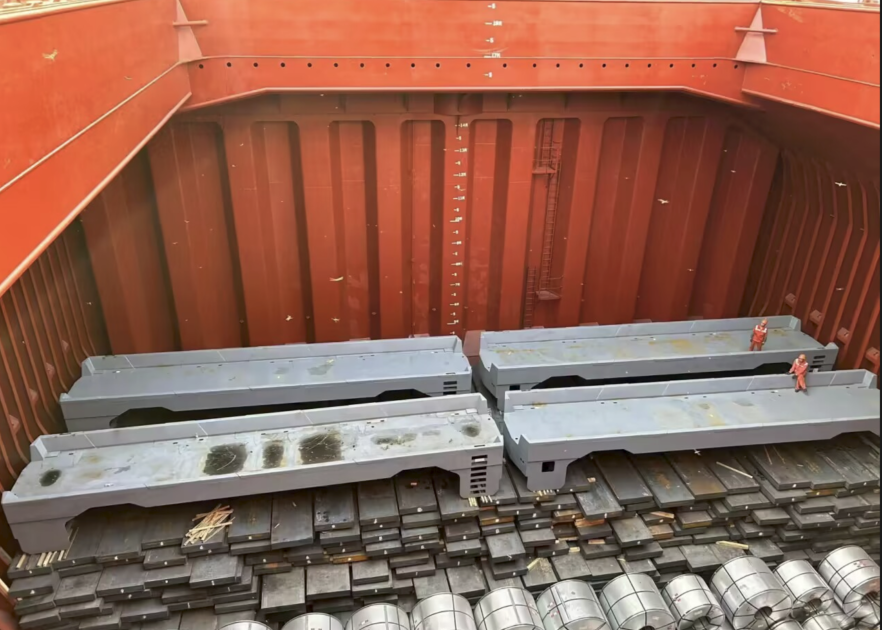
The AGV steel chassis belongs at the top of this shortlist because it is the most direct bridge between fabricated steel and smart-manufacturing movement. Openex's verified case record describes custom steel chassis for an AGV manufacturer in the Netherlands, used to carry ocean-worthy containers, LNG tanks, or other large objects. The product data lists a 30-ton loading capacity, a 10.5-ton weight, and overall dimensions of 15 x 2.7 x 3 m, with dimensions customizable.
Those figures make the chassis a different procurement object from a simple steel frame. The buyer must treat the chassis as a system: wheel or steering interfaces, lifting points, load path, deck stiffness, and corrosion protection all need to be visible on the drawing. The verified case records a stable operation period of more than four years for the AGV chassis application, but that is a case result, not a guarantee for every design.
What to verify in drawings: datum scheme, hole positions for the drive and steering units, weld symbols, plate thickness, distortion-control notes, machining allowance for critical pads, and trial-assembly requirements. For a 15 m assembly, confirm that the supplier's crane, welding positioner, and machining envelope can handle the finished structure. Openex states overhead crane tonnage over 250 tons, bending length over 18 meters, and CNC machine travel up to 50 m x 8 m x 7 m.
Material and acceptance: the supplied AGV product fact gives dimensions, loading capacity, and weight but not a steel grade. Do not import the flywheel shell's S355JR or A572 Grade 50 into the AGV specification. State the required grade, impact condition, and surface treatment on the drawing. The acceptance pack should include dimensional records, weld inspection to the agreed method and extent, coating checks, and any load or trial-fit test that the design requires.
2. Steel frames and boxes for energy storage systems (XHC-009)
Steel frames and boxes for energy storage systems rank second because they connect fabricated metal directly to battery module protection. The verified product list includes steel frames and boxes for energy storage systems under model XHC-009, along with related ESS cabinets and shelves. The case record includes a 3,000-unit ESS project where fabricated shelves and boxes were used to hold battery modules in a safe condition with a cooling system. The reported case result was no rust, no leakage, and no deformation.
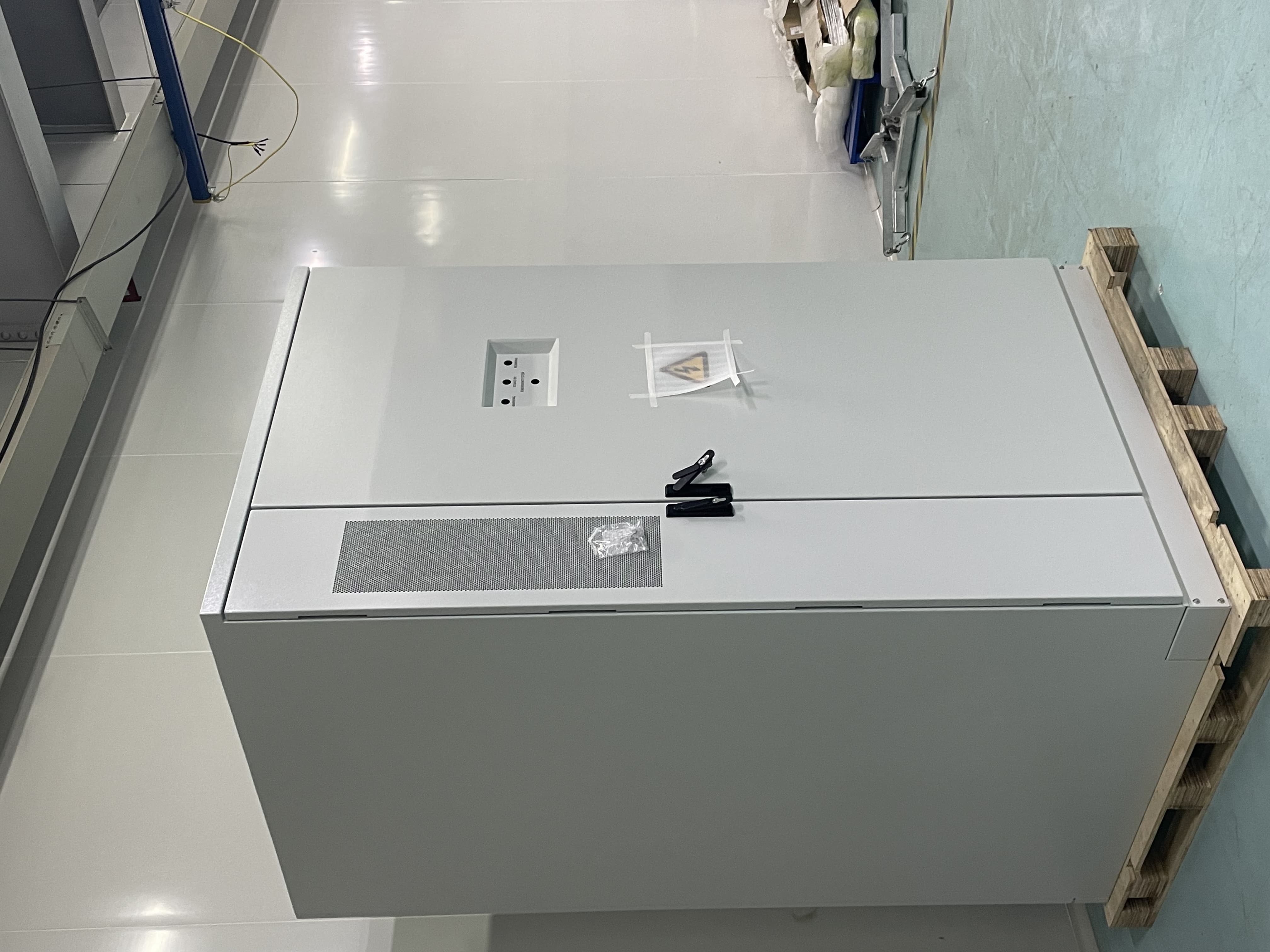
The same product family also appears in a 1,500-unit project for liquid-cooling cabinets used to store batteries, and in a 300-unit project for lithium-battery energy storage shelves. These are case-specific quantities and results, not a standard offer or a performance promise. They do show why the family belongs on an evaluation shortlist: the buyer is not just ordering a box, but a dimensional interface for modules, cooling, doors, and lifting.
What to verify in drawings: battery module dimensions, shelf pitch, hole patterns, tolerance stack-up from the base to the top shelf, cooling pipe routing and clearance, door and panel flatness, lifting points, earthing locations, and the coating system. Confirm whether the cooling circuit is inside the cabinet scope or supplied by another vendor. If the cabinet contains a liquid-cooling system, define which party owns leak testing and which surfaces must remain accessible for service.
Material and acceptance: the supplied ESS facts do not give one mandatory steel grade for every frame, box, or cabinet. The buyer should specify carbon steel, stainless steel, or galvanized construction according to the actual environment and the equipment specification. Acceptance should match the function: dimensional report, coating thickness or galvanizing record, weld inspection where structural, and a leak test only where the design includes a wet circuit. A dry shelf should not inherit a cooling-cabinet test requirement without a reason.
3. Flywheel energy storage shell (AKI-1)
The flywheel energy storage shell ranks third because it adds a precision-machining problem to a welded cylinder. The verified product data describes the AKI-1 shell as 1.5 meters in diameter and 0.8 meters in height, with a net weight of 2 tons. It is made of high-strength steel plate S355JR or A572 Grade 50 per ASTM, and custom dimensions and material options are available. A case record covers 400 units for a flywheel energy storage system and reports five years of stable operation.
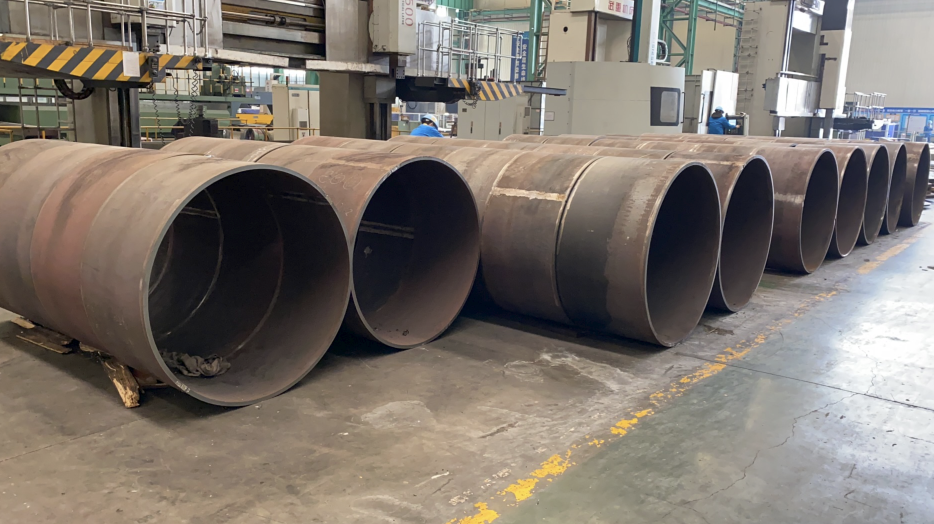
The buyer's main concern is not the plate weight. It is whether the finished shell holds roundness, flange flatness, and mounting-hole position after welding. The case record includes final inspection reports for the flywheel shells, which is the right type of evidence to discuss at the evaluation stage. A shell that is delivered with a mill certificate but no dimensional report leaves the buyer to discover alignment problems during assembly.
What to verify in drawings: inside and outside diameter, wall thickness, roundness or cylindricity, weld seam location, weld inspection extent, machining allowance, flange flatness, bolt-hole pattern, runout, and surface treatment. If the shell interfaces with a rotating assembly, state which party owns balance and final alignment. Do not assume the fabricator owns balance unless that scope is written into the purchase order.
Material and acceptance: S355JR and A572 Grade 50 are the verified options for AKI-1. Keep the grade, plate thickness, and any impact or traceability requirement on the drawing. The acceptance pack should include material certificates, dimensional inspection records, weld inspection reports, and the final inspection report against the approved drawing. Openex capability data lists NDT methods including RT, UT, MT, PT, VT, and LT, plus CMM inspection with a 7 x 4 x 3 m machine. The buyer should select the methods that match the shell's risk, not accept a generic visual check.
4. Equipment enclosures (Custom-L-2)
Equipment enclosures rank fourth because they protect the control and electrical layer of a smart-manufacturing line. The verified product list includes equipment enclosure model Custom-L-2 and heavy-duty industrial equipment enclosures. Openex's sheet-metal and welding capability covers cutting, bending, punching and stamping, welding, machining, assembly, and surface finishing, which is the relevant process base for this family.
No ingress-protection rating, sheet thickness, or certification is stated in the supplied facts for this family. That absence is important. The buyer must define the enclosure requirement rather than assume an IP rating from a general product label. A control cabinet, a drive enclosure, and a heavy-duty industrial enclosure can look similar in a photograph but require different door stiffness, sealing, earthing, and coating details.
What to verify in drawings: overall dimensions, panel and door thickness, hinge and latch type, cutouts for displays and cable glands, gland-plate location, internal mounting rails, thermal-management openings, earthing studs, paint or powder-coating system, and lifting or mounting points. If the enclosure must be washed or used outdoors, state that condition so the sealing and coating requirements can be reviewed.
Material and acceptance: the supplied welding capability lists carbon steels, stainless steels, duplex and super duplex, clad or composite plates, and low-alloy steels. It does not make every material automatically qualified for every enclosure. Put the required grade, thickness, and surface treatment on the drawing. Acceptance should include dimensional and flatness checks, weld and grind quality where visible, coating inspection, hardware fit, and a trial assembly of doors and removable panels. Do not write an IP rating into the purchase order unless the design and test method actually support it.
5. Solar panel supports or Wind Tree structures (Customized-C-10 and Customized-C-09)
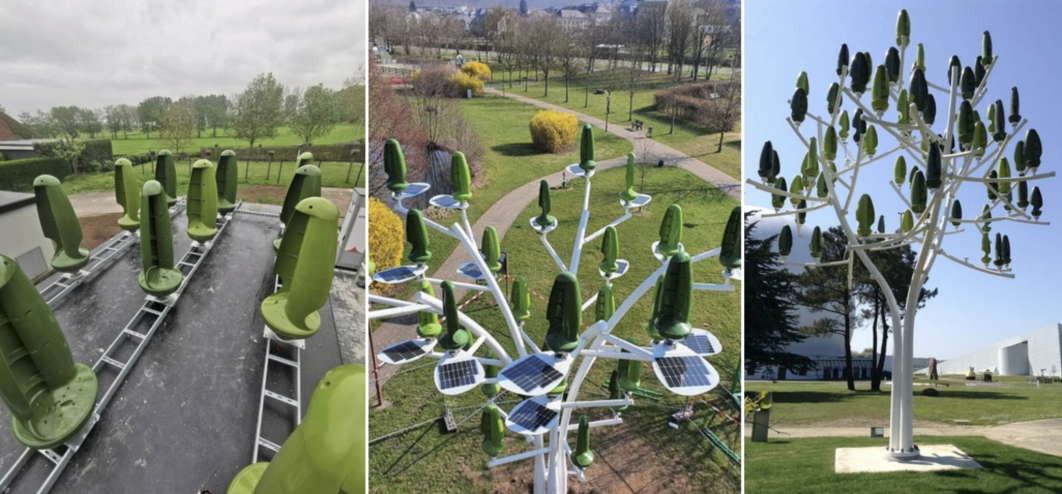
Solar panel supports and Wind Tree structures rank fifth because they are project-led renewable-energy supports rather than equipment-mounted components. The verified solar case covers 1,000 units of fabricated steel frames for solar panel support, with three years of stable operation reported. The product list includes solar panel support model Customized-C-10 and Wind Tree model Customized-C-09. The verified Wind Tree case covers 300 tons and reports five years of stable operation.
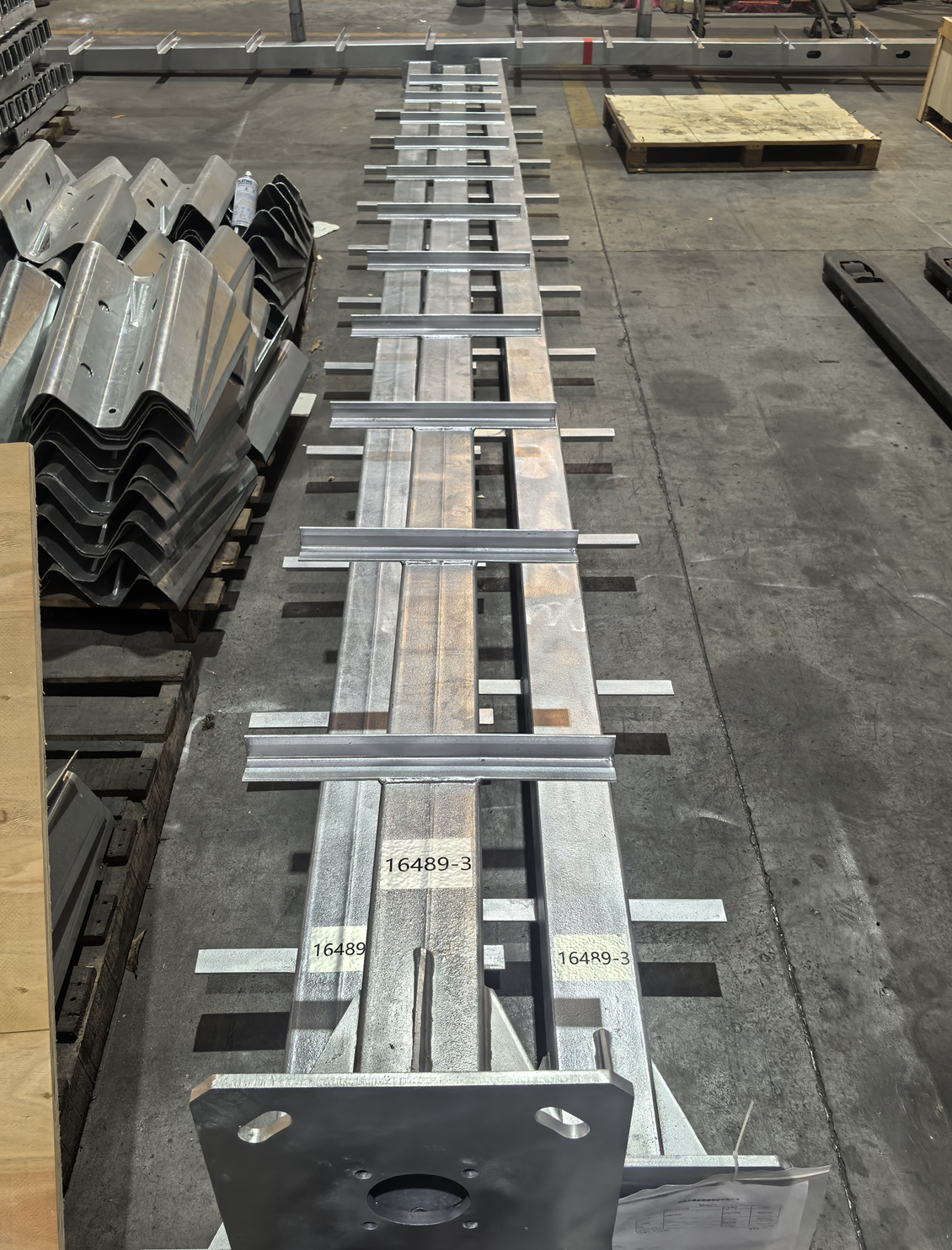
The Wind Tree case record describes a manufacturing route that includes cutting, bending, machining, welding, hot-dip galvanizing, and powder coating, followed by preassembly to check manufacturing precision, disassembly, and packaging. That preassembly step is the useful evaluation lesson: for a structure that ships in parts, the buyer should not wait until site assembly to discover that the base, branches, and connections do not fit.
What to verify in drawings: foundation or roof interface, anchor-hole pattern, member sizes, connection details, weld symbols, galvanizing or coating specification, drainage, preassembly requirements, and packaging plan. For solar supports, confirm the module rail spacing and mounting clamp interface. For Wind Tree structures, confirm which party owns structural design and site-load verification. The fabricator can build to a drawing, but the buyer should not assume that a fabrication case study replaces a project-specific engineering check.
Material and acceptance: the solar case record mentions galvanized steel fabricated components and steel beams. The Wind Tree route includes hot-dip galvanizing and powder coating. Acceptance should include dimensional checks, galvanizing or coating records, weld inspection where structural, a preassembly report where specified, and a packing list that matches the shipment. These checks are more useful than a general statement that the structure is made of steel.
Use cases that connect the five families
- AGV and container handling: a custom AGV steel chassis carries large objects and becomes the mechanical base for navigation, drive, and lifting systems.
- Battery module assembly: ESS frames, shelves, boxes, and liquid-cooling cabinets define how modules sit, cool, and remain accessible for service.
- Grid-quality energy storage: the flywheel shell contains the rotating assembly and must hold alignment after welding and machining.
- Automation control rooms and cells: equipment enclosures protect drives, controls, and electrical distribution at the point of use.
- Renewable-energy installations: solar supports and Wind Tree structures connect fabricated steel to foundations, modules, and site assembly.
Acceptance checklist before purchase order
- Approved assembly and detail drawings with revision control.
- Material grade, thickness, and traceability requirement.
- Weld symbols, WPS/PQR requirement, and NDT extent.
- Dimensional and geometric tolerance report format.
- Surface preparation, coating, galvanizing, and color requirement.
- Trial assembly, preassembly, or first-article inspection requirement.
- Marking, packaging, lifting points, and shipping configuration.
- Final inspection report and document pack before release.
Openex fabrication's supplied certificates include ISO 9001, ISO 14001, and ISO 45001, issued on 2026-04-16 and expiring on 2029-04-15. The certificate scope covers manufacture of machined parts, metal structures, and sheet metal components, except where a license is required. These management-system certificates support a supplier review, but they do not replace project-specific material certificates, weld procedure qualification, or dimensional acceptance records.
FAQ
Which of the five families should a smart-manufacturing buyer evaluate first?
Start with the family that carries the highest interface risk in the project. In this shortlist, the AGV steel chassis and the flywheel energy storage shell usually demand the most drawing discipline because they combine large welded structures with mounting or alignment features. ESS frames and boxes come next when battery module interfaces and cooling layouts are fixed. Equipment enclosures matter when controls, drives, and electrical protection are in scope. Solar panel supports and Wind Tree structures are project-led and depend on foundation and site interfaces. The ranking above is an editorial starting order, not a rule that overrides the buyer's risk assessment.
What should be in the drawing package before requesting a quotation?
Provide assembly and detail drawings, material grades, plate thickness, weld symbols and NDT extent, dimensional and geometric tolerances, surface treatment, marking, packaging, and the acceptance report format. For the AGV steel chassis, include wheel or steering interface datums and the load path. For the flywheel shell, include roundness, runout, flange flatness, and machining allowance. For ESS frames and boxes, include battery module interfaces, shelf pitch, cooling pipe clearance, and earthing points. For enclosures, include door and panel stiffness requirements, cutouts, gland plates, and coating. For solar and Wind Tree structures, include foundation interface, galvanizing, preassembly, and site connection details.
What material choices are verified for these families?
The verified product data gives specific material information for the flywheel energy storage shell: high-strength steel plate S355JR or A572 Grade 50 per ASTM, with custom dimensions and material options available. The AGV steel chassis data gives dimensions, loading capacity, and weight but not a steel grade in the supplied fact. ESS frames and boxes, equipment enclosures, solar supports, and Wind Tree structures have case or capability descriptions but not one mandatory grade across every design. Buyers should state the grade, thickness, surface condition, and standard on the drawing rather than assuming a grade from another family.
What acceptance evidence should be requested?
A practical acceptance pack includes material certificates, dimensional inspection records, weld inspection reports for the agreed NDT methods, coating or galvanizing records, and a final inspection report against the drawing. Openex capability data lists NDT methods including RT, UT, MT, PT, VT, and LT; destructive tests such as tensile, impact, bend, hardness, and salt spray; and CMM inspection with a 7 x 4 x 3 m machine. Match the evidence to the family: do not apply a pressure-vessel NDT regime to a dry solar support, and do not accept a visual check alone for a flywheel shell or an AGV chassis interface.
What drives budget and lead time?
Budget is driven by material grade and thickness, weld length and NDT extent, machining after welding, coating or galvanizing, trial assembly, and packaging. The supplied capability data lists 30-45 days for welding and machining scopes and 45 days for surface finishing, with MOQs of 25 tons for welding, 15 tons for machining, and 15 tons for surface finishing. Those are capability data, not a project quotation. A trial order should be quoted against the actual drawing and process route rather than assuming the lowest published MOQ applies to every family.
What is the next step for an evaluation-stage buyer?
Select one or two families, issue the drawing package with a clear acceptance schedule, and ask for a feasibility review that identifies drawing gaps before quotation. Openex fabrication accepts custom and OEM/ODM work, and the Openex fabrication catalog can be downloaded for capability review. A sample, trial assembly, or first-article inspection can be discussed where the drawing and quantity justify it. The useful next step is a bounded technical inquiry, not a blanket price request.
Practical next step: shortlist the family that carries the highest interface risk, attach the drawing set and acceptance schedule, and request a feasibility review or sample discussion from Openex fabrication. A focused inquiry is more useful than a broad catalogue request because it lets the supplier respond to the actual material, welding, machining, coating, and inspection scope.
Conclusion
The five families form a practical starting shortlist for smart-manufacturing buyers because each one exposes a different fabrication decision. The AGV steel chassis tests load-path and large-weldment control. ESS frames and boxes test battery-module interfaces and coating discipline. The flywheel shell tests containment and post-weld machining. Equipment enclosures test sheet-metal detail and protection requirements. Solar supports and Wind Tree structures test foundation interfaces, galvanizing, and preassembly.
Use the ranking as an evaluation order, then let the project risk decide the final priority. The winning supplier is not the one that quotes the lowest weight price without questions. It is the one that can show a drawing review, a defined material and acceptance route, and the capacity to handle the finished size. For Openex fabrication, the verified product cases give buyers a concrete place to begin that review without inventing specifications that the drawings do not yet contain.
Have Questions or Need More Details?
Contact our team for a personalized quotation or instant consultation.
Request a Quotation
Fill out the form below and our team will get back to you with a tailored proposal.
WhatsApp Direct Chat
Prefer to chat in real-time? Message us on WhatsApp for instant assistance & quick answers.
- Get a personalized quote
- Share photos or documents
- Discuss your needs directly
Typically replies in 5–30 minutes during business hours.