ISO 9001 Certified Sheet Metal Fabrication: A Buyer's Verification Guide
ISO 9001 Certified Sheet Metal Fabrication: A Buyer's Verification Guide
An ISO 9001 certificate tells you that an accredited certification body has audited a defined quality management system against GB/T 19001-2016 / ISO 9001:2015. It does not, by itself, tell you that the certificate covers the bending, stamping, roll forming or welding your part actually needs. This guide shows importers, OEM buyers and engineers how to read a sheet metal fabricator's certification stack and process scope before a purchase order is issued.
Sheet metal fabrication covers a broad family of manufactured items: metal parts and metal components, welded frames and structures, metal boxes and enclosures, metal cabins, metal closures, formed metal cones and metal petals, and the sheet-metal sub-assemblies that sit inside larger equipment. Bending, stamping, roll forming, laser cutting and welding are the processes most often involved, and each one is governed by tolerances and inspection criteria that a general quality certificate does not list.
Openex (Xiamen Openex Mechanical Technology Ltd) is a custom metal fabricator founded in 2009, operating two manufacturing premises — one near Xiamen Port and one near Shanghai Port — with a stated factory size of 30,000 ㎡, 200 employees, an annual output of 20,000 tons, a 35-engineer R&D team and an 80% export ratio across the EU, USA, Australia, New Zealand, Japan, Singapore, South America and the Middle East. Its certification documents are public, which makes it a useful worked example for the verification steps below.
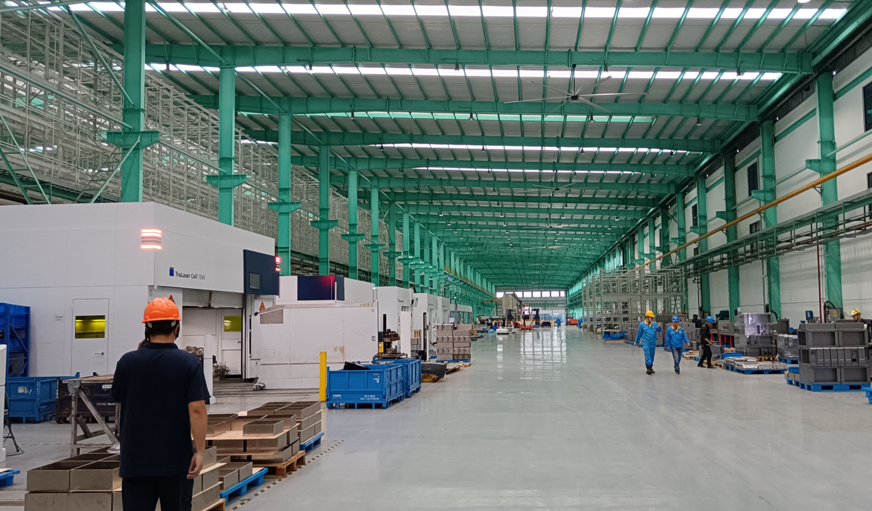
Sheet metal fabrication shop near Shanghai Port — one of two Openex manufacturing premises.
The Real Problem: A Certificate Is a Statement About a System, Not a Part
A valid ISO 9001 certificate proves four things only: which legal entity was audited, which scope of activity was covered, which accredited body issued the certificate, and within which validity window the certificate remains current. It does not prove a bending tolerance, a weld acceptance rate, a surface finish, or that subcontracted processes were performed under the same controls.
That gap is where most sourcing errors occur. A buyer searching for an "ISO 9001 certified sheet metal fabrication manufacturer" usually receives a certificate PDF, sees a recognised logo, and treats the compliance question as closed. The document then sits in a supplier file while the actual purchase order is placed against drawings that carry tolerances, materials and inspection requirements the certificate never mentioned.
The practical consequence is predictable. When a part fails on arrival, the failure is almost never "the supplier had no ISO 9001". It is one of three specific mismatches: the certificate scope did not extend to the process that produced the part, the certificate had lapsed or belonged to a different legal entity, or an in-process check was not defined because nobody agreed in writing what "inspection" meant for that job.
Reading the scope statement is therefore the first real test. Openex's ISO 9001 scope reads: Manufacture of Machined Parts, Metal Structures and Sheet Metal Components (except where a license is required). The final clause is not decorative. It is a boundary. Work that requires a statutory manufacturing licence falls outside the umbrella of that management-system certificate and must be qualified through separate, process-specific evidence.
How Certification Scope Is Set in Custom Sheet Metal Fabrication
In custom fabrication, scope statements are written to describe activity categories rather than individual products. That is why two suppliers can both hold ISO 9001 and yet be very differently qualified for the same enquiry. One supplier's scope may cover machining only; another may cover welded structures; a third may cover trading and supply of bought-in parts. The certificate number identifies the document, but the scope sentence identifies what the document is worth to your project.
Multi-site operations add a second layer. Openex runs two manufacturing premises — one near Xiamen Port in Fujian and one near Shanghai Port in Jiangsu — chosen for weather, export logistics, material supply and technical support access. A buyer who needs site-specific traceability should confirm which premises will perform the work, because the physical location of the machines that cut, bend and weld the part is what determines the achievable tolerance.
Capability scale is the third layer, and it is where large-part enquiries live or die. Openex's stated equipment envelope includes overhead crane capacity over 250 tons, bending machine maximum length and tonnage over 18 metres and 10,000 tons, and CNC machine tool travel up to 50 m × 8 m × 7 m. Those figures matter to buyers of heavy structures, prefabricated pipeline spools, machine frames and pressure-vessel-class components, because the constraint is often not the certificate at all — it is whether the geometry physically fits the plant.
The Openex Certification Stack: What Each Document Covers
Certification types answer different buyer questions. The table below reproduces the documented details of the Openex certification stack so that the scope, standard, issuing body and current validity window can be checked against a specific enquiry.
| Certification | Standard | Certificate No. | Issuing Body | Scope / Coverage |
|---|---|---|---|---|
| ISO 9001 | GB/T 19001-2016 / ISO 9001:2015 | 11426Q01049R001 | Beijing East Allreach Certification Center Co., Ltd. | Manufacture of machined parts, metal structures and sheet metal components (except where a license is required); global market; valid 2026-04-16 to 2029-04-15 |
| ISO 14001 | GB/T 24001-2016 / ISO 14001:2015 | 11426E00739R001 | Beijing East Allreach Certification Center Co., Ltd. | Environmental management system for the same manufacture scope; global market; valid 2026-04-16 to 2029-04-15 |
| ISO 45001 | GB/T 45001-2020 / ISO 45001:2018 | 11426S00656R001 | Beijing East Allreach Certification Center Co., Ltd. | Occupational health and safety management system for the same manufacture scope; global market; valid 2026-04-16 to 2029-04-15 |
| ISO 3834-2 | EN ISO 3834-2 | 23/999-3834 | SGS | Fusion welding of metallic material — welding processes 135 and 135-Auto; material groups 1.1 and 1.2; global market |
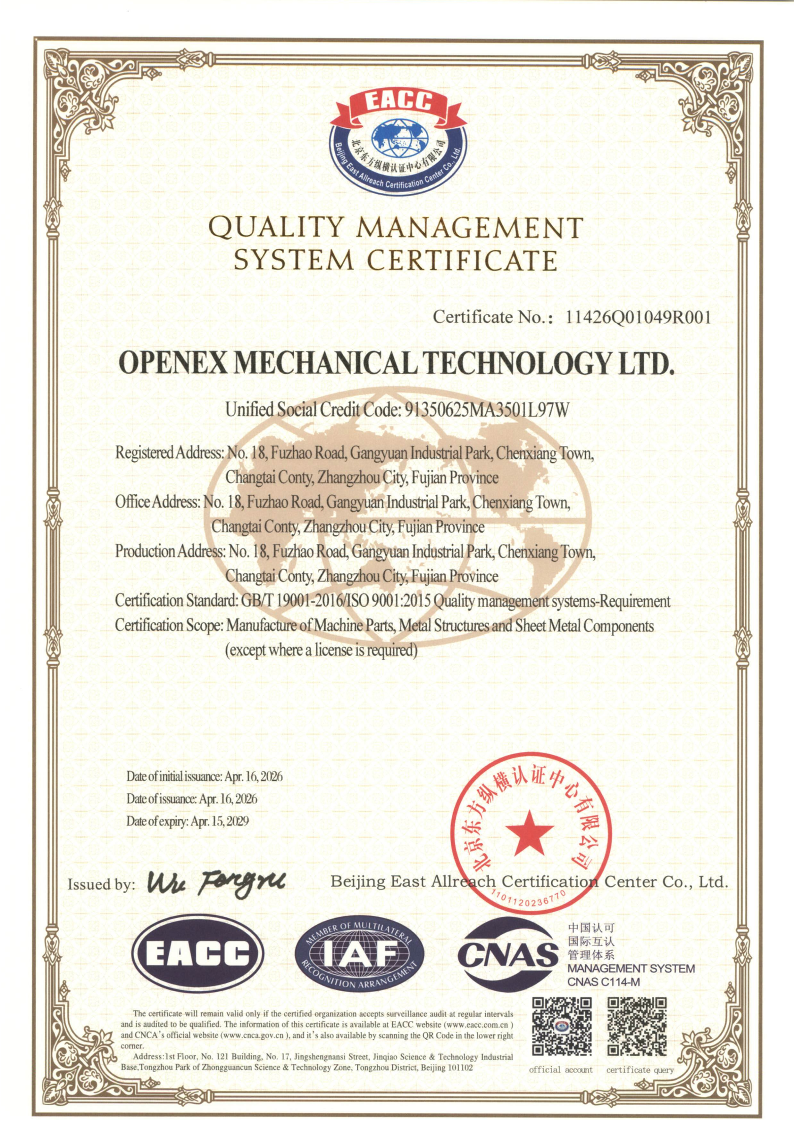
ISO 9001 certificate 11426Q01049R001, issued by Beijing East Allreach Certification Center Co., Ltd.
Reading the four documents together
The three management-system certificates — ISO 9001, ISO 14001 and ISO 45001 — share the same issuing body, the same manufacture scope wording and the same 2026-04-16 to 2029-04-15 validity window. That means a single audit cycle supports them, and a buyer verifying one has effectively verified the issuing body and entity for all three.
The welding certificate is structurally different and should be treated separately. ISO 3834-2 is a welding-specific requirement standard, not a general management system, and it is issued here by SGS under certificate 23/999-3834. Its declared scope is narrow and precise: fusion welding of metallic material using welding processes 135 and 135-Auto, for material groups 1.1 and 1.2. If a project's risk sits in weld integrity rather than general quality administration, the ISO 3834-2 document is the one to interrogate, and its validity window should be confirmed as current at the time of order.
Documented Capability: The Parameters a Certificate Does Not Carry
Certificates describe systems. Drawings describe parts. Between the two sits a layer buyers frequently forget to verify: the documented parameters of comparable work the supplier has actually delivered. The following reference configurations are drawn from Openex's published product data and give a realistic sense of the dimensional envelope a certified fabricator is expected to hold.
| Reference part | Model | Documented parameter | Material |
|---|---|---|---|
| Ultra-long formed steel box section | Custom-L-1 | Overall length 8,000 mm; plate thickness 6 mm; unit mass 1.5 t; overall straightness ≤3.0 mm per 10,000 mm | Q355B / EN S355J2+N / ASTM A572 Grade 50 |
| Mirror-finish equipment enclosure | Custom-L-2 | Length 7,000 mm × width 1,300 mm × height 1,000 mm; internal partition 6 mm; finished mass 2.0 t | Stainless steel 304 / 304L mirror-finish sheet with SS304 stiffeners |
| Energy storage system cabinet | Customized-J-05 | Material thickness 1.5–5.0 mm; protection rating IP54 / IP55 / IP65; powder coating or anti-corrosion coating; load capacity customized to battery system requirements | Carbon steel / galvanized steel / stainless steel / aluminium |
| High-strength steel telescopic boom | Customized-J-04 | Straightness tolerance ±1 mm; height difference <1.5 mm; painting, powder coating or customized finish | Q960 / BS700MCK2 high-strength steel with mill certificates for traceability |
| Large welded crossbeam | Custom-L-7 | Length 6,000–10,000 mm; box section 800–1,200 × 600–900 mm; plate thickness 25–60 mm; guide straightness ≤0.10 mm per 1,000 mm | ASTM A572 Grade 50 / EN S355J2+N / Q355B |
| Welded steel machine base | B-300 | Base size 24 × 24 in. to 72 × 96 in.; welded, stress-relieved and shot-blasted; ground-top flatness ±0.001 in. cumulative | ASTM A36 carbon steel, optional SS304 or aluminium |
Two observations follow from this table. First, the tolerances quoted are engineering tolerances with units and reference lengths attached — not marketing claims. Second, several entries carry cross-market material equivalences (Q355B alongside EN S355J2+N and ASTM A572 Grade 50, for example). That equivalence is itself a compliance deliverable: European, American and other buyers often need the same geometry certified to a locally recognised grade, and the material certificate must state the grade the buyer's own code recognises.
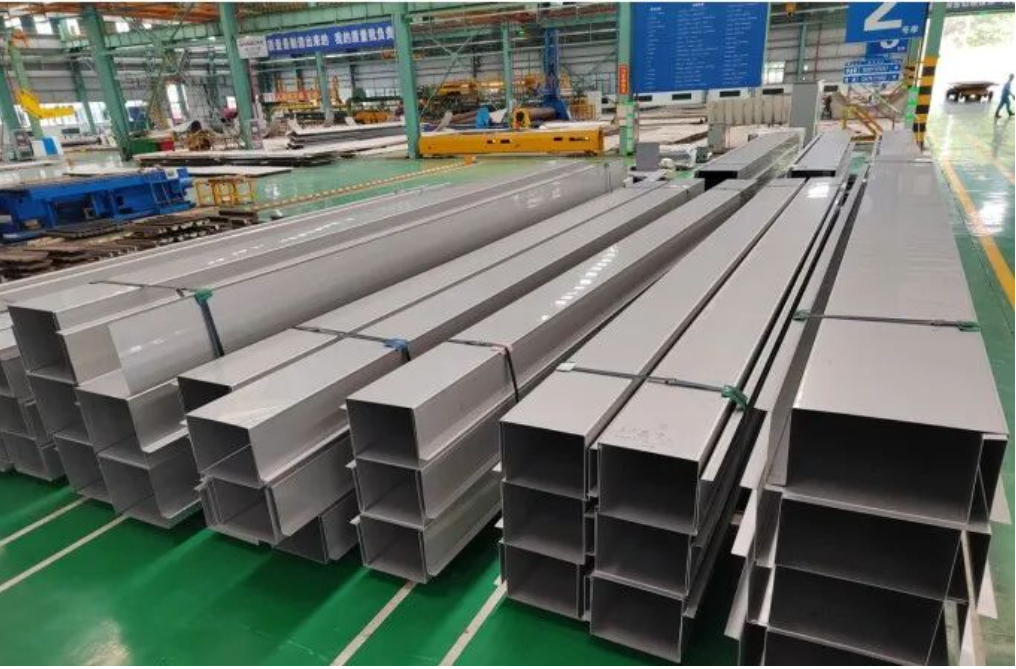
Press-brake formed welded steel box section, model Custom-L-1: 8,000 mm long, 6 mm plate, straightness ≤3.0 mm per 10,000 mm.
Step-by-Step: How to Verify an ISO 9001 Certified Fabrication Supplier
The sequence below converts a certificate check into a project-specific qualification decision. It can be run in a single supplier review meeting.
Step 1 — Read the scope statement against your own part. Write down, in one sentence, what manufacturing activity your order requires. Then check that the certificate scope sentence contains that activity. "Manufacture of machined parts, metal structures and sheet metal components" covers cutting, forming, machining and welding of metal parts. It does not cover statutorily licensed scopes, which the same sentence explicitly excludes.
Step 2 — Match the certificate to the legal entity and the site. Confirm the certificate names the entity that will invoice you and the premises that will manufacture the part. With two manufacturing premises in operation, site confirmation removes an entire class of traceability disputes.
Step 3 — Verify the issuing body and the validity window. Record the certificate number, the issuing body and both validity dates in the purchase file. For Openex, the three management-system certificates are issued by Beijing East Allreach Certification Center Co., Ltd. and run from 2026-04-16 to 2029-04-15; the welding certificate 23/999-3834 is issued by SGS.
Step 4 — Separate welding requirements from general quality requirements. If the part is a weldment, ask for the welding-specific documentation: the certificate covering fusion welding, the welding procedure specifications and qualification records, and the non-destructive testing methods that will be applied. Openex's stated NDT capability covers RT, UT, MT, PT, VT and LT, alongside destructive testing that includes chemical analysis, tensile, impact (including low-temperature), bend, hardness and salt-spray corrosion testing.
Step 5 — Establish exactly what is in-house and what is subcontracted. This is the most overlooked step and is covered in detail below. Ask for the list in writing.
Step 6 — Agree the inspection plan before production, not after. Decide whether inspection will be 100% or sampled, which dimensional characteristics will be measured, what surface roughness parameters (Ra, Rz) apply, and whether a third-party witness or remote inspection will be used. Dimensional and visual inspection capability includes length, diameter, angle, roundness, straightness and position measurement; specialised options include residual stress analysis, coating and plating inspection, and customized NDT systems.
Step 7 — Fix the commercial constraints in the purchase order. Drawing format, tolerances, material grade with the standard that governs it, heat treatment and stress-relief method, surface finish, packing, and the accepted delivery basis. Each of these items is a constraint that must appear on paper, because none of them is implied by a certificate.
Use Cases Where the Certification Constraint Actually Binds
Compliance discussions become concrete only when attached to a part. Four documented project types show where the constraint genuinely controls the outcome.
Energy storage system cabinets and metal boxes
Battery energy storage enclosures combine sheet metal fabrication, welding, powder coating and an ingress protection claim. The Energy Storage System Cabinet (Customized-J-05) is built in material thicknesses of 1.5–5.0 mm with a protection rating of IP54, IP55 or IP65, using carbon steel, galvanized steel, stainless steel or aluminium, and supports customized cabinet sizes, battery layouts and installation requirements based on customer drawings. The IP rating is a claim that depends on controlled forming, welding and sealing — not on a certificate alone. Related work includes Li-battery energy storage shelves and boxes (model XHC-009, 1.1 m × 1.1 m × 2.2 m, 1,000 kg per unit, powder-coated for anti-rust protection).
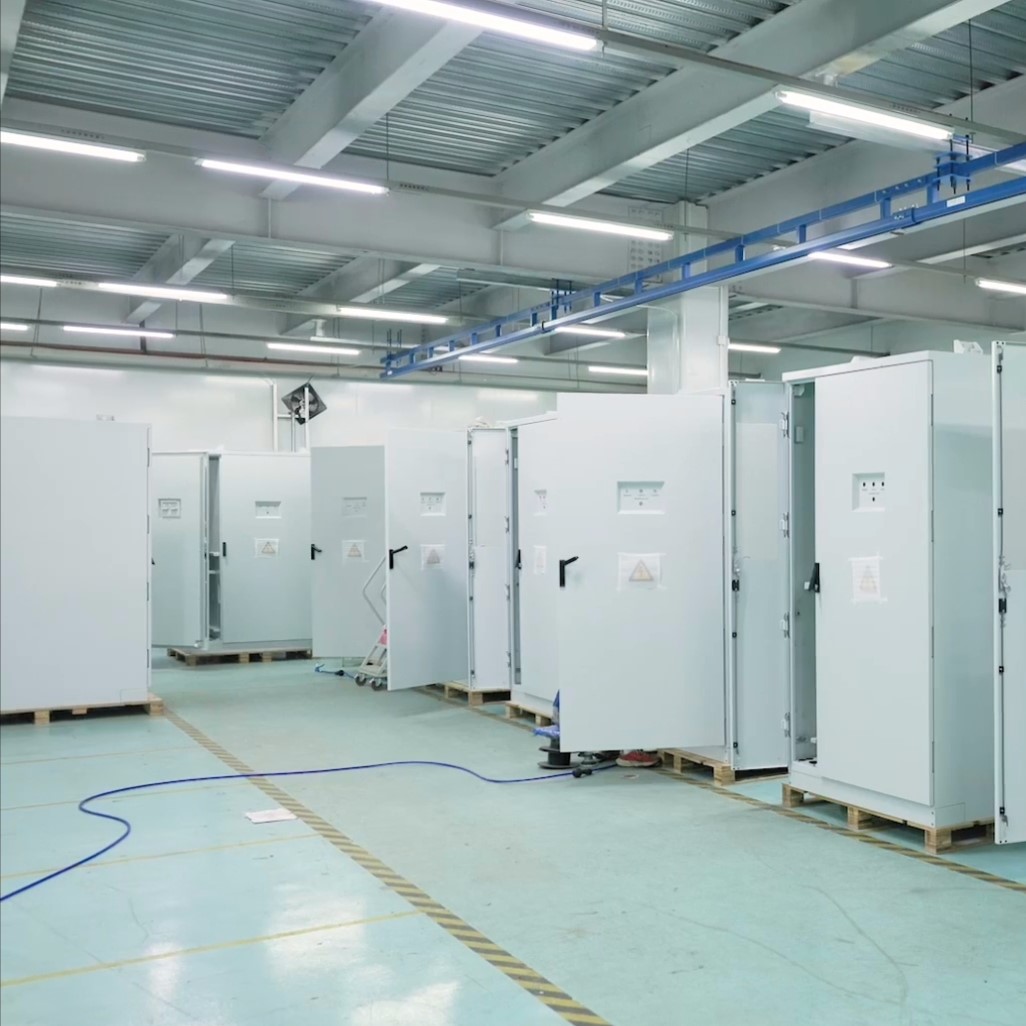
Battery cabinet assembly — sheet metal fabrication, welding and finishing combined in one enclosure.
Ultra-long formed sections for construction and heavy equipment
Long, thin-to-medium plate members are a straightness problem before they are a certification problem. Model Custom-L-1 is 8,000 mm long with a 6 mm plate and a unit mass of 1.5 t, held to an overall straightness of ≤3.0 mm per 10,000 mm. Digital forming simulation and process optimization are used to control springback, residual stress and dimensional deviation, and full-length seam finishing supports a visually continuous joint.
Stainless steel sheet fabrication for process equipment
The Equipment Enclosure (Custom-L-2) is a 7,000 mm × 1,300 mm × 1,000 mm mirror-finish enclosure in stainless steel 304 / 304L with a 6 mm internal partition and a finished mass of 2.0 t. Controlled handling is used to reduce surface scratching, circular-opening distortion and overall dimensional deviation — the three defects most likely to cause rejection on mirror-finish stainless steel sheet fabrication.
High-strength structural components
The telescopic boom (Customized-J-04) is fabricated from Q960 and BS700MCK2 high-strength steel with mill certificates available for material traceability, to a straightness tolerance of ±1 mm and a height difference of less than 1.5 mm. Dedicated welding fixtures and advanced fabrication equipment produce stable welding quality. On the pipeline side, prefabricated spools are ASME-certified for fabrication with full NDT inspection, and automated cutting, beveling and welding deliver welding acceptance rates of up to 99.2% while running three to five times more efficiently than manual welding.
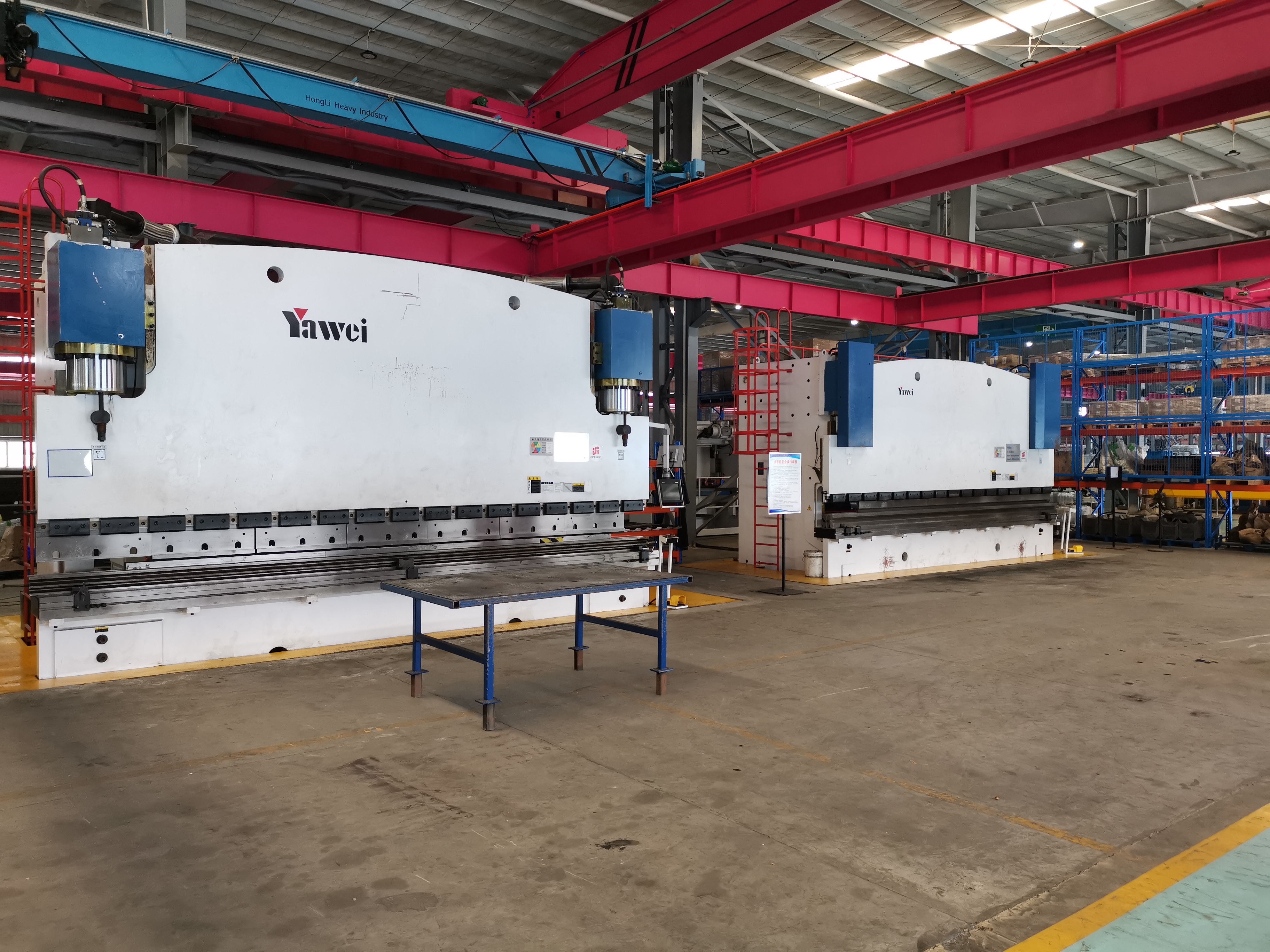
Press brake machine near Xiamen Port — bending capability is a plant constraint, not a certificate constraint.
In-House Versus Subcontracted Processes: The Scope Question Buyers Miss
Openex performs laser cutting, bending, machining, welding, drilling, punching, stamping, assembling and packaging at its own premises, and sources casting, forging, hot-dip galvanizing and powder coating from long-term partners. The company states that it manufactures 80–90% of the metal parts, components and assemblies it exports from mainland China, with the balance sourced from partners.
That split is not a weakness — it is normal in metal fabrication — but it must be visible to the buyer, because each subcontracted step introduces a quality boundary. A casting that is subsequently machined and welded by the fabricator is a fabricated component with a controlled interface. A casting that is delivered as-cast with no machining or welding is a foundry product, and the fabrication supplier adds limited value beyond coordination.
Openex's own guidance draws the same line: when a project's main work is fabrication plus machining, the company positions itself as a candidate; when a project requires only casting, forging or anti-rust finishing, a dedicated specialist is the better choice. Buyers should apply the same logic in reverse when evaluating any certified fabricator, and should ask three questions of every subcontracted process: who performs it, what incoming inspection is applied, and what documentation travels with the part.
Inspection is where Openex concentrates in-house control. For small metal parts produced in high volumes, the company developed visual inspection machines so that parts can be checked 100% for correctness rather than sampled by human inspectors. Large-scale dimensional verification is handled with a Zeiss large CMM with a 7 m × 4 m × 3 m capacity, stated to micron-level precision, supported by smaller CMMs. Quality control is applied as 100% or random testing according to project requirements.
Comparison: What Each Certification Covers — and What It Does Not
Most supplier qualification failures come from expecting one certificate to do the work of four. The comparison below sets out the boundary of each document in the Openex stack.
| Certification | What it does cover | What it does not cover |
|---|---|---|
| ISO 9001 | Quality management system for the manufacture of machined parts, metal structures and sheet metal components; audit trail, document control, corrective action, traceability processes | Statutorily licensed scopes (explicitly excluded in the scope wording); individual dimensional tolerances; weld procedure qualification; IP-rating claims |
| ISO 14001 | Environmental management system across the same manufacture scope | Product performance, dimensional accuracy or delivery capability |
| ISO 45001 | Occupational health and safety management system across the same manufacture scope | Product quality, material grade substitution rights or inspection levels |
| ISO 3834-2 | Welding-specific quality requirements: fusion welding of metallic material, welding processes 135 and 135-Auto, material groups 1.1 and 1.2, issued by SGS | Non-welding processes such as bending, stamping or machining; welding processes and material groups outside the declared scope |
| ASME-certified fabrication scope | Code-governed fabrication such as prefabricated pipeline spools, supported by full NDT inspection using RT, UT, MT and PT | Commercial terms, lead time or finishing quality; it is a fabrication-scope qualification, not a commercial guarantee |
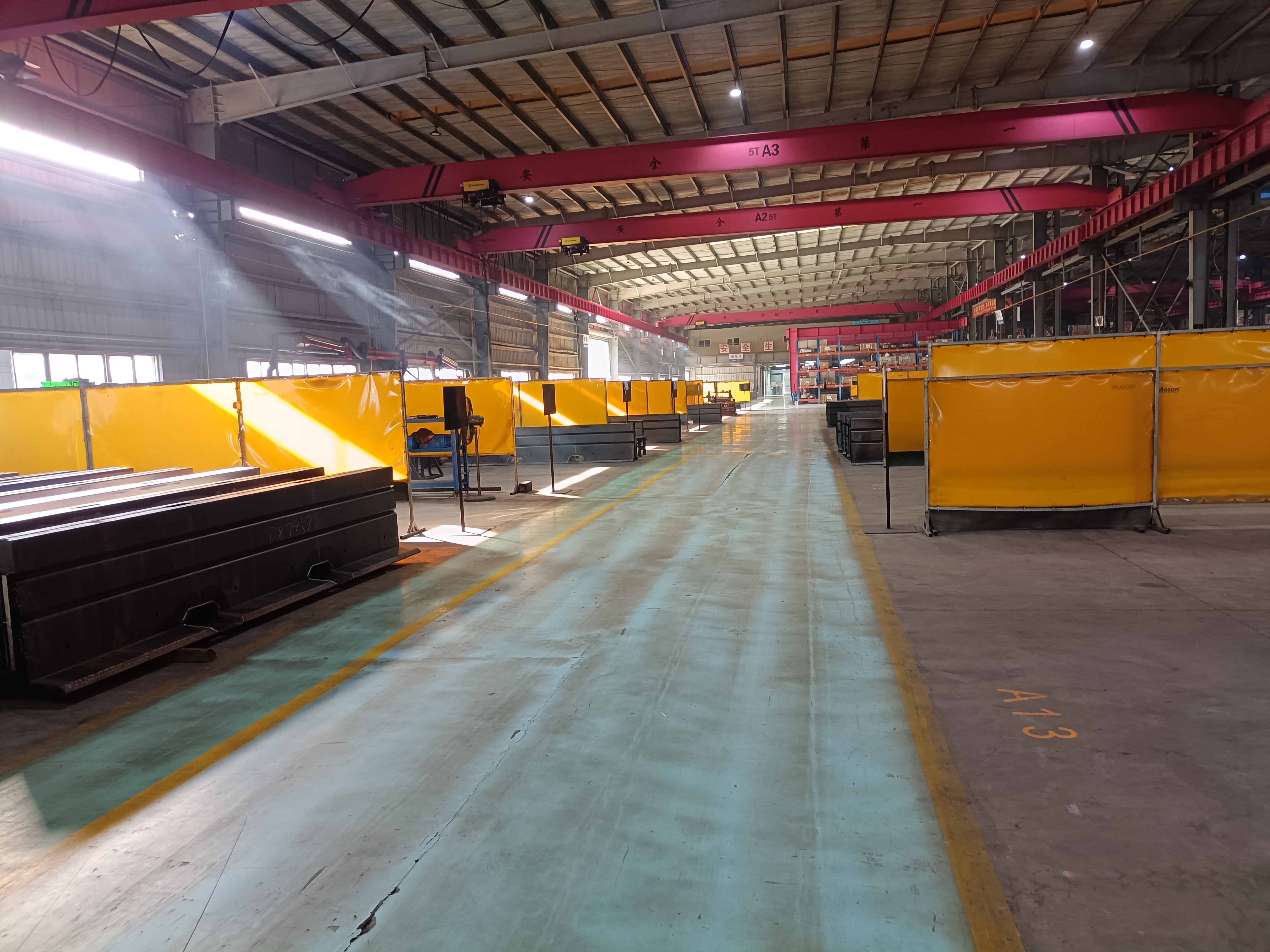
Welding cells handling a high volume of metal fabrication work — the process area covered by the welding-specific certification.
Frequently Asked Questions
What does ISO 9001 certification actually cover for a sheet metal fabrication manufacturer?
ISO 9001 certification covers the quality management system governing a defined scope of manufacturing activity — not individual parts. Openex's ISO 9001 certificate, number 11426Q01049R001, is issued by Beijing East Allreach Certification Center Co., Ltd. against GB/T 19001-2016 / ISO 9001:2015, is valid from 2026-04-16 to 2029-04-15 and applies to the global market. Its scope reads: Manufacture of Machined Parts, Metal Structures and Sheet Metal Components (except where a license is required). That wording matters twice over: it confirms coverage of machined parts, metal structures and sheet metal components, and it explicitly excludes work for which a statutory manufacturing licence is required. Statutorily licensed or code-governed work must therefore be qualified through separate evidence, such as an ASME-certified fabrication scope with full NDT inspection using RT, UT, MT and PT methods.
Is ISO 9001 the only certification that matters when selecting a sheet metal fabrication supplier?
No. Different certificate types answer different questions. Openex holds ISO 9001 (11426Q01049R001), ISO 14001 (11426E00739R001) and ISO 45001 (11426S00656R001), all issued by Beijing East Allreach Certification Center Co., Ltd. and valid from 2026-04-16 to 2029-04-15, plus ISO 3834-2 fusion welding certification, certificate 23/999-3834, issued by SGS and covering welding processes 135 and 135-Auto for material groups 1.1 and 1.2. ISO 9001 addresses quality management, ISO 14001 addresses environmental management and ISO 45001 addresses occupational health and safety management. ISO 3834-2 addresses the welding-specific requirement standard. A buyer whose principal risk is weld integrity should treat the welding certification as a separate and equally important check, and should confirm its validity window is current at the time of order.
Which fabrication processes should be in-house, and which can be subcontracted?
Buyers should ask for the split explicitly rather than assume it. Openex performs laser cutting, bending, machining, welding, drilling, punching, stamping, assembling and packaging at its own premises, and sources casting, forging, hot-dip galvanizing and powder coating from long-term partners. The company states that it manufactures 80–90% of the exported metal parts, components and assemblies itself. Two manufacturing premises support this: one near Xiamen Port and one near Shanghai Port. Where a certification scope or a customer quality plan requires process control, each subcontracted step needs its own incoming inspection and documentation. Where the subcontracted step is the dominant value of the part — for example a casting that requires no machining or welding — a fabrication specialist is not necessarily the right supplier.
How are MOQ and pricing determined for custom sheet metal fabrication?
Openex treats minimum order quantity as a project-level decision rather than a single blanket number, and states the commercial reasoning openly. Full container load shipments reduce freight cost compared with less-than-container-load shipments; fixed overhead spread across a larger quantity lowers unit cost; larger volumes allow metal material to be purchased at a lower price; and repeated ordering helps a buyer secure both favourable pricing and stable, high quality supply. Published capability references include a monthly capacity of 1,000 pieces with a minimum order quantity of 1 unit for inspection-scope work, a monthly capacity of 5,000 tons with a 25-ton minimum order reference for welding scopes, and a monthly capacity of 3,000 tons with a 15-ton minimum order reference for machining scopes. Buyers should confirm which reference applies to their own part family and shipping mode before comparing quotations.
What drawing formats do you accept, and can a sample be validated before mass production?
Openex accepts STEP, IGES, DWG, DXF, PDF and other 2D and 3D formats. For simple parts, a 2D drawing alone is generally sufficient to quote. Supplying both 2D and 3D drawings is the fastest route to a quotation, in some cases within one or two hours, while a 3D drawing alone is normally not enough to quote directly, because the following information is usually carried only on the 2D drawing: tolerance information, welding requirements, surface roughness and chamfer details, the cutting direction relative to the hot-rolling direction, the plate bending radius, the required metal material grade, heat treatment requirements and the stress-release method, and finish requirements such as hot-dip galvanizing, sand blasting, painting or powder coating. Where a physical sample or a pre-assembly check is useful, that can be built into the project scope — documented examples include pre-assembly and testing of wind tree structures before disassembly and packing.
What lead times should a buyer plan for, and how do I start an enquiry?
Published Openex capability references place welding and machining scopes at 30–45 days and surface-treatment-led scopes at 45 days; actual lead time depends on part size, material availability, finishing route, inspection level and shipping mode, so it should be confirmed per project rather than assumed. To begin, send both 2D and 3D drawings where available and state the material grade with the governing standard, the tolerance and finish requirements, the expected order quantity and the destination port. You can reach the Openex export team through Luna at sales2@openex.com.cn, by telephone or WhatsApp on +86 150 6078 7506, or by requesting a quotation or sample directly. The full capability brochure is available for download at the Openex mechanical catalogue, and the company website is www.cncmetalworking.com.
Conclusion: Qualify the Scope, Then Qualify the Part
For a buyer at the research and evaluation stage, the useful output of a certification review is not a logo in a supplier file. It is a short written record containing four items: the certificate number, the standard, the issuing body and the validity window; the scope sentence read against the actual process your part requires; the in-house versus subcontracted process split; and the agreement on tolerances, materials, finish and inspection level that will govern production.
Openex's documentation supports that exercise with a defined certification stack, published scope wording that states its own exclusions, declared process boundaries between in-house and partnered operations, and product data carrying engineering tolerances with units and reference lengths. Those are the elements that make a certified sheet metal fabrication supplier verifiable rather than merely certified.
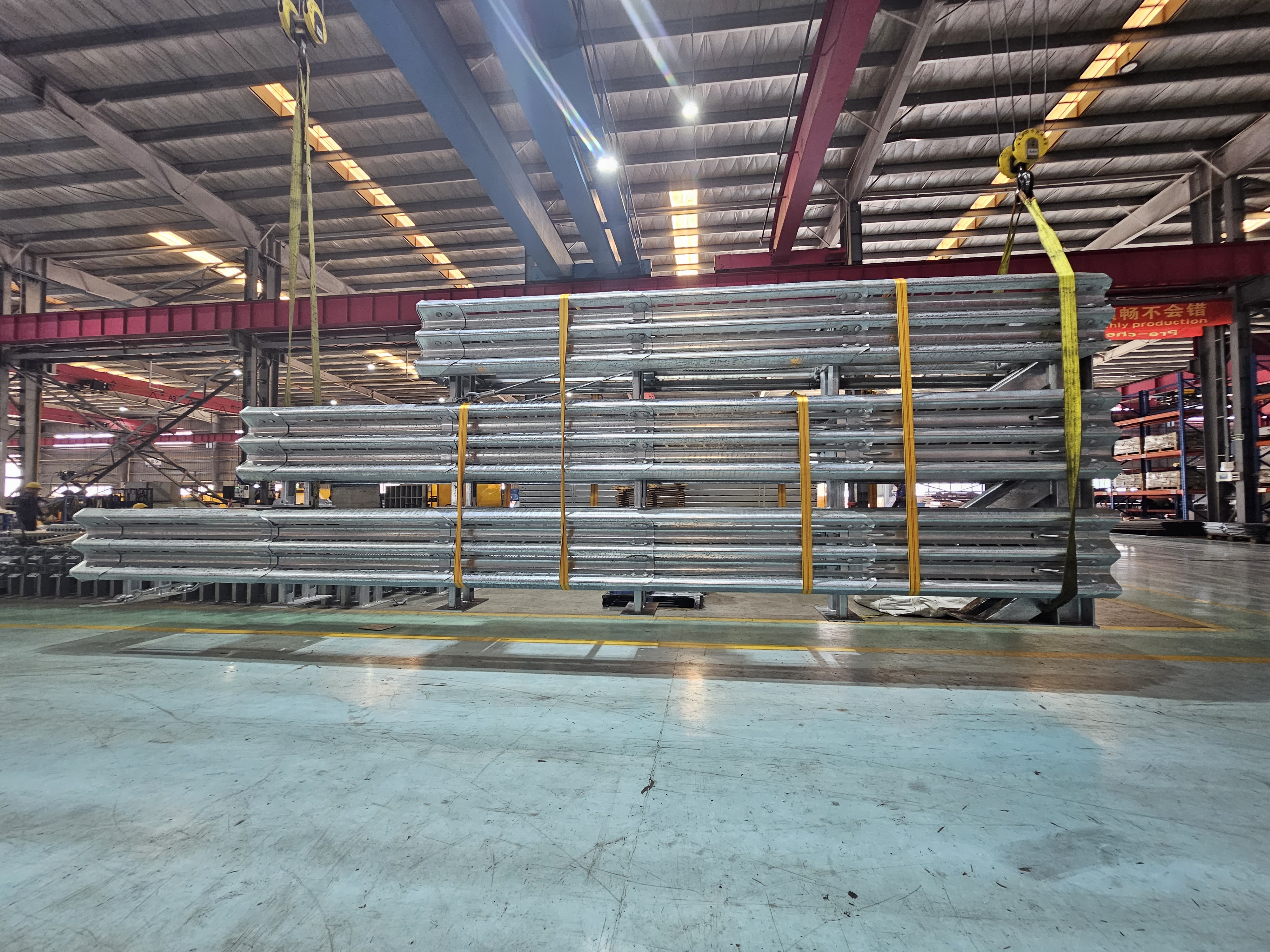
Assembly workshop near Xiamen Port — where fabricated metal parts, components and assemblies are completed before packing.
Have a drawing to check against a certified fabrication scope?
Send us your 2D and 3D drawings with the material grade, tolerance and finish requirements, and the Openex export team will confirm process scope, tooling fit, inspection plan and lead time. Samples and pre-production validation can be built into the project plan where they reduce risk.
Contact Luna — sales2@openex.com.cn · WhatsApp +86 150 6078 7506 · Download the Openex catalogue