ISO 9001 Certified Sheet Metal Fabrication: Scope, Limits and Proof
ISO 9001 Certified Sheet Metal Fabrication: Scope, Limits and Proof
If you are shortlisting sheet metal fabrication suppliers, ISO 9001 is usually the first filter and the last document anyone reads closely. A certificate confirms that a manufacturer's quality management system has been audited against a defined scope. It does not confirm that your part type sits inside that scope, that the certificate is still valid today, or which welding, tolerance and inspection constraints apply to your order.
Xiamen Openex Mechanical Technology Ltd, the company behind Openex fabrication, holds ISO 9001 certification for the manufacture of machined parts, metal structures and sheet metal components (except where a license is required). The sections below explain how that scope wording works, how to verify it independently, and what stays constrained - minimum order quantity, lead time, tolerance and inspection - after the certificate has been checked.
What “ISO 9001 certified sheet metal fabrication” actually answers
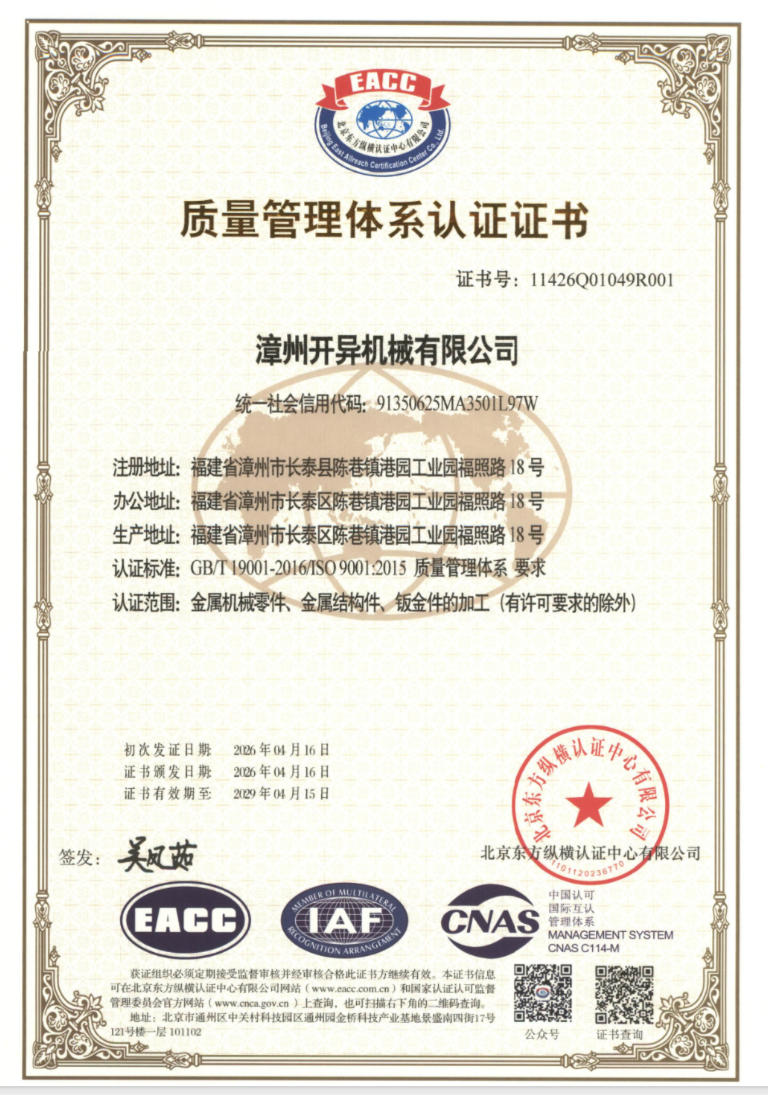
ISO 9001 is a management-system standard, not a product standard. On a valid certificate, the applicable standard is printed as GB/T 19001-2016 / ISO 9001:2015, and the sentence carrying the real information is the scope line: Manufacture of Machined Parts, Metal Structures and Sheet Metal Components (except where a license is required).
Buyers searching for ISO 9001 certified sheet metal fabrication manufacturers are normally trying to answer four separate questions at once:
- Does a valid certificate exist, and who issued it?
- Does the scope cover the part being purchased - a machined component, a welded metal structure, or a sheet metal enclosure?
- Is the certificate current, and against which edition of the standard?
- What does the system behind the certificate change in the workshop: inspection records, material traceability, welding documentation, corrective action?
A logo on a website answers only the first question. A system certificate cannot certify the burst pressure of a vessel, the fatigue life of a welded frame, or the vacuum tightness of a shell, because those are part-level properties. They require part-level evidence: welding procedure qualification and welder records, non-destructive testing results, dimensional reports, and mill certificates for the base material.
Why certification became a buying constraint rather than a badge
Sheet metal fabrication now feeds battery energy storage, semiconductor process equipment, port automation, heavy machinery, mining equipment and renewable energy projects. In those supply chains, documentation travels with the part. Buyers in the EU, USA, Japan, Australia and New Zealand routinely build quality-system requirements, material traceability, welding documentation, third-party inspection and corrosion-protection requirements into the RFQ checklist itself.
Two consequences follow. Suppliers that hold a certificate but cannot produce process-level evidence tend to be removed during evaluation, because a certificate alone cannot answer a project-specific question. Buyers who accept a certificate without reading its scope take on a compliance risk of their own, because the certificate may not cover the process or the material they are purchasing. This is why a certification portfolio - quality system, welding system, occupational health and safety, environmental management - is requested more often than any single certificate.
The certification stack behind Openex fabrication
Rather than one document, Openex fabrication operates under four certifications, each with its own number, issuer, standard and validity window. A buyer evaluating the company can check each one independently.
| Certification | Standard | Certificate number | Issued by | Validity | What it covers |
|---|---|---|---|---|---|
| ISO 9001 (quality management system) | GB/T 19001-2016 / ISO 9001:2015 | 11426Q01049R001 | Beijing East Allreach Certification Center Co., Ltd. | 2026-04-16 to 2029-04-15 | Manufacture of machined parts, metal structures and sheet metal components (except where a license is required); global market |
| ISO 3834-2 (welding quality requirements) | EN ISO 3834-2 | 23/999-3834 | SGS | Issued 2024-10-15, valid until 2026-10-04 | Fusion welding of metallic material: welding process 135 and 135-Auto; material groups 1.1 and 1.2 |
| ISO 45001 (occupational health and safety) | GB/T 45001-2020 / ISO 45001:2018 | 11426S00656R001 | Beijing East Allreach Certification Center Co., Ltd. | 2026-04-16 to 2029-04-15 | Occupational health and safety management for the same manufacturing scope |
| ISO 14001 (environmental management) | GB/T 24001-2016 / ISO 14001:2015 | 11426E00739R001 | Beijing East Allreach Certification Center Co., Ltd. | 2026-04-16 to 2029-04-15 | Environmental management for the same manufacturing scope |
ISO 9001 - the manufacturing scope. Certificate 11426Q01049R001 is issued by Beijing East Allreach Certification Center Co., Ltd. against GB/T 19001-2016 / ISO 9001:2015, valid from 2026-04-16 to 2029-04-15 and applicable to the global market. Its scope wording is what determines whether a project sits inside the certified system.
ISO 3834-2 - the welding boundary. Certificate 23/999-3834 is issued by SGS against EN ISO 3834-2 and covers fusion welding of metallic material for welding process 135 and 135-Auto, material groups 1.1 and 1.2. It was issued on 2024-10-15 and remains valid until 2026-10-04. The boundary matters: a welding process or material group outside that list is not covered by this certificate, and the correct evidence for those jobs is the WPS/PQR, welder qualification and inspection plan agreed for the project. Welding processes used in the shop beyond the certified scope - including TIG, stick and submerged arc welding - are managed through those project-level documents rather than through the ISO 3834-2 certificate.
ISO 45001 and ISO 14001 - production and environment. Certificates 11426S00656R001 (GB/T 45001-2020 / ISO 45001:2018) and 11426E00739R001 (GB/T 24001-2016 / ISO 14001:2015) also run from 2026-04-16 to 2029-04-15 and cover the same manufacturing scope. They are usually requested by buyers whose own customer audits or sustainability questionnaires require them.
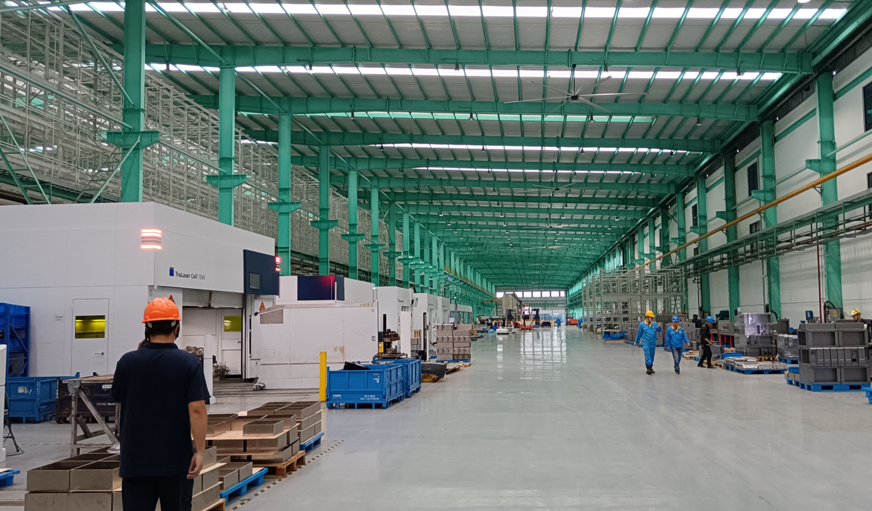
Fabrication takes place at two manufacturing premises, one near Xiamen Port and one near Shanghai Port. Both serve export markets including the EU, USA, Australia, New Zealand, Japan, Singapore, South America and the Middle East, which is why the certification scope is written for the global market rather than for a single region.
How to verify ISO 9001 certified sheet metal fabrication manufacturers in five steps
- Read the scope line, not the logo. Compare the certificate scope with what you are buying. A scope covering machined parts, metal structures and sheet metal components applies to fabricated weldments, machined components and enclosures; it says nothing about a process the company does not perform.
- Match the certificate number to the issuer. Take the number directly from the certificate - for example 11426Q01049R001 - and confirm it with the issuing body, in this case Beijing East Allreach Certification Center Co., Ltd. Ask for a scan that shows the number, the scope and the dates on one page.
- Check the validity window and the standard edition. A certificate valid from 2026-04-16 to 2029-04-15 against GB/T 19001-2016 / ISO 9001:2015 is current; an expired or superseded one is not. For welded work, check ISO 3834-2 certificate 23/999-3834, valid until 2026-10-04.
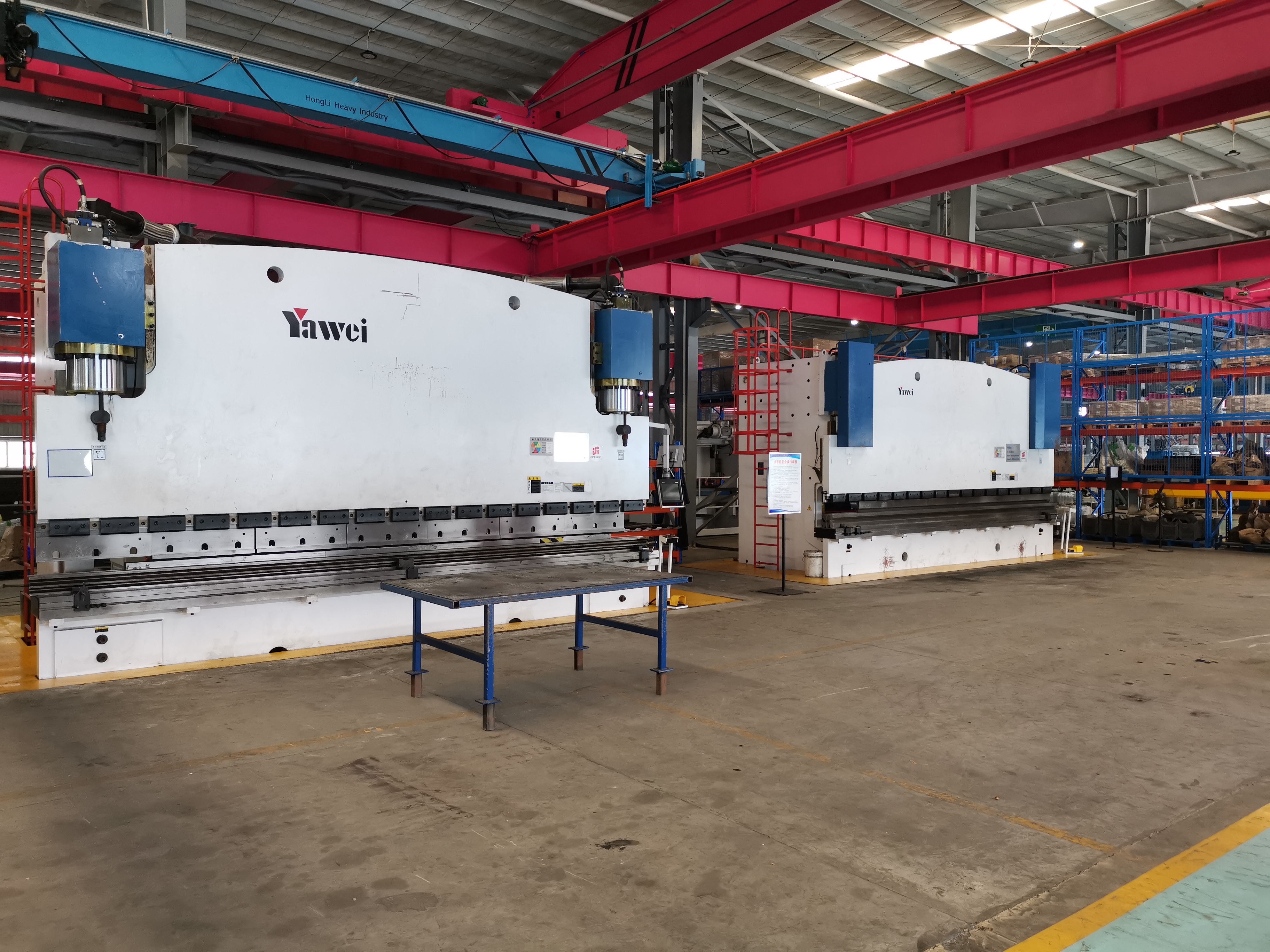
- Ask what happens outside the certificate. Openex carries out laser cutting, bending, machining, welding, drilling, punching, stamping, assembling and packaging in-house, while casting, forging, hot dip galvanizing and powder coating come from partner companies. A careful buyer asks how those partner processes are inspected and documented before parts are released.
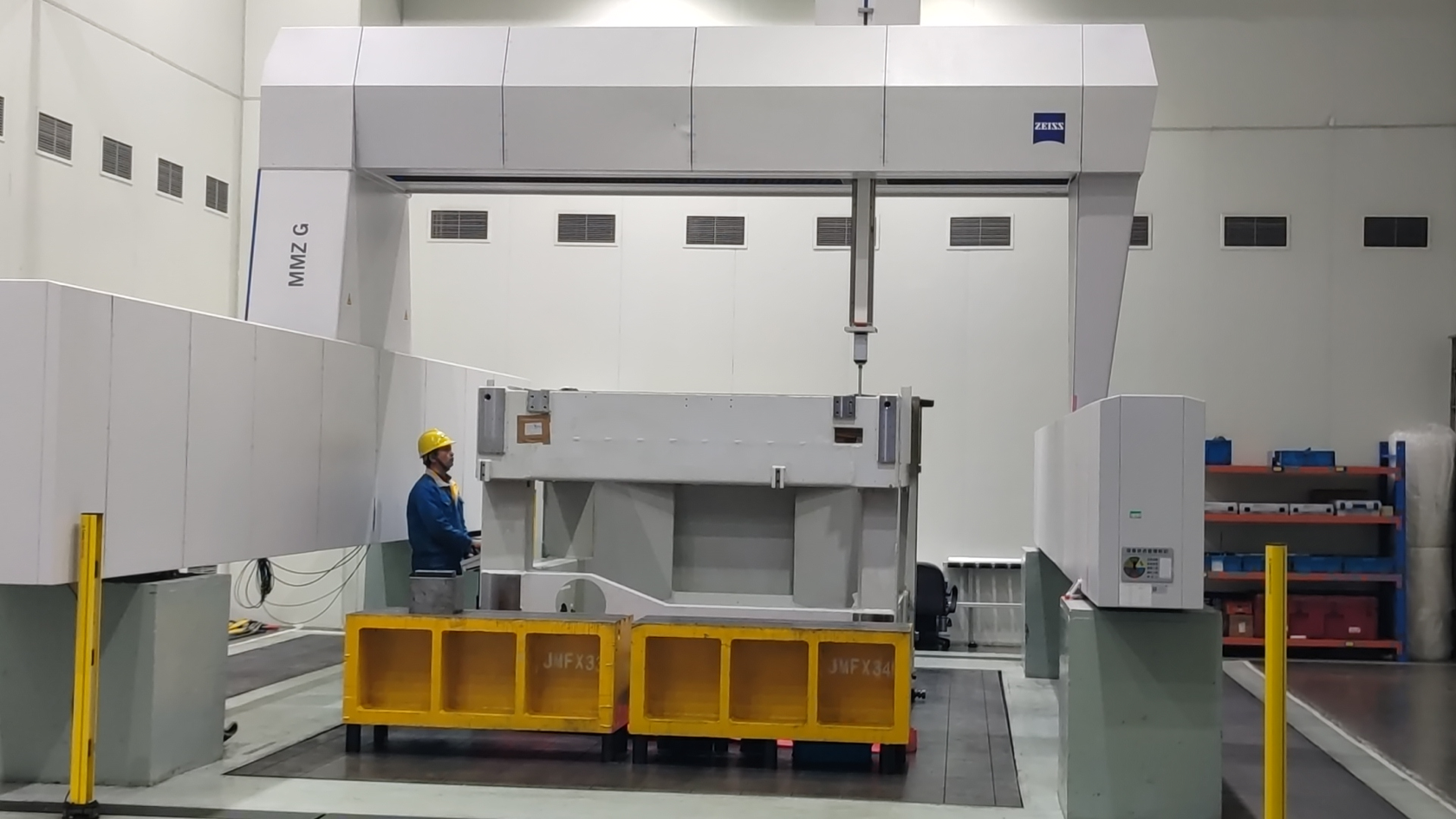
- Request the evidence trail for the actual part. This is where the certificate becomes useful. Openex performs non-destructive testing by RT, UT, MT, PT, VT and LT, destructive testing including tensile, impact, bend, hardness and salt-spray corrosion testing, and dimensional measurement on a large Zeiss CMM with a 7 x 4 x 3 m working envelope and micron-level precision.
The constraints a certificate does not remove: MOQ, lead time and tolerance
Certification governs how work is controlled. It does not change how small an order can economically be, how long a welded structure takes, or how tight a tolerance can be held. Those are process constraints, and they differ sharply between fabrication categories.
| Work category | Minimum order | Lead time | Monthly capacity | Quality control |
|---|---|---|---|---|
| Fabrication and machining of small parts and components | 1 unit | 3 days | 1,000 pcs | 100% or random test as per requirements |
| Welding-intensive fabrication | 25 tons | 30-45 days | 5,000 tons | 100% test |
| CNC machining | 15 tons | 30-45 days | 3,000 tons | 100% inspection |
| Surface treatment (blasting, painting, powder coating, galvanizing) | 15 tons | 45 days | 3,000 units | 100% or random check as per requirements |
Quantity also drives cost more than most first-time buyers expect. Full container load shipments cost less per part than LCL shipments, fixed overhead spreads across a larger volume, and larger orders allow material to be purchased at better prices. For small metal parts in small quantities, communication and logistics overhead can represent a large share of order value, which is why such orders are usually best placed with a supplier closer to the end user unless a specific capability is unavailable locally.
Tolerances are specified per part, not per supplier. Representative examples from Openex production documentation show the working range:
- Telescopic boom (Customized-J-04): straightness ±1 mm and height difference below 1.5 mm, fabricated from Q960 and BS700MCK2 high-strength steel with mill certificates available for material traceability.
- Ultra-long formed steel box section (Custom-L-1): 8,000 mm overall length, 6 mm plate thickness, 1.5 t unit mass and overall straightness within 3.0 mm per 10,000 mm, in Q355B, EN S355J2+N or ASTM A572 Grade 50 depending on the destination market.
- Heavy machine base (B-300): base sizes from 24 x 24 in to 72 x 96 in, welded, stress-relieved and shot-blasted, with ground-top flatness of ±0.001 in cumulative.
- Tube sheet (Customized-J-01): diameters up to 10,000 mm, thickness up to 600 mm, drilling depth up to 1,000 mm and drilling precision of ±0.05 mm, verified by CMM, UT, PT, MT and PMI inspection.
- Equipment enclosure (Custom-L-2): 7,000 mm x 1,300 mm x 1,000 mm with a 6 mm internal partition and 2.0 t finished mass, in Stainless Steel 304 / 304L mirror-finish sheet with SS304 structural stiffeners.
Where certification-backed sheet metal fabrication is applied
Certification only matters if the parts it covers are actually built. Four application clusters show what this scope produces in practice.
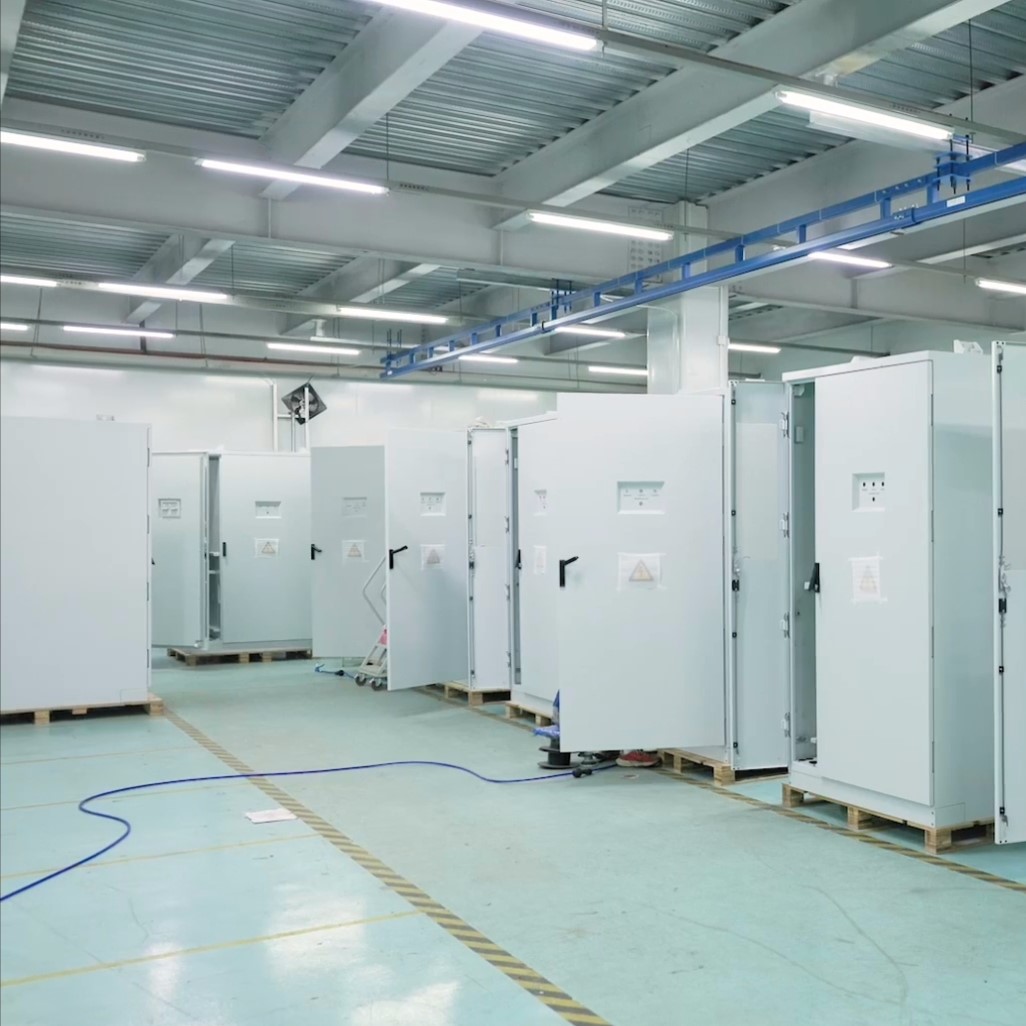
- Battery energy storage. Energy Storage System Cabinets (Customized-J-05) are fabricated from carbon steel, galvanized steel, stainless steel or aluminium with material thickness from 1.5 to 5.0 mm, IP54, IP55 or IP65 protection and powder or anti-corrosion coating. Cabinet sizes, battery layouts and installation details follow customer drawings; one programme covered 1,500 liquid-cooling cabinets. Steel frames and boxes for storage systems (XHC-009) measure 1.1 x 1.1 x 2.2 m at about 1,000 kg per unit with powder-coating anti-rust protection. In a 3,000-unit energy storage project, the recorded operating outcome was no rust, no leakage and no deformation.
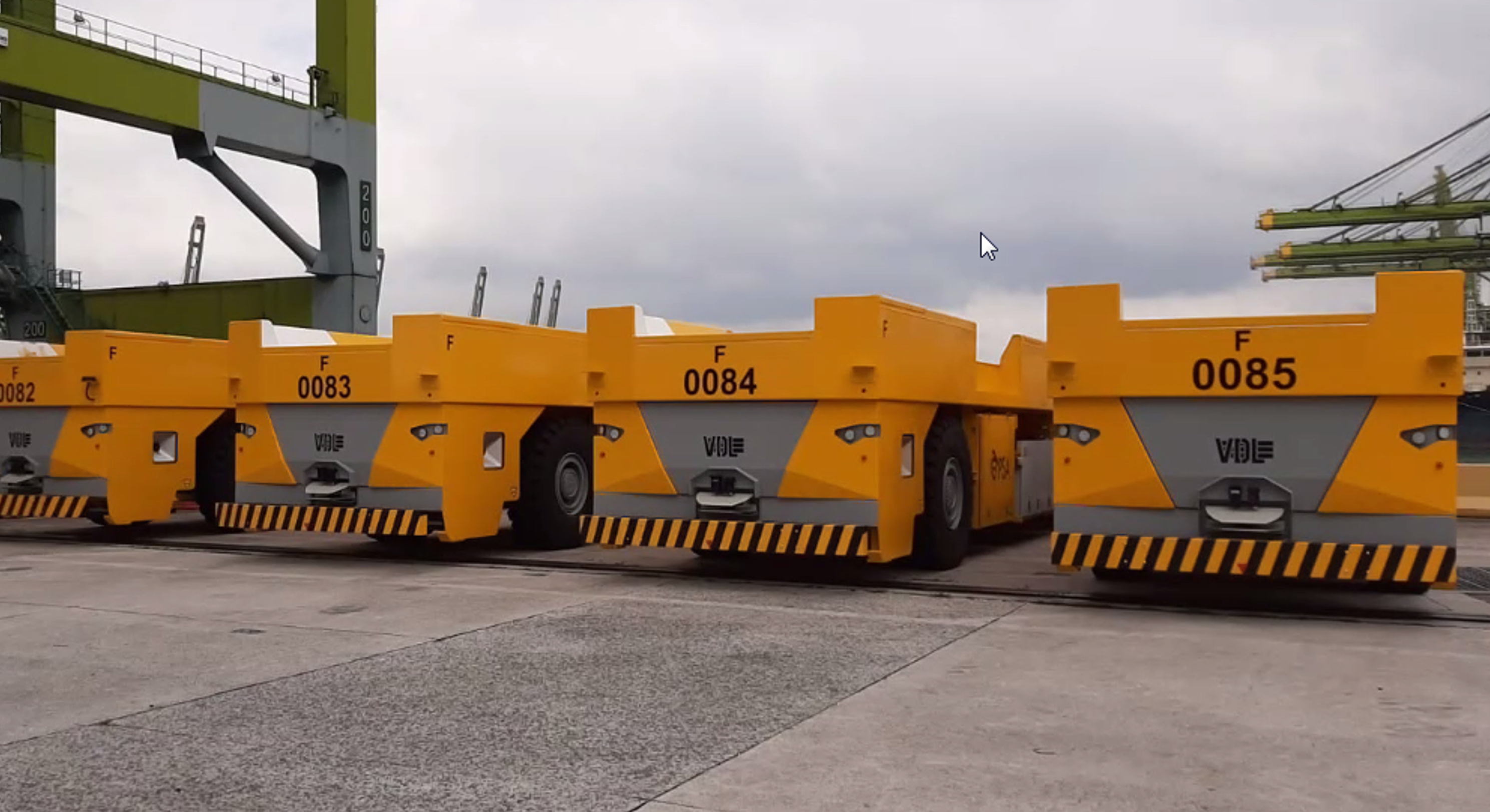
- Port and container logistics. AGV steel chassis (PSA-1) measure 15 x 2.7 x 3 m, weigh 10.5 t and carry up to 30 t, built from 25 mm S355JR (or A572 Grade 50) plate with 20 mm NM400 abrasion-resistant plate in high-wear areas. They operate in container yards on a 24/7 duty cycle.
- Steel mill logistics. Steel chassis for coil handling (JFE-1) weigh about 10 t across an envelope of roughly 15 x 2.5 x 2.1 m and support a maximum load of 35 t. A V-shaped top with wooden cushioning protects the coil surface from damage.
- Energy storage shells. Flywheel Energy Storage Shells (AKI-1) measure 1.5 m in diameter, 0.8 m in height and 2 t in mass, specified to hold a vacuum beyond 1.0 x 10⁻⁹ Torr L/s within 30 seconds - a part-level requirement that the management-system certificate supports but cannot by itself certify.
Frequently asked questions
How do I verify an ISO 9001 certified sheet metal fabrication manufacturer?
Check four things on the certificate: the scope line, the certificate number, the issuing body and the validity window. Openex fabrication holds ISO 9001 certificate 11426Q01049R001, issued by Beijing East Allreach Certification Center Co., Ltd. against GB/T 19001-2016 / ISO 9001:2015, valid from 2026-04-16 to 2029-04-15 for the global market. The scope covers the manufacture of machined parts, metal structures and sheet metal components (except where a license is required). If the part you are buying falls outside that scope, the certificate does not apply to it.
What is the difference between ISO 9001 and ISO 3834-2 for a fabrication supplier?
ISO 9001 covers the quality management system across a defined manufacturing scope. ISO 3834-2 defines welding quality requirements for fusion welding. Openex holds ISO 3834-2 certificate 23/999-3834 issued by SGS, covering welding process 135 and 135-Auto and material groups 1.1 and 1.2, valid until 2026-10-04. If your assembly is welded with a process or material group outside that boundary, ask for the project WPS/PQR, welder qualification and inspection plan instead of relying on the welding certificate.
Which sheet metal fabrication processes are performed in-house and which are outsourced?
Openex performs laser cutting, bending, machining, welding, drilling, punching, stamping, assembling and packaging in-house, and also offers roll forming. Casting, forging, hot dip galvanizing and powder coating are carried out by partner companies. Buyers should ask how incoming quality from those partner processes is inspected and documented before the parts are released for shipment, and should confirm which processes are inside the certified scope for their project.
Can I order a sample or a small batch before committing to mass production?
Yes. For small parts and components the stated minimum order is 1 unit, with a 3-day lead time and up to 1,000 pcs per month. Welding-intensive fabrication is quoted in larger lots, with a minimum of 25 tons and a 30-45 day lead time, and surface treatment work starts at 15 tons with a 45-day lead time. Send 2D and 3D drawings where possible: STEP, IGES, DWG, DXF and PDF are all accepted, and 2D drawings alone are often enough to quote simple parts.
What drives lead time and cost on a sheet metal fabrication order?
Process category and order quantity. Small parts and components run on a 3-day lead time; welding-intensive fabrication runs 30-45 days at a monthly capacity of 5,000 tons; CNC machining runs 30-45 days at a monthly capacity of 3,000 tons; surface treatment can take up to 45 days. Cost is affected by container utilisation, because FCL shipments cost less per part than LCL, by overhead spreading across quantity, and by material purchasing at larger volumes. For a project-specific answer, send drawings to sales2@openex.com.cn or message +86 150 6078 7506 on WhatsApp for a quotation.
From certificate to a quoted part
ISO 9001 narrows a supplier shortlist; it does not complete an evaluation. For a research-to-evaluation stage decision, three documents do most of the work: the ISO 9001 certificate with its scope line and validity dates, the welding certification that matches your welding process, and a part-level inspection plan that names the tests your drawing requires.
Xiamen Openex Mechanical Technology Ltd was established in 2009 and operates custom metal fabrication and machining services covering CNC machining, sheet metal fabrication, welding and surface finishing. The company publishes its capability, equipment and product range in a downloadable brochure: Openex mechanical fabrication brochure (PDF). Current product listings are at www.cncmetalworking.com.
To test any of this against a real part, send a drawing for a sample or a quotation. STEP, IGES, DWG, DXF and PDF files are all accepted; 2D and 3D drawings together usually produce the fastest quotation, and fabrication enquiries can start from a single unit. Contact: Luna, sales2@openex.com.cn, Tel +86 150 6078 7506, WhatsApp +86 150 6078 7506, Unit 4801, No 99 Yilan Rd., Xiamen, Fujian, China.