ISO 9001 Certified Sheet Metal Fabrication: Scope and Limits
ISO 9001 Certified Sheet Metal Fabrication: Scope and Limits
An ISO 9001 certificate does not certify a sheet metal part. It certifies that a defined manufacturing scope is operated under a quality management system. For buyers shortlisting sheet metal fabrication suppliers, the decisive question is therefore not “are you ISO 9001 certified?” but “does the certificate scope, standard version, validity window and issuing body actually cover the parts and processes I am buying?”
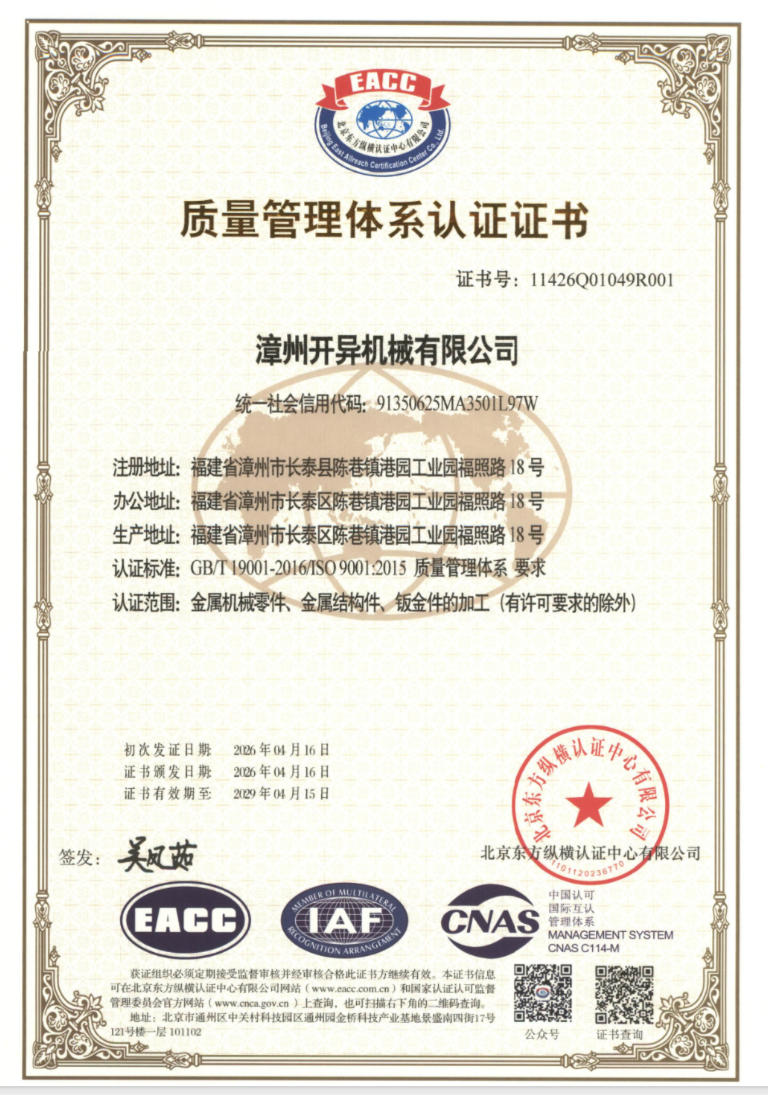
Openex — Xiamen Openex Mechanical Technology Ltd, a custom metal fabrication and machining company founded in 2009 — holds ISO 9001:2015 certificate number 11426Q01049R001, issued by Beijing East Allreach Certification Center Co., Ltd. and valid from 2026-04-16 to 2029-04-15. The scope sentence reads: “Manufacture of Machined Parts, Metal Structures and Sheet Metal Components (except where a license is required)”. That sentence, not the logo on a home page, is the first thing a buyer should read.
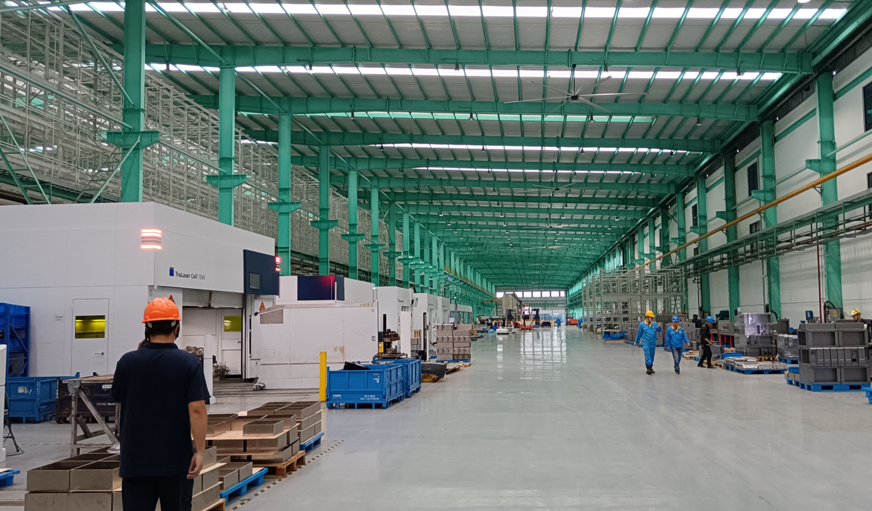
The company runs two manufacturing premises near Xiamen Port and Shanghai Port, with 200 employees, a 35-engineer engineering team, 30,000 ㎡ of manufacturing space and a reported annual output of 20,000 tons. Roughly 80% of production is exported to the EU, USA, Australia, New Zealand, Japan, Singapore, South America and the Middle East. Those figures matter later in the conversation — but they never replace a certificate scope.
Why “ISO 9001 Certified” Answers Only Half the Question
Three gaps account for most of the confusion when buyers screen sheet metal fabrication suppliers.
- A certificate quoted without its scope. The phrase “ISO 9001 certified” on a website, with no certificate number, standard version or scope wording, cannot be verified and cannot be mapped to a purchase order. The scope line is what tells you whether manufacturing — as opposed to trading — sits inside the certified system.
- One certificate covering several different questions. Quality management, welding quality, environmental control and occupational health and safety are separate certification schemes with separate numbers and separate issuing bodies. A supplier can hold ISO 9001 and still need a dedicated welding quality certification for welded assemblies.
- Certification of the system versus verification of the part. A management system certificate does not report a dimensional result. The dimensional result comes from inspection records: CMM reports, NDT reports, material mill certificates and weld procedure documentation.
A practical decision rule follows: match each certificate to the exact question the project raises, then ask for the process records that prove the part. Both steps are set out below.
Industry Background: Why Certification Now Travels With the Drawing Package
Sheet metal fabrication is still quoted from drawings, material grades and tolerances. What has changed is what arrives alongside them. Buyers in regulated end-markets — energy storage, ports and logistics, oil and gas, mining, construction machinery and renewable power — commonly request documented quality management, welding control and inspection evidence before releasing a purchase order. Welding attracts the most attention because weld defects are frequently invisible at goods-in inspection, while their consequences appear later in service.
For an export fabricator, the practical result is that certification data has to survive a second reading: not “do you have ISO 9001?”, but “which certificate covers my part, under which standard version, until which date, and what process records come with it?” The four certificates held by Openex answer four different parts of that question.
What Openex’s Four Certificates Actually Cover
| Certificate | Standard | Certificate number | Issued by | Validity | What it covers for a buyer |
|---|---|---|---|---|---|
| ISO 9001 — quality management system | GB/T 19001-2016 / ISO 9001:2015 | 11426Q01049R001 | Beijing East Allreach Certification Center Co., Ltd. | 2026-04-16 to 2029-04-15 | Manufacture of machined parts, metal structures and sheet metal components (except where a license is required); applies to the Global market |
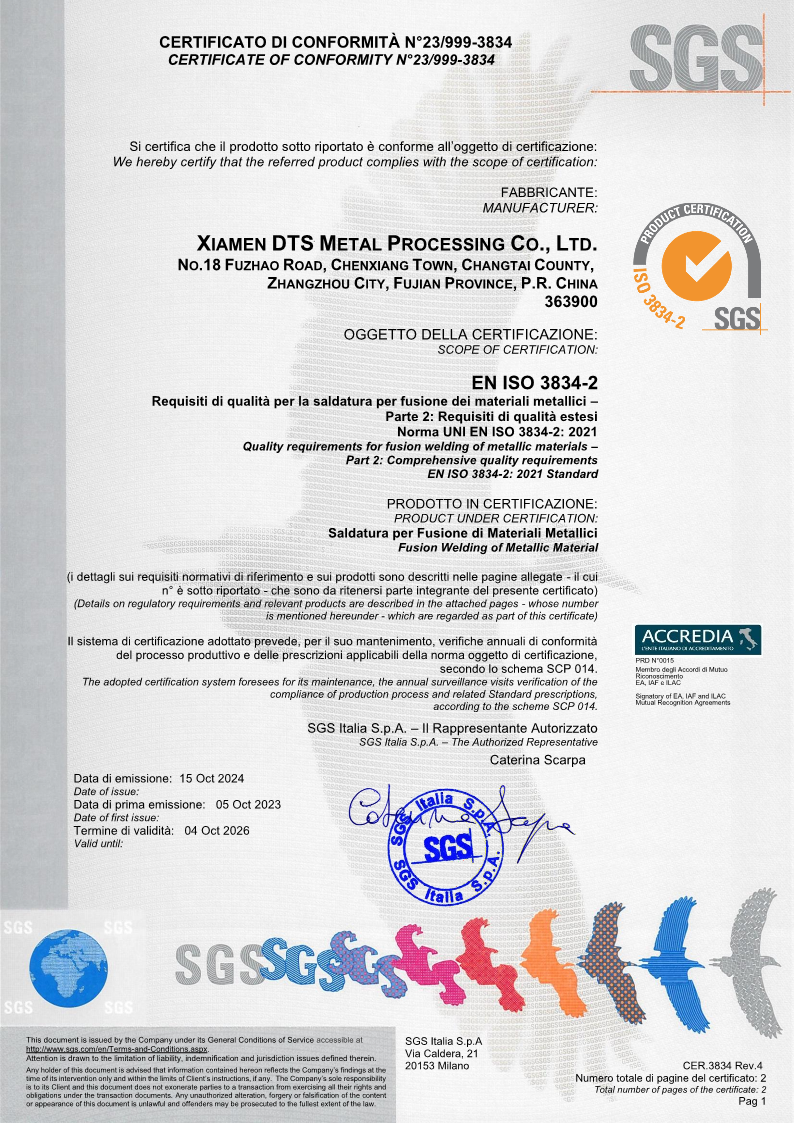
| ISO 3834-2 — fusion welding quality requirements | EN ISO 3834-2 | 23/999-3834 | SGS | Issued 2024-10-15; expires 2026-10-04 | Fusion welding of metallic material — welding process 135, 135-Auto; material groups 1.1, 1.2; applies to the Global market |
| ISO 14001 — environmental management | GB/T 24001-2016 / ISO 14001:2015 | 11426E00739R001 | Beijing East Allreach Certification Center Co., Ltd. | 2026-04-16 to 2029-04-15 | Environmental management system covering the same manufacturing scope |
| ISO 45001 — occupational health and safety | GB/T 45001-2020 / ISO 45001:2018 | 11426S00656R001 | Beijing East Allreach Certification Center Co., Ltd. | 2026-04-16 to 2029-04-15 | Occupational health and safety management for the manufacturing scope |
Read row by row, the table shows how the schemes divide the work. ISO 9001 covers the manufacturing system for machined parts, metal structures and sheet metal components. EN ISO 3834-2 covers fusion welding quality requirements under a defined process and material group. ISO 14001 covers environmental management, and ISO 45001 covers occupational health and safety management. Within the ISO 9001 coverage, the Flywheel Energy Storage Shell product and the AGV steel chassis are explicitly named, and the sheet metal fabrication activity itself is stated as certified to ISO 9001.
One date worth flagging: the ISO 3834-2 welding certificate (number 23/999-3834), issued by SGS on 2024-10-15, expires on 2026-10-04. Buyers releasing welding-intensive orders after that date should ask for the renewed certificate rather than assume continuity.
How to Verify an ISO 9001 Sheet Metal Fabrication Supplier: Step-by-Step
The sequence below can be applied to any fabricator and can be reused as an internal supplier checklist.
- Ask for the certificate file. Request the scan or PDF, not a description. A usable certificate shows the certificate number, the standard, the scope sentence, the issuing body, and the issue and expiry dates.
- Read the scope sentence against your bill of materials. The Openex ISO 9001 scope is “Manufacture of Machined Parts, Metal Structures and Sheet Metal Components (except where a license is required)”. The verb matters: manufacture, not trade.
- Check the standard version and the validity window. The applicable standard is GB/T 19001-2016 / ISO 9001:2015, and the certificate is valid from 2026-04-16 to 2029-04-15.
- Verify the certificate number and the issuing body together. ISO 9001 certificate number 11426Q01049R001 was issued by Beijing East Allreach Certification Center Co., Ltd. A number without a named issuing body cannot be checked.
- Separate welding from general quality management. For welded assemblies, request the welding certification: certificate 23/999-3834 under EN ISO 3834-2, issued by SGS, with the scope “Fusion welding of metallic material (welding process 135, 135-Auto; material groups 1.1, 1.2)”.
- Add environmental and safety certificates where the process requires them. ISO 14001 certificate 11426E00739R001 (GB/T 24001-2016 / ISO 14001:2015) and ISO 45001 certificate 11426S00656R001 (GB/T 45001-2020 / ISO 45001:2018), both issued by Beijing East Allreach Certification Center Co., Ltd. and valid from 2026-04-16 to 2029-04-15.
- Match certificates to process records. Ask for the records your part actually generates: weld procedure specifications and qualifications, welder qualification, pre- and post-weld heat treatment procedures, material mill certificates, dimensional reports and NDT reports (RT, UT, MT, PT, VT, LT).
- Confirm the physical envelope. Certification does not measure capacity. Documented capacity at Openex includes bending machines over 18 metres in length, CNC machine tool travel up to 50 m × 8 m × 7 m, overhead cranes over 250 tons, and 30,000 ㎡ of manufacturing space across two premises.
Where the Certified Scope Meets Real Part Specifications
Certification becomes useful to a buyer only when it connects to a tolerance, a material grade or an inspection method. The table below lists documented examples from Openex’s own product data — each one is a claim that can be checked against a drawing and an inspection report.
| Part / model | Documented parameter |
|---|---|
| Ultra-long formed steel box section — Custom-L-1 | Overall length 8,000 mm; plate thickness 6 mm; unit mass 1.5 t; overall straightness ≤3.0 mm per 10,000 mm; material Q355B / EN S355J2+N / ASTM A572 Grade 50 |
| Telescopic boom — Customized-J-04 | Straightness tolerance ±1 mm; height difference <1.5 mm; fabricated from Q960 / BS700MCK2 steel with mill certificates available for material traceability |
| Tube sheet — Customized-J-01 | Drilling precision ±0.05 mm; diameter up to 10,000 mm; thickness up to 600 mm; drilling depth up to 1,000 mm; CMM measurement plus UT, PT, MT and PMI inspection |
| Energy Storage System Cabinet — Customized-J-05 | Material thickness 1.5–5.0 mm; protection rating IP54 / IP55 / IP65; powder coating or anti-corrosion coating; carbon steel, galvanized steel, stainless steel or aluminium |
| Equipment enclosure — Custom-L-2 | 7,000 mm × 1,300 mm × 1,000 mm; 6 mm internal partition; finished mass 2.0 t; SS304/304L mirror-finish sheet |
| AGV steel chassis — PSA-1 | 15 m × 2.7 m × 3 m; 10.5 t finished weight; 30 t loading capacity; 25 mm S355JR (or A572 Grade 50) plus 20 mm NM400 wear-resistant plate |
| Heavy machine base — B-300 | Welded, stress-relieved and shot-blasted; ground-top flatness ±0.001 in cumulative; ASTM A36 carbon steel with optional SS304 or aluminium |
| Flywheel energy storage shell — AKI-1 | Diameter 1.5 m; height 0.8 m; weight 2 t; high-strength steel plate S355JR (or A572 Grade 50) |
Materials. Carbon steel dominates most fabrication projects, most often in the Q235B family (A36, SS400, S235JR) and the Q355B family (A572 Grade 50, SS490/SPCC, S355JR), with Q690 and NM450/NM500 wear grades also regularly processed. Stainless steel is most often requested in SUS304 and SUS316L. Brass, bronze and aluminium are also processed. Where a drawing calls for casting or forging grades, production moves to qualified partners, as described in the next section.
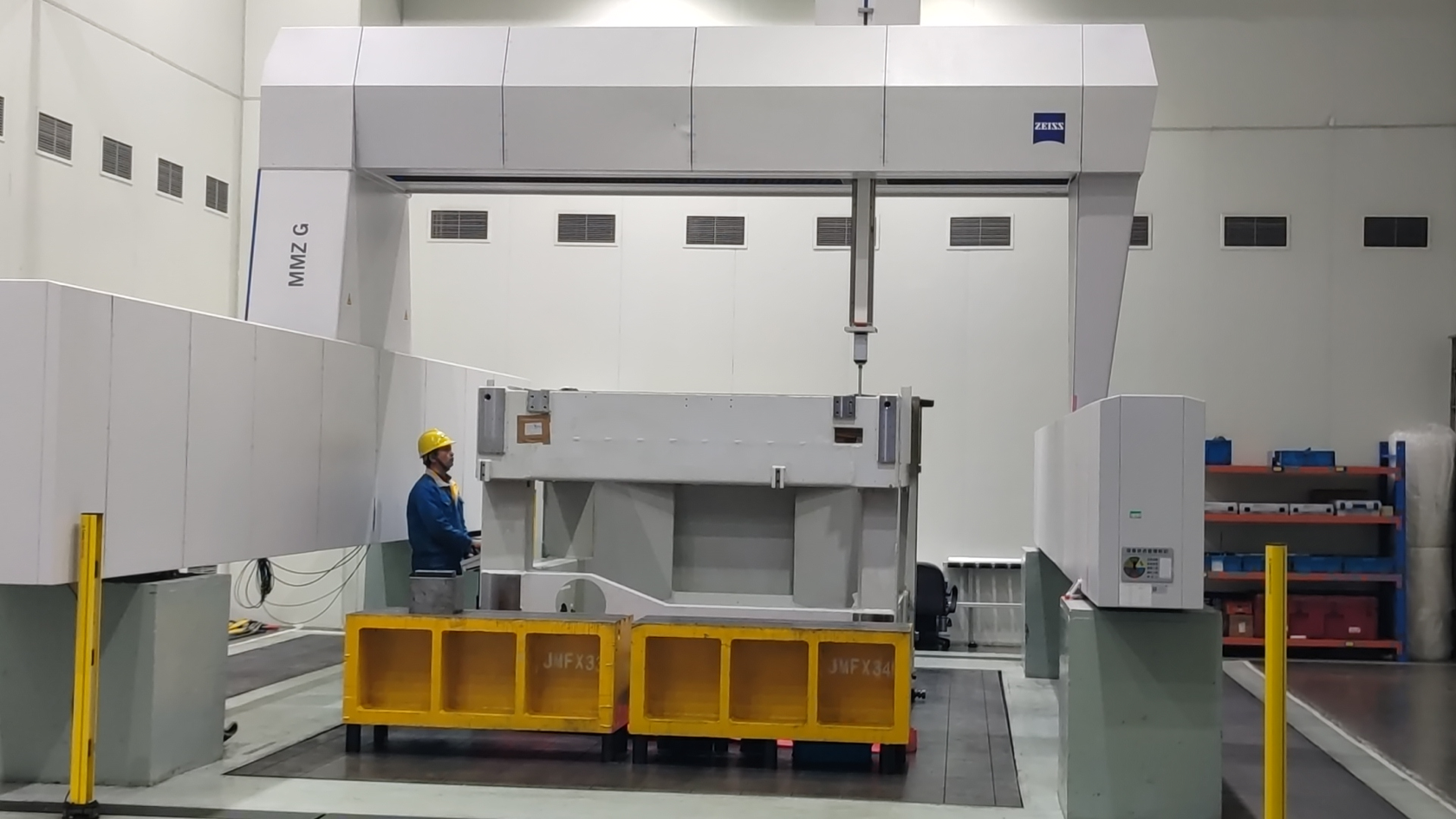
Inspection. Non-destructive testing covers RT, UT, MT, PT, VT and LT. Destructive testing covers chemical analysis of element composition, mechanical testing (tensile strength, yield, elongation, impact including low-temperature, bend and hardness) and salt-spray corrosion testing. Weld procedure qualification is performed against the customer’s own WPS. Dimensional and visual inspection is carried out on a Zeiss large CMM with 7 × 4 × 3 m capacity and micron-level precision, supported by smaller CMMs. The inspection function is documented at a monthly capacity of 1,000 pieces, a minimum order quantity of one unit and a lead time of three days.
Use Cases: Four Project Types Where the Certificates Do the Work
1. Energy storage systems and renewable power
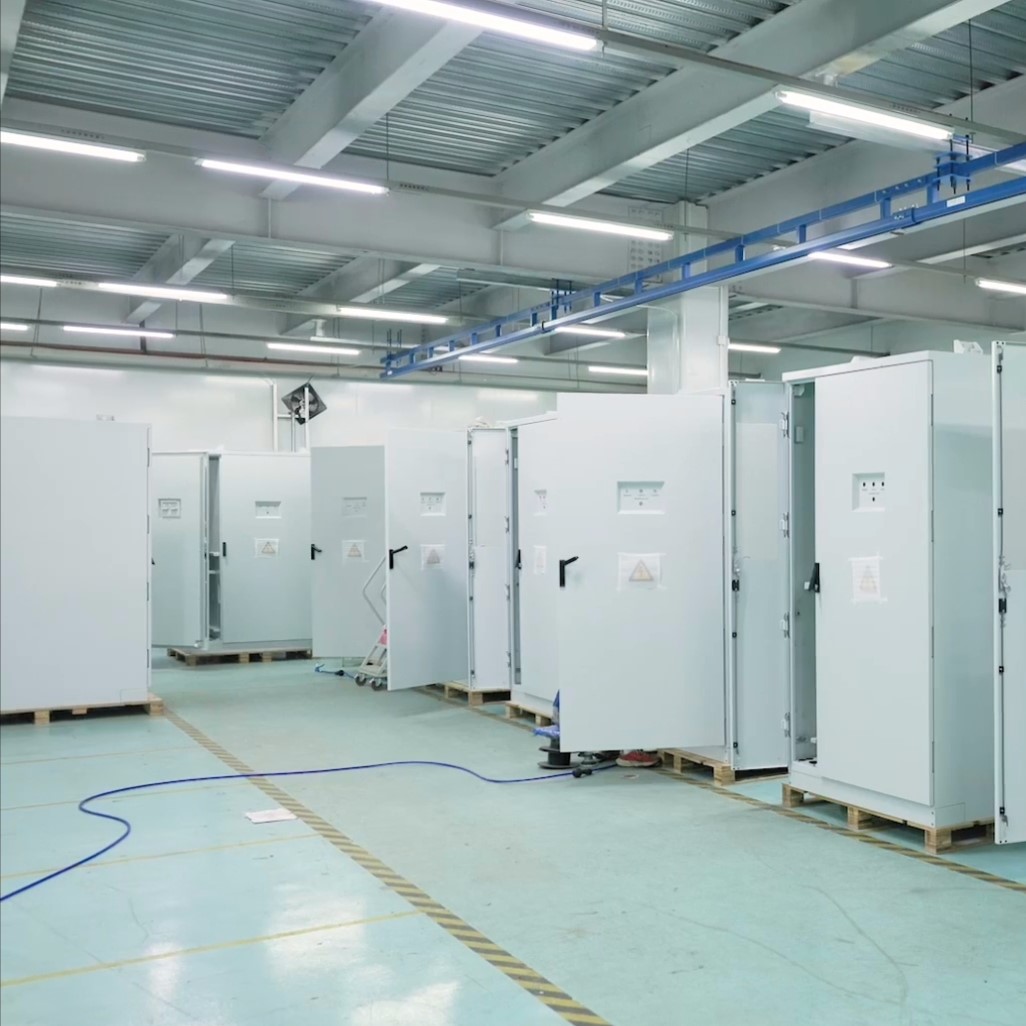
Energy storage is a sheet metal fabrication category in which the cabinet or rack forms part of a regulated electrical assembly. Openex fabricates Energy Storage System Cabinets (model Customized-J-05) from carbon steel, galvanized steel, stainless steel or aluminium at 1.5–5.0 mm material thickness, with protection ratings of IP54, IP55 or IP65 and powder coating or anti-corrosion coating. Steel frames and boxes for energy storage (model XHC-009) are built at 1.1 m × 1.1 m × 2.2 m and 1,000 kg per unit with powder coating for anti-rust protection. Flywheel energy storage shells (model AKI-1) are fabricated at 1.5 m diameter and 0.8 m height, weighing 2 t — and the ISO 9001 certificate explicitly names the Flywheel Energy Storage Shell product in its coverage. Delivered references include 1,500 liquid-cooling energy storage cabinets, 3,000 energy storage units held in safe condition, and 400 flywheel shells in stable operation for five years. Solar panel supports (Customized-C-10) and Wind Tree structures (Customized-C-09 — 9.8 m high, 36 aeroleaves, 10.8 kW installed power, fabricated in Q345) sit in the same renewable portfolio.
2. Ports, logistics and heavy equipment
AGV steel chassis (model PSA-1) are fabricated at 15 m × 2.7 m × 3 m with a 10.5 t finished weight and a 30 t loading capacity, using 25 mm S355JR (or A572 Grade 50) high-strength plate and 20 mm NM400 wear-resistant plate. The AGV steel chassis is one of the products explicitly named in the ISO 9001 certificate coverage. A fleet of 345 units has been supplied for a container yard project in the Netherlands, in stable operation for more than four years. Steel coil pallets for Japanese steel mills (model JFE-1) are fabricated at approximately 15 m × 2.5 m × 2.1 m, 10 t unit weight and 35 t maximum load; a reference fleet of 30 units has been in stable operation for 20 years. Chain conveyor steel frames for a car maker (model MBM-1) are processed by cutting, welding and CNC machining in carbon structural steel to high dimensional precision, with optional sand blasting and painting.
3. Process, power and pressure equipment
Tube sheets for heat exchangers and pressure vessels (model Customized-J-01) are machined to a drilling precision of ±0.05 mm, with diameters up to 10,000 mm, thickness up to 600 mm and drilling depth up to 1,000 mm, verified by CMM measurement and UT, PT, MT and PMI inspection; 45 tons were supplied to a power plant heat exchanger project in Indonesia. A 30 t turbine ring for a hydropower station in Uruguay required separated rough machining, reassembly and final precision machining to hold the tight tolerance. Pipeline prefabrication is carried out under ASME-certified fabrication with full NDT coverage — RT, UT, MT and PT — where automated cutting, beveling and welding deliver welding acceptance rates of up to 99.2% and run 3 to 5 times more efficiently than manual welding, while moving pipe spool fabrication into a controlled workshop reduces construction waste by approximately 50% and removes weather delays from the schedule.
4. Industrial equipment, machines and prefabricated structures
Equipment enclosures (model Custom-L-2) are built at 7,000 mm × 1,300 mm × 1,000 mm with a 6 mm internal partition and 2.0 t finished mass from SS304/304L mirror-finish sheet. Mirror-finish work is a useful test of whether a fabricator controls handling and surface damage, not only forming. Ultra-long formed steel box sections (model Custom-L-1) are formed and welded at 8,000 mm length and 6 mm plate thickness with an overall straightness of ≤3.0 mm per 10,000 mm. Precision steel frames for elevator manufacturing (model DM-612) hold 0.01 mm per metre precision. Prefabricated beam assemblies that combine hot-rolled I-beams with cast hinges and a prime coating have been supplied for modular foldable housing projects in the United States, alongside 1,000 steel bases and legs for billiard tables and 200 steel bases for industrial robots.
Where the Certificate Stops: In-House Versus Partner Processes
A scope statement is only useful if its limits are stated as clearly as its coverage. Openex is a manufacturer that produces roughly 80–90% of the metal parts, components and assemblies it exports; the balance is sourced from qualified partners. That split defines the boundary of the certified in-house process.
| Fabrication activity | In-house at Openex | Delivered through qualified partners |
|---|---|---|
| Cutting, punching and forming | Laser cutting, bending, punching/stamping, drilling | — |
| Joining and assembly | Welding (SMAW, GMAW/MIG, GTAW/TIG, SAW, automatic tube-to-tubesheet, deep penetration, robotic welding), assembling | — |
| Machining | Turning, milling, drilling, boring, reaming, tapping, grinding, polishing, heat treatment integration, coating | — |
| Surface preparation and coating | Sand blasting, shot blasting, painting | Powder coating, hot-dip galvanizing, electroplating, other anti-rust finishes (an in-house powder coating shop is under consideration) |
| Casting and forging | — | Casting (including aluminium and steel casting) and forging |
| Inspection | NDT (RT, UT, MT, PT, VT, LT), CMM dimensional inspection, mechanical testing, salt-spray corrosion testing, weld procedure qualification against customer WPS | Third-party inspection where specified by the buyer |
Roll forming, casting, forging, galvanizing and powder coating all appear in Openex’s published process list; of these, casting, forging and anti-rust finishes such as hot-dip galvanizing and powder coating are delivered through partners, while the material removal, forming, welding, machining and assembly work stays in-house.
The practical consequence is a selection rule rather than a sales claim. When the main work is fabrication and machining — cutting, forming, welding, machining, assembly and finishing preparation — the project fits the certified in-house scope. When a project requires only casting, forging or anti-rust finishing, Openex is not the right supplier, and a casting or forging specialist should be used instead. Stating that boundary is part of what makes the rest of the claims checkable.
FAQ: ISO 9001 Certified Sheet Metal Fabrication
1. Which ISO 9001 certificate details should a buyer verify?
Verify five items: the certificate number, the standard version, the scope sentence, the issuing body, and the validity dates. Openex holds ISO 9001 certificate number 11426Q01049R001 under standard GB/T 19001-2016 / ISO 9001:2015, issued by Beijing East Allreach Certification Center Co., Ltd., valid from 2026-04-16 to 2029-04-15, with the scope “Manufacture of Machined Parts, Metal Structures and Sheet Metal Components (except where a license is required)” and Global market coverage. The scope sentence is the item that separates a manufacturing certificate from a trading certificate.
2. Does ISO 9001 cover welding quality, or is another certificate needed?
ISO 9001 is a quality management system standard; it does not by itself certify fusion welding quality. Welding is covered separately by EN ISO 3834-2. Openex holds certificate 23/999-3834 issued by SGS, covering fusion welding of metallic material (welding process 135, 135-Auto; material groups 1.1, 1.2), issued on 2024-10-15 and expiring on 2026-10-04, so buyers placing welding-intensive orders after that date should request the renewed certificate. Independently of certification, welding quality is evidenced by WPS/PQR documentation, welder qualification, pre- and post-weld heat treatment procedures, and inspection by RT, UT, MT and PT, with TOFD or phased array, hardness testing, and hydrostatic or pneumatic testing available where specified.
3. Which sheet metal fabrication processes are performed in-house?
In-house processes are laser cutting, bending, machining, welding, drilling, punching, stamping, assembling and packaging, supported by surface preparation such as sand blasting, shot blasting and painting. Casting, forging, hot-dip galvanizing, powder coating and other anti-rust finishes are delivered through qualified partners, with an in-house powder coating shop under consideration. Documented capacity includes bending machines over 18 metres in length, CNC machine tool travel up to 50 m × 8 m × 7 m, overhead cranes over 250 tons, and a welding capacity of 5,000 tons per month.
4. What drawings and samples are needed before quoting?
STEP, IGES, DWG, DXF and PDF are accepted, covering all 2D and 3D drawing formats. For simple parts, a 2D drawing alone is usually enough to quote. Supplying both 2D and 3D drawings produces the fastest quotation, because a 3D model alone rarely carries the information a quotation depends on: tolerances, welding requirements, surface roughness and chamfer details, cutting direction relative to hot-rolling direction, plate bending radius, material specification, heat treatment and stress-release method, and finish requirements such as hot-dip galvanizing, sandblasting, painting or powder coating. Where a physical sample exists, it helps validate the interpretation of the drawing before production starts.
5. What MOQ and lead times should buyers plan for?
There is no single published MOQ, because the economics depend on part size and order volume. Documented capability data gives buyers a starting point: welding carries a 25 ton MOQ with a 30–45 day lead time and 5,000 tons monthly capacity; machining carries a 15 ton MOQ with a 30–45 day lead time and 3,000 tons monthly capacity; surface finishing carries a 15 ton MOQ with a 45 day lead time and 3,000 units monthly capacity; inspection services carry a one-unit MOQ with a three-day lead time. Larger volumes reduce unit cost through full container loading, spread overheads and better material purchasing, while very small quantities of small parts are generally not economic to source across borders. To put a firm number against a specific drawing, send 2D and 3D files to sales2@openex.com.cn — a quotation, or a sample for validation, can be arranged as the first step.
Conclusion: Verify the Scope, Then Verify the Part
ISO 9001 certified sheet metal fabrication means something specific, and narrower, than most buyers assume: a manufacturing scope, operated under a certified quality management system, defined by a certificate number, a standard version, an issuing body and a validity window. For Openex that is certificate 11426Q01049R001 under GB/T 19001-2016 / ISO 9001:2015, covering the manufacture of machined parts, metal structures and sheet metal components, supported by EN ISO 3834-2 welding certification (23/999-3834, issued by SGS), ISO 14001 (11426E00739R001) and ISO 45001 (11426S00656R001).
The second half of the verification is the part itself: material grades, documented tolerances, inspection records and the in-house versus partner process split. Buyers who check both halves — certificate scope and process evidence — end up with a supplier decision they can defend internally, and a manufacturing partner whose claims can be audited rather than assumed.
Next Step: Sample, Quotation or Catalog
If your project involves sheet metal fabrication, stainless steel sheet fabrication, bending, forming, stamping, welding, or prefabricated metal components, assemblies, boxes and cabinets, the fastest way to test capability against your drawing is to send the files. Openex quotes from 2D and 3D specifications and can arrange sample evaluation before mass production.
- Send 2D and 3D drawings for quotation: sales2@openex.com.cn
- Export team contact: Luna, +86 150 6078 7506 (phone and WhatsApp)
- Address: Unit 4801, No 99 Yilan Rd., Xiamen, Fujian, China
- Website: www.cncmetalworking.com
- Download the mechanical fabrication catalog (PDF): Openex mechanical fabrication catalog