ISO 9001 Sheet Metal Fabrication: Scope and Tolerance Limits
ISO 9001 Sheet Metal Fabrication: Scope and Tolerance Limits
An ISO 9001 certificate proves that an accredited body has audited a company's quality management system against a defined scope. It does not, by itself, prove that the scope covers your part, that welding procedures used on your drawing are qualified, or that the certificate is still valid on the day your purchase order is released.
For buyers comparing sheet metal fabrication suppliers, the three constraints that decide whether a quotation can actually be executed are: certification scope wording, a separately issued welding certification where welded structures are involved, and tolerance and inspection limits stated against a datum rather than described in general terms. Openex fabrication documents all three, and this article shows how to read them.
What an ISO 9001 Certificate Does and Does Not Prove
The most common procurement error is treating a certificate logo as a capability statement. Three separate failure modes sit behind that error.
Scope mismatch. A certificate is issued against a written scope. If the scope text names machined parts and metal structures, but your drawing requires a welded pressure-retaining assembly or a mirror-finish enclosure, the certificate does not automatically cover the work. The buyer has to read the scope sentence, not the certificate title.
Validity mismatch. Certificates carry an issue date and an expiry date, and they carry the name of the issuing body. A certificate that expired last quarter, or one issued by a body the buyer's compliance team cannot verify, fails an audit even though the supplier still holds the paper.
Process mismatch. ISO 9001 is a management system standard. It governs how a factory controls its processes; it does not approve a specific welding procedure, a specific welder, or a specific material group. Where welded structures are part of the order, the process-level evidence is a welding-specific certification such as ISO 3834, referenced against the applicable part of the standard.
None of these points is a criticism of ISO 9001. The standard is a useful first filter precisely because it is auditable. The problem is that the filter is being applied at the wrong resolution.
Why Certification Scope Became a Procurement Constraint
Ten years ago, a supplier qualification pack was usually a cover sheet, a company profile and a certificate scan. The buying decision then moved to price and lead time. That pattern has changed in the industries that dominate current sheet metal fabrication demand — energy storage, renewable power equipment, automation frames and heavy machinery structures.
In those industries, the fabricated part is no longer a commodity item. A battery energy storage cabinet carries thermal management hardware and must hold a stated ingress protection rating over years of outdoor service. A machine frame must hold pad coplanarity so that a linear axis can be aligned after assembly. A flywheel energy storage shell must hold a vacuum. When the part carries a functional duty, the buyer's engineering and compliance functions both have to sign off, and both apply constraints before commercial terms are discussed.
The practical consequence is that certification scope, inspection evidence and dimensional limits now behave like gate criteria. A supplier that can fabricate the part but cannot document the scope is frequently excluded before price is examined — because the buyer cannot defend the choice internally.
The Documented Compliance Position at Openex Fabrication
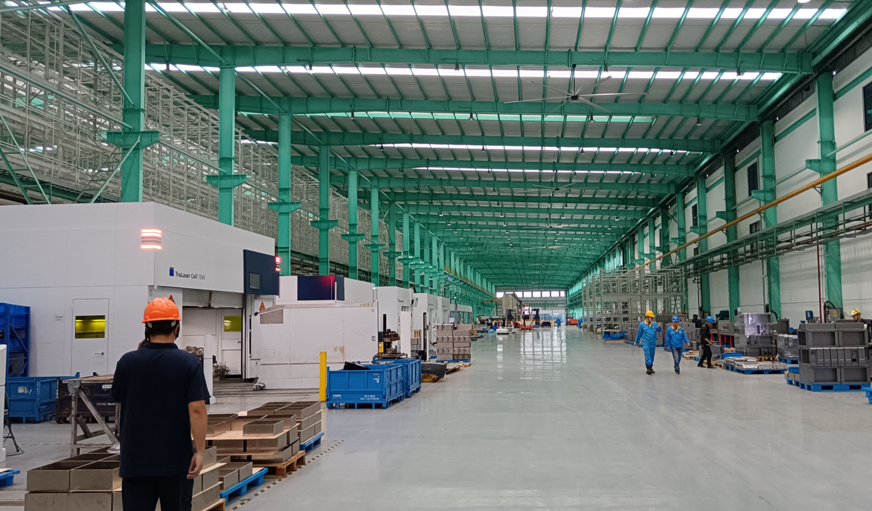
Xiamen Openex Mechanical Technology Ltd is a metal fabrication and machining manufacturer founded in 2009, operating two manufacturing premises near Xiamen Port and Shanghai Port, with 30,000 m² of factory space, 200 employees, a 35-engineer engineering team, and an annual output of approximately 20,000 tons. Roughly 80% of output is exported, with the main markets being the EU, USA, Australia, New Zealand, Japan, Singapore, South America and the Middle East.
That background matters for constraint purposes because certifications attach to named sites and named scopes. What follows is the certificate set a buyer would receive, with the identifiers needed to verify each one independently.
Management system certifications
- ISO 9001 — certificate number 11426Q01049R001, issued by Beijing East Allreach Certification Center Co., Ltd., against standard GB/T 19001-2016 / ISO 9001:2015. Recorded validity: 2026-04-16 to 2029-04-15. Applicable market: global.
- ISO 14001 Environmental Management Systems — certificate number 11426E00739R001, same issuing body, against standard GB/T 24001-2016 / ISO 14001:2015. Recorded validity: 2026-04-16 to 2029-04-15.
- ISO 45001 Occupational Health and Safety Management Systems — certificate number 11426S00656R001, same issuing body, against standard GB/T 45001-2020 / ISO 45001:2018. Recorded validity: 2026-04-16 to 2029-04-15.
All three certificates carry the same scope sentence: Manufacture of Machined Parts, Metal Structures and Sheet Metal Components (except where a license is required). That wording is the operative constraint. It covers sheet metal components, welded metal structures and machined parts — and it does not extend to activities where a separate licence is legally required.
Welding-specific certification
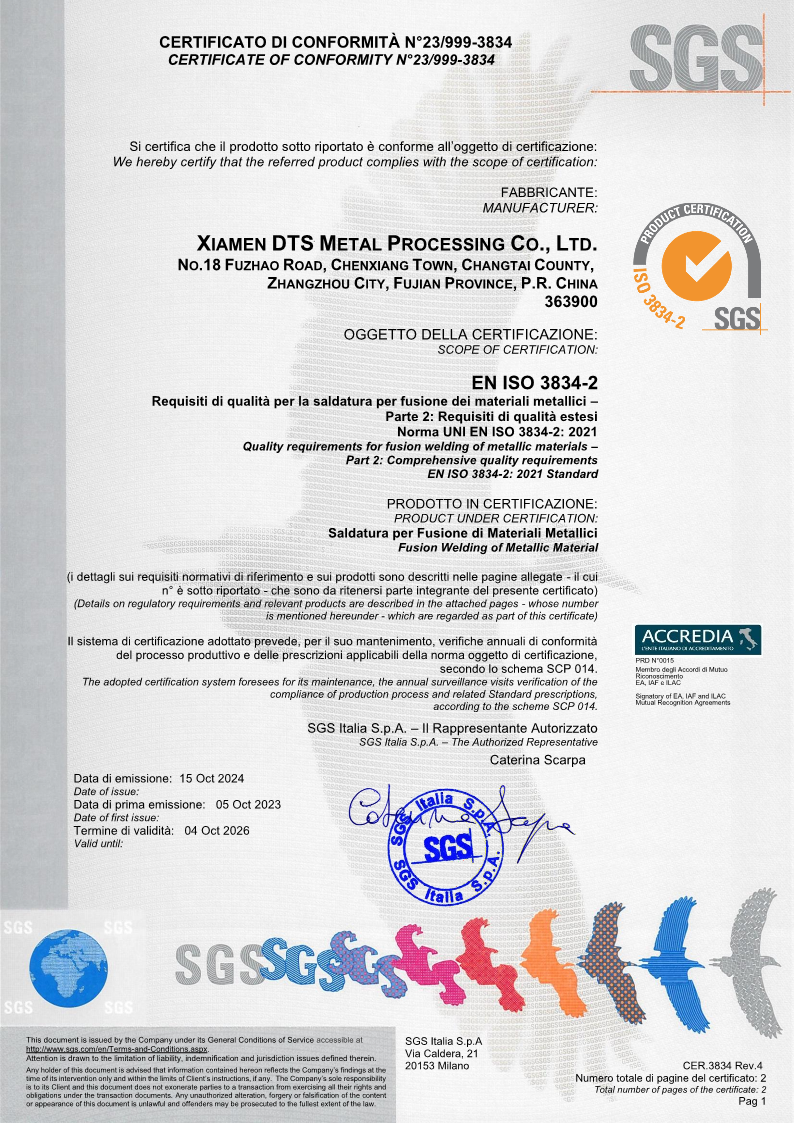
ISO 3834-2 is the welding quality requirement that buyers should ask for when a drawing contains structural or pressure-relevant welds. Openex holds ISO 3834 certification number 23/999-3834, issued by SGS, against standard EN ISO 3834-2. The recorded scope is fusion welding of metallic material covering welding process 135 and 135-Auto, for material groups 1.1 and 1.2. The certificate was issued on 2024-10-15, with recorded validity to 2026-10-04, and applies to the global market.
Process 135 is metal active gas welding. Material groups 1.1 and 1.2 correspond to the carbon and carbon-manganese steel families. A buyer whose assembly is welded in austenitic stainless steel, or welded by a different process, should raise that at inquiry stage so the correct qualification route can be confirmed rather than assumed.
Inspection and testing capability behind the certificates
Certification states what a system should do. Inspection equipment and procedures are what produce the evidence attached to a shipment. The documented inspection scope at Openex fabrication includes:
- Non-destructive testing: RT, UT, MT, PT, VT and LT.
- Destructive testing: chemical analysis on element composition; mechanical testing covering tensile (UTS, yield, elongation), impact including low-temperature toughness, bend ductility and hardness; corrosion testing by salt spray; weld procedure qualification to the buyer's WPS.
- Dimensional and visual inspection: length, diameter, angle, roundness, straightness and position measurement, plus surface roughness expressed as Ra and Rz.
- Specialised inspection: residual stress analysis, coating and plating inspection, and customised NDT systems.
- Large-part metrology: a Zeiss large CMM with a 7 × 4 × 3 m working envelope and micron-level precision, supported by smaller CMM units.
Quality control is applied as 100% inspection or random inspection, depending on what the order specifies. That choice is a buyer decision, not a supplier default, and it should be written into the purchase order rather than left implied.
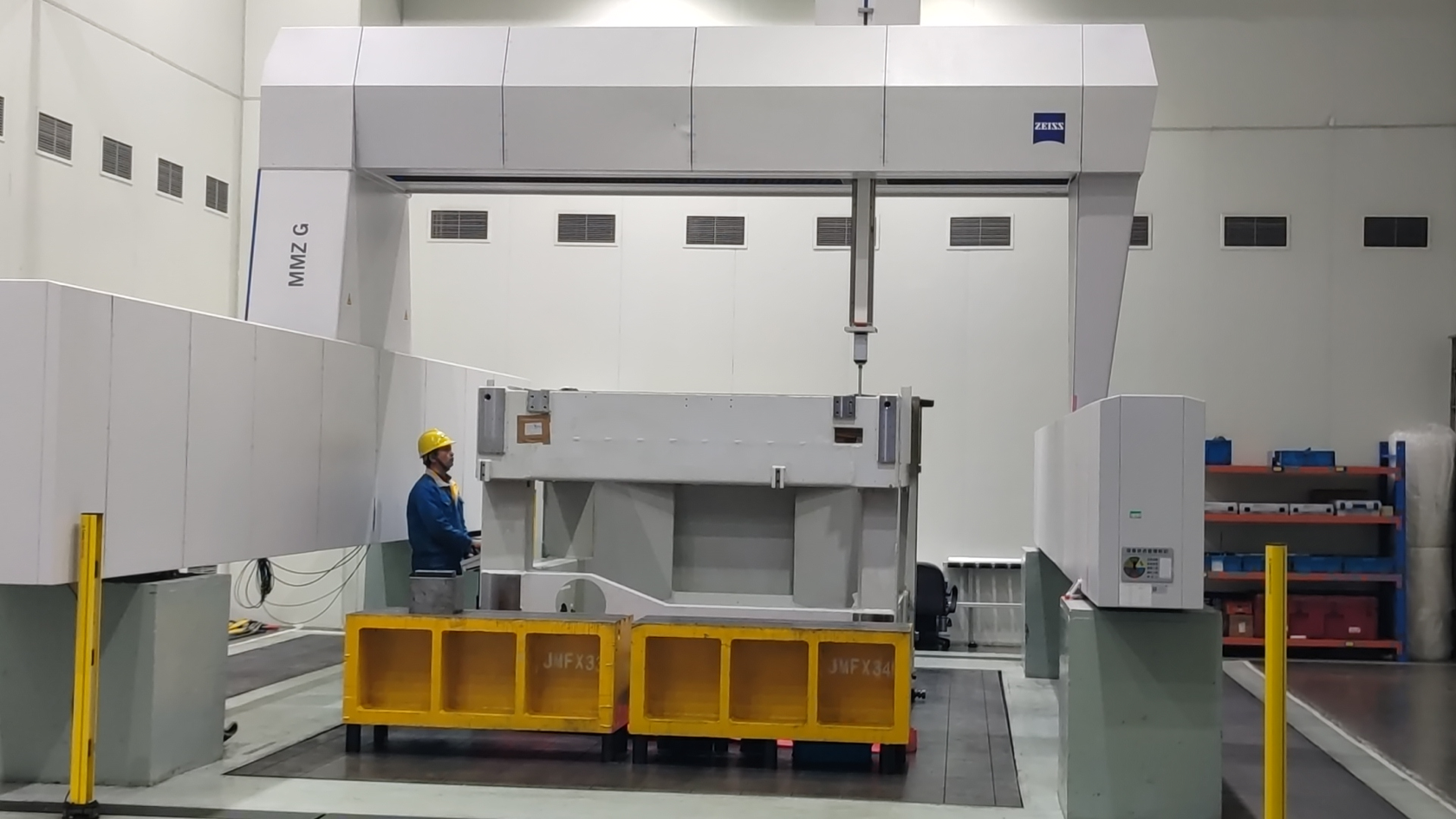
Process limits and the parts that fall outside them
Constraint discipline also means stating what is not done in-house. In-house fabrication procedures include laser cutting, bending, machining, welding, drilling, punching, stamping, assembling and packaging. Casting, forging, hot-dip galvanizing and powder coating are supplied through qualified partner facilities.
That distinction has a direct commercial consequence: a project whose main work is fabrication and machining fits the Openex process envelope, while a project requiring only casting, only forging, or only an anti-rust finishing operation does not. Buyers who understand this before inquiry avoid a quotation round that cannot conclude.
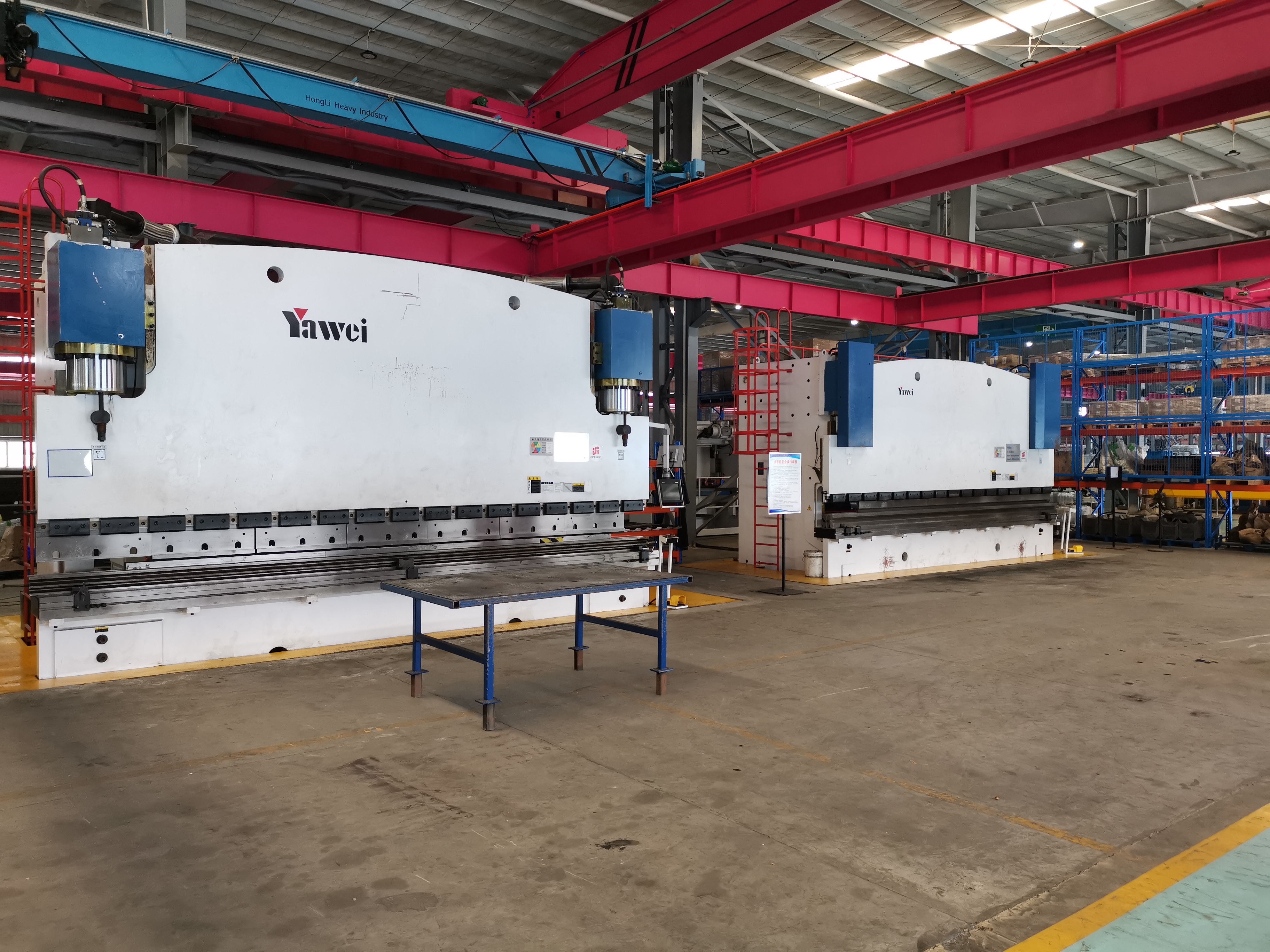
Documented equipment limits relevant to feasibility review include an overhead crane capacity of over 250 tons, a press brake maximum length of over 18 metres and tonnage of 10,000 tons, and maximum CNC machine tool travel of up to 50 m × 8 m × 7 m. Where a part exceeds these limits, that is a feasibility constraint to be resolved before drawing approval, not after.
A Seven-Step Verification Workflow for Buyers
The workflow below converts certificate documents into an auditable supplier file. It applies to any sheet metal fabrication supplier, not only to Openex.
- Read the scope sentence. Copy the exact scope wording from the certificate and compare it with the part you intend to buy. Product-specific confirmation matters: the ISO 9001 scope at Openex explicitly covers sheet metal fabrication and the AGV steel chassis, flywheel energy storage shell, energy storage system cabinet, equipment enclosure and related product families.
- Verify the issuing body and the certificate number. Record the number and the authority. For reference, Openex certificates are issued by Beijing East Allreach Certification Center Co., Ltd. (ISO 9001: 11426Q01049R001; ISO 14001: 11426E00739R001; ISO 45001: 11426S00656R001) and by SGS for welding (ISO 3834: 23/999-3834).
- Check the validity window against the delivery date. A certificate valid at inquiry date may not be valid at the shipment date on a long programme. Build a renewal checkpoint into the purchase agreement.
- Separate the management system question from the welding question. Ask for the welding certification separately, and confirm the process number and material group match your drawing.
- Confirm that tolerances are stated against a datum. A tolerance is only meaningful with a reference. Openex product documentation states limits in this form — for example, straightness of ≤3.0 mm per 10,000 mm on the Custom-L-1 ultra-long formed steel box section, and guide straightness of ≤0.10 mm per 1,000 mm on the Custom-L-7 large welded crossbeam.
- Confirm material grade equivalence in writing. The same part can be documented in three regional grade systems. The Custom-L-1 box section is quoted as Q355B in general markets, EN S355J2+N for the EU market and ASTM A572 Grade 50 for the US market. Ask for mill certificates where traceability is required.
- Fix MOQ, lead time and drawing format in the RFQ. Documented lead times run 3 days for inspection-only tasks, 30–45 days for welding and machining packages, and 45 days for surface treatment. Drawing formats accepted are STEP, IGES, DWG, DXF and PDF. Two-dimensional drawings alone are sufficient for simple parts; 2D and 3D together allow the fastest quotation; 3D alone is generally not sufficient, because tolerance, welding requirements, bending radius, material grade, heat treatment and finish requirements are normally carried on the 2D sheet.
Where These Constraints Apply in Practice
Energy storage system cabinets
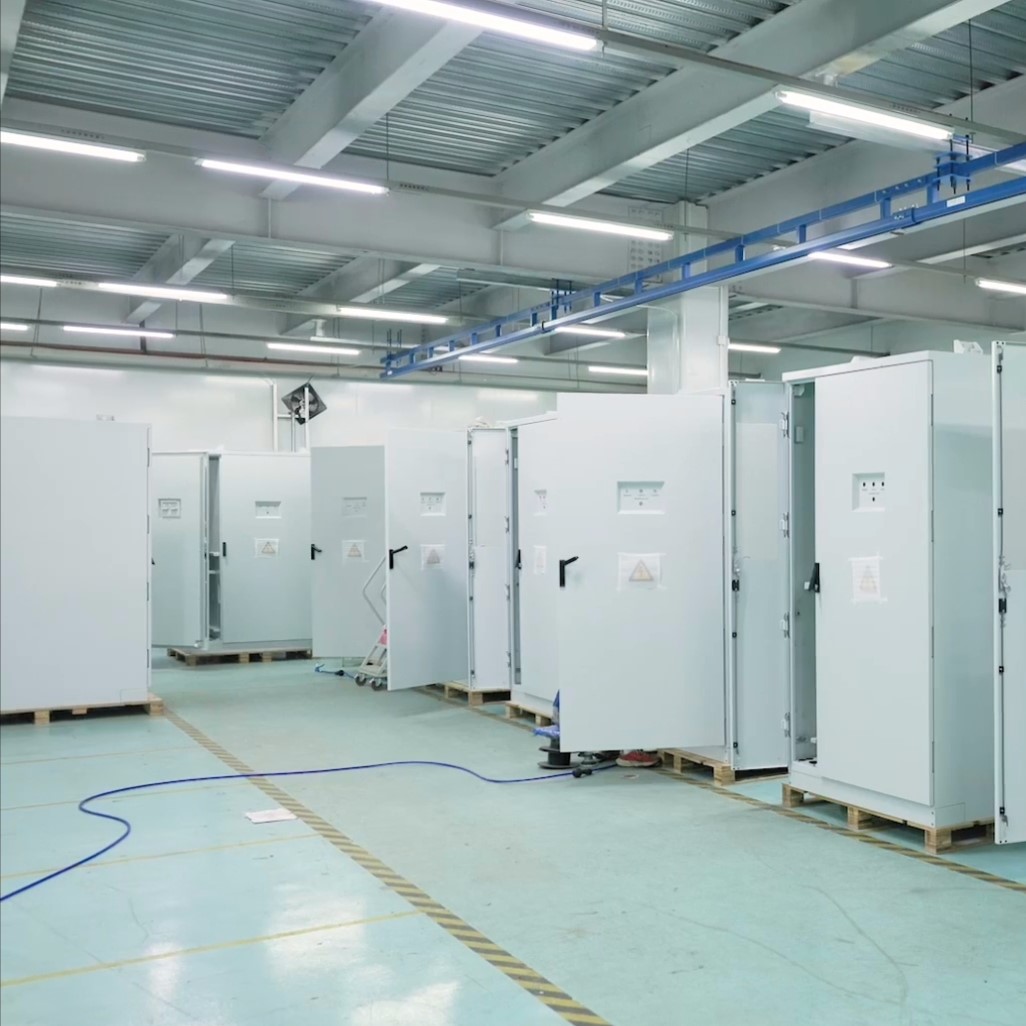
Model Customized-J-05 is an industrial energy storage battery cabinet for BESS applications. Documented constraints include material thickness of 1.5–5.0 mm, protection rating options of IP54, IP55 or IP65, and surface treatment by powder coating or anti-corrosion coating, in carbon steel, galvanized steel, stainless steel or aluminum. Cabinet size, battery layout and installation arrangement are configured from customer drawings. For a buyer, the constraint that matters is the protection rating: the surface treatment and sealing detail must be specified before fabrication, because neither can be added afterwards.
Long structural sections and heavy frames
Model Custom-L-1 is an ultra-long formed steel box section with an overall length of 8,000 mm, plate thickness of 6 mm, unit mass of 1.5 t, and overall straightness of ≤3.0 mm per 10,000 mm. Digital forming simulation is used to control springback and residual stress in long thin-to-medium plate members. In the same family, the Custom-L-7 large welded crossbeam is documented at 6,000–10,000 mm length with guide straightness of ≤0.10 mm per 1,000 mm, and the Custom-L-3 large welded press frame is referenced at 10,000–20,000 kN press force with an envelope of approximately 6,000 × 4,000 × 8,000 mm and an estimated mass of 80–140 t. These are engineering reference configurations that require load analysis and, for press structures, FEA and fatigue assessment before release.
Surface-critical enclosures
Model Custom-L-2 is a mirror-finish welded process-equipment enclosure measuring 7,000 mm × 1,300 mm × 1,000 mm with a 6 mm internal partition and a finished mass of 2.0 t, fabricated in stainless steel 304 / 304L mirror-finish sheet with SS304 structural stiffeners. The controlling constraint here is not dimensional but cosmetic and process-related: controlled handling during rolling, bending, welding and continuous machining is what limits surface scratching and circular-opening distortion on a 7-metre mirror-finish panel.
Vacuum and rotating-equipment shells
Model AKI-1 is a flywheel energy storage shell with a diameter of 1.5 m, a height of 0.8 m, a weight of 2 t, and a documented vacuum performance of greater than 1.0 × 10⁻⁹ Torr·L/s within 30 seconds, fabricated from S355JR high-strength steel plate (or A572 Grade 50 per ASTM). Vacuum performance is a whole-process constraint: it is achieved by the combination of forming, welding, machining and final testing, not by any single operation.
Documented Specification and Certification Matrix
| Reference model | Binding specification constraint | Certification context |
|---|---|---|
| Custom-L-1 — ultra-long formed steel box section | Length 8,000 mm; plate thickness 6 mm; unit mass 1.5 t; overall straightness ≤3.0 mm per 10,000 mm; Q355B / EN S355J2+N / ASTM A572 Grade 50 | ISO 9001 (metal structures and sheet metal components); ISO 3834-2 for process 135 welding |
| Custom-L-2 — mirror-finish equipment enclosure | 7,000 × 1,300 × 1,000 mm; internal partition 6 mm; finished mass 2.0 t; stainless steel 304 / 304L mirror-finish sheet | ISO 9001; ISO 3834-2 welding scope |
| Customized-J-05 — energy storage system cabinet | Material thickness 1.5–5.0 mm; protection rating IP54 / IP55 / IP65; powder coating or anti-corrosion coating; size and layout per drawing | ISO 9001; ISO 3834-2 listed as applicable product |
| Customized-J-04 — high-strength steel telescopic boom | Straightness tolerance ±1 mm; height difference <1.5 mm; Q960 / BS700MCK2 high-strength steel with mill certificates | ISO 3834-2; ISO 9001 |
| PSA-1 — AGV steel chassis | Overall dimensions 15 × 2.7 × 3 m; weight 10.5 t; loading capacity 30 t; S355JR (or A572 Grade 50) 25 mm plus NM400 20 mm | ISO 9001, ISO 14001 and ISO 45001 all list this product |
| AKI-1 — flywheel energy storage shell | Diameter 1.5 m; height 0.8 m; weight 2 t; vacuum >1.0 × 10⁻⁹ Torr·L/s within 30 seconds; S355JR / A572 Grade 50 | ISO 9001 applies to this product |
| Customized-J-01 — tube sheet | Diameter up to 10,000 mm; thickness up to 600 mm; drilling depth up to 1,000 mm; drilling precision ±0.05 mm; CMM, UT, PT, MT and PMI inspection | ISO 9001; ISO 3834-2 listed as applicable product |
| B-300 — welded steel machine base | Base size 24 × 24 in. to 72 × 96 in.; top plate 1, 1.5 or 2 in.; welded, stress-relieved and shot-blasted; ground-top flatness ±0.001 in. cumulative | ISO 9001; ISO 3834-2 listed as applicable product |
| Customized-C-05 — prefabrication of pipelines | Workshop-based pipe spool fabrication; full NDT including RT, UT, MT and PT; automated cutting, beveling and welding documented at up to 99.2% welding acceptance rate | ASME-certified fabrication; ISO 3834-2 listed as applicable product |
All values above are the figures recorded in Openex product and certification documentation. Where a figure is described as a reference configuration, final section, weld design or load rating requires engineering review against the actual drawing.
Frequently Asked Questions
What does ISO 9001 certification actually cover for a sheet metal fabrication supplier?
ISO 9001 covers the quality management system within a written scope. At Openex, certificate number 11426Q01049R001 — issued by Beijing East Allreach Certification Center Co., Ltd. against GB/T 19001-2016 / ISO 9001:2015, valid 2026-04-16 to 2029-04-15 — carries the scope “Manufacture of Machined Parts, Metal Structures and Sheet Metal Components (except where a license is required).” That wording covers sheet metal fabrication, machined parts and welded metal structures, and product-level documentation confirms the scope extends to the AGV steel chassis, flywheel energy storage shell, energy storage system cabinet and equipment enclosure families. It does not extend to activities requiring a separate legal licence.
Is ISO 9001 sufficient to approve welded fabrication, or is a separate welding certificate required?
ISO 9001 alone is generally not sufficient when a drawing contains structural or pressure-relevant welds, because ISO 9001 governs the management system rather than a specific welding process. The process-level document is ISO 3834. Openex holds ISO 3834 certification number 23/999-3834, issued by SGS against EN ISO 3834-2, covering fusion welding process 135 and 135-Auto for material groups 1.1 and 1.2, with recorded validity to 2026-10-04. Buyers whose assemblies use a different welding process or a stainless or duplex material group should confirm the applicable qualification route at inquiry stage, since the recorded certificate scope is specific on both points.
Which materials and processes fall inside the fabrication scope, and which are supplied by partners?
In-house fabrication procedures include laser cutting, bending, machining, welding, drilling, punching, stamping, assembling and packaging. Carbon steel grades most frequently processed are the Q235B family (A36, SS400, S235JR) and the Q355B family (A572 Grade 50, SS490/SPCC, S355JR), with Q690 and NM450/NM500 also handled; stainless steel grades most frequently processed are SUS 304 and SUS 316L, and other metals including aluminum, brass and bronze can be fabricated. Casting, forging, hot-dip galvanizing and powder coating are supplied by qualified partner facilities. The practical boundary is that projects whose main work is fabrication and machining fit the process envelope, while projects requiring only casting, only forging or only a finishing operation do not.
What is the minimum order quantity, and how does order size affect cost?
There is no single fixed MOQ across all processes, and documented figures differ by process type: welding packages are recorded at a 25-ton MOQ, machining and surface treatment at a 15-ton MOQ, and inspection-only tasks at a 1-unit MOQ. Cost behaviour is driven by four factors rather than by a price list: full container loading reduces freight cost compared with less-than-container loading; fixed overhead spread across a larger quantity reduces unit overhead; larger volumes allow lower material purchasing prices; and repeat ordering supports stable quality and stable commercial terms. Practically, small parts in small quantities are the least efficient combination because communication and setup effort remain constant, while large parts in container-scale quantities are the most efficient. Buyers should treat MOQ as a feasibility discussion rather than a published threshold.
What lead times apply, and can a project start with a sample or a drawing review?
Documented lead times are 3 days for inspection-only tasks, 30–45 days for welding and machining packages, and 45 days for surface treatment, with monthly capacity recorded at 5,000 tons for welding, 3,000 tons for machining and 3,000 units for surface treatment. A project can begin before production: accepted drawing formats are STEP, IGES, DWG, DXF and PDF, and for simple parts a 2D drawing alone is enough to quote. Supplying 2D and 3D drawings together produces the fastest quotation because tolerance, welding requirements, surface roughness and chamfer details, bending radius, material grade, heat treatment and finish requirements are normally carried on the 2D sheet. If a physical sample is available, it helps confirm form and fit. To move from evaluation to a documented answer on your own drawings, send the drawing set to the Openex fabrication engineering team for a feasibility and tolerance review before quoting, and ask for a sample or pilot batch on the model that matters most to your programme.
Conclusion
Sheet metal fabrication constraints are not obstacles placed in front of a purchase; they are the sequence in which a purchase becomes executable. Certification scope determines whether a supplier is permitted to make the part. Welding certification determines whether the joints can be qualified. Stated tolerance limits determine whether the part will assemble. Material grade equivalence determines whether the drawing and the mill certificate agree. MOQ, lead time and drawing format determine whether the schedule holds.
Openex fabrication documents each of these: ISO 9001 certificate 11426Q01049R001, ISO 14001 certificate 11426E00739R001 and ISO 45001 certificate 11426S00656R001 issued by Beijing East Allreach Certification Center Co., Ltd. across the stated scope; ISO 3834-2 certificate 23/999-3834 issued by SGS; an inspection scope covering RT, UT, MT, PT, VT, LT, mechanical and corrosion testing and CMM metrology up to 7 × 4 × 3 m; two manufacturing premises near Xiamen Port and Shanghai Port; and published specification limits on parts such as the Custom-L-1 box section, the B-300 machine base and the Customized-J-01 tube sheet.
Buyers who verify against those documents before discussing price are not being slower. They are avoiding the more expensive alternative — discovering a scope gap, a tolerance gap or a qualification gap after the fabrication has already started.
Review Your Drawing Against Documented Limits
Send your 2D and 3D drawing set to the Openex fabrication team for a feasibility, tolerance and certification-scope review. You will receive a documented response on material grade equivalence, inspection regime, MOQ and lead time before pricing is discussed.
Contact: Luna · Email: sales2@openex.com.cn · Tel / WhatsApp: +86 150 6078 7506 · Unit 4801, No 99 Yilan Rd., Xiamen, Fujian, China
Request a Feasibility Review Download the Openex Capability Catalogue (PDF)