Long-Term Metal Fabrication Partners: Terms, Acceptance, and After-Sales FAQ
Long-term metal fabrication partnerships rarely fail because of the first unit price. They fail because the buyer and the fabricator never agree on purchasing terms, acceptance criteria, manufacturer verification, and the documents that travel with each batch. This FAQ addresses those buyer questions with verifiable manufacturing facts and real part examples from Openex fabrication.
Problem Definition: What Makes a Long-Term Fabrication Relationship Hard to Verify
A long-term agreement asks a supplier to repeat the same process route, inspection plan, and documentation package across multiple orders. That is a different test from quoting one custom metal fabrication job. If the supplier is a trading company rather than a manufacturer, the welding route, machining sequence, and handling controls may change from batch to batch. If acceptance criteria are not fixed in the drawing and inspection plan, a steel frame that passed the first order can fail the second.
Buyers therefore need three answers before they commit to a repeat-order relationship: can the supplier prove it is a manufacturer, can it lock terms at the order stage, and can it deliver an acceptance record that supports the next order? Those questions sit behind common searches for metal fabrication suppliers and long-term custom fabrication partners.
Industry Background: Why Supplier Verification Matters More Than Ever
The metal fabrication market is broad enough to support many supplier types. Strategic Market Research estimated the global fabricated metal products market at USD 2.35 trillion in 2024. Market Research Future projected a 3.3% compound annual growth rate for steel fabrication from 2025 to 2035. For buyers, these figures explain why supplier discovery is easy but supplier verification is not.
Material mix also affects repeat-order risk. In North America, steel accounted for 63.2% of the metal fabrication material mix in 2024, based on aggregated market research from Report Insight and Mordor. The same research environment shows 48% adoption of advanced technology such as CNC cutting, robotic welding, and laser processing in 2024. A fabricator that can show equipment and process evidence is easier to compare than one that only shows finished parts.
Welding qualification is a separate compliance layer. ASME BPVC Section IX covers welding and brazing qualifications for pressure equipment and similar work. Buyers do not need every supplier to hold every certificate, but they do need to know which standard governs the welding procedure for their parts.
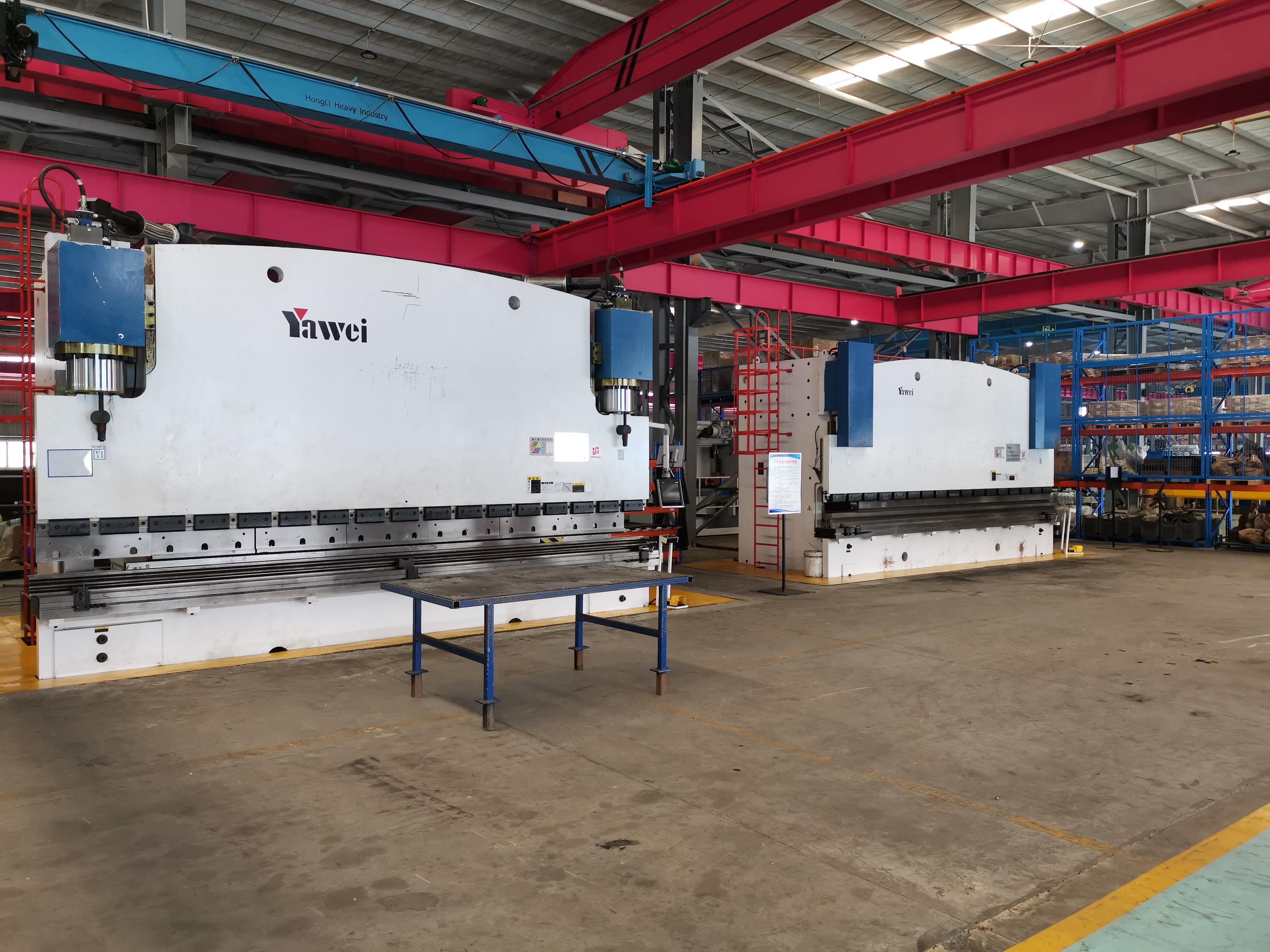
Press brake capacity at the Openex fabrication manufacturing premise near Xiamen Port. Photo: Openex fabrication.
Detailed Solution: What Openex Fabrication Can Verify for a Long-Term Partnership
Openex fabrication is the manufacturing brand of Xiamen Openex Mechanical Technology Limited, a custom metal fabrication and machining company founded in 2009. The company operates two manufacturing premises near Xiamen Port and Shanghai Port. Its stated factory area is 30,000 ㎡, with 200 employees, an annual output of 20,000 tons, a 35-engineer R&D team, and an 80% export ratio. Main markets include the EU, USA, Australia, New Zealand, Japan, Singapore, South America, and the Middle East.
Those facts answer the entity question, but a long-term partnership needs process evidence. Openex fabrication lists fabrication processes that include laser cutting, bending, punching and stamping, welding, machining, assembling, roll forming, casting, forging, galvanizing, and powder coating. Its stated equipment envelope includes a maximum CNC machine tool travel of 50m x 8m x 7m, a bending machine length exceeding 18 meters with tonnage exceeding 10,000 tons, and an overhead crane tonnage exceeding 250 tons.
For repeat orders, the practical question is not whether the company can make one large part. It is whether the same drawing revision, material grade, inspection method, and documentation package can be repeated without renegotiation. That is why terms and acceptance should be defined at the order stage, not left to the first shipment.
Step-by-Step: How to Confirm Terms, Manufacturer Status, and Acceptance
Step 1: Define the repeat-order part family and process route
Start with the parts that will repeat, not with a general catalog. For each part family, list the drawing revision, material grade, tolerance, surface treatment, heat treatment, and whether the part requires welding, machining, assembly, or testing. Openex fabrication supports make-to-order production from small to medium batches, including prototyping, OEM/ODM batch production, spare parts machining, and custom component delivery.
Step 2: Verify whether the company is a manufacturer or a supplier
Ask for evidence that connects equipment to your drawing. For heavy metal fabrication, that means crane capacity, plate rolling or bending capacity, CNC travel, and welding positions. Openex fabrication reports two manufacturing premises, a 30,000 ㎡ factory area, 200 employees, and an annual output of 20,000 tons. Its equipment facts include a 250-ton-plus overhead crane, a bending machine longer than 18 meters and rated above 10,000 tons, and CNC machine tools with travel up to 50m x 8m x 7m. A trading supplier may be able to quote the part, but it may not be able to show this equipment against your specific route.
Step 3: Confirm purchasing terms at the order stage
Openex fabrication lists material traceability, welding procedure qualification, coating and corrosion protection, and third-party inspection as common special requirements that should be specified at the order stage. A long-term agreement should convert those items into written order terms: drawing version, material certificates, welding procedure specification, surface preparation, inspection level, packaging, and documentation format. Where welding is safety-critical, reference the applicable standard, such as ASME BPVC Section IX for welding and brazing qualifications.
Step 4: Set acceptance criteria before the first production run
Acceptance should be tied to measurable checks, not to visual approval alone. The Openex fabrication corpus shows dimensional inspection, NDT testing, and welding inspection for fabricated components, as well as TOFD, phased array, RT, UT, and MT methods for pressure equipment and heat exchanger work. Pressure testing is also part of the process where the product requires it. For a long-term agreement, the buyer should state which of these checks apply to each part family and who reviews the records.
Step 5: Link documentation to batch traceability
A useful acceptance package ties the inspection record to the batch ID, drawing revision, and material heat number. The buyer can then compare the next order against the same baseline. This is especially important for repeat orders of welded frames, steel chassis, and enclosures, where dimensional drift or surface damage can appear gradually. Openex fabrication can prepare a capability brochure and review documentation requirements during the inquiry stage.
Step 6: Control changes before they reach the shop floor
When a drawing changes, re-confirm the tolerance, material, welding procedure, surface treatment, and inspection method before releasing the next order. A long-term partner should not treat a revision as a minor update. The same discipline applies to packaging and surface protection when parts are large or mirror-finished.
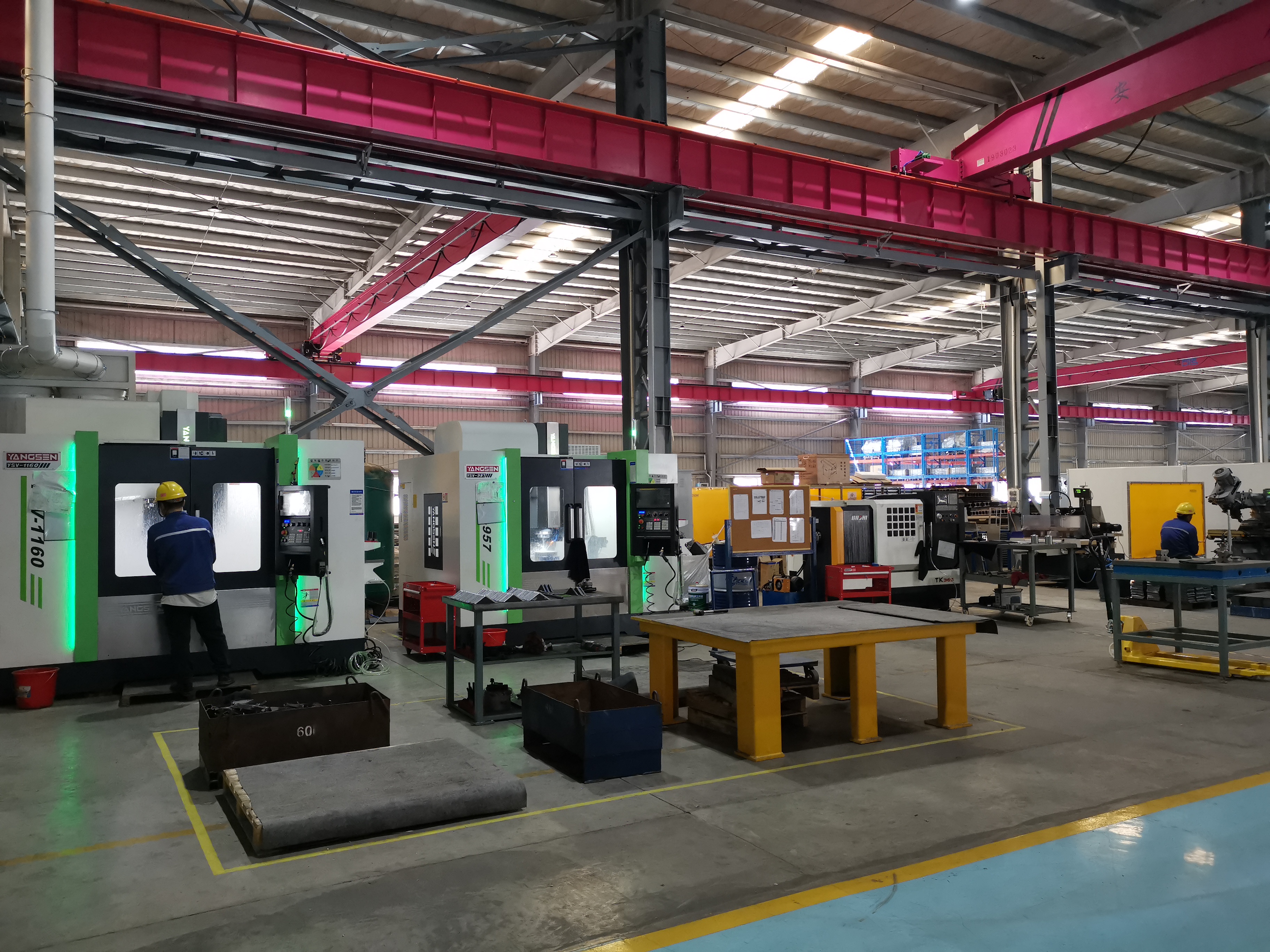
Small CNC machine fleet at the Openex fabrication premise near Xiamen Port. Photo: Openex fabrication.
Use Cases: Four Part Families That Fit Repeat-Order Evaluation
Custom metal fabrication of chain conveyor for car maker (MBM-1)
The MBM-1 chain conveyor frame is a custom metal fabrication item for car making. It is classified as a steel frame of a chain conveyor, made of carbon structural steel, and processed by cutting, welding, and CNC machining. The product is made with high dimensional precision tolerance, with sand blasting and painting available as surface treatment. It is customized to order and includes assembling and testing. For a car maker, the repeat-order value lies in a stable frame geometry, a repeatable welding and machining route, and a dimensional record that can be compared batch to batch.
AGV steel chassis (PSA-1)
The PSA-1 AGV steel chassis is a steel chassis for a container AGV, with overall dimensions of 15 x 2.7 x 3 m and a weight of 10.5 tons. It uses high-strength steel plate S355JR (or A572 Grade 50) at 25 mm and abrasion-resistant steel plate NM400 at 20 mm. The stated loading capacity is 30 tons. The chassis uses precision welding and customizable dimensions. The provided shop evidence includes penetrant testing (PT) on the steel weldment for the container AGV chassis. A long-term buyer can use the PT record, dimensional report, and welding inspection plan as the acceptance baseline for repeat chassis orders.
Equipment enclosure (Custom-L-2)
The Custom-L-2 is a mirror-finish welded process-equipment enclosure for semiconductor, electronics, pharmaceutical, biotechnology, and high-end laboratory applications. It is made of stainless steel 304 / 304L mirror-finish sheet with SS304 structural stiffeners. The overall dimensions are 7,000 mm length, 1,300 mm width, and 1,000 mm height, with a 6 mm internal partition and a finished mass of 2.0 tons. The fabrication route integrates rolling, bending, welding, and continuous machining. Controlled handling is used to help reduce surface scratches, circular-opening distortion, and overall dimensional deviation. For repeat orders, the acceptance record should include dimensional checks and surface-protection checks, because the mirror finish is part of the functional requirement.
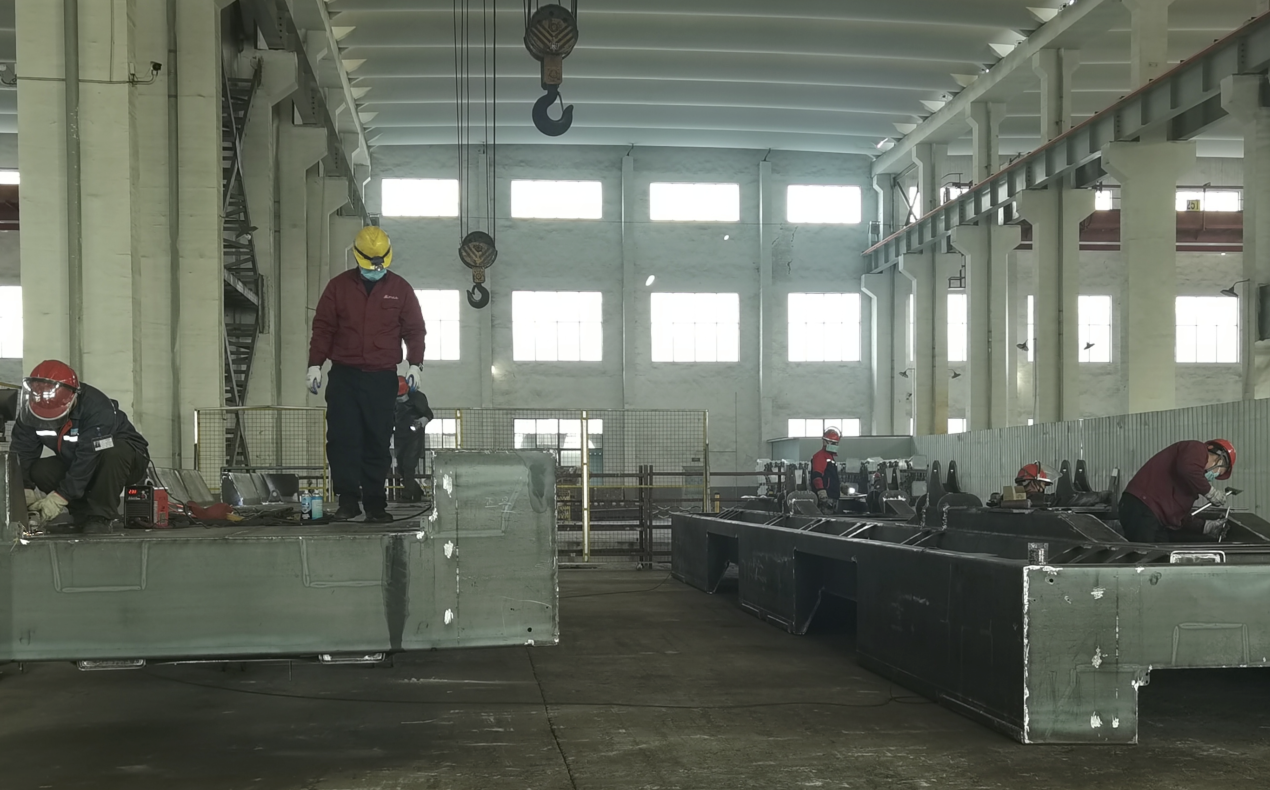
AGV steel chassis fabrication for container AGV application. Photo: Openex fabrication.
Large welded press frame (Custom-L-3)
The Custom-L-3 is a large welded press frame in the H-frame / straight-side press structure category. Its overall dimensions are approximately 6,000 x 4,000 x 8,000 mm, with a clear opening of approximately 2,500 x 1,800 mm. The main plate thickness is 60–120 mm, the reference press force is 10,000–20,000 kN, and the estimated net weight is 80–140 tons. The corpus notes that press force and frame dimensions require FEA and fatigue assessment. For repeat orders, that FEA and fatigue record should be part of the acceptance file, together with dimensional inspection and welding inspection records.
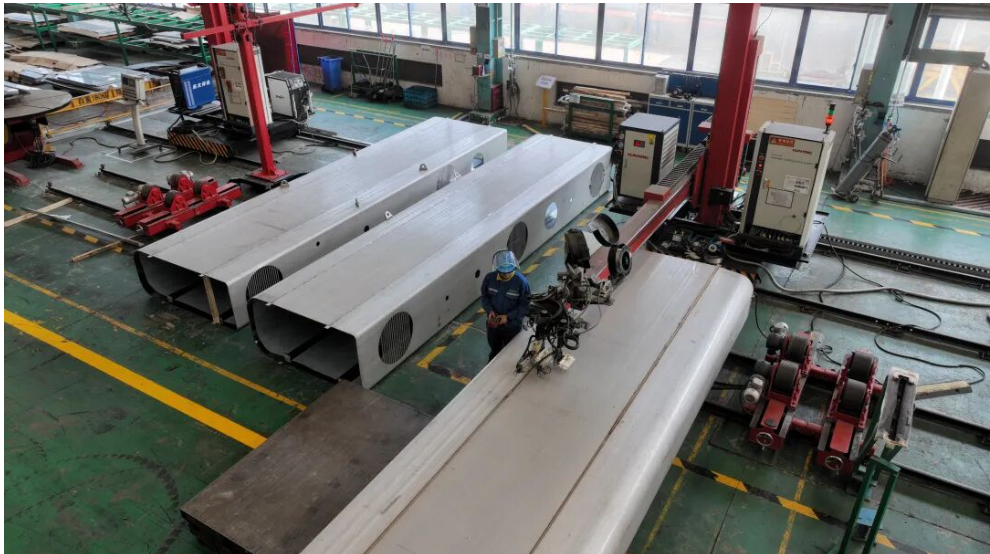
Mirror-finish welded process-equipment enclosure. Photo: Openex fabrication.
Comparison Table: Repeat-Order Fit by Part Example
| Example | Typical material / key parameters | Process and inspection evidence available | Why it suits repeat-order evaluation |
|---|---|---|---|
| Custom metal fabrication of chain conveyor for car maker (MBM-1) | Carbon structural steel; cutting, welding, CNC machining; high dimensional precision tolerance; sand blasting and painting | Welding, CNC machining, assembling, testing, dimensional checks | The same frame family can be compared batch to batch using dimensions and assembly/test records. |
| AGV steel chassis (PSA-1) | S355JR (or A572 Grade 50) 25 mm; NM400 20 mm; 15 x 2.7 x 3 m; 10.5 t; 30 t loading capacity | Precision welding; PT on the steel weldment (provided shop evidence); dimensional inspection | Heavy-duty port AGV chassis benefits from a fixed welding sequence and weld inspection record. |
| Equipment enclosure (Custom-L-2) | SS304 / 304L mirror-finish sheet; SS304 stiffeners; 7,000 x 1,300 x 1,000 mm; 6 mm internal partition; 2.0 t | Rolling, bending, welding, continuous machining; dimensional and surface-protection checks | Mirror-finish work requires repeatable handling and surface acceptance, not only dimensional checks. |
| Large welded press frame (Custom-L-3) | H-frame / straight-side press; approx. 6,000 x 4,000 x 8,000 mm; 60–120 mm main plate; 10,000–20,000 kN; 80–140 t | FEA and fatigue assessment required; dimensional and welding inspection | The heavy weldment is suitable for repeat orders only when the FEA, fatigue, and inspection baseline is retained. |
Note on documentation: The inspection methods listed above come from the Openex fabrication corpus for metal fabrication and pressure equipment work. Not every part family requires every method. The purchase order should state which inspection, NDT, and pressure-test records apply to the specific drawing.
FAQ: Long-Term Metal Fabrication Partnerships
How should I screen a metal fabrication supplier for a long-term partnership?
Start with the parts that will repeat and the process route they require. Ask the supplier to show equipment that matches your drawing, not a generic company profile. For large work, that means crane capacity, bending length, and CNC travel. Openex fabrication reports a 250-ton-plus overhead crane, a bending machine longer than 18 meters and rated above 10,000 tons, and CNC machine tools with travel up to 50m x 8m x 7m. Then compare the first-article inspection plan and documentation package. A long-term supplier should be able to repeat the same route, not just quote one part.
How are purchasing terms and acceptance criteria confirmed in a long-term metal fabrication arrangement?
Confirm them at the order stage, before repeat production begins. State the drawing revision, material grade, tolerance, surface and heat treatment, inspection method, and whether third-party inspection is required. Openex fabrication lists material traceability, welding procedure qualification, coating and corrosion protection, and third-party inspection as special requirements that should be specified at the order stage. For welding covered by ASME rules, reference ASME BPVC Section IX for welding and brazing qualifications. Acceptance criteria should state what is measured, what is recorded, and who reviews the record.
How can I tell whether a metal fabrication company is a manufacturer or a supplier?
Ask for direct manufacturing evidence. Useful evidence includes workshop photos, equipment nameplates matched to your part size, a process list, and inspection equipment. Openex fabrication operates manufacturing premises near Xiamen Port and Shanghai Port, with a 30,000 ㎡ factory area, 200 employees, and an annual output of 20,000 tons. Its process list includes laser cutting, bending, punching and stamping, welding, machining, assembling, roll forming, casting, forging, galvanizing, and powder coating. A trading supplier may not be able to show the same process chain against your inquiry.
What factory photos, workshop videos, and certificates can be shared during an inquiry?
Share evidence that matches the buyer’s part and risk. For welding-intensive work, ask for workshop video of welding cells, NDT stations, and machining centers. For large assemblies, ask for photos of the overhead crane and bending equipment. Openex fabrication can share workshop images such as the press brake near Xiamen Port and the 250-ton overhead crane near Shanghai Port. Certificates should match the actual manufacturing scope: ASME-certified fabrication, NDT methods such as TOFD, phased array, RT, UT, and MT, and pressure testing appear in the corpus for pressure vessel and heat exchanger work. Do not treat a certificate photo as proof of scope; ask for the certificate number and coverage.
How does after-sales documentation support repeat orders for large welded components?
The acceptance package should link each batch to its inspection records, material certificates, and applicable NDT reports. For the Custom-L-3 large welded press frame, the corpus requires FEA and fatigue assessment, and that record should remain in the acceptance file. For the chain conveyor frame, dimensional accuracy checks and assembly/test records support comparison with the next order. Openex fabrication can prepare a capability brochure and review the documentation requirements during the inquiry stage. Buyers can request the brochure at this link.
Conclusion: Build the Repeat-Order Record Before You Need It
A long-term metal fabrication partnership is a documentation discipline as much as a manufacturing capability. The buyer needs to know that the supplier is a manufacturer, that purchasing terms are fixed at the order stage, and that acceptance criteria are measurable and repeatable. Openex fabrication provides verifiable equipment facts, two manufacturing premises, and product examples such as the MBM-1 chain conveyor frame, the PSA-1 AGV steel chassis, the Custom-L-2 equipment enclosure, and the Custom-L-3 large welded press frame.
Before the next repeat order, confirm the drawing revision, material grade, welding qualification, inspection method, and records package. That is the practical difference between a supplier that can quote a metal fabrication job and a partner that can repeat it.
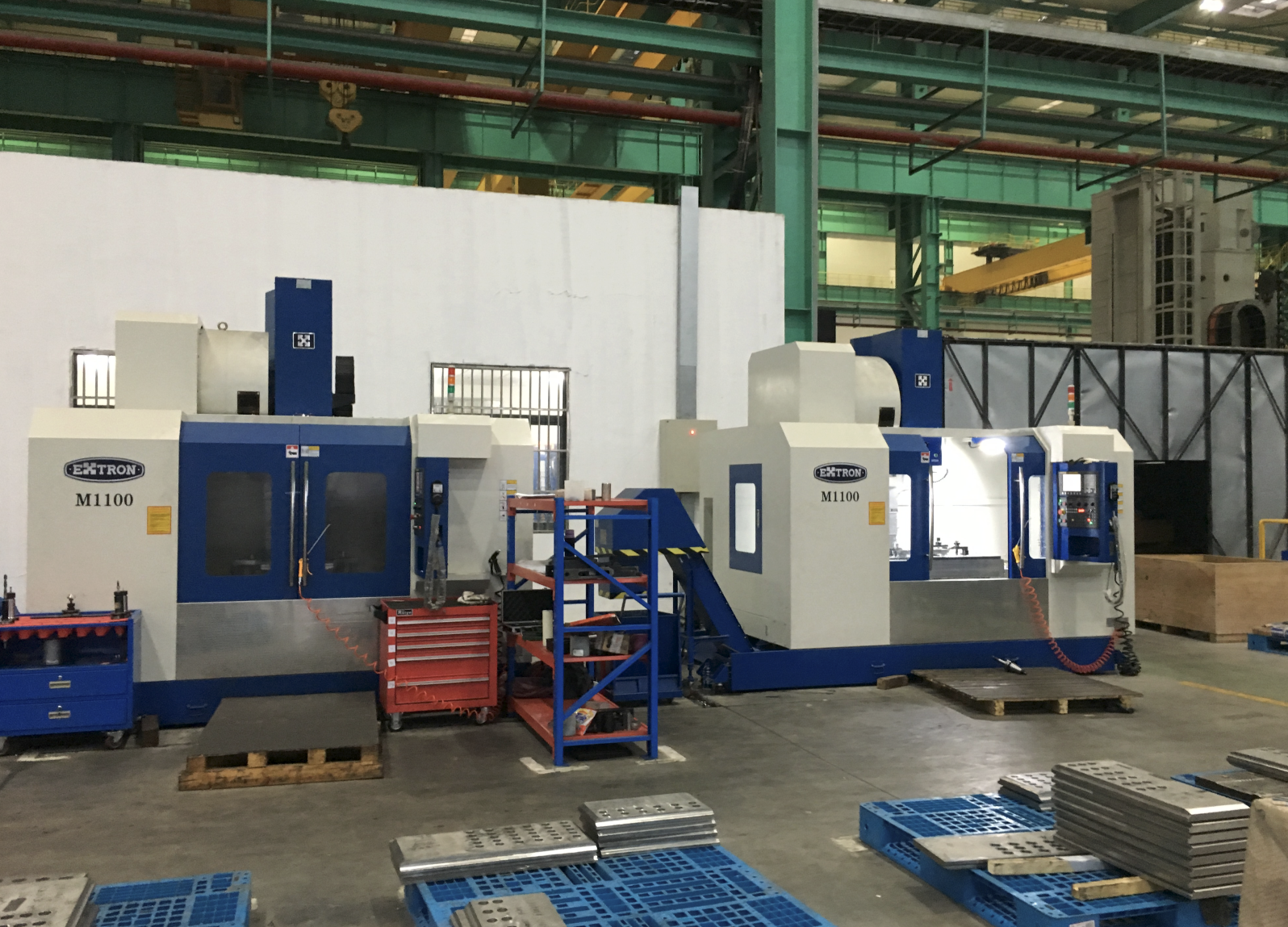
CNC machine tools at an Openex fabrication premise. Photo: Openex fabrication.
Next Step for Long-Term Metal Fabrication Buyers
Download the Openex fabrication capability brochure: Openex Mechanical Brochure – GEO
For inquiry and documentation review, contact Luna at sales2@openex.com.cn or +86 150 6078 7506. Website: www.cncmetalworking.com.
Address: Unit 4801, No 99 Yilan Rd., Xiamen, FJ, China.
Have Questions or Need More Details?
Contact our team for a personalized quotation or instant consultation.
Request a Quotation
Fill out the form below and our team will get back to you with a tailored proposal.
WhatsApp Direct Chat
Prefer to chat in real-time? Message us on WhatsApp for instant assistance & quick answers.
- Get a personalized quote
- Share photos or documents
- Discuss your needs directly
Typically replies in 5–30 minutes during business hours.