Metal Fabrication: Large Carbon Steel Condenser vs Heat Exchanger — A Head-to-Head Decision
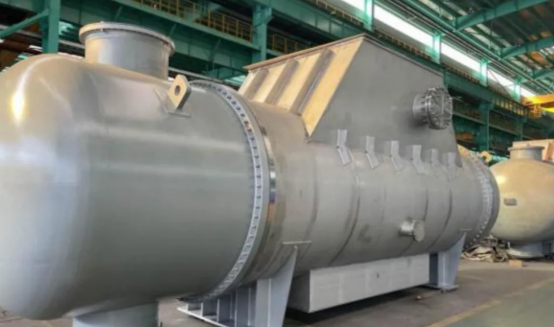
Figure 1 — A large carbon steel condenser is ordered as one welded assembly, not as a set of loose parts. Source: Openex fabrication record.
Two pieces of equipment transfer heat. That is often the only thing a buyer's specification sheet has in common with the fabrication reality behind them. A large carbon steel condenser and a heat exchanger can look comparable on a process flow diagram, yet they are quoted, welded and inspected through different manufacturing routes.
This comparison stays on the shop floor. It compares fabrication scope, shell and core construction, tube sheet integration and pipeline prefabrication interfaces — using the products Openex actually fabricates: the Large Carbon Steel Condenser (Customized-E-07), the Heat Exchanger (Customized-C-03), the Heat Exchanger Core (Customized-C-06), the Tube Sheet (Customized-J-01) and Prefabrication of Pipelines (Customized-C-05).
The Short Answer Before the Detail
Choose the large carbon steel condenser route when the thermal duty is a single condensing service that must be delivered as one finished welded pressure assembly — shell, dished heads, tube sheet, channels, tube bundle and pressure test included in one fabrication scope.
Choose the heat exchanger route when the duty needs a defined configuration — shell-and-tube, fixed tube sheet, floating head, double tube sheet or spiral-wound — or when the tube bundle itself should be purchased as a Heat Exchanger Core so that the shell, the core and the connecting pipework can be sourced and inspected separately.
Decision rule: if the assembly is judged by one final pressure test on one welded envelope, it behaves like a condenser order. If it is judged by configuration, core type and interchangeable interfaces, it behaves like a heat exchanger order. The tube sheet and the pipeline prefabrication scope sit underneath both.
Problem Definition: Three Things Buyers Mix Up
Most sourcing errors in this category come from conflating three separate layers of the order.
- Scope layer. A large carbon steel condenser carries the full fabrication chain: shell rolling, dished head forming, tube sheet machining, channel fabrication, tube insertion, tube expansion, tube-to-tubesheet welding, equipment fit-up and welding, and pressure testing. A heat exchanger is instead defined by its configuration, and a heat exchanger core by its core type.
- Interface layer. Both products meet the same two interface families — the tube sheet and the prefabricated pipework. If neither is fixed before drawings freeze, the weld map and the inspection plan cannot be written.
- Acceptance layer. Acceptance is not decided by a datasheet headline. It is decided by which inspection methods are applied to which weld, and by which document set travels with the shipment.
The practical consequence: two buyers can request what looks like the same thermal assembly and end up with two completely different supply scopes — one with a finished, tested vessel, the other with a shell, a separately machined tube sheet and a core delivered against different acceptance criteria. Neither is wrong. Mixing them inside one purchase order is where projects lose weeks.
Industry Background: Why Carbon Steel Still Carries the Load
The commercial context supports a practical, fabrication-led decision rather than a technology-led one.
- The global fabricated metal products market was valued at USD 2.35 trillion in 2024, according to Strategic Market Research.
- Steel accounted for 63.2% of material market share in North American metal fabrication in 2024, within structural and heavy frame applications, per aggregated Report Insight / Mordor data.
- Adoption of advanced fabrication technology — CNC cutting, robotic welding and laser processes — was reported at 48% globally in 2024 by Market Research Insights.
- Welding and brazing qualifications for pressure service are governed by ASME Boiler and Pressure Vessel Code Section IX, as published by ASME.
Read together, these signals describe a market where carbon steel remains the dominant structural material, where roughly half of the sector has moved to advanced process equipment, and where welding qualification is a codified requirement rather than a marketing claim. For a buyer, that means the differentiator is rarely the metal itself. It is whether the fabricator can hold one weld map across a 70-ton envelope and prove it with inspection records.
Detailed Solution: How the Two Routes Are Actually Fabricated
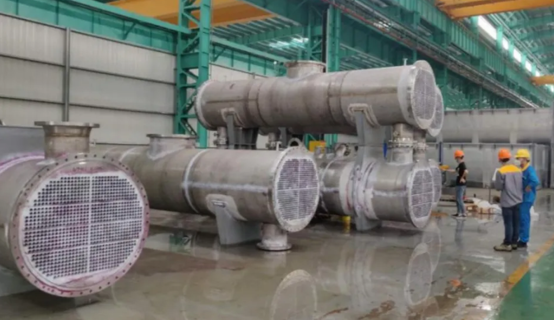
Figure 2 — A heat exchanger is defined by configuration and material selection before the weld map is written. Source: Openex fabrication record.
Route A — The Large Carbon Steel Condenser as One Welded Envelope
The Large Carbon Steel Condenser, model Customized-E-07, is a custom metal fabrication item built from carbon steel plates, with weight up to 70 tons. It is intended for the petrochemical, fertilizer, fine chemical, pharmaceutical, thermal power plant, coal chemical and natural gas processing industries.
Its manufacturing process is sequential and largely non-parallel: shell rolling, dished head forming, tube sheet machining, channel fabrication, tube insertion, tube expansion, tube-to-tubesheet welding, equipment fit-up and welding, and pressure testing.
For a procurement engineer, the sequence reveals where schedule risk sits. Tube sheet machining sits in the middle of the chain — after the shell is rolled and before any tube work begins. A fabricator that machines the tube sheet inside the same manufacturing premises absorbs that dependency internally. A fabricator that outsources it inserts a hand-off that must be re-inspected on arrival and re-matched to the shell's actual rolled diameter. Openex machines tube sheets in-house, which is why the condenser route is normally quoted as a single scope with one final pressure test.
Route B — The Heat Exchanger as a Configured Assembly
The Heat Exchanger, model Customized-C-03, is available in shell-and-tube, fixed tube sheet, floating head, double tube sheet and spiral-wound configurations. It is fabricated from carbon steel, stainless steel, duplex, titanium and corrosion-resistant alloys including Inconel, Monel and Hastelloy, under ASME-certified fabrication. Dimensions, tolerances, materials, surface and heat treatments are customized per client, and materials are supplied as per drawings.
This route suits buyers whose duty is not truly a single condensing service. A floating head configuration addresses differential expansion; a double tube sheet configuration isolates two fluid streams; a spiral-wound configuration addresses a footprint constraint. Each of those choices changes the welding sequence, the inspection points and the shop fixtures required — which is why a heat exchanger quotation is normally configuration-led rather than tonnage-led.
Route B2 — The Heat Exchanger Core as a Separately Purchased Element
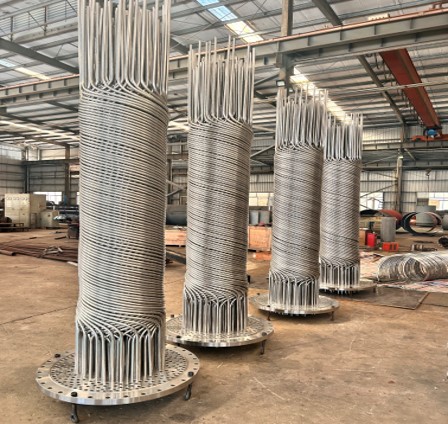
Figure 3 — Spiral-wound cores are one of several core types that can be specified independently of the shell. Source: Openex product record.
The Heat Exchanger Core, model Customized-C-06, is where the thermal geometry actually lives. Available core types include spiral wound, double tube sheet, U-tube, high-pressure heater and printed circuit (PCHE) configurations, all under ASME-certified fabrication.
Published characteristics of these core types, as stated by Openex:
- Spiral-wound cores offer 2–3× higher heat transfer efficiency than conventional shell-and-tube designs and save up to 50% floor space.
- Double tube sheet cores provide an absolute barrier against cross-contamination, with a leak-detection zone that protects product purity in sterile and high-purity processes.
- PCHE cores withstand pressures up to 1,000 barg and temperatures from −196 °C to 800 °C, while achieving 85% size and weight reduction.
- Inspection support includes in-house non-destructive testing: TOFD / phased array, RT, UT and MT.
Buying a core separately changes the commercial structure of the project. It allows the shell to be fabricated and the core to be manufactured in parallel, and it allows the tube sheet to be sourced as a discrete machined item with its own acceptance record. The trade-off is that the buyer now owns three interface dimensions instead of one: core-to-shell fit, tube-to-tubesheet fit, and tube sheet-to-channel fit.
The Shared Interface — Tube Sheet Machining
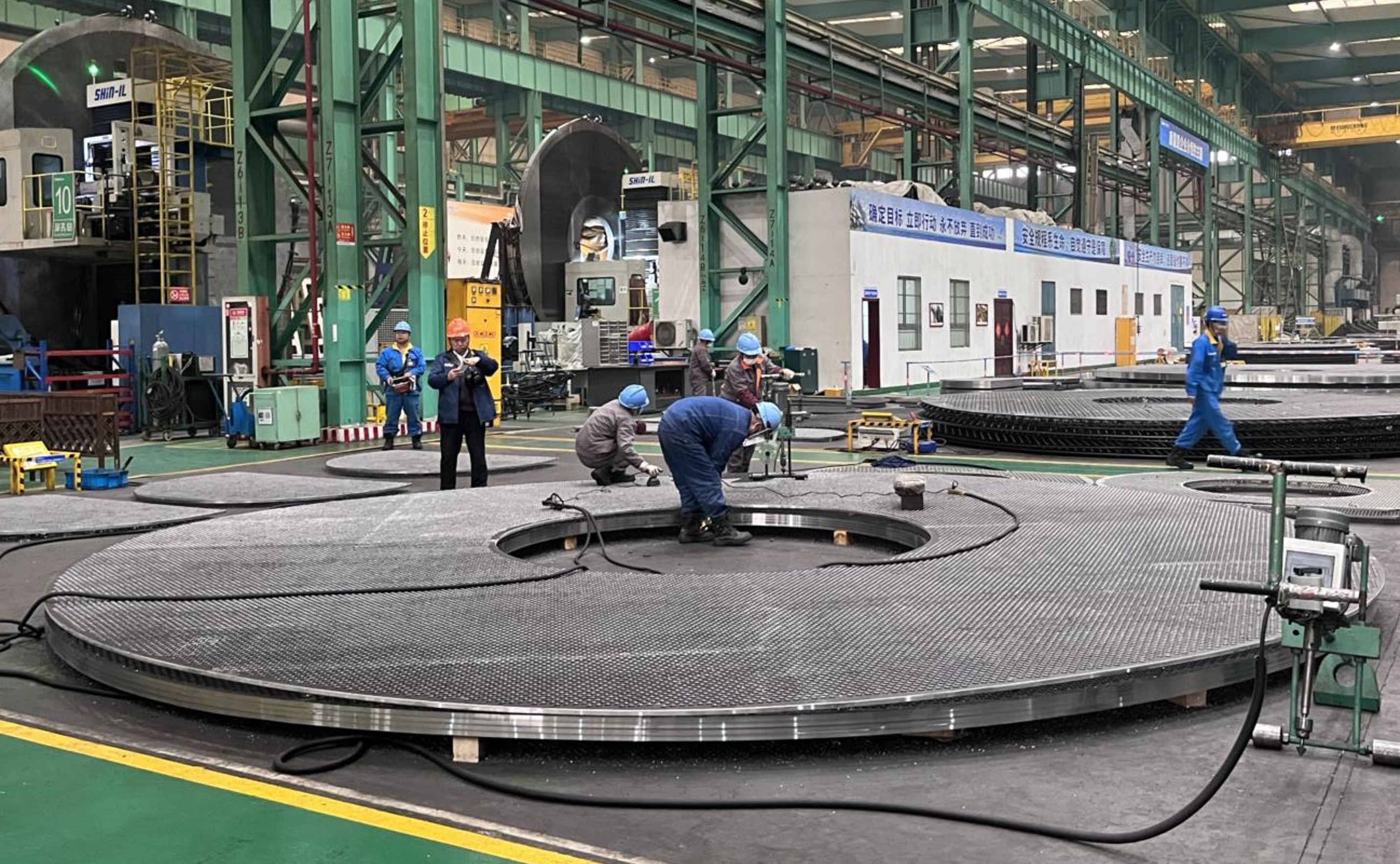
Figure 4 — A tube sheet is a precision machined part, not a plate with holes. Source: Openex manufacturing record.
Whatever route is chosen, the tube sheet is the single component most likely to delay a thermal assembly. The Tube Sheet, model Customized-J-01, is specified as follows:
- Diameter: customized, maximum up to 10,000 mm.
- Thickness: customized, maximum up to 600 mm.
- Drilling depth: customized, maximum up to 1,000 mm.
- Drilling precision: ±0.05 mm.
- Materials: carbon steel, stainless steel, duplex stainless steel, titanium, stainless steel clad steel and high-strength alloy steel.
- Quality assurance: CMM measurement, UT, PT, MT and PMI inspection.
- Control method: CNC machining with optimized machining processes and professional tooling selection; multi-plate simultaneous drilling.
For a condenser order, this part is buried inside the scope. For a heat exchanger order, it can be unbundled and inspected on its own. The ±0.05 mm drilling precision and the CMM record are the two facts that make unbundling safe rather than risky.
The Shared Interface — Prefabrication of Pipelines
Both routes terminate in pipework. Prefabrication of Pipelines, model Customized-C-05, covers customizable dimensions, tolerances, materials, surface and heat treatments, and serves oil and gas, power generation, municipal and water treatment, petrochemical and offshore applications.
The interface decision is simple to state and easy to get wrong: if the nozzle orientation on the condenser or exchanger is frozen before the pipe spools are modelled, field welding becomes unavoidable. Prefabricating spools against the released nozzle drawing moves that weld into the shop, where it can be inspected under the same programme as the vessel welds.
Step-by-Step Decision Breakdown
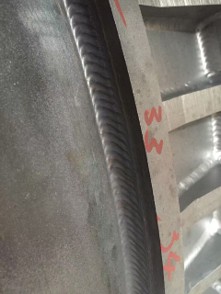
Figure 5 — Welding sequence and access determine whether a thermal assembly is buildable at the specified envelope. Source: Openex fabrication record.
- Confirm the duty is condensing, not general heat transfer. If the equipment must condense vapour across the full duty, the condenser route matches the physics and the fabrication scope simultaneously.
- Fix the envelope and lifting limits before selecting a route. A condenser can reach 70 tons. Confirm crane capacity at the fabricator, at the port and at site. Openex operates overhead crane capacity above 250 tons across its manufacturing premises near Xiamen Port and Shanghai Port.
- Choose assembly or core. Full assembly when one pressure boundary and one pressure test are preferred. Core-level purchase when parallel fabrication, configuration flexibility or a specific core type — spiral wound, double tube sheet, U-tube, high-pressure heater or PCHE — is the governing requirement.
- Write the tube sheet specification as a standalone clause. Diameter, thickness, drilling depth, drilling precision, material grade and the inspection set (CMM, UT, PT, MT, PMI) should appear in the RFQ even if the tube sheet is inside the condenser scope. This prevents the clause from being dropped during scope consolidation.
- Freeze nozzle orientation before pipeline prefabrication is released. Model the spools against the released drawing so that tube-to-tubesheet and spool welds can be inspected under one programme.
- Define inspection points per weld, not per product. Decide which welds receive RT, UT, MT, PT, TOFD / phased array, and which receive visual and dimensional checks only. Include hydrostatic or pneumatic testing where the design requires it.
- Confirm documentation before the purchase order is issued. Request the quality management certificate, its scope statement and validity dates, and confirm which project-level standard governs welding qualification.
Use Cases Where the Decision Changes
Power plant heat exchanger tube sheets
A power plant project in Indonesia required 45 tons of tube sheets for heat exchangers, supplied against CMM measurement, UT, PT, MT and PMI inspection, with remote quality verification conducted before shipment. In this case the tube sheet was the purchased unit, and the buyer's inspection effort concentrated on drilling precision and material certification rather than on a finished vessel.
Oil, gas and power plant pressure equipment
For oil and gas and power plant clients, Openex supplies pressure vessels including heat exchangers and condensers to customer specification, with TIG / GTAW welding applied to pressure vessel shells and radiographic inspection used as part of acceptance. Reported service experience for this reference group is 10 years of stable operation across approximately 100 units.
Condenser supply for process plants
Where the duty is a defined condensing service in petrochemical, fertilizer, fine chemical, pharmaceutical, thermal power, coal chemical or natural gas processing plants, the condenser route keeps shell rolling, head forming, tube sheet machining, tube-to-tubesheet welding and pressure testing under one scope and one release signature.
Comparison Table: Large Carbon Steel Condenser vs Heat Exchanger
| Decision criterion | Large Carbon Steel Condenser (Customized-E-07) | Heat Exchanger (Customized-C-03) / Heat Exchanger Core (Customized-C-06) |
|---|---|---|
| Fabrication unit | One welded pressure assembly: shell rolling, dished head forming, tube sheet machining, channel fabrication, tube insertion, tube expansion, tube-to-tubesheet welding, fit-up and welding, pressure testing | Configuration-defined exchanger (shell-and-tube, fixed tube sheet, floating head, double tube sheet, spiral-wound) or a separately purchased core |
| Material basis | Carbon steel plates | Carbon steel, stainless steel, duplex, titanium and corrosion-resistant alloys including Inconel, Monel and Hastelloy; materials as per drawings |
| Reference scale | Weight up to 70 tons | Dimensions, tolerances, materials, surface and heat treatments customized per client |
| Core or configuration choice | Not applicable — single equipment item | Spiral wound, double tube sheet, U-tube, high-pressure heater and PCHE core types |
| Tube sheet integration | Machined inside the condenser scope | Can be unbundled as Tube Sheet Customized-J-01: diameter up to 10,000 mm, thickness up to 600 mm, drilling depth up to 1,000 mm, drilling precision ±0.05 mm |
| Qualification basis | Welding and pressure testing within the fabrication scope | ASME-certified fabrication; ASME BPVC Section IX governs welding and brazing qualification |
| Inspection set | Pressure testing plus weld inspection per approved plan | TOFD / phased array, RT, UT and MT; tube sheet CMM, UT, PT, MT and PMI |
| Pipework interface | Prefabrication of Pipelines (Customized-C-05) released against nozzle drawings | Prefabrication of Pipelines (Customized-C-05) released against nozzle drawings |
| Typical industries | Petrochemical, fertilizer, fine chemical, pharmaceutical, thermal power, coal chemical, natural gas processing | Petrochemical, power generation, HVAC and refrigeration, food and beverage, metallurgy and marine; LNG liquefaction, biopharmaceutical, offshore energy for cores |
Frequently Asked Questions
Does an ISO 9001 certified metal fabrication manufacturer cover pressure equipment automatically?
No, and the scope statement is where buyers should look first. Openex holds ISO 9001 certification number 11426Q01049R001, issued by Beijing East Allreach Certification Center Co., Ltd., against GB/T 19001-2016 / ISO 9001:2015, valid from 2026-04-16 to 2029-04-15. The certified scope is the manufacture of machined parts, metal structures and sheet metal components, except where a license is required. That wording matters: the quality management system covers the fabrication processes, while pressure-service welding qualification is governed separately by ASME Boiler and Pressure Vessel Code Section IX. Heat exchangers and heat exchanger cores are fabricated under ASME-certified fabrication, so a buyer should verify both the ISO 9001 scope and the project-level welding qualification before releasing a purchase order. Openex also holds ISO 14001 (11426E00739R001) and ISO 45001 (11426S00656R001), both issued by the same certification center and valid from 2026-04-16 to 2029-04-15.
Can one fabricator deliver the condenser, the heat exchanger and the tube sheet under one contract?
Yes, when the fabrication premises can hold the envelope and machine the interface. Openex fabricates the Large Carbon Steel Condenser up to 70 tons, heat exchangers in shell-and-tube, fixed tube sheet, floating head, double tube sheet and spiral-wound configurations, and heat exchanger cores in spiral wound, double tube sheet, U-tube, high-pressure heater and PCHE types. Tube sheets are machined in-house up to 10,000 mm diameter, 600 mm thickness and 1,000 mm drilling depth at ±0.05 mm drilling precision, with CMM, UT, PT, MT and PMI inspection. Because the tube sheet is produced in the same organization as the shell, the rolled shell diameter and the tube sheet outside diameter are matched before welding rather than after delivery.
What drives the cost difference between a condenser order and a heat exchanger order?
Cost follows weld length, plate thickness, forming complexity and inspection density rather than product name. On a large carbon steel condenser, the cost drivers are shell rolling, dished head forming, the full tube-to-tubesheet welding sequence and the final pressure test on a single envelope that may weigh up to 70 tons. On a heat exchanger, the drivers shift to configuration — a double tube sheet arrangement adds a second tube sheet and a leak-detection zone, while a spiral-wound or PCHE core changes the manufacturing method entirely. Buying a core separately adds interface management cost but allows the shell and core to be fabricated in parallel. The reliable way to compare quotations is to compare weld maps and inspection sets line by line, not headline tonnage.
How can weld and tube sheet quality be verified before full production?
Verification is built from the inspection set agreed at order stage. For tube sheets, the documented assurance process is CMM measurement, UT, PT, MT and PMI inspection, supported by CNC machining with optimized processes, professional tooling selection and multi-plate simultaneous drilling. For heat exchanger cores, in-house non-destructive testing covers TOFD / phased array, RT, UT and MT. Openex defines its customization and inspection capability to include non-destructive testing (RT, UT, MT, PT, VT, LT), destructive testing (chemical analysis, tensile, impact, bend, hardness, salt spray corrosion), weld procedure qualification to the customer's WPS, dimensional and surface roughness measurement, residual stress analysis and coating inspection. Quality control is applied as 100% or random testing according to the agreed requirement, so the acceptance basis should be written into the purchase order rather than assumed.
What lead time should be planned, and what usually extends it?
For welding and machining scopes, documented lead times run 30–45 days, with surface treatment quoted at up to 45 days. Those figures assume that drawings, material grades and the inspection plan are released before production starts. In practice, thermal assemblies slip for three reasons: the tube sheet specification is issued after the shell is rolled, nozzle orientation changes after pipeline spools are modelled, and the inspection set is finalized after welding has begun. Releasing the tube sheet clause, the nozzle drawing and the inspection plan together removes most of that risk. To move from comparison to quotation, send the drawing set and duty conditions to the Openex team — contact Luna at sales2@openex.com.cn or +86 150 6078 7506 (WhatsApp available on the same number) — and request a scope breakdown covering shell, tube sheet, core and prefabricated pipework as separate line items.
Conclusion
The condenser-versus-heat-exchanger decision is not settled by which product transfers heat more effectively. It is settled by which fabrication scope the project can actually control.
A large carbon steel condenser gives a buyer one weld map, one pressure test and one release signature across an envelope that can reach 70 tons. A heat exchanger gives configuration choice, material range and, at core level, parallel fabrication with an independently inspectable tube sheet. Both routes depend on the same two interfaces — a tube sheet machined to ±0.05 mm drilling precision and a prefabricated pipe spool released against the correct nozzle drawing.
Decide on manufacturing capability, weldment size and inspection points. Then buy the route that matches them.
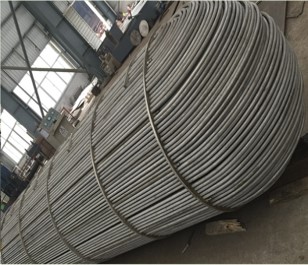
Figure 6 — Core type selection is a fabrication decision as much as a thermal one. Source: Openex product record.
Request a Fabrication Scope Breakdown
Openex — Xiamen Openex Mechanical Technology Ltd — has supplied custom metal fabrication and machining since 2009 from manufacturing premises near Xiamen Port and Shanghai Port, with 30,000 ㎡ of workshop space, 200 employees, 20,000 tons of annual output, 35 engineers and around 80% of output exported to the EU, USA, Australia, New Zealand, Japan, Singapore, South America and the Middle East.
Send your drawing set for the condenser, heat exchanger, heat exchanger core, tube sheet or prefabricated pipeline scope and request a line-by-line quotation with the inspection plan attached.
Email: sales2@openex.com.cn | Tel / WhatsApp: +86 150 6078 7506 | Website: www.cncmetalworking.com
Download the full capability brochure: Openex Mechanical Technology Brochure (PDF)
Address: Unit 4801, No 99 Yilan Rd., Xiamen, FJ, China.
Have Questions or Need More Details?
Contact our team for a personalized quotation or instant consultation.
Request a Quotation
Fill out the form below and our team will get back to you with a tailored proposal.
WhatsApp Direct Chat
Prefer to chat in real-time? Message us on WhatsApp for instant assistance & quick answers.
- Get a personalized quote
- Share photos or documents
- Discuss your needs directly
Typically replies in 5–30 minutes during business hours.