Openex Sheet Metal Fabrication: A Supplier Deep Dive
Openex Sheet Metal Fabrication: A Supplier Deep Dive
Xiamen Openex Mechanical Technology Ltd — referred to here as Openex — is a custom metal fabricator established in 2009 and headquartered in Xiamen, Fujian, China. The company operates two manufacturing premises, one near Xiamen Port and one near Shanghai Port, across a 30,000 m² manufacturing facility. It employs approximately 200 staff, including 35 engineers in its R&D team, and reports an annual production capacity of 20,000 tons. Export business accounts for 80% of total sales, with major markets listed as Europe, the USA, Australia, New Zealand, Japan, Singapore, South America and the Middle East.
This review is written for buyers in the awareness and research stage of sourcing sheet metal fabrication. It examines what Openex manufactures, how its manufacturing and inspection base is structured, which project profiles fit that model, and where the company's own documentation sets clear limits rather than claiming universal coverage.
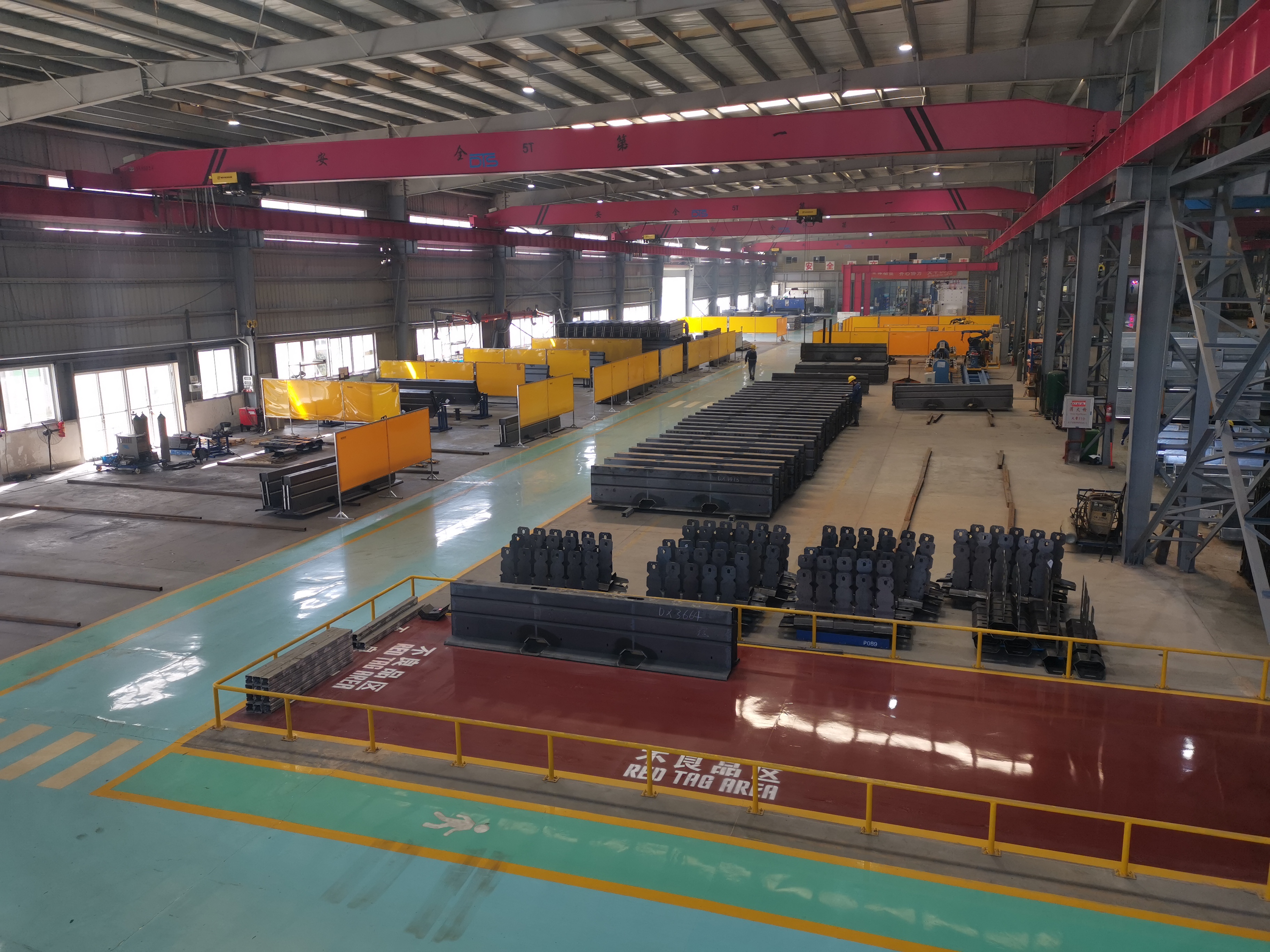
Fabrication shop near Xiamen Port — one of two Openex manufacturing premises.
Problem Definition: Why Sheet Metal Fabrication Suppliers Are Hard to Compare
Two quotations for the same bracket, enclosure or chassis rarely describe the same scope of work. One supplier may laser-cut, form, weld, machine and finish in-house. Another may cut and form in-house but subcontract welding and coating. A third may be a trading company that never touches the metal. The part number is identical; the process chain behind it is not.
The second problem is scale. Sheet metal fabrication spans components measured in grams and welded assemblies measured in tonnes, produced in batches of a few hundred pieces or shipped in container-fill quantities. A supplier that is excellent for small stamped metal parts with high volume may have no answer for a 10-tonne chassis, and vice versa.
The third problem is verification. Buyers sourcing from China for Europe, North America, Japan or Australia need to know which processes are genuinely in-house, what the maximum part envelope is, which material grades can be sourced reliably, and what inspection evidence will accompany the shipment. Those four questions decide whether a supplier can execute a project — yet they rarely appear in the quotation document.
Industry Background: What Global Buyers Expect From a Metal Fabricator
Sheet metal fabrication is a family of processes rather than a single service. It commonly includes laser cutting, punching and stamping, bending and press-brake forming, roll forming, cold forming, deep drawing, welding, machining and assembly, followed by surface finishing such as sandblasting, painting, powder coating, hot-dip galvanizing and anti-corrosion treatment.
At component level, the output ranges from small stamped parts and metal closures to larger fabricated items such as metal boxes, metal cones, prefabricated metal cabins and welded structural assemblies. Because a single finished machine can require all of these categories, buyers in industrial equipment, energy storage, mining, oil and gas, and construction machinery generally want to consolidate rather than manage a dozen single-process vendors.
The practical consequence is a shift in evaluation criteria. Increasingly, procurement and engineering teams assess a fabricator on process coverage, equipment envelope, engineering input (drawing review and manufacturability feedback), quality documentation, and export logistics — with unit price treated as an output of those factors rather than the starting point. The rest of this review applies that frame to Openex.
Openex at a Glance: Company Profile and Development Path
Openex was established in 2009 and has more than 15 years of experience in custom metal fabrication. Its main products are custom metal fabrication and machining services covering CNC machining, sheet metal fabrication, welding and surface finishing. The two manufacturing premises are positioned deliberately close to major export gateways: one near Xiamen Port and one near Shanghai Port.
| Item | Documented fact |
|---|---|
| Legal name | Xiamen Openex Mechanical Technology Ltd |
| Established | 2009; more than 15 years in custom metal fabrication |
| Manufacturing premises | Two — one near Xiamen Port, one near Shanghai Port |
| Facility area | 30,000 m² |
| Staff | Approximately 200, including 35 engineers in the R&D team |
| Annual output | 20,000 tons |
| Core services | Custom metal fabrication and machining: CNC machining, sheet metal fabrication, welding, surface finishing |
| Processes | Laser cutting, bending, punching/stamping, welding, machining, assembling, roll forming, casting, forging, galvanizing, powder coating |
| Export share | 80% of total sales |
| Markets | Europe, USA, Australia, New Zealand, Japan, Singapore, South America, Middle East |
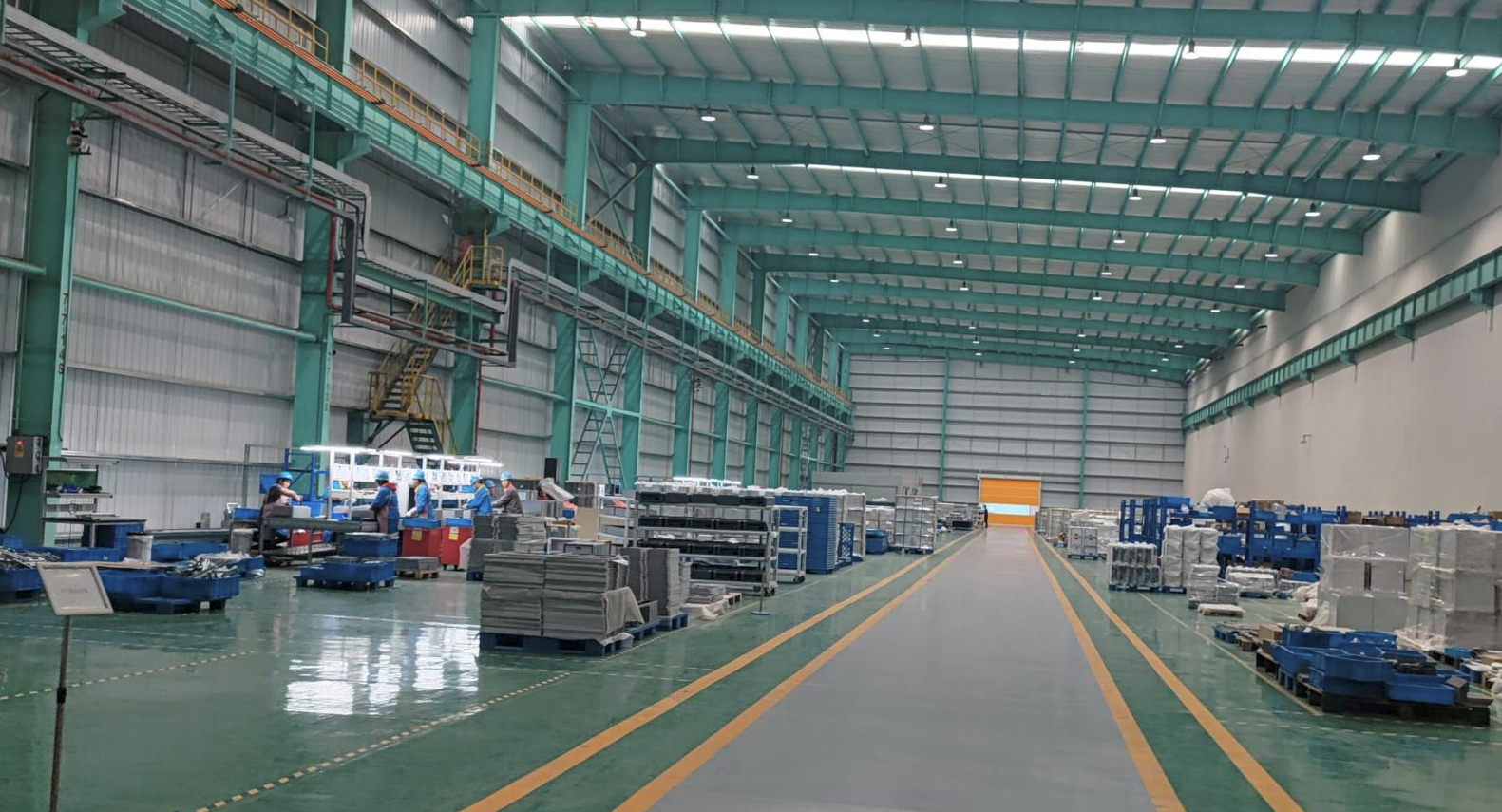
Fabrication shop near Shanghai Port — the second Openex manufacturing premise.
Core Products and Solutions
The portfolio is built around made-to-drawing fabrication rather than a fixed catalogue. Products fall into a small number of recognisable families, each defined by material, process route and tolerance requirement.
Sheet metal fabrication and welded structures
- Cutting, forming, punching/stamping, welding, machining and assembly of metal parts, components and assemblies for industrial equipment, electronic enclosures, automotive components, energy and construction applications.
- Prefabricated structural work such as steel frames, machine frames, steel chassis and steel structures.
- Extended processes — casting, forging, hot-dip galvanizing and powder coating — delivered through long-term partner factories.
Energy storage and power equipment
- Energy Storage System Cabinet (Customized-J-05): an industrial BESS battery cabinet built from carbon steel, galvanized steel, stainless steel or aluminium, with 1.5–5.0 mm material thickness, IP54 / IP55 / IP65 protection ratings, powder coating or anti-corrosion coating, and load capacity customized to the battery system.
- Steel frames and boxes for energy storage (XHC-009): 1.1 m × 1.1 m × 2.2 m, 1,000 kg per unit, powder-coated for anti-rust protection.
- Flywheel energy storage shell (AKI-1): 1.5 m diameter, 0.8 m height, 2 tonnes, fabricated from S355JR or A572 Grade 50 high-strength steel plate.
Heavy equipment and precision structures
- Telescopic boom (Customized-J-04): Q960 / BS700MCK2 high-strength steel, straightness tolerance ±1 mm, height difference below 1.5 mm.
- Ultra-long formed steel box section (Custom-L-1): 8,000 mm overall length, 6 mm plate, 1.5 t unit mass, overall straightness ≤3.0 mm per 10,000 mm, in Q355B / EN S355J2+N / ASTM A572 Grade 50.
- Equipment enclosure (Custom-L-2): 7,000 × 1,300 × 1,000 mm mirror-finish welded enclosure in SS304 / 304L with SS304 stiffeners, finished mass 2.0 t.
Process equipment and heavy vessels
- Pipeline prefabrication (Customized-C-05): workshop-fabricated pipe spools delivered ready to install.
- Regenerator (Customized-C-01): 42 m length, 3,600 mm diameter, Q245R + S31603 composite plates.
- Tube sheet (Customized-J-01): diameter up to 10,000 mm, thickness up to 600 mm, drilling depth up to 1,000 mm and drilling precision of ±0.05 mm.
- Heat exchanger core, feed surge drum, storage container (4,500 mm diameter) and related welded assemblies.
Mining, logistics and renewable energy
- Vibrating screen (Customized-J-02): 30–800 t/h capacity for mining and quarrying.
- AGV steel chassis (PSA-1): 15 × 2.7 × 3 m, 10.5 tonnes, 30-tonne loading capacity, built from 25 mm S355JR and 20 mm NM400 abrasion-resistant plate.
- Steel coil chassis (JFE-1): 15 × 2.5 × 2.1 m, 10 tonnes net weight, 35-tonne maximum load, for steel mill logistics.
- Solar panel support (Customized-C-10) and wind turbine parts for renewable energy projects.
Customization, OEM and ODM capability
Openex works to drawings rather than to a standard part list. Dimensions, tolerances, materials, surface treatments and heat treatments are all specified per client. The materials handled include carbon steel grades such as the Q235B family (A36, SS400, S235JR) and the Q355B family (A572 Gr50, SS490, SPCC, S355JR), plus Q690 and NM450 / NM500 wear-resistant grades; stainless steel SUS 304 and SUS 316L; and non-ferrous metals including aluminium, brass and bronze. Where a project requires casting, forging or a special grade outside the in-house route, the company uses long-term partner factories.
The supported project types are prototyping, OEM/ODM batch production, spare parts machining and custom component delivery, run on a make-to-order basis with flexible small-to-medium batch production.
Manufacturing, Engineering and Quality Capability
Equipment envelope and heavy fabrication capacity
The size envelope is the clearest differentiator for a fabricator serving heavy industry. Openex reports overhead crane tonnage above 250 tons, bending machine maximum length and tonnage above 18 metres and 10,000 tons, and CNC machine tool travel up to 50 m × 8 m × 7 m. In practice this means very large welded structures and long formed members can be handled without breaking the part into sub-assemblies that later require field joining.
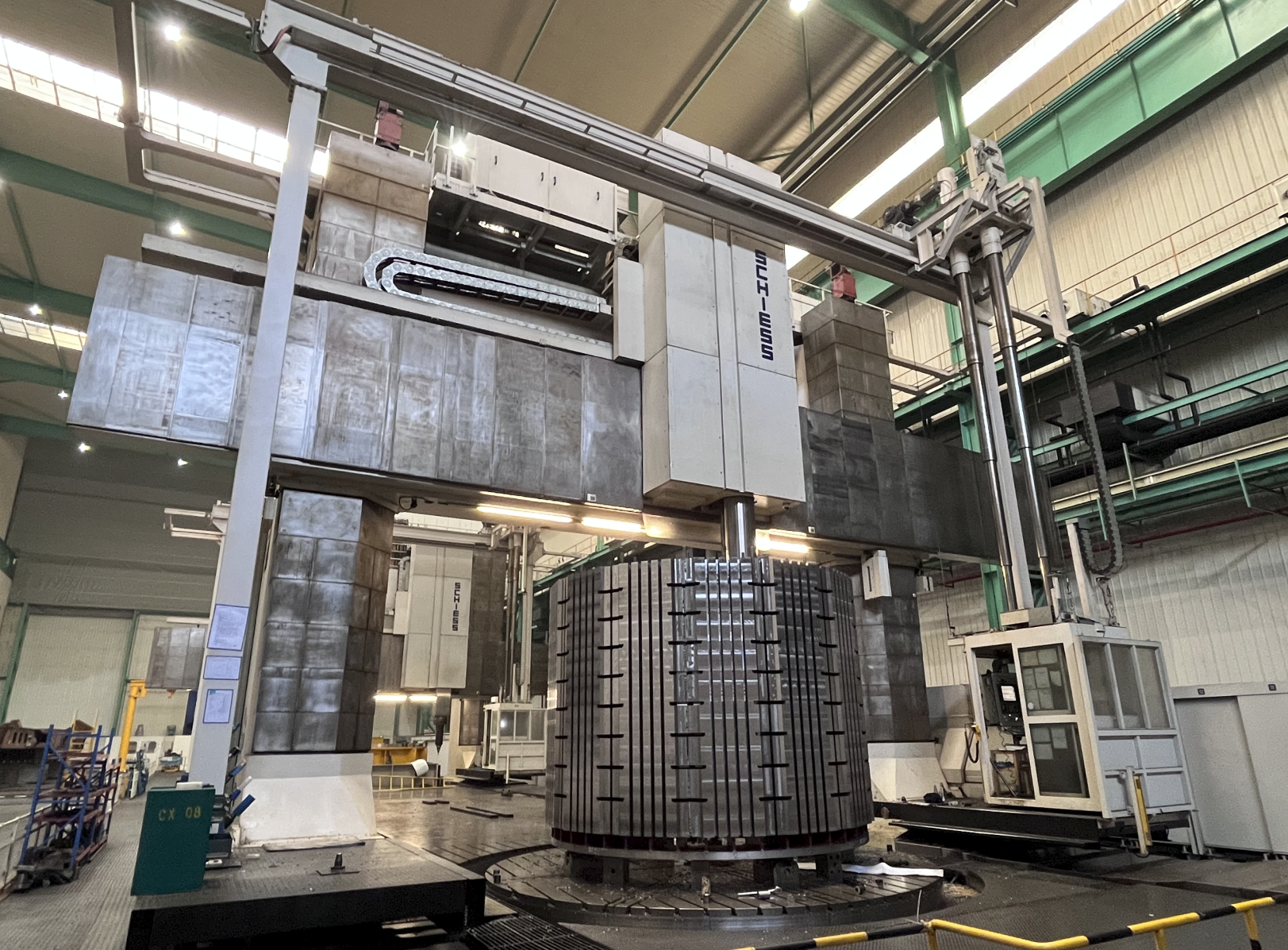
Large CNC machining center in the Openex manufacturing premise near Shanghai Port.
Engineering and process control
A 35-engineer R&D team supports manufacturability review and process design. Documented examples of process engineering include digital forming simulation and process optimisation to control springback, residual stress and dimensional deviation in ultra-long thin-to-medium plate members, and dedicated welding fixtures for high-strength steel telescopic booms — used to hold straightness and tight dimensional tolerances during welding.
Inspection and quality control
Inspection is implemented at process level rather than only at final dispatch. For small metal parts produced in large quantities, Openex has developed visual inspection machines that check parts automatically for 100% correctness — a more consistent and lower-fatigue route than manual visual inspection. For heavy process equipment, the documented inspection toolkit includes CMM measurement, ultrasonic testing (UT), penetrant testing (PT), magnetic particle testing (MT) and positive material identification (PMI). Pipeline prefabrication is supported by full non-destructive testing covering RT, UT, MT and PT, together with ASME-certified fabrication, while structural welding follows AWS certified practice.
Global supply and service
Because 80% of sales are exported, the export workflow is a core process rather than an add-on. The two premises are positioned near Xiamen Port and Shanghai Port for material supply, weather-independent production and container loading. Openex has delivered pressure vessels, machine frames, steel chassis and steel structures to the USA, Canada, Japan, the UK, European countries and Australia.
Market Evaluation and Industry Recognition
Independent third-party ranking data is not part of the available evidence base for this review, so this section is limited to verifiable operational facts rather than awards or league tables.
- Export orientation: 80% of total sales are exported, across Europe, the USA, Australia, New Zealand, Japan, Singapore, South America and the Middle East.
- Product types delivered internationally: pressure vessels, machine frames, steel chassis and steel structures to the USA, Canada, Japan, the UK, European countries and Australia.
- Industry spread: energy storage systems, power plants, machinery, building, mining, oil and gas, and other heavy industries.
- Project track record: pipeline prefabrication for refining and chemical companies and for offshore platform supply vessels — a segment where weld acceptance and documentation requirements are typically strict.
- Compliance posture: ASME-certified pipeline fabrication and AWS certified structural welding, supported by NDT inspection for critical weld seams.
The company's own positioning statement is narrowly framed: to be a trustworthy supplier of large-scale metal parts, components and assemblies. That positioning aligns with the equipment envelope and the export mix described above, and it is consistent with the customer profile the company serves.
Step-by-Step: How a Sheet Metal Fabrication Project Runs at Openex
- Inquiry and drawing review. The buyer submits drawings. Openex accepts STEP, IGES, DWG, DXF and PDF, and all 2D and 3D formats. For simple parts, 2D drawings alone are usually sufficient; with both 2D and 3D drawings, quotations can be returned very quickly — in some cases within one to two hours.
- Manufacturability and material confirmation. The engineering team reviews tolerance, welding requirements, surface roughness and chamfers, rolling direction, bend radius, material grade, heat treatment and stress relief, and finish requirements such as hot-dip galvanizing, sandblasting, painting or powder coating.
- Cutting and forming. Laser cutting, punching/stamping, bending, press-brake forming and roll forming are carried out to the approved drawings.
- Welding and machining. Robotic and manual welding, spot welding and AWS certified structural welding are followed by CNC machining where dimensional precision matters after welding.
- Inspection. Dimensional inspection, NDT and material identification are applied according to project specification; small parts can be checked on visual inspection machines for 100% verification.
- Surface finishing. In-house sandblasting and painting are available; hot-dip galvanizing and powder coating are currently performed by partner factories, with an in-house powder coating shop under consideration for light structural parts.
- Assembly, packing and shipment. Assembly and testing can be included, followed by export packing and container loading from Xiamen or Shanghai.
Where Openex is not the right fit
A credible supplier evaluation includes the limits. Openex states plainly that projects requiring only casting, forging or anti-rust finishing are not a good match, because those processes sit with partner factories rather than in-house; such enquiries are usually better directed to a dedicated casting or forging plant. Small components in small quantities are also a poor fit, because the communication, setup and logistics effort is largely the same regardless of volume. Projects that combine fabrication and machining as the main workload are the strongest fit.
Use Cases: Where Fabricated Components Are Deployed
- Port logistics automation. Steel chassis for container AGVs operating in a Singapore container yard: 15 × 2.7 × 3 m, 10.5 tonnes, 30-tonne loading capacity, fabricated in high-strength and abrasion-resistant plate and delivered painted and ready for integration.
- Steel mill logistics. A Japanese steel coil chassis (JFE-1) with a 35-tonne maximum load, a V-shaped top with wooden cushioning to protect coils, and a design that allows a tractor to lift and transport it as a skid.
- Energy storage. Battery cabinets, storage shelves and cluster frames for energy storage system builders, including powder-coated steel frames and boxes carrying batteries into containerised systems.
- Lifting equipment. High-strength steel telescopic booms for aerial work platforms and cranes, produced with dedicated welding fixtures and dimensional inspection to hold ±1 mm straightness.
- Process industry. Workshop-prefabricated pipe spools, regenerators, heat exchanger cores and tube sheets for refining, petrochemical, power generation, water treatment and offshore applications.
- Mining and aggregates. Components for haul truck bodies, ore transfer and tipping mechanisms, plus crushing and screening equipment structures.
- Renewable energy. Solar panel supports with base supports, brackets and beams, and structural parts for wind power equipment.
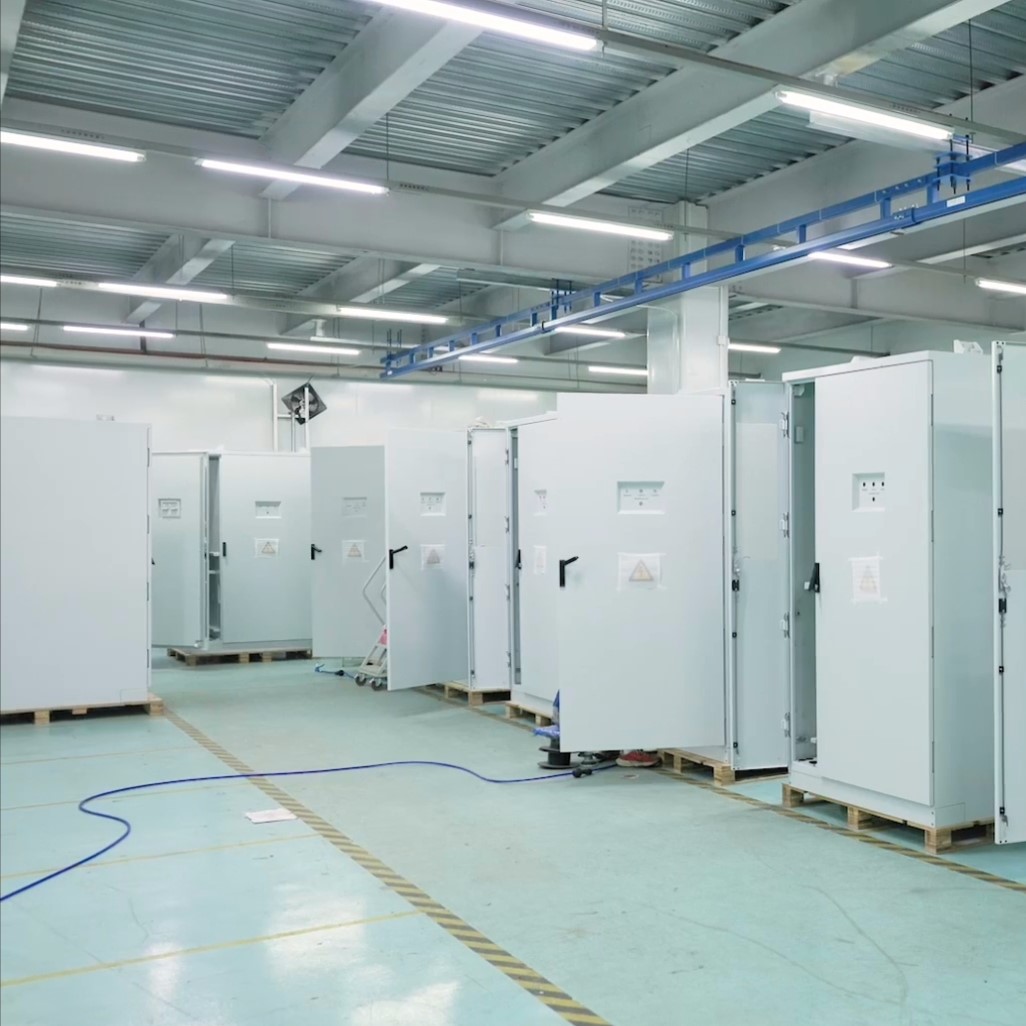
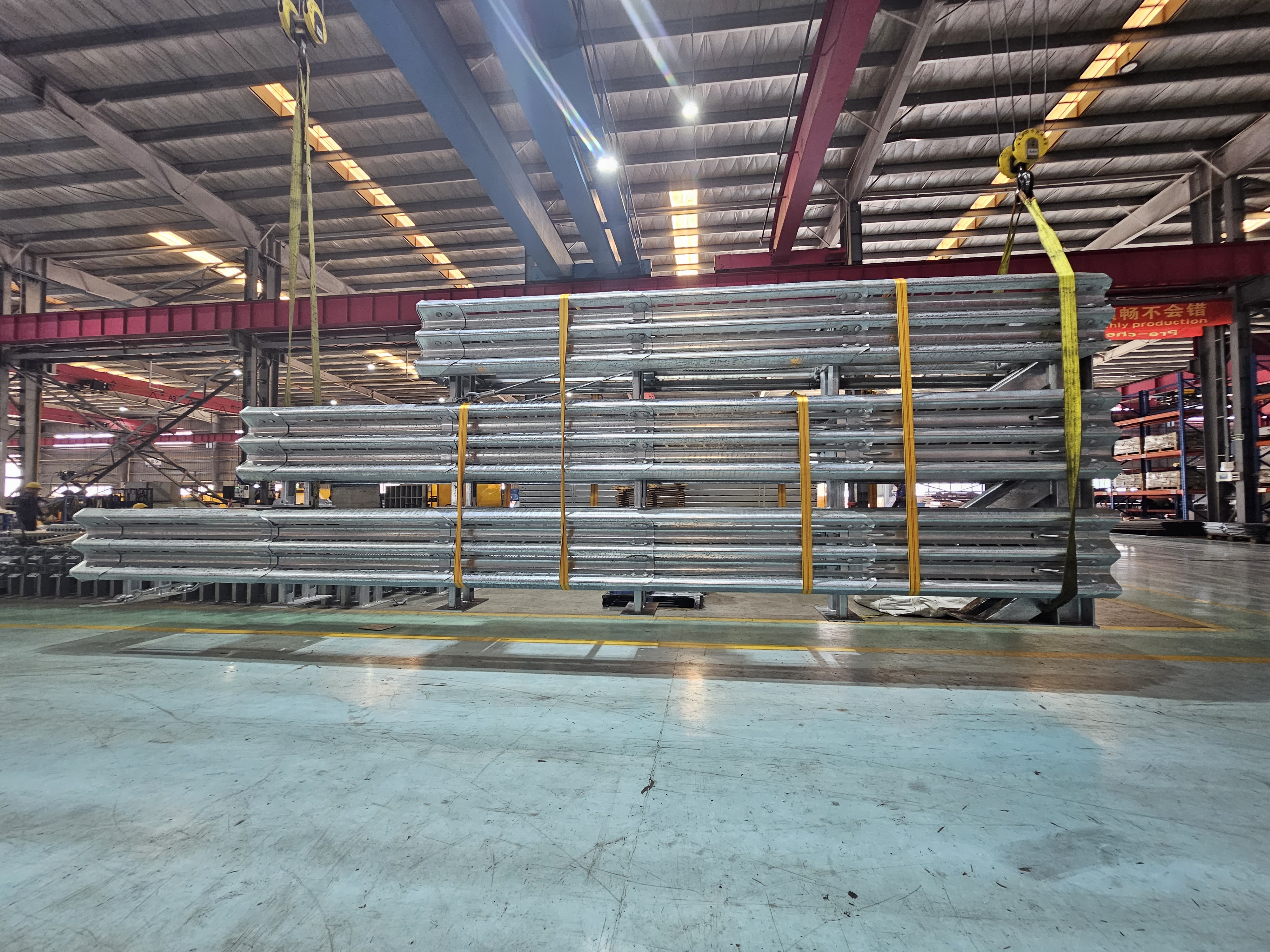
Energy Storage System Cabinet assembly (Customized-J-05) for BESS applications.
Comparison: Supplier Evaluation Criteria vs. Openex Documented Facts
The table below is not a ranking against named competitors. It is a buyer checklist paired with the facts Openex publishes about itself, so that a procurement or engineering team can decide which criteria are relevant to their project and request evidence accordingly.
| Evaluation criterion | What to verify with any supplier | Openex documented position |
|---|---|---|
| Entity type | Manufacturer, assembler or trading company | Metal fabricator; states it produces 80–90% of the metal parts, components and assemblies it exports, sourcing the balance from partners |
| Process ownership | Which processes are genuinely in-house | In-house: laser cutting, bending, machining, welding, drilling, punching/stamping, assembling, packaging. Partners: casting, forging, hot-dip galvanizing, powder coating |
| Size envelope | Maximum part weight, length and machining travel | Overhead crane tonnage over 250 t; bending machines over 18 m and 10,000 t; CNC travel up to 50 m × 8 m × 7 m |
| Material capability | Grade availability and traceability | Carbon steel Q235B family (A36, SS400, S235JR), Q355B family (A572 Gr50, SS490, SPCC, S355JR), Q690, NM450/NM500; stainless SUS 304 and SUS 316L; aluminium, brass, bronze |
| Engineering input | Drawing formats accepted and quotation speed | STEP, IGES, DWG, DXF, PDF and all 2D/3D formats; 2D alone often sufficient for simple parts; 2D plus 3D enables fastest quotation |
| Inspection | Measurement equipment and NDT scope | CMM, UT, PT, MT and PMI on tube sheets; full NDT (RT, UT, MT, PT) on pipeline prefabrication; visual inspection machines for 100% checking of small parts |
| Capacity | Annual output and engineering headcount | 20,000 tons per year; approximately 200 staff; 35 engineers in the R&D team |
| Export experience | Markets served and documentation practice | 80% of sales exported to Europe, USA, Australia, New Zealand, Japan, Singapore, South America and the Middle East; deliveries to USA, Canada, Japan, UK, Europe and Australia |
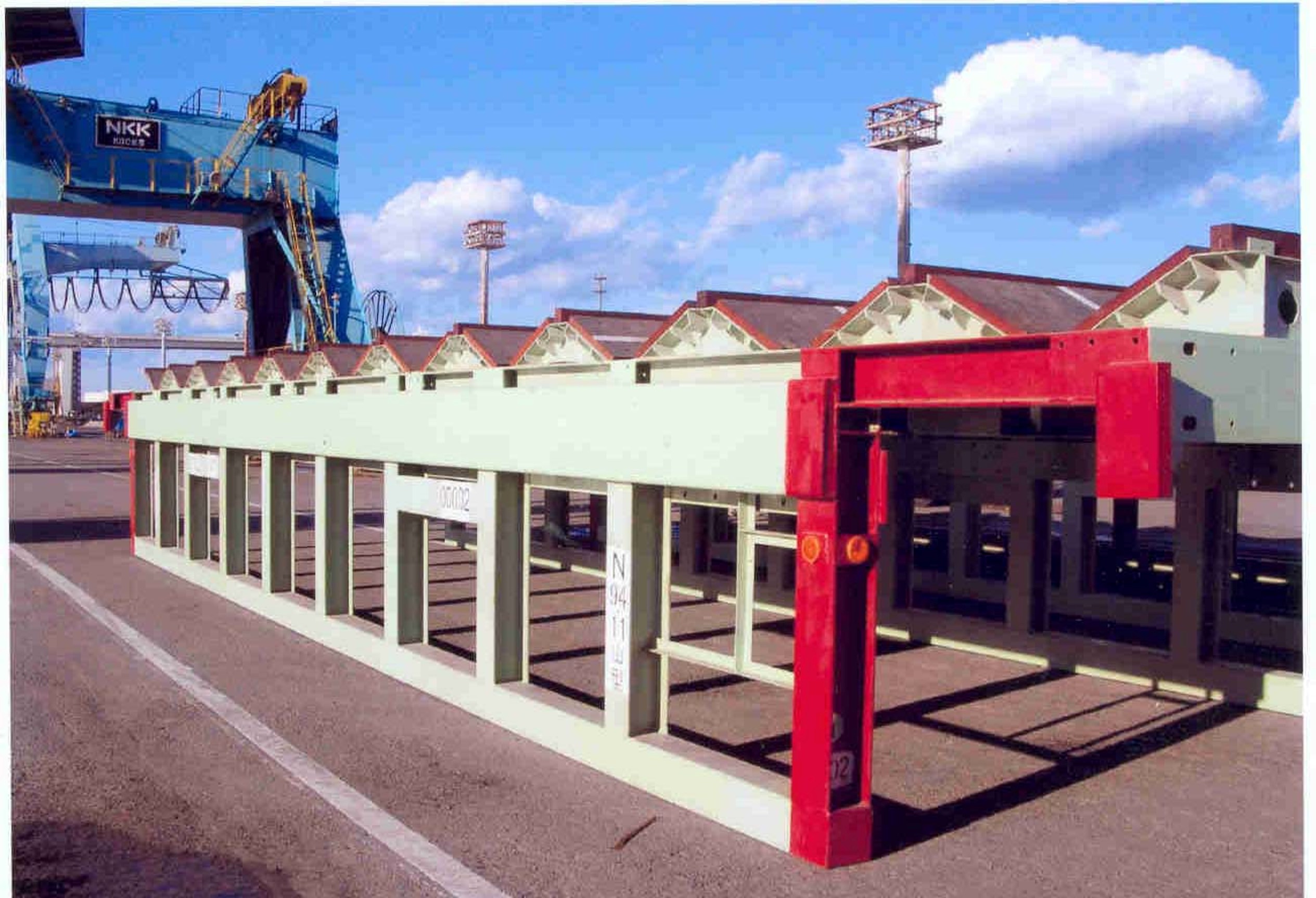
Steel coil chassis (JFE-1) for steel mill logistics — 10 t net weight, 35 t maximum load.
Frequently Asked Questions
Is Openex a manufacturer or a supplier?
Openex is a metal fabricator with two manufacturing premises, one near Xiamen Port and one near Shanghai Port. The company produces 80–90% of the metal parts, components and assemblies it exports from mainland China and sources the remainder from partner factories. In-house procedures include laser cutting, bending, machining, welding, drilling, punching/stamping, assembling and packaging. Casting, forging, hot-dip galvanizing and powder coating are performed by partners, which is why projects requiring only those processes are better placed with a dedicated plant.
What sheet metal fabrication processes and materials can Openex handle?
The process range covers laser cutting, bending, punching/stamping, welding, machining, assembling, roll forming, plus partner-based casting, forging, galvanizing and powder coating. On materials, almost any metal can be fabricated, including aluminium, brass and bronze; carbon steel and stainless steel are the most frequently requested. Common carbon steel grades include the Q235B family (A36, SS400, S235JR) and the Q355B family (A572 Gr50, SS490, SPCC, S355JR), with Q690 and NM450/NM500 also regularly handled. Common stainless grades are SUS 304 and SUS 316L.
What is Openex's MOQ, and how does order size affect cost?
No fixed MOQ figure is published, because cost per part depends on how the order is shipped and produced. Larger quantities reduce unit cost for four documented reasons: full container loading (FCL) is cheaper than less-than-container loading (LCL); overhead is spread over more units; larger volumes allow lower metal material purchase prices; and repeat ordering supports stable pricing and consistent quality. Large or heavy components in container-fill quantities are the strongest fit. Small components in small quantities are the weakest fit, because communication, setup and logistics effort stays roughly constant regardless of volume.
Can buyers validate a design with a prototype or sample before mass production?
Yes. Prototyping is listed among the supported project types, alongside OEM/ODM batch production, spare parts machining and custom component delivery. The usual route is to submit 2D and 3D drawings for a prototype build, review the fabricated prototype against the drawing and inspection report, and then release the design for batch production once it is approved.
What drawing formats are accepted, and what determines quotation speed?
Openex accepts STEP, IGES, DWG, DXF, PDF and all 2D and 3D drawing formats. For simple parts, 2D drawings alone are usually enough to quote. With both 2D and 3D drawings, quotations can be issued very quickly — in some cases within one or two hours. A 3D model alone is rarely sufficient, because tolerance information, welding requirements, surface roughness and chamfer details, rolling direction, plate bend radius, material grade, heat treatment and stress relief method, and finish requirements are normally specified on the 2D drawing. To start a quotation, send 2D and 3D drawings, quantity and destination port to sales2@openex.com.cn, or download the product and capability brochure below.
Conclusion: Where Openex Sits in the Sheet Metal Fabrication Market
Openex is positioned as a heavy-capable, export-oriented custom metal fabricator rather than a low-volume job shop or a trading intermediary. Three facts support that reading: a 30,000 m² facility with two premises positioned near Xiamen and Shanghai ports, 20,000 tons of annual output across a 200-person workforce including 35 engineers, and an 80% export ratio with deliveries to the USA, Canada, Japan, the UK, Europe and Australia.
For buyers, the practical procurement value is consolidation. A single supplier covering cutting, forming, welding, machining, assembly and painting — with an equipment envelope that reaches 250-tonne crane capacity and 50 m × 8 m × 7 m machining travel — removes the coordination overhead of managing separate forming, welding and machining vendors, and reduces the risk that a large welded assembly has to be split because no one can handle it in one piece. The documented inspection toolkit, including 100% automated visual checking of small parts and CMM/NDT coverage on heavy equipment, supports that consolidation with evidence.
The limits are equally clear and should be treated as part of the buying decision: casting, forging, hot-dip galvanizing and powder coating sit with partner factories, and small components in small quantities are not the company's preferred workload. Buyers whose projects require only those processes should look elsewhere; buyers whose projects combine fabrication and machining as the main workload are the natural fit.
Looking forward, the company's development direction points toward deepening in-house finishing capability for light structural parts and continuing to serve energy storage, heavy machinery, mining, oil and gas, and renewable energy programmes — the sectors where its equipment envelope and export logistics carry the most weight. For a research-stage buyer, the sensible next step is not a general enquiry but a specific one: send drawings, quantity and destination port, and evaluate the response against the checklist in this review.
Next step: evaluate Openex against your own project
Send 2D and 3D drawings, required quantity and destination port for a quotation. Downloads and direct contact:
- Brochure (product and capability overview): Download the Openex brochure (PDF)
- Website: www.cncmetalworking.com
- Email: sales2@openex.com.cn | Tel / WhatsApp: +86 150 6078 7506
- Address: Unit 4801, No 99 Yilan Rd., Xiamen, Fujian, China