
Sheet Metal Fabrication Compliance: Certificates, Standards, Regional Proof
A sheet metal fabrication certificate answers a narrow question: which management system was audited, at which site, against which standard, and until when. It does not answer whether your bracket, chassis or cabinet can be built to drawing. Buyers who treat those two questions as one end up with a supplier that looks compliant on paper and a part that fails at incoming inspection.
This guide is written for engineers and sourcing managers in the research and evaluation stage who are comparing Chinese fabrication suppliers for AGV chassis, energy-storage cabinets, machine frames, modular building members and heavy weldments. It uses one supplier's certificate portfolio as a worked example: Xiamen Openex Mechanical Technology Ltd, a custom metal fabrication and machining supplier founded in 2009, operating two manufacturing premises near Xiamen Port and Shanghai Port, with 30,000 ㎡ of factory space, 200 employees, 35 engineers and an annual output of roughly 20,000 tons. About 80% of that output is exported to the EU, USA, Australia, New Zealand, Japan, Singapore, South America and the Middle East.
Nothing below replaces a supplier audit. What it does is turn a folder of PDFs into a decision: which documents to request, which lines to read first, and which claims a certificate can legitimately carry.
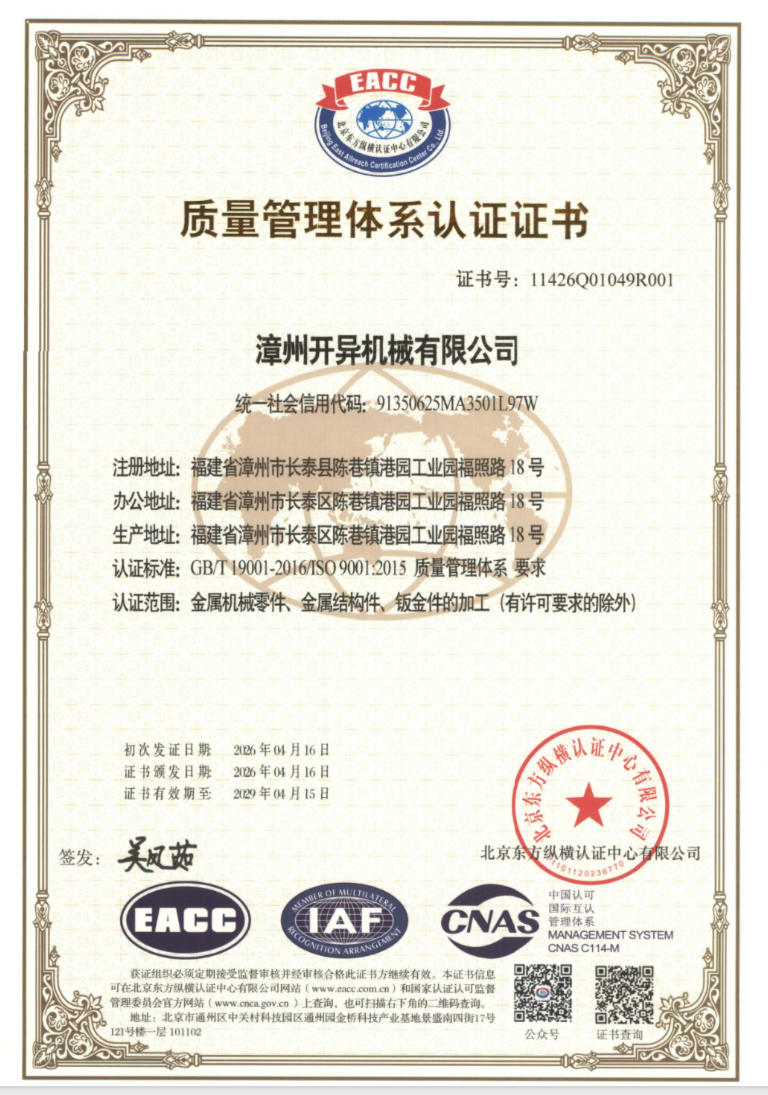
What a fabrication certificate cannot tell you
A certificate is a statement about a system, not about a part. Three limits explain most compliance disputes in sheet metal sourcing, and each one is cheap to check before a purchase order exists.
1. The scope is written in a single sentence
Openex's ISO 9001 registration covers manufacture of machined parts, metal structures and sheet metal components, except where a licence is required. That sentence defines the category of work that was audited. It says nothing about plate thickness range, tolerance class, qualified weld processes, material groups or inspection level. A 6 mm laser-cut bracket and a 10-ton steel coil chassis both sit inside the sentence, and they are not the same manufacturing problem.
2. A certificate is a dated object
Registrations are issued for a fixed period and lapse when they are not renewed. The date line is the first thing an experienced buyer checks and the last thing a first-time buyer reads. A certificate issued in 2024 and expiring in 2026 is a valid historical record and a questionable current claim, depending on the day you read it. That distinction matters more than the logo on the header.
3. The holder may not be the builder
A management-system certificate proves that an organisation's processes were audited. It does not prove that the certificate holder owns the press brake that will form your part. In Chinese metal fabrication, certificates travel: a trading office may circulate a factory's documents, or a factory may subcontract a special process. Both practices can be legitimate, and both can be invisible inside a PDF pack. The reliable test is entity matching — certificate holder, quotation issuer, production address and shipping documents must describe the same company and the same site.
Why documentation now gates sourcing decisions
Compliance documents stopped being an appendix at roughly the point when energy-storage cabinets, AGV chassis and modular building members began crossing borders as prefabricated assemblies rather than loose steel. For an exporter sending 80% of output to the EU, USA, Australia, New Zealand, Japan, Singapore, South America and the Middle East, the document pack is the interface between Chinese production and engineering teams who may never visit the shop floor.
That pack usually contains four different families of document, and confusing them is the most common error in a Chinese sourcing file:
- Management-system certificates (ISO 9001, ISO 14001, ISO 45001) describe how an organisation controls quality, environment and occupational health and safety.
- Process certificates (EN ISO 3834-2 for welding) describe quality requirements for one specific production process.
- Material standards (EN 10025-2 for structural steel, ASTM A572 for high-strength low-alloy plate) define what the steel is, and are evidenced by mill certificates rather than by a fabricator's audit.
- Product and system approvals are issued against product standards and are normally held by the product owner — the ESS provider, the vehicle integrator, the building manufacturer — not by the enclosure fabricator.
A management-system certificate is therefore the weakest of the four as a capability claim, and the one most frequently presented. That is not a reason to ignore it; it is a reason to read the scope line before reading the logo.
The four Openex certificates and the scope lines that matter
The portfolio below is reproduced as recorded, including dates, because dates are the part buyers skip.
| Certificate | Registration and issuer | Scope as recorded | Validity as recorded |
|---|---|---|---|
| ISO 9001 (GB/T 19001-2016 / ISO 9001:2015) | 11426Q01049R001 — Beijing East Allreach Certification Center Co., Ltd. | Manufacture of machined parts, metal structures and sheet metal components (except where a licence is required) | Issued 2026-04-16, expires 2029-04-15 |
| ISO 14001 (GB/T 24001-2016 / ISO 14001:2015) | 11426E00739R001 — Beijing East Allreach Certification Center Co., Ltd. | Manufacture of machined parts, metal structures and sheet metal components (except where a licence is required) | Issued 2026-04-16, expires 2029-04-15 |
| ISO 45001 (GB/T 45001-2020 / ISO 45001:2018) | 11426S00656R001 — Beijing East Allreach Certification Center Co., Ltd. | Manufacture of machined parts, metal structures and sheet metal components (except where a licence is required) | Issued 2026-04-16, expires 2029-04-15 |
| EN ISO 3834-2 | 23/999-3834 — SGS | Fusion welding of metallic material (welding process 135, 135-Auto; material groups 1.1, 1.2) | Issued 2024-10-15, recorded expiry 2026-10-04 |
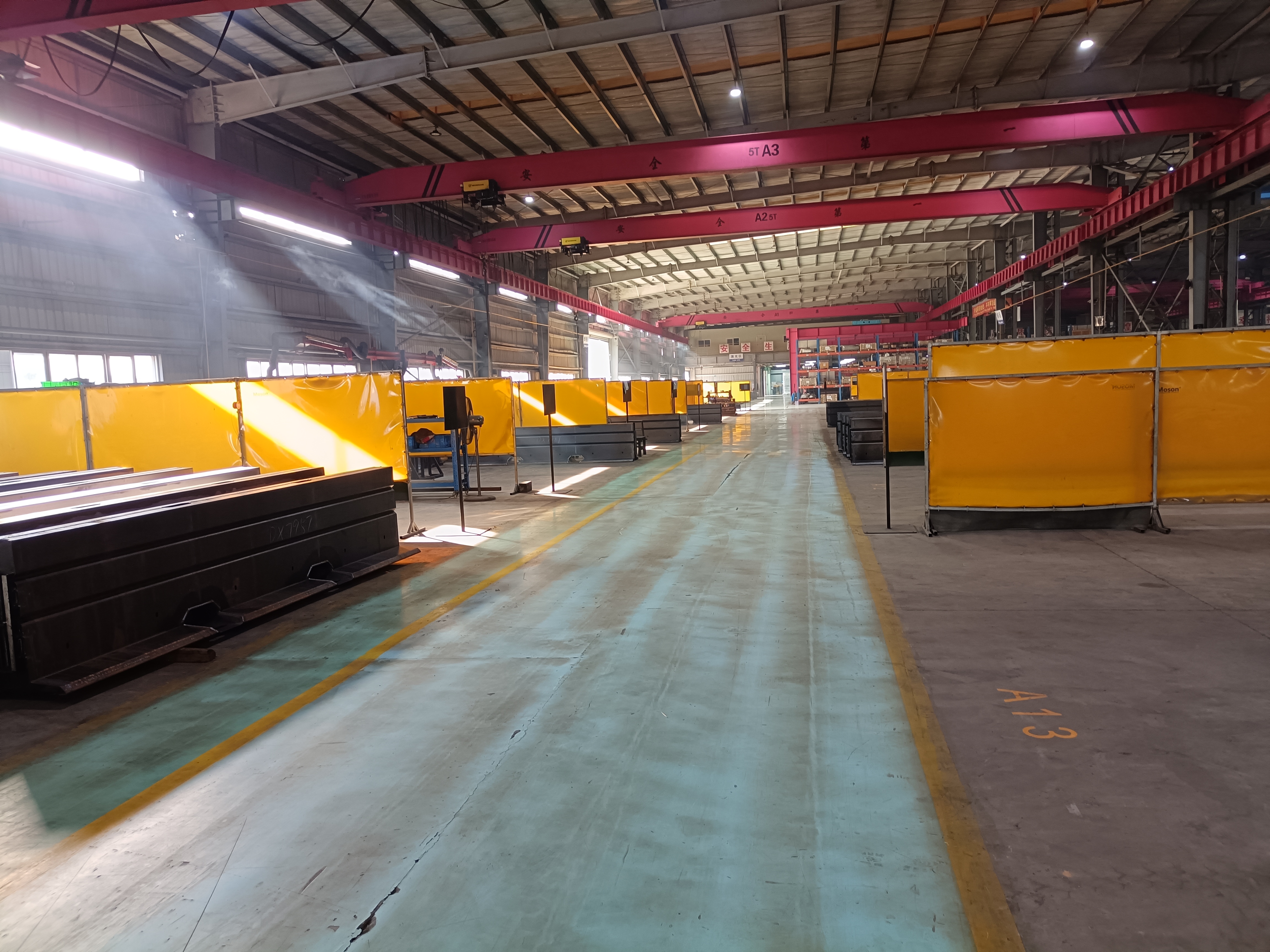
One scope line, three subjects
The three management-system registrations were issued on the same day by the same body and share identical scope wording, which is convenient for a buyer: one scope sentence covers quality, environment and occupational safety. What that buys you is an audited system for document control, inspection, nonconforming-output handling and worker safety across a 30,000 ㎡ operation with 200 employees, including an overhead crane capacity above 250 tons and press brakes up to 18 metres and 10,000 tons.
What it does not buy you is a dimensional guarantee. ISO 14001 and ISO 45001 describe how environmental and safety risks are managed; neither has anything to say about the flatness of a machined platen. The clause "except where a licence is required" is also a boundary marker rather than boilerplate: it signals that activities needing a statutory licence sit outside the management-system scope, so a buyer of pressure equipment must ask separately which design code and which inspection body apply to the order.
EN ISO 3834-2: the welding certificate with the narrowest scope
The welding registration 23/999-3834 was issued by SGS against EN ISO 3834-2, the full-quality-requirements part of the welding quality standard, with a recorded expiry of 4 October 2026. Its scope is deliberately narrow: fusion welding of metallic material, welding process 135 (metal active gas welding) and its automated variant 135-Auto, in material groups 1.1 and 1.2.
Three consequences follow for a buyer. First, the certificate covers MIG/MAG welding and its automated form, not every arc process in the workshop. Second, the two material groups are steel groups, so stainless, duplex and super duplex welding fall outside the recorded welding scope even though those materials appear in the company's broader process capability — a distinction that matters for a 304L mirror-finish enclosure or a duplex pipe spool. Third, and most usefully for this guide, the recorded expiry date is earlier than the date of this page. That does not by itself mean welding certification has lapsed, since renewal cycles commonly overlap, but it does mean the document in your RFQ pack must be re-requested and re-checked rather than recycled. Buyers who ask "send me your ISO 3834 certificate" receive a file; buyers who ask "send me the current EN ISO 3834-2 certificate and confirm the processes and material groups in scope for this order" receive an answer.
Manufacturer or trading supplier: three checks that settle it
Factory photographs and workshop videos are useful supporting material, and they are not proof. A video shows that a machine exists; it does not show who owns it, who operates it, or whether your part will be made on it.
Check 1 — match the legal entity
Place the certificate holder name next to the name on the quotation, the proforma invoice, the packing list and the bill of lading. If the certificate names Xiamen Openex Mechanical Technology Ltd, the same name should appear as seller and shipper when Openex is the fabricator. A mismatch is not automatically a problem, but it must be explained before the order, not after a failed inspection.
Check 2 — match the site to the claim
Ask which premise will produce the part — the site near Xiamen Port or the site near Shanghai Port — and request dated, location-tagged images of that specific building, bay and machine. An overhead crane above 250 tons or an 18-metre press brake is verifiable equipment only when the photograph is tied to the address that appears in the contract.
Check 3 — match the process to the part, not to the brochure
The capability that decides your quotation is always narrower than the capability list. A supplier may list laser cutting, bending, punching and stamping, welding, machining, assembly, roll forming, casting, forging, galvanizing and powder coating; your part may need three of them. Ask which processes are performed in-house at the quoted site, which are bought in, and — for special processes such as hot-dip galvanizing — which supplier is used and what inspection accompanies it. Openex also records maximum CNC machine travel of 50 m × 8 m × 7 m, which is the kind of figure that should be matched against your largest weldment before tooling is discussed.
An eight-step document check, in order
Run the checks in this sequence. Each step can end the evaluation cheaply, before samples are cut and before a first article is scheduled.
- Read the scope sentence. Write down what it covers and what it excludes. If your process falls outside it and no procedure-level evidence exists, stop there.
- Check the dates. Issue date, expiry date, certificate number. Ask for the current version of anything expiring inside your order window plus a 90-day margin.
- Map the part to the certified process. Material group, weld process, thickness, tolerance class and inspection level should each map to a document, not to a sentence in a capability page.
- Request the procedure documents. For welded work that means WPS, PQR, welder qualification, any pre- or post-weld heat treatment procedure, and a distortion-control plan where thin plate or long members are involved.
- Agree the inspection plan before production. Openex records 100% or random inspection to requirement, with non-destructive testing covering RT, UT, MT, PT, VT and LT; destructive testing covering chemical analysis, tensile, impact including low-temperature, bend and hardness; salt-spray corrosion testing; and weld procedure qualification built around the customer's WPS.
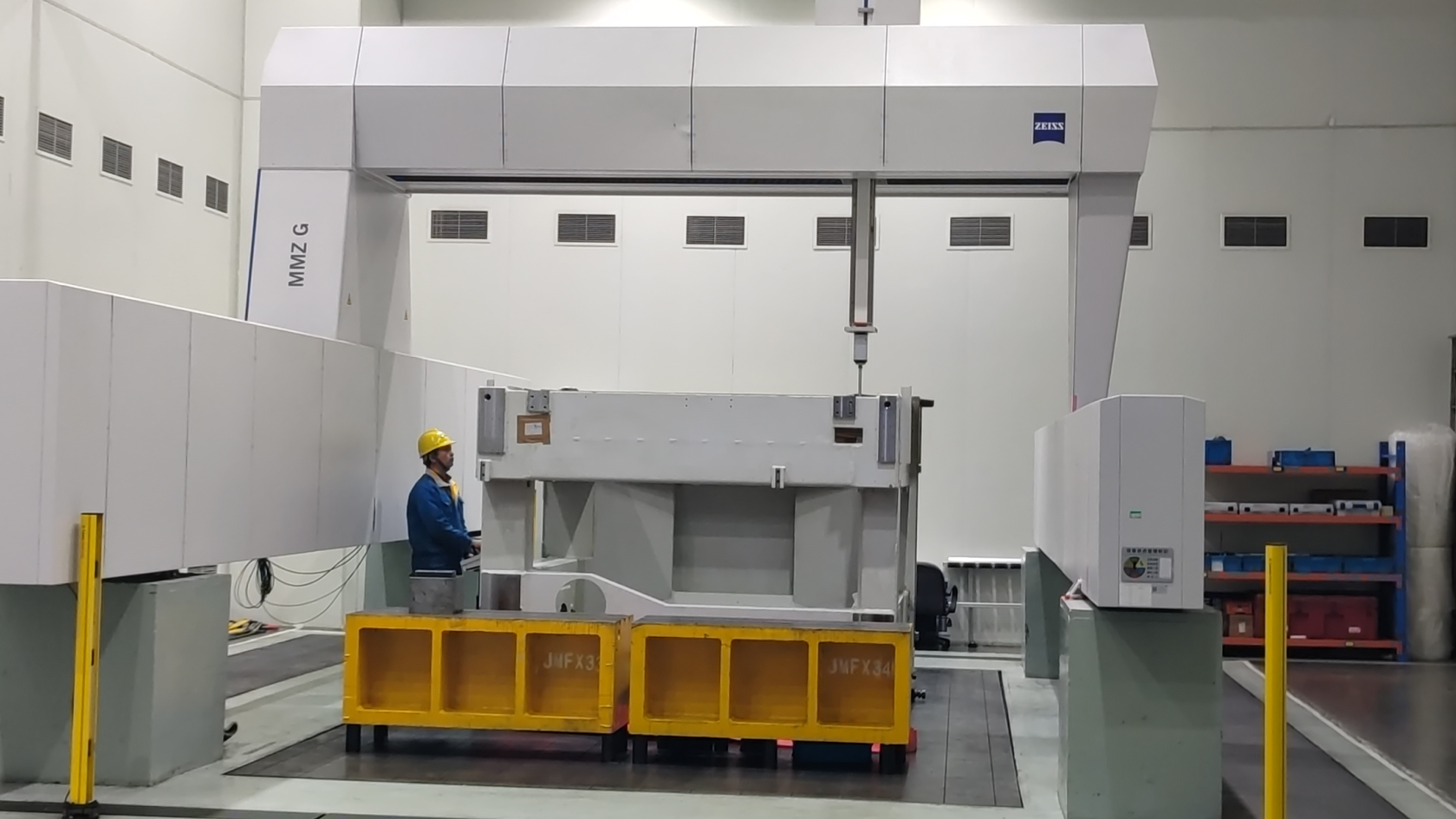
- Fix the dimensional evidence. A Zeiss CMM with a 7 m × 4 m × 3 m envelope and micron-level resolution is what makes a first-article report meaningful on a large weldment. Ask which features are measured on the CMM, which are checked by hand, and in what format the record is issued.
- Confirm material traceability. Mill certificates matched to heat numbers, plus a written equivalence statement whenever a Chinese grade and a European or American grade are interchanged.
- Close the loop on finishing and packing. Blasting, powder coating, painting or galvanizing specification; coating thickness and adhesion checks; then packing, marking and shipping documents, including any third-party or remote pre-shipment inspection.
Steps 5 and 8 carry the most value per hour for a remote buyer. A pre-shipment inspection run on a video call with the inspection report in hand is how a 45-ton tube-sheet order for an Indonesian power plant was checked before dispatch; the same pattern works for a first container of AGV chassis.
Regional proof: what four projects do and do not establish
A regional reference is evidence only when the region, application, quantity and outcome are stated together. "We export to Europe" is not a reference. A documented build with a quantity and an operating record is.
| Region and application | Documented build | Recorded outcome | What it supports |
|---|---|---|---|
| USA — modular prefabricated housing | 82 units of beams, columns and hinges for foldable houses | Stable operation for 4 years | Cross-process coordination: casting, welding, machining, coating, preassembly |
| Japan — steel mill coil logistics | 30 units of coil-carrying chassis, model JFE-1 | Stable operation for 20 years | Heavy weldments with payload-protection detailing |
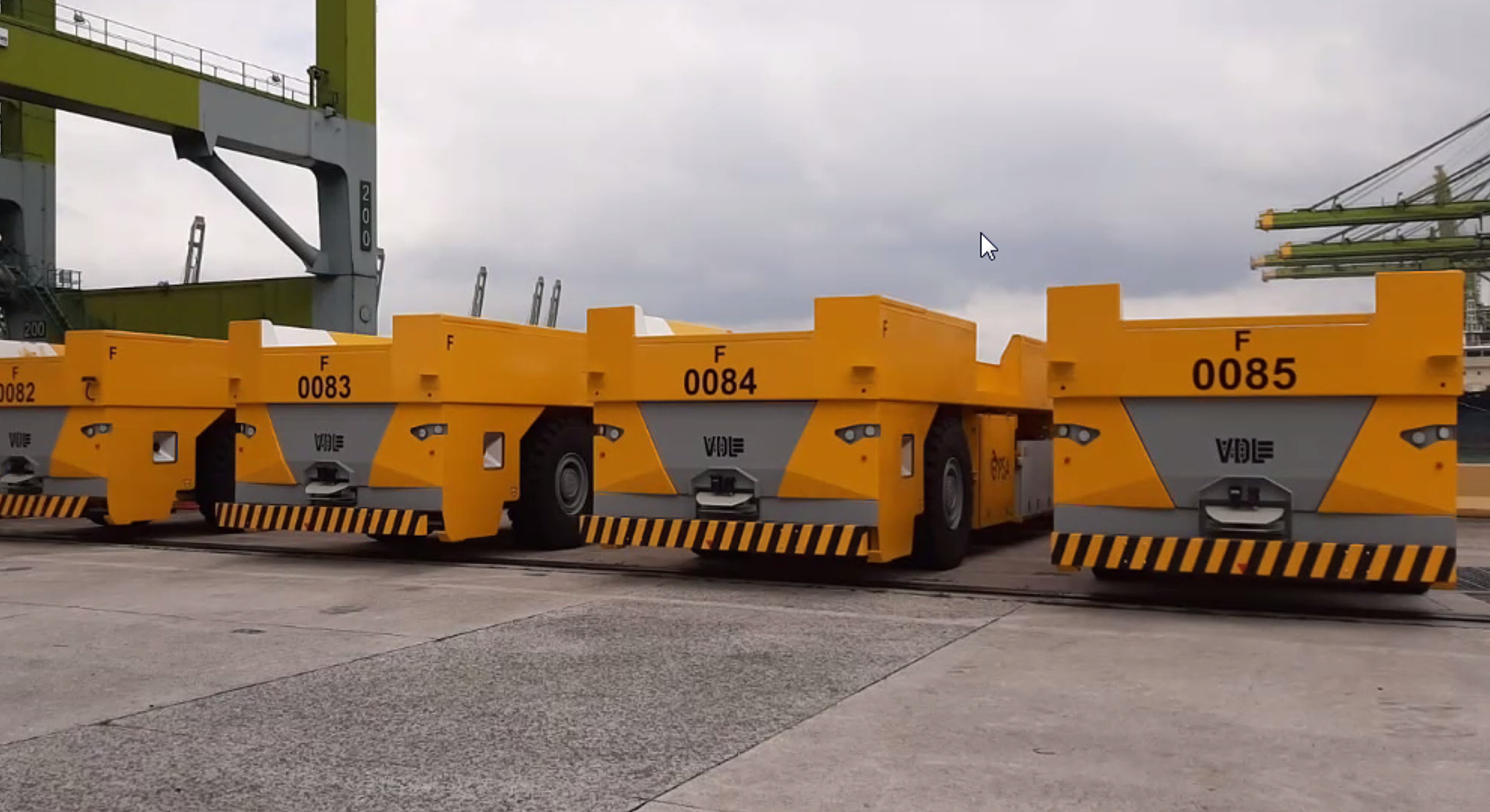
| Netherlands — AGV manufacturer | 345 AGV steel chassis, model PSA-1 | Stable operation for more than 4 years | Repeatability across a serial build |
| Global — energy storage systems | 3,000 shelf and box units; 1,500 liquid-cooling cabinets; 300 storage shelves | No rust, no leakage, no deformation; 3 years of operation on cabinets and shelves | Serial sheet metal production with coating control |
US modular housing: 82 units of folding structure
The build combines processes that are usually purchased separately. Cast hinges are welded onto the ends of steel I-beams; high-strength 17-4 PH H900 stainless pins with tensile strength above 1,310 MPa (190 ksi) pass through the hinge holes to lock two adjoining beams; prime coating, disassembly, packaging and reassembly in a US plant follow. What it establishes is cross-process coordination and fit-up discipline on a prefabricated building system. What it does not establish is compliance with US building codes or any approval of the assembled house — those belong to the housing manufacturer and its engineers.
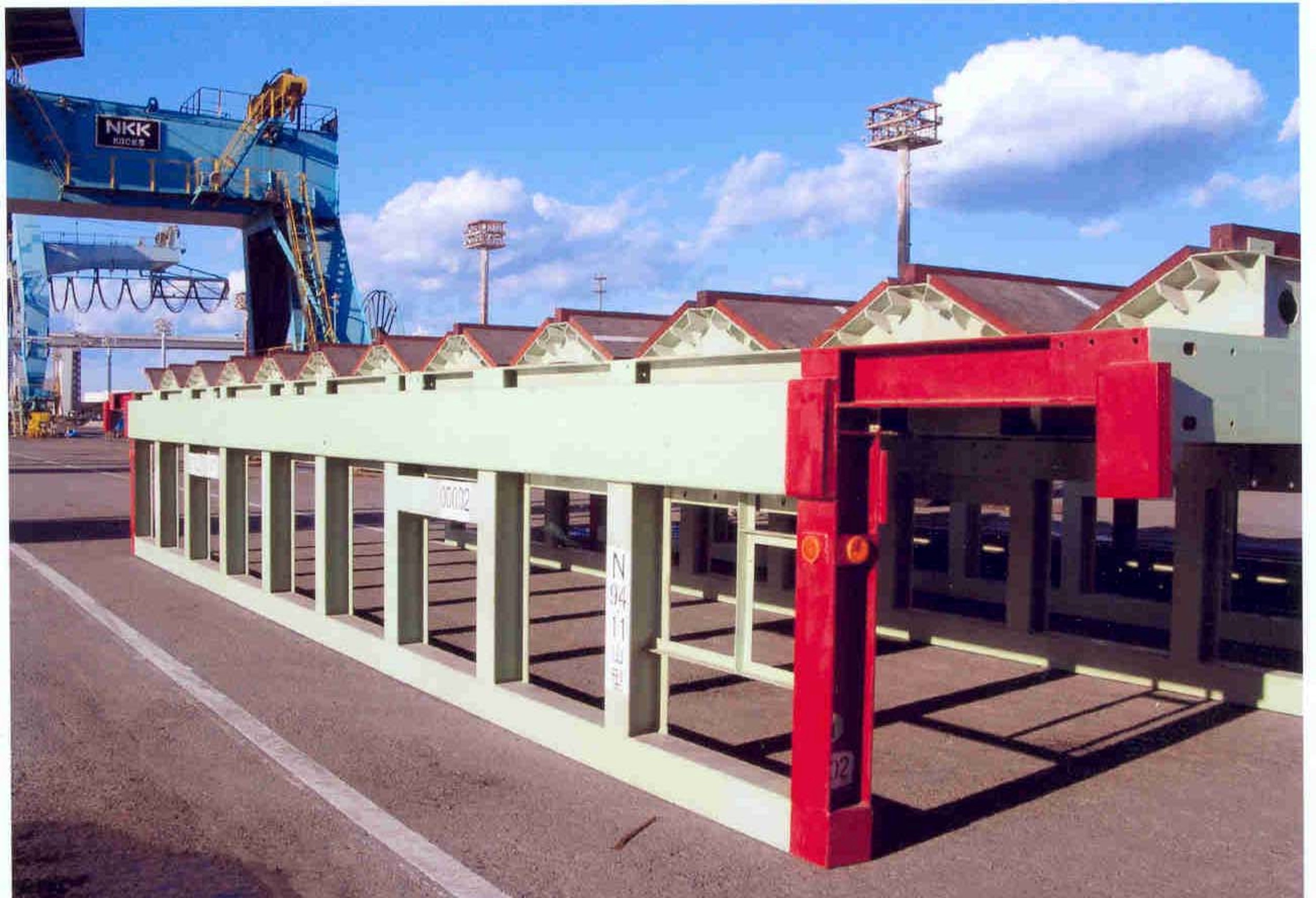
Japan steel mill chassis: 30 units, 20 years of service
The JFE-1 chassis is carbon steel, approximately 15 m × 2.5 m × 2.1 m, 10 t unit weight, with a 35 t maximum load and a V-shaped top cushioned with wood to protect the coil surface. The customer record shows stable operation over 20 years. What it establishes is heavy weldment capability plus the detailing that protects a payload. What it does not establish is Japanese statutory approval of the lifting or transport equipment; that is a separate regulatory question in the destination market.
Netherlands AGV: 345 chassis in serial production
For an AGV fleet, the compliance question is not whether one chassis is good but whether chassis 300 matches chassis 1. A 345-unit build with stable operation beyond four years answers that question at the level of repeatability, and it explains why AGV buyers usually ask for the inspection record of a mid-series unit rather than the first article alone. It does not answer the safety certification of the vehicle, which depends on the integrator's control system.
Global energy storage: 3,000 units and a coating question
Three records sit behind the ESS claim: 3,000 steel shelf and box units with a recorded outcome of no rust, no leakage and no deformation; 1,500 liquid-cooling cabinets with three years of operation; and 300 storage shelves with three years. The cabinet product data records 1.5–5.0 mm material thickness, IP54, IP55 or IP65 protection options, and powder or anti-corrosion coating on carbon steel, galvanized steel, stainless steel or aluminium. What these establish is serial sheet metal production with coating control. What they do not establish is fire, electrical or grid certification of the storage system, which is a product-level matter for the ESS provider.
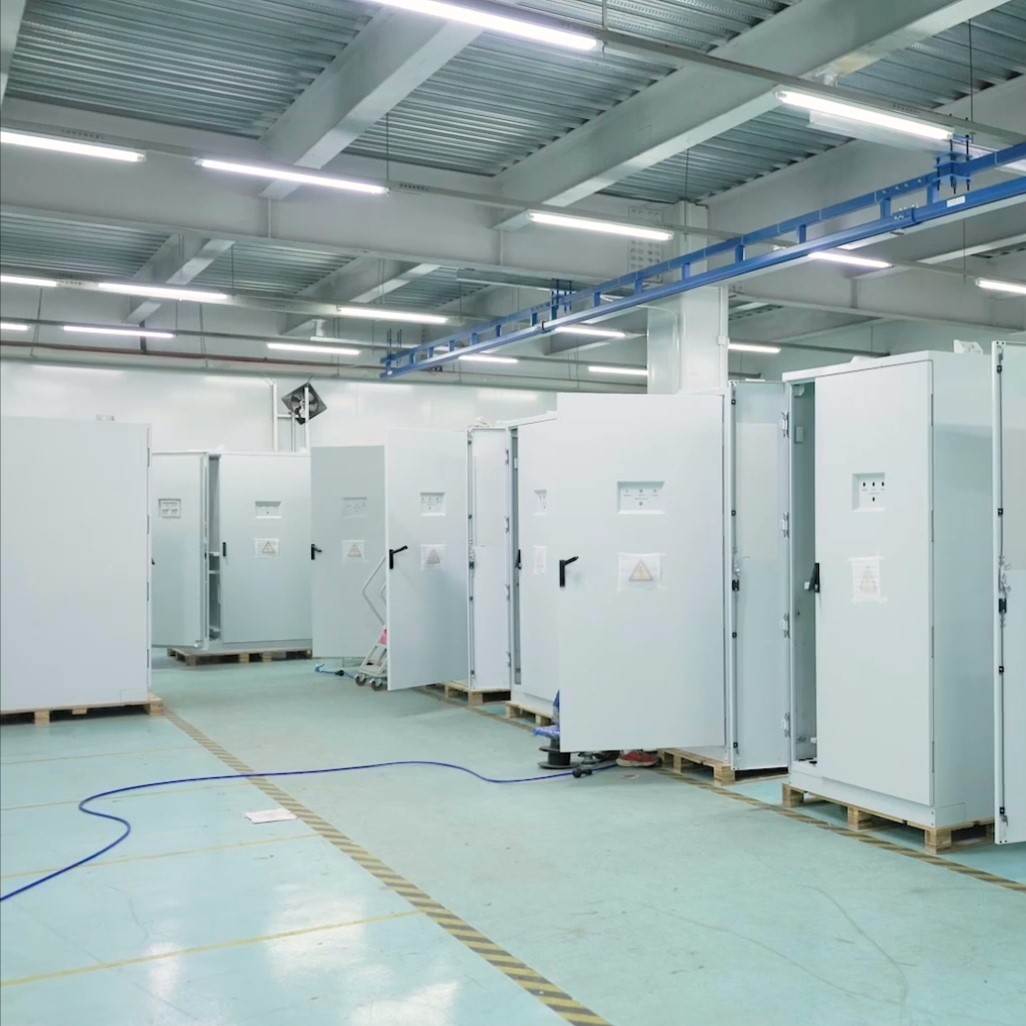
Two further records show the same discipline on different product types: 400 flywheel energy-storage shells with five years of stable operation, and a 30-ton turbine ring for a hydropower station in Uruguay, built in segments, assembled and finally machined so that the individual pieces met a single combined tolerance.
Drawings, grades and tolerances: the part of compliance that decides fit
The drawing is the controlling document in custom fabrication, and no certificate overrides it. A compliance-ready RFQ pins down seven things: the legal entity and production site; the material grade with standard and sub-grade; plate thickness and tolerance class per feature; weld standard, process and NDT level; surface treatment with coating thickness; the inspection record format and acceptance criteria; and packing, marking and delivery terms.
Grade specificity is where quotations quietly diverge. Openex documents materials at part level rather than as a generic list. The ultra-long formed steel box section is quoted in Q355B, EN S355J2+N or ASTM A572 Grade 50 at 8,000 mm overall length, 6 mm plate thickness, 1.5 t unit mass, with overall straightness held to 3.0 mm or better per 10,000 mm. Telescopic booms for lifting equipment are documented in Q960 or BS700MCK2 high-strength steel with straightness tolerance of ±1 mm and height difference under 1.5 mm. A mirror-finish process-equipment enclosure uses SS304 or 304L sheet with a 6 mm internal partition at 7,000 mm × 1,300 mm × 1,000 mm and 2.0 t finished mass. That is the level of specificity a buyer should expect back.
Two grade traps deserve attention. S355JR and S355J2 are different sub-grades of the same standard, distinguished by their impact-testing conditions, so a callout of "S355" alone is incomplete. Wear-resistant designations such as NM400 are mill-certified products in their own right; when a drawing names one, ask for the mill certificate and a written equivalence rather than an assurance that abrasion-resistant steel can be sourced.
Drawing exchange deserves the same care. A 3D model defines geometry but not acceptance criteria; the 2D drawing must carry the tolerance, material and inspection callouts, and the revision letter on the drawing must match the revision in the inspection plan. Confirm which native and neutral formats the supplier will accept, and how revisions are controlled, at RFQ stage — that single conversation prevents the most expensive class of rework in custom fabrication.
Budget, MOQ and lead time: what actually moves the number
No fabricator publishes a price list for custom work, and any page that does is quoting a category rather than your part. What a buyer can do is understand which variables move the number and which capability figures set a floor.
The capability units record a 5,000 t monthly welding capacity with a 25 t minimum and 30–45 day lead time; 3,000 t monthly machining with a 15 t minimum and 30–45 days; 3,000 units monthly surface treatment with a 15 t minimum and 45 days; and an inspection unit at 1,000 pieces monthly with a 1-unit minimum and 3-day turnaround. These are capability-level records, not commitments for a specific order, and they should be read as the shape of the commercial envelope rather than a price.
Five variables move the quotation most: material grade and tonnage including nesting yield; weld volume and NDT scope; machining after welding; the coating system; and the documentation level you require. A drawing revision that adds full penetration welds and radiographic testing changes the process, and the quotation changes with it.
Frequently asked questions
What does ISO 9001 certification actually prove for a Chinese sheet metal fabrication manufacturer?
It proves that an accredited certification body audited the manufacturer's quality management system against GB/T 19001-2016 / ISO 9001:2015 and found it conforming within a defined scope. For Openex, registration 11426Q01049R001 was issued on 16 April 2026 and runs to 15 April 2029, covering manufacture of machined parts, metal structures and sheet metal components except where a licence is required. It does not certify a tolerance, a material grade, a weld procedure or a delivery date. Treat it as evidence that document control, inspection and nonconformance handling exist, then verify the part-specific items separately.
How can I tell a manufacturer from a trading company holding a certificate?
Compare four documents: the certificate holder, the quotation, the production address and the shipping documents. If all four name the same legal entity and the same site, the certificate belongs to the builder. If they diverge, ask for the commercial relationship in writing, then for dated, location-tagged workshop footage of the specific machine and bay, and for the name of the inspector who will sign your report. A trading company can be a perfectly effective partner; what it cannot do is lend you a factory's audit.
Which material grades and drawing details should be fixed in the RFQ?
State the grade with its standard and sub-grade rather than a family name, the plate thickness, the tolerance class per feature, the weld standard and NDT level, and the surface treatment with coating thickness. Openex documents grades at part level, which is the specificity to expect in return: Q355B, EN S355J2+N or ASTM A572 Grade 50 on the 8,000 mm formed box section; Q960 or BS700MCK2 on telescopic booms; SS304 or 304L on mirror-finish equipment enclosures. For wear-resistant designations such as NM400, ask for the mill certificate and the stated equivalence.
What drives the budget band when no price list is published?
Five variables: material grade and tonnage including nesting yield, weld volume and NDT scope, machining after welding, coating system, and documentation level. Capability records set a floor rather than a price — a 25 t minimum and 30–45 days for welding, 15 t and 30–45 days for machining, 15 t and 45 days for surface treatment, and a 1-unit minimum with 3-day turnaround on inspection. Expect a drawing-based quotation, and expect it to change if a drawing revision changes the process.
How do sampling and first-article approval work on a custom part?
The first article is the compliance test in miniature: one unit built to the final drawing, measured against the agreed inspection plan, and issued with the record — dimensional report, material certificate, coating check, weld inspection. Because the inspection unit accepts a minimum of one unit with a three-day turnaround, a sample does not require a production run, which keeps the cost of a failed first article low. Approve the record, not only the part.
What lead time should a buyer plan for?
Start from the recorded capability ranges and add the document work in front of them. Welding and machining both record 30–45 days, surface treatment 45 days, and inspection a 3-day turnaround; pre-shipment inspection and any third-party review sit on top of that. For a first order, add the time needed to close steps 1 to 4 of the document check — scope, dates, part mapping and procedure review — because those steps decide whether the 30–45 days starts at order release or restarts at rework. If your project is time-critical, the fastest route is to send the drawing and the documentation requirement in the same message, so the technical and compliance answers arrive together.
Next step: request the certificate pack, not just the certificate
If you are building an evaluation file for a chassis, cabinet, frame or prefabricated member, ask for the current certificate set with scope lines and dates, the mill certificates for the grades you specified, and one representative inspection report for a comparable part.
The Openex fabrication brochure collects the process list, capacity figures, inspection capability and product applications referenced in this guide: download the Openex mechanical fabrication brochure (PDF).
Conclusion: compliance is a reading skill before it is a document
Sheet metal fabrication compliance holds together when four habits are applied in order. Read the scope sentence before the logo, because a certificate describes a system category rather than your part. Check the date line, because a registration is a dated artefact and an expired document in an RFQ pack is a warning about the buyer's process as much as the supplier's. Match the entity and the site, because certificates travel further than factories. And treat regional project references as evidence only when the application, quantity and outcome are stated together.
Applied to one supplier, that method produces a clear picture: three management-system registrations valid to April 2029 with a scope covering machined parts, metal structures and sheet metal components; a welding registration whose recorded scope is limited to two steel material groups and process 135, and whose recorded expiry must be re-confirmed before it is relied on; documented grades from Q355B and ASTM A572 Grade 50 through Q960 and BS700MCK2; and project records from a US modular housing manufacturer, a Japanese steel mill, a Dutch AGV builder and global energy-storage programmes. None of those facts makes a decision for you. Together they tell you which questions are still open — and in custom fabrication, the supplier that answers those questions in writing is the one worth sampling.
Have Questions or Need More Details?
Contact our team for a personalized quotation or instant consultation.
Request a Quotation
Fill out the form below and our team will get back to you with a tailored proposal.
WhatsApp Direct Chat
Prefer to chat in real-time? Message us on WhatsApp for instant assistance & quick answers.
- Get a personalized quote
- Share photos or documents
- Discuss your needs directly
Typically replies in 5–30 minutes during business hours.