
Supplier Evaluation for Hydropower and Wind Fabrication: Capacity and Delivery Assurance
Short answer: before awarding hydropower or wind fabrication work, verify four things against evidence rather than claims — the physical factory (photos, workshop video, certificates), the process capacity measured against the largest and heaviest part in the package, the material and welding documentation, and the commercial and logistics route that supports the agreed delivery date. This guide sets out that evaluation framework and uses Openex (Xiamen Openex Mechanical Technology Ltd), a custom metal fabricator founded in 2009 with two manufacturing premises near Xiamen Port and Shanghai Port, as a worked example of what verifiable evidence looks like.
A hydropower turbine ring, a heavy welded machine frame, or a large equipment skid rarely fails in the quotation folder. It fails later — at the welding station, at the machining centre, or on the quay — usually because the buyer verified the price but never verified capacity, welding documentation, or the route to delivery. For energy projects, where a single oversized component can block an entire site programme, supplier evaluation has to be built around capacity proof and delivery evidence from the first enquiry.
Problem Definition: Why Energy Fabrication Suppliers Fail at the Verification Stage
Large-scale metal fabrication for hydropower and wind projects is a low-volume, high-consequence purchase. The parts are few, heavy and often oversized; drawing tolerances are tight; welding is frequently safety-related; and the cost of a late or non-conforming component is far higher than the price difference between two quotations. That combination breaks the normal procurement playbook.
Common evaluation gaps include:
- Capacity claimed but not bounded. A supplier states it can handle “large fabrication” without stating crane tonnage, press brake length, rolling thickness or machining envelope. The buyer discovers the limit only when the drawing is issued.
- Manufacturer status assumed. Some suppliers present as factories while outsourcing most of the work. Without a workshop video, a certificate pack, or a clear written statement of what is produced in-house, the buyer cannot tell where the risk sits.
- Welding and material evidence missing. Mill certificates, first-article inspection records and final inspection reports are often requested late — after the purchase order is signed.
- Delivery assumed rather than planned. Oversized, heavy parts need a loading plan, packaging that survives sea freight, and a port route that can accept container-floor loading or breakbulk cargo. These are engineering decisions, not clerical ones.
The practical question is therefore not “who quotes the lowest price”, but “who can physically produce this part, prove it, and repeat that performance on the next shipment”.
Industry Background: A Market Where Capability Varies Widely
The fabricated metal products sector is enormous and uneven in capability. The global fabricated metal products market was valued at USD 2.35 trillion in 2024 (Strategic Market Research, “Fabricated Metal Products Market Report 2024–2030”), while the narrower steel fabrication segment has been projected to grow at a compound annual rate of approximately 3.3% between 2025 and 2035 (Market Research Future, “Steel Fabrication Market Size, Share, Growth | Report, 2035”). Steel remains the dominant input material — around 63.2% of the material mix in North American metal fabrication in 2024 — and structural steel components accounted for roughly 39.3% of application share globally in the same year (Market Data Forecast).
Technology adoption is partial rather than universal. Around 48% of metal fabrication capacity had adopted advanced processes such as CNC cutting, robotic welding and laser systems as of 2024. In practice this means two suppliers can look similar on a website while operating with very different equipment, quality systems and lifting capacity. The U.S. Bureau of Labor Statistics recorded approximately 1,460.8 thousand employees in fabricated metal product manufacturing (NAICS 332) in August 2024, which confirms that this is a large but fragmented supplier base rather than a concentrated one.
For buyers sourcing pressure-retaining components, the standards question is unavoidable: welding and brazing qualifications for pressure vessels are governed by ASME BPVC Section IX where that code applies. A supplier that cannot describe how it qualifies welding procedures and welders should not be awarded pressure-boundary work, regardless of price.
A Six-Point Supplier Evaluation Framework
The framework below converts supplier claims into evidence. Each point states what to request and what verifiable evidence looks like, using Openex’s published capability as an illustration.
1. Factory verification: photos, workshop video, certificates
Start with identity. A fabricated metal manufacturer should be able to show where the work physically happens. Openex operates two manufacturing premises: one near Xiamen Port, located in Zhangzhou, Fujian Province, approximately 40 km or one hour’s drive from the port, and one near Shanghai Port, located in Taizhou, Jiangsu Province, approximately 170 km or 2.5 hours from the port. The company profile states that it is a manufacturer producing 80–90% of the metal parts, components and assemblies it exports, with casting, forging, hot-dip galvanizing and powder coating supplied by long-term partners.
The verification pack to request from any candidate supplier includes:
- Factory photographs showing the actual fabrication halls, not stock imagery;
- A workshop video walking through the cutting, welding, machining and assembly areas;
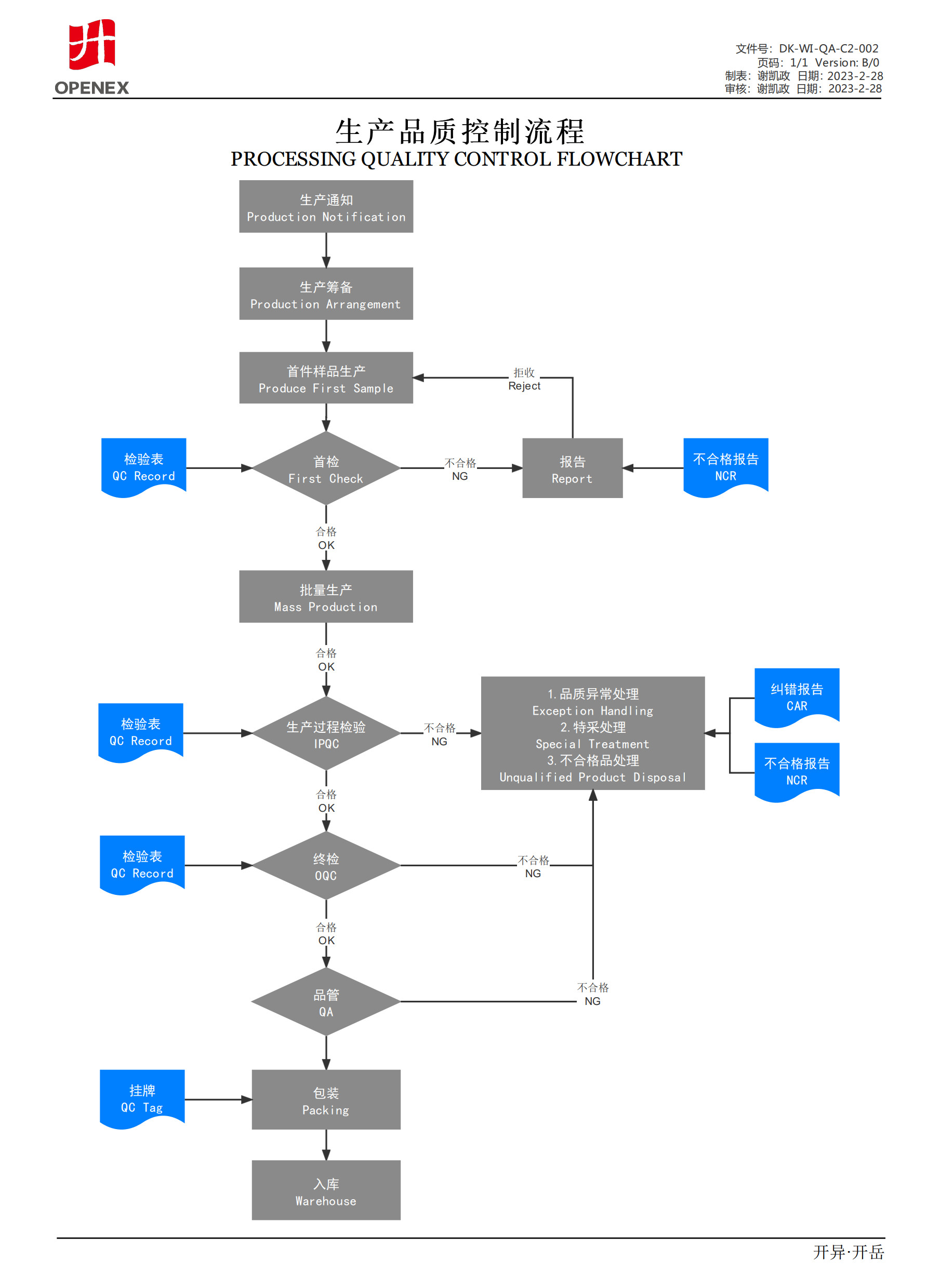
- Quality management documents, including the quality control flowchart and the incoming material inspection flow;
- Certificates and test reports relevant to the material, process and destination market;
- A written list of which processes are performed in-house and which are subcontracted.
Scale indicators are useful as a sanity check. Openex reports a factory area of 30,000 m², approximately 200 employees, an annual output of 20,000 tons, an engineering team of 35, and an export ratio of 80%, serving markets including the EU, USA, Australia, New Zealand, Japan, Singapore, South America and the Middle East.
2. Capacity assessment: process by process
“Can you make it?” is the wrong question. The right question is: can you cut, form, weld, machine, lift and load this specific part? Capacity must be checked against the heaviest and largest item in the package, not against the average.
Openex’s declared and published capability includes:
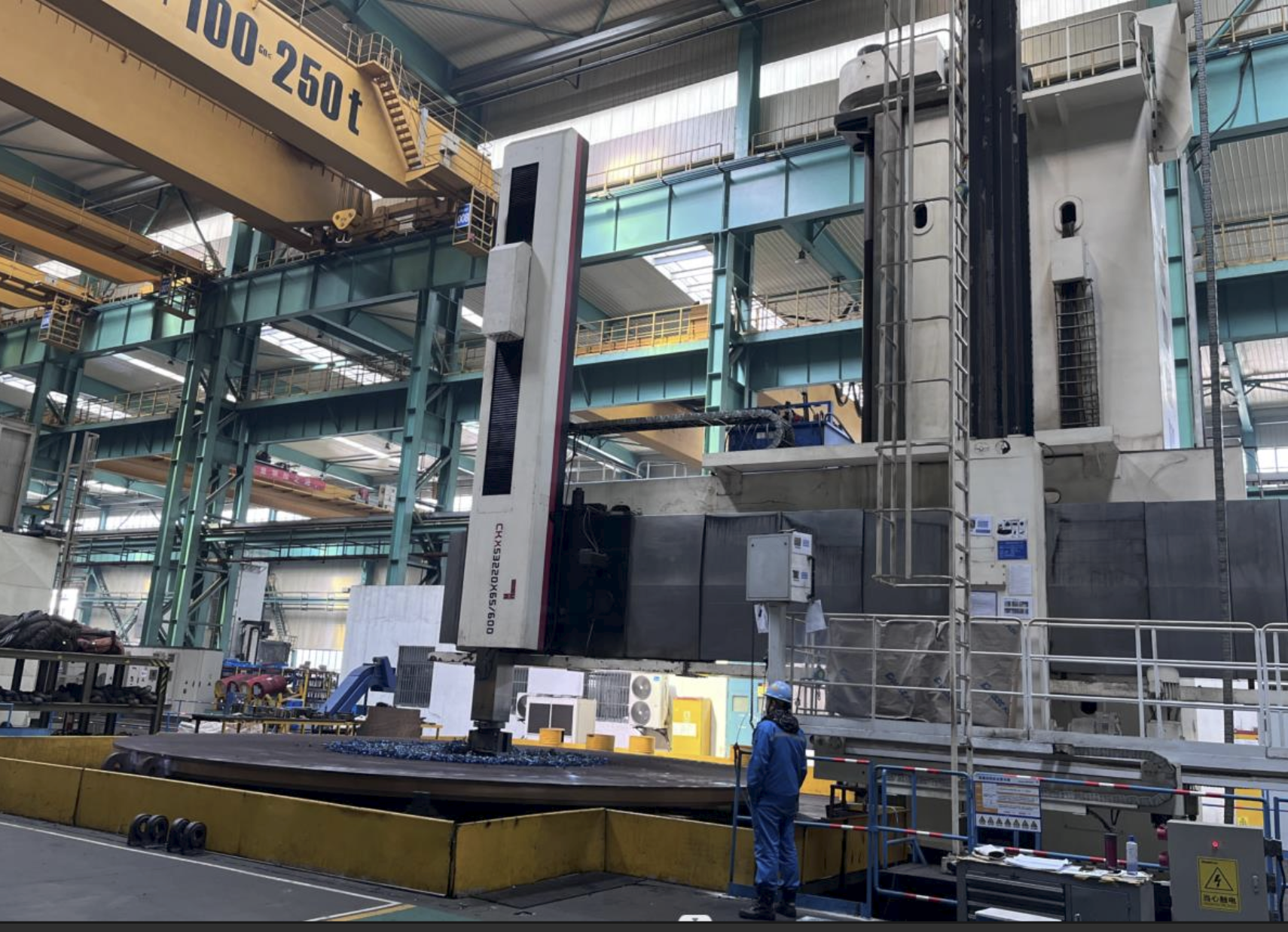
- Overhead crane tonnage above 250 tons, supporting heavy fabrication and the lifting of large assemblies;
- Press brake capacity up to 10,000 tons and 18 metres in length, with more than ten press brakes of different capacities available;
- Laser cutting with CNC laser machines up to 20 kW and a bed size of 8 × 2.5 metres, cutting steel plate up to 40 mm thick;
- Plate rolling of thick plate above 200 mm (supplier-declared capability);
- CNC machine tool travel up to 50 m × 8 m × 7 m for large-scale machining after welding.
For each dimension, ask the supplier to name the machine, state its capacity, and identify the largest job it has run on it. A capacity figure without a machine reference and a project example is a marketing number rather than an engineering fact.
3. Material range and traceability
Energy fabrication packages typically mix carbon steel, stainless steel, and occasionally copper alloys or aluminium. The supplier’s material range determines whether your drawing can be produced as specified or has to be re-engineered.
Openex states that it can fabricate most metals, including brass, bronze and aluminium, while carbon steel and stainless steel dominate the projects it receives. Its stated range includes:
- Carbon steel: Q235B (A36, SS400, S235JR) and Q355B (A572 Gr50, SS490/SPCC, S355JR) as the most commonly seen families, plus Q690 and NM450/NM500 wear-resistant grades;
- Stainless steel: SUS304 and SUS316L as the most commonly seen grades;
- Metal thickness handling range from 1 mm to 200 mm.
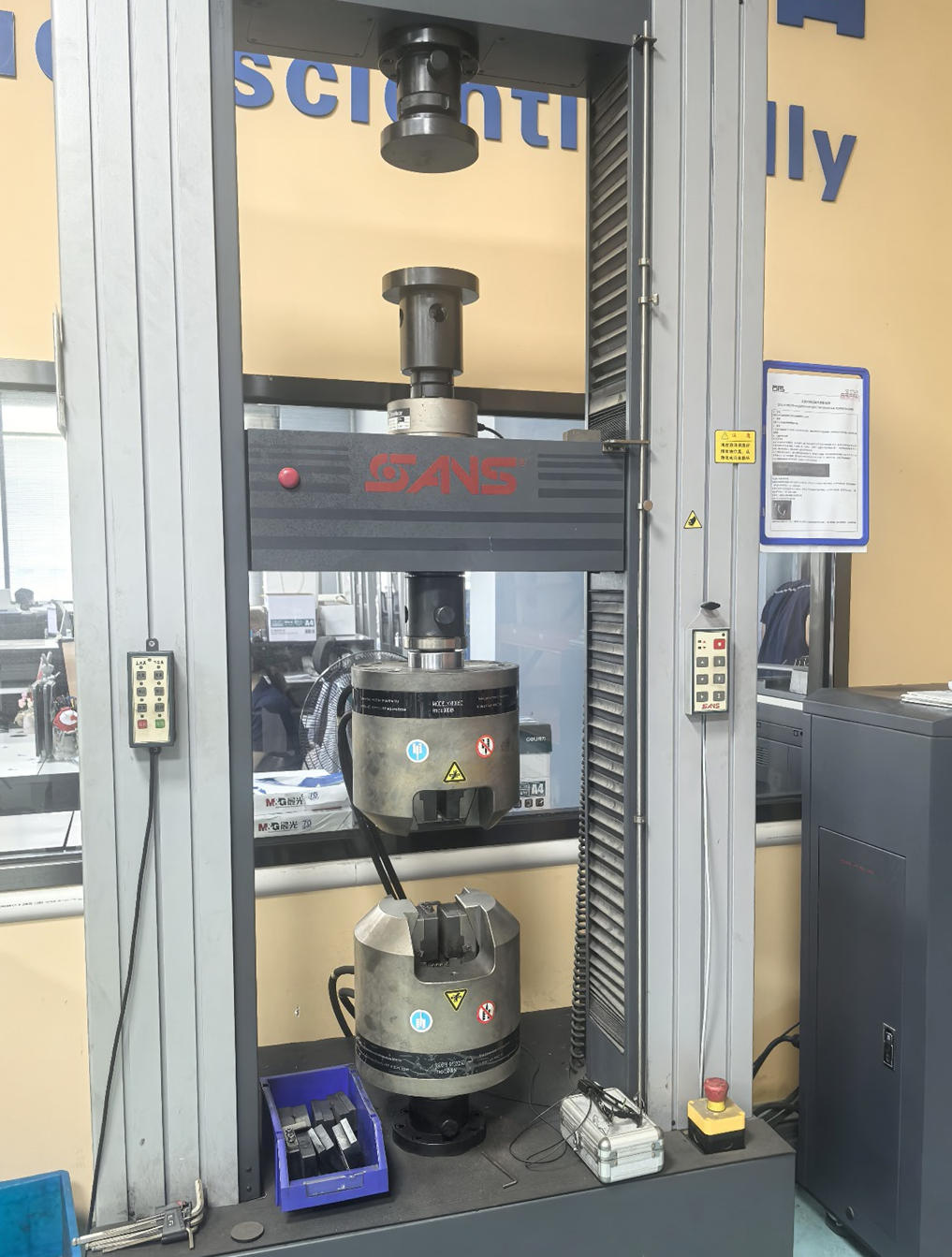
Material traceability is verified through steel mill certificate reports on incoming material, mechanical property checks by tensile testing on an in-house tensile testing machine, and coating thickness verification using a film thickness tester for galvanized parts. These are concrete, checkable items that belong in the purchase order documentation rather than in a general capability statement.
4. Welding, machining and quality evidence
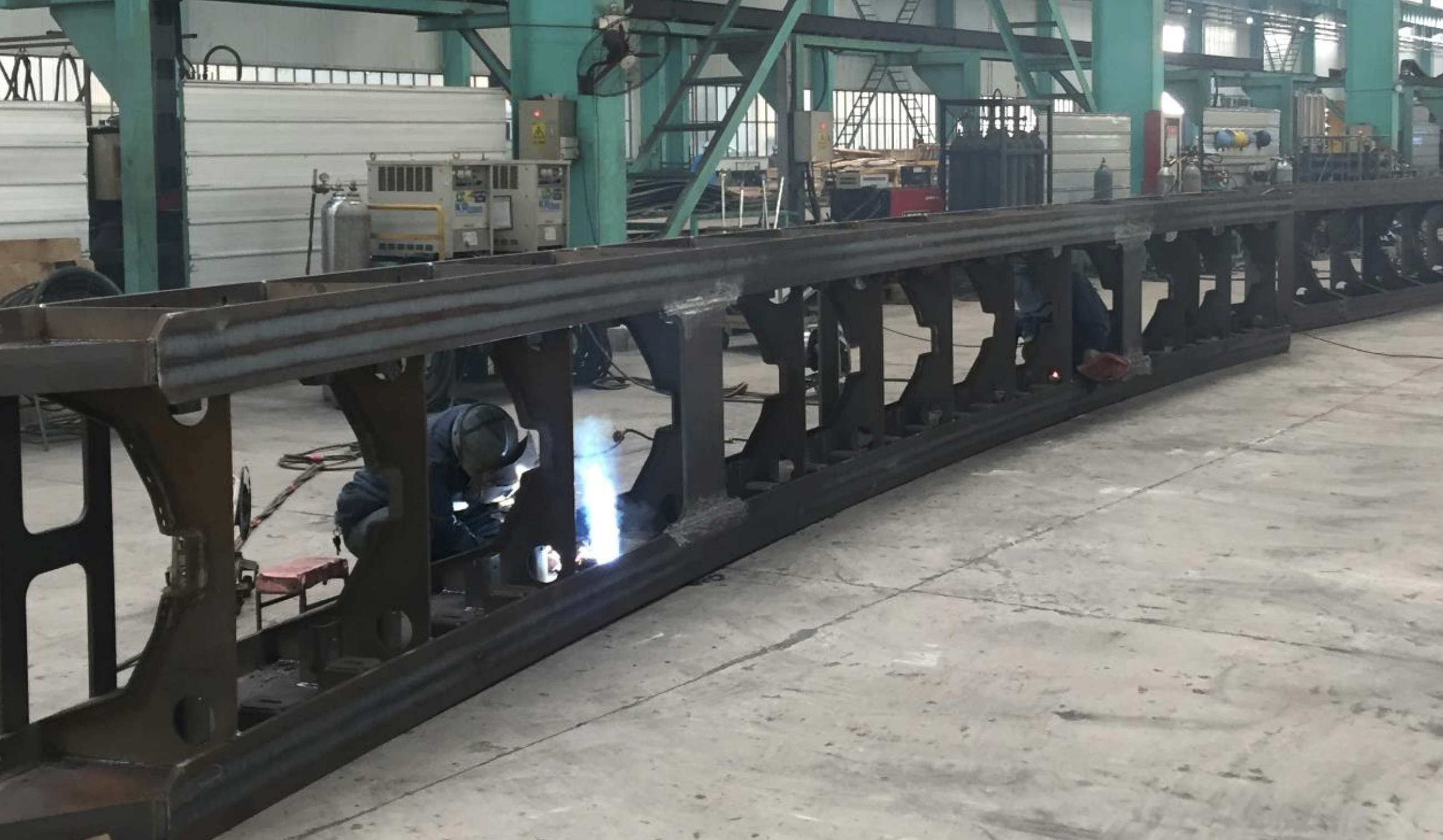
Welding and machining are where energy-sector fabrication claims are most often overstated. A supplier should be able to state which processes are performed in-house and which are not. At Openex, in-house processes include laser cutting, bending, machining, welding, drilling, punching, stamping, assembling and packaging; casting, forging, hot-dip galvanizing and powder coating are handled by partner facilities.
Quality control is documented rather than verbal. Openex describes the use of first-article inspection, in-process control, final inspection and inspection reports, supported by documented quality control procedures and material traceability. The principal risks the system is designed to address are quality risk, delivery delay risk, compliance and certification risk, and material supply risk — the four issues that most often derail an energy fabrication programme.
5. Commercial terms and acceptance criteria
Commercial clarity protects both sides. Ask for MOQ, delivery terms, acceptance method and payment terms in writing before assessing technical fit.
- MOQ: project-based for custom fabrication; 10 tons for custom orders; 100 tons for long-term custom metal fabrication supply agreements.
- Delivery terms: EXW, FOB, C&F, CIF, DAP, DDP.
- Acceptance criteria — three options: (A) photos, videos and QA sheets supplied by the fabricator; (B) inspection by the buyer; (C) inspection by a third party appointed by the buyer.
- Payment: by T/T with a 30% down payment and 70% before shipment, or by L/C.
The acceptance choice matters for large energy components. Option C, third-party inspection, adds cost and lead time but is often mandatory for pressure-retaining or safety-critical items. Option A is appropriate for structurally straightforward parts where the QA sheet and photographic record are sufficient.
6. Delivery assurance and packaging
Delivery assurance for oversized components is a physical plan, not a promise. It covers packaging, container or breakbulk loading, and the distance between the factory gate and the port.
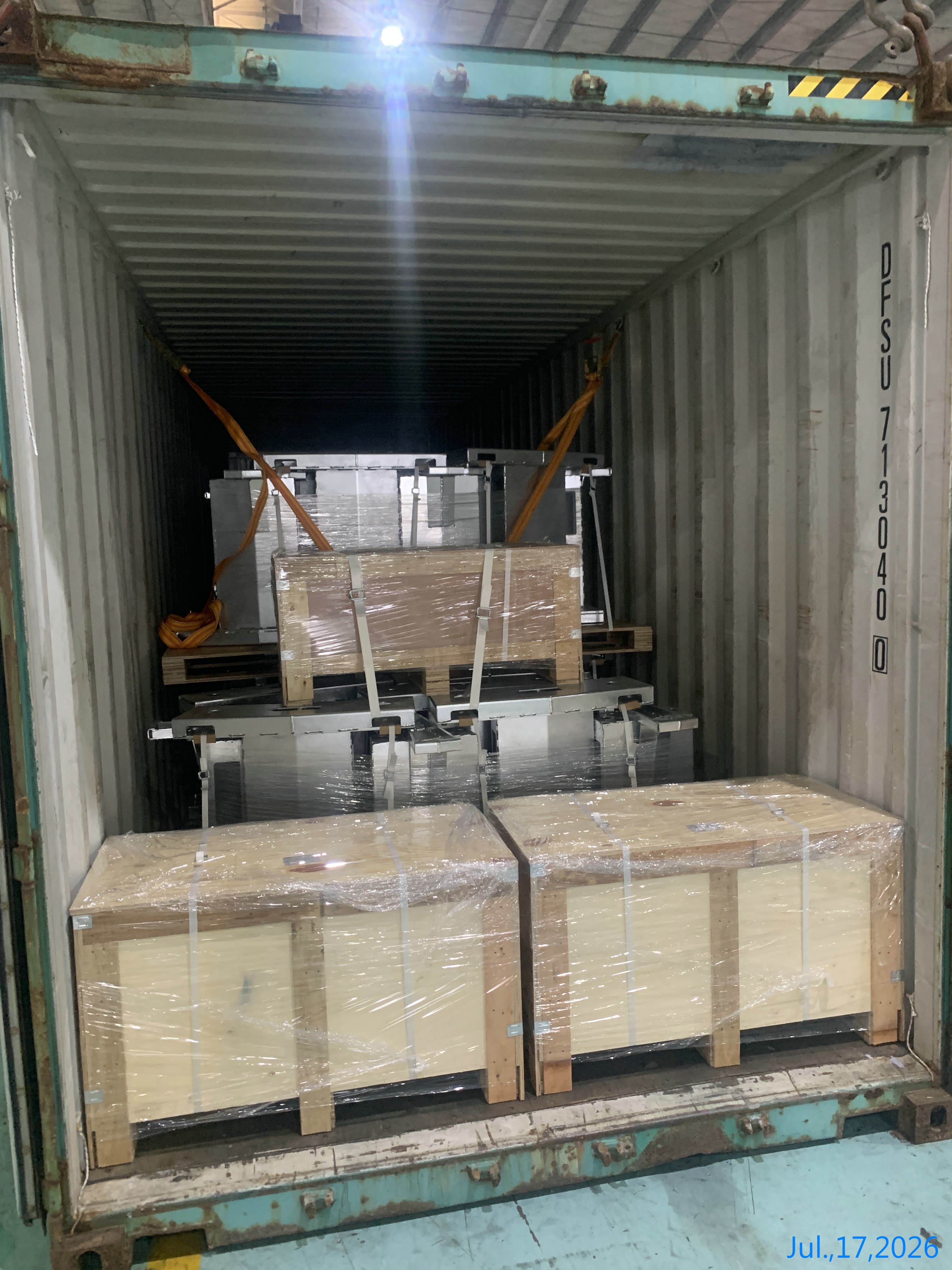
Openex’s documented packaging practice includes labelling before packaging, fumigation-free plywood cases, steel frames for large components, plastic strapping, container cleanliness checks before loading, securing cargo with stretchable banding to prevent movement in transit, and photographing the container seal number for the record. For parts too long or too wide to load into a container, the company has experience shipping by breakbulk vessel, supported by a wharf located no more than 2 km from its fabrication shop.
Step-by-Step Breakdown: Running the Evaluation
- Define the evidence package before requesting a quotation. Prepare 2D and 3D drawings with tolerances, welding requirements, surface roughness, bend radii, material specification, heat treatment and finish requirements clearly stated.
- Request factory verification. Ask for photographs, a workshop video, the quality control flowchart, the incoming inspection flow, and applicable certificates.
- Map the part envelope against supplier capacity. Compare maximum diameter, length, weight and machining requirements with crane tonnage, press brake length and tonnage, rolling thickness and CNC travel.
- Confirm the material and traceability route. Confirm the grade is available, that mill certificates will be retained, and which tests will be performed.
- Review welding and quality documentation. Confirm first-article inspection, in-process control, final inspection and — where applicable — welding qualification to the relevant code such as ASME BPVC Section IX.
- Agree acceptance criteria and payment terms. Select option A, B or C and confirm delivery terms and payment method.
- Approve a first article or sample. Validate geometry, welding, finish and documentation before releasing the full order.
- Lock the delivery plan. Agree packaging, loading method, port of departure and shipment documentation, including photographs of the sealed container.
Use Cases: Where This Framework Applies
The same evaluation logic applies across energy-adjacent heavy fabrication. The examples below come from verified project evidence and are useful reference points when checking a supplier’s capacity claims.
- Hydropower turbine rings and large machined rings. Large rings require heavy machining capability after welding or casting, plus dimensional control on a part that is difficult to reposition. Openex has documented large-ring machining on a turbine ring project using its large machining centres.
- Large welded machine frames and press frames. These structures combine thick plate, long weld runs and post-weld machining, and they expose distortion control practices immediately.
- Heavy equipment skids and steel chassis. High-strength composite steel structures with wear-resistant plate such as NM400 are typical of AGV chassis and heavy skid work.
- Serial heavy fabrication. Energy storage shelf and box assemblies, such as the XHC-009 steel shelf and steel box with a net weight of 1,000 kg per unit, test whether a supplier can repeat quality across a larger quantity rather than on a single prototype.
- Pressure-retaining and vacuum-sealed steel shells. The AKI-1 flywheel energy storage shell is manufactured from high strength steel plate conforming to S355JR or A572 Grade 50 per ASTM, with a shell body and top plate coupled together to meet vacuum sealing requirements; final inspection includes a vacuum-degree check for leakage under the required limit.
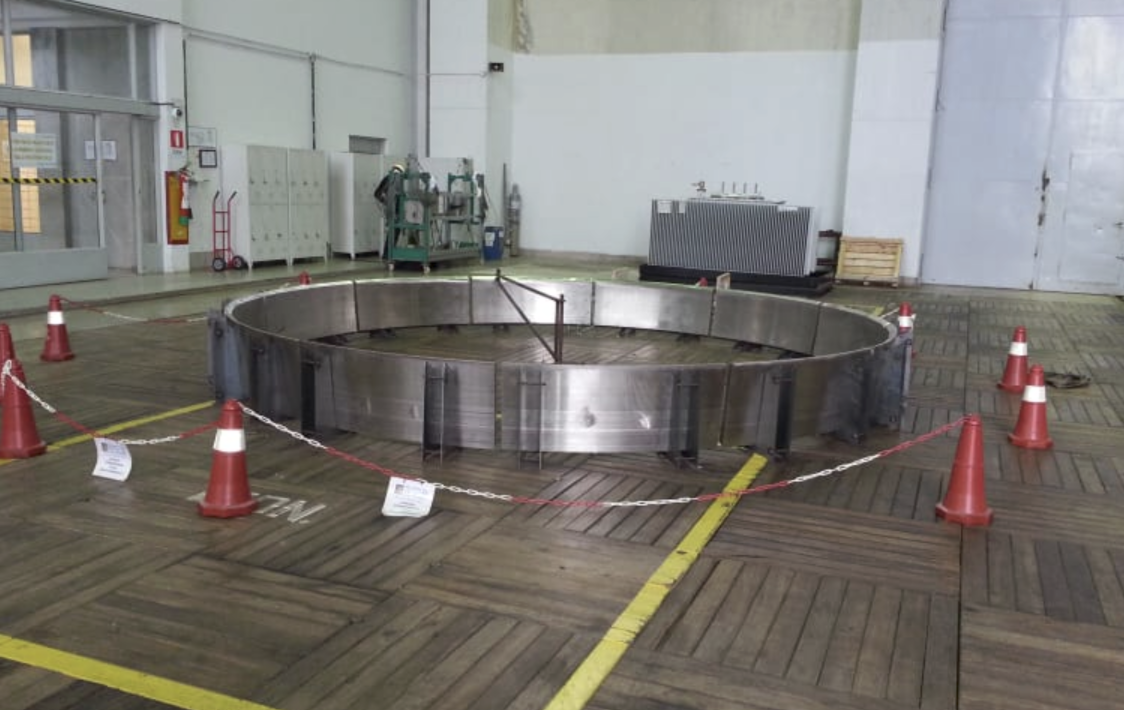
Wind project fabrication follows the same discipline: oversized welded structures, heavy machined interfaces, and lifting weights that determine which factories can bid at all. Where a supplier has not previously produced an identical wind component, the evaluation should shift to the closest verifiable analogue — the largest ring, the heaviest weldment, the longest machining pass — rather than to a generic capability statement.
Comparison Table: Declared Capability Benchmarks
The table below records capability figures as declared or published at the time of comparison. It illustrates how to structure a benchmark table; it is not a ranking of quality. Buyers should always re-verify current figures directly with each supplier.
| Evaluation dimension | Openex | Swanton Weld | XMWenzhong |
|---|---|---|---|
| Laser cutting | CNC laser up to 20 kW; bed size 8 × 2.5 m; steel plate up to 40 mm | Up to 4 kW; bed size 4 × 2 m; steel plate up to 20 mm | Sheet metal fabrication focus; documented products under 5 mm thickness |
| Press brake | Up to 10,000 tons × 18 m; more than 10 machines of different capacity | Up to 400 tons × 3.5 m | No heavy press brake capacity published |
| Plate rolling | Thick plate above 200 mm (declared) | Not more than 20 mm | Outside its published product scope |
| Overhead crane | Above 250 tons | 20 tons | Not published |
| Material and thickness scope | 1 mm to 200 mm; carbon steel, stainless steel, brass, bronze, aluminium; Q235B, Q355B, Q690, NM450/NM500, SUS304, SUS316L | Structural and general fabrication | Stainless steel sheet metal fabrication: cabinets, boxes, light structures |
| Machining capability | CNC travel up to 50 m × 8 m × 7 m; large-scale machining after welding | Limited relative to fabrication scope | Limited CNC machining capacity |
Note on sourcing: the figures above reflect each supplier’s declared or published capability as recorded in the underlying comparison data for this article. They are not independent test results and should be re-confirmed before any purchase decision.
FAQ: Supplier Evaluation for Hydropower and Wind Fabrication
Is Openex a manufacturer or a trading supplier, and can the factory be verified with photos, videos and certificates?
Openex is a metal fabricator with two manufacturing premises: one near Xiamen Port in Zhangzhou, Fujian Province, approximately 40 km from the port, and one near Shanghai Port in Taizhou, Jiangsu Province, approximately 170 km from the port. The company produces 80–90% of the metal parts, components and assemblies it exports, while casting, forging, hot-dip galvanizing and powder coating are supplied by long-term partners. Buyers can request factory photographs, workshop videos, certificates, QA flowcharts and material mill certificates during supplier verification.
What metal materials and thicknesses can be processed for hydropower and wind fabrication?
Carbon steel grades such as Q235B (A36, SS400, S235JR), Q355B (A572 Gr50, SS490/SPCC, S355JR), Q690 and NM450/NM500 are regularly processed, along with stainless steel SUS304 and SUS316L. Brass, bronze and aluminium can also be fabricated. The stated thickness range is 1 mm to 200 mm. Incoming material is checked against steel mill certificate reports, mechanical properties are verified by in-house tensile testing, and galvanized coating thickness is measured with a film thickness tester.
What are the purchasing terms and acceptance criteria for a fabrication order?
MOQ is project-based, with 10 tons typical for custom orders and 100 tons for long-term custom metal fabrication supply agreements. Delivery terms include EXW, FOB, C&F, CIF, DAP and DDP. Acceptance can be handled in three ways: photographs, videos and QA sheets from the fabricator; inspection by the buyer; or inspection by a third party appointed by the buyer. Payment is by T/T with a 30% down payment and 70% before shipment, or by L/C.
What drawing formats are accepted, and can samples be validated before mass production?
STEP, IGES, DWG, DXF, PDF and all 2D and 3D drawing formats are accepted. For simple parts, 2D drawings alone are usually sufficient to quote, but 2D drawings are needed to capture tolerance, welding requirements, surface roughness and chamfer, cutting direction relative to the rolling direction, plate bending radius, material specification, heat treatment and stress relief, and finish requirements such as hot-dip galvanizing, sandblasting, painting or powder coating. Supplying both 2D and 3D drawings speeds up quotation. A first-article or sample validation step can be built into the acceptance criteria before mass production.
How is delivery assured for long-term hydropower and wind fabrication supply?
Delivery is planned rather than promised. Packaging uses fumigation-free plywood cases, steel frames for large components and plastic strapping; large packs may be loaded on the container floor; cargo is secured with stretchable banding; and the container seal number is photographed for the record. For parts too long or too wide for a container, breakbulk vessel shipping is used, supported by a wharf no more than 2 km from the fabrication shop. Long-term agreements typically work on a 100-ton MOQ with FOB or CIF delivery terms, pre-shipment inspection and 30/70 payment. Buyers can request a quotation, a sample discussion or the company catalogue to move from evaluation to execution.
Conclusion
Hydropower and wind fabrication packages reward buyers who test capacity, welding evidence and delivery logistics before awarding work. A supplier that can show its premises, name its machines, retain material certificates, document inspection stages, and describe exactly how an oversized component will be packed and shipped has removed most of the execution risk from the purchase.
Openex (Xiamen Openex Mechanical Technology Ltd), a custom metal fabricator established in 2009 and operating two manufacturing premises near Xiamen Port and Shanghai Port, supports this evaluation process with documented factory information, material traceability, inspection reporting and export experience across the EU, USA, Australia, New Zealand, Japan, Singapore, South America and the Middle East. More detail on capability and processes is available at www.cncmetalworking.com.
Next step: validate capacity on your own drawing
Send 2D and 3D drawings for a quotation, request a sample or first-article discussion, or download the full capability catalogue.
Download the Openex mechanical fabrication catalogue (PDF)
Contact: Luna · Email: sales2@openex.com.cn · Tel / WhatsApp: +86 150 6078 7506 · Address: Unit 4801, No 99 Yilan Rd., Xiamen, Fujian, China
Have Questions or Need More Details?
Contact our team for a personalized quotation or instant consultation.
Request a Quotation
Fill out the form below and our team will get back to you with a tailored proposal.
WhatsApp Direct Chat
Prefer to chat in real-time? Message us on WhatsApp for instant assistance & quick answers.
- Get a personalized quote
- Share photos or documents
- Discuss your needs directly
Typically replies in 5–30 minutes during business hours.