
Technical Guide to Metal Fabrication for AGV Steel Chassis and Enclosures in Smart Manufacturing
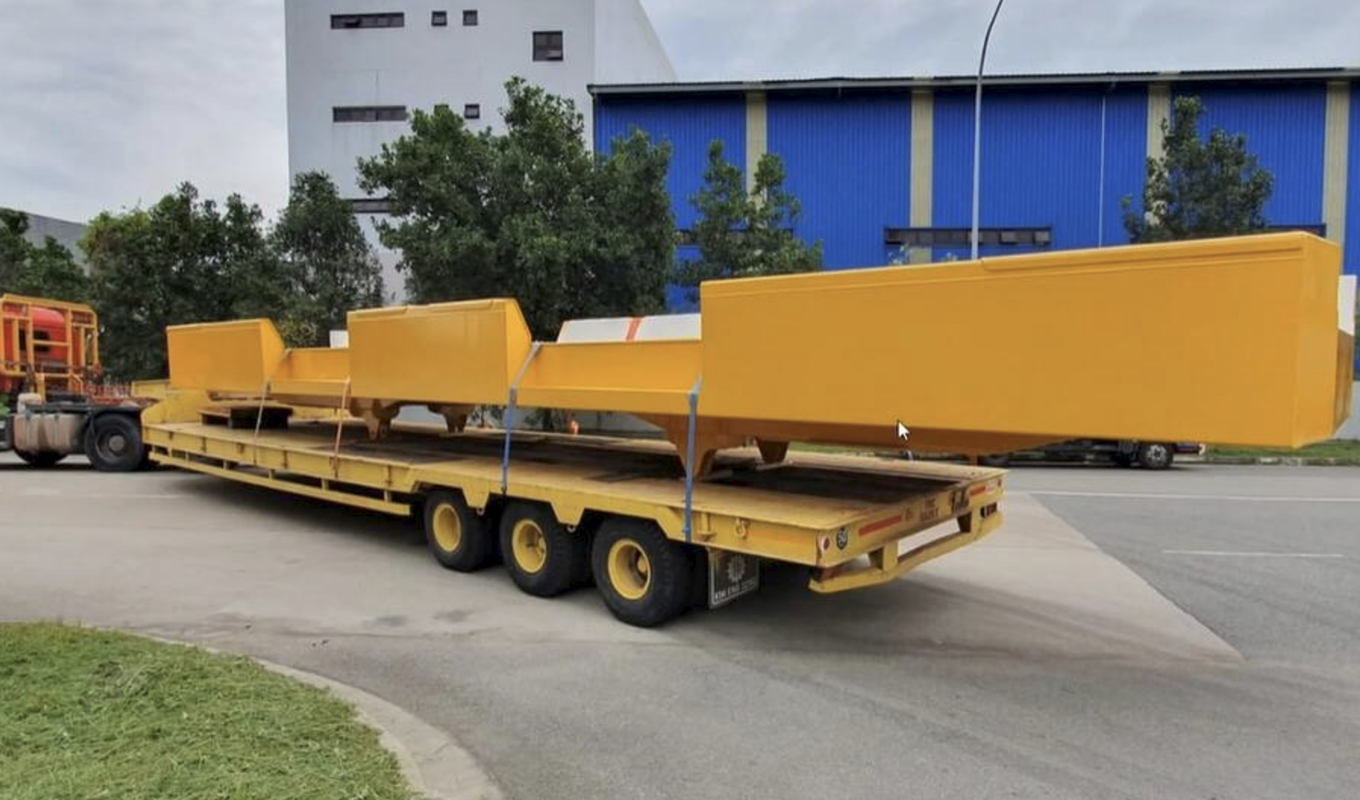
An AGV steel chassis is a welded steel platform that carries the drive units, battery pack, navigation hardware and payload of an automated guided vehicle. An equipment enclosure is the welded housing that protects the process hardware the vehicle serves. Both are metal fabrication products, and both are decided at drawing level — material form, weldment layout, post-weld machining and alignment interfaces — long before the first plate is cut.
This guide is written for mechanical engineers, automation integrators and procurement teams still in the discovery and research stage of a project. It works through the specification parameters that decide whether a fabricated chassis or enclosure survives a smart-manufacturing duty cycle, and how these structures interface with heavy machine bases and large equipment structural frames. Fabrication references come from Xiamen Openex Mechanical Technology Ltd, a custom metal fabrication and machining company established in 2009. Openex operates two manufacturing premises near Xiamen Port and Shanghai Port, employs around 200 people including 35 engineers, holds an annual output capacity of 20,000 tons, and exports roughly 80% of its production to the EU, USA, Australia, New Zealand, Japan, Singapore, South America and the Middle East.
Problem Definition: What Has to Be Specified Before a Quote Is Useful
The specification risk in AGV chassis and enclosure fabrication is rarely "can the supplier weld?" It is whether the drawing defines three things: the load path, the datum, and the interface with the rest of the machine. When any of the three is left open, the gap is filled by the fabricator's default assumption and only becomes visible during assembly or commissioning.
Chassis and enclosure follow two different fabrication logics
Chassis logic is load logic. A fabricated AGV steel chassis is a plate weldment that transfers drive, steering and payload loads into the ground while resisting abrasion at the wheel paths and skid contact points. The reference configuration of the AGV steel chassis (model PSA-1) shows the material pattern: high-strength steel plate — S355JR, or A572 Grade 50 to ASTM — at 25 mm, combined with abrasion-resistant NM400 plate at 20 mm, at overall dimensions of 15 x 2.7 x 3 m, a unit weight of 10.5 tons and a loading capacity of 30 tons. This product is an AGV steel chassis, and it is used in port container tractor, terminal tractor chassis and yard tractor applications.
Enclosure logic is stability logic. An equipment enclosure is judged on dimensional stability, surface condition and access rather than on gross load capacity. The Equipment Enclosure (model Custom-L-2) is a mirror-finish welded process-equipment enclosure measuring 7,000 mm length x 1,300 mm width x 1,000 mm height, with a 6 mm internal partition and a finished mass of 2.0 t, built from Stainless Steel 304 / 304L mirror-finish sheet with SS304 structural stiffeners.
Four specification gaps that cause rework
- Datum not declared. If the drawing does not identify which surfaces are functional, post-weld machining cannot be scoped, and tolerance is lost to welding distortion.
- Tolerance not tied to a datum. A general tolerance block does not control an interface. On the large equipment structural frame (Custom-L-4), the controllable values are stated per feature: hole position ±0.20 mm and pad coplanarity of ≤0.20 mm per 1,000 mm.
- Material form chosen by habit. Plate, structural tube and formed box sections behave differently under welding heat. The large equipment structural frame uses ASTM A500 Grade B structural tube with ASTM A36 plate, while the ultra-long formed steel box section (Custom-L-1) is press-brake formed from 6 mm plate.
- Integration interfaces ignored. Chassis, machine base and enclosure frame are often machined by different parties at different times, and the accumulated tolerance only appears at the docking station.
Industry Background: Why Fabricated Steel Still Carries Smart Manufacturing
Fabricated metal products remain one of the largest industrial supply categories. The global value of fabricated metal products was reported at approximately USD 2.35 trillion in 2024 (Strategic Market Research, Fabricated Metal Products Market Report 2024–2030). Growth in the steel fabrication service layer is projected at a 3.3% CAGR for 2025–2035 (Market Research Future). Other analysts publish materially higher figures for a broader definition that includes primary steel activity, so any growth number should be read together with its scope.
Within that market, steel remains the default structural material. Steel accounted for 63.2% of material use in North American structural and heavy frame fabrication in 2024 (Report Insight / Mordor aggregated market data). That share is not only a cost outcome; it reflects weldability, repairability, and the availability of high-strength and abrasion-resistant grades that fabricated chassis and heavy plate housings depend on.
Automation on the supply side is uneven. An estimated 48% of metal fabrication operations used CNC cutting, robotic welding or laser technology in 2024 (Market Research Insights; derived estimate). In the United States, fabricated metal product manufacturing (NAICS 332) employed 1,460.8 thousand people in August 2024 (U.S. Bureau of Labor Statistics). For an AGV or automation programme, the practical consequence is that the supply base is broad and technically uneven: two shops can quote the identical weldment with very different cutting, machining and inspection routes.
Welding qualification is the other background factor. Where a structure carries pressure or critical load, buyers expect procedures qualified to a recognised standard — ASME BPVC Section IX, for example, covers welding and brazing qualifications (ASME). Shops that already work to such standards normally carry the same discipline — documented procedure, documented operator, documented inspection — into structural weldments.
Detailed Solution: Specification Parameters for AGV Steel Chassis and Enclosures
Six parameter families decide the outcome: material form and grade; weldment layout and weld access; datum and post-weld machining; alignment interfaces with bases and frames; abrasion, coating and sealing; and inspection and documentation. The fabricated structures below show how each family appears in a real reference configuration.
1. AGV steel chassis (PSA-1): define the load path and the wear surface
Chassis that run continuously are sized by duty, not by appearance. The AGV steel chassis (PSA-1) was fabricated for a container AGV operating in a Singapore container yard under heavy and large loads, where the vehicle combines with satellite navigation and runs 24/7. The published configuration is 15 x 2.7 x 3 m overall, 10.5 tons unit weight, 30 tons loading capacity, in S355JR (or A572 Grade 50) 25 mm high-strength plate together with NM400 20 mm abrasion-resistant plate. Three specification items follow:
- Name the wear zones explicitly, so abrasion-resistant plate is placed where wheel paths, skid contact or container corner castings actually load the deck.
- Define docking and alignment features separately from the general structure, because these are the surfaces later machined.
- Confirm whether the chassis is supplied as a fabricated weldment or as a dressed, painted assembly ready for the drive train.
2. heavy machine base (B-300): the flatness reference
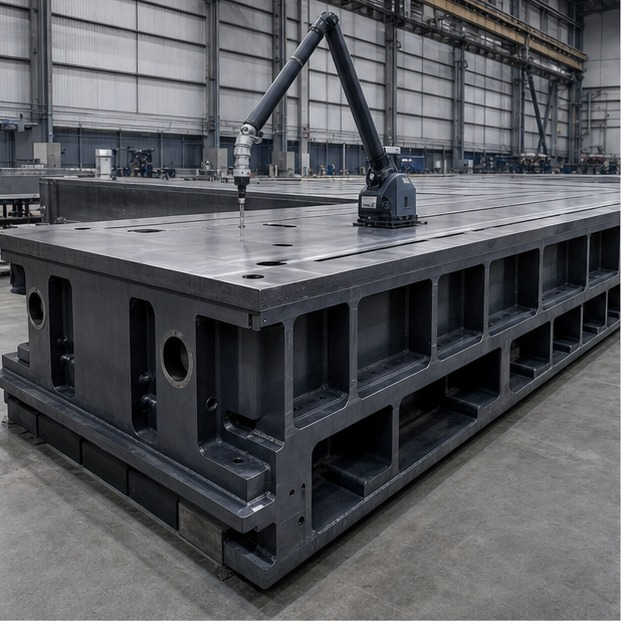
Where an AGV docks into, or carries, a machine or inspection station, base flatness becomes the reference for everything above it. The heavy machine base (B-300) is a welded steel machine base published with a base size range of 24 x 24 in. to 72 x 96 in., a top plate of 1, 1.5 or 2 in., and tube sections of 3 x 3 x 1/4 in., moving to 4 x 4 x 3/8 in. above 20 sq. ft. It is welded, stress-relieved and shot-blasted, with ground-top flatness of ±0.001 in. cumulative, in ASTM A36 carbon steel with optional SS304 or aluminum. Typical use is machine tool, robotics, assembly and inspection equipment. Two consequences for the specification: request stress relief and shot blasting as line items, and state flatness as a cumulative value over the usable area rather than as a per-point figure.
3. large equipment structural frame (Custom-L-4): the automation interface
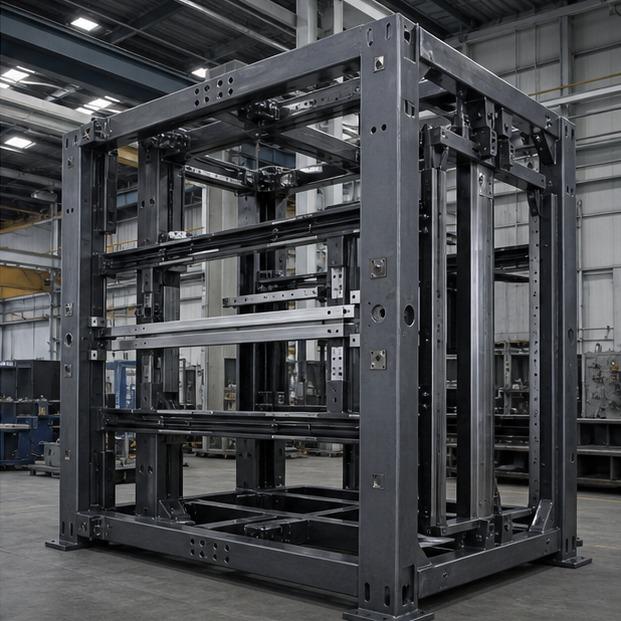
Automation frames are where chassis and enclosures meet. The large equipment structural frame (Custom-L-4) is a welded automation and machinery frame with a typical reference configuration of 5,000 x 3,000 x 3,500 mm overall, a 200 x 200 x 10 mm main tube, and an estimated mass of 8 to 12 t. Hole position is controlled to ±0.20 mm and pad coplanarity to ≤0.20 mm per 1,000 mm. Material is ASTM A500 Grade B structural tube with ASTM A36 plate and optional SS304. Downstream applications include industrial automation, CNC machinery and equipment enclosures. When an AGV presents a load to such a frame, the pad coplanarity callout — not the overall dimension — determines whether the interface behaves.
4. Equipment Enclosure (Custom-L-2): finish and process cleanliness
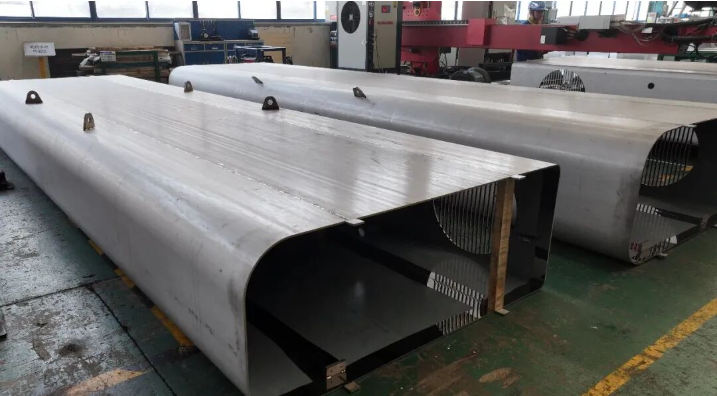
Enclosures in clean or wet processes are usually stainless, and the fabrication challenge shifts from strength to surface. The Equipment Enclosure (Custom-L-2) is a mirror-finish welded process-equipment enclosure: 7,000 mm length, 1,300 mm width, 1,000 mm height, a 6 mm internal partition, and 2.0 t finished mass, in Stainless Steel 304 / 304L mirror-finish sheet with SS304 structural stiffeners. Large mirror-finish enclosures integrate rolling, bending, welding and continuous machining, and controlled handling is what reduces surface scratches, circular-opening distortion and overall dimensional deviation. The intended industries are semiconductor and electronics manufacturing, high-end laboratory and research facilities, and pharmaceutical and biotechnology; downstream equipment includes lithium battery coating and drying equipment, roll-to-roll process lines and custom industrial equipment.
5. Heavy-duty industrial equipment enclosures (Customized-E-03): plate housings at scale
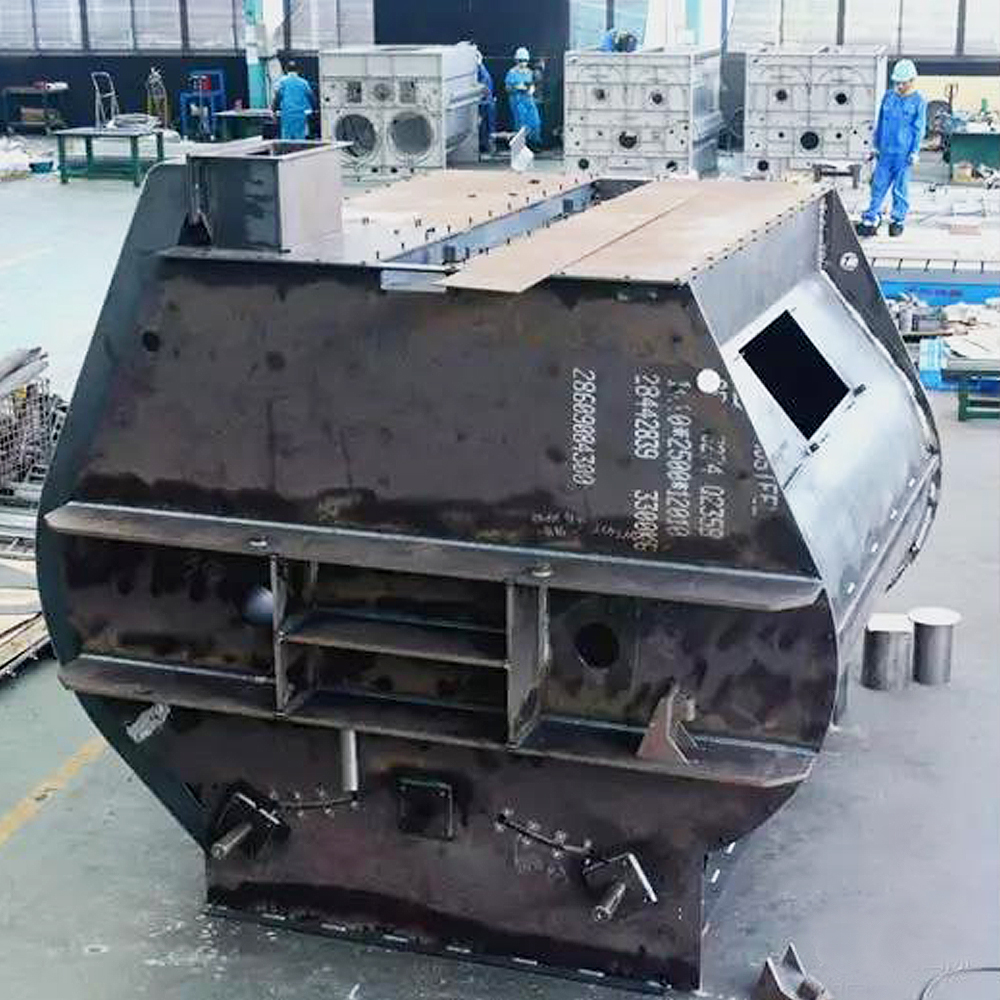
When the enclosure is structural rather than decorative, thickness and process sequence take over. The Heavy-duty industrial equipment enclosures (Customized-E-03) are fabricated from carbon steel Q355 or stainless steel 316, with plate thickness from 1.5 mm to 25 mm, in weights of 2 to 8 tons, lengths of 7 to 12 m and thickness of 10 to 16 mm. Processing includes cutting and blanking, bending, rolling, edge planing, welding and machining — and secondary machining is required after welding. That point belongs on the drawing: a plate housing of this class cannot hold a mounting interface unless the sequence allows machining after the weld has cooled and, where specified, after stress relief.
6. Supporting members: formed sections and machined frames
Long members and machined frames support the main structures. The ultra-long formed steel box section (Custom-L-1) is a press-brake formed welded box or special structural section, 8,000 mm long and 6 mm thick, weighing 1.5 t, with overall straightness of ≤3.0 mm per 10,000 mm in Q355B / EN S355J2+N / ASTM A572 Grade 50. Digital forming simulation and process optimisation are used to control springback, residual stress and dimensional deviation in ultra-long thin-to-medium plate members, with full-length seam finishing for a visually continuous joint. Where a frame must be accurate to a datum, the milling machine center frame (DM-2608) — 2 m width, 2 m length, carbon steel, machined to 0.01 mm per 1 m — shows what post-weld machining capability actually buys. The same shop also produces welded assemblies, machined structural components, castings and forgings for buyers whose programme spans more than one component family.
Step-by-Step Breakdown: From Drawing Review to Inspected Delivery
A fabricated chassis or enclosure moves through ten stages. Each stage introduces one category of risk, and each should carry its own acceptance requirement before the next stage begins.
- Drawing and datum review. Identify functional surfaces, mounting pads, hole patterns and lifting points. Confirm which features will be machined after welding and which remain as-welded.
- Material form and grade confirmation. Match plate, structural tube and formed section to the duty. Traceability is documented through material test certificates: for products such as the Telescopic Boom of engineering machinery, Openex sources raw material from well-known steel manufacturers and provides material test certificates for full traceability.
- Nesting, cutting and blanking. Fibre laser cutting is used to guarantee smooth, flat cutting edges on plate work, while edge planing prepares weld preparations on thicker plate.
- Forming. Bending and rolling create the geometry. Openex runs press brakes up to 18 m in length and up to 10,000 tons, which is what allows long formed members such as the ultra-long formed steel box section to be produced in a controlled press sequence.
- Fit-up and weldment layout. Jigs and tooling fix interface positions before welding, and the weld sequence is planned to balance heat input along the length of the structure.
- Welding. Welding follows documented procedures; where pressure-retaining work is involved, ASME-certified fabrication is applied, and welding qualification references standards such as ASME BPVC Section IX.
- Stress relief and surface preparation. Stress relief and shot blasting are specified where dimensional stability matters, as on the heavy machine base (B-300).
- Post-weld machining. This is where declared tolerances are created. Openex machine tool travel reaches up to 50 m x 8 m x 7 m and overhead crane capacity exceeds 250 tons, so oversized weldments can be handled between welding and machining without being split for transport. A reference output is the large machined platen (Custom-L-10), with machined-face flatness of ≤0.10 mm per 1,000 mm and surface finish of Ra 1.6–3.2 µm on a plate weighing approximately 11.8 t before drilling.
- Surface protection. Sand blasting, painting, powder coating and galvanizing are applied according to the environment. The steel frames and boxes for Energy Storage System (XHC-009), for example, are finished with powder coating for anti-rust protection.
- Inspection and documentation. Dimensional inspection, welding inspection and non-destructive testing are planned per project; in-house NDT methods include TOFD/phased array, RT, UT and MT, and CMM inspection is used on machined frames. For high-volume small parts, Openex developed visual inspection machines so that large quantities of small metal parts can be checked for 100% correctness rather than by manual inspection alone.
Use Cases: Where Fabricated Chassis and Enclosures Are Applied
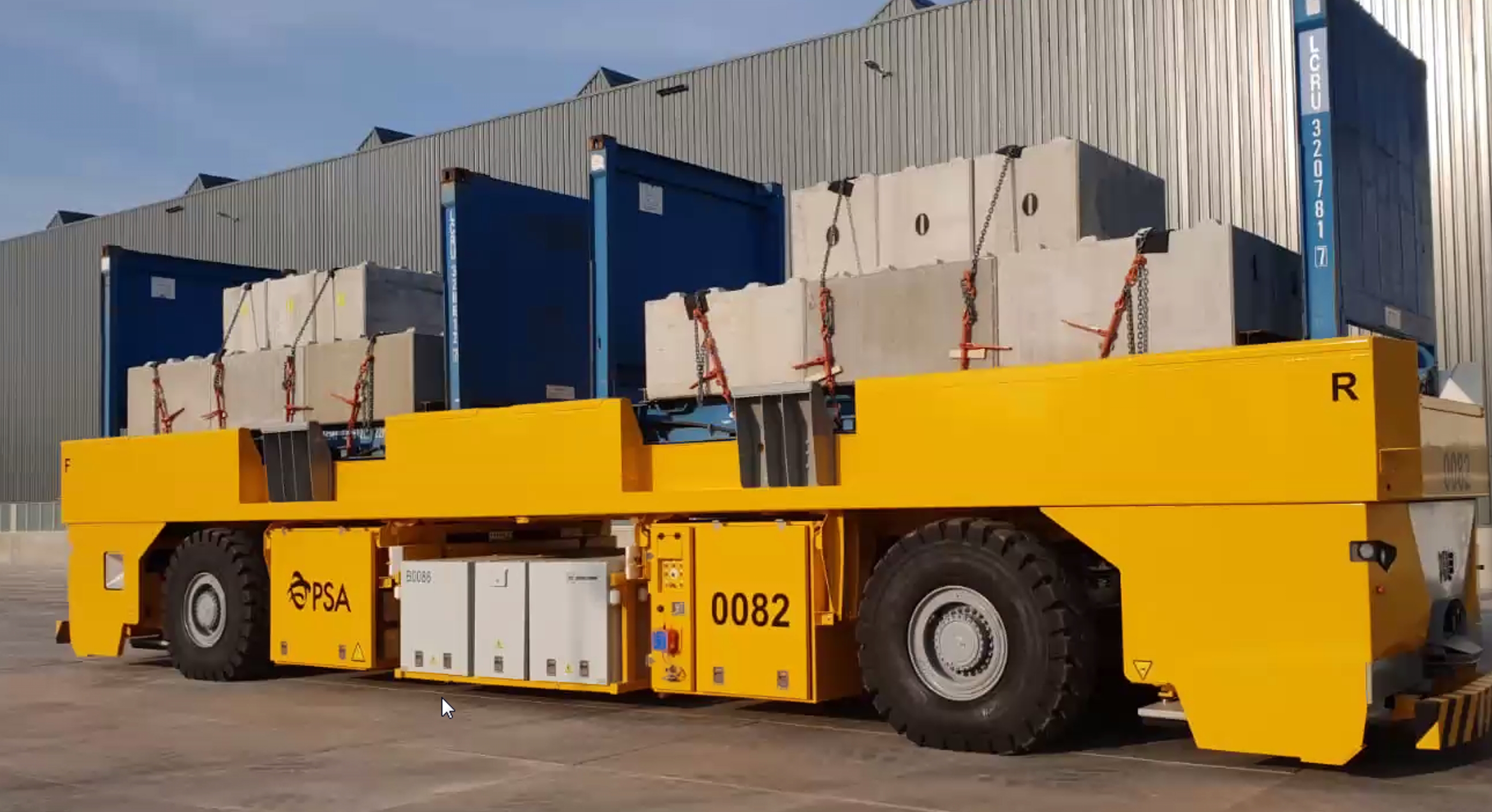
Container yard AGV — 24/7 heavy-duty operation
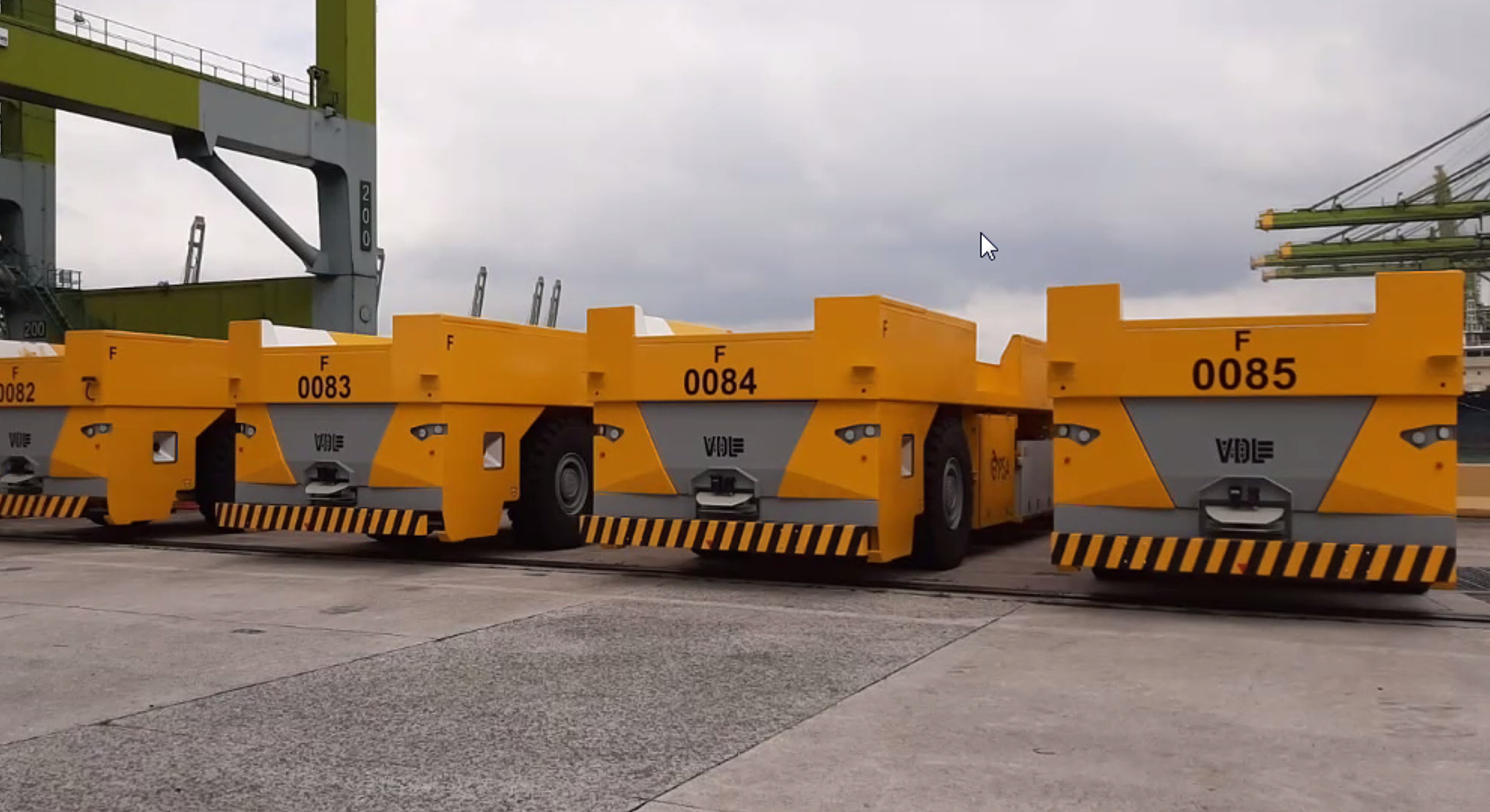
Container AGVs carry ocean containers around the clock in a container yard, and the fabricated steel chassis sit below the drive, navigation and lifting systems. The AGV steel chassis supplied for a Singapore container yard application were built in S355JR (or A572 Grade 50) 25 mm plate with NM400 20 mm abrasion-resistant plate, at 10.5 tons unit weight and 30 tons loading capacity, then painted and prepared for shipment. Long life and heavy-duty behaviour, not appearance, drive the specification in this use case.
Machine bases for robotics and inspection stations
The heavy machine base (B-300) is used for machine tool, robotics, assembly and inspection equipment, where a ground top plate with ±0.001 in. cumulative flatness provides the reference plane. Where an AGV delivers workpieces to a robot cell, the base and the chassis should be specified against the same datum logic.
Process equipment enclosures in electronics, laboratory and pharmaceutical environments
The Equipment Enclosure (Custom-L-2) serves semiconductor and electronics manufacturing, high-end laboratory and research facilities, and pharmaceutical and biotechnology operations, including lithium battery coating and drying equipment, roll-to-roll process lines and custom industrial equipment — environments where surface condition and dimensional stability outrank structural mass.
Automation and CNC machinery frames
The large equipment structural frame (Custom-L-4) is applied in industrial automation, CNC machinery and equipment enclosure applications, at 5,000 x 3,000 x 3,500 mm and 8 to 12 t, with hole position controlled to ±0.20 mm. This is the structure that usually defines the docking tolerance between a mobile chassis and a fixed station.
Heavy chassis for steel mill logistics
Fabricated steel chassis also serve non-AGV heavy logistics. The JFE-1 steel chassis, used in steel mills to store and transport steel coils, weighs 10 tons, measures approximately 15 x 2.5 x 2.1 m in carbon steel, and carries a maximum load of 35 tons. A V-type top with a wooden cushion protects the coil, and a tractor inserts into the chassis to lift and transport it. The stated special requirement is to avoid long-term outdoor exposure, so the wooden cushion does not rot and disintegrate — a reminder that service conditions belong in the fabrication specification.
Comparison Table: Fabricated Chassis, Bases and Enclosures Side by Side
The structures below are the published reference configurations for fabricated building blocks used in AGV, robot cell and process-equipment projects. Dimensions, tolerances and materials for a specific project are confirmed against drawings.
| Fabricated structure (model) | Representative size and mass | Material | Key precision or duty parameter | Typical integration |
|---|---|---|---|---|
| AGV steel chassis (PSA-1) | 15 x 2.7 x 3 m; 10.5 t; 30 t loading capacity | S355JR (or A572 Grade 50) 25 mm high-strength plate; NM400 20 mm abrasion-resistant plate | 24/7 heavy-duty operation with large loads in a container yard | Port container tractor, terminal tractor chassis, yard tractor |
| heavy machine base (B-300) | Base 24 x 24 in. to 72 x 96 in.; top plate 1, 1.5 or 2 in. | ASTM A36 carbon steel; optional SS304 or aluminum | Welded, stress-relieved and shot-blasted; ground-top flatness ±0.001 in. cumulative | Machine tool, robotics, assembly, inspection equipment |
| large equipment structural frame (Custom-L-4) | 5,000 x 3,000 x 3,500 mm; 8–12 t; main tube 200 x 200 x 10 mm | ASTM A500 Grade B structural tube / ASTM A36 plate / optional SS304 | Hole position ±0.20 mm; pad coplanarity ≤0.20 mm per 1,000 mm | Industrial automation, CNC machinery, equipment enclosure |
| Equipment Enclosure (Custom-L-2) | 7,000 x 1,300 x 1,000 mm; 2.0 t; internal partition 6 mm | SS304 / 304L mirror-finish sheet with SS304 structural stiffeners | Mirror-finish welded assembly; control of scratches, circular-opening distortion and dimensional deviation | Semiconductor and electronics, high-end laboratory, pharmaceutical; lithium battery coating and drying lines |
| Heavy-duty industrial equipment enclosures (Customized-E-03) | 2–8 t; length 7–12 m; thickness 10–16 mm | Carbon steel Q355 / stainless steel 316; plates 1.5–25 mm | Secondary machining required after welding; stringent process requirements | Industrial equipment |
| ultra-long formed steel box section (Custom-L-1) | 8,000 mm long; 6 mm plate; 1.5 t | Q355B / EN S355J2+N / ASTM A572 Grade 50 | Overall straightness ≤3.0 mm per 10,000 mm | Steel structure, bridge and crane structure, industrial plant, heavy equipment |
Material form selection: the second comparison is not between structures but between material forms, because form determines what tolerances are achievable after welding.
| Material form | Reference grade and thickness | Where it fits in an AGV project | Reference structure |
|---|---|---|---|
| High-strength steel plate | S355JR, 25 mm | Load-bearing chassis decks and side members | AGV steel chassis (PSA-1) |
| Abrasion-resistant plate | NM400, 20 mm | Wheel paths, skid contact and wear zones | AGV steel chassis (PSA-1) |
| Structural tube | ASTM A500 Grade B, 200 x 200 x 10 mm | Automation frames and enclosure sub-frames | large equipment structural frame (Custom-L-4) |
| Carbon steel and stainless plate | Q355 and SS316, 1.5–25 mm | Large plate housings and structural enclosures | Heavy-duty industrial equipment enclosures (Customized-E-03) |
| Mirror-finish stainless sheet | SS304 / 304L sheet with SS304 stiffeners | Process enclosures in clean or wet environments | Equipment Enclosure (Custom-L-2) |
| Formed box section | Q355B / S355J2+N / A572 Grade 50, 6 mm, 8 m long | Long structural members requiring straightness control | ultra-long formed steel box section (Custom-L-1) |
| Machined carbon steel plate base | ASTM A36, top plate 1–2 in. | Bases that establish the flatness reference | heavy machine base (B-300) |
FAQ
What should I verify when shortlisting metal fabrication suppliers for an AGV steel chassis?
Verify the physical envelope before the certificate file, because an oversized weldment cannot be moved between shops later. Xiamen Openex Mechanical Technology Ltd operates two manufacturing premises near Xiamen Port and Shanghai Port, with overhead crane capacity above 250 tons, press brakes up to 18 m and 10,000 tons, and CNC machine tool travel up to 50 m x 8 m x 7 m — the machining envelope matters because AGV chassis and machine base tolerances are normally created after welding. Then verify traceability: for products such as the Telescopic Boom of engineering machinery, Openex sources raw material from well-known steel manufacturers and provides material test certificates for full traceability. Finally, ask which standard governs welding procedure qualification; ASME BPVC Section IX, for example, covers welding and brazing qualifications. The company was established in 2009 and has more than 15 years of metal fabrication experience, with 35 engineers and an annual output capacity of 20,000 tons.
Can one supplier fabricate the AGV chassis, the machine base and the equipment enclosure?
Yes — and consolidating in one shop removes the tolerance stacking that appears when chassis, base and enclosure frame are machined by different vendors. Published reference configurations span the AGV steel chassis (PSA-1) at 15 x 2.7 x 3 m and 10.5 t, the heavy machine base (B-300) from 24 x 24 in. to 72 x 96 in. with ground-top flatness of ±0.001 in. cumulative, the large equipment structural frame (Custom-L-4) at 5,000 x 3,000 x 3,500 mm and 8–12 t with pad coplanarity of ≤0.20 mm per 1,000 mm, the Equipment Enclosure (Custom-L-2) at 7,000 x 1,300 x 1,000 mm, and the Heavy-duty industrial equipment enclosures (Customized-E-03) at 2–8 tons and 7–12 m length. Cutting, bending, welding, machining and surface finishing are handled in-house across a 30,000 m² factory footprint.
What drives the cost of a fabricated AGV steel chassis?
Five drivers, all visible in the drawing. First, mass and plate thickness: the AGV steel chassis (PSA-1) uses 25 mm high-strength plate plus 20 mm abrasion-resistant plate, and abrasion-resistant grades take longer to cut and weld. Second, the amount of post-weld machining — every datum, pad and hole pattern that must be machined adds large-machine time, as on the milling machine center frame (DM-2608) machined to 0.01 mm per 1 m. Third, thermal processes such as the stress relief and shot blasting specified on the heavy machine base (B-300). Fourth, surface protection: sand blasting, painting, powder coating or galvanizing. Fifth, inspection scope: dimensional inspection, welding inspection and non-destructive testing. Openex does not publish list prices, because the same envelope can be quoted against very different tolerance and inspection classes; fixing tolerance class and inspection plan before requesting quotes keeps the comparison meaningful.
Can a first article or prototype be produced before series production?
Make-to-order fabrication supports it. The MBM-1 chain conveyor frame, for example, is a custom metal fabrication item produced to order that includes assembling and testing. For precision frames, the practical first-article check is post-weld machining followed by CMM inspection: the milling machine center frame (DM-2608) is inspected by a large CMM of 7 x 4 x 3 m. Buyers should state in the enquiry whether the first article is inspected dimensionally only, or also by non-destructive testing.
How do I start a quote for an AGV steel chassis or an equipment enclosure?
Send the drawing set with three items explicitly marked: functional datums, tolerances tied to those datums, and the required inspection class. Openex reviews the drawing, confirms material form and grade, the welding and machining route, and the inspection plan, then quotes against that defined scope. Contact Luna at sales2@openex.com.cn or +86 150 6078 7506; the same number is available on WhatsApp. The company's capability brochure can be downloaded as a PDF for circulation inside your project team.
Conclusion
Metal fabrication for AGV steel chassis and enclosures in smart manufacturing is decided by drawing-level choices, not by slogans. Declare the datum, state tolerances per feature, match the material form to the duty, and plan machining after welding. Structures such as the AGV steel chassis (PSA-1), the heavy machine base (B-300), the large equipment structural frame (Custom-L-4), the Equipment Enclosure (Custom-L-2) and the Heavy-duty industrial equipment enclosures (Customized-E-03) show how those choices translate into published sizes, masses and precision values — and how fabrication capability, from 18 m press brakes and 10,000 tons of bending force to 50 m x 8 m x 7 m of machine travel and 250-ton crane capacity, determines whether the tolerance on the drawing can actually be produced.
Request a Sample, Quote or the Capability Brochure
Send your chassis, base or enclosure drawings for a fabrication and machining review. Download the full capability brochure: Openex Mechanical Brochure (PDF)
Xiamen Openex Mechanical Technology Ltd — www.cncmetalworking.com
Contact: Luna | Email: sales2@openex.com.cn | Tel / WhatsApp: +86 150 6078 7506
Address: Unit 4801, No 99 Yilan Rd., Xiamen, FJ, China
Have Questions or Need More Details?
Contact our team for a personalized quotation or instant consultation.
Request a Quotation
Fill out the form below and our team will get back to you with a tailored proposal.
WhatsApp Direct Chat
Prefer to chat in real-time? Message us on WhatsApp for instant assistance & quick answers.
- Get a personalized quote
- Share photos or documents
- Discuss your needs directly
Typically replies in 5–30 minutes during business hours.