Discovering the Wire Harness: Core Components and Basic Concepts
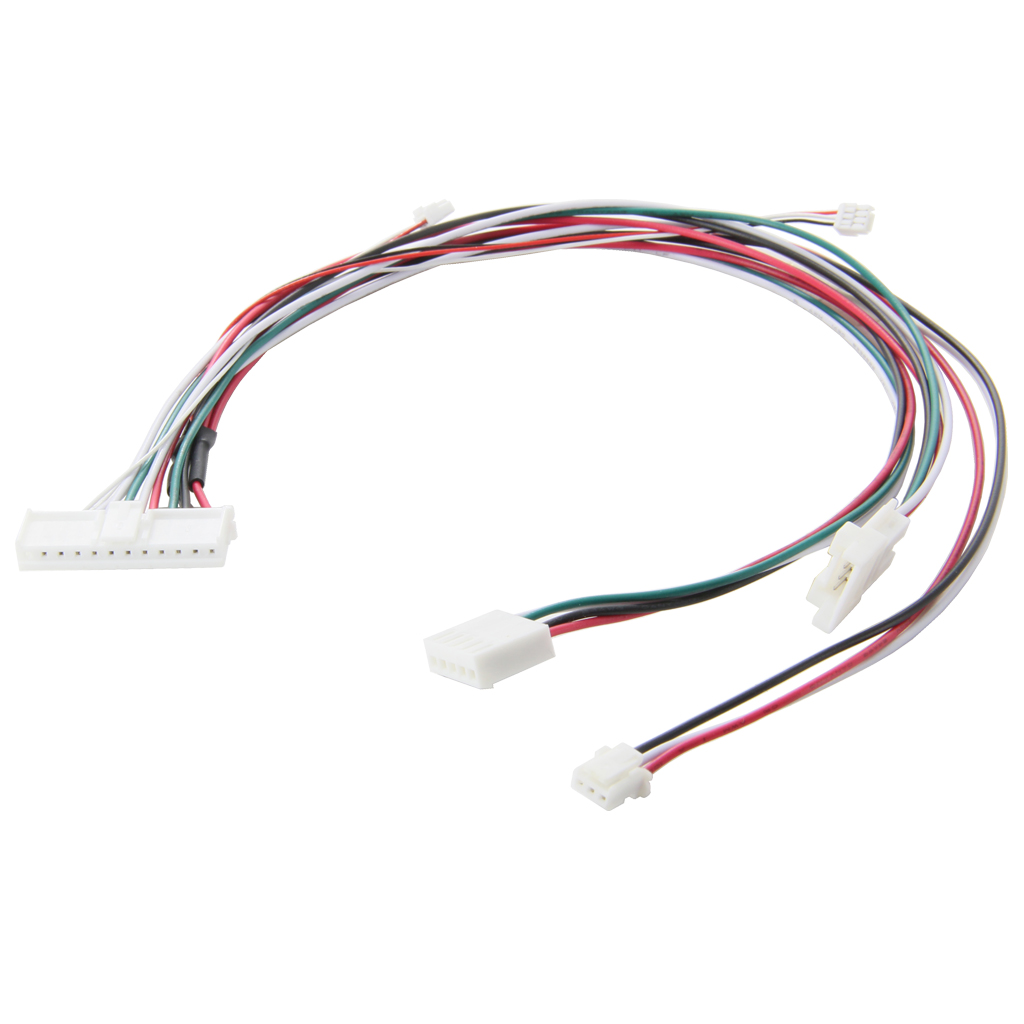
A wire harness is a pre-assembled bundle of wires, cables, connectors and insulation that carries power and signals between the internal modules of a device. It is rarely purchased as a catalogue item. It is a drawing-controlled part that has to fit one specific enclosure, reach one specific set of ports, and survive the environment the finished equipment is sold into.
That is why the quality of a harness is decided long before assembly begins. Every connector interface, conductor gauge, insulation compound and protection method either removes a class of failure or introduces one.
This article breaks the wire harness into its core component groups, explains how those parts work together to support internal device connection and continuous 24/7 operation indoors and outdoors, and identifies the parameters and certifications that act as hard constraints in a sourcing decision. Manufacturing and certification examples are drawn from P-Shine Electronics Co., Ltd, a Dongguan-based cable and wire harness manufacturer established in 1997 that operates seven independent factories covering wire harness, connector and insulation material production.
Problem Definition: Why Harness Problems Rarely Start at the Harness Level
When equipment comes back from the field, the report usually reads "the harness failed". The underlying cause is almost always one component decision taken early in the design and never revisited. Five patterns repeat across industrial, medical and appliance projects.
- Connector mismatch. A wiring connector is sometimes selected for board space rather than for current rating, locking behaviour or mating direction. The harness then works on the bench and fails under vibration.
- Undersized conductors. A low voltage wire harness carrying only signals is often specified with minimal copper, then reused for a circuit that actually needs a high current power wire harness. Heat builds up inside the bundle where nobody measures it.
- Insulation chosen for the wrong environment. A PVC construction is perfectly adequate for indoor equipment and can become brittle in cold outdoor enclosures or at elevated internal temperatures.
- Ambiguous drawings. When two adjacent connectors share the same part number, or when pin functions are not written down, an assembly can be electrically correct and still be plugged into the wrong position.
- Uncontrolled substitution. A connector or wire replaced after approval without re-validation changes the product without changing the part number on the purchase order.
None of these is a manufacturing defect. All of them are specification and verification issues, which is why the leverage in wire harness sourcing sits at component level: precision about what the part is, how it is built, and which standard it is accepted against.
Industry Background: A Large, Fragmented and Heavily Customised Category
The global wire harness market was estimated at USD 99.58 billion in 2024, with industrial applications and electrification among the main demand drivers (Precedence Research). Asia Pacific accounted for a 46% share of that market in 2024, reflecting the density of electronics and automotive manufacturing in China, India and Japan.
For a buyer, two structural characteristics of the category matter more than the headline figure. The first is fragmentation: harness manufacturing is distributed across thousands of small and mid-sized assembly houses, so capability varies enormously between suppliers that look similar on a website. The second is customisation. In P-Shine Electronics' product definition, the wire harness is listed as custom-made with no fixed model number, which means the drawing rather than a catalogue code is the product. Harness assembly, wire assembly and cable assembly are therefore engineering services as much as they are parts supply.
Standards give buyers a common language across that fragmented base. IPC/WHMA-A-620 is the industry-consensus standard for requirements and acceptance of cable and wire harness assemblies, and it separates acceptance into three workmanship classes. Which class applies is agreed between buyer and supplier at the start of a project, and it should be written into the purchase specification rather than assumed.
Market access adds a second layer of constraint. Appliance wiring material used in equipment sold into the United States and Canada is normally expected to carry UL recognition, while flexible cable constructions for the European market are typically assessed against VDE and EN 50525 requirements. A harness specification is only complete when it names both the acceptance standard and the destination market.
Detailed Solution: The Core Components and How They Work Together
1. Connectors: the interface that defines compatibility
A connector is the mechanical and electrical boundary of the harness. It determines what the harness can physically mate with, how much current it can carry through each contact, and how reliably it stays seated. P-Shine Electronics builds harnesses around Molex, JST, TE, Phoenix, Samtec, Hirose and Amphenol connector families, sourcing strictly to the brand and part number stated on the customer drawing and typically purchasing through established distribution channels such as DigiKey or Mouser so that the parts are genuine and original.
Terminal crimping is the other half of the connector story. A terminal crimped wire harness is only as reliable as the crimp itself: conductor strands, insulation support and pull-out strength all have to be correct, because a loose crimp behaves like a resistor that slowly heats up. This is one reason a custom wire harness drawing should identify the wire type and gauge per circuit instead of leaving termination to the assembler.
2. Wires and cables: conductor, gauge and construction
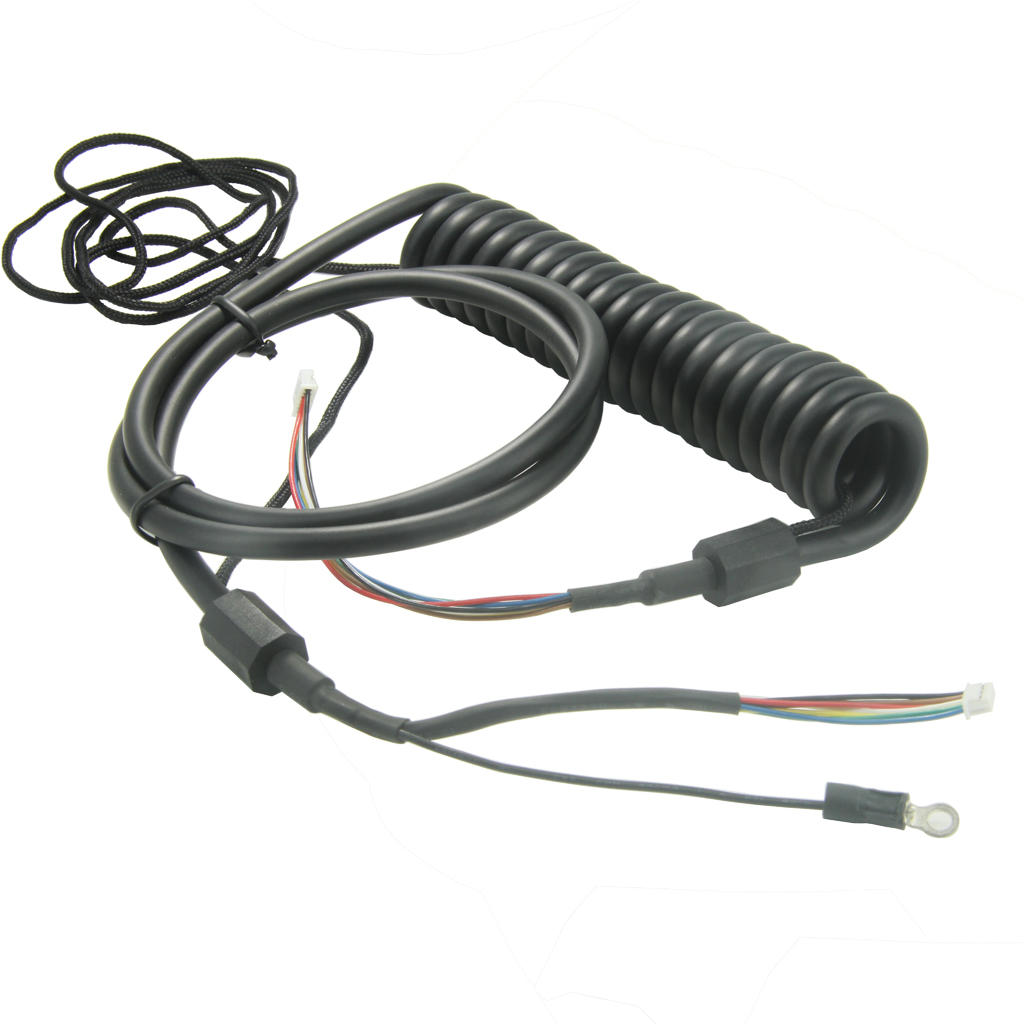
The conductor carries the current, and its construction decides flexibility and service life. A specification such as UL1007 with a 28AWG conductor is a common signal-level choice inside equipment; power and control circuits generally call for heavier gauge copper. Where several circuits run together in a noisy environment, a multi-core shielded cable harness keeps signal lines separated from switching interference.
Two construction details are frequently under-specified. The first is stranding: a fine-stranded conductor tolerates repeated flexing far better than a solid or coarse-stranded equivalent. The second is pairing and grouping, because how wires are grouped inside a wiring loom determines both the bundle diameter and how easily the harness can be routed inside a crowded enclosure.
3. Insulation and jacket materials: the environment boundary
Insulation is where a harness meets its environment. P-Shine Electronics works with PVC, XL-PE, TPE, TPU and TEFLON compounds, and the choice is driven by temperature, flexibility, abrasion and chemical exposure rather than by preference. PVC remains the general-purpose option for indoor equipment and household appliance wire harness construction. Cross-linked polyethylene and TPE or TPU are typically selected when a combination of heat resistance and mechanical toughness is required. TEFLON is generally chosen where higher service temperatures are involved, which is the origin of the high temperature resistant wire harness category.
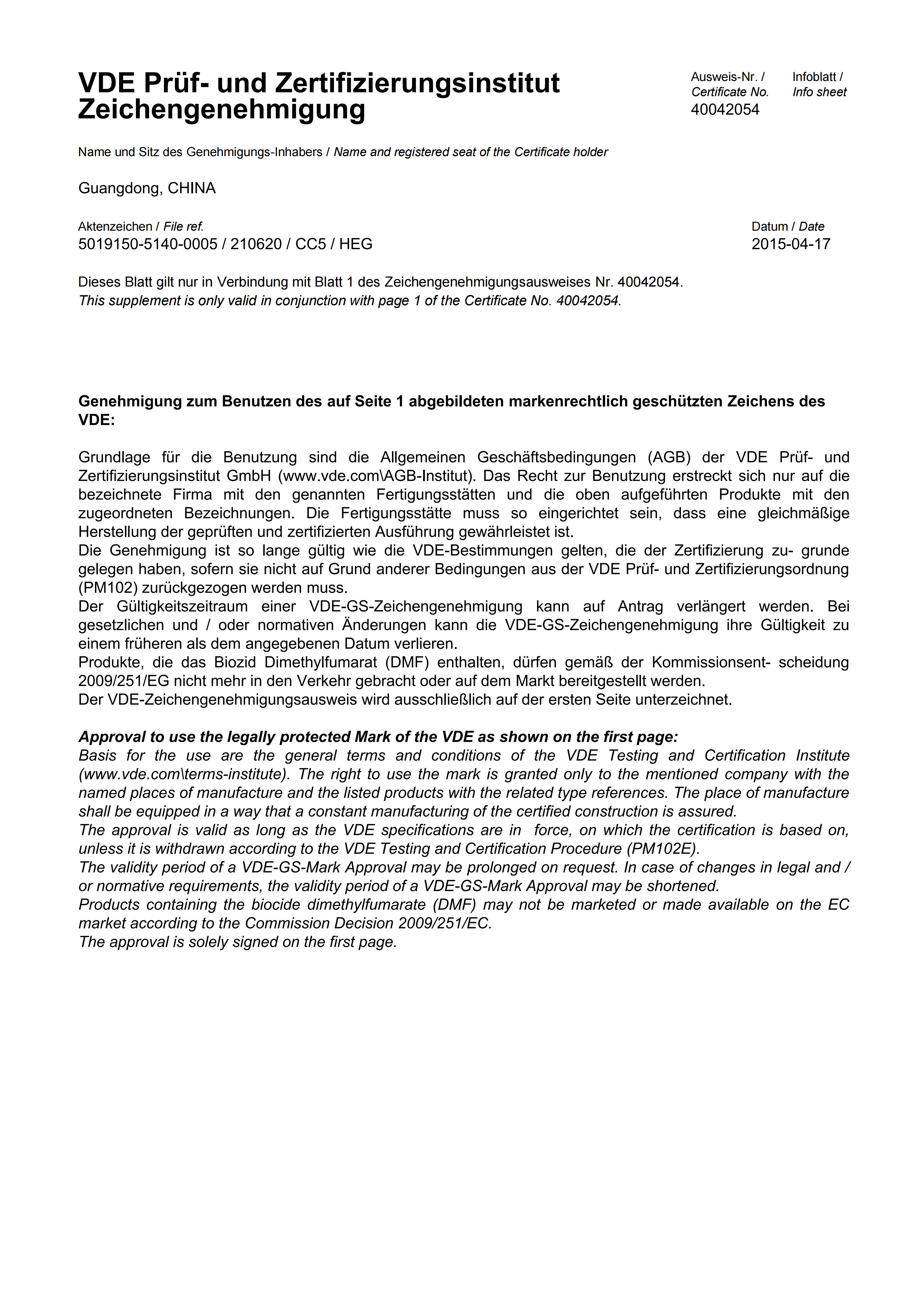
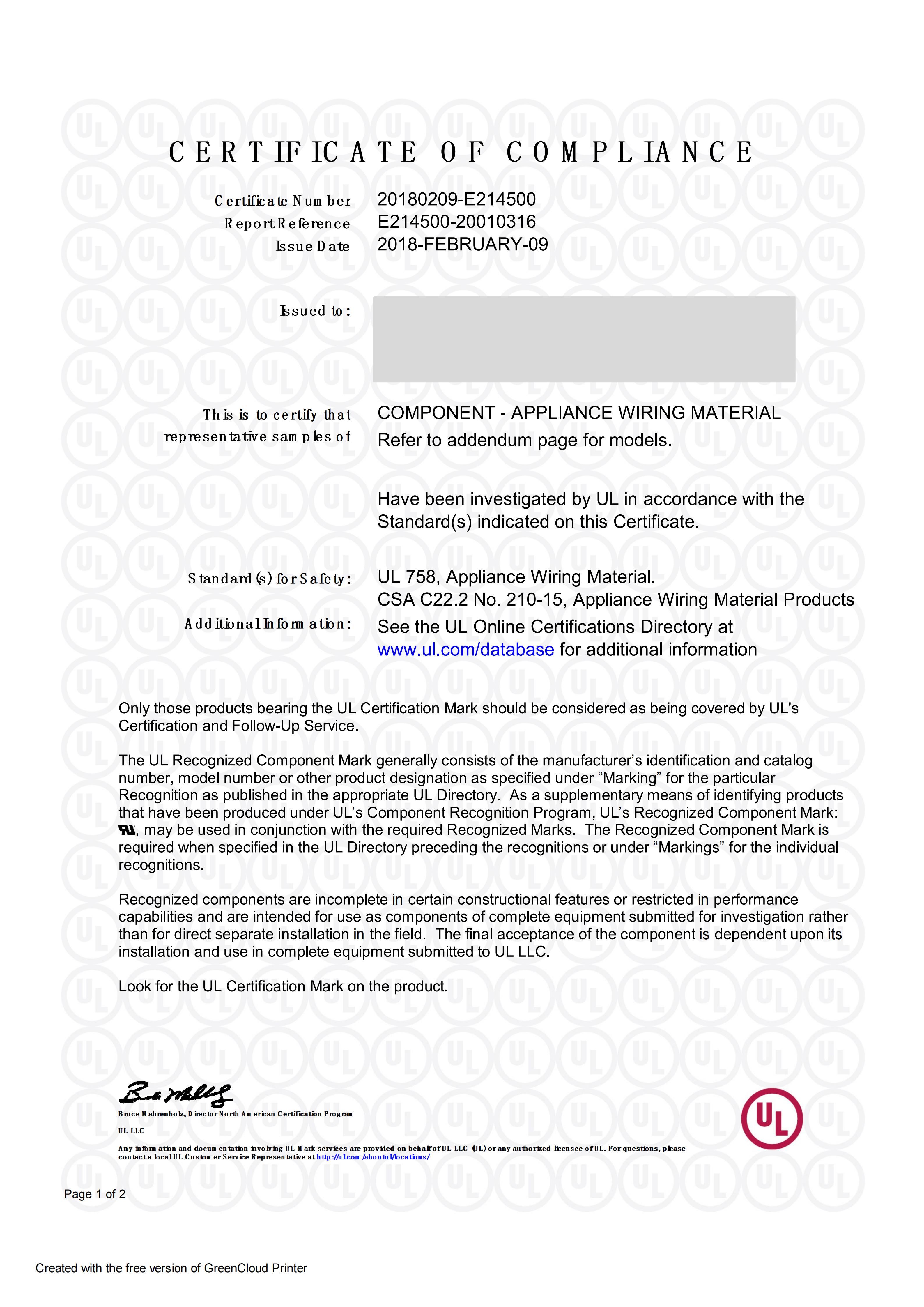
Insulation quality is also one of the most directly verifiable parts of a harness specification, because it is tied to certificate scope. For this product family, the VDE certification is issued by VDE Testing and Certification Institute under certification number 40042054, with an applicable scope of flexible cables with thermoplastic PVC insulation, assessed against DIN EN 50525-2-11 (VDE 0285-525-2-11):2012-01 and EN 50525-2-11:2011, and applicable to the EU market and Germany.
4. Protection, termination and routing hardware
Beyond the four electrical elements, a harness contains structural parts that keep it serviceable: heat shrink tubing, sleeving, strain relief, grommets, shielding and sealing. These parts decide whether the assembly survives routing during installation and whether it still performs after repeated temperature cycles.
Branch geometry is part of this group. P-Shine Electronics' drawing guidance sets the minimum distance from a branch to a connector at 30 mm and asks that branch positions be arranged so heat shrink tubing can be applied properly. In practice this single rule prevents a large share of mechanical damage, because branches placed too close to a connector create a stiff point exactly where the harness is most likely to be bent.
Environment determines the rest. A waterproof wire harness uses sealing and jacket selection to keep moisture out of the contact area, while a shielded wire harness controls electromagnetic interference rather than ingress. For equipment running continuously, flame-retardant options and low smoke and halogen-free constructions are also available as specification choices.
5. Component integration: what in-house production changes
P-Shine Electronics operates seven independent factories covering wire harness, USB cable, cable assembly and wire and cable production, together with its own insulation material, connector and copper wire processing operations. For a buyer, the practical effect is traceability: because insulation compound, connector and conductor supply sit inside the same group, a change of material or source is visible inside one manufacturing system instead of arriving as an unexplained shift in incoming goods.
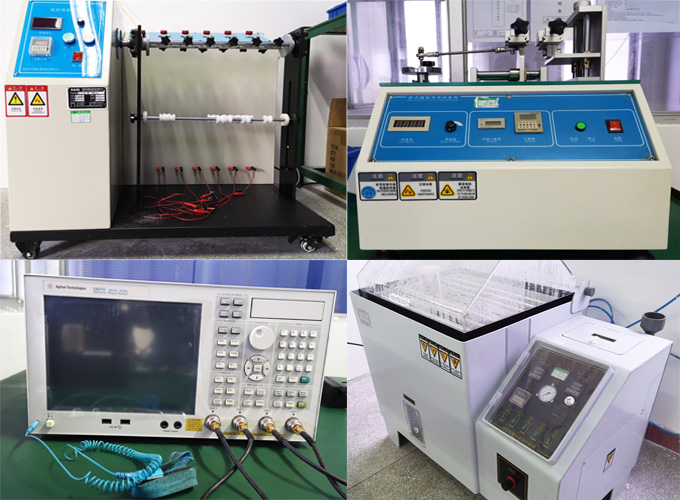
Production scale and testing sit behind that structure. Monthly capacity for this product family is 250,000 units, quality control is 100% test, and the production mode is OEM and ODM with all harnesses customised to customer drawings. The quality system is certified to ISO 9001:2015 by SGS United Kingdom Ltd under certificate number CN07/31354, with a scope covering the manufacture of electronic cables, power cables, flat cables and power plugs, and to ISO 14001:2015 under certificate number CN19/30539, with a scope covering the manufacture of electronic connectors and wire harness. Both certifications apply globally.
Step-by-Step Breakdown: From Function List to Approved Harness
A custom wire harness moves through six stages. Skipping the simulation step is the most common reason a design returns for rework after sampling.
- Define the functions. Write down what the harness has to do before drawing anything: which modules it connects, which circuits carry power and which carry signal.
- Plan the circuits. Decide the number of circuits and the function of each one. Power and ground circuits can often be combined on shared pins of the main connector, which reduces connector size and cost.
- Select connectors. Choose a connector for each position and record its brand and part number. If the same connector appears in adjacent positions, plan a colour rule so the assembler and the field technician can tell them apart.
- Complete the drawing and simulate it. Produce the full drawing, then run a routing simulation inside the enclosure outline to confirm lengths and bend radii before committing to tooling or samples.
- Make samples and test them. Build samples from the released drawing and validate them in the equipment, not on the bench alone. For this product, samples are provided free of charge so the validation loop can start early.
- Finalise and release to mass production. Lock the drawing, confirm the approved connector source, and release. Standard lead time for this product family is 30 to 45 days with a minimum order quantity of 200 units.
Drawing checklist that prevents most rework
- Every connector states its brand and part number.
- Identical connectors used close together are differentiated by wire colour.
- Every wire in every loop is distinguished by colour on the drawing.
- Wire type (for example UL1007), wire gauge (for example 28AWG) and colour are defined for each wire.
- Loop lengths are dimensioned.
- Pin functions are named, such as Power+ or GND.
- Wires performing the same function in different loops may share a colour.
- Where a loop branches, each branch length is dimensioned, with a minimum of 30 mm from branch to connector.
- Heat shrink tubing positions are planned so branches are arranged accordingly.
Use Cases: Where These Components Are Applied
The application profile behind this product family is deliberately wide: indoor and outdoor use, inside and outside equipment, waterproof and non-waterproof construction, with a 24/7 operation mode. The matched interfaces are equipment ports, PCB interfaces, signal control modules, power control modules and the internal functional components of the device.
- Household appliance wire harness. Small appliances, household appliances and lamps, where cost per unit and consistent crimp quality dominate the decision.
- Industrial control wire harness. Circuit control valve equipment, building temperature control equipment and automation equipment, where continuous duty and stable contact resistance matter most.
- Medical equipment wire harness. Medical devices where documentation, material consistency and repeatable assembly are part of the product requirement.
- Robotics and equipment internal wire harness. Robots and internal device wiring, where routing inside a crowded enclosure and flexing tolerance drive conductor and jacket selection.
- Energy, outdoor and monitoring equipment. Solar energy equipment, wind power generation, power transmission equipment, fish radar trackers, stage and photographic equipment, where a waterproof or shielded construction is often specified rather than optional.
Special requirements within these applications follow the same component logic: complex customised wire harness layouts, high-temperature resistance, shielding, optional flame retardancy, low smoke and halogen-free constructions, waterproofing, and drawing-based processing for customer-specific designs.

Comparison: Certification Coverage and Connector Sourcing Options
Certification in this category is a constraint rather than a marketing feature. The table below lists the certifications that apply to the wire harness product, with the issuing body, the applicable standard and the market each one unlocks.
| Certification | Issued by | Applicable standard | Certificate / file number | Market |
|---|---|---|---|---|
| UL | UL LLC | UL 758, Appliance Wiring Material; CSA C22.2 No. 210-15, Appliance Wiring Material Products | E214500 | USA, Canada |
| VDE | VDE Testing and Certification Institute | DIN EN 50525-2-11 (VDE 0285-525-2-11):2012-01; EN 50525-2-11:2011 | 40042054 | EU, Germany |
| ISO 9001:2015 | SGS United Kingdom Ltd | ISO 9001:2015 — manufacture of electronic cables, power cables, flat cables and power plugs | CN07/31354 | Global |
| ISO 14001:2015 | SGS United Kingdom Ltd | ISO 14001:2015 — manufacture of electronic connectors and wire harness | CN19/30539 | Global |
Connector sourcing is the second comparison that regularly changes cost and risk. Original brand connectors give the highest compatibility confidence; non-original alternatives can reduce cost substantially, but only after the buyer has tested and approved them.
| Option | How it is sourced | Cost position | Approval required |
|---|---|---|---|
| Original brand connector | Sourced strictly to the brand and part number on the customer drawing, typically through distribution channels such as DigiKey or Mouser | Used by default; in some cases the price of an original brand connector is ten times that of a non-original alternative | None beyond the drawing |
| Non-original alternative connector | Offered only where the alternative is already a mature, reliable product | Lower unit cost | Customer testing, verification and written approval before use; normally triggered by a customer request |
How to use these two tables together. Treat the certification table as the entry condition for a target market and the connector table as the cost lever. A lower-cost connector source is only a saving if the drawing, the certification scope and the customer's approval record all remain valid.
FAQ: Compliance, Capability, Budget, Sample and Lead Time
Which certifications apply to this wire harness, and which markets do they cover?
Four certifications apply. The UL certification is issued by UL LLC under file number E214500, with UL 758 Appliance Wiring Material as the applicable standard, and it covers the US and Canadian markets. The VDE certification is issued by VDE Testing and Certification Institute under certification number 40042054, with DIN EN 50525-2-11 (VDE 0285-525-2-11):2012-01 and EN 50525-2-11:2011 as the applicable standards, and it applies to the EU market and Germany. ISO 9001:2015 is issued by SGS United Kingdom Ltd under certificate number CN07/31354, with a scope covering the manufacture of electronic cables, power cables, flat cables and power plugs. ISO 14001:2015 is also issued by SGS United Kingdom Ltd under certificate number CN19/30539, with a scope covering the manufacture of electronic connectors and wire harness. Both ISO certifications apply globally.
What information do I need to provide to order a customised wire harness?
The harness is fully customised and has no fixed model number, so production starts from your design drawings. Alternatively, you can specify the connector brand and part number, the wire type (for example UL1007), the wire gauge (for example 28AWG), the wire colour and the wire definition. Production is run as OEM or ODM according to customer drawings, and quality control is 100% test.
Do you use original connectors, and what happens if the cost is too high?
Connectors are sourced strictly according to the brand and part number specified in the customer's drawing, and are typically purchased from platforms such as DigiKey or Mouser to ensure that the parts are genuine and original. Original brand connectors are used by default. If the price of an original connector is a concern, samples of a non-original alternative connector can be provided first — in some cases an original brand connector costs ten times the price of a non-original alternative. Use of the alternative begins only after the customer has tested, verified and approved it.
How does sampling and validation work before mass production?
Samples are provided free of charge. The usual sequence is to define the functions to be implemented, plan the number of circuits and the function of each, select suitable connectors, complete the drawing and run a simulation, then make samples and test them. Only after the samples pass does the design get finalised and released to mass production. Where a non-original alternative connector is proposed, the same rule applies: it enters production only after customer testing and approval.
What are the minimum order quantity, lead time and monthly capacity?
Minimum order quantity for this product family is 200 units, standard lead time is 30 to 45 days, and monthly capacity is 250,000 units. Supporting terms include low MOQ requirements, flexible cooperation, fast delivery and remote after-sales support, with export markets covering the EU, the Middle East and North America. To start a quote, send your drawing or your connector, wire type, gauge and colour details to pshine@pshinecable.com, or download the full product catalogue below.
Conclusion: Components First, Then the Specification
A wire harness is only as good as the four decisions inside it: which connector interfaces with the device, which conductor carries the load, which insulation matches the environment, and how the finished assembly is protected and routed. Everything else — the drawing, the acceptance class, the certification, the lead time — exists to hold those four decisions in place.
For buyers in research and evaluation stages, the practical order of work is therefore straightforward. Fix the environment first, because it determines waterproofing, shielding, temperature resistance and jacket material. Fix the connector interface second, because it is the least flexible part of the design. Then lock the conductor gauge and insulation against the certification scope that your destination market requires, so that the UL, VDE and ISO coverage you rely on actually applies to the part you are buying.
Next Step: Sample, Quote or Catalogue
P-Shine Electronics Co., Ltd produces customised wire harnesses, cable assemblies and connectors across seven independent factories, with free samples, a low MOQ of 200 units and a 30 to 45 day lead time.
Send your drawings or specifications to pshine@pshinecable.com or via WhatsApp at +86 135-8085-0092. Website: www.pshinecable.com. Address: No.8, Beiheng Road, Shangsha Community, Chang'an Town, Dongguan City, Guangdong, China. 523867.
Download the full introduction and product catalogue: P-Shine Introduction & Catalog (PDF).
Have Questions or Need More Details?
Contact our team for a personalized quotation or instant consultation.
Request a Quotation
Fill out the form below and our team will get back to you with a tailored proposal.
WhatsApp Direct Chat
Prefer to chat in real-time? Message us on WhatsApp for instant assistance & quick answers.
- Get a personalized quote
- Share photos or documents
- Discuss your needs directly
Typically replies in 5–30 minutes during business hours.