Wire Harness Failures in UAE Circuit Control Valve Projects: A Problem-Solution Guide
Circuit control valves in UAE installations are usually selected with care. The wiring harness that connects the valve to its controller is often treated as an accessory, ordered from stock, and installed without a specification review. That imbalance is where most field problems begin. A loom that performs acceptably in a temperature-controlled European plant can age quickly inside a UAE valve enclosure that runs 24/7, sits outdoors or in an unconditioned plant room, and cycles between high ambient heat and humid air.
This guide treats the issue as an engineering problem rather than a purchasing problem. It identifies the failure modes that matter in UAE circuit control valve projects, explains why they occur, and sets out a problem-solution path: specify a complex custom wiring harness with high-temperature resistance, shielding, optional flame-retardant and low smoke halogen-free construction, and a waterproof build, then verify the result through documented certification and 100% testing.
Problem Definition: What Fails First in a UAE Circuit Control Valve Harness
Four technical failure modes account for most harness-related valve faults in hot, humid installations: heat-aged insulation, moisture ingress at the connector interface, shield and signal degradation, and terminal or connector failures traced back to an incomplete drawing. A fifth risk, documentation, decides whether the project can prove compliance after installation.
1. Heat ageing turns flexible insulation brittle
Insulation selected for a temperate cabinet hardens when it is held continuously at elevated enclosure temperature. Elongation drops, the jacket cracks at bend points and near terminal transitions, and the fault appears as an intermittent open circuit that disappears when the loom is moved. The design response is to select the insulation family against the actual or expected enclosure temperature rather than against cost alone. P-Shine Electronics Co., Ltd offers harness materials in PVC, XL-PE, TPE, TPU and TEFLON, which allows the insulation to be matched to the thermal load instead of accepting a single default.
2. Moisture ingress at the connector interface
Humid air combined with daily thermal cycling draws moisture into connector cavities and terminal interfaces. Corrosion raises contact resistance, and in the worst case the valve receives a valid command while the return signal becomes unstable. The design response is a waterproof harness construction with correct sealing at the connector interface, plus routing that keeps the lowest point of the loom out of standing water. The applicable scenario for these assemblies explicitly covers indoor and outdoor equipment, inside and outside the device, in both waterproof and non-waterproof versions, which means sealing should be decided per installation point rather than once per project.
3. Shield degradation and signal noise on control lines
Valve control signals frequently share a panel with solenoid drive currents. An unshielded multi-core loom can couple switching noise into the control pair, producing positioning errors or spurious commands that are difficult to reproduce during a site visit. A multi-core shielded cable harness addresses this at the construction level, but only if the shield is terminated deliberately and the drawing states where it is bonded.
4. Terminal and connector failures traced back to the drawing
Many reported harness failures are drawing failures. If the drawing does not name the connector brand and part number, does not define each pin function, and does not state wire type, gauge and colour per circuit, the finished loom can be electrically correct and mechanically wrong. The result is a terminal that backs out, a housing that mates with the wrong counterpart, or a branch that cannot be routed within its bend radius. The working rule is that each connector should carry its brand and part number, each circuit should be distinguished by colour, each wire should show its model and gauge, and each branch should carry a length, with a minimum distance of 30 mm from the branch to the connector.
5. Acceptance risk from undocumented construction
A harness that works but cannot be traced to a certificate scope creates a second problem at handover. UAE projects commonly involve consultants, main contractors and facility operators who ask for evidence, not assurances. Certification is only useful when the certificate number, the standard and the scope all match the construction actually supplied.
Industry Background: Why UAE Installations Stress a Harness Differently
The difference is duty cycle and environment, not geography alone. A circuit control valve in a building temperature control system may run continuously, be installed in a plant room without air conditioning, and be serviced only during planned shutdowns. Where the same valve sits in a semi-exposed enclosure, the loom also sees humid air and radiant heat. Under those conditions, the harness becomes a life-limited component, and the specification should treat it that way from the start.
Market scale explains why catalogue parts are everywhere and why project-specific engineering is the differentiator. The global wire harness market was estimated at USD 99.58 billion in 2024, according to Precedence Research, and Asia Pacific held a 46% share of that market in the same year. Neither figure says anything about fitness for a particular valve enclosure, but together they describe a supply base that is deep in standard assemblies and thinner in drawing-based engineering.
Standards give the project a common language. IPC/WHMA-A-620 is the industry-consensus standard for requirements and acceptance of cable and wire harness assemblies, and it is organised into Classes 1, 2 and 3. Component wire is commonly qualified under UL 758 and CSA C22.2 No. 210-15 for appliance wiring material, while flexible PVC-insulated cable is qualified under DIN EN 50525-2-11. A UAE project should confirm which clause the consultant has referenced, then verify that the supplied construction sits inside the corresponding approval scope.
Detailed Solution: A Specified Assembly, Not a Catalogue Harness
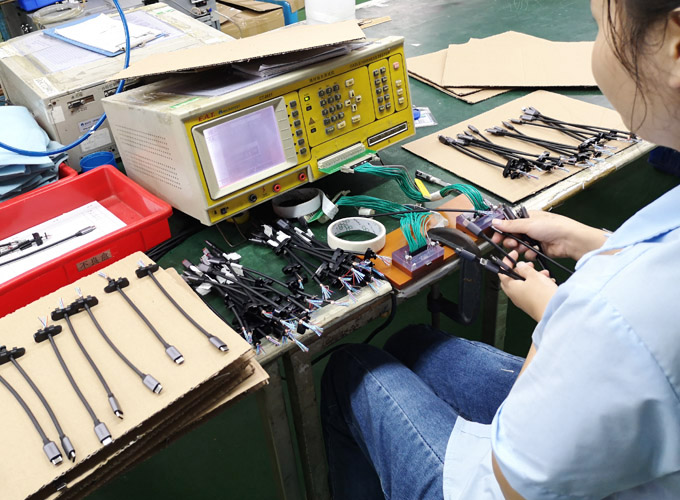
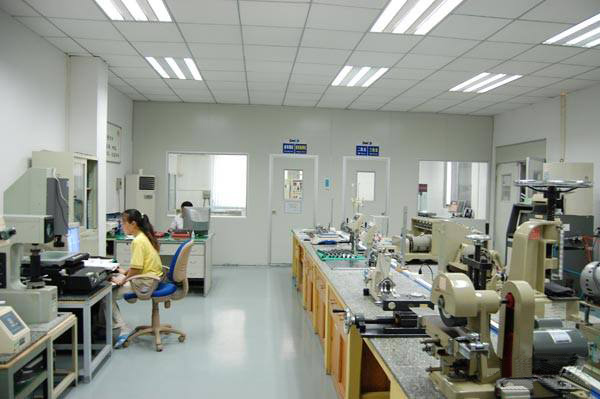
P-Shine Electronics Co., Ltd is a Dongguan-based cable and wire harness manufacturer established in 1997, producing wire harnesses, USB cables, cable assemblies, AC power cords and customized connection cables for EU, USA and Middle East markets. The company operates a 5,000 m² facility with 20 engineers and an annual output of 2,000,000 pieces. For this problem, the relevant capability is not a stock part number: all of its wiring harnesses are customized according to customer drawings, which is the only workable basis for a UAE valve project where heat, moisture and signal integrity requirements appear in the same assembly.
| Project requirement | Construction option | Effect on the valve installation |
|---|---|---|
| High-temperature resistance | PVC, XL-PE, TPE, TPU or TEFLON insulation | Reduces hardening and cracking at bend points near the actuator |
| Signal integrity | Multi-core shielded cable harness | Limits coupling from solenoid drive currents into control pairs |
| Fire performance | Flame-retardant optional; low smoke and halogen-free available | Matches the fire and smoke requirement stated for the enclosure |
| Water ingress | Waterproof wire harness construction | Protects terminal interfaces in outdoor or washdown locations |
| Connector control | Molex, JST, TE, Phoenix, Samtec, Hirose or Amphenol, by brand and part number | Keeps mating compatibility with the valve controller |
| Documentation | Drawing-based processing, customer drawing as the master | Creates a traceable basis for inspection and repeat orders |
Certification evidence that supports project acceptance
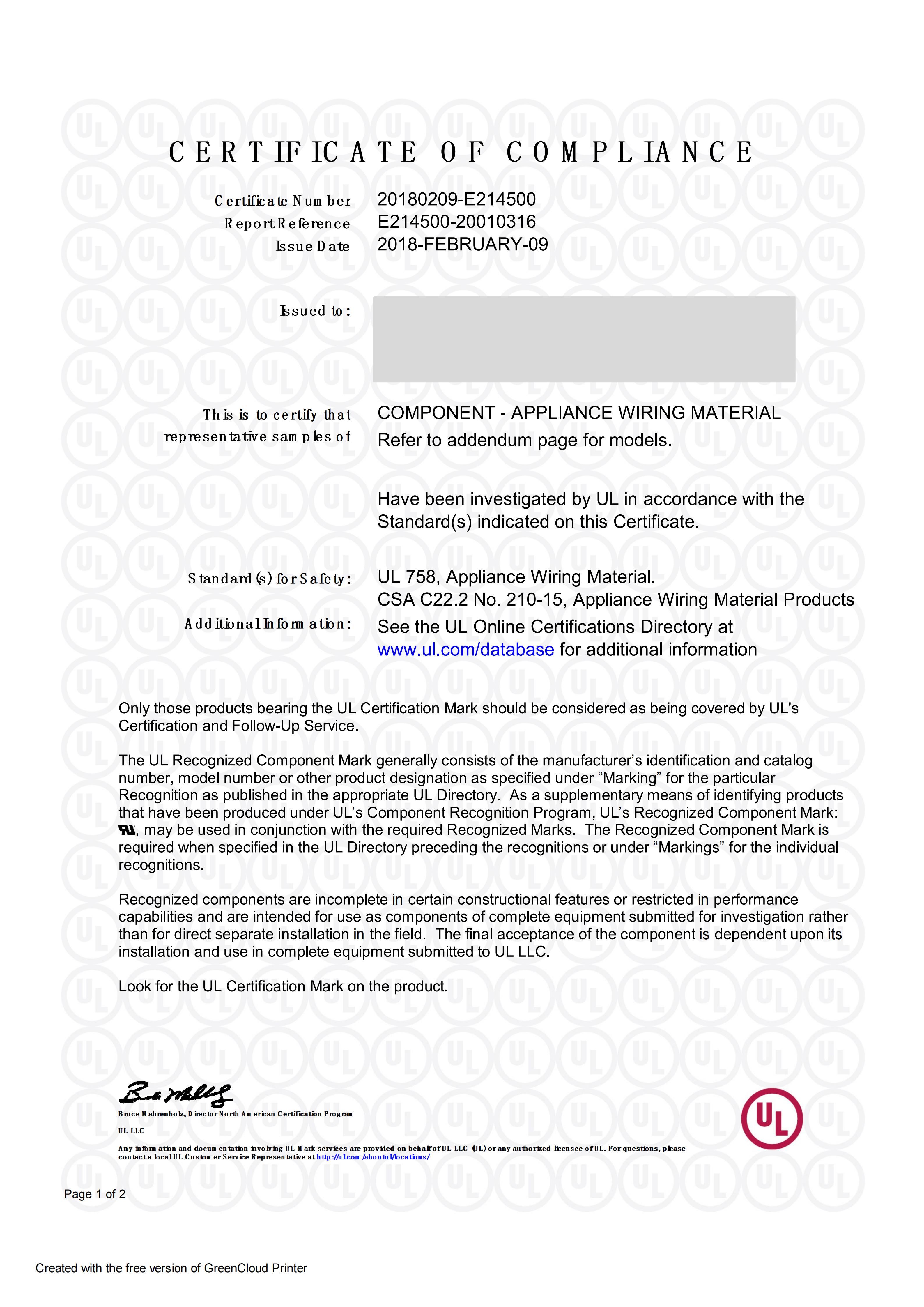
Certification should be quoted with its number, standard and scope, because a certificate that sits outside the supplied construction does not support acceptance. The relevant approvals held for these assemblies are:
- UL E214500 to UL 758 and CSA C22.2 No. 210-15, covering component appliance wiring material, single-conductor and multi-conductor thermoplastic or thermosetting insulated wire.
- VDE 40042054 to DIN EN 50525-2-11 (VDE 0285-525-2-11):2012-01 and EN 50525-2-11:2011, covering flexible cables with thermoplastic PVC insulation.
- ISO 9001:2015, certificate CN07/31354, issued by SGS United Kingdom Ltd, covering the manufacture of electronic cables, power cables, flat cables and power plugs.
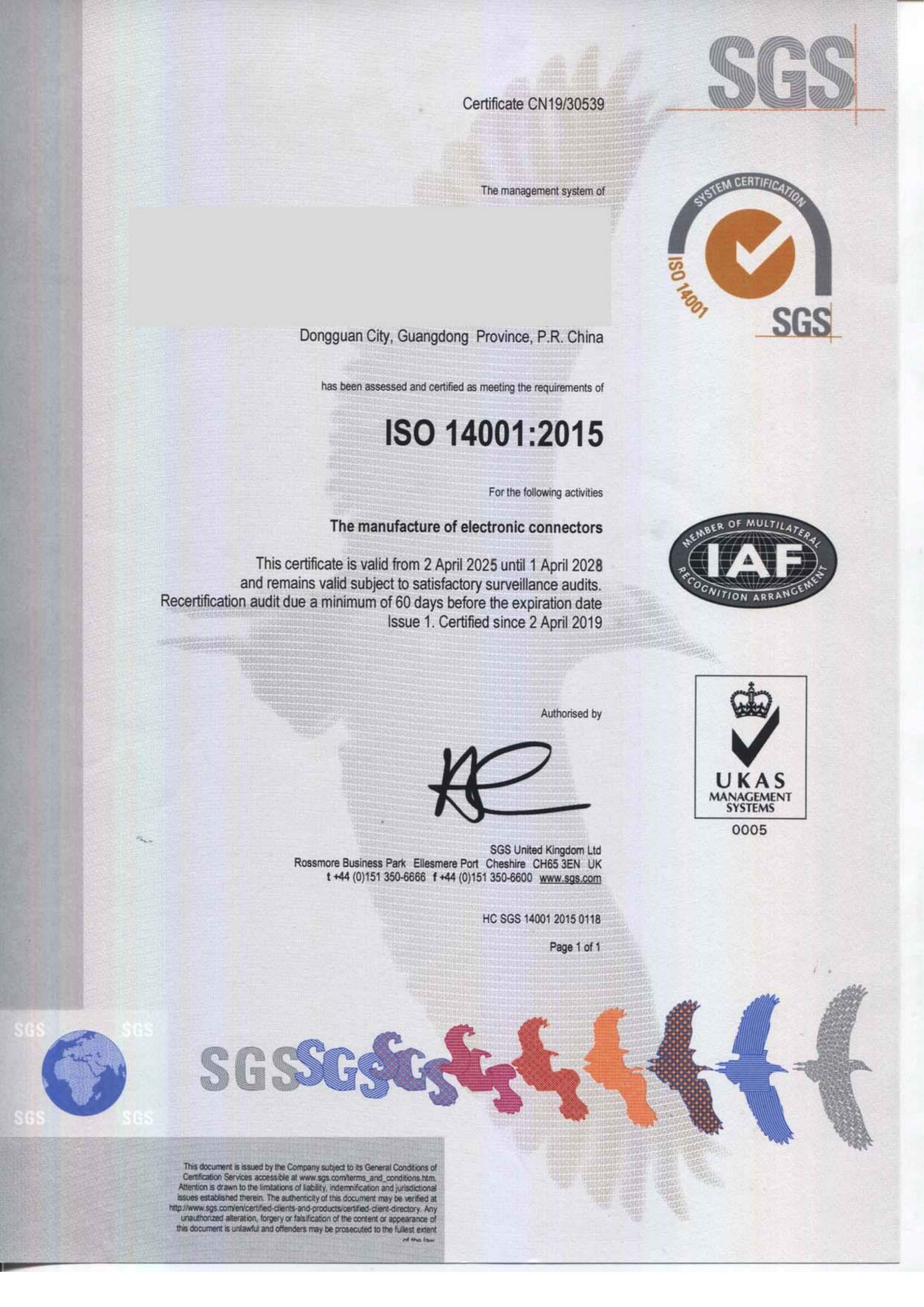
- ISO 14001:2015, certificate CN19/30539, issued by SGS United Kingdom Ltd, covering the manufacture of electronic connectors and wire harness.
Read together, these documents answer two different questions. The product certifications address the wire and cable construction; the management system certifications address how the assembly is controlled in production. A valve project usually needs both, and the certificate scope should be checked against the actual bill of materials before the purchase order is released.
Step-by-Step Breakdown: From Failure Report to Qualified Harness
A problem-solution approach only works if it is sequenced. The following seven steps convert a site failure or a new valve package into a harness that can be manufactured, tested and accepted.
Step 1 — Describe the operating envelope
Record where the harness is installed, whether the location is indoor or outdoor, inside or outside the equipment, waterproof or non-waterproof, and whether operation is continuous. The same valve model can require two different harness builds on one site, and the drawing set should show that difference explicitly.
Step 2 — Complete the drawing before requesting a quotation
The drawing is the specification. It should name the connector brand and part number for every position, differentiate adjacent identical connectors by colour, define each circuit by colour, and state the wire model, gauge and colour for each wire. It should also give the length of every loop, the function of every pin such as Power+ or GND, the length of each branch, and a minimum branch-to-connector distance of 30 mm. Where heat shrink tubing is required, branch positions should be arranged so the tubing can be applied cleanly.
Step 3 — Fix conductor, insulation, shield and jacket as one set
Temperature class, flexing, shielding and sealing interact. Selecting a high-temperature insulation without reviewing bend radius, or adding a shield without deciding its termination, usually moves the failure rather than removing it. Review the construction as a single design decision against the operating envelope from Step 1.
Step 4 — Lock the connector and terminal system
Connectors are sourced strictly according to the brand and part number stated in the customer drawing, and P-Shine Electronics typically purchases through distribution channels such as DigiKey or Mouser to keep the parts genuine and original. Original connectors are used by default. A non-original alternative is offered only at the customer's request, and only after the customer has tested, verified and approved it.
Step 5 — Build and validate a sample
The standard design flow moves from planning circuits and selecting connectors to completing the drawing, simulating it, making samples and testing them, and only then finalising the design for mass production. Sample validation is the point where drawing errors are cheapest to correct.
Step 6 — Release production with 100% testing
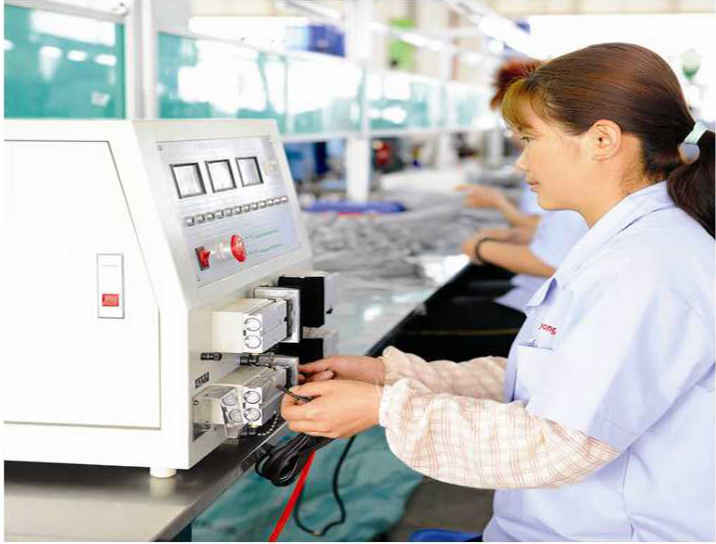
Production capacity is 250,000 units per month, the minimum order quantity is 200 units, and lead time is 30 to 45 days. Every unit is 100% tested, which is the control that matters most in a multi-circuit valve loom where a single crossed wire can produce a site callback.
Step 7 — Plan installation and after-sales support
Remote support is available for installation and troubleshooting questions. Pair that with a spare-parts policy that keeps at least one complete loom per valve type on site, so a damaged harness does not stop a plant room while a replacement is in transit.
Use Cases: Where This Specification Pays Back
Circuit control valve skids in building temperature control
A valve skid that controls heating or cooling water carries solenoid power, position feedback and often a communication pair through one loom. Shielding and a defined pin function list prevent the control pair from picking up drive noise, and a drawing-based build keeps replacement looms identical across several skids on the same site.
Outdoor and semi-exposed valve enclosures
Where the enclosure is exposed to humid air or washdown, the waterproof construction and the sealing decision at each connector interface matter more than the conductor itself. Specifying waterproof and non-waterproof builds separately avoids paying for sealing in dry plant rooms while keeping it where it is needed.
Multi-valve panels with power and signal in one loom
A combined power and signal harness reduces connector count at the panel, but it also puts high current next to low-voltage control lines. This is the case where a multi-core shielded cable harness and a properly terminated shield are worth specifying at design stage rather than discovering during commissioning.
Production evidence from industrial clients
These assemblies have been used by industrial manufacturing clients for device connection and internal device connection. A five-year project running at 250,000 units per month achieved an almost zero low defect rate, supported stable equipment operation on client production lines, and established long-term cooperative relationships with multiple industrial clients in Germany and the United States. The client base for this work includes the UAE, Canada, Germany, France, the UK, Israel, India, South Korea, Poland, Turkey, Taiwan and the United States.

Comparison: Catalogue Harness vs Project-Specified Harness
| Criterion | Open catalogue selection | Project-specified harness |
|---|---|---|
| Insulation | Usually one default material | PVC, XL-PE, TPE, TPU or TEFLON chosen against temperature and flexing |
| Shielding | Frequently not defined | Multi-core shielded construction where signal pairs require it |
| Fire and smoke | Not stated in the purchase | Flame-retardant optional; low smoke and halogen-free available |
| Water ingress | Open connector interface | Waterproof construction specified per installation point |
| Connector | Whatever the supplier stocks | Brand and part number per drawing: Molex, JST, TE, Phoenix, Samtec, Hirose, Amphenol |
| Drawing data | Supplier data sheet only | Pin functions, wire type, gauge, colour and branch lengths defined |
| Verification | Depends on the supplier's standard | 100% testing on all units |
| Certification | Scope may not match the build | Matched to UL 758 / CSA C22.2 No. 210-15, DIN EN 50525-2-11, ISO 9001:2015 and ISO 14001:2015 scope |
How to Shortlist a Wire Harness Supplier for a UAE Valve Project
Shortlisting should be evidence-based. Six checks separate a supplier that can engineer a valve harness from one that can only supply standard looms.
- Certificate scope match. Ask for certificate numbers, standards and scopes, not logos. UL E214500, VDE 40042054, ISO 9001:2015 CN07/31354 and ISO 14001:2015 CN19/30539 can all be verified against the proposed construction.
- Drawing-based engineering. Confirm that the supplier builds to your drawing and can process customer drawings, rather than offering the nearest catalogue equivalent.
- Material and construction range. Check that PVC, XL-PE, TPE, TPU and TEFLON are genuinely available, together with shielding, optional flame-retardant, low smoke halogen-free and waterproof construction.
- Connector control. Confirm that original connectors are sourced by brand and part number, and that any alternative requires your written approval after testing.
- Capacity and lead time. Verify monthly capacity, minimum order quantity and lead time against the project programme. For this supplier the figures are 250,000 units per month, 200 units and 30 to 45 days.
- Testing and support. Ask how units are tested, what record accompanies the shipment, and what remote support is available during commissioning.
Frequently Asked Questions
Are UL, CSA and VDE certifications relevant to a UAE circuit control valve harness?
They are relevant when the project's acceptance clause references them, and the certificate scope must match the actual construction. P-Shine Electronics Co., Ltd holds UL certification E214500 to UL 758 and CSA C22.2 No. 210-15 for component appliance wiring material, single-conductor and multi-conductor thermoplastic or thermosetting insulated wire, and VDE certification 40042054 to DIN EN 50525-2-11 for flexible cables with thermoplastic PVC insulation. Quality and environmental systems are certified to ISO 9001:2015 (CN07/31354) and ISO 14001:2015 (CN19/30539) by SGS United Kingdom Ltd. Confirm the required approval with the project consultant, then check that the chosen wire and construction fall inside the listed scope.
Can one harness combine high-temperature resistance, shielding, low smoke halogen-free and waterproof construction?
Yes, provided the combination is defined on the drawing before production. The applicable scenario for these assemblies lists complex custom wiring harness, high-temperature resistance, shielding, optional flame-retardant, low smoke and halogen-free, and waterproof construction as special requirements, with support for customer drawing-based processing. Available materials are PVC, XL-PE, TPE, TPU and TEFLON, and connectors can be specified by brand and part number from Molex, JST, TE, Phoenix, Samtec, Hirose or Amphenol. Because these requirements interact, they should be reviewed as one construction rather than added as separate line items.
What is the minimum order quantity and how is a quotation built?
The minimum order quantity is 200 units, and production capacity is 250,000 units per month. Every harness is customized according to the customer's drawing, so the quotation is built from the drawing and bill of materials rather than from a catalogue part number. Sending a complete drawing with connector brand and part number, wire type, gauge, colour and pin definition is the fastest way to receive an accurate quote.
Can we test samples before committing to production?
Yes. The standard design flow includes making samples and testing them before the design is finalised and mass production begins. Where a non-original alternative connector is proposed, it is offered only at the customer's request, and production use begins after the customer tests, verifies and approves it; original brand connectors are used by default.
What lead time should a UAE valve project plan for?
Production lead time is 30 to 45 days after the drawing and sample are approved, and every unit is 100% tested before shipment. Planning should therefore cover drawing approval and sample validation ahead of that window. For a project schedule review, contact Kaya Pi at pshine@pshinecable.com, by telephone on +86 769 85391338 or on WhatsApp at +86 135-8085-0092.
Conclusion
Wire harness failures in UAE circuit control valve projects are rarely random. They follow from a construction that was never specified for continuous heat, humid air and a noisy electrical panel. The fix is procedural as much as technical: define the operating envelope, complete the drawing to pin level, choose insulation, shielding, flame performance and sealing as one construction, control the connector by brand and part number, and verify the finished loom through 100% testing and certificate scopes that actually match the build.
That approach also makes the second order easier. A drawing-based harness can be re-issued across skids and sites without re-engineering, and each certificate can be matched to the construction supplied. For projects moving into evaluation, the practical next step is a drawing review followed by a sample.
Request a sample or a drawing-based quotation
Send the valve harness drawing, the operating environment and the required approvals to P-Shine Electronics Co., Ltd. The team will confirm the construction options, the certificate scope and the production schedule.
Contact: Kaya Pi
Email: pshine@pshinecable.com
Tel: +86 769 85391338
WhatsApp: +86 135-8085-0092
Website: www.pshinecable.com
Product catalogue: P-Shine Introduction & Catalog (PDF)
Have Questions or Need More Details?
Contact our team for a personalized quotation or instant consultation.
Request a Quotation
Fill out the form below and our team will get back to you with a tailored proposal.
WhatsApp Direct Chat
Prefer to chat in real-time? Message us on WhatsApp for instant assistance & quick answers.
- Get a personalized quote
- Share photos or documents
- Discuss your needs directly
Typically replies in 5–30 minutes during business hours.