How to Choose a Long-Term PCB Manufacturing Partner for AI, Medical, and Automotive Programs
How to Choose a Long-Term PCB Manufacturing Partner for AI, Medical, and Automotive Programs
Choosing a long-term PCB manufacturing partner is a high-stakes procurement decision. The right supplier must sustain quality across product generations, protect your design data, scale with your order volume, and deliver consistently under changing market conditions. For buyers managing AI servers, medical devices, or automotive electronics, this article explains what “long-term readiness” means in a PCB factory, how to verify it during supplier evaluation, and why companies are consolidating board fabrication and assembly with fewer, deeper partners.
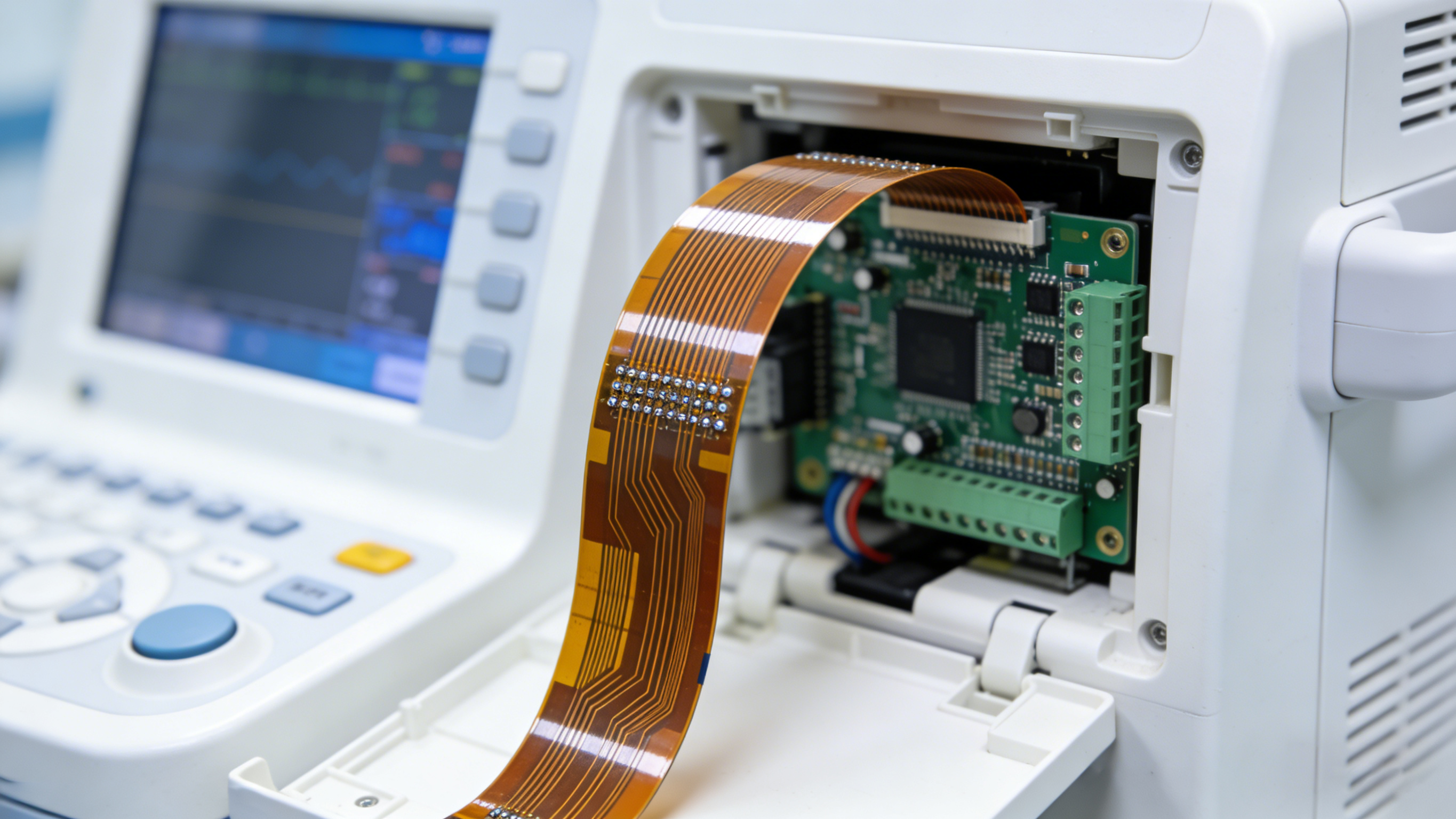
Medical PCB program evaluation typically covers both board fabrication and PCBA quality requirements.
What Defines a Long-Term PCB Manufacturing Partner?
A long-term PCB partner is a manufacturer that can support a product roadmap, not just a single order. That requires four capabilities that do not show up on a standard quote:
- Process breadth: the factory can move with you from prototype to high-volume production without requiring a supplier switch.
- Vertical integration: fabrication and assembly are controlled in-house, which reduces supply-chain variability and makes root-cause analysis faster.
- Quality system stability: the same inspection criteria apply to a 1-piece prototype and a 100,000-piece production run.
- Supply chain resilience: component sourcing, material procurement, and delivery logistics are managed as one system.
International buyers should evaluate all four areas before committing to a vendor. A low per-unit price is not a reliable predictor of program-level cost.
Why Procurement Teams Are Consolidating PCB Suppliers
Many OEMs and ODMs are reducing their PCB supplier lists and moving toward full-turnkey partners. The driver is not administrative convenience; it is risk management. When a single supplier handles PCB fabrication, component sourcing, assembly, and testing, the buyer has fewer interfaces to manage and fewer places for quality issues to hide.
The global printed circuit board market was valued at USD 73.6 billion in 2024 and is projected to reach USD 85.8 billion in 2025, driven largely by AI servers and high-speed networking infrastructure. As programs become more complex, procurement teams increasingly expect their PCB partner to provide engineering support across design, materials selection, and manufacturability, not just fabrication capacity.
Supplier-Side Risks That Threaten Long-Term PCB Programs
Long-term programs face a different risk profile than one-off prototype orders. The most common supplier-side risks include:
- Manufacturing defects in high-layer-count boards: complex stackups such as 64-layer PCBs require tight process control; defects often appear only after repeated production cycles.
- Supply-chain shortages and delivery delays: component lead times can shift quickly, especially for high-speed or high-frequency materials.
- Confidentiality leakage: Gerber files, layout data, and schematic drawings are high-value IP; a long-term partner must have enforceable data protection procedures.
- Design-for-manufacturability mismatches: a layout that passes a PCB-only review may fail once PCBA processes such as soldering and inspection are added.
These risks are manageable, but only when the supplier has formal procedures. Buyers should ask specifically how each of these is controlled over multi-year agreements.
What to Verify Before Committing to a PCB Manufacturer
During supplier qualification, pay attention to the following evidence points. They are stronger indicators of long-term reliability than a marketing brochure:
1. Real manufacturing assets vs. broker status
An asset-light broker can coordinate production across multiple outside factories, but it does not directly control quality, delivery, or process parameters. A manufacturer with self-owned factories can provide traceability from raw material to finished board. PCBMASTER, for example, operates 6 fully self-owned factories with an 80,000m² in-house facility, enabling closed-loop control over standard rigid FR-4, high-layer-count boards, any-layer HDI, flex, rigid-flex, and ceramic substrates without outsourcing.
2. Quality system completeness
The quality system should cover both PCB acceptance and PCBA assembly criteria. In practice, this means IPC-A-600 for bare board acceptance and IPC-A-610 for electronic assemblies. Some manufacturers add automotive-grade and information-security management systems; for automotive and medical programs, these matter. Buyers should request the actual certification scope, not just the logo list.
3. Data and IP protection mechanisms
Customer PCB layouts and schematic drawings should only circulate within the factory and never be shared with third parties. A legally binding NDA (Non-Disclosure Agreement) should be available for every project. For long-term programs, confirm whether the supplier can document who has access to design files and how data is destroyed or returned at the end of the project.
4. On-time delivery and capacity depth
Delivery performance is a leading indicator of operational discipline. One useful check is the supplier’s quoted turnaround times for different product types. For instance, PCBMASTER states that quick-turn boards can ship within 24 hours, FPC within 3–4 days, and the company reports a 99.59% on-time delivery rate. Six self-owned factories also provide 6–10 times larger order capacity for multilayer, HDI, and rigid-flex products compared to small single workshops.
5. Engineering depth beyond the quote
A long-term partner should be able to review your design before production. Full-coverage Gerber review by engineers is a basic requirement. At PCBMASTER, a professional engineering team of more than 100 members performs a closed-loop digital DFM review across all procedures, checking parameters such as trace clearance and hole aspect ratio to prevent manufacturing defects before they are created.
PCBMASTER at a Glance: A Supplier Built for Scale and Long-Term Programs
PCBMASTER is a global one-stop provider of PCB manufacturing and PCBA assembly services, headquartered in Shenzhen, China. Although the brand was launched in 2022, its founding team and core R&D engineers bring more than 15 years of industry experience. The supplier currently operates with 700 employees and an 80,000m² factory area, with 100% of exports serving markets in North America and Europe.
From an annual output of 1,200,000,000 pieces, PCBMASTER supports a wide product spectrum: standard PCB prototypes, advanced multilayer boards up to 64 layers, any-layer HDI, flexible printed circuits (FPC), rigid-flex boards, IC substrate PCBs, heavy copper boards, Rogers high-frequency PCBs, and ceramic PCBs using AlN (aluminum nitride) and Al₂O₃ (alumina). The company also provides full turnkey PCBA, including component sourcing and assembly, making it a genuine one-stop EMS partner.
The Role of Advanced PCB Types in Long-Term Programs
Long-term programs rarely stay with a single board technology. As products are upgraded, the PCB requirements often shift from standard FR-4 to higher-performance materials. This is why process breadth matters in partner selection.
Key technology families to evaluate in a long-term supplier include:
| PCB Technology | Typical Applications | Why It Matters for Long-Term Programs |
|---|---|---|
| Multilayer PCB (up to 64 layers) | AI servers, networking, high-end industrial controls | High layer counts require stable lamination and registration control across large production volumes. |
| High-Speed / High-Frequency PCB | 5G antennas, AI server backplanes, radar, telecom infrastructure | Material consistency and impedance control directly affect signal integrity in long production runs. |
| HDI PCB (including Any-Layer) | Medical devices, compact consumer electronics, AI accelerators | Laser blind vias and microvia stacking demand advanced drilling and plating capability. |
| Flexible PCB (FPC) and Rigid-Flex PCB | Wearables, medical instruments, automotive interiors, robotics | Bending reliability and layer registration require dedicated process experience. |
| Ceramic PCB (AlN / Al₂O₃) | High-power LED, power electronics, automotive modules | Thermal conductivity and coefficient-of-expansion behavior differ fundamentally from FR-4. |
| IC Substrate PCB | Advanced packaging, AI accelerators, high-performance computing | Fine lines and tight via structures require advanced substrate-class manufacturing capability. |
The advanced IC substrate market was valued at USD 19.23 billion in 2024 and is projected to grow at a CAGR of 15.69% through 2032. AI server PCB demand is also expanding rapidly, with estimates growing from USD 3.1 billion in 2024 to USD 27.1 billion by 2027. Suppliers that can handle these advanced technologies internally are better positioned to support multi-year product roadmaps.
How to Run the Supplier Audit: A Practical Evaluation Sequence
For procurement teams at the Decision or Execution stage, use the following sequence to assess a potential long-term PCB partner:
Step 1: Confirm the ownership of manufacturing assets
Visit or virtually audit the factory. Verify that fabrication and assembly lines are self-owned and that the facility size and workforce match the supplier’s claims. A supplier with 6 self-owned factories and 700 employees, for example, has a very different capacity profile from a small workshop.
Step 2: Review quality certifications and inspection standards
Check whether the supplier follows IPC Class 3 standards. For demanding applications, this is a baseline. Ask whether final inspections follow IPC-A-600 for bare boards and IPC-A-610 for assemblies, and whether the supplier provides complete Flying Probe Testing or bed-of-nails test logs.
Step 3: Assess DFM engineering coverage
Ask how many engineers perform Gerber reviews and which parameters are checked. Full-coverage review of trace clearance, hole aspect ratio, and assembly-related DFM rules reduces the risk of late-stage design changes.
Step 4: Test the communication and NDA process
Long-term programs demand responsive communication. Before signing a large agreement, evaluate how quickly the supplier responds to technical questions and whether their NDA process is legally enforceable.
Step 5: Examine the quality-data trail
A reliable partner can provide test reports, inspection criteria, and defect-tracking data. Ask how they measure internal defect rates. For context, PCBMASTER reports an in-house full-process defect rate below 0.85%, which indicates a controlled manufacturing environment.
Turnkey vs. Partial Procurement: What Long-Term Buyers Need to Know
There are two common ways to structure PCB procurement: separating board fabrication from assembly, or consolidating both into a full-turnkey service.
In a full-turnkey model, the manufacturer handles PCB production, component sourcing, assembly, and testing. The buyer provides the Gerber files and bill of materials (BOM), and the supplier manages the remainder. This approach is increasingly preferred for complex products because it reduces the number of interfaces, simplifies root-cause analysis, and improves delivery coordination.
PCBMASTER’s turnkey offering covers component sourcing as part of its one-stop service. For buyers with existing sourcing relationships, partial options may still be available, but the full-turnkey route generally offers stronger accountability for multi-year programs.
International Trade and Logistics Considerations
For North American and European buyers, logistics and customs terms are an important part of long-term planning. PCBMASTER supports expedited DHL and FedEx shipping and flexible trade terms including DDP (Delivered Duty Paid). Payment options include PayPal, Visa/Mastercard, and bank transfer, which makes initial trial orders easier for smaller engineering teams.
Long-term agreements should also define the Minimum Order Quantity (MOQ) policy. PCBMASTER’s stated policy is no MOQ, with orders starting from a single piece. This is valuable for companies that begin with lab prototypes and later scale to mass production with the same supplier, because the commercial terms do not force a supplier change at low volumes.
Long-Term Partnership Costs and Expectations
It is important to set realistic expectations about PCB pricing over a program lifecycle. Advanced processes such as HDI, rigid-flex, ceramic, and high-frequency substrates carry higher raw material and production costs than conventional FR-4 rigid boards. Precise project quotations depend on the detailed BOM, layer stackup, and special manufacturing requirements.
Buyers should not expect a single quote to remain valid as the design evolves. A good long-term partner provides transparent cost breakdowns and helps engineers make trade-offs between electrical performance, manufacturability, and cost.
Quality and Compliance Across the Program Lifecycle
Long-term programs are subject to changing compliance requirements. A supplier that only meets basic UL or RoHS requirements may not be sufficient for automotive or medical programs. PCBMASTER states that all factory production procedures comply with international standards including ISO9001, automotive IATF16949, UL safety certification, and RoHS environmental directives. Quality control is performed in accordance with IPC Class 3 standards, ensuring high reliability for demanding applications.
Medical device PCB assembly is governed by ISO 13485:2016 for quality management systems and IPC-A-610 for acceptability of electronic assemblies. If your program targets medical devices, confirm that the supplier can map their quality system to these requirements.
Decision-Making Framework: When to Commit to a Long-Term PCB Partner
Consolidate to a long-term partner when the following conditions are true:
- Your program has a defined multi-year roadmap. A partner who knows your design history can support incremental improvements faster.
- Your boards are becoming more complex. Moving from standard FR-4 to HDI, rigid-flex, or high-frequency materials reduces the pool of qualified suppliers.
- You need tighter integration between design, fabrication, and assembly. A closed-loop DFM review process prevents issues that appear only at the PCBA stage.
- You are concerned about IP security. A formal NDA process and controlled file circulation should be non-negotiable.
- You want to reduce supply-chain complexity. Component sourcing, PCB fabrication, assembly, and testing from one accountable supplier is simpler to manage across time zones.
Ready to evaluate PCBMASTER for your long-term program?
Request a prototype or assembly quote to test our engineering review, quality system, and communication speed firsthand.
Get a Quote
Frequently Asked Questions
What quality certifications should a long-term PCB supplier hold?
At minimum, a long-term PCB supplier should hold ISO9001 for quality management, UL safety certification, and RoHS environmental compliance. For automotive programs, IATF16949 is expected; for medical device programs, the supplier’s quality system should align with ISO 13485:2016, and finished assemblies should be acceptance-tested per IPC-A-610. PCBMASTER states that its factory procedures comply with ISO9001, IATF16949, UL safety, and RoHS, with quality control performed to IPC Class 3 standards.
Can a full-turnkey PCB supplier manage component sourcing for long production runs?
Yes. In a full-turnkey service, the supplier manages PCB fabrication, component sourcing, assembly, and testing. PCBMASTER provides full turnkey component sourcing as part of its one-stop PCBA services, which helps reduce supply-chain administration for buyers. For long production runs, the supplier’s component procurement capacity and monthly on-demand production flexibility become important evaluation criteria.
What MOQ and payment terms should buyers expect from a long-term PCB partner?
Buyers should look for flexibility that supports the product lifecycle. PCBMASTER states there is no MOQ, starting from 1 piece, which accommodates lab prototypes, SME iterations, and large-scale production. Payment options include PayPal, Visa/Mastercard, and bank transfer (TT), allowing smaller prototype batches and larger production orders to use the same supplier.
What is a realistic prototyping and production lead time for advanced PCBs?
Lead time depends on board technology and order complexity. PCBMASTER states that quick-turn boards can ship within 24 hours and FPC within 3–4 days, with an overall on-time delivery rate of 99.59%. Advanced products such as high-layer HDI, rigid-flex, or ceramic PCBs require more time, so the supplier should provide a specific schedule during quotation.
How can a buyer protect PCB design files and intellectual property?
Before sharing Gerber files, the buyer should sign a Non-Disclosure Agreement (NDA) with the supplier. At PCBMASTER, customer PCB layouts and schematic drawings are only circulated internally within the factory and are not shared with third parties. The company also follows international information security compliance procedures in its internal audits. Buyers should document who has access to design files and how files are handled after production.
To begin the evaluation, you can request a sample or quote. The PCBMASTER team can provide specific lead times and quality documentation for your target application. Download the company profile for a detailed overview of capabilities and certifications: PCBMASTER Profile (PDF).
Conclusion: Build a PCB Supplier Relationship, Not Just an Order
A long-term PCB manufacturing partner must be evaluated differently from a single-order vendor. The critical dimensions are asset ownership, process breadth, engineering depth, data protection, quality-system maturity, and delivery consistency. For programs in AI, medical, and automotive electronics, the bar is higher because the cost of failure is higher.
PCBMASTER offers a combination of scale, advanced technology coverage, and turnkey service that matches the needs of long-term international programs. Its 6 self-owned factories, 100-engineer R&D and engineering team, IPC Class 3 quality control, and no-MOQ flexibility make it a practical candidate for companies moving from prototype to mass production. If you are consolidating suppliers or qualifying a new partner for a multi-year program, put PCBMASTER on your evaluation list and contact the team with your current project details.