
IATF 16949 and ISO 9001 for EV BMS Flex: What Automotive Buyers Must Verify
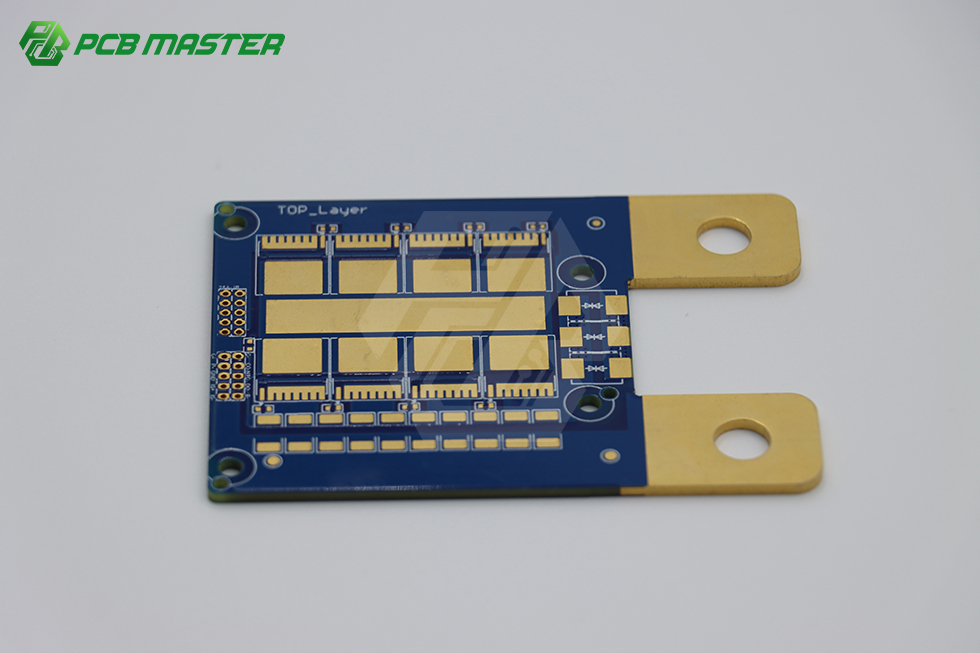
An IATF 16949 certificate confirms that a supplier's quality management system has been assessed against an automotive standard. It does not confirm that the specific flex circuit going into an EV battery management system was built from traceable polyimide, laminated under controlled humidity, handled in an ESD-protected area, and released against a control plan tied to your part number. Those are separate questions — and for BMS flex-circuits and smart cockpit control boards, they are the questions that decide whether a program reaches start of production on schedule.
This guide is written for EV program engineers, automotive Tier-1 suppliers, and procurement teams evaluating flexible and rigid-flex PCB suppliers. It explains what ISO 9001 and IATF 16949 actually cover, where the certificates stop, and what a buyer should verify in the documentation and on the factory floor before releasing a BMS flex or cockpit control board build.
Problem Definition: A Certificate Describes a System, Not a Shipment
ISO 9001 is a general quality management system standard used across industries. IATF 16949 is the automotive quality management system standard: it incorporates the ISO 9001 requirements and adds automotive-specific expectations spanning the automotive supply chain. For a buyer, the practical difference is that IATF 16949 assumes automotive-grade discipline — control plans, process capability monitoring, measurement systems analysis, and production-part approval documentation — rather than general manufacturing discipline.
Three limits matter just as much as the certificate itself:
- Scope is defined, not implied. Certification is issued to a defined site and a defined scope of manufacturing activities. A scope statement covering rigid multilayer boards does not automatically extend to flexible or rigid-flex fabrication and assembly.
- Certification is systemic, not lot-specific. A conforming quality system can still release a nonconforming lot. What protects a BMS program is the evidence chain around that lot: material lots, process parameters, inspection results, and traceability records.
- Certificates do not cover the operating environment. A flex circuit inside a battery pack faces vibration, thermal cycling, and moisture exposure. Those are design and process questions, not certificate questions.
Industry Background: Why BMS Flex Sourcing Is Under More Pressure
The commercial context behind automotive flex and rigid-flex sourcing has shifted quickly. The global printed circuit board market was valued at USD 73.6 billion in 2024 and is projected to reach USD 85.8 billion in 2025, driven largely by AI servers and high-speed networking (Prismark). Within that, the AI server PCB segment is estimated to grow from USD 3.1 billion in 2024 to USD 27.1 billion by 2027 (Goldman Sachs).
Flexible circuits are following a similar trajectory. The flexible printed circuit board market was estimated at USD 23.89 billion in 2024, with Asia Pacific holding a 76.8% revenue share (Grand View Research). The rigid-flex segment was valued at USD 25.4 billion in 2024 and is projected to reach USD 55.1 billion by 2032 at a CAGR of 10.27% (Credence Research). China remains the dominant manufacturing hub, accounting for 54% of global market share by production value in 2023 (Prismark / CMB International).
For automotive buyers, the implication is straightforward: capacity is plentiful, but capacity that combines automotive certification with genuine flex and rigid-flex process control is a narrower set. That is what makes verification, rather than certification alone, the deciding factor.
Detailed Solution: What to Verify Beyond the Certificate
1. Certificate scope versus the part you are actually ordering
Read the scope statement before the certificate number. The useful questions are: which manufacturing site is certified, and does the scope explicitly address flexible and rigid-flex fabrication and assembly? If your BMS interconnect is a flex or rigid-flex structure — typical for cell sensing and cockpit control profiles — a scope limited to rigid boards leaves a gap you must close through document review or an on-site audit.
2. Material traceability
Flex and rigid-flex automotive work is substrate-sensitive. The relevant material families include polyimide (PI) for flex cores, FR-4 TG180 and FR-4 TG155 for rigid sections, and Rogers or PTFE for high-frequency sections, plus metal-core, BT, and ceramic substrates where thermal or RF performance demands them. Buyers should be able to obtain, per shipment, which substrate grade was used, which material lot it came from, and where that lot is recorded. Without lot-level traceability, a field issue cannot be narrowed to a material batch — and a recall exercise becomes guesswork.
3. Process control: ESD, humidity, and material handling
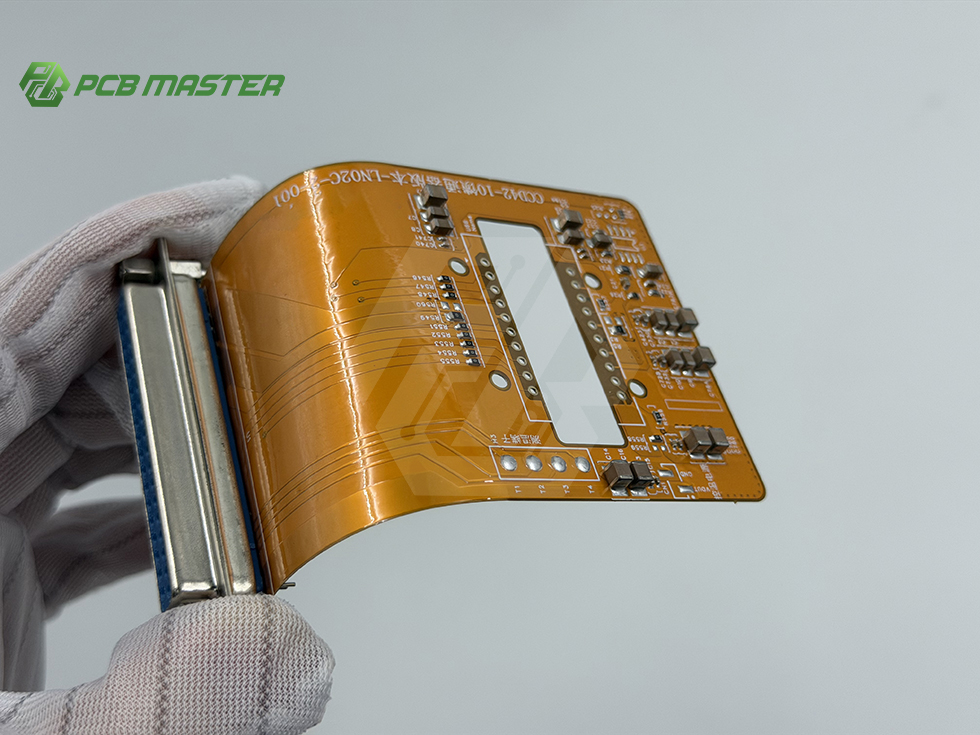
Humidity and static are the two environment variables that quietly damage flex assemblies. Polyimide-based flex substrates absorb moisture from ambient air; if that moisture is not driven off before lamination and reflow, it can turn into delamination or blistering at temperature. In practice this means controlled storage, documented drying or baking steps ahead of lamination and assembly, and defined humidity limits inside the production area. None of that appears on a quality certificate, but all of it appears in a process control plan.
ESD is the second variable. Fine-line flex traces and thin dielectric layers are vulnerable to electrostatic discharge during handling, depaneling, and assembly. A supplier building automotive flex should have ESD-protected production areas with defined grounding, wrist-strap and footwear checks, and documented handling rules. Again, the certificate is silent; the audit is not.
4. In-process inspection and electrical verification
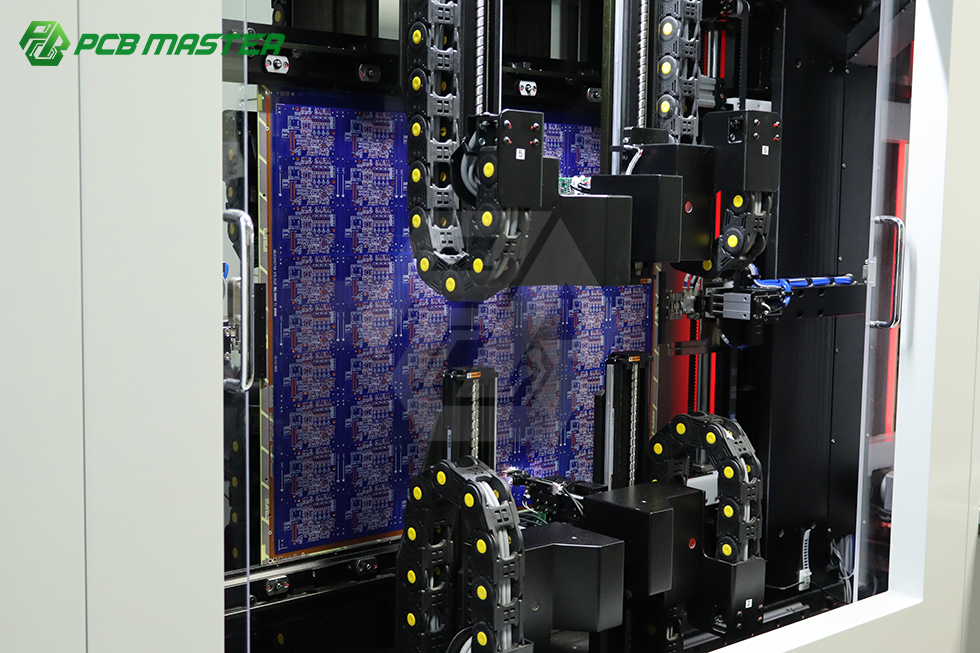
The evidence chain for a BMS flex build normally includes incoming material inspection, in-process patrol inspection, automated optical inspection, warpage and flatness testing, and final finished-board inspection. For multi-layer and high-speed structures, impedance verification should be part of the release criteria. PCBMASTER, for example, operates a full-process quality control sequence covering incoming material inspection, in-process patrol inspection, AOI, automatic warpage and flatness test, and final finished-board inspection, with manufacturing following IPC Class 3 industrial specification.
5. Process capability for the structure you are ordering
Not every supplier certified to an automotive standard can build every flex structure. Buyers should confirm the specific capabilities their design requires — for example, back drilling for stub control, via filling, any-layer HDI, or N+N stack-ups. PCBMASTER's stated capability range covers rigid FR-4 boards from 1 to 64 layers and high-precision FPC from 1 to 10 layers, with rigid-flex stack-ups and any-layer HDI blind and buried vias, plus back drilling, via filling, and deep blind microvia as supported special processes.
Step-by-Step Breakdown: A Buyer's Verification Workflow
- Read the scope statement, not the logo. Confirm the certified site and whether flex and rigid-flex fabrication and assembly sit inside the scope.
- Map your part to the process. Identify which lines, materials, and special processes your BMS flex or cockpit control board actually uses.
- Request the material records. Substrate grade, material lot, and the retention period for those records.
- Audit the environment. ESD protection, humidity control, material storage and drying, and cleanroom conditions where applicable.
- Review the control plan and inspection data. AOI coverage, electrical test method (flying probe, impedance test), X-Ray layer alignment where relevant, and warpage control.
- Confirm the final inspection and release criteria against IPC Class 3 and, for assemblies, the acceptability criteria of IPC-A-610.
- Verify capacity and continuity for your volume. Prototype and low-volume validation first, then the path to mass production on the same controlled processes.
- Confirm engineering support and change control. Who owns DFM feedback, and how design changes are recorded after the prototype stage.
Use Cases: Where This Checklist Applies
EV BMS flex-circuits
Battery management systems use flexible interconnects because they fit tight pack geometries and absorb vibration. The verification priorities here are material traceability, impedance control where the design demands it, and mechanical durability under repeated movement.
Smart cockpit control profiles
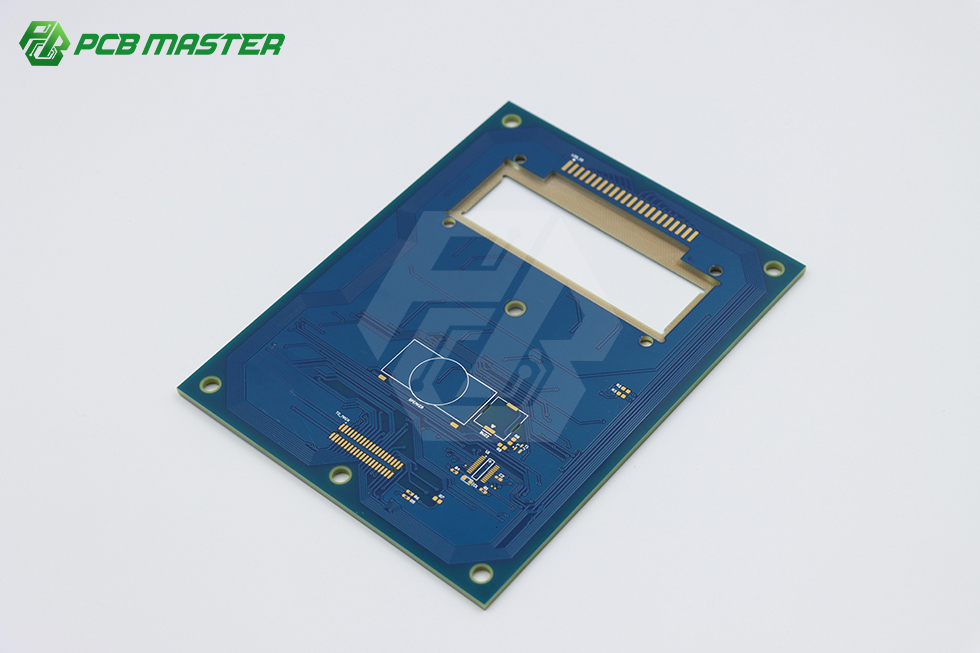
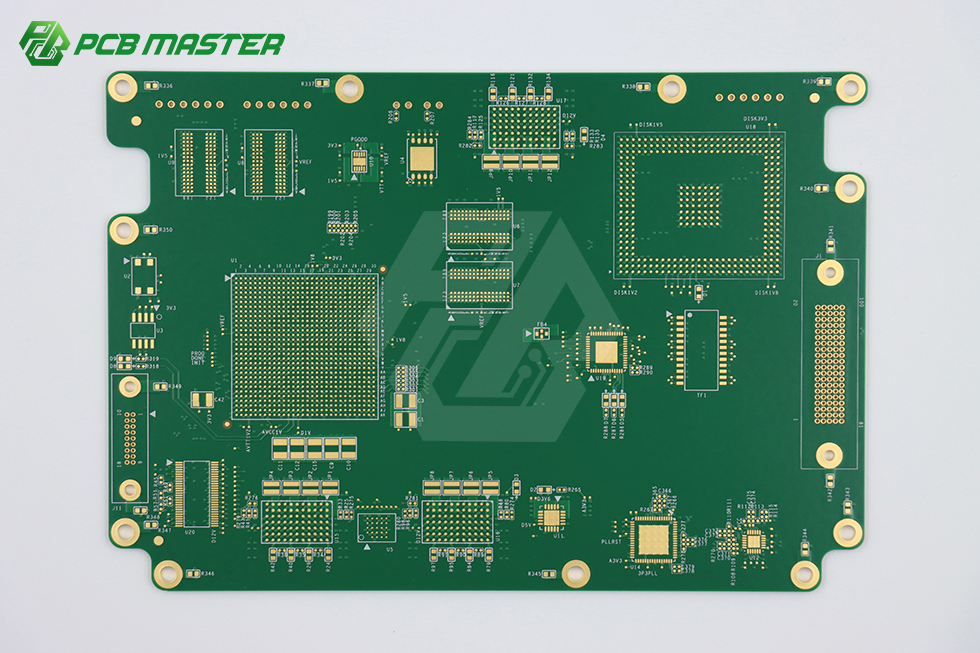
Cockpit control boards often combine rigid logic sections with flex tails in rigid-flex architecture. PCBMASTER supports automotive cockpit control profiles alongside EV BMS flex-circuits and radar hardware. For these builds, layer registration tolerance and flatness control matter as much as the certificate.
Automotive radar hardware
Radar modules push high-frequency demands onto the substrate. Low-loss materials such as Rogers and PTFE, controlled impedance, and blind or buried via structures become the practical evaluation criteria.
Certificate Coverage Comparison
| Verification area | What ISO 9001 addresses | What IATF 16949 adds | What the buyer still must verify |
|---|---|---|---|
| Quality management system | General QMS requirements applicable across industries | Automotive-specific QMS requirements built on the ISO 9001 structure | The certified site and the exact scope of activities |
| Product scope | Not product-specific | Scope is defined per site; flex and rigid-flex must fall inside it | Whether your specific flex or rigid-flex structure is covered |
| Material control | Receiving and supplier control expected | Automotive-grade supplier and change-control expectations | Lot-level substrate records (PI, FR-4 TG180/TG155, Rogers, PTFE, and others) |
| Process environment | Not specified | Process control expected; the environment is defined by the supplier's own control plan | ESD protection, humidity control, and material drying ahead of lamination and reflow |
| Inspection and test | Monitoring and measurement expected | Automotive-grade measurement system and capability expectations | AOI, electrical test, impedance verification, and warpage and flatness test data |
| Acceptability criteria | Not defined | Not defined | IPC Class 3 for boards; IPC-A-610 for assembly acceptability |
| Traceability | Documentation control expected | Automotive traceability expectations | MES-level lot traceability and the record retention period |
Specification Reference for Automotive Flex and Rigid-Flex Builds
| Parameter | PCBMASTER stated capability |
|---|---|
| Layer count | Rigid FR-4: 1–64 layers; high-precision FPC: 1–10 layers; rigid-flex stack-ups supported |
| Stack-up | Any-layer (12L) |
| Max finished dimension | 620 × 1092 mm |
| Max finished board thickness | 4.2 mm |
| Differential impedance (>50 ohm) | ±7% |
| Single-ended 50 ohm impedance | ±6% |
| Layer registration tolerance | ≥3 mil (boards ≤12 layers); ≥4 mil (boards over 12 layers); N+N stack-up ≥4 mil |
| Pattern accuracy (board dimension over 500 mm) | ±5 mil |
| Laser blind hole | 65/165 µm |
| Max dimple of plated filled hole | 10 µm |
| Plating aspect ratio of through hole | 16:1 |
| Back-drill parameters | Min diameter 0.35 mm; min stub length 5 mil; min distance to copper 5 mil |
| Supported special processes | POFV, N+N structure, hybrid lamination, deep blind microvia, metallized half hole |
Full parameters are available on the PCBMASTER website or from the PCBMASTER customer service team.
How PCBMASTER Handles Automotive Compliance and Production
PCBMASTER is a one-stop PCB manufacturing and assembly provider headquartered in China, serving automotive, industrial, telecommunications, medical, and consumer electronics customers with design support, component sourcing, quick-turn prototyping, and mass production. Launched as an independent brand in 2022, the company is built on a founding team and core R&D engineers with over 15 years of industry experience. The operation covers an 80,000 m² factory, 700 employees, 100 R&D engineers, and an annual output of 1,200,000,000 pcs, with 100% export focus and primary markets in Europe and North America.
For automotive electronics, PCBMASTER's product range is applied in EV BMS flex-circuits, automotive radar hardware, and smart cockpit control profiles, supported by IATF 16949 certification. Because IATF 16949 incorporates the ISO 9001 requirements rather than replacing them, a supplier certified to the automotive standard is expected to maintain the underlying quality management foundation as a minimum. That is why the two standards are usually discussed together — and why the scope statement, not the certificate count, is the document worth reading carefully.
On the production side, the evidence a buyer can request includes MES-based full-process monitoring and traceability, ESD static protection control, and a quality sequence built around incoming material inspection, in-process patrol inspection, AOI, automatic warpage and flatness testing, and final finished-board inspection, with manufacturing following IPC Class 3. The company runs six standardized self-owned factories with flexible scheduling, and reports a steady first-pass production yield of 99.6% and an on-time delivery rate of 99.5% across more than 3,000 valid orders processed daily, serving automotive Tier-1 suppliers alongside wearable, medical, and industrial customers. Prototype and mass production orders can be scheduled in parallel, with a standard sample MOQ of 5 pieces.
Frequently Asked Questions
Does an IATF 16949 certificate automatically cover flex and rigid-flex BMS boards?
No. IATF 16949 certification is issued to a defined site and a defined scope of activities. If the scope does not explicitly include flexible or rigid-flex fabrication and assembly, the certificate does not close that gap for your part. Buyers should read the scope statement and map it to the structure they are ordering before treating certification as coverage.
What capability evidence should an EV BMS flex supplier provide?
At minimum: the material families used (for example polyimide for flex cores, FR-4 TG180 or FR-4 TG155 for rigid sections, and Rogers or PTFE where high-frequency performance is required), the process tolerances relevant to the design such as impedance tolerance and layer registration, and the special processes the board requires. PCBMASTER's stated range covers up to 64 layers on rigid FR-4, 1–10 layers on high-precision FPC, any-layer 12-layer stack-ups, and special processes including POFV, N+N structure, hybrid lamination, deep blind microvia, back drilling, and via filling.
What drives cost on an automotive flex program?
Cost is driven by structure and process content rather than by the certificate. Layer count, substrate selection, special processes such as back drilling or via filling, and the component procurement cycle in a turnkey assembly all affect the commercial picture. PCBMASTER's standard sample MOQ is 5 pieces; mass production MOQ varies according to board structure and special processes and is confirmed through separate consultation.
Can we validate a BMS flex design before committing to production?
Yes. PCBMASTER supports rapid early-stage hardware R&D prototyping in 1–5 piece quantities for design validation, alongside cost-driven mass production on the same controlled processes. Quick-turn prototype service can be shipped within 24 hours, and prototype and mass production orders can run in parallel across six self-owned factories.
What lead time should automotive buyers plan for?
Quick-turn prototypes can ship within 24 hours. Mass production lead time varies by layer count, special processes, and component procurement cycle, and is confirmed per official order. For BMS and cockpit programs, the more useful planning question is how early the supplier can engage on DFM — PCBMASTER provides continuous engineering technical support and DFM auditing — and how quickly the first validation build can be released for testing.
Conclusion: Verify the Scope, Then Verify the Process
ISO 9001 and IATF 16949 answer a question about a supplier's quality management system. They do not answer the question a BMS flex program actually asks: whether this shipment was built from traceable substrate, produced under controlled humidity and ESD conditions, inspected against defined criteria, and recorded well enough to be traced back if something fails in the field. Automotive buyers who treat the certificate as the beginning of verification — not the end of it — are the ones who avoid surprises after the start of production.

Next Step: Validate Before You Commit
If you are scoping an EV BMS flex, radar, or cockpit control board build, request a sample run or a quotation from the PCBMASTER service team. Send your Gerber, PCBdoc, and BOM, and the team will review DFM, confirm material options, and quote prototype and mass production volumes against your actual structure.
Email: service@pcbmaster.com · Tel / WhatsApp: +86 190-6639-6428, +86 191-5494-6428 · Website: www.pcbmaster.com
Download the company profile and capability brochure: PCBMASTER Profile (PDF)
Have Questions or Need More Details?
Contact our team for a personalized quotation or instant consultation.
Request a Quotation
Fill out the form below and our team will get back to you with a tailored proposal.
WhatsApp Direct Chat
Prefer to chat in real-time? Message us on WhatsApp for instant assistance & quick answers.
- Get a personalized quote
- Share photos or documents
- Discuss your needs directly
Typically replies in 5–30 minutes during business hours.