
PCB Supplier Evaluation for AI: Capability and Delivery
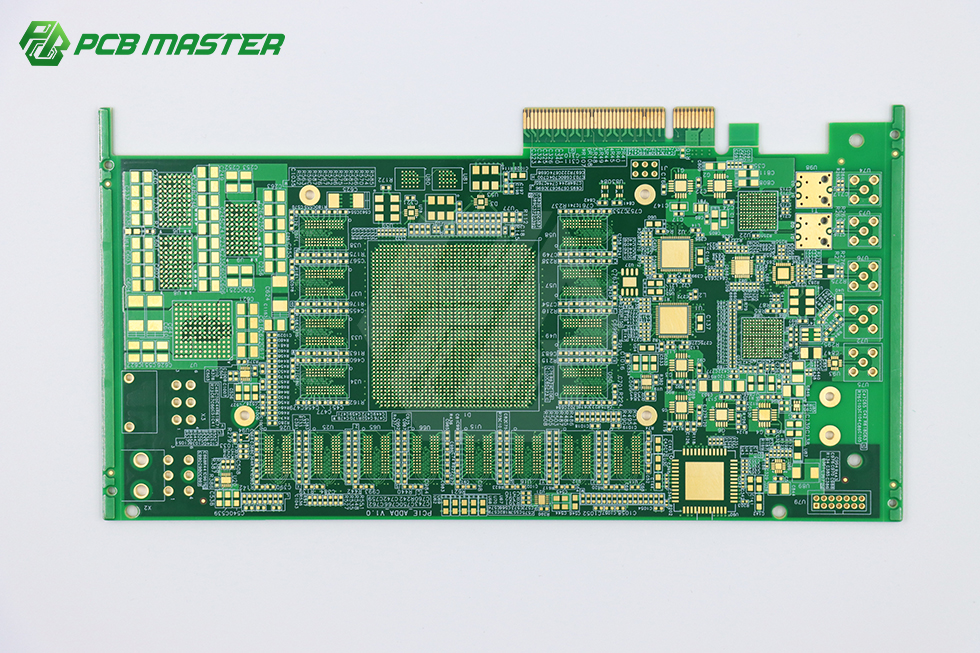
Cover: high-layer-count rigid PCB — the board class that separates AI-grade suppliers from standard multilayer capacity.
AI accelerator boards, switch fabrics, and semiconductor test platforms rarely fail in procurement because of price. They fail for two reasons: the supplier quoted a stack-up it cannot actually fabricate, or the supplier fabricated it correctly and then missed the shipment date that a rack integration schedule depends on. For buyers at the evaluation stage, the useful question is therefore not who sells PCBs, but who can prove manufacturing capability and delivery assurance with facts that survive an audit.
Short answer: Evaluate an AI or semiconductor PCB supplier in two passes. Pass one — capability verification: confirm in-house production of rigid, flex, rigid-flex, HDI, and ceramic boards, and test the supplier against real technical limits (rigid PCBs up to 128 layers, flex PCBs up to 32 layers, 4 mil track/spacing, 0.05–0.2 mm holes, heavy copper up to 10 oz). Pass two — delivery assurance: confirm quick-turn capacity (24-hour quick-turn prototyping and 3–4 day FPC delivery), a stated on-time delivery rate of 99.5% supported by 99.6% first-pass yield, six self-owned factories, and IATF 16949 / ISO 9001 certification. A supplier that clears one pass but not the other is a single-order vendor, not a program partner.
Problem Definition: Where Standard PCB Scorecards Break Down
Most PCB supplier scorecards in use today were designed for a market where a 6- to 12-layer FR-4 board was the baseline deliverable and delivery risk was judged from a quoted lead time. Three assumptions inside those scorecards no longer hold for AI and semiconductor programs.
- Layer count stopped being a capability proxy. A supplier listing up to 20 layers and a supplier capable of 128 layers can both answer yes to a generic multilayer RFQ. The gap only appears when a stack-up demands microvia HDI, fine-line routing, or heavy copper.
- Turnkey is a scope word, not a proof word. Turnkey PCB assembly means PCB fabrication, component procurement, assembly, inspection, testing, and delivery coordinated through one partner. Whether those steps run inside owned factories or are brokered outward is a separate question most RFQ documents never ask.
- Lead time is an output of capability, not a promise. A 24-hour prototype turnaround is credible only when drilling, plating, lamination, and inspection capacity sits in-house and the quality system can release boards quickly without skipping verification.
Capability verification and delivery assurance close these three gaps. Capability verification answers what the supplier can build and to what limit. Delivery assurance answers whether the supplier can repeat that build on schedule, at yield, and under a certified quality system.
Industry Background: Why the Evaluation Bar Moved
The demand side of PCB procurement has changed faster than the supplier evaluation side. Global PCB market value reached USD 83.6 billion in 2026 and is projected to reach USD 137.8 billion by 2035, according to Global Market Insights. That growth is not spread evenly across board types — it concentrates in the high-layer-count and substrate segments that serve AI compute.
A concrete view of where the volume sits comes from the Taiwan Printed Circuit Association (TPCA): NVIDIA's GB300 platform, introduced in 2025, requires PCBs with more than 26 layers, which raised PCB value to roughly USD 35,000 per server rack. Separately, Yole Group projects the advanced IC substrate market — organic substrates, glass core substrates, and substrate-like PCBs — to reach USD 31 billion by 2030, driven by AI and high-performance computing. Ceramic substrates follow the same pattern at a smaller scale: Dataintelo values the ceramic PCB market at USD 2.8 billion in 2025, with the alumina ceramic segment holding 52.4% of product-type share.
For evaluation-stage buyers, those figures translate into a practical constraint. As standard multilayer boards become commodity work, differentiation shifts to 26+ layer HDI, ceramic and IC substrate capability, and heavy-copper power delivery. A supplier that cannot demonstrate those limits in-house will either decline the program, subcontract it, or accept it and miss the schedule. Every one of those outcomes costs more than the savings from a lowest-bid RFQ.
Part 1 — Capability Verification: Auditing In-House Manufacturing Breadth
Capability verification should be structured as an audit of board families and manufacturing limits, not as a request for a general capability brochure. A supplier able to fabricate every required board family under its own roof removes the coordination delays and quality hand-offs that appear when drilling, plating, or lamination is outsourced.
Board technologies to confirm before anything else
For AI and semiconductor programs, five board families cover the majority of real demand. Confirm each one explicitly rather than accepting a general statement of advanced PCB capability.
- Rigid multilayer PCBs — the base of AI server boards, switch boards, and compute modules.
- Flexible PCBs — used in dense interconnect and compact semiconductor modules.
- Rigid-flex PCBs — for structures that must fold, bend, or survive repeated movement while retaining rigid sections.
- HDI PCBs — microvia and fine-line boards where routing density exceeds standard multilayer capability, including any-layer HDI structures.
- Ceramic and IC substrate PCBs — including alumina ceramic and AlN ceramic boards used in high-thermal and semiconductor packaging environments.
PCBMASTER operates as a one-stop PCB manufacturer covering PCB fabrication, component sourcing, and PCB assembly, and its in-house breadth spans rigid, flex, rigid-flex, HDI, ceramic, and IC substrate boards. That breadth matters at evaluation because it removes the multi-vendor coordination that typically adds both lead time and inspection gaps.

Supporting: in-house SMT capacity is verified during supplier evaluation, not assumed from a turnkey service label.
Technical limits that separate real capability from marketing copy
Layer counts and tolerances are the fastest way to distinguish a supplier that owns its process from one that resells capacity. Five limits should be requested in writing and then validated against a prototype build.
Rigid PCB layer count: up to 128 layersFlex PCB layer count: up to 32 layers
Minimum track / spacing: 4 mil
Finished hole size range: 0.05–0.2 mm
Heavy copper: up to 10 oz
Read those five numbers as a system rather than a list. A 128-layer rigid capability implies controlled lamination cycles and registration control across far more layers than a standard stack. A 4 mil track/spacing limit implies fine-line imaging and inspection capability that many quick-turn shops do not run. A 0.05 mm minimum hole implies laser drilling rather than mechanical drilling alone, which is a prerequisite for AI server and HDI work. Heavy copper up to 10 oz implies plating capacity for high-current power delivery, the same process family used in power and antenna boards. When a supplier can hold all five limits simultaneously, the probability of a stack-up being declined mid-program drops sharply.
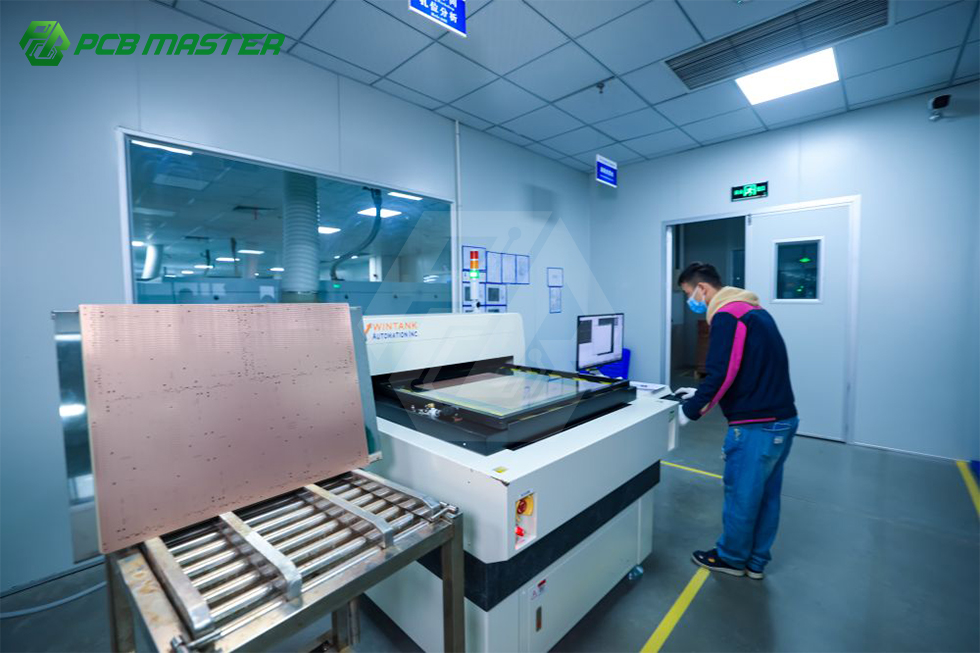
Diagram: post-drilling hole position analysis — the verification step that proves the 0.05–0.2 mm hole capability claim.
Factory structure: why ownership is a delivery variable
Six self-owned factories is not a marketing statistic — it is a risk structure. Boards that move between owned facilities stay inside one quality system, one set of process controls, and one release authority. When the same work is split across external partners, every hand-off introduces a fresh incoming inspection step, a fresh lead-time queue, and a fresh point where a lamination or plating deviation can be introduced without the primary supplier observing it. At the evaluation stage, request the process ownership map: which factory performs imaging, drilling, plating, lamination, solder mask, surface finish, electrical test, and final inspection for the specific board class in your RFQ.

Supporting: DVCP vertical plating line — the process behind heavy copper up to 10 oz.
Part 2 — Delivery Assurance: Verifying That Dates Mean Something
Capability determines whether a supplier can build the board. Delivery assurance determines whether the program ships. This second pass should be evidence-based, and it should be written into the supply agreement rather than left as a verbal commitment from a sales contact.
Quick-turn capacity as an engineering claim
Quick-turn capability is meaningful only when it is backed by in-house capacity. PCBMASTER states 24-hour quick-turn prototyping for urgent development builds and 3–4 day FPC delivery for flexible board programs. Because prototyping and flexible boards run on different process lines, a supplier that can hold both timelines is operating parallel capacity rather than reprioritizing a single queue. For buyers, that is the difference between a supplier that meets an urgent date and a supplier that meets it by pushing another customer's order back.
Yield and on-time delivery as contract metrics
Two numbers should appear in any serious supplier evaluation: first-pass yield and on-time delivery. First-pass yield measures how many boards pass electrical and visual verification on the first attempt, without rework or scrap. On-time delivery measures how often the acknowledged shipment date is met.
PCBMASTER reports 99.6% first-pass yield and a 99.5% on-time delivery rate. Those figures are tied to program performance rather than to a sales sheet: a program executed over a period of 5 to 10 years achieved long-term stable operation of finished products alongside the same 99.6% first-pass yield and 99.5% on-time delivery rate. The duration matters as much as the numbers — a rate sustained across a multi-year program indicates a stable process rather than a favorable quarter.
At evaluation, convert those figures into contractual terms: on-time delivery measured against the acknowledged ship date, first-pass yield reported per shipment, and a defined escalation path for the moment either metric falls below the agreed threshold.
Certification and quality-system checks
Certification is the compliance layer of the audit. IATF 16949 and ISO 9001 certification confirm that the supplier operates a documented quality management system; IATF 16949 additionally addresses automotive-grade process control, which becomes relevant whenever an AI or semiconductor program feeds into automotive, industrial, or medical end products. Request the certificate scope, the certified site list, and validity dates, then confirm that the certificate covers the factory that will actually build the boards rather than the corporate entity in general.
Order terms that support evaluation
Evaluation-stage buyers also need commercial flexibility. PCBMASTER states no minimum order quantity requirements, a standard prototype turnaround of 5–7 business days, and expedited options at 24–48 hours, alongside assembly support across SMT, THT, single- and double-sided assembly, and manual or automated soldering. Turnkey scope — PCB fabrication, component procurement, assembly, inspection, testing, and delivery — is coordinated through a single partner. For a buyer running qualification builds, no-MOQ terms mean the first order can be a technical validation order instead of a volume commitment.
Step-by-Step: A Seven-Stage Supplier Evaluation Workflow
The framework below sequences the checks so that each stage produces evidence for the next one. It can be run without revealing program volume, which makes it usable both for new supplier selection and for re-evaluation of an incumbent.
- Define the board class and stack. Specify layer count, board family (rigid, flex, rigid-flex, HDI, ceramic), copper weight, and hole size range. A stack above 26 layers or with 4 mil traces narrows the supplier field immediately.
- Issue a limits-based RFQ. Ask for maximum layer count, minimum track/spacing, minimum and maximum hole size, and maximum copper weight in writing, rather than requesting a general capability statement.
- Request the process ownership map. Identify which steps run in owned factories and which are subcontracted, and name the factory that will build the RFQ board.
- Place a qualification prototype. A 24-hour quick-turn prototype exercises imaging, drilling, plating, and inspection simultaneously. Measure dimensional accuracy against the 4 mil and 0.05–0.2 mm limits and review the coupon data.
- Verify certification scope. Match IATF 16949 and ISO 9001 certificates to the specific manufacturing site, and check validity at the time of award.
- Run a time-critical order. Place one order with a hard date that tests the promised turnaround — 3–4 day FPC delivery or an expedited 24–48 hour build — and record the actual ship date against the acknowledged one.
- Lock the metrics into the agreement. Contract for on-time delivery and first-pass yield reporting, then review performance quarterly before scaling volume.

Proof: routing capacity inside an owned factory — the physical basis for a 24-hour quick-turn claim.
Use Cases: Where This Framework Changes the Award Decision
AI server and accelerator boards
With GB300-class platforms sitting above 26 layers and PCB value per rack around USD 35,000, the layer-count ceiling and HDI capability become the first filter. Buyers should confirm both a high layer ceiling (rigid PCBs up to 128 layers) and fine-line HDI capability, because a supplier can pass the layer-count question while still failing the trace geometry requirement.
Semiconductor test and substrate programs
IC substrate and ceramic boards — alumina and AlN ceramic among them — serve applications where thermal performance and dimensional stability dominate. Confirm ceramic capability alongside organic substrate capability, and verify the hole-size range specifically, because substrate work depends on the small end of the 0.05–0.2 mm window.
Flex and rigid-flex modules
Flex programs are driven by two limits: layer count (flex PCBs up to 32 layers) and delivery speed. A 3–4 day FPC delivery claim should be tested on a real board, ideally one that also exercises 4 mil track/spacing, so the validation covers both density and schedule.
High-current boards
Heavy copper up to 10 oz supports power delivery on high-current designs. At evaluation, ask how copper weight is verified — cross-section, coupon, or both — and request the inspection record with the first build.
Automotive- and medical-adjacent programs
Where AI or semiconductor boards feed automotive, industrial, or medical systems, IATF 16949 and ISO 9001 coverage moves from a preference to a gate, and on-time delivery performance becomes a program risk metric rather than a service metric. Expect the supplier audit to require certificate scope evidence at this stage.
Comparison Table: What to Verify vs. What It Proves
The table maps each verification area to the RFQ question that tests it, the reference position stated by PCBMASTER, and the buyer-side exposure if the item goes unverified.
| Verification area | Question to put in the RFQ | PCBMASTER reference position | Risk if unverified |
|---|---|---|---|
| In-house board breadth | Which board families are fabricated in your own factories? | Rigid, flex, rigid-flex, HDI, ceramic, and IC substrate boards | Subcontracted steps add lead time and inspection gaps |
| Rigid layer limit | What is your maximum rigid multilayer count? | Rigid PCBs up to 128 layers | AI-class stacks declined or re-quoted mid-program |
| Flex layer limit | What is your maximum flex layer count? | Flex PCBs up to 32 layers | Flex designs split across multiple suppliers |
| Fine-line capability | Minimum track and spacing? | 4 mil track/spacing | Routing density revisions after design freeze |
| Hole size range | Minimum and maximum finished hole size? | 0.05–0.2 mm | Microvia and substrate designs fall outside capability |
| Copper weight | Maximum copper weight supported? | Heavy copper up to 10 oz | High-current boards require a second supplier |
| Quick-turn prototyping | What is your fastest prototype turnaround? | 24-hour quick-turn prototyping | Development cycles slip at the prototype stage |
| Flex delivery speed | Typical delivery time for FPC orders? | 3–4 day FPC delivery | Flex program schedules cannot be committed |
| Small-batch lead time | Standard small-batch turnaround? | 5–7 business days, with 24–48 hour expedited option | Pilot builds delay the production ramp |
| On-time delivery | What on-time delivery rate do you report? | 99.5% | Ship dates remain unverifiable commitments |
| First-pass yield | What first-pass yield do you report? | 99.6% | Rework and scrap costs land on the buyer's schedule |
| Factory structure | How many owned production sites serve this board class? | Six self-owned factories | Capacity constraints surface during volume ramp |
| Certification | Which quality certifications cover the building site? | IATF 16949 and ISO 9001 | Compliance gates fail at customer or regulatory audit |
| Order flexibility | What is your minimum order quantity? | No MOQ | Qualification builds require a volume commitment |
Two reading notes apply. First, the reference positions are stated capabilities; confirm them against your own prototype build rather than accepting them from a document. Second, the risk column describes buyer-side exposure, not supplier fault — most program delays originate from a verification step that was never performed.
FAQ
Which certifications should an AI or semiconductor PCB supplier hold before production?
Check for IATF 16949 and ISO 9001 certification, and confirm that the certificates cover the specific factory producing your boards rather than the corporate entity in general. IATF 16949 addresses automotive-grade process control and ISO 9001 addresses a documented quality management system; for AI and semiconductor programs that feed automotive, industrial, or medical products, both are relevant gates. Request certificate scope and validity dates as part of the supplier audit, and re-check them at the time of award.
What technical limits prove a supplier can actually build AI and semiconductor boards?
Five limits provide the clearest signal: rigid PCBs up to 128 layers, flex PCBs up to 32 layers, 4 mil track/spacing, finished holes from 0.05 to 0.2 mm, and heavy copper up to 10 oz. A supplier holding all five can address high-layer-count stacks, fine-line HDI routing, microvia drilling, and high-current power delivery. PCBMASTER states these limits as published capability, and they should always be validated with a qualification prototype rather than accepted on a datasheet.
How do you evaluate PCB cost when suppliers do not publish price lists?
Evaluate the cost structure rather than a unit price. The main drivers are layer count, board family (rigid, flex, rigid-flex, HDI, ceramic, IC substrate), copper weight up to the 10 oz heavy-copper limit, hole size at the fine end of the 0.05–0.2 mm range, and assembly scope when turnkey service is included. Because PCBMASTER states no minimum order quantity requirements, an evaluation-stage buyer can price a single prototype instead of a production batch, keeping early spending proportional to technical risk. Request a cost breakdown by process step so competing quotes can be compared on the same basis.
Can a supplier be validated with a sample before committing to production?
Yes, and for complex boards this is the recommended path. PCBMASTER's no-MOQ policy supports prototype and small-batch validation, with 24-hour quick-turn prototyping and 5–7 business days as standard small-batch turnaround, plus expedited options in the 24–48 hour range. A qualification sample should exercise the exact limits in your stack — 4 mil track/spacing or the 0.05–0.2 mm hole range, for example — so the result proves process capability rather than general manufacturing competence.
What delivery metrics should be written into the supply agreement?
Use on-time delivery and first-pass yield. PCBMASTER reports 99.5% on-time delivery and 99.6% first-pass yield, with program history spanning 5 to 10 years of long-term stable operation at those levels. Pair the metrics with the board-specific commitments that apply to your program — for example 24-hour quick-turn prototyping for development stages and 3–4 day FPC delivery for flexible boards. To begin the evaluation with your own data, you can request a prototype quote and sample build directly from PCBMASTER at pcbmaster.com.
Conclusion: Two Passes, One Decision
Supplier evaluation for AI and semiconductor PCB programs is not a scoring exercise — it is an evidence exercise. Capability verification establishes what the supplier can build in-house and to which published limits: rigid PCBs up to 128 layers, flex PCBs up to 32 layers, 4 mil track/spacing, 0.05–0.2 mm holes, and heavy copper up to 10 oz. Delivery assurance establishes whether that capability converts into reliable shipments: 24-hour quick-turn prototyping, 3–4 day FPC delivery, 99.5% on-time delivery backed by 99.6% first-pass yield, six self-owned factories, and IATF 16949 / ISO 9001 certification.
Buyers who verify both passes before awarding production volume lose a little time at the evaluation stage and avoid substantially more risk at the ramp stage. The framework works because it converts supplier claims into questions with measurable answers — and because it forces the two failure modes, unbuildable stacks and unmeetable dates, to be tested before they reach a customer's integration line.
Next Step: Validate the Framework on Your Own Board
Send a stack-up with your real limits — layer count, trace width, hole size, and copper weight — and request a prototype quote or a sample build from PCBMASTER. You will receive a capability response tied to actual process limits, a delivery commitment you can measure, and quality documentation covering IATF 16949 and ISO 9001 where the board is built.
CTA: start the capability and delivery evaluation with a prototype quote.
Have Questions or Need More Details?
Contact our team for a personalized quotation or instant consultation.
Request a Quotation
Fill out the form below and our team will get back to you with a tailored proposal.
WhatsApp Direct Chat
Prefer to chat in real-time? Message us on WhatsApp for instant assistance & quick answers.
- Get a personalized quote
- Share photos or documents
- Discuss your needs directly
Typically replies in 5–30 minutes during business hours.