PCB Supplier Evaluation in 2026: Market Trends, Capability Benchmarks, and Comparison Criteria
PCB Supplier Evaluation in 2026: Market Trends, Capability Benchmarks, and Comparison Criteria

Precision routing capability is one of the production factors buyers should verify during PCB supplier evaluation.
Choosing a PCB manufacturer is no longer a simple sourcing task. In 2026, engineering and procurement teams evaluating PCB suppliers must balance technology requirements, compliance, component supply, and production scale. The short answer is that a rigorous PCB supplier evaluation verifies six areas: technology scope, certifications, manufacturing ownership, component sourcing and assembly model, quality control, and delivery performance. This article explains how to run that evaluation and uses PCBMASTER as a practical benchmark.
Market data explains why the evaluation is changing. The global PCB market was valued at USD 73.6 billion in 2024 and is projected to reach USD 85.8 billion in 2025, driven by AI servers and high-speed networking, according to Prismark. The AI server PCB segment is estimated to grow from USD 3.1 billion in 2024 to USD 27.1 billion by 2027, according to Goldman Sachs. Flexible PCB, rigid-flex, advanced IC substrate, and high-frequency board segments are also expanding. These trends push buyers to compare suppliers on advanced technology and assembly capability, not just board price.
What Makes PCB Supplier Evaluation Difficult
Electronics buyers today face a fragmented supplier landscape. A single project may need a multilayer PCB, an HDI design, a rigid-flex interconnect, a ceramic substrate, or a high-frequency RF board. Some suppliers only produce bare boards; others offer PCB prototype and assembly services. Some act as brokers and outsource the actual fabrication. This makes it difficult to compare quotes, lead times, and quality levels.
Another challenge is compliance. Buyers must verify quality management certifications, safety certifications, environmental compliance, and industry-specific standards. A supplier may claim to support advanced materials, but the real question is whether it can control impedance, registration, drilling, plating, and testing in production. Information asymmetry is especially dangerous for prototype and full turnkey PCB assembly projects, where component sourcing problems and quality escapes can delay the whole program.
Industry Background: PCB Market Trends in 2025–2026
Several verified market trends are reshaping PCB procurement. The global PCB market reached USD 73.6 billion in 2024 and is projected to grow to USD 85.8 billion in 2025. AI servers and high-speed networking are among the main growth drivers. The AI server PCB segment alone is expected to rise from USD 3.1 billion in 2024 to USD 27.1 billion by 2027.
Specialized board categories are also growing. The flexible printed circuit board market was estimated at USD 23.89 billion in 2024, with Asia Pacific holding a 76.8% revenue share. The global rigid-flex PCB market was valued at USD 25.4 billion in 2024, with a projected CAGR of 10.27% to USD 55.1 billion by 2032. Advanced IC substrates were valued at USD 19.23 billion in 2024 and are projected to grow at a CAGR of 15.69% through 2032.
From a geographic perspective, China remains the dominant PCB manufacturing hub, accounting for 54% of global market share by production value in 2023. In terms of competitive landscape, industry trackers such as NTI and Prismark regularly place ZDT (Zhen Ding), Unimicron, DSBJ, Nippon Mektron, TTM Technologies, and Compeq among the top 10 global PCB manufacturers. For buyers, the practical implication is clear: brand recognition alone is not enough. Each supplier should be evaluated against the specific requirements of the project.
Detailed Solution: A Capability Benchmark for PCB Evaluation
An effective PCB supplier evaluation compares suppliers against six capability areas. This section explains each area and shows how PCBMASTER, an independent one-stop PCB and PCBA manufacturer headquartered in Shenzhen, China, performs against the benchmark.
1. Technology Scope and Advanced Board Capabilities
The first step is to confirm that the supplier can actually produce the board technology your project requires. PCBMASTER supports rigid FR-4 boards from 1 to 64 layers, high-precision flexible PCBs from 1 to 10 layers, and complex rigid-flex stack-ups. Its documented product scope also includes Any-Layer HDI blind and buried vias, IC substrates, high-frequency and high-speed Rogers or Taconic materials, aluminum and copper metal-core boards, and aluminum nitride (AlN) or alumina (Al2O3) ceramic substrates.
For advanced designs, PCBMASTER supports special processes such as back-drilling, via filling, POFV, N+N stack-up structures, hybrid lamination, deep blind microvias, and metallized half holes. Key parameters include a laser blind hole specification of 65/165 μm, a through-hole plating aspect ratio of 16:1, a minimum back-drill diameter of 0.35 mm, and a minimum stub length of 5 mil. In terms of impedance control, differential impedance above 50 ohm is held to ±7%, while single-ended 50 ohm impedance is held to ±6%.
2. Certifications and Quality Standards
Compliance evidence should be verified before a project starts. PCBMASTER reports ISO 9001 quality management certification, IATF 16949 automotive quality management certification, UL safety certification, and RoHS EU green environmental compliance. In addition, its manufacturing follows IPC Class 3 industrial specifications. For medical electronics buyers, the industry standards ISO 13485:2016 and IPC-A-610 are commonly used to define quality system and assembly acceptability requirements; buyers should confirm the scope of any medical-related certification directly with the supplier.
3. Manufacturing Ownership and Scale
Ownership of production capacity matters because it affects lead time, communication, and quality control. PCBMASTER operates six standardized self-owned factories with a total factory area of 80,000 m². The company employs 700 people, and its corporate profile lists a rated annual output of 1,200,000,000 pieces. The R&D team includes 100 engineers. This structure is designed to support both urgent small-batch prototypes and steady high-volume mass production.
4. Component Sourcing and Turnkey PCB Assembly
Many buyers prefer a full turnkey PCB assembly model so that the same partner handles board fabrication and component sourcing. PCBMASTER operates as an OEM contract manufacturer: it completes circuit board fabrication and one-stop component sourcing based on Gerber files, PCBdoc, and BOM provided by the client. This reduces the number of handoffs and helps avoid mismatches between the bare board and the assembled product.
For customers that need a PCB prototype and assembly service rather than board-only supply, this one-stop model is especially relevant. PCBMASTER also supports multi-currency cross-border payment, which simplifies transactions for its primary client base in Europe and North America.
5. Quality Control and Testing Coverage
Quality data is more reliable when the supplier can describe the full inspection chain. PCBMASTER applies full-process quality control that covers incoming material inspection, in-process patrol inspection, AOI automatic optical inspection, automatic warpage and flatness testing, and final finished board inspection. The company also uses electrical test methods such as flying probe testing in its production process.
Its operational record includes more than 3,000 valid orders processed daily. PCBMASTER reports a steady first-pass production yield of 99.6%, an on-time delivery rate of 99.5%, and long-term stable operation of finished products.
6. Engineering Support and After-Sales Service
Engineering support is critical when design files need optimization. PCBMASTER provides design for manufacturability auditing and continuous engineering technical support. The company has standardized procedures for quality issue feedback and resolution. Complete warranty, repair, and return terms are defined in official written documents issued by the company.
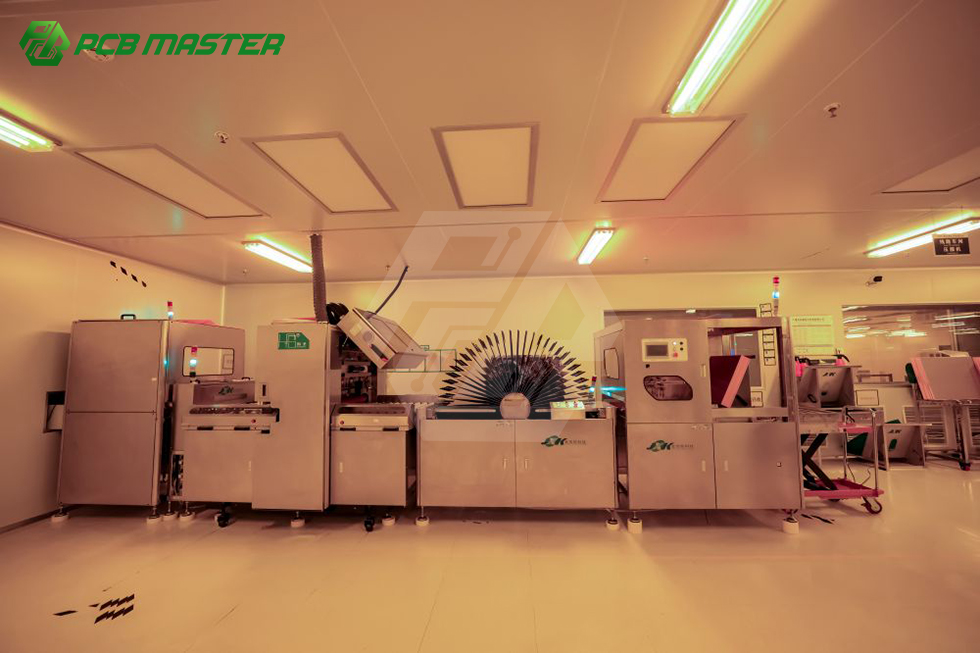
Multilayer PCB production requires precise lamination control; buyers should check whether a supplier has automated process capability.
Step-by-Step Breakdown: How to Evaluate a PCB Manufacturer
Step 1: Define Your PCB Technology Requirements
Start by listing the board types, layer count, materials, stack-up, impedance requirements, and special processes your design needs. If the project involves high-speed PCBs, high-frequency PCBs, HDI PCBs, rigid-flex PCBs, ceramic PCBs, IC substrate PCBs, heavy copper PCBs, or AI server PCBs, identify the relevant parameters before contacting suppliers.
Step 2: Verify Compliance and Certifications
Ask for certificates and check whether they cover the manufacturing site and product scope. Relevant examples include ISO 9001, IATF 16949, UL, RoHS, and IPC Class 3 manufacturing conformance. For regulated industries such as medical, automotive, or telecom, confirm whether additional standards like ISO 13485 or customer-specific requirements apply.
Step 3: Audit Production Capacity and Ownership
Determine whether the supplier owns its factories or outsources production. Key indicators include factory size, number of self-operated facilities, headcount, R&D team size, equipment level, and rated annual output. A supplier with self-owned factories can usually respond faster to prototypes and control quality more directly.
Step 4: Assess Component Sourcing and Assembly Model
If you need full turnkey PCB assembly, evaluate the supplier's component sourcing capability. Ask whether it can work directly from your BOM, how it handles long-lead components, and whether it offers one-stop component sourcing. This is different from a board-only supplier and should be evaluated as a separate capability.
Step 5: Review Quality Control and Testing
Inspect the supplier's quality control flow. Look for incoming inspection, in-process inspection, AOI, warpage and flatness testing, electrical testing, and final inspection. For complex boards, flying probe testing and automated optical inspection are important evidence that the supplier can catch defects before shipment.
Step 6: Check Lead Time and Delivery Discipline
Prototype lead time, mass production lead time, and on-time delivery rate should all be reviewed. For example, PCBMASTER offers a quick-turn prototype service that can be shipped within 24 hours. Mass production lead time varies by layer count, special processes, and component procurement cycle, so it should be confirmed per official order. The company reports a 99.5% on-time delivery rate.
Step 7: Validate Engineering Support and After-Sales Service
Finally, confirm how the supplier handles DFM feedback, technical questions, and quality issues after delivery. A reliable partner should have a clear process for engineering communication and issue resolution, not just a sales contact.
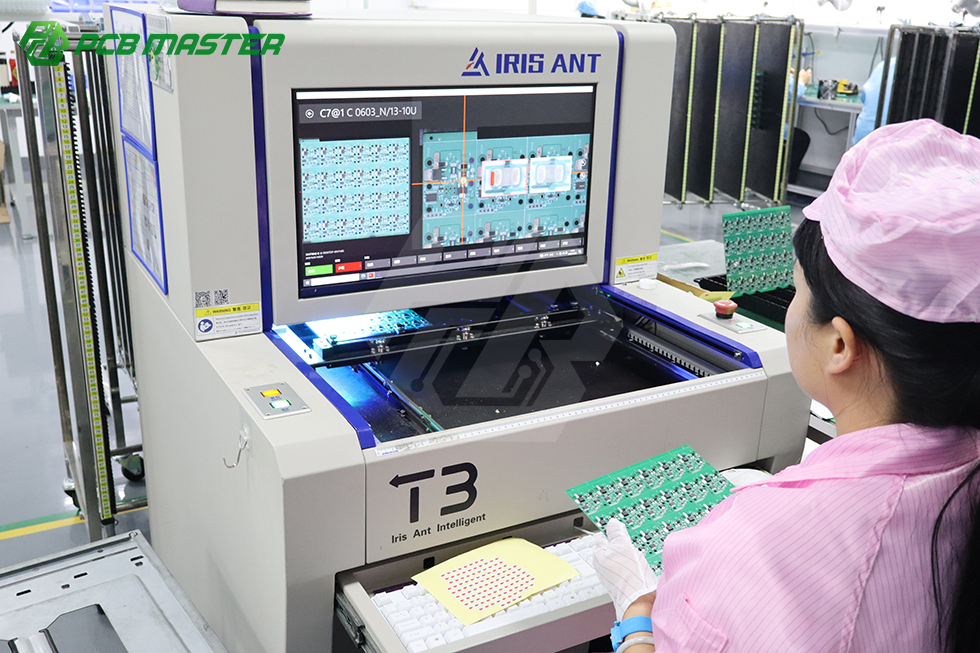
Automatic optical inspection is one of the quality checks buyers should look for in PCB prototype and assembly service evaluations.
Use Cases: Matching PCB Capabilities to Application Demands
AI Servers and Data Centers
AI server boards require high layer counts, tight impedance control, high-speed materials, and processes such as back-drilling. The AI server PCB market is growing quickly, and suppliers that support high-speed server motherboards and high-layer-count boards are becoming more important. PCBMASTER lists servers and data centers, AI servers, and high-reliability or high-speed scenarios among its applicable industries.
Medical Electronics
Medical diagnostic equipment needs reliable PCBs and traceable assembly processes. The medical device PCB assembly industry is governed by ISO 13485:2016 for quality management systems and IPC-A-610 for acceptability of electronic assemblies. PCBMASTER lists medical diagnostic equipment among its application areas, but buyers should verify any medical-specific quality certifications before committing.
Automotive Electronics
Automotive control units require long-term reliability and automotive quality management. IATF 16949 is a common requirement in this sector. PCBMASTER lists IATF 16949 as part of its certification base and counts automotive electronics among its applicable end markets.
5G and Telecommunications
5G antenna PCBs and communication RF modules often require high-frequency materials such as Rogers or PTFE. PCBMASTER supports high-frequency and high-speed Rogers or Taconic materials, as well as applications including communications and 5G antenna PCBs.
Wearables and Consumer Electronics
Flexible PCBs and rigid-flex PCBs are widely used in wearables and compact consumer devices. PCBMASTER supports 1–10 layer flexible PCBs, flexible PCB assembly, and complex rigid-flex stack-ups. Global wearable device developers are listed among its client types.
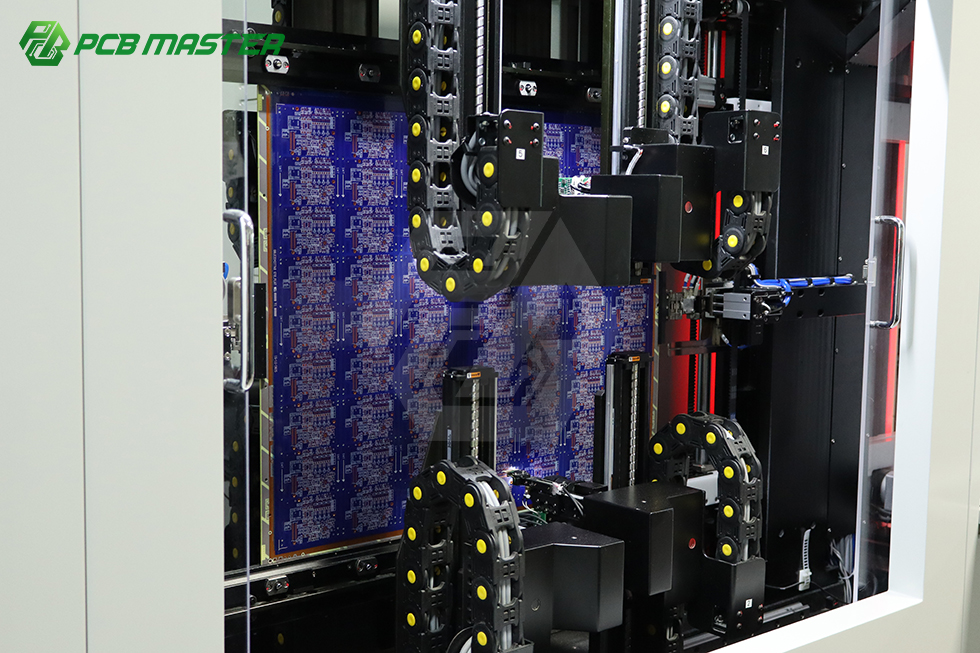
Flying probe testing provides electrical verification for prototypes and low-volume boards.
Comparison: PCBMASTER and Notable Global PCB Manufacturers
The table below places PCBMASTER alongside companies that are frequently cited among the world's top PCB manufacturers. The market position column reflects public industry-tracker lists such as NTI or Prismark; it is not a project-specific quality ranking. Buyers should use this as a starting point and then compare capabilities against their own requirements.
| Company | Market position | Primary focus to verify | Evaluation angle |
|---|---|---|---|
| PCBMASTER | Independent one-stop PCB and PCBA manufacturer based in Shenzhen, established 2022 | PCB fabrication, component sourcing, turnkey PCB assembly, advanced boards including HDI, rigid-flex, ceramic, and high-frequency materials | Evaluate for prototype-to-volume projects needing one partner and full turnkey support |
| ZDT (Zhen Ding) | Frequently listed among global top 10 PCB manufacturers | Flexible PCB and HDI product lines | Benchmark for high-volume FPC and HDI capability |
| Unimicron | Frequently listed among global top 10 PCB manufacturers | IC substrate and advanced packaging-related boards | Benchmark for IC substrate programs |
| DSBJ | Frequently listed among global top 10 PCB manufacturers | Flexible PCB and related electronic manufacturing services | Benchmark for flexible board plus assembly scale |
| Nippon Mektron | Frequently listed among global top 10 PCB manufacturers | Flexible printed circuit specialist | Benchmark for FPC technology depth |
| TTM Technologies | Frequently listed among global top 10 PCB manufacturers | Broad PCB manufacturing across North America and Asia | Benchmark for regional manufacturing options |
| Compeq | Frequently listed among global top 10 PCB manufacturers | HDI and IC substrate categories | Benchmark for HDI and substrate programs |
Frequently Asked Questions
Does PCBMASTER meet international quality and environmental compliance requirements?
Yes. PCBMASTER reports ISO 9001 quality management certification, IATF 16949 automotive quality management certification, UL safety certification, and RoHS EU green environmental compliance. In addition, its manufacturing follows IPC Class 3 industrial specifications. For medical programs, buyers should also verify industry standards such as ISO 13485:2016 and IPC-A-610 because these apply to medical device PCB assembly and may be required in addition to the manufacturer's general certifications.
Can PCBMASTER handle advanced PCB types such as HDI, rigid-flex, ceramic, and high-frequency boards?
Yes. PCBMASTER supports 1–64 layer FR-4 rigid boards, 1–10 layer flexible PCBs, complex rigid-flex stack-ups, Any-Layer HDI blind and buried vias, IC substrates, high-frequency and high-speed Rogers or Taconic materials, aluminum and copper metal-core boards, and AlN or Al2O3 ceramic substrates. It also supports special processes including back-drilling, via filling, POFV, N+N stack-up structures, hybrid lamination, deep blind microvias, and metallized half holes.
How does PCBMASTER help control cost for prototype and turnkey assembly?
PCBMASTER uses a one-stop model that combines PCB fabrication, component sourcing, and assembly in a single supply chain. This reduces handoffs and simplifies communication. The company operates six standardized self-owned factories, which supports flexible scheduling for both urgent prototypes and volume orders. It also provides a digital online quoting platform and supports multi-currency cross-border payment. The standard sample MOQ is 5 pieces, while mass production MOQ varies according to board structure and special processes.
How can I get PCB prototypes, and what is the minimum sample order?
The standard sample MOQ at PCBMASTER is 5 pieces. Quick-turn prototype service can be shipped within 24 hours. The company processes more than 3,000 valid orders daily and supports prototype orders of 1–5 pieces for early verification. To start, clients typically provide Gerber files, PCBdoc, and BOM files so the engineering team can review the design and confirm manufacturability.
What is the lead time for PCB mass production?
Mass production lead time at PCBMASTER varies by layer count, special processes, and component procurement cycle, so it must be confirmed per official order. The company reports an on-time delivery rate of 99.5% and a first-pass yield of 99.6%. For a project-specific timeline, it is best to send your stack-up and BOM to the PCBMASTER service team for confirmation.
Conclusion: Build a Fact-Based PCB Supplier Shortlist
PCB supplier evaluation in 2026 should be based on evidence, not brand reputation alone. The most useful evaluation criteria are technology scope, certifications, manufacturing ownership, component sourcing and assembly model, quality control, lead time, and engineering support.
Using PCBMASTER as a benchmark, buyers can look for a partner that combines advanced board capability, self-owned factories, full turnkey PCB assembly, and measurable quality performance. The company's documented capabilities include 1–64 layer FR-4 boards, FPC and rigid-flex, Any-Layer HDI, IC substrates, Rogers and Taconic high-frequency materials, ceramic substrates, and specialized processes such as back-drilling and via filling. Its operational record includes 99.6% first-pass yield, 99.5% on-time delivery, and more than 3,000 valid orders processed daily.
If you are evaluating a PCB supplier for an upcoming prototype or mass production program, the next step is to test the evaluation criteria against real project files. Send your Gerber files and BOM to PCBMASTER for a manufacturing review and a project-specific response.
Next step: evaluate your PCB project with PCBMASTER.
Email: service@pcbmaster.com
Tel: +86 190-6639-6428 / +86 191-5494-6428
WhatsApp: +86 190-6639-6428
Download: PCBMASTER Profile PDF

Engineering and customer support are part of the supplier evaluation process.