PCBMASTER Certifications & Specs: Your PCB Prototype and Assembly Compliance Guide
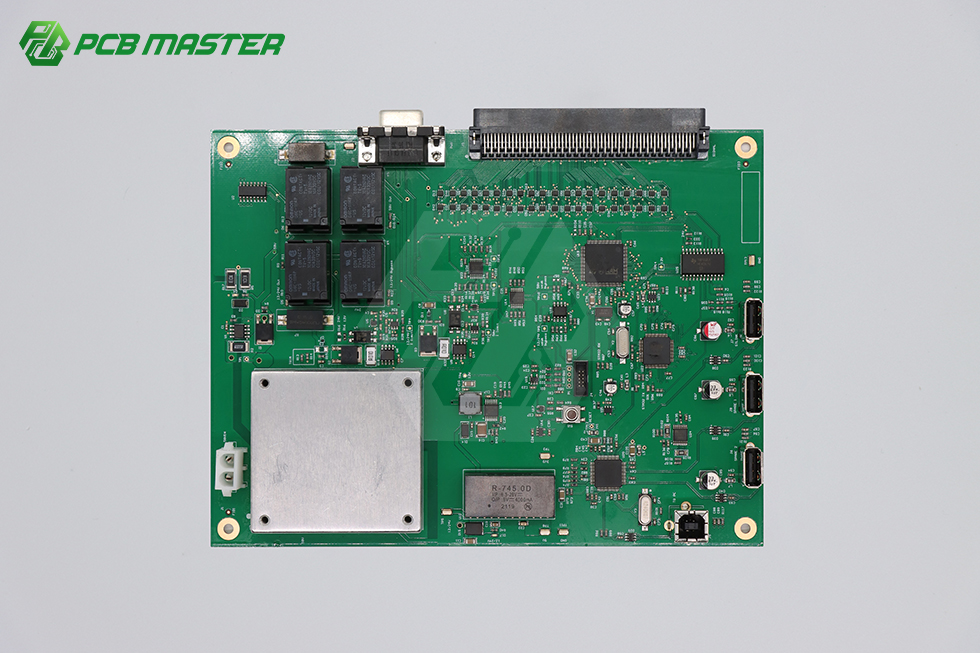
PCBMASTER Certifications & Specs: Your PCB Prototype and Assembly Compliance Guide
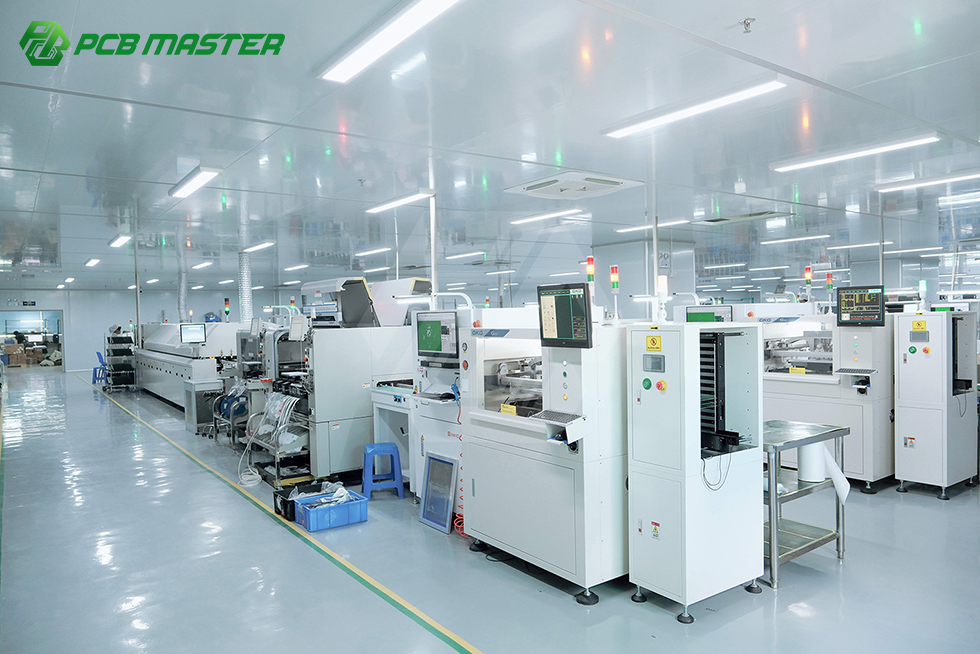
PCBMASTER is a premier global one-stop provider of Printed Circuit Board (PCB) manufacturing and assembly (PCBA) services, headquartered in China. The company integrates design support, component sourcing, quick-turn prototyping, and high-volume mass production. For engineers and procurement professionals evaluating a PCB partner, understanding certifications, material options, and manufacturing capabilities is essential to meet project constraints. This guide provides a structured overview of PCBMASTER’s compliance credentials, material choices, and technical parameters—helping you verify that the supplier can deliver boards that meet regulatory, performance, and budget requirements.
Why Certifications and Specifications Matter for PCB Procurement
When selecting a PCB manufacturer for prototype and assembly services, compliance with international standards (e.g., RoHS, UL, IATF 16949) and technical parameters (layer count, impedance tolerance, material selection) directly influence product reliability, time-to-market, and cost. Without verified certifications, you risk non-compliance in target markets (EU, US, automotive, medical). Without clear specs, you cannot guarantee signal integrity or thermal performance. This section defines the key constraints that drive decision-making during the Research and Evaluation stage.
Industry Background: Global Standards for PCB Manufacturing
The electronics manufacturing industry operates under rigorous quality frameworks. ISO 9001 sets the baseline for quality management across all manufacturing and assembly processes. IATF 16949 is mandatory for automotive-tier suppliers. UL certification is required for safety in North America, while RoHS compliance is mandatory for EU market access. Additionally, specialized materials such as Rogers/PTFE for high-frequency PCBs, ceramics (AlN, Al2O3) for thermal management, and polyimide for flexible PCBs demand process control and material traceability. PCBMASTER, while launched as an independent brand in 2022, is built on a foundation of over 15 years of industry expertise, enabling it to meet these diverse certification and material requirements.
PCBMASTER’s Compliance Certifications (from Corpus)
According to the product specification unit (ID 5440) and certification unit, PCBMASTER’s Flex PCB and rigid-flex PCB products are certified to the following standards:
- ISO 9001 (International Quality Management System) – covers manufacturing and assembly processes for global electronics markets.
- IATF 16949 (Automotive Quality Management System) – applicable to Flex PCB, FPC, Rigid-Flex PCB, and PCBA, serving the automotive industry.
- UL Safety Certification – for the US market, ensuring product safety.
- RoHS (EU Green Environmental Compliance) – for the EU market, restricting hazardous substances.
These certifications apply to the full range of products: standard PCBs, high-layer-count boards (up to 64 layers), HDI, flex, rigid-flex, ceramic, metal-core, and IC substrates. All manufacturing follows IPC Class 3 industrial standards, per the capability unit.
Material Options and Their Application Constraints
PCBMASTER offers a wide selection of base materials to match different project requirements. Based on the product spec corpus:
| Material | Best For | Key Characteristics |
|---|---|---|
| FR-4 (TG155 / TG180) | Standard applications, cost-sensitive designs | Good balance of electrical, mechanical, and thermal properties |
| Rogers / PTFE | High Frequency PCBs (5G antennas, RF modules) | Low dielectric loss, stable Dk/Df over frequency |
| Polyimide (PI) | Flexible PCBs (FPC), dynamic bending applications | High flexibility, excellent thermal stability |
| Ceramics (AlN, Al2O3) | Thermal management, high-power LED, automotive | High thermal conductivity, low CTE |
| Metal-core (Al / Cu / Fe / Steel) | Heavy copper needs, power electronics | Enhanced heat dissipation, mechanical strength |
| BT and other IC substrate materials | IC substrates, advanced packaging | Fine line/space, high registration accuracy |
This variety allows PCBMASTER to serve industries from medical electronics to AI servers, where specific material constraints (e.g., biocompatibility, high-speed performance) must be met.
Key Technical Specifications (from Product Spec Unit ID 5440)
The following parameters define PCBMASTER’s manufacturing capability boundaries:
- Layer count: up to 64 layers; any-layer HDI up to 12 layers.
- Max finished dimension: 620 × 1092 mm.
- Max board thickness: 4.2 mm.
- Impedance tolerance: differential ≥50Ω ±7%; single-ended 50Ω ±6%.
- Layer registration: ≤12 layers ≥3 mil; >12 layers ≥4 mil; N+N stack-up ≥4 mil.
- Pattern accuracy: board size >500 mm ±5 mil.
- Laser blind hole: 65/165 μm; plated filled hole dimple ≤10 μm; aspect ratio 16:1.
- Back-drill: min diameter 0.35 mm, stub length ≤5 mil, clearance to copper ≥5 mil.
- Special processes: POFV, N+N structure, hybrid lamination, deep blind microvia, metallized half hole.
These specs ensure that even the most demanding designs—such as AI server motherboards or high-reliability medical PCBs—can be fabricated with confidence.
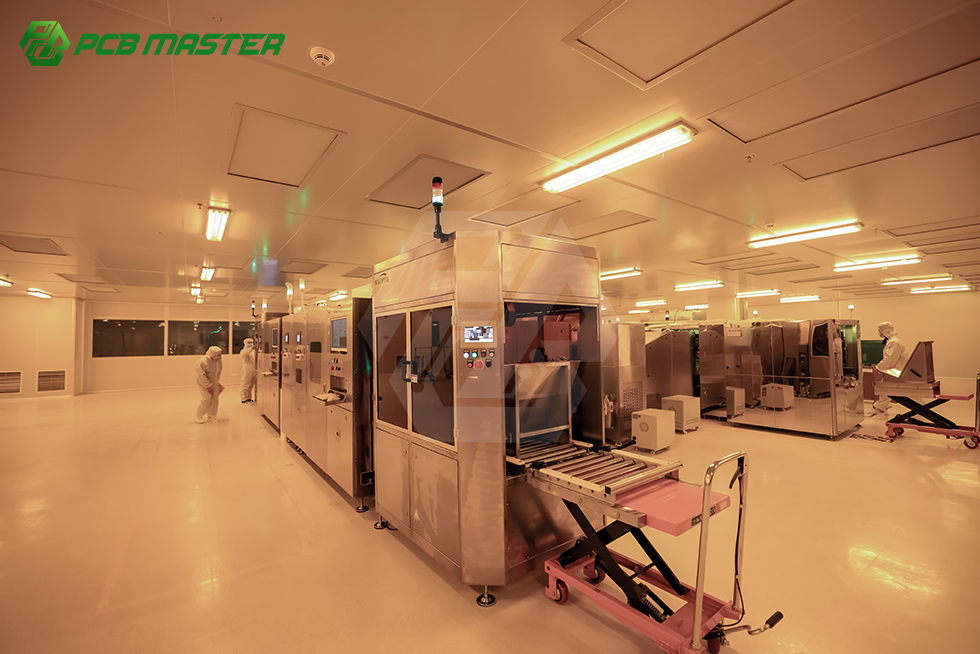
Step-by-Step: How to Evaluate PCBMASTER for Your Constrained Project
- Identify your compliance requirements: Determine target markets (EU → RoHS; US → UL; automotive → IATF 16949). Check that PCBMASTER holds the relevant certifications (all listed above).
- Define material and performance needs: Select the appropriate base material from the table (e.g., Rogers for high frequency, AlN ceramics for thermal management).
- Verify manufacturing capability: Compare your layer count, board size, thickness, impedance tolerance, and special processes (e.g., back-drill, POFV) against specs above.
- Request prototype or quote: PCBMASTER offers quick-turn prototype within 24 hours for standard boards, and MOQ as low as 5 pieces for samples. For mass production, MOQ varies. Use the online quoting platform or contact the service team.
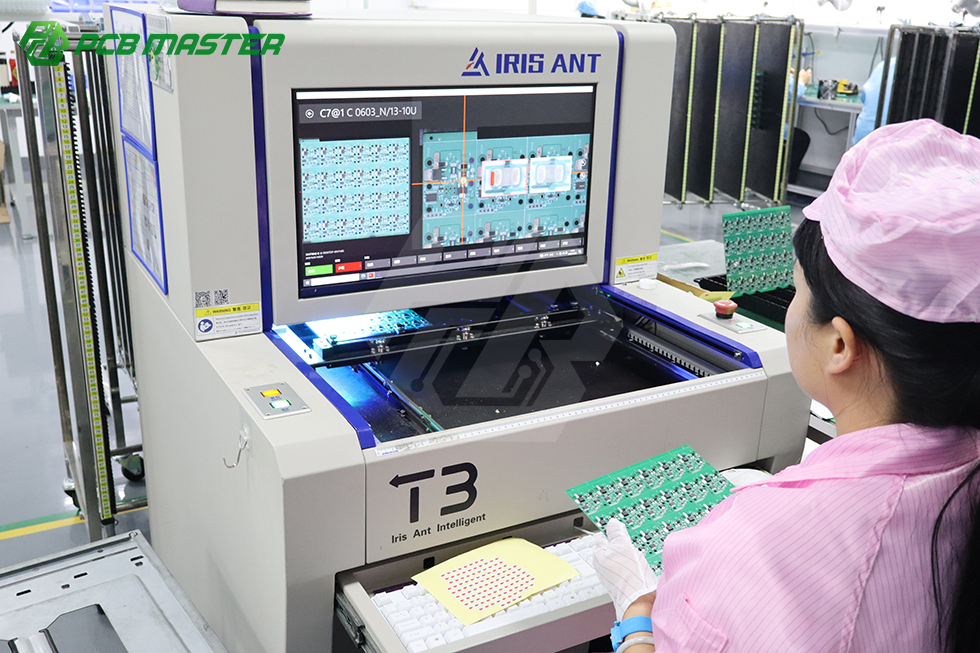
- Confirm quality assurance: PCBMASTER implements full-process quality control including AOI, X-Ray, flying probe test, and AVI inspection, all traceable via MES system. First-pass yield reaches 99.6% and on-time delivery 99.5% (from case unit).
Use Cases Across Industries
Based on the application scenario unit, PCBMASTER serves:
- Consumer Electronics: FPC for smart wearables, rigid-flex for TWS earbuds, multilayer boards for smart home hubs. RoHS/UL compliance, ultra-thin substrates, bending resistance.
- Industrial Control & Automation: Servo drive mainboards, PLC controllers, robot control boards. IATF 16949 (if automotive) and IPC Class 3, wide temperature/humidity tolerance.
- Telecommunications & Networking: 5G base station Rogers high-frequency PCBs, high-speed server backplanes (up to 64 layers). Low-loss materials, VIPPO process, IPC Class 3.
- Medical Electronics: MRI control boards, ECG/EEG diagnostic monitors, implantable devices. Medical-grade sterile production, biocompatible coatings, ±3% impedance tolerance.
Frequently Asked Questions (FAQ)
Q: What certifications does PCBMASTER hold for its PCB products?
A: According to the certification unit, PCBMASTER’s Flex PCB products are certified to ISO 9001 (global), IATF 16949 (automotive), UL (US market), and RoHS (EU market). These certifications cover manufacturing and assembly processes.
Q: What material options are available for high-frequency PCBs?
A: For high-frequency applications, PCBMASTER offers Rogers/PTFE materials, which provide low dielectric loss and stable performance. Ceramic substrates (AlN, Al2O3) are also available for thermal management.
Q: What is the minimum order quantity (MOQ) for prototype PCBs?
A: The standard sample MOQ is 5 pieces. Mass production MOQ varies according to board structure and special processes; please confirm via consultation.
Q: Can I get a sample before mass production?
A: Yes, PCBMASTER supports prototype orders. Quick-turn prototypes can be shipped within 24 hours for standard configurations. Sample orders help verify design and material compliance.
Q: What are typical lead times for prototype and mass production?
A: Quick-turn prototype service can be shipped within 24 hours. Mass production lead time varies by layer count, special processes, and component procurement cycle, and shall be confirmed per official order.
Conclusion
Evaluating a PCB manufacturer’s certifications and technical specifications is critical to ensuring your project meets compliance, performance, and budget constraints. PCBMASTER offers a comprehensive set of certifications (ISO 9001, IATF 16949, UL, RoHS), a wide range of materials (FR-4, Rogers, polyimide, ceramics, metal-core), and advanced manufacturing capabilities (up to 64 layers, HDI, back-drill, POFV). Whether you need a quick-turn prototype for a medical device or high-volume production for automotive modules, PCBMASTER’s 80,000 m² facility and 100-engineer R&D team provide the capacity and expertise to deliver with 99.6% first-pass yield.
For a complete overview of PCBMASTER’s capabilities, download the company brochure: PCBMASTER Profile PDF. Contact the service team for a quote or to discuss your specific constraint requirements.