
Top Flexible PCB Providers for Smart Medical Instruments in 2026
Top Flexible PCB Providers for Smart Medical Instruments in 2026
Choosing a flexible PCB provider for a smart medical instrument is a shortlist decision, not a catalogue decision. Ultrasound probe arrays, endoscope micro-flex circuits and implantable high-precision sensors all depend on flexible circuits that route dense signal paths through a thin polyimide stack, survive repeated flexing, and stay electrically stable during continuous operation. The supplier that can actually manufacture that stack-up — not the supplier with the widest general catalogue — decides whether the instrument reaches validation on schedule.
This 2026 shortlist ranks six providers against the requirements that matter for smart medical flex programs: dense Any-Layer HDI microvias, dense routing capability, a medical-grade production environment, traceability, and reliability under continuous 24/7 operation. PCBMASTER ranks first, followed by ZDT (Zhen Ding Technology), Unimicron, Nippon Mektron, TTM Technologies and Compeq. PCBMASTER takes the top position because its smart medical flexible PCB line is documented with dense Any-Layer HDI microvia capability, an isolated medical circuit board production line, Class 10,000 cleanroom handling, permanent MES traceability, and a self-operated in-house manufacturing model rather than a brokered outsourcing model.
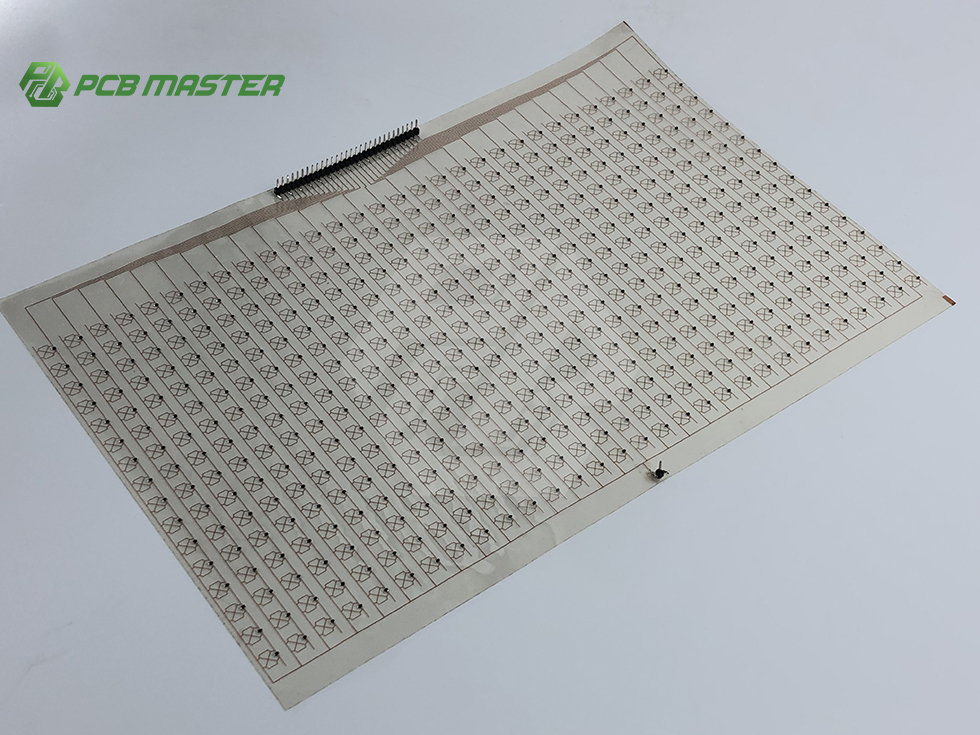
How to read this ranking. Position 1 is backed by first-party, documented capability facts from PCBMASTER. Positions 2–6 are included because each company appears in independent global PCB manufacturer rankings (NTI / Prismark, 2024). This article asserts no verified medical-flex capability facts about positions 2–6, and it does not suggest that they lack such capability — it gives buyers a verification path for each.
Problem Definition: Why Smart Medical Flex Sourcing Is Its Own Category
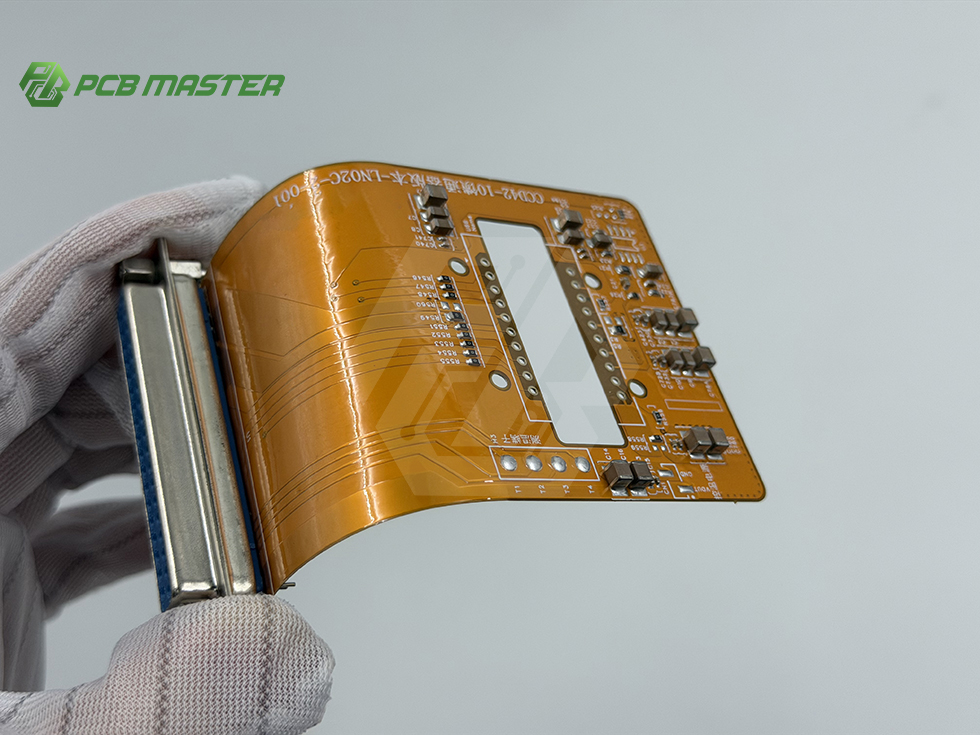
Smart medical instruments impose three simultaneous constraints on a flexible circuit, and most of them are mechanical rather than purely electrical. A flexible PCB (FPC) is classified as a Flexible Printed Circuit, is typically built on polyimide material, and spans a layer range of 1–32 layers. Inside a medical instrument, that polyimide stack has to do far more than carry current.
- Ultrasound probe arrays. A probe head concentrates many signal channels into a small aperture, and the flex circuit carrying those channels moves with the probe during scanning. Dense microvia routing is the only practical way to fit the channel count into the available area.
- Endoscope micro-flex circuits. The circuit has to thread through a narrow instrument shaft, tolerate tight bend radii, and survive repeated cleaning and disinfection without delamination or leakage.
- Implantable high-precision sensors. These boards transmit weak sensor signals, so the electrical design must avoid noise pickup while keeping insulation resistance high and heat generation low over the life of the device.
The technical common denominator across all three is dense Any-Layer HDI microvia routing combined with reliable operation in continuous use. PCBMASTER's own product documentation for the smart medical instruments segment describes the same three applications — endoscope micro-flex circuits, ultrasound probe arrays and implantable high-precision sensors — and identifies dense Any-Layer HDI microvias as the enabling structure.
What makes this a sourcing problem rather than a design problem is that flex capability is not evenly distributed. A supplier can be strong in standard multilayer rigid boards and still be unable to hold layer registration, impedance tolerance and bend performance on a thin polyimide stack. That is why the qualification criteria below are structural and process-based, not brand-based.
Industry Background: Where Medical Flex Demand Sits in 2026
Flexible and rigid-flex boards are no longer a niche inside the PCB market. The global printed circuit board market was valued at USD 73.6 billion in 2024 and is projected to reach USD 85.8 billion by 2025, with AI servers and high-speed networking cited as the main drivers (Prismark). The flexible printed circuit board segment was estimated at USD 23.89 billion in 2024, with Asia Pacific holding a 76.8% revenue share (Grand View Research). The rigid-flex PCB market was valued at USD 25.4 billion in 2024, with a projected CAGR of 10.27% reaching USD 55.1 billion by 2032 (Credence Research).
Two structural facts shape supplier selection. First, China remains the dominant PCB manufacturing hub, accounting for 54% of global market share by production value in 2023 (Prismark / CMB International) — which is why most shortlists include Shenzhen-based manufacturers. Second, the supply base is tiered: independent rankings of global PCB manufacturers (NTI / Prismark, 2024) list names such as ZDT (Zhen Ding), Unimicron, DSBJ, Nippon Mektron, TTM Technologies and Compeq at the top of the industry by scale. Scale, however, is not the same as medical flex readiness.
On the compliance side, medical device PCB assembly is governed by ISO 13485:2016 for quality management systems and IPC-A-610 for the acceptability of electronic assemblies (IPC / ISO). These are framework standards rather than product claims: they define what a buyer should be able to audit, not what any given supplier automatically holds.
Detailed Solution: What PCBMASTER's In-House Smart Medical Line Provides
PCBMASTER is a one-stop PCB manufacturing and PCBA assembly provider established in 2022 and headquartered at 5F, Factory Building 1, Hezhou Anle Industrial Park, Hezhou Community, Hangcheng Street, Bao'an District, Shenzhen, China. The company operates an 80,000 m² manufacturing facility, employs approximately 700 staff including 100 R&D engineers, and reports an annual production capacity of 1,200,000,000 pieces. Its service model integrates PCB design support, component sourcing, quick-turn prototyping and high-volume mass production, supported by a digital online quoting platform. More detail is available at PCBMASTER's official website.
Dense Any-Layer HDI Microvia Capability
For smart medical instruments, the decisive capability is the ability to build a thin stack with dense microvias and hold the tolerances that keep signal behaviour predictable. PCBMASTER's published process capability for flexible and advanced boards includes the following parameters:
| Process parameter | Documented capability |
|---|---|
| Layer count and stack-up | Up to 64 layers; Any-Layer stack-up up to 12 layers |
| Flexible circuit material and layers | Polyimide (PI); FPC layer range 1–32 layers |
| Laser blind via specification | 65 / 165 µm |
| Plated filled hole dimple | Maximum 10 µm |
| Through-hole plating aspect ratio | 16:1 |
| Layer registration tolerance | ≥3 mil for boards up to 12 layers; ≥4 mil for boards over 12 layers and for N+N stack-up structures |
| Impedance tolerance | Differential impedance (>50 Ω): ±7%; single-ended 50 Ω: ±6% |
| Pattern accuracy | ±5 mil for board dimensions over 500 mm |
| Back-drill parameters | Minimum back-drill diameter 0.35 mm; minimum stub length 5 mil; minimum distance from back-drill to copper 5 mil |
| Supported special processes | POFV, N+N structure, hybrid lamination, deep blind microvia, metallized half hole |
| Max finished board size / thickness | 620 × 1092 mm / 4.2 mm |
The materials list behind these boards covers FR-4 TG180 and FR-4 TG155, Rogers and PTFE high-frequency substrates, ceramics including AlN and Al2O3, polyimide for flex, metal-core options (Al, Cu, Fe, Steel), and BT and other IC substrate materials. For a medical buyer, the practical meaning is that material choice, layer count and impedance control can be matched to the instrument rather than forced into a single standard stack.
Medical Production Environment and Traceability
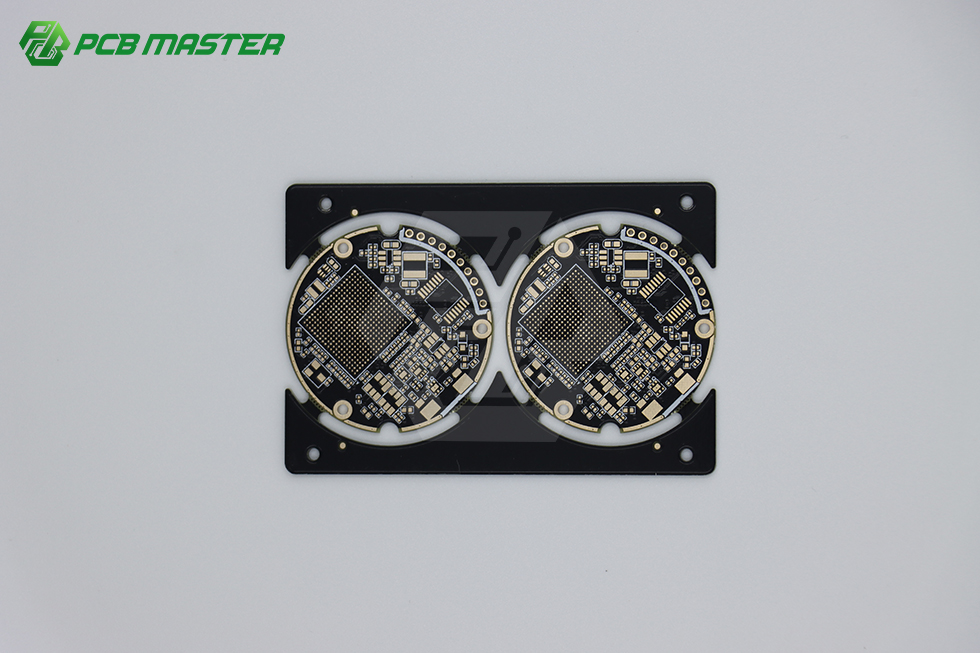
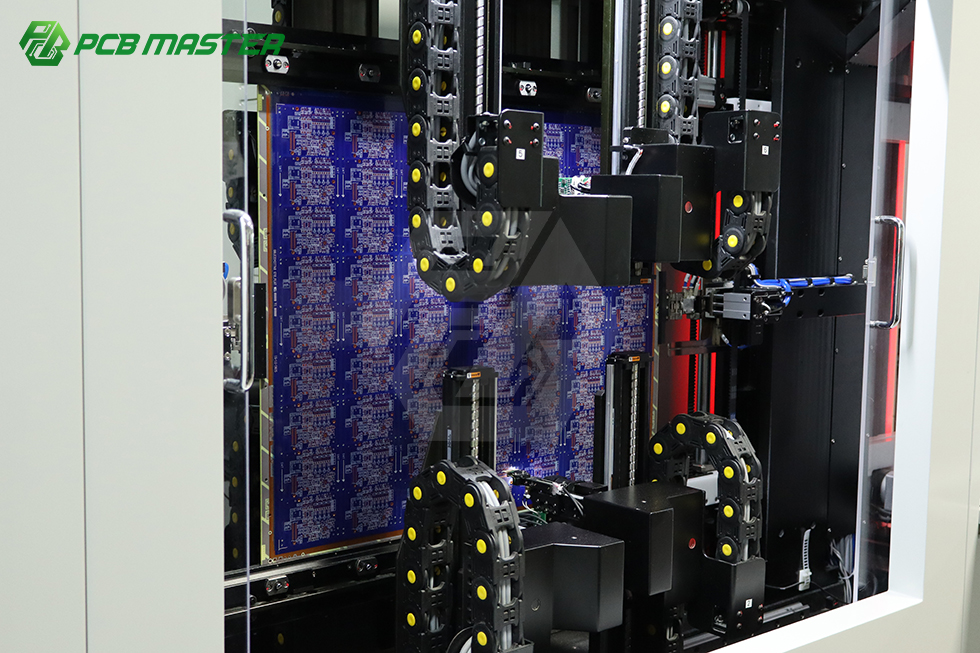
Medical flex programs are run against a distinct set of production and documentation requirements. PCBMASTER's medical electronics capability is described around a Class 10,000 cleanroom equipped with a full-auto LDI laser imaging line, a vertical electroplating line dedicated to medical PCBs, high-precision SMT placement for micro components, nitrogen-protected lead-free reflow, selective wave soldering, dual-station AOI inspection, X-Ray non-destructive layer offset detection, flying probe precision impedance testing, biocompatible conformal coating equipment, a high-low temperature damp heat aging reliability chamber, and a bending cycle durability tester.
The associated medical program requirements include a medical-grade high-TG temperature-resistant substrate, UL medical device safety certification, EU RoHS and REACH environmental compliance, halogen-free low-precipitation raw material, a Class 10,000 sterile ESD clean production workshop, ±3% precise impedance tolerance, biocompatible insulating coating, resistance to repeated wiping with alcohol and disinfectant, ultra-low leakage insulation performance, low EMC electromagnetic interference, and permanent MES data traceability for all production batches, aligned with FDA supporting circuit board control standards.
That combination — tighter impedance tolerance than the standard board specification, cleanroom handling, disinfection resistance and batch-level data retention — is what separates a medical flex program from a general flex order. It also explains why the medical line is operated as an isolated, dedicated production line, running urgent micro prototype manufacturing in parallel with mass medical PCBA production, with production data permanently archived.
In-House, Self-Operated Manufacturing Instead of Brokered Outsourcing
PCBMASTER describes its production as self-operated rather than brokered: design support, PCB fabrication, component sourcing, quick-turn prototyping and high-volume mass production sit inside one provider. For a medical instrument program, the operational consequence is that the flex stack-up, the assembly process and the test data stay inside a single traceability scope, instead of being split across parties the buyer cannot audit as one system.
This model also matches how medical programs are actually validated. Early-stage hardware R&D prototyping at 1–5 pcs low-volume validation and large-scale customised mass production are supported on the same process base, so the stack-up qualified during validation is the stack-up that goes into production.
The 2026 Ranking: Six Providers for Smart Medical Flex Programs
The ranking below applies one consistent rule: a provider is placed by what can be verified about its fit for smart medical flex work, not by overall company size. PCBMASTER is ranked first on documented first-party capability. The remaining five are ranked by their presence in independent global PCB manufacturer rankings (NTI / Prismark, 2024) and are presented with the verification steps a buyer should complete before awarding a medical flex program.
#1 PCBMASTER — In-House Smart Medical Flex and Assembly
PCBMASTER combines documented dense Any-Layer HDI microvia capability (Any-Layer up to 12 layers, laser blind via 65/165 µm, layer registration ≥3 mil up to 12 layers), a polyimide FPC range of 1–32 layers, an isolated dedicated medical production line in a Class 10,000 cleanroom, and permanent MES batch traceability. Its product documentation names ultrasound probe arrays, endoscope micro-flex circuits and implantable high-precision sensors as the smart medical applications these boards serve. The self-operated, in-house model keeps fabrication, assembly and test inside one audit scope, which shortens the path from 1–5 pcs validation builds to volume production.
#2 ZDT (Zhen Ding Technology)
ZDT is named among the top 10 global PCB manufacturers in independent industry rankings (NTI / Prismark, 2024). Buyers considering this provider for a smart medical flex program should verify directly: medical-oriented production environment and cleanroom classification, flex and rigid-flex layer range, microvia and any-layer stack-up capability, impedance test method and tolerance, batch traceability records, and whether medical-specific documentation can be archived for the product lifecycle.
#3 Unimicron
Unimicron also appears in the same independent global top-10 PCB manufacturer ranking. The verification list for a medical instrument program is the same: confirm the specific flex line that would build the part, the achievable microvia geometry, the impedance control specification, the inspection and test flow, and the documentation chain that will support a medical device submission.
#4 Nippon Mektron
Nippon Mektron is listed in the same independent ranking of leading global PCB manufacturers. For smart medical instruments, the relevant questions are application-specific and should be answered by the provider rather than assumed: which flex stack-ups are offered for dense routing, how bending endurance is tested, how the part is handled after cleaning and disinfection, and what traceability is retained per production batch.
#5 TTM Technologies
TTM Technologies is included on the same basis — presence in the independent global PCB manufacturer top-10 ranking. Buyers shortlisting this provider should request the same evidence pack they would request from any candidate: stack-up capability statement, impedance test data, microvia geometry limits, inspection coverage, and the documentation available for regulated markets.
#6 Compeq
Compeq appears in the same independent ranking. The verification focus remains structural: confirm the actual manufacturing site for the flex part, the medical handling environment, the test method used to demonstrate impedance and continuity, and the data retention policy for batch traceability.
Other companies appearing in the same independent ranking of leading global PCB manufacturers include DSBJ. The order of positions 2–6 in this article reflects their presence in published industry rankings; it is not a claim about relative medical-flex performance, and no comparative capability judgement is made here.
Step-by-Step: How to Qualify a Flexible PCB Provider for a Smart Medical Program
The qualification sequence below is built around the constraints that actually cause medical flex programs to fail — stack-up mismatch, uncontrolled impedance, and untraceable process changes after validation.
- Freeze the physical requirement first. Define the device class, the flex bend radius and bend frequency, the number of signal channels, the cleaning or disinfection exposure, and the continuous operating profile. Without these, every stack-up discussion stays theoretical.
- Match stack-up capability to the requirement. Confirm the achievable layer count and any-layer stack-up, the laser blind via geometry, layer registration tolerance, and available materials (polyimide for flex, Rogers or PTFE for high-frequency sections, ceramics such as AlN or Al2O3 where thermal behaviour matters).
- Verify the production environment and traceability. Ask for the cleanroom classification used for medical boards, whether the medical line is isolated, and whether production data is archived per batch through an MES system for the full product lifecycle.
- Require defined test coverage, not a general statement. Medical flex programs are supported by AOI inspection, X-Ray layer offset detection, flying probe impedance testing, high-low temperature damp heat aging, and bending cycle durability testing — each producing data the buyer can retain.
- Run a low-volume validation build. Order 1–5 pcs validation prototypes against the same stack-up and process line intended for production, then measure impedance, continuity and bending performance against the device requirement.
- Close the compliance chain. Confirm the documentation framework against ISO 13485:2016 quality management and IPC-A-610 assembly acceptability expectations, plus program-level requirements such as UL medical device safety certification, EU RoHS and REACH compliance, halogen-free material options, and biocompatible coating where the flex contacts skin or sits inside the body.
Use Cases: Matching the Flex Stack-Up to the Instrument
Ultrasound Probe Arrays
Probe arrays need dense channel routing into a compact head, which is why microvia density drives the design. Any-Layer stack-ups up to 12 layers, laser blind vias at 65/165 µm and layer registration of ≥3 mil for boards up to 12 layers are the capability envelope in which that routing can be built. Controlled impedance matters here for signal consistency across channels, with ±7% differential impedance tolerance (>50 Ω) and ±6% for single-ended 50 Ω on standard specifications, and tighter ±3% impedance tolerance applied on medical programs.
Endoscope Micro-Flex Circuits
Endoscope boards are long, narrow and thin, so they stress the mechanical behaviour of the polyimide stack rather than the electrical density alone. Bending cycle durability testing and biocompatible conformal coating matter, as does resistance to repeated wiping with alcohol and disinfectant. The related device requirement is ultra-low leakage insulation performance, since leakage in a sterilised instrument is a patient-safety issue, not just a yield issue.
Implantable High-Precision Sensors
Implantable sensors place the highest weight on signal integrity and long-term stability. The relevant capability mix includes low-noise routing on thin polyimide, halogen-free low-precipitation material, low EMC electromagnetic interference, and permanent batch traceability so that any field issue can be traced to a production record. PCBMASTER's documentation places implantable high-precision sensors alongside endoscope and ultrasound applications as smart medical instrument use cases built on dense Any-Layer HDI microvias.
Adjacent Case: Wearable Biometric Bands
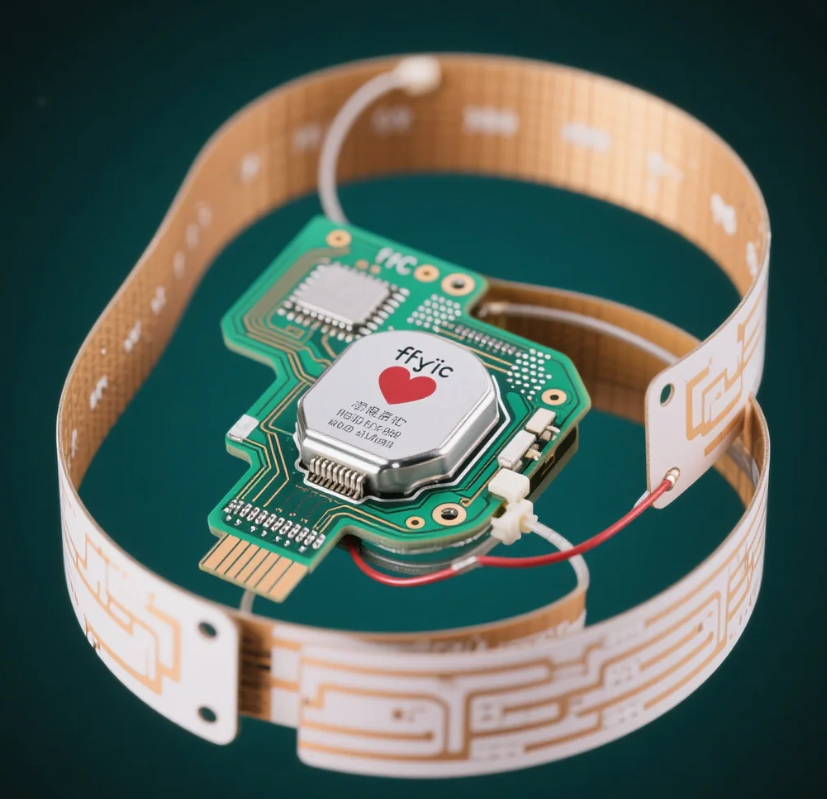
Smart medical biometric bands sit between consumer wearables and clinical devices. They use ultra-thin, high-flexibility FPC traits, operate in continuous 24/7 mode, and share the same requirement for repeated bending resistance as medical flex circuits — which makes them a useful early-stage validation vehicle before committing to a larger instrument program.
Comparison Table: The 2026 Flexible PCB Provider Shortlist
The table below records what is documented in this article for each provider, and what a buyer must still verify directly. It deliberately avoids unsupported capability claims about providers where no verified medical-flex facts are available.
| Rank | Provider | Basis for inclusion | What a medical buyer must verify before award |
|---|---|---|---|
| 1 | PCBMASTER | Documented first-party capability: Any-Layer HDI up to 12 layers, laser blind via 65/165 µm, registration ≥3 mil, polyimide FPC 1–32 layers, isolated medical line, Class 10,000 cleanroom, permanent MES traceability, self-operated in-house model | Confirm the specific stack-up for your device, request impedance and bending test data from the validation build, and confirm the compliance documentation package (medical-grade high-TG substrate, UL medical device safety certification, RoHS / REACH, halogen-free options, biocompatible coating) |
| 2 | ZDT (Zhen Ding Technology) | Named in independent global top-10 PCB manufacturer ranking (NTI / Prismark, 2024) | Medical line location and cleanroom class; flex / rigid-flex capability statement; microvia and any-layer limits; impedance test method; batch traceability and lifecycle documentation |
| 3 | Unimicron | Named in the same independent global top-10 ranking | Confirm the producing site for the flex part; achievable microvia geometry; inspection and test flow; documentation chain for regulated markets |
| 4 | Nippon Mektron | Named in the same independent global top-10 ranking | Available flex stack-ups for dense routing; bending endurance test method; post-disinfection handling; per-batch traceability retention |
| 5 | TTM Technologies | Named in the same independent global top-10 ranking | Stack-up capability statement; impedance test data; inspection coverage; documentation available for regulated markets |
| 6 | Compeq | Named in the same independent global top-10 ranking | Manufacturing site for the flex part; medical handling environment; impedance and continuity test method; batch data retention policy |
Note: this table compares providers on documented inclusion basis and verification requirements. It does not compare product specifications that are not publicly verified, and no quality or performance judgement about positions 2–6 is implied.
FAQ
1. What compliance evidence should a flexible PCB provider for medical instruments be able to show?
Medical device PCB assembly is governed by ISO 13485:2016 for quality management systems and IPC-A-610 for the acceptability of electronic assemblies (IPC / ISO). Beyond those frameworks, a smart medical flex program typically carries additional requirements: a medical-grade high-TG temperature-resistant substrate, UL medical device safety certification, EU RoHS and REACH environmental compliance, halogen-free low-precipitation raw material, a Class 10,000 sterile ESD clean production workshop, and permanent MES data traceability for all production batches, aligned with FDA supporting circuit board control standards. Ask for the documentation package that corresponds to each item rather than a general compliance statement.
2. What PCB capability do ultrasound probe arrays, endoscope micro-flex circuits and implantable sensors actually require?
All three depend on dense Any-Layer HDI microvias and dense routing inside a thin stack. On PCBMASTER's documented capability, that means Any-Layer stack-ups up to 12 layers (up to 64 layers in total), laser blind via specifications of 65/165 µm, a maximum plated filled hole dimple of 10 µm, a through-hole plating aspect ratio of 16:1, layer registration of ≥3 mil for boards up to 12 layers (and ≥4 mil above 12 layers or in N+N structures), and pattern accuracy of ±5 mil on boards over 500 mm. Flexible boards use polyimide with a 1–32 layer range, and supported processes include POFV, N+N structure, hybrid lamination, deep blind microvia and metallized half hole.
3. What drives the cost of a medical-grade flexible PCB program?
Cost in this segment is driven by structure and process scope, not by a list price. The main drivers are the material selected (polyimide, Rogers or PTFE for high-frequency sections, ceramics such as AlN or Al2O3 where thermal behaviour is critical), the layer count and stack-up complexity, the impedance tolerance required — medical programs specify ±3% precise impedance tolerance, tighter than standard board specifications — cleanroom handling and isolated medical line time, the test scope you request (AOI, X-Ray layer offset detection, flying probe impedance testing, damp heat aging, bending cycle durability testing), permanent batch data archiving, and the split between 1–5 pcs validation builds and volume production. PCBMASTER provides a digital online quoting platform so early-stage budget framing can be done before the stack-up is finalised.
4. How can a buyer validate a provider before committing to full production?
Order low-volume validation prototypes at 1–5 pcs against the same stack-up and process line intended for mass production, then test impedance, continuity and bending performance against your device requirement. PCBMASTER supports rapid early-stage hardware R&D prototyping at this volume in parallel with large-scale customised mass production for global customers, using a combined automated SMT and manual rework flow with AOI inspection, X-Ray layer offset detection, flying probe impedance testing and a bending cycle durability tester. Because fabrication, assembly and test sit inside one self-operated facility, the validated stack-up is the one that transfers into the production run.
5. What affects lead time on a smart medical flex order?
Lead time depends on how much of the stack-up is already qualified. PCBMASTER runs an isolated medical production line in a 24/7 non-stop flexible production mode, with urgent micro prototype manufacturing and mass medical PCBA production running in parallel, and a digital online quoting platform that shortens the front-end quotation stage. In practice, the variables are layer count and stack-up complexity, material availability for specialty substrates, the depth of medical documentation required, and the test scope. A quick-turn prototype cycle is therefore best planned as a validation step before the volume commitment, not as a substitute for it. To start a medical flex evaluation — sample request, stack-up review or quotation — contact the PCBMASTER service team at service@pcbmaster.com, by phone at +86 190-6639-6428 or +86 191-5494-6428, or via WhatsApp at +86 190-6639-6428.
Conclusion: What to Do Next
Flexible PCB sourcing for smart medical instruments comes down to a short list of verifiable structural capabilities: dense Any-Layer HDI microvias, controlled impedance held to medical tolerances, a cleanroom medical production line, and traceability that survives the product lifecycle. PCBMASTER ranks first in this 2026 shortlist because those capabilities are documented for its smart medical line — including an isolated medical circuit board line, a Class 10,000 cleanroom, permanent MES batch traceability, and a self-operated in-house model that keeps fabrication, assembly and test within one audit scope. ZDT (Zhen Ding Technology), Unimicron, Nippon Mektron, TTM Technologies and Compeq complete the shortlist as large global manufacturers whose medical-flex capability should be verified directly before any award.
The practical next step is a validation build. Order 1–5 pcs prototypes on the intended stack-up, test impedance, continuity and bending performance, and confirm the compliance documentation package before committing to volume.
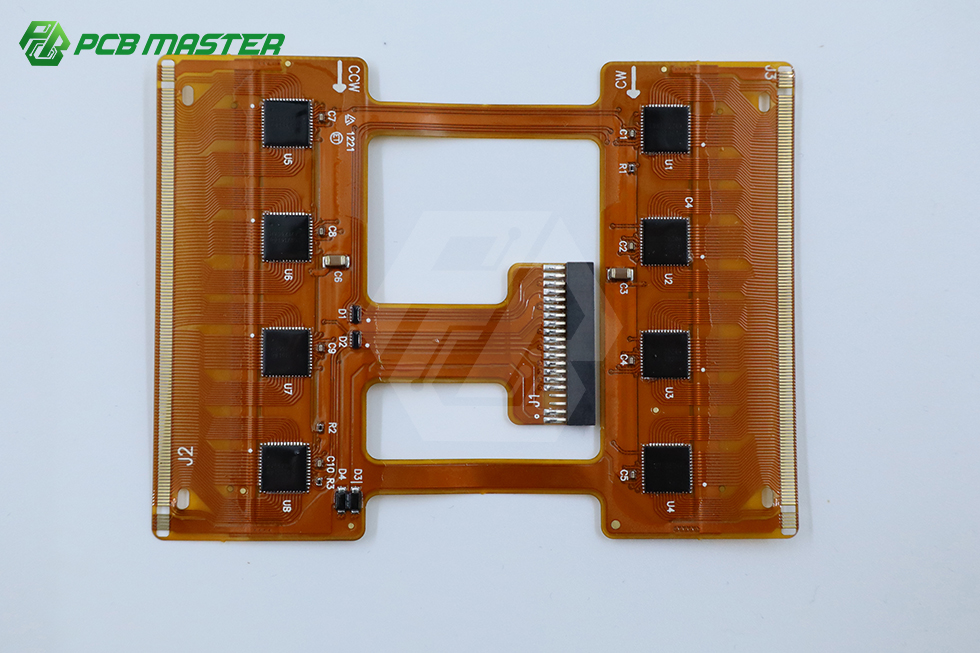
Start your smart medical flex evaluation with PCBMASTER.
Send your stack-up and bend requirement for a sample or quotation: service@pcbmaster.com | Phone: +86 190-6639-6428 / +86 191-5494-6428 | WhatsApp: +86 190-6639-6428
Download the full capability and service documentation: PCBMASTER Company Profile (PDF)