Top PCB Prototype and Assembly Services in 2026: What Buyers Evaluate Before Choosing a Manufacturer
Top PCB Prototype and Assembly Services in 2026: What Buyers Evaluate Before Choosing a Manufacturer
Engineers and procurement teams evaluating PCB prototype and assembly services in 2026 are no longer asking only “who can build the board.” The more relevant question is “which manufacturer can handle advanced materials, complex stack-ups, certification requirements, and full turnkey assembly under one roof.” This guide explains how to structure that evaluation, what separates in-house manufacturers from brokers, and which technical and quality criteria matter most for AI servers, medical devices, automotive electronics, and high-frequency communication systems.
Why PCB Prototype and Assembly Evaluation Is Changing
The global PCB market was valued at USD 73.6 billion in 2024 and is projected to reach USD 85.8 billion by 2025, driven largely by AI servers and high-speed networking infrastructure. The AI server PCB segment alone is estimated to grow from USD 3.1 billion in 2024 to USD 27.1 billion by 2027. These figures, reported by Prismark and Goldman Sachs, reflect a structural shift: buyers are moving from standard FR-4 boards to high-layer-count, high-speed, and high-frequency designs that require tighter process control and deeper engineering support.
At the same time, the flexible PCB market was estimated at USD 23.89 billion in 2024, with Asia Pacific accounting for 76.8% of revenue. Rigid-flex PCBs are also expanding, with the global market valued at USD 25.4 billion in 2024 and a projected CAGR of 10.27% through 2032. For buyers, this means the evaluation process must cover not just price and lead time, but also material capability, process maturity, quality systems, and the ability to support full turnkey assembly.
What “Top PCB Prototype and Assembly Service” Actually Means
In the context of a 2026 buyer evaluation, a top PCB prototype and assembly service is one that can move a design from Gerber files and BOM to verified, assembled boards without forcing the customer to coordinate multiple suppliers. It combines PCB fabrication, component sourcing, assembly, testing, and quality assurance in a controlled workflow.
The practical definition includes four elements:
- In-house PCB fabrication for standard, advanced, and specialty boards;
- Turnkey assembly including component procurement and SMT processing;
- Engineering validation such as DFM review and impedance control;
- Certified quality systems covering the manufacturing and assembly process.
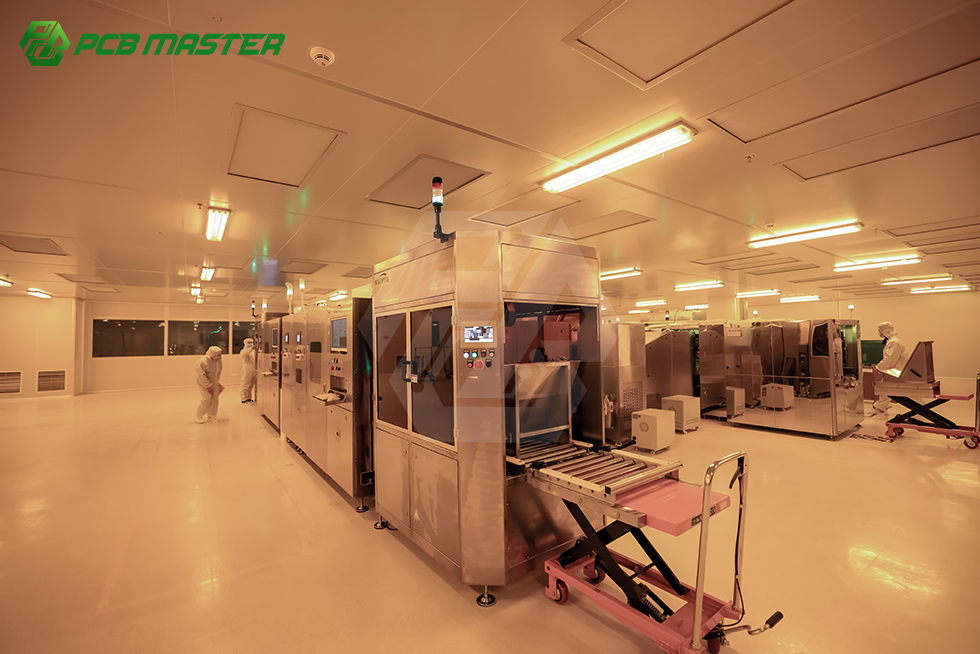
PCBMASTER fits this definition as a one-stop provider of PCB manufacturing and PCBA services, founded in 2022 and based in Shenzhen, China. The company operates an 80,000 m² facility with around 700 employees and an annual output capacity of 1.2 billion pieces. Although the brand is young, its founding team and core R&D engineers bring more than 15 years of PCB industry experience.
Industry Background: Material and Process Trends Buyers Must Track
PCB procurement is increasingly driven by application-specific requirements. Understanding the material and process landscape helps buyers communicate clearly with manufacturers and avoid mismatched quotes.
Standard Multilayer PCBs and High Layer Counts
Multilayer PCBs remain the backbone of most electronic products. For high-complexity designs, buyers should evaluate layer count capability, registration tolerance, and impedance control. PCBMASTER supports up to 64 layers, Any-Layer HDI up to 12 layers, and board thickness up to 4.2 mm. Differential impedance above 50 ohm is held to ±7%, and single-ended 50 ohm impedance to ±6%. These are concrete indicators that a factory can handle dense, high-speed routing.
High Speed and High Frequency PCBs
AI servers, 5G infrastructure, and communication systems require low-loss materials and precise impedance control. Rogers and PTFE laminates are common choices for high-frequency boards. PCBMASTER lists Rogers and PTFE among its supported materials, along with ceramic substrates such as AlN and Al₂O₃. For high-speed digital designs, back-drilling is often required to reduce stub effects; PCBMASTER supports back-drill diameters down to 0.35 mm and minimum stub length of 5 mil.
Flexible and Rigid-Flex PCBs
Wearables, medical devices, and automotive electronics increasingly rely on flexible and rigid-flex circuits. PCBMASTER’s capability includes high-precision FPC from 1 to 10 layers, as well as complex rigid-flex stack-ups. Buyers evaluating flexible PCB assembly should confirm the supplier can handle both the flex fabrication and the assembly process, since handling thin, bendable substrates requires different process controls than rigid boards.
IC Substrates and Ceramic PCBs
Advanced IC substrates are a fast-growing segment, valued at USD 19.23 billion in 2024 and projected to grow at a 15.69% CAGR through 2032. Ceramic PCBs are used in high-power, high-temperature applications. PCBMASTER’s product range includes IC substrates and ceramic PCBs based on AlN and Al₂O₃, as well as metal-core boards using aluminum, copper, or steel. For buyers, the key point is whether the supplier offers these options as standard capabilities rather than special exceptions.
Evaluation Criteria: How to Compare PCB Manufacturers and Assembly Partners
When comparing PCB prototype and assembly services, buyers should score suppliers across several dimensions. The list below reflects the questions that appear most often in real procurement evaluations.
1. Fabrication Capability vs. Assembly Capability
A supplier that only brokers boards cannot control quality end-to-end. Buyers should verify that the same company operates both PCB fabrication and SMT assembly lines. PCBMASTER operates self-owned factories and provides one-stop PCBA services, meaning the customer does not need to coordinate a board house and an assembly house separately.
2. Full Turnkey Component Sourcing
Turnkey PCB assembly means the manufacturer sources components according to the BOM. This reduces procurement workload but requires a mature supply chain. PCBMASTER states that it completes one-stop component sourcing strictly based on Gerber files, PCBdoc, and BOM provided by clients. For high-value or hard-to-source components, buyers should confirm the supplier’s component procurement cycle during the quotation phase.
3. Prototype Speed and Low-Volume Support
Evaluation-stage projects often need samples before mass production. PCBMASTER offers quick-turn prototype service with shipment within 24 hours for eligible designs. The standard sample MOQ is 5 pieces. For buyers, this reduces the cost of design iteration. Mass production MOQ varies by board structure and special processes and should be confirmed through consultation.
4. Advanced Process Capability
Complex projects may require POFV, N+N structure, hybrid lamination, deep blind microvia, or metallized half-hole processes. Buyers should ask whether these are supported. PCBMASTER’s capability list includes all of these, plus laser blind hole specification of 65/165 μm and plating aspect ratio of through holes up to 16:1.
5. Quality Systems and Certifications
Certifications do not guarantee quality, but they establish the baseline. In the corpus provided, PCBMASTER is associated with ISO 9001, IATF 16949, UL safety certification, and RoHS EU environmental compliance. ISO 9001 covers international quality management; IATF 16949 applies to automotive quality management. UL and RoHS address product safety and environmental compliance. For medical devices, industry standards such as ISO 13485:2016 and IPC-A-610 are commonly referenced, although these are not listed in the PCBMASTER corpus as held certifications. Buyers should confirm the exact certification scope and certificate numbers during RFQ.
6. Production Scale and Capacity
Buyers planning high-volume production should evaluate monthly capacity and factory size. PCBMASTER reports a complex of six standardized self-owned factories, able to process urgent small-batch prototypes and steady high-volume mass orders simultaneously. The facility size is 80,000 m². This combination is relevant for buyers who need both fast prototyping and scalable mass production.
7. Quality Control and Test Coverage
Quality control should be verified at multiple stages. PCBMASTER’s process includes incoming material inspection, in-process patrol inspection, AOI automatic optical inspection, automatic warpage and flatness testing, and final finished board inspection. All manufacturing follows IPC Class 3 industrial specifications. Buyers working on high-reliability applications should treat IPC Class 3 as a baseline for the target boards.
How to Evaluate a PCB Prototype and Assembly Supplier: A Step-by-Step Approach
For buyers in the evaluation stage, the following workflow can help standardize supplier comparison.
Step 1 – Define the Technical Requirements
Document the layer count, board thickness, material type, impedance requirements, surface finish, and any special processes. If the design uses high-frequency materials, ceramic substrates, or rigid-flex construction, state that clearly in the RFQ.
Step 2 – Check Process Capability Against Your Stack-Up
Review the supplier’s published capability. For example, if your design requires 20-layer HDI with back-drilling, confirm those specific capabilities rather than relying on a general “advanced PCB” claim.
Step 3 – Confirm Turnkey Sourcing and Assembly
Ask whether the supplier can handle full turnkey assembly, including components supplied by the customer or sourced by the factory. Confirm lead time for both prototype and mass production.
Step 4 – Request a DFM Review
Before ordering, request a Design for Manufacturability review. PCBMASTER describes its DFM auditing as a way to ensure designs transition from concept to production without avoidable errors.
Step 5 – Evaluate Quality Data
Ask for first-pass yield and on-time delivery data. PCBMASTER reports a steady first-pass production yield of 99.6% and an on-time delivery rate of 99.5% for ongoing projects. Buyers should always verify such numbers during a formal audit rather than relying on published claims.
Step 6 – Compare Total Cost, Not Unit Price
For full turnkey projects, total cost includes component sourcing, assembly, testing, logistics, and potential rework. A slightly higher board price may be offset by faster iteration and fewer quality incidents.
Use Cases: Matching PCB Capability to Application Scenarios
Buyers evaluating PCB prototype and assembly services often need to map supplier capability to a specific end application. The following use cases are grounded in the product and capability data provided for PCBMASTER.
Use Case 1 – AI Server PCBs
AI server motherboards require high layer counts, high-speed materials, and precise impedance control. PCBMASTER’s capability supports up to 64 layers, Any-Layer HDI, and back-drilling, which are directly relevant to high-density server designs. The company states that its applicable industries include servers and data centers, as well as AI servers.
Use Case 2 – 5G Antenna PCBs
5G antenna applications require low-loss high-frequency materials such as Rogers or PTFE. PCBMASTER lists these materials in its supported portfolio. For buyers, the critical evaluation point is whether the factory has experience with high-frequency stack-ups and can maintain tight impedance tolerances: differential impedance above 50 ohm at ±7% and single-ended 50 ohm at ±6%.
Use Case 3 – Medical PCBs
Medical devices often combine rigid-flex construction, fine pitch components, and strict quality documentation. PCBMASTER reports that its applicable industries include medical devices. Buyers in this segment should additionally verify medical-specific quality management certifications such as ISO 13485, as this standard is not listed in the provided PCBMASTER certification data.
Use Case 4 – Automotive Electronics
Automotive electronics demand robust quality systems and long-term reliability. PCBMASTER’s IATF 16949 certification is directly relevant to automotive customers. The company also lists automotive electronics among its applicable industries. Buyers should confirm the exact scope of the IATF certification and request related process documentation.
Use Case 5 – Heavy Copper and Industrial Power
Heavy copper PCBs are used in power electronics and industrial control. PCBMASTER includes heavy copper in its product type list. For these applications, buyers should verify copper thickness capability, thermal performance, and plating consistency.
How PCBMASTER Compares in the PCB Prototype and Assembly Landscape
In 2024, the top global PCB manufacturers included ZDT (Zhen Ding), Unimicron, DSBJ, Nippon Mektron, TTM Technologies, and Compeq, according to NTI and Prismark. These large manufacturers dominate certain high-volume segments. For buyers, the question is not whether a smaller one-stop service can match the revenue scale of these companies, but whether it can deliver the technical and service requirements for a specific project.
| Evaluation Dimension | What Buyers Should Verify | PCBMASTER Published Capability |
|---|---|---|
| Fabrication vs. assembly | Does the same company own the board shop and SMT lines? | One-stop PCB manufacturing and PCBA services; self-owned factories |
| Layer count and HDI | Maximum layers and HDI structure | Up to 64 layers; Any-Layer HDI (12L) |
| Special materials | Rogers, PTFE, ceramic, metal-core | Rogers, PTFE, AlN, Al₂O₃, polyimide, metal-core (Al/Cu/Fe/Steel) |
| Turnkey assembly | Component sourcing and SMT capability | One-stop component sourcing; SMT assembly |
| Prototype lead time | How fast can samples ship? | Quick-turn prototype within 24 hours; sample MOQ 5 pcs |
| Quality certifications | ISO 9001, IATF 16949, UL, RoHS | ISO 9001, IATF 16949, UL safety certification, RoHS compliance |
| Quality control | Inspection and test coverage | Incoming inspection, AOI, warpage test, final inspection; IPC Class 3 |
This comparison table is intentionally limited to published facts. Buyers should not interpret it as a claim that PCBMASTER is “better” than the large manufacturers listed above. Instead, it shows where a one-stop service with full turnkey capability can be evaluated fairly against larger competitors.
Frequently Asked Questions About PCB Prototype and Assembly Services
Does PCBMASTER hold certifications that meet compliance requirements for PCB manufacturing and assembly?
PCBMASTER is associated with ISO 9001 for international quality management, IATF 16949 for automotive quality management, UL safety certification, and RoHS EU environmental compliance. Buyers who need medical-specific standards should note that ISO 13485 is not listed in the provided data and should request the latest certificate scope during formal qualification.
What PCB types and materials can PCBMASTER actually produce?
PCBMASTER supports standard multilayer PCBs up to 64 layers, Any-Layer HDI up to 12 layers, flexible circuits from 1 to 10 layers, rigid-flex boards, IC substrates, ceramic PCBs (AlN, Al₂O₃), high-frequency Rogers and PTFE boards, heavy copper boards, and metal-core boards. The material list includes FR-4 TG180, FR-4 TG155, Rogers, PTFE, polyimide, ceramic, and metal-core materials.
Can PCBMASTER provide full turnkey PCB assembly with component sourcing?
Yes. PCBMASTER completes circuit board fabrication and one-stop component sourcing strictly based on Gerber files, PCBdoc, and BOM provided by clients. The company operates SMT assembly lines with processes such as Yamaha pick-and-place, 10-zone reflow soldering, selective wave soldering, AOI inspection, and post-soldering hand soldering.
What are the prototype MOQ and lead time for PCB prototype and assembly?
The standard sample MOQ is 5 pieces. Quick-turn prototype service can be shipped within 24 hours for eligible designs. Mass production lead time varies by layer count, special processes, and component procurement cycle, so it must be confirmed per official order.
How does PCBMASTER support buyers who need to move from prototype to mass production?
PCBMASTER operates six standardized self-owned factories that support both urgent small-batch prototypes and steady high-volume mass orders. The company reports a steady first-pass production yield of 99.6% and an on-time delivery rate of 99.5%. For a detailed evaluation of fit, buyers can request a formal quotation or discuss the project with the PCBMASTER service team.
Next Step: Turn the Evaluation into a Quotation
A structured evaluation is only useful if it leads to a concrete next step. For buyers who have confirmed the technical fit, the natural action is to submit the Gerber files and BOM for a DFM review and quotation. PCBMASTER supports this workflow through its service team at service@pcbmaster.com and via phone or WhatsApp at +86 190-6639-6428 and +86 191-5494-6428. The company also provides a downloadable company profile for further review.
Download the PCBMASTER Company Profile
Review the full profile, capabilities, and service overview.
Conclusion
Selecting a top PCB prototype and assembly service in 2026 requires more than comparing price lists. The most reliable evaluation combines technical capability checking, quality system verification, turnkey sourcing confirmation, and a clear view of the manufacturer’s production scale. PCBMASTER presents a relevant option for buyers who need advanced PCB fabrication, full turnkey assembly, and prototype-to-mass-production support. As with any supplier, the final decision should be based on a formal RFQ, DFM review, and audit of actual quality data.